
ROOVICE Renovates a Multi-Generational Tokyo Home by Removing Rather Than Adding
In Tokyo's Minamicho district, a careful renovation of a family home proves that restraint can be the strongest design gesture.

Most renovation projects announce themselves. Walls come down, volumes get carved open, materials shift from old to aggressively new. The Minamicho House in Tokyo, completed in 2025 by ROOVICE, does something rarer: it peels back constraints layer by layer until the house can breathe on its own terms. Led by Giulia Taverna and Koichi Takahashi, the 112 m² project takes a multi-generational family residence and treats its history not as a problem to solve but as a quality worth preserving.
The house sits in an unusual ownership condition. Its current owner lives abroad but refused to let go of the property, a place that had quietly accumulated the textures of everyday life over decades. ROOVICE approached the project through their Kariage framework, a system for renovating vacant homes and subleasing them, turning a sentimental attachment into a viable second life. The result is a home that feels neither restored nor redesigned. It feels unblocked.
Subtraction as Strategy
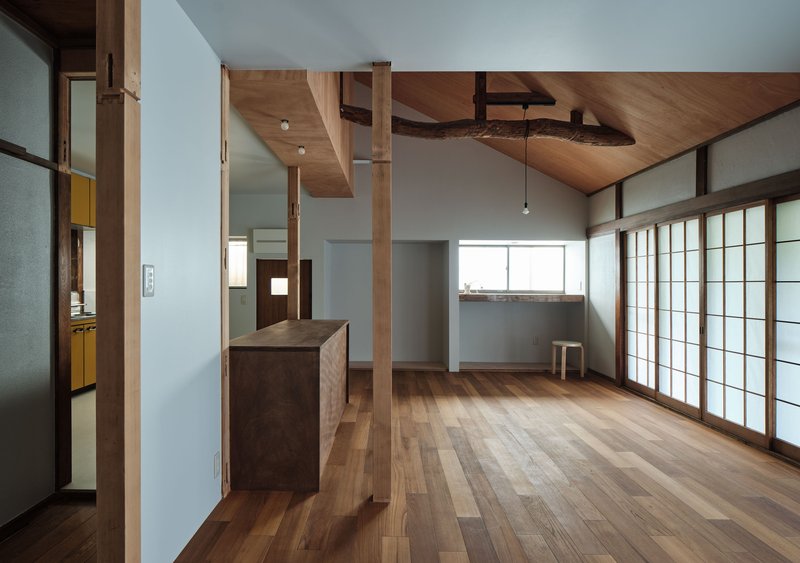
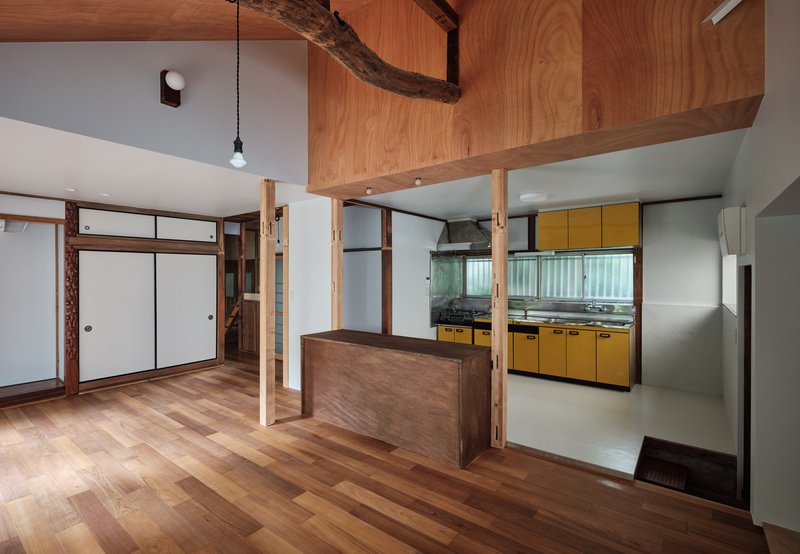
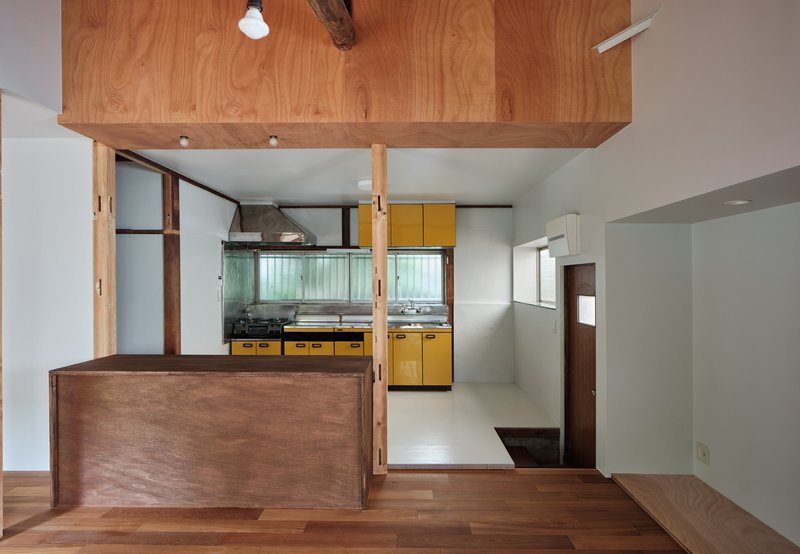
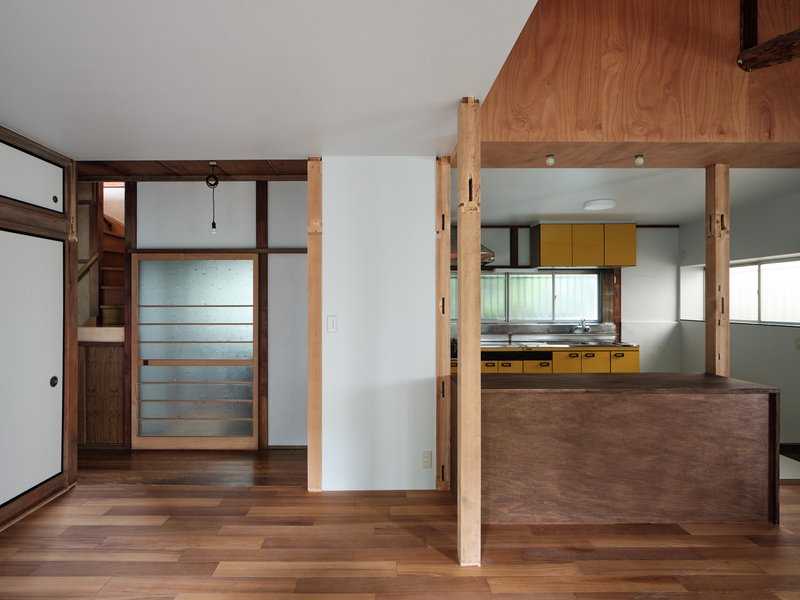
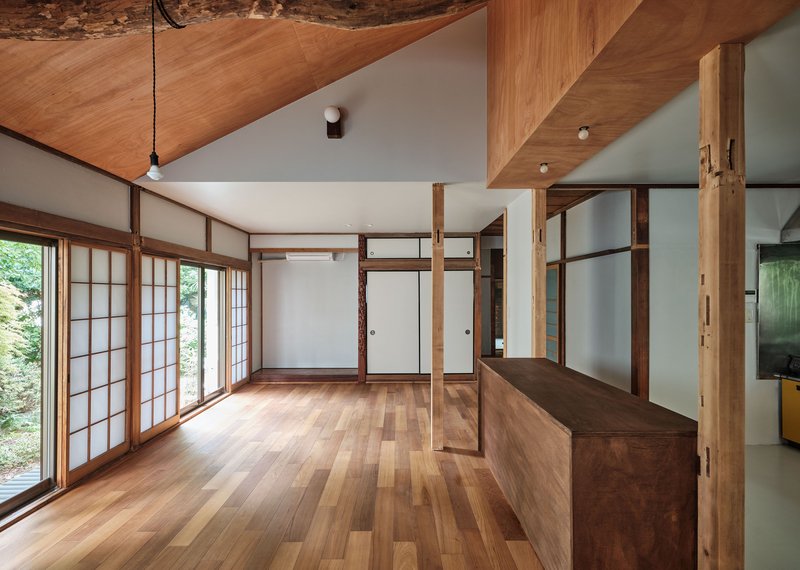
The ground floor's most visible intervention is also its most conceptually direct. The original kitchen occupied the deepest and darkest corner of the plan, sealed off from usable daylight. ROOVICE relocated and opened it up beneath a sculptural wood ceiling plane that hovers over a timber counter island. The yellow cabinetry reads as a deliberate punctuation mark: warm, specific, and just assertive enough to anchor the open living area without overpowering the surrounding timber frame.
What holds the composition together is the exposed column grid, left standing as both structure and spatial rhythm. Rather than wrapping these elements in new finishes, the architects let the timber do the work of defining zones. The cantilevered ceiling volume above the kitchen creates a sense of compression that makes the adjacent living space feel taller by contrast. It is a move that costs nothing structurally but changes everything perceptually.
Light Released Through the Staircase
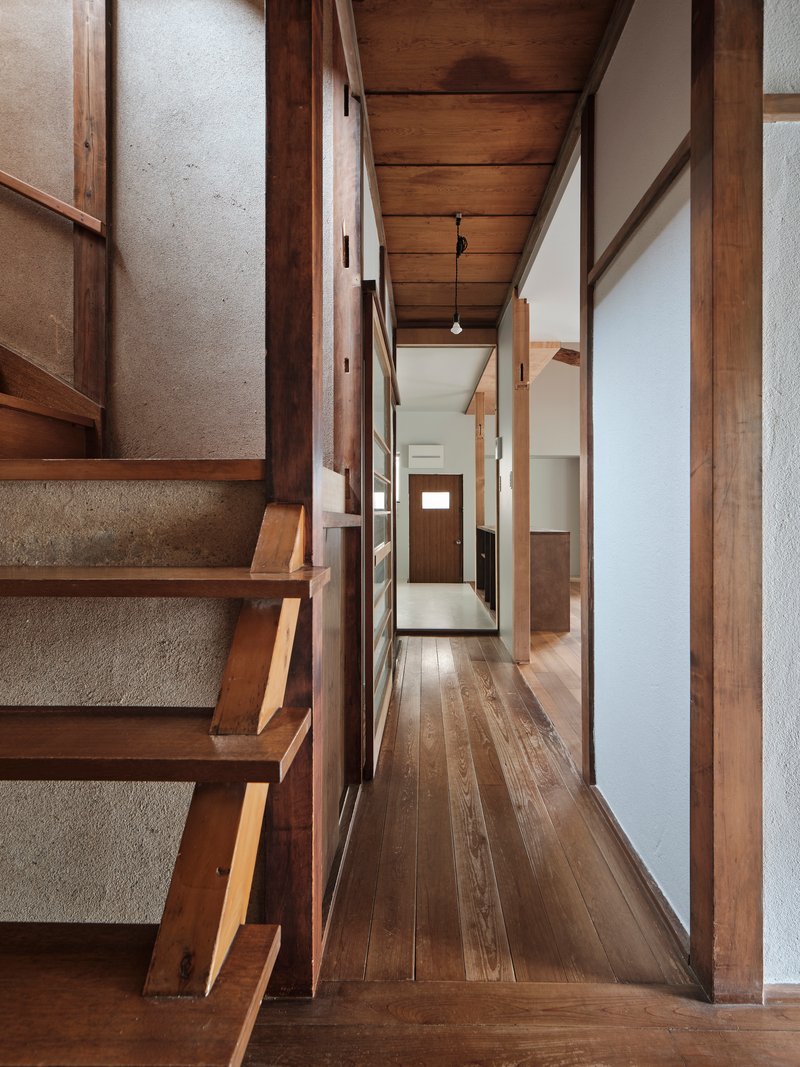
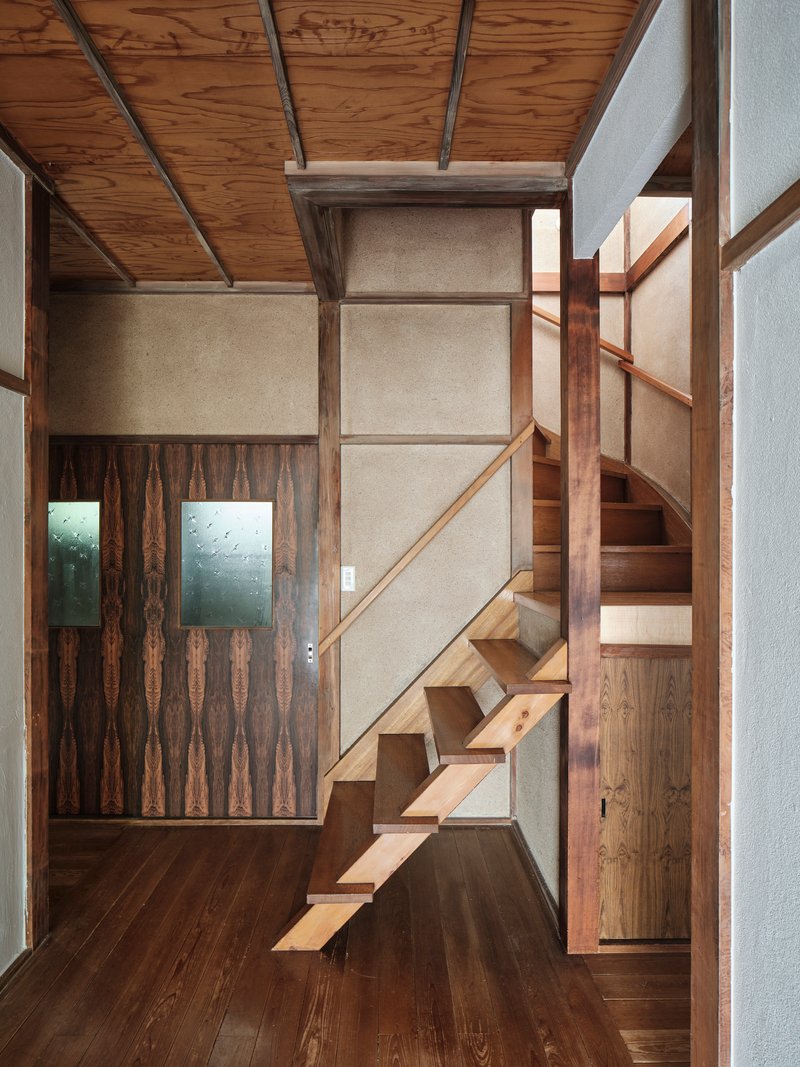
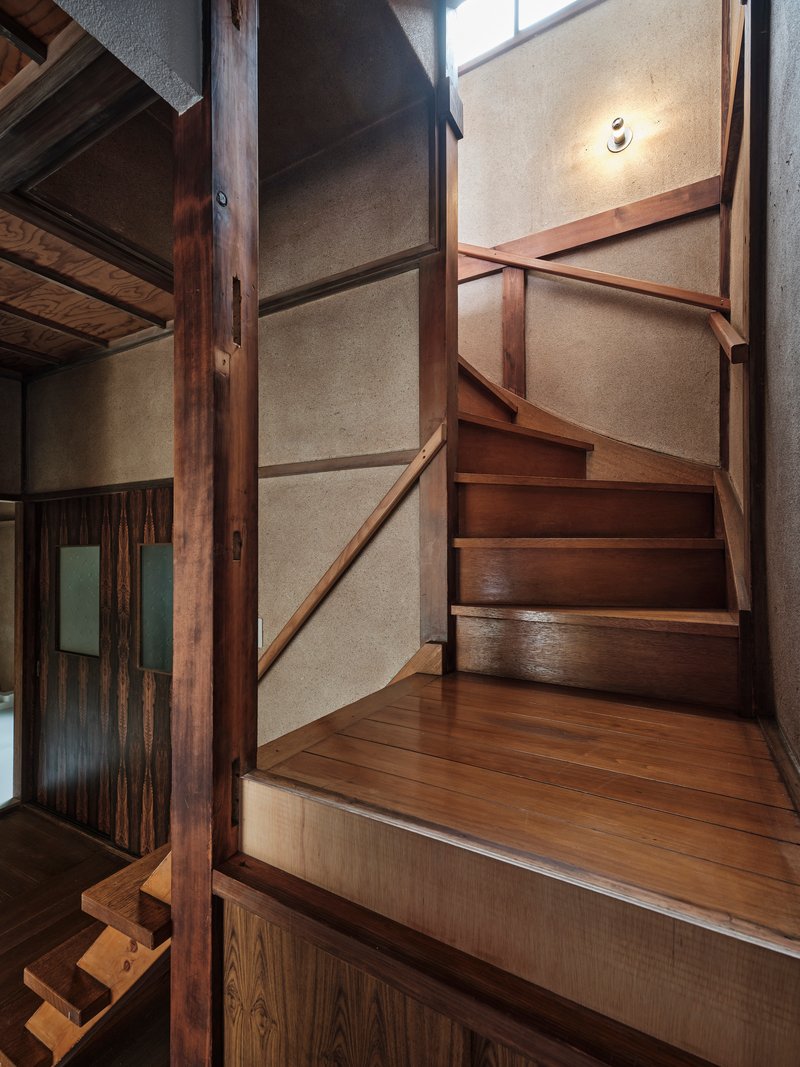
The original staircase was enclosed, a sealed vertical tube that blocked light from a window on the upper landing. By opening the staircase, ROOVICE allowed that single window to send daylight cascading down into the entrance hall, fundamentally altering the character of the ground floor without adding a single new opening to the facade. The open risers and exposed timber treads reinforce this transparency.
A spherical wall sconce, mounted on a reclaimed timber block against textured plaster, serves as a quiet signal of the architects' attitude toward detail. Nothing here is gratuitous. The plaster surfaces catch and scatter warm light from the fixture, turning the stairwell into a vertical lantern that works both day and night. The staircase went from being an obstacle to becoming the house's primary light engine.
Screens, Thresholds, and Ambiguity
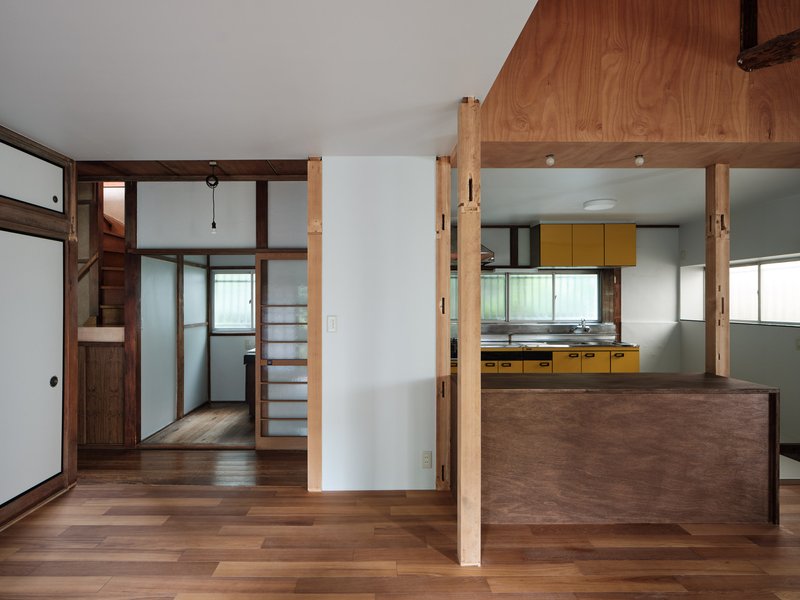
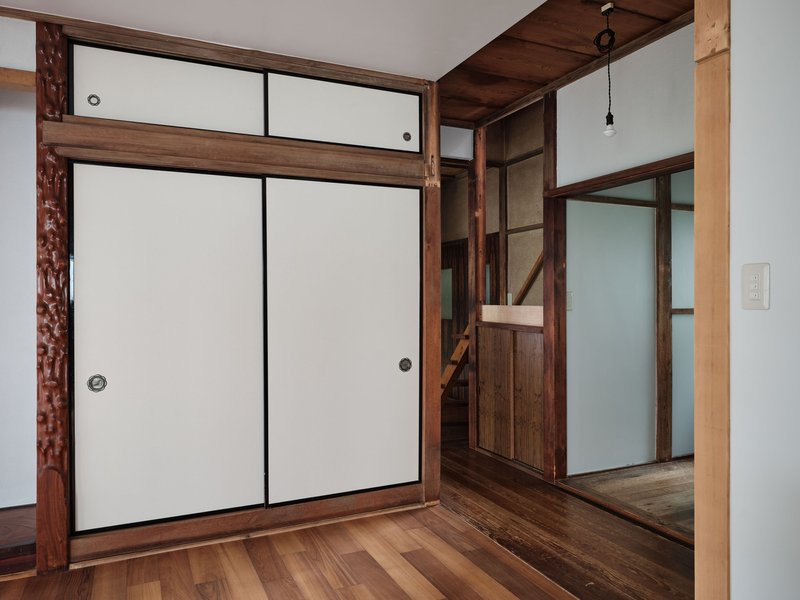
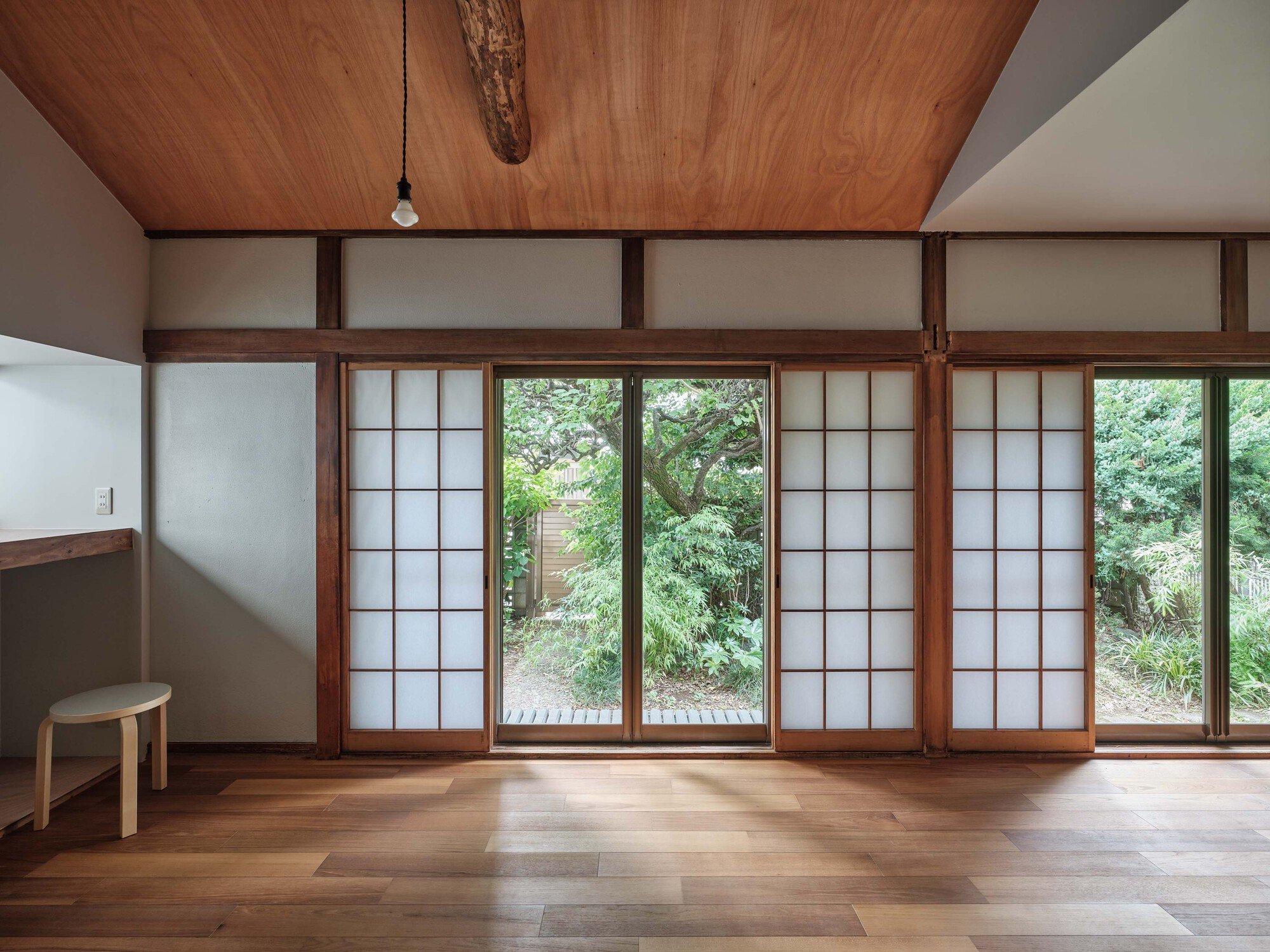
Translucent sliding screens run through the house in various configurations, controlling not just views but degrees of connection. On the ground floor, timber-framed shoji panels filter garden light into the interior while simultaneously allowing cross-ventilation between rooms. The screens create a spatial ambiguity that is deeply traditional in Japanese residential architecture, but here they are calibrated to work with the newly opened plan rather than subdividing it.
The passage between the entry sequence and the kitchen area is particularly well resolved. Paper screen walls and exposed columns frame a layered depth of field that pulls the eye through multiple thresholds. You always see more than the room you are standing in, a quality that makes 112 square meters feel far more generous than the number suggests.
The Garden as Interior Material
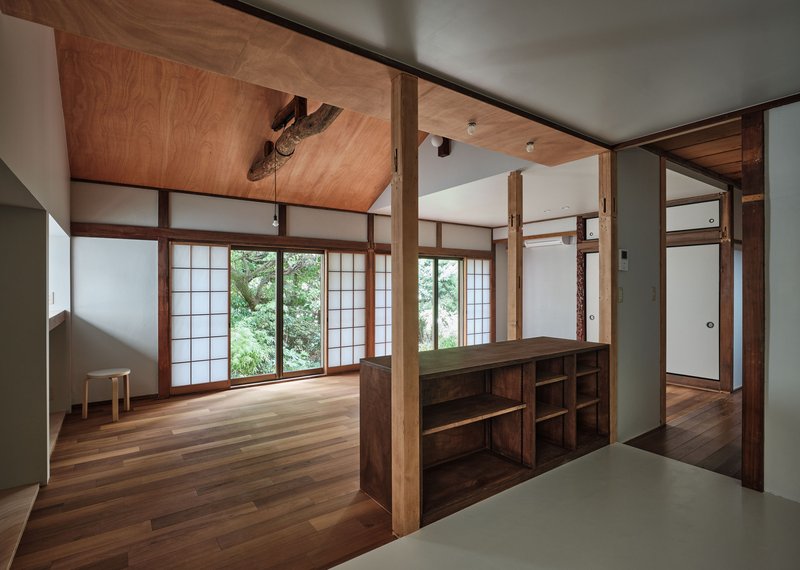
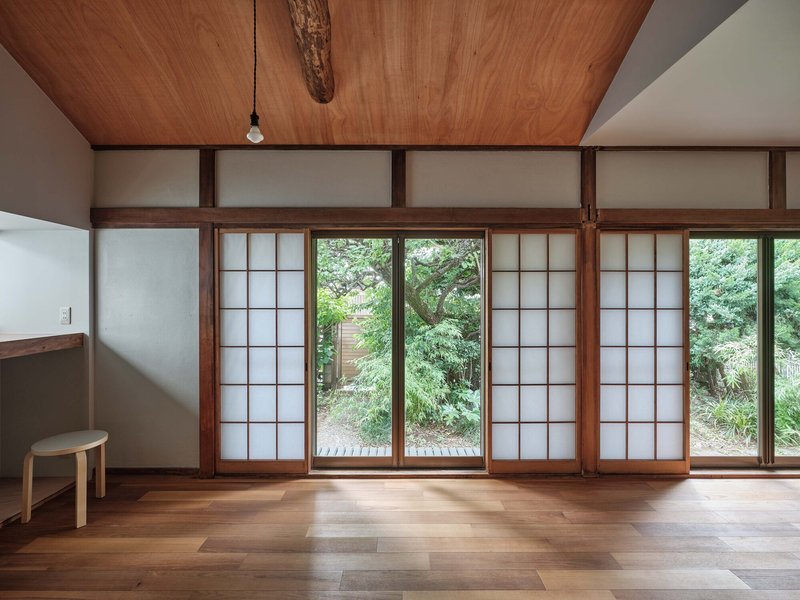
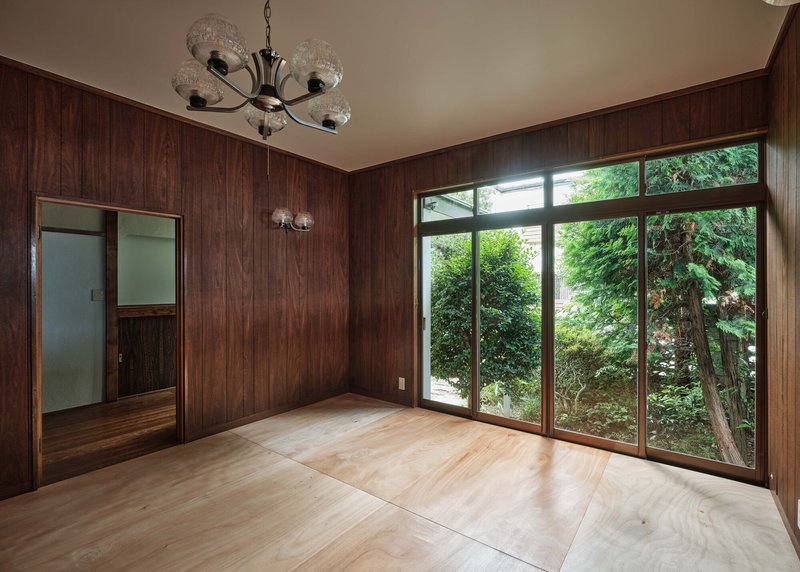
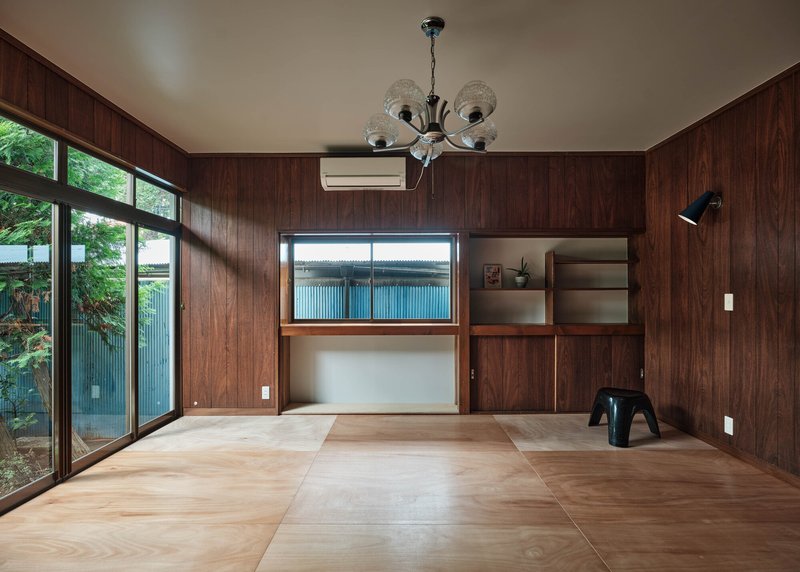
Dense greenery presses up against nearly every opening in the house, and the architects leaned into this condition rather than managing it. From the ground floor, translucent screens dissolve the wall plane and allow foliage to register as color and shadow rather than specific plants. On the upper floor, floor-to-ceiling windows in the wood-paneled rooms frame the canopy so aggressively that the garden becomes a kind of wallpaper, shifting with seasons and weather.
The garden itself was carefully renewed as part of the project, though the intervention reads as maintenance rather than redesign. ROOVICE understood that the mature planting was an asset no new landscape scheme could replicate. The result is a house where interior finishes are consistently quiet because the exterior foliage provides all the visual richness the rooms need.
Tatami Rooms and the Second Floor
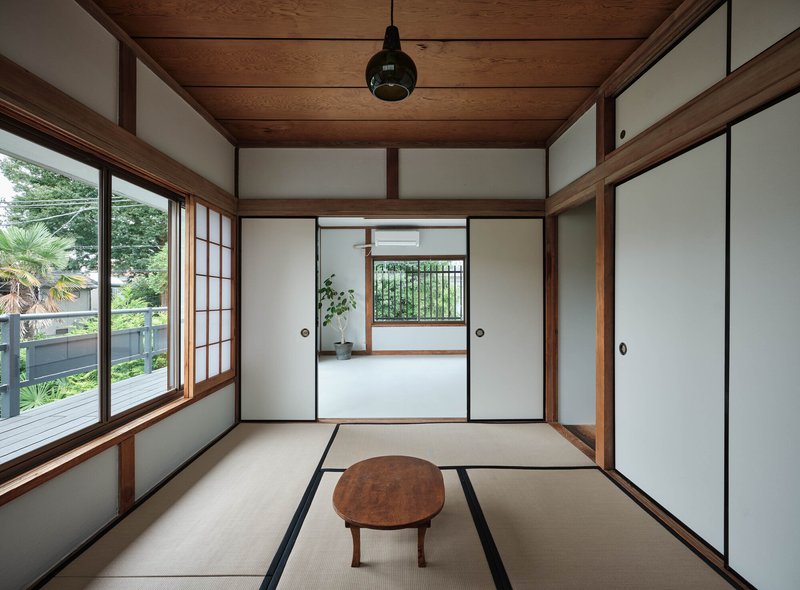
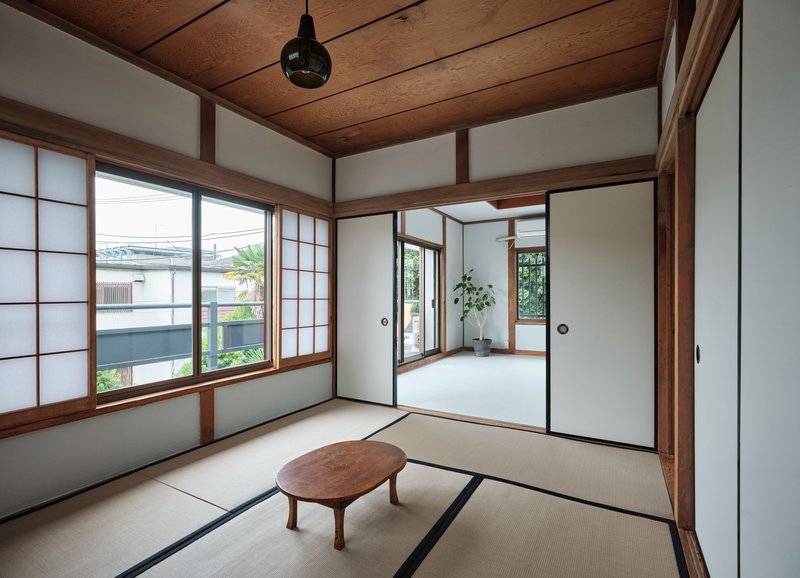
Upstairs, the traditional tatami rooms were retained in their essential character. Connected in enfilade through sliding screens, these spaces preserve the layered spatial depth that defined the original house. Timber ceilings and frames remain exposed, and the woven tatami mats establish a textural warmth underfoot that no engineered flooring could match. One room adapted with PVC tile flooring accommodates contemporary use without disrupting the overall grain.
The relationship between these rooms and the garden below is mediated by the veranda, whose flooring was replaced after significant deterioration. Restored as a usable extension of the second floor, the veranda now functions as an outdoor room rather than a vestigial corridor. A single lounge chair on the timber deck terrace, facing treetops under an overcast sky, captures the spirit of the entire project: one good thing, placed carefully, is enough.
Terrace and Threshold Details
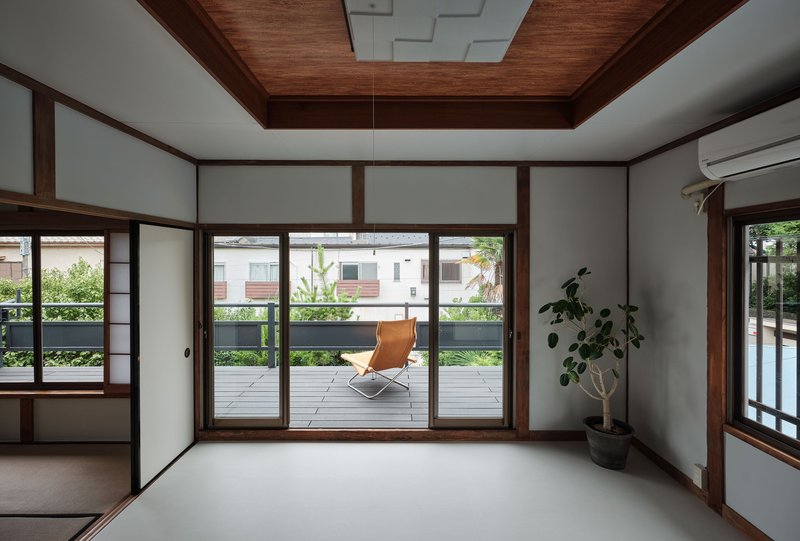
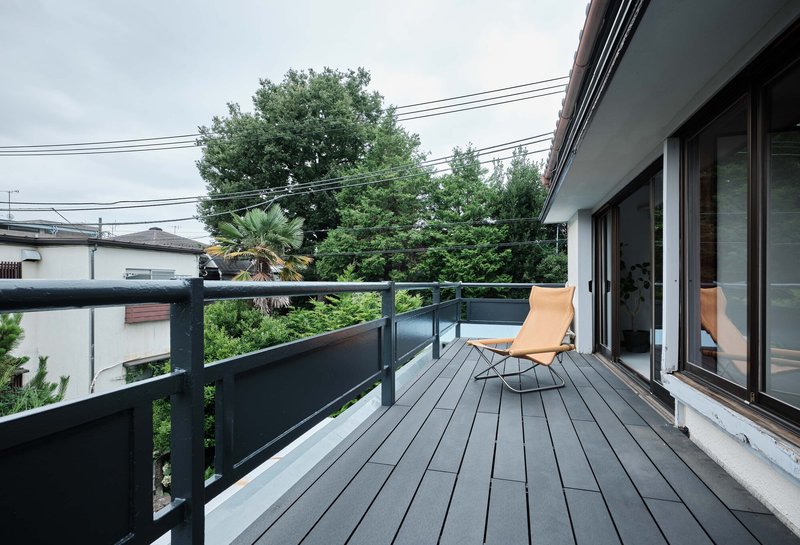
The terrace off the upper floor establishes a direct line between interior domesticity and the treetop canopy. Dark metal railings provide a crisp edge without visual weight, letting the timber deck and the foliage beyond do the talking. A potted plant and a single chair are the only furnishings, and they tell you everything about the intended pace of life here.
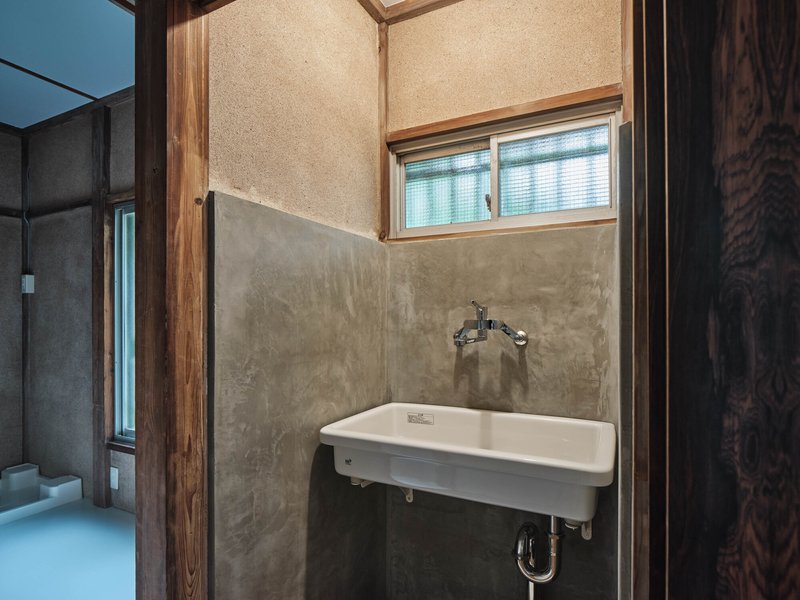
Even the bathroom corner, with its wall-mounted sink beneath a small window and timber-framed plaster walls, reflects the project's discipline. The toilet was expanded from an undersized footprint to meet current standards, one of the few instances where the renovation physically enlarged a room. Otherwise, the approach was consistently to open, reveal, and repair rather than to add.
Entry and the Deep Green Door
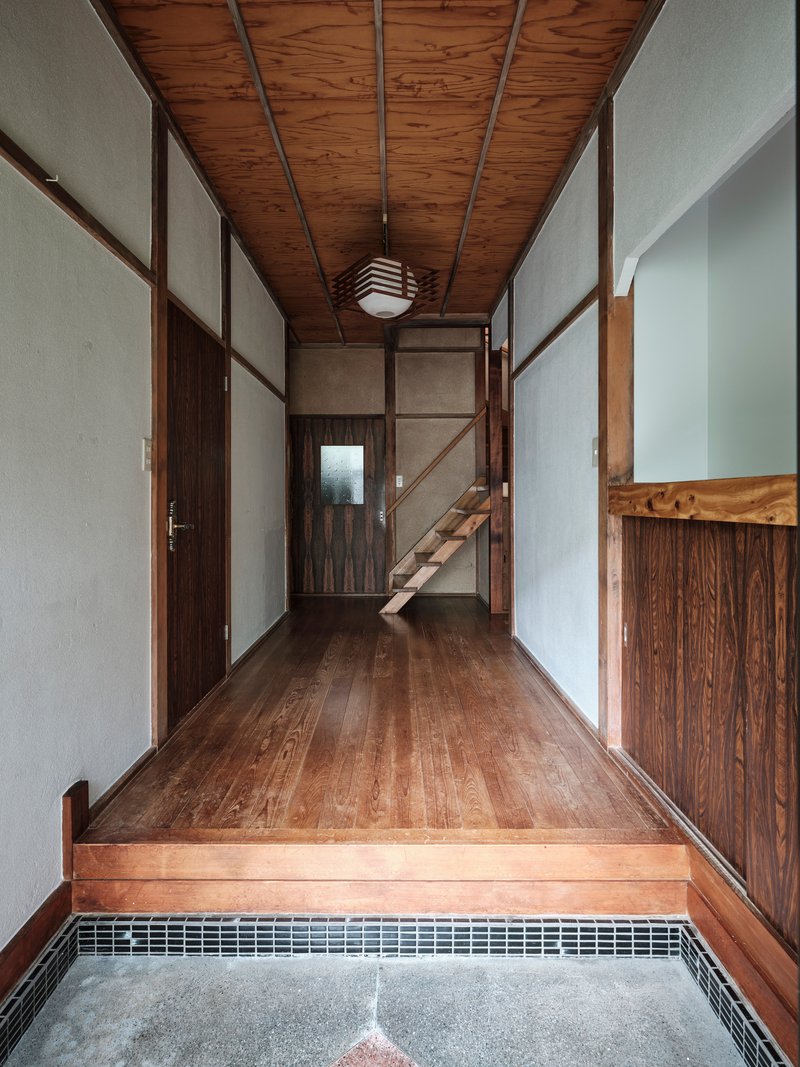
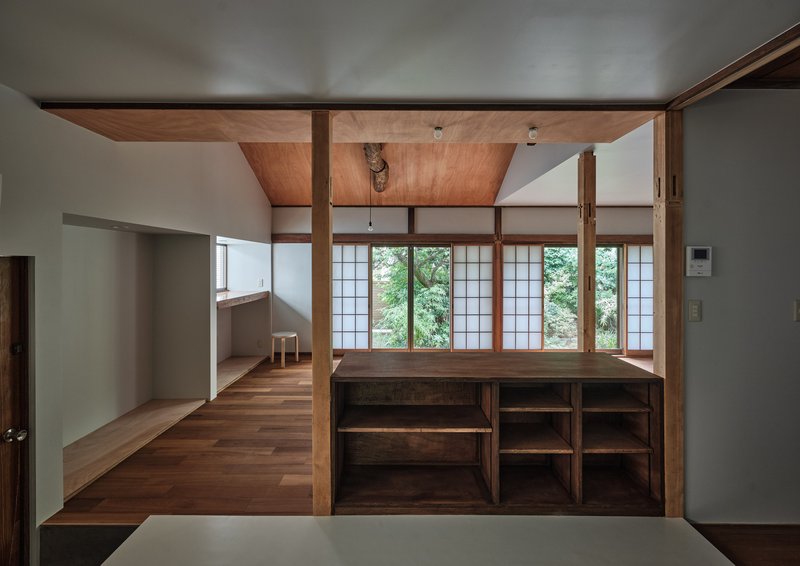
The entry sequence sets the tone. A timber ceiling, paper walls, and a raised floor platform lead to the now-open staircase, establishing a procession that moves from compressed to expanded in just a few steps. The entrance door was repainted in a deep green that acknowledges the garden outside, a small chromatic decision that aligns the architecture with its landscape from the first moment of arrival.
Raised platforms with built-in shelving face shoji screens overlooking the garden, creating zones that function as reading nooks, display areas, or simply places to sit. These moments of embedded furniture echo a long tradition in Japanese residential design where storage and structure are inseparable. ROOVICE treated the existing millwork with the same respect they gave the timber frame: repair where needed, replace only when unavoidable.
Plans and Drawings
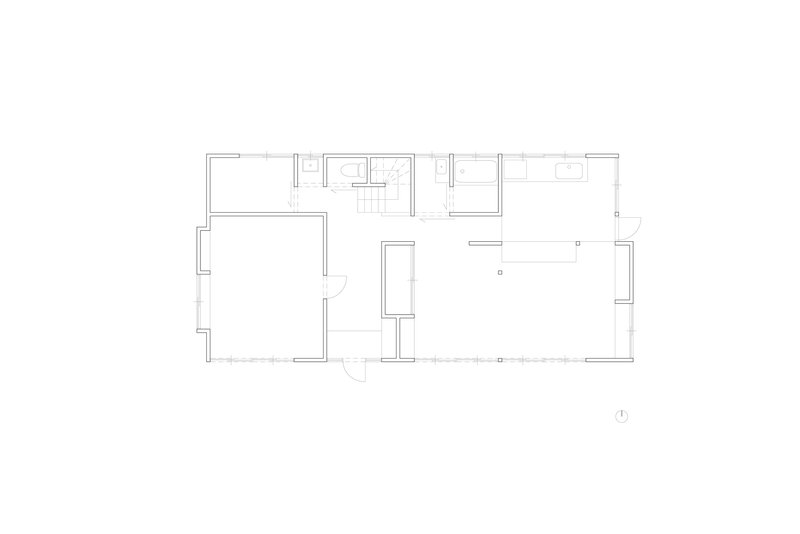
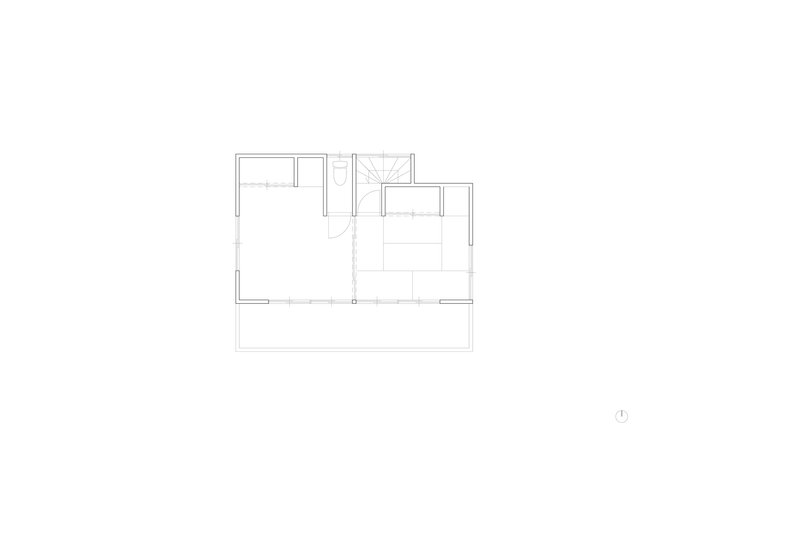
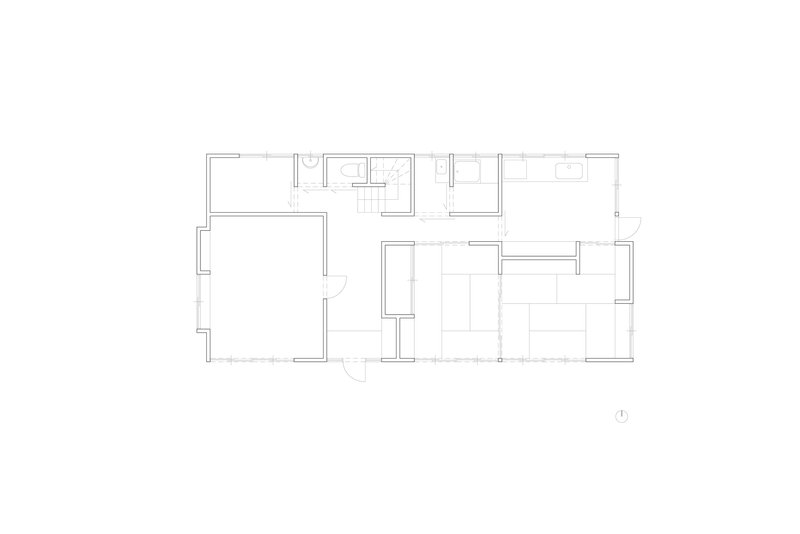
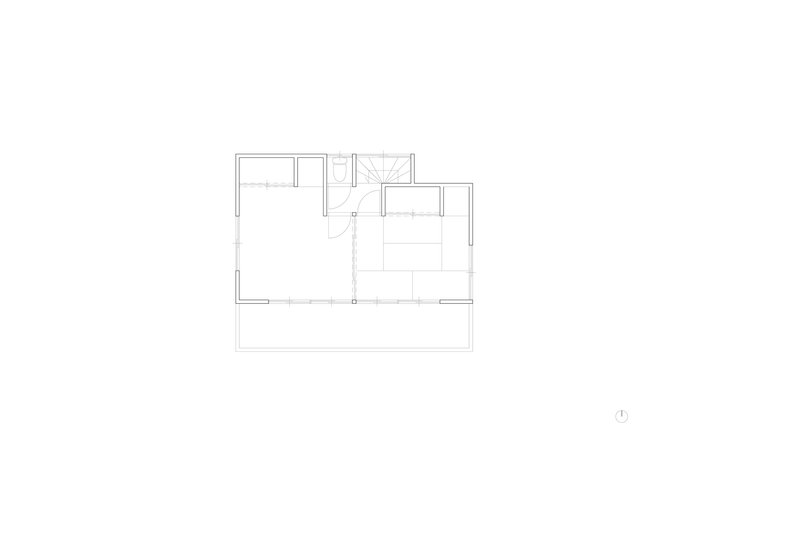
The floor plans reveal a compact rectangular footprint organized around a central staircase. On the ground floor, the bathroom cluster anchors one end while the open living and kitchen area occupies the other, with the stair acting as both connector and light well. The upper floor has a smaller footprint, with the cantilevered balcony extending the usable area outward. Subdivided tatami rooms on one side give way to more open space on the other, a duality that lets the house accommodate both communal gathering and private retreat within a modest envelope.
Why This Project Matters
Japan has millions of vacant homes, a well-documented crisis of abandonment that sits uneasily alongside the country's appetite for demolition and new construction. The Kariage framework that ROOVICE operates within proposes a middle path: renovate what exists, sublease it back into use, and let owners retain their emotional and financial connection to a property. The Minamicho House is evidence that this model can produce architecture of genuine quality, not just functional rehabilitation.
More broadly, the project is a case study in editorial restraint. Giulia Taverna and Koichi Takahashi made a series of small, precise moves: open a staircase, relocate a kitchen, replace a decayed veranda, repaint a door. None of these gestures would photograph dramatically in isolation. Together, they transform a house that had turned inward and dim into one that is generous with light, air, and connection to its garden. The lesson is worth repeating: sometimes the most impactful thing an architect can do is identify what is already working and remove whatever is in its way.
Minamicho House by ROOVICE (Giulia Taverna, Koichi Takahashi). Tokyo, Japan. 112 m². Completed 2025. Photography by Akira Nakamura.
About the Studio
Share Your Own Work on uni.xyz
If projects like this are the kind of work you want to make, uni.xyz is a place to publish your own, find collaborators, and enter design competitions.




Popular Articles
Popular articles from the community

Twobytwo Architecture Studio Towers a Blackened Ski Cabin Above the Trees in Golden, BC
A compact three-storey lookout in the Kootenay mountains trades square footage for 14-foot ceilings and Columbia River Valley views.
Constanti Architects Builds a Fortress of Privacy in Nicosia with House 345
A concrete and timber residence in Cyprus reinterprets the traditional introverted courtyard house for a new urban landscape.
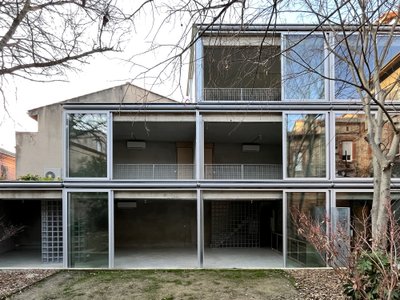
BAST Slots a Four-Story Glass House into a Narrow Gap Between Toulouse Townhouses
In the dense Bonnefoy district, a stepped infill building merges home and office while preserving a majestic hackberry tree.
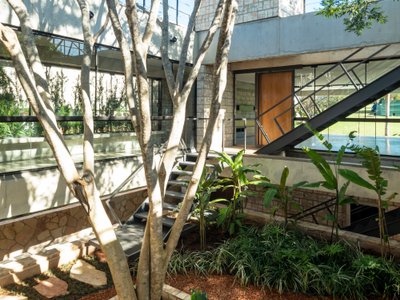
OMCM arquitectos Builds a Summer House in Paraguay from Quarry Waste Blocks and Three Sacred Trees
In the young hillside neighborhood of Altos, a 696-square-meter concrete volume hovers on six pillars around three preserved native Yvyraju trees.


Similar Reads
You might also enjoy these articles

127af Flips a Tiny Bagnolet Rowhouse Upside Down with a Handcrafted Roof Extension
A 55-square-meter terraced house on the edge of Paris gains a luminous upper living floor through lightweight timber and steel.
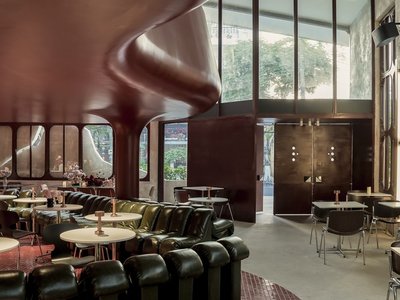
1.61 Design Workshop Wraps a 600-Square-Meter Café in Vietnam in Sculptural Burgundy Drama
Reden Café & Bistro pairs a helical staircase, mosaic floors, and deep red interiors to rethink Vietnamese hospitality space.

The Unbound Brain: A School Shaped by Cognitive Architecture
Cylindrical learning pods radiate like neurons from a central cortex, turning the floor plan into a spatial model of human thought.
Revival Vernacular Architecture: Rammed Earth Settlements for the Sahara
A modular desert community in Mauritania that fuses passive cooling techniques with earthen construction and local craftsmanship.


Explore Residential Building Competitions
Discover active competitions in this discipline




The Global Benchmark for Architecture Dissertation Awards


Challenge to design mud housing for contemporary communities


Challenge to design luxury tourism on rails


VR headsets Storefront design competition
Comments (0)
Please login or sign up to add comments
No comments yet. Be the first to comment!