
Rumah RifBagus House: A Modern Tropical Family Sanctuary in East Jakarta
Transforming two old houses, Rumah RifBagus creates a modern tropical family home with meditative entrance, waffle ceilings, and lush courtyard.

Architects: Gets Architects
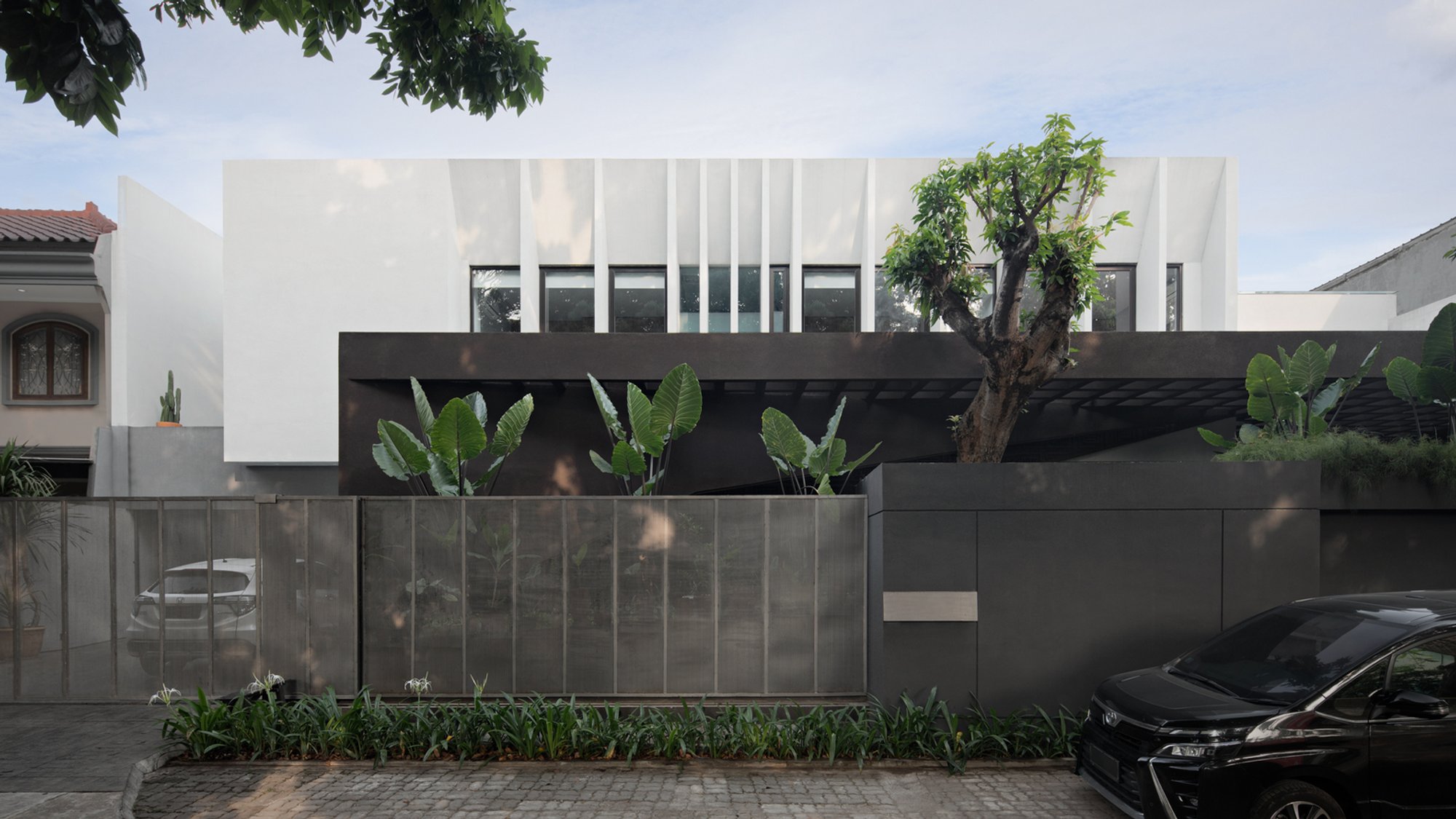
Rumah RifBagus House is a striking example of adaptive residential architecture, where two dilapidated traditional houses were transformed into a cohesive, light-filled family home. Designed for a young family, this residence prioritizes comfort, functionality, and a seamless connection with nature while addressing the challenges of an urban setting. Located opposite a local elementary school, noise reduction was a primary concern, tackled with thoughtful architectural interventions.
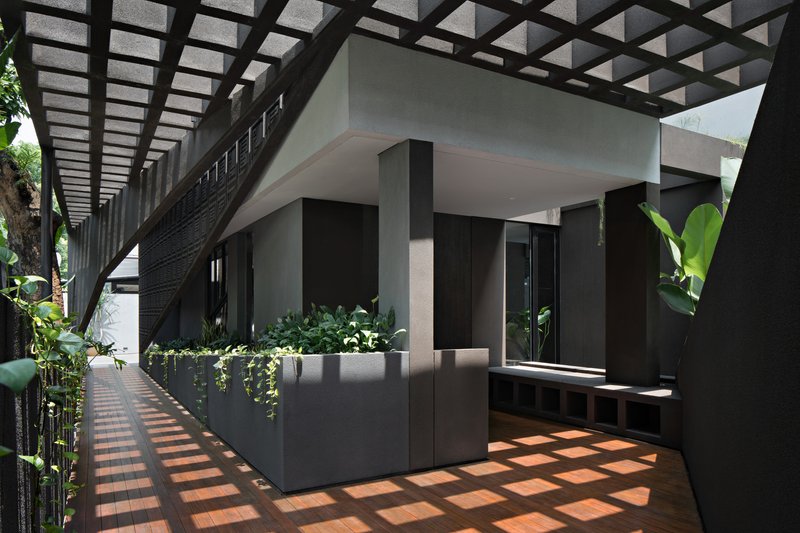
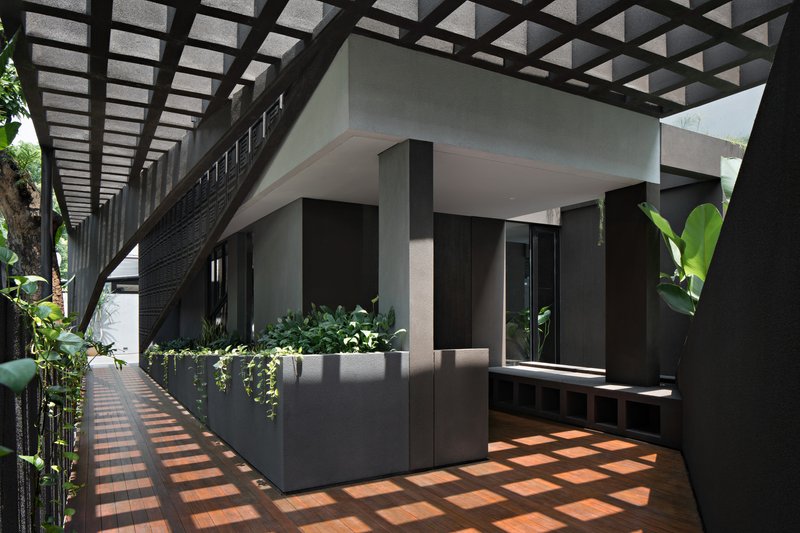
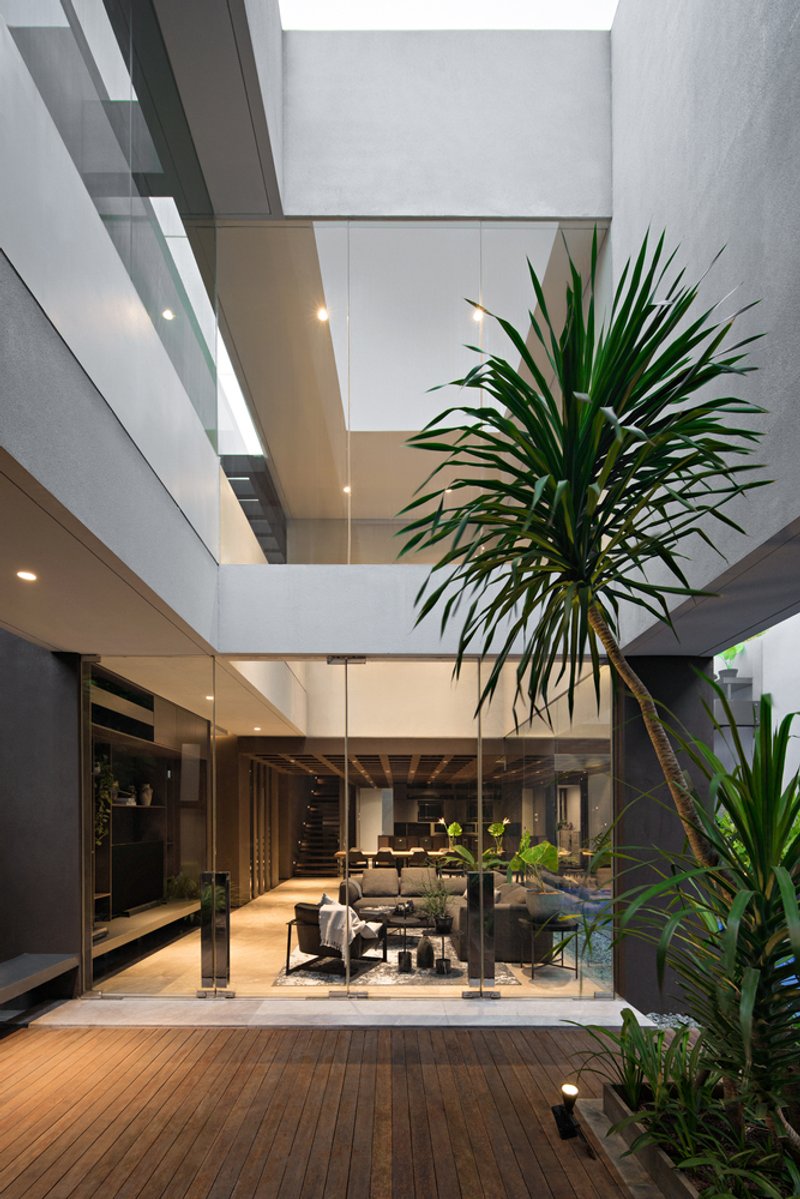
A tunnel-like hanging 3D calligraphy wall combined with lush landscape elements creates a buffer zone at the entrance. This meditative sequence guides the inhabitants from the street into a calm, serene environment. The entrance features multiple layers, including a porch, private courtyard, and a niche entrance to the guest bedroom pavilion. A diagonal wall acts as both a functional and aesthetic divider, marking public and private areas while adding character to the spatial composition. Wooden flooring throughout the entrance area enhances a resort-like, unhurried ambiance, complemented by a mudroom-like function and a spacious bench for informal interactions.
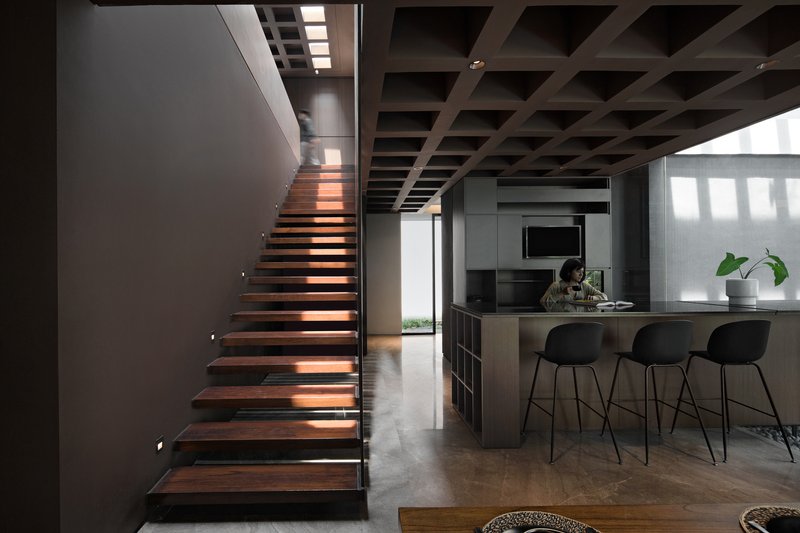
Materiality and Architectural Expression
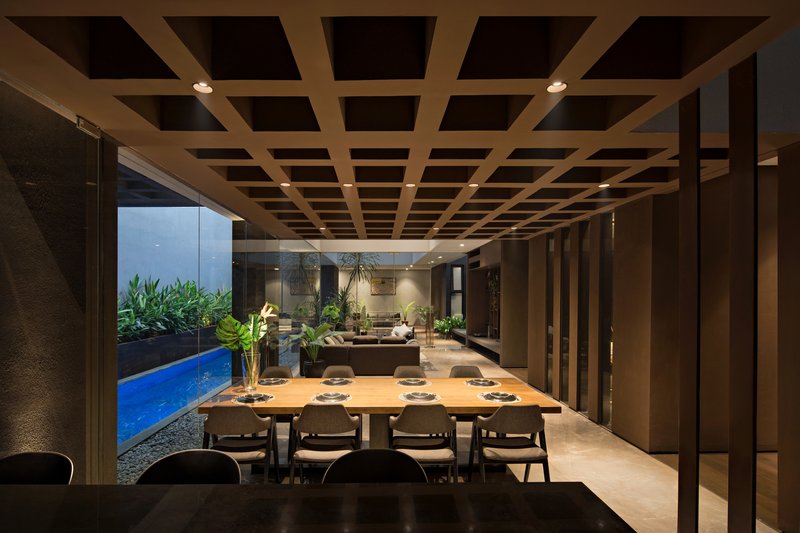
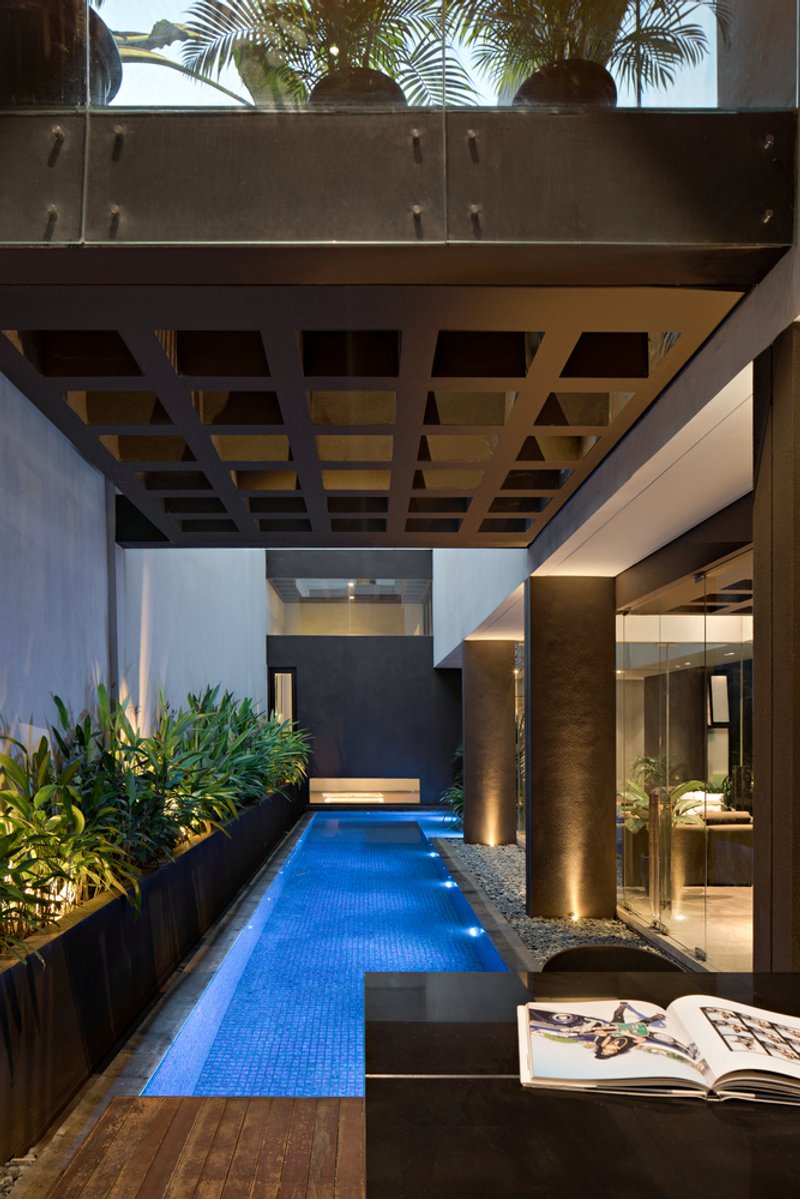
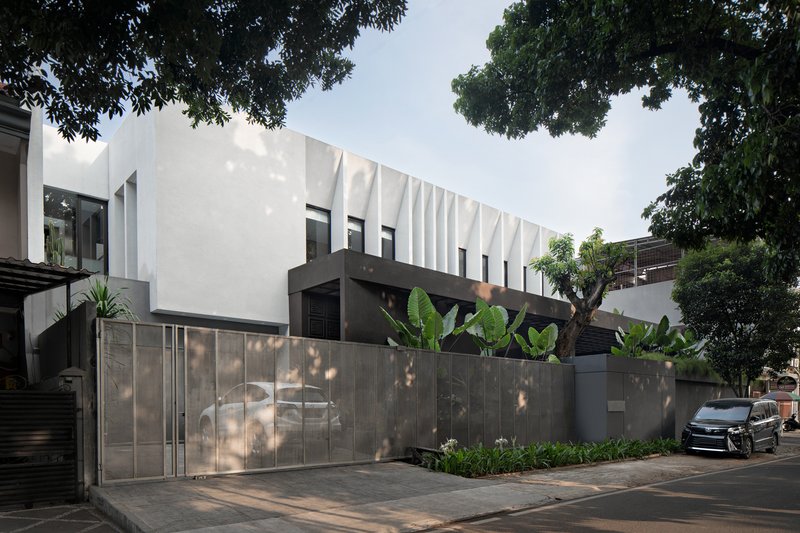
From the street, Rumah RifBagus appears modest in massing, color, and materials. Yet, inside, it reveals a series of intricately designed spaces that balance functionality and aesthetic richness. The house is organized into two distinct volumes: a horizontal upper rectangle with a modern colonnade facade and a lower mass defined by a brown waffle-structured canopy. This waffle motif is a unifying architectural element, weaving through ceilings, skylights, balcony floors, and canopy structures, while also visually amplifying spatial dimensions and framing natural light.
The careful integration of greenery, double-height ceilings, and indoor-outdoor visual connections softens the house’s rigid geometry. Sunlight filters through surrounding foliage, creating dynamic patterns and a harmonious dialogue between interior and exterior spaces.
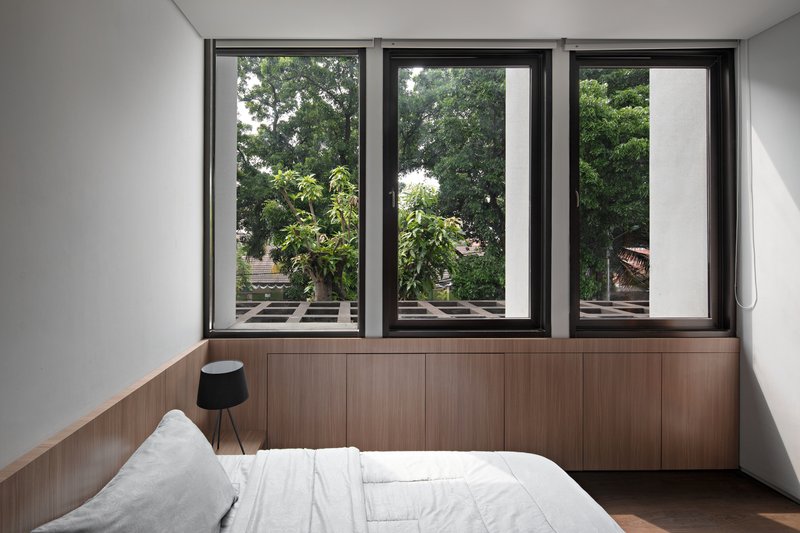
Interior Spaces as a Relaxing Retreat
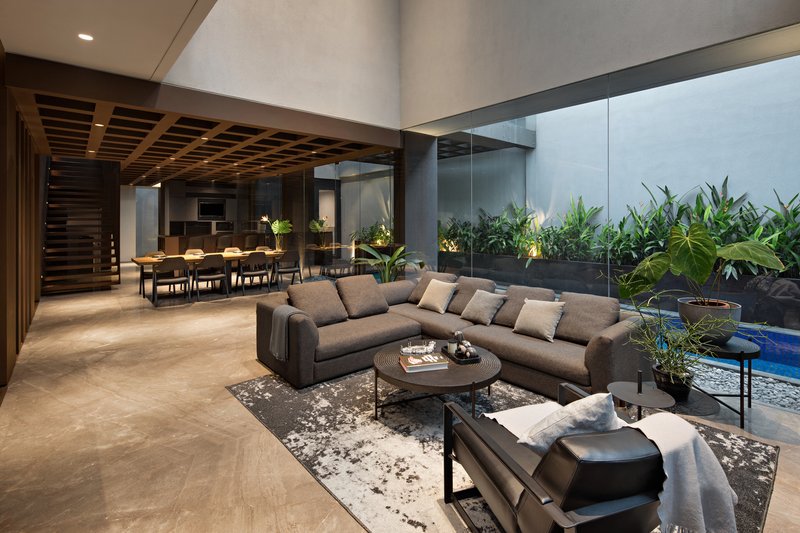
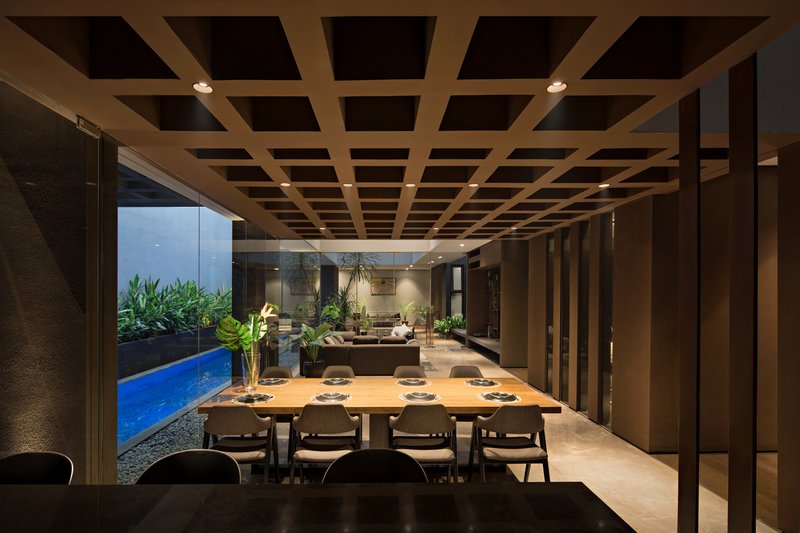
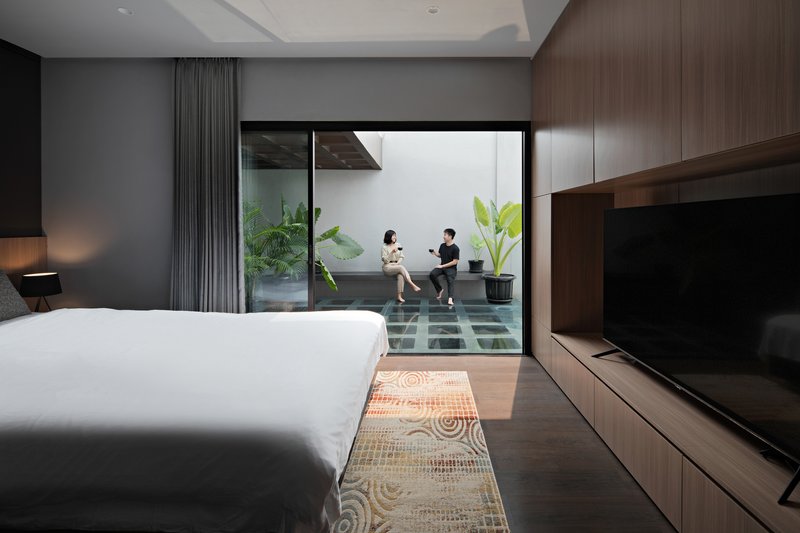
The interior design emphasizes a vacation-home-like ambiance, offering both practicality and visual warmth. A consistent material palette links indoor and outdoor areas, using raw, non-reflective finishes for durability and low maintenance. Upstairs, minimalist spaces integrate with the brown waffle ceilings and light wooden textures in furniture, providing visual contrast against the neutral walls. The living spaces are designed to accommodate a range of daily activities, blending aesthetic appeal with functional adaptability for family life.
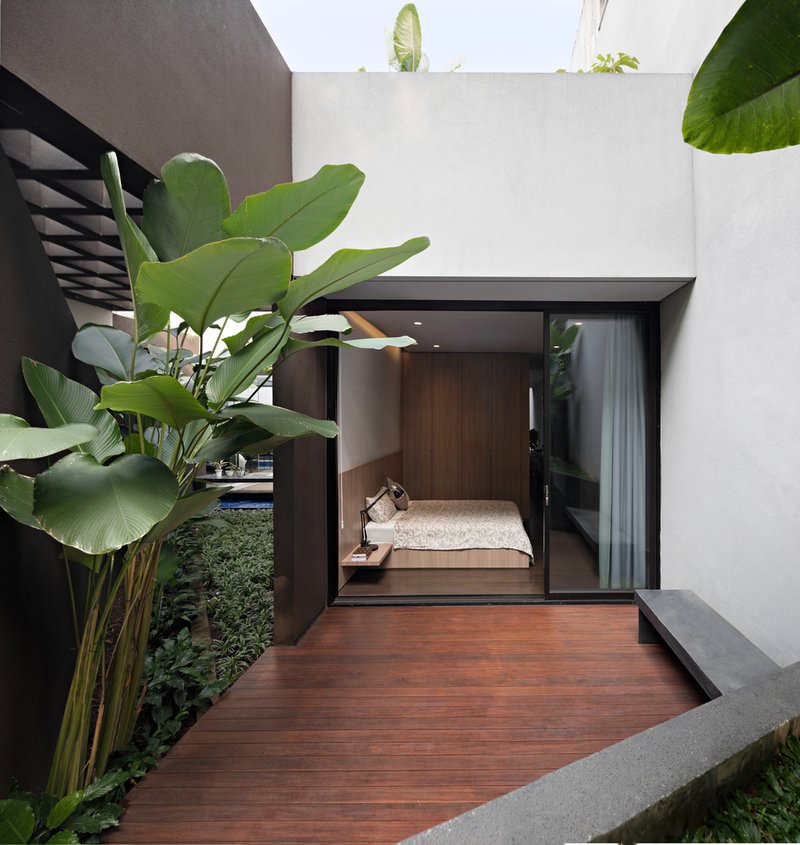
Renovation and Programmatic Strategy
The challenge lay in transforming two separate traditional homes into a unified, family-oriented residence. The original structures were carefully stitched together, creating two elongated masses that establish a sense of cohesion. Existing structures were selectively upgraded, maintaining a respect for historical character while introducing openness and modern spatial flexibility.
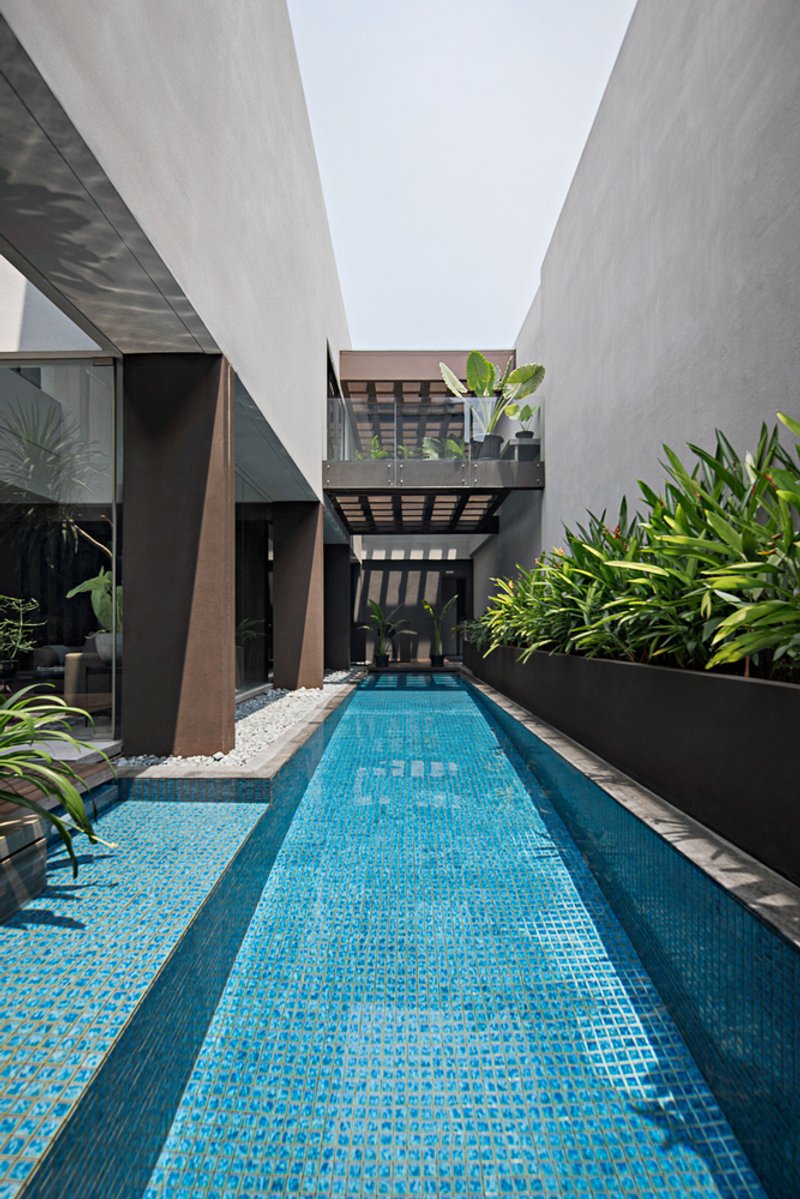
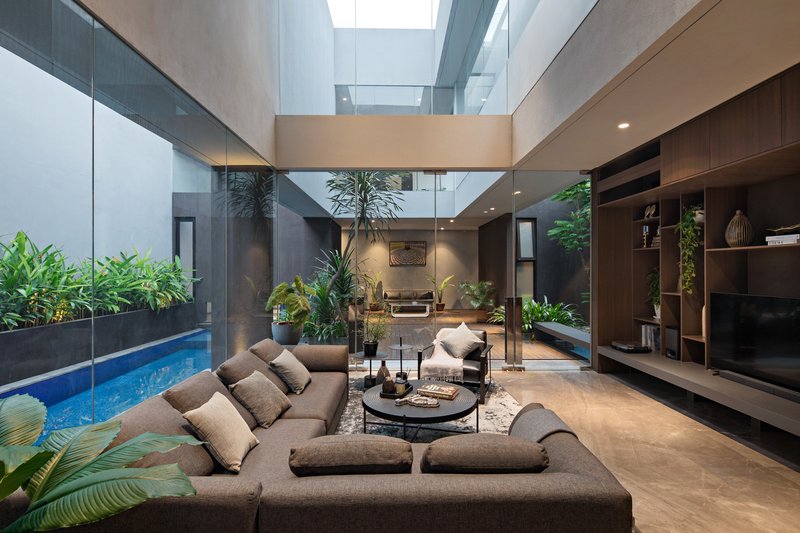
Rumah RifBagus accommodates a full spectrum of family activities: living and dining areas, a study, music and cinema rooms, kitchen, master bedroom, and four children’s bedrooms with two shared bathrooms. Outdoor areas include a swimming pool that flows into the courtyard, establishing an oasis-like environment that enhances both leisure and visual connectivity. Programmatic zoning ensures functional efficiency while maximizing flexibility for family gatherings.
Courtyard and Pavilion Integration
The centrally located courtyard serves as a mediator between the main house and the guest pavilion. While the pavilion mirrors the main house in formal language, it reads as an independent volume. Sliding glass doors enable fluid connectivity between living areas, the pool, and courtyard, offering immersive indoor-outdoor experiences. The pavilion accommodates a guest bedroom, bathroom, and prayer room, allowing the home to cater to both daily family life and social visits.
A careful interplay of light, shadow, and water reflections animates the spaces, creating an ever-changing environment that celebrates raw materiality and natural beauty. The monumental energy of the two-story volumes contrasts with the soft ambient sound from water, generating a serene sanctuary for the family.
Architectural Impact and Experience
Rumah RifBagus House exemplifies how modern tropical design can blend functionality, aesthetics, and natural integration. The combination of thoughtful spatial planning, innovative material use, and meditative sequences creates a home that fosters family interaction while offering moments of tranquility. Its distinctive waffle motif, muted color palette, and greenery integration deliver a holistic experience, transforming a traditional residential context into a modern tropical sanctuary.
Whether through its meditative entrance, dynamic interior lighting, or immersive courtyard-pool connection, Rumah RifBagus provides a harmonious living environment that supports the lifestyles of its residents while offering a retreat-like quality reminiscent of a luxury resort. This project highlights the potential of contemporary tropical design to adapt, unify, and elevate traditional housing typologies.
All photographs are works of
Mario Wibowo




Popular Articles
Popular articles from the community

RDTH architekti Rips Out Nearly Every Wall in a Prague Apartment and Replaces Them with Furniture
A 101-square-meter post-war flat in Prague trades rigid partitions for a single rotated furniture block, curtains, and glass concrete.
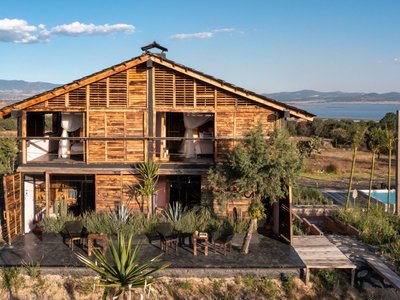
Fausto Terán and Toro Fuse Japanese Craft with Mexican Tradition in a Lakeside Retreat
Nakamura House pairs Shou-Sugi-Ban charred pine with handmade clay tile at the foot of Atlangatepec Lagoon in Mexico.
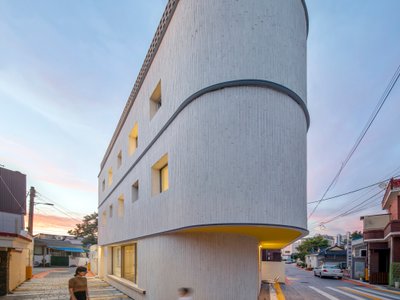
YOAP Architects Round a Corner in Yeongcheon with a Cylindrical Community Hub
A 197-square-meter brick and ribbed-clad tower turns a forgotten alley corner in South Korea into a public garden with a low threshold.
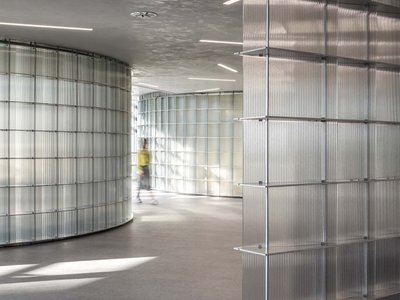
HCCH Studio Wraps a Shanghai High-Rise Office in Curved Walls of Translucent Glass
A 1,000 square meter fit-out in Lujiazui replaces the typical tech-office palette with layered glass, micro-cement, and quiet rigor.


Similar Reads
You might also enjoy these articles

Kokaistudios Wraps a Shanghai Retail Podium in Horizontal Louvers That Echo Its Foster + Partners Neighbor
A four-storey glass-roofed gateway links an underground commercial valley to the revitalized north bank of Shanghai's Suzhou River.
Fausto Terán and Toro Fuse Japanese Craft with Mexican Tradition in a Lakeside Retreat
Nakamura House pairs Shou-Sugi-Ban charred pine with handmade clay tile at the foot of Atlangatepec Lagoon in Mexico.
RDTH architekti Rips Out Nearly Every Wall in a Prague Apartment and Replaces Them with Furniture
A 101-square-meter post-war flat in Prague trades rigid partitions for a single rotated furniture block, curtains, and glass concrete.

SWA Group Spirals a Landscape Memorial into the Woods of Sandy Hook
A 1.8-acre clearing in Newtown, Connecticut, honors 26 lives lost with water, stone, and a single sycamore tree.


Explore Architecture Competitions
Discover active competitions in this discipline




The International Standard for Design Portfolios


The Global Benchmark for Architecture Dissertation Awards


The Global Benchmark for Graduation Excellence


Challenge to reimagine the Iron Throne
Comments (0)
Please login or sign up to add comments
No comments yet. Be the first to comment!