
Sa Taronja House by beef architekti: Preserving Cultural Legacy in Andratx, Mallorca
Sa Taronja House in Andratx, Mallorca, transforms a historic chicken farm into a cultural, artistic, and sustainably renovated guesthouse.


Architects: beef architekti Nestled at the foot of the Serra de Tramuntana mountains on the island of Mallorca, Sa Taronja House is a remarkable architectural and cultural landmark in Andratx, Spain. Originally the largest chicken farm in the Balearic Islands, established in the 1960s by the Burgos family, the site has since transformed into a vibrant hub of art, culture, and history. In 1997, German painter Hartmut Usadel purchased the property, converting it into an informal gallery and cultural center that welcomed artists from around the globe. The farm’s three original 80-meter-long chicken coops were creatively reimagined as studios, exhibition spaces, and a small theater, hosting unforgettable events, including a performance by the Berlin Symphony Orchestra.

Historical Renovation and Adaptive Reuse
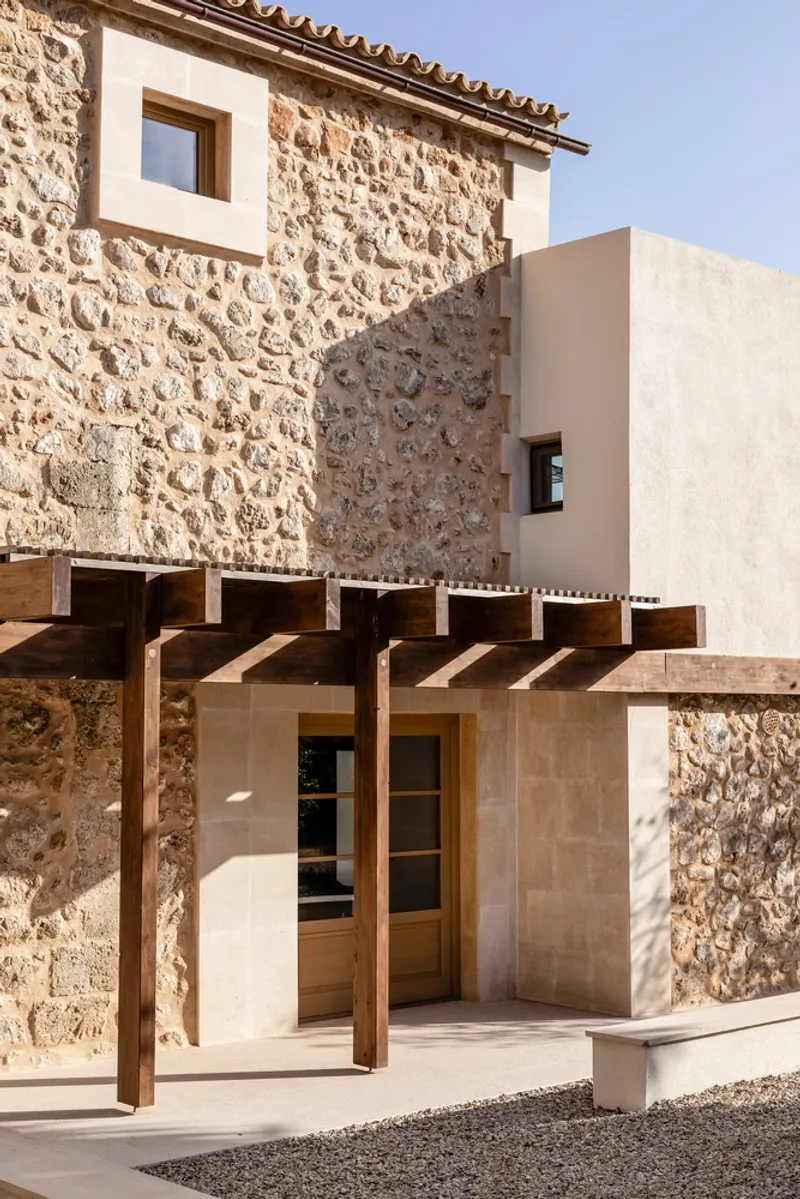
The Sa Taronja renovation project is executed in two main phases, reflecting a deep respect for the site’s rich history while introducing contemporary interventions. The first phase focused on restoring a 300-year-old stone townhouse at the edge of Andratx. Previously used as a residence and later supporting culinary activities for the cultural center, the townhouse has now been transformed into a guesthouse featuring four apartments and an office space for the manager, locally known as the “oficina.”
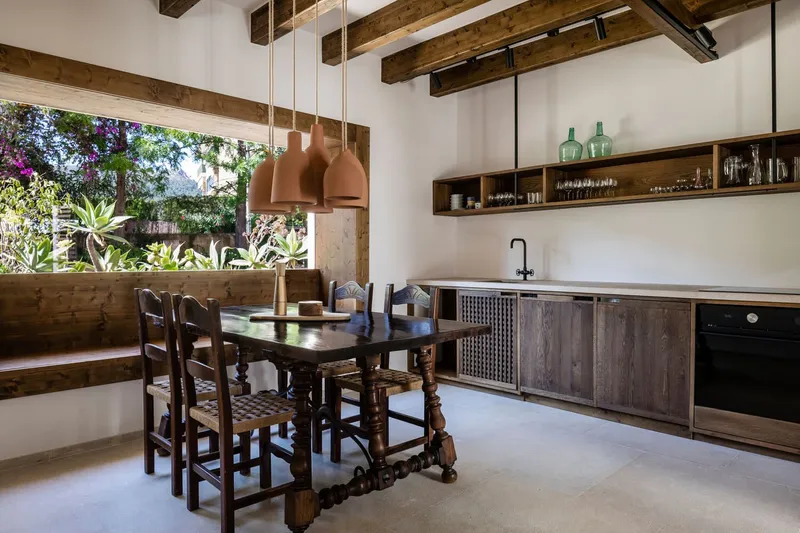

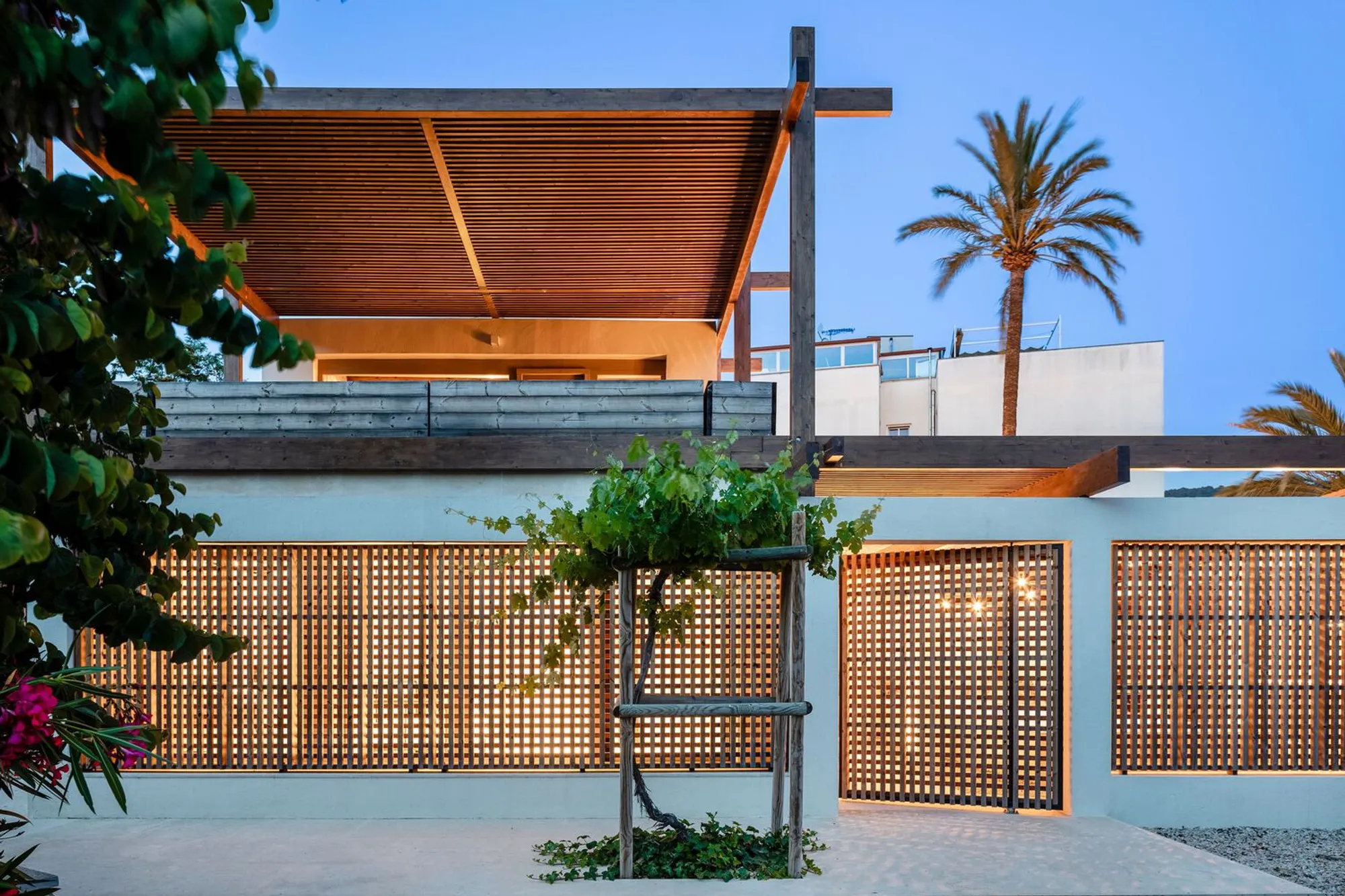
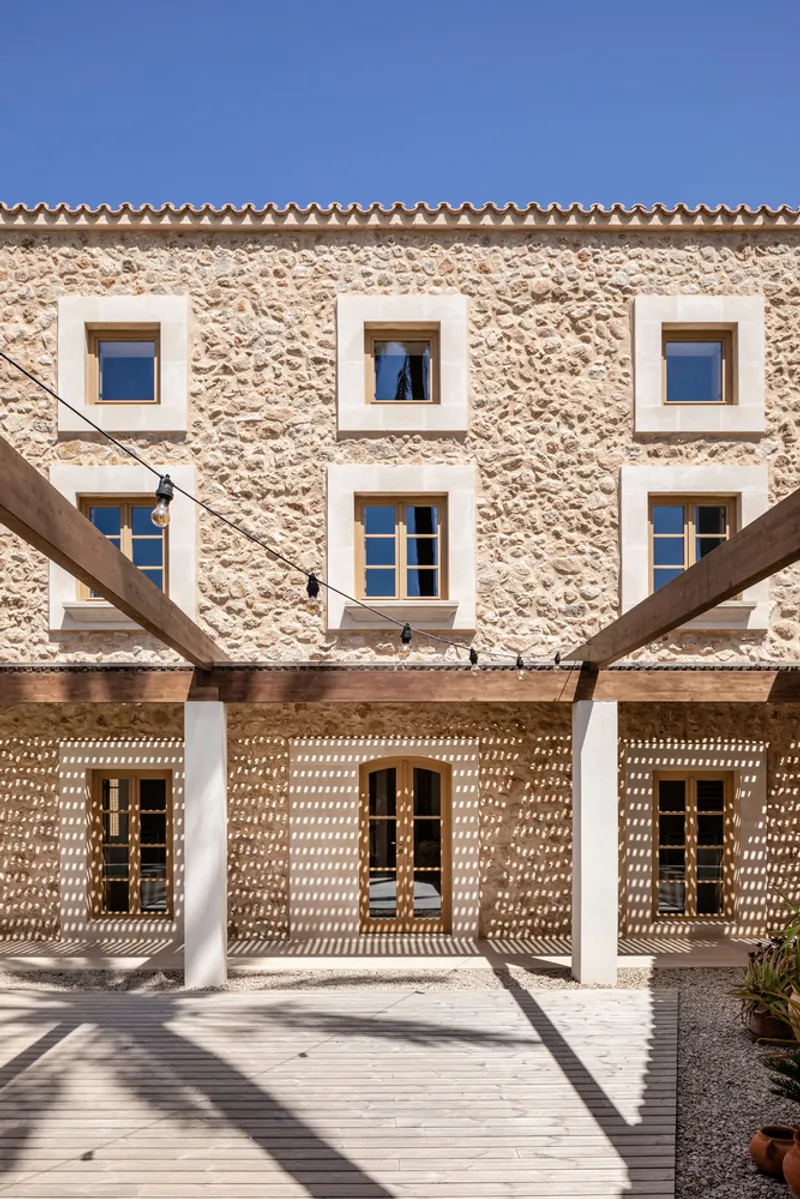
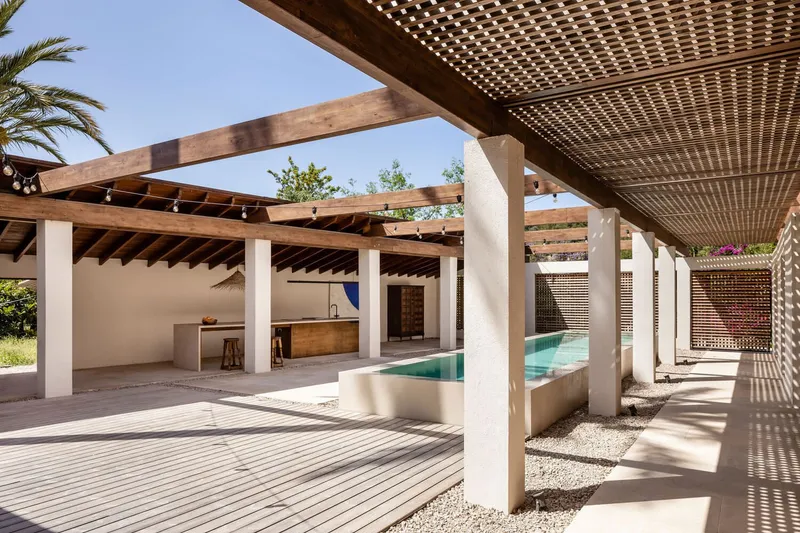
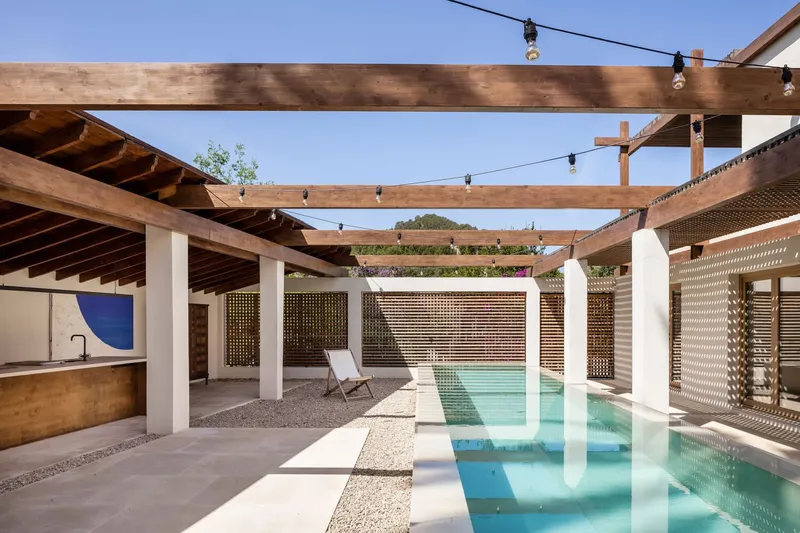
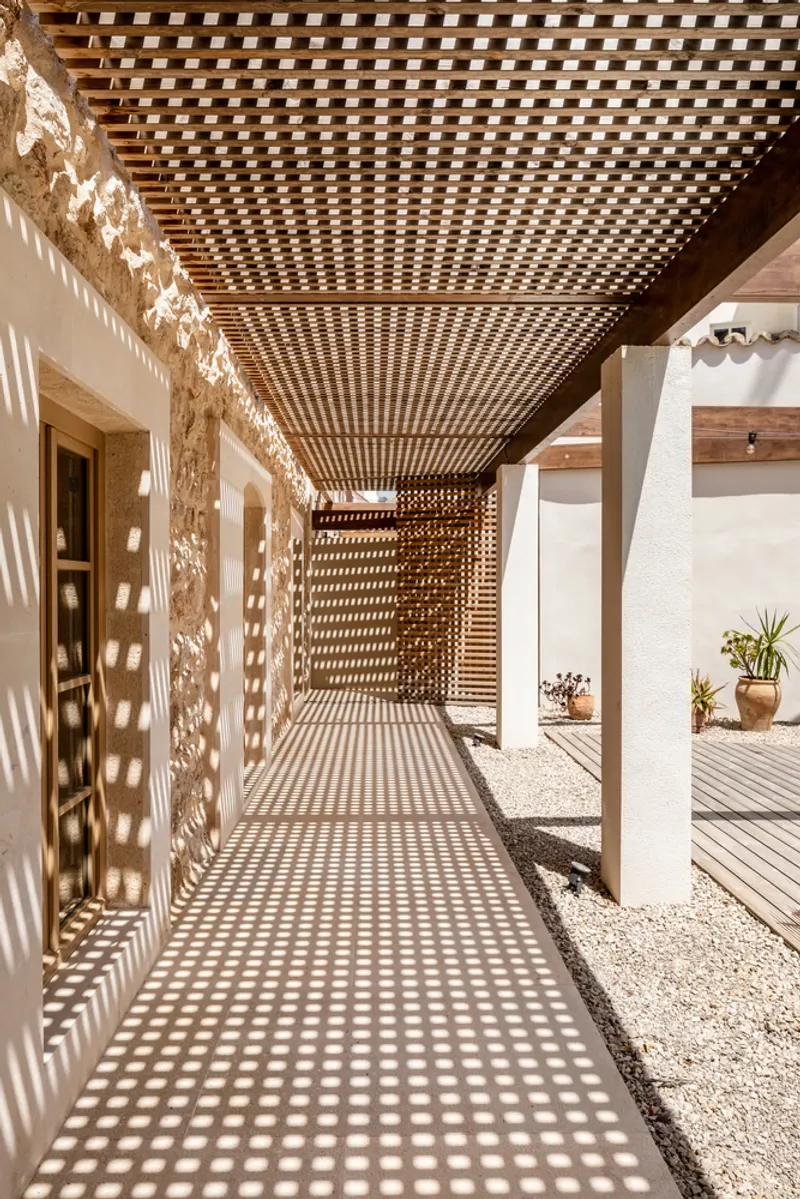
Local artisans meticulously removed modern additions to reveal the original stone structure in its authentic form. Reinforced wooden elements were preserved with their natural tones, while locally sourced Mares stone was used for new additions. A larger opening in the northern façade enhances natural light and creates a strong connection between the street and the communal kitchen. Outdoor spaces were thoughtfully integrated with the house, using a covered patio and simple wooden lattice shading that provides both functionality and modern aesthetic appeal.

Interior Design: Honoring the Past
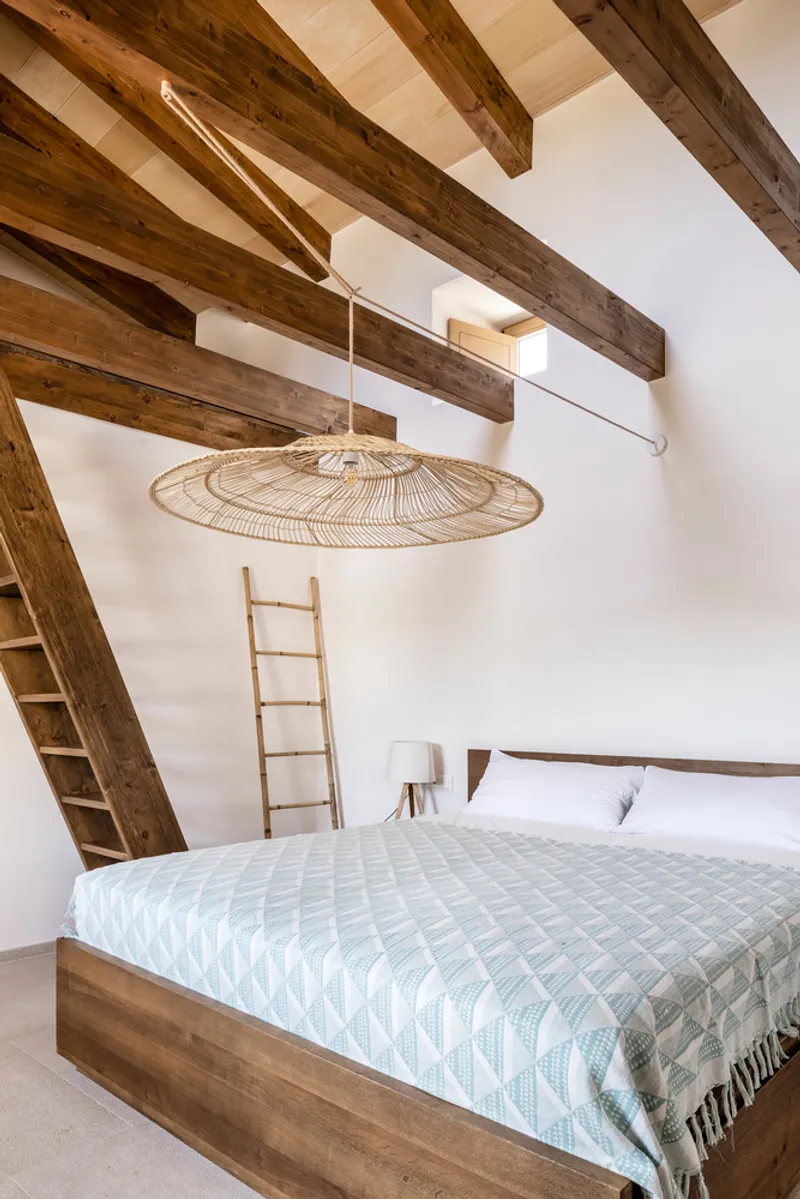
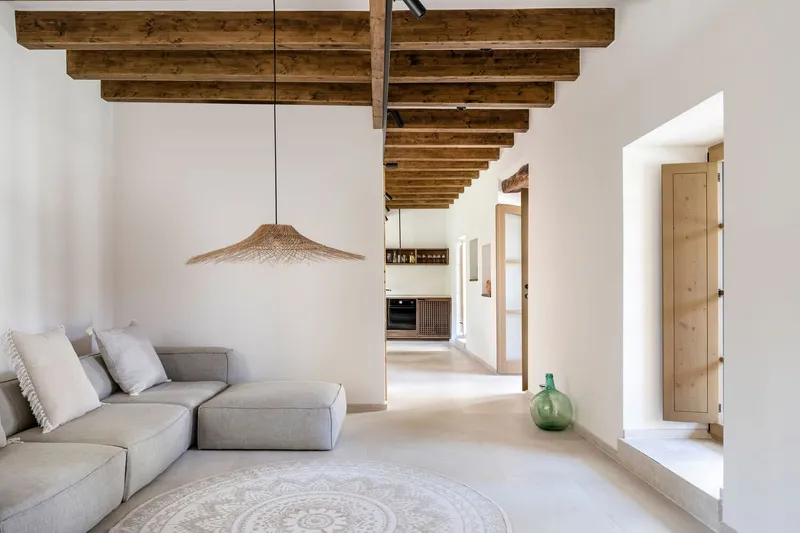
Throughout the renovation, numerous historical artifacts discovered on-site were incorporated into the interior design. Antique Mallorcan furniture, glassware, and artworks from Sa Taronja’s golden era as a cultural hub now complement the contemporary living spaces. Every detail reflects the building’s layered history, creating an authentic and immersive environment for residents and visitors.
Future Plans: Revitalizing the Former Chicken Coops
The second phase of the project focuses on the three long halls that were once chicken coops and later artist studios. The renovation will preserve their industrial architectural character, featuring delicate prefabricated steel structures. The modular exterior cladding will be replaced, and window layouts slightly adjusted to improve functionality while maintaining historical integrity. Inside, a flexible system for utilities will allow these halls to adapt to future cultural or residential uses, ensuring long-term sustainability.
The careful restoration and thoughtful design strategies at Sa Taronja aim to reestablish the site as a cultural landmark in Mallorca, bridging local traditions with international artistic influence. Through this project, beef architekti demonstrates how adaptive reuse, historical preservation, and modern design can harmoniously coexist.

Architectural Highlights
- Location: Andratx, Mallorca, Spain
- Architects: beef architekti
- Area: 124 m² (stone house)
- Year: 2022
- Photographers: Tomeu Canyellas
- Materials: Mares stone, wood, steel L-profiles, modern lattice shading
- Manufacturers: Couleur Locale, Creative Cables, HKliving, si.li.
Sa Taronja House stands as a testament to cultural heritage, sustainable renovation, and architectural innovation, redefining how historical sites can evolve while preserving their identity.

All photographs are works of
Tomeu Canyellas




Popular Articles
Popular articles from the community


Play: Fragments of Their World
Familiar architecture becomes modular playground design, creating safe spaces where displaced children can learn, connect, imagine and play.

Riyadh For All: Intergenerational Urban Design for Active Aging in Rabat
Riyadh For All reimagines urban design in Rabat with intergenerational co-living, adaptive courtyards, and Moroccan cultural exchange today.

Co-life: Sustainable Architecture for Age-Friendly Community Living
Co-life reimagines sustainable architecture for seniors through courtyards, rammed earth, shared gardens, and spaces designed for belonging.

Lunar Spiral: Space Architecture Shaped by the Mathematics of the Universe
Lunar Spiral reimagines space architecture through Fibonacci geometry, lunar regolith, levitating habitats, and self-sustaining Moon living.


Similar Reads
You might also enjoy these articles

FAMM Arquitectura Organizes Ten Villas Around Courtyards and Jungle in Nosara, Costa Rica
El Molino pairs two elongated volumes with deep overhangs and timber louvers to build a compact coastal community five minutes from the beach.
Oscar Niemeyer's Ibirapuera Park Pavilions Define São Paulo's Cultural Identity in Concrete and Curve
A constellation of modernist volumes set within São Paulo's most important urban park, conceived for the city's 400th anniversary in 1954.
How Henri Picq's 1889 Paris Pavilion Traveled 11,000 Kilometers to Become Santiago's Artequín Museum
A prefabricated iron and glass pavilion built for the Paris Universal Exposition found a second life as a children's art museum in Chile.
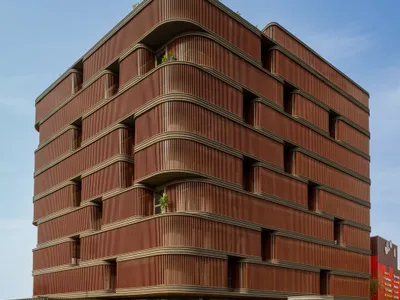
Sanjay Puri Architects Wraps a Jaipur Office Tower in Capsule-Shaped Green Buffers
A nine-level climate-responsive workplace near Jaipur Airport uses stacked planter terraces and aluminium screens to fight 40°C heat.


Explore Architecture Competitions
Discover active competitions in this discipline



Challenge to reimagine the Iron Throne


Photograph architecture without architects


Illustrate the lost glory of Angkor Wat - Render Challenge


Design challenge to reuse E-waste
Comments (0)
Please login or sign up to add comments
No comments yet. Be the first to comment!