

Saitama Prefectural University by Riken Yamamoto: Innovative Campus Design for Community-Centered Education
Saitama Prefectural University by Riken Yamamoto features a unified architectural volume promoting interdisciplinary education, community engagement, and spatial clarity resembling an urban landscape.


Located in Koshigaya, Japan, Saitama Prefectural University, designed by acclaimed architect Riken Yamamoto, stands as a striking example of contemporary educational architecture that merges functionality with urban sensibility. Completed in 1999, this university specializes in nursing and welfare programs, aiming to cultivate professionals who will play leading roles in local communities. The campus design reflects a forward-thinking approach to interdisciplinary education and collaborative learning.
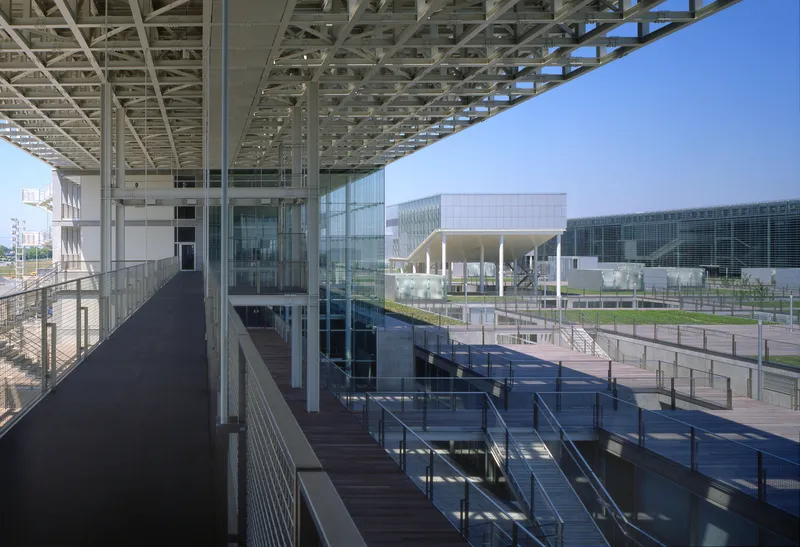
Unified Architectural Concept
Instead of separating faculties and departments into conventional buildings, Yamamoto envisioned a single architectural volume that connects all areas of study. This integrated design fosters interaction between students and faculty, breaking down traditional academic barriers and promoting collaborative learning. Each functional area within the university is carefully organized, yet the overall plan maintains a sense of cohesion and clarity. The campus flows seamlessly, creating a spatial experience that mirrors the structure of a small city, where each element: classrooms, lecture halls, and communal spaces, relates logically to the whole.
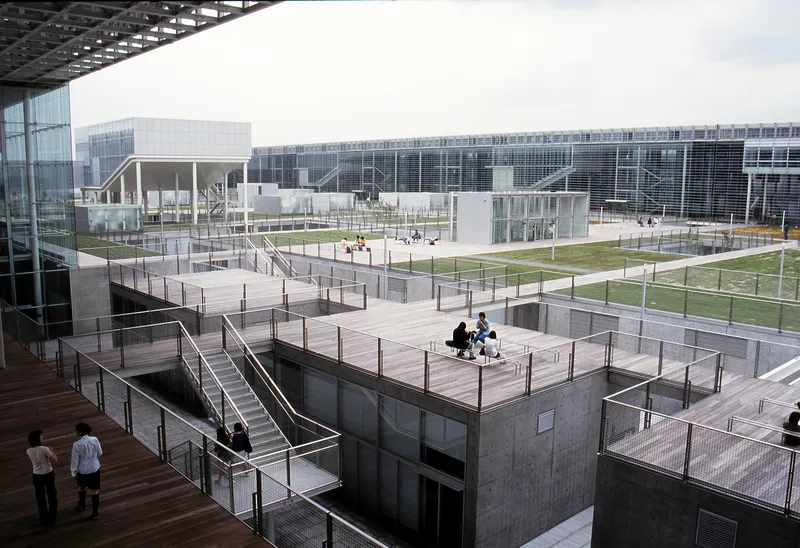
Functional and Aesthetic Solutions
Designing a single volume for a large educational institution posed numerous challenges, particularly in accommodating specialized programs like nursing and welfare. Yamamoto approached these challenges by developing systematic architectural correlations, ensuring that circulation, accessibility, and spatial organization are intuitive. The exterior, characterized by clean facades and rhythmic window placements, complements the interior, where open staircases, handrails, and communal areas encourage interaction and movement.
The architecture transforms the university into a dynamic urban landscape, where the building itself acts as a framework for community engagement and academic exchange. By emphasizing transparency, openness, and spatial continuity, the design reflects the university’s mission: nurturing future leaders who value collaboration, empathy, and social responsibility.
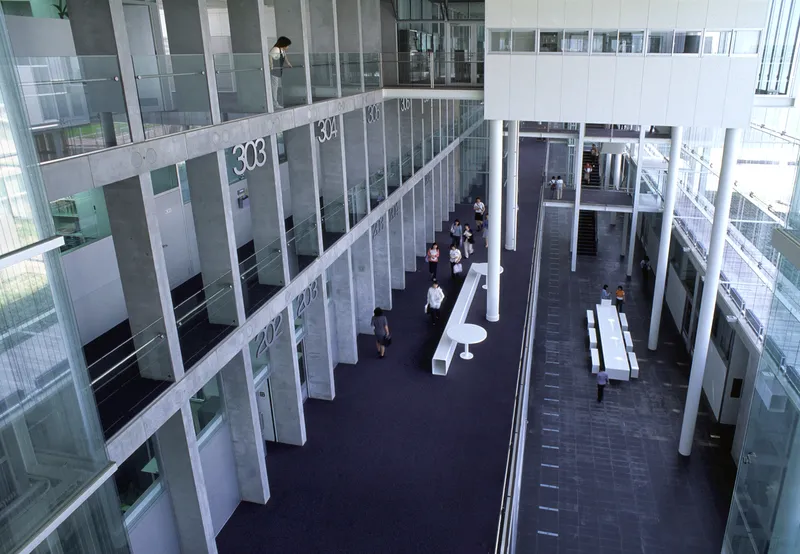
Sustainability and Context
The project’s scale spans 54,080 m², demonstrating a careful balance between building mass and open circulation areas. The campus layout considers both environmental context and user experience, integrating natural light and outdoor connections to enhance student well-being. The thoughtful planning of the volume, combined with material choices and façade articulation, creates an environment that is both functional and visually compelling, reflecting Yamamoto’s commitment to human-centered and sustainable architecture.
Saitama Prefectural University by Riken Yamamoto exemplifies how educational architecture can go beyond mere functionality. Its single-volume concept, city-like spatial arrangement, and emphasis on interdisciplinary interaction provide a blueprint for modern university design that prioritizes community, collaboration, and architectural clarity. This project highlights the role of architecture in shaping not only physical spaces but also the social and educational experiences within them.
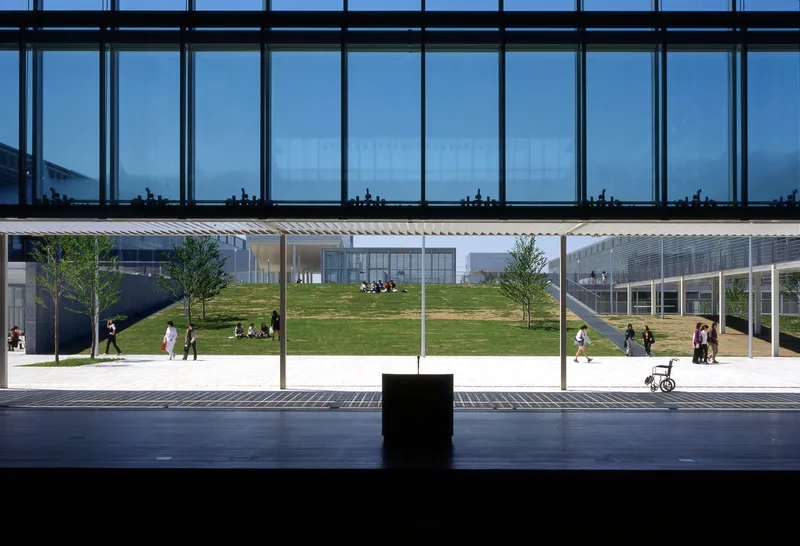
All photographs are works of
Tomio Ohashi


Popular Articles
Popular articles from the community


Tsunami Convergenics: Turning Catastrophic Ocean Forces into Underwater Housing Infrastructure
A speculative underwater settlement off the coast of Onagawa, Japan, treats tsunamis and typhoons as energy sources rather than threats.

The Amber Palace Opera: A Geological Fiction Surfaces on Tallinn's Baltic Waterfront
Pierre Brillard reimagines a Baltic legend as a public landscape, opera house, and waterfront promenade rooted in Tallinn's coastal identity.

Temporary Home for Dogs: A Reversed Zoo Rethinks Animal Shelter Architecture
In Bucharest, a sinuous corridor and freed landscape flip the logic of containment, designing a shelter that works to make itself unnecessary.
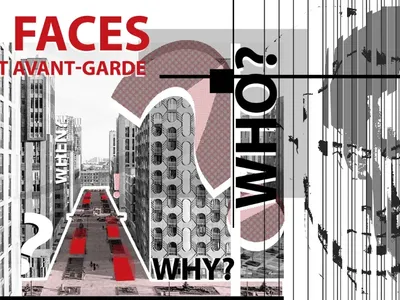
Faces of the Soviet Avant-Garde: Turning Moscow's Street Names into an Open-Air Museum
A network of sculptural installations across a Moscow residential district transforms forgotten architect names into spatial encounters with cultural memor

Similar Reads
You might also enjoy these articles

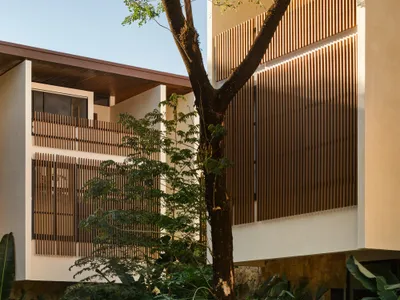
FAMM Arquitectura Organizes Ten Villas Around Courtyards and Jungle in Nosara, Costa Rica
El Molino pairs two elongated volumes with deep overhangs and timber louvers to build a compact coastal community five minutes from the beach.
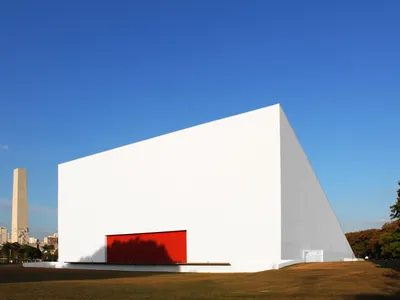
Oscar Niemeyer's Ibirapuera Park Pavilions Define São Paulo's Cultural Identity in Concrete and Curve
A constellation of modernist volumes set within São Paulo's most important urban park, conceived for the city's 400th anniversary in 1954.
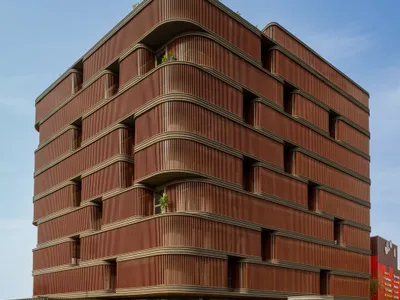
Sanjay Puri Architects Wraps a Jaipur Office Tower in Capsule-Shaped Green Buffers
A nine-level climate-responsive workplace near Jaipur Airport uses stacked planter terraces and aluminium screens to fight 40°C heat.
RHO Converts a Berlin Spree-Side Industrial Courtyard into Enkime's 1,000 m² Agency Headquarters
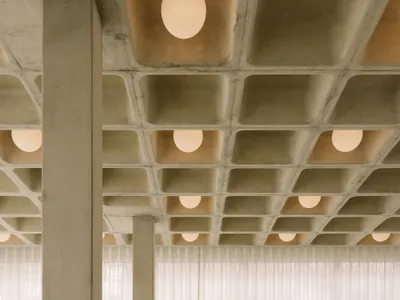
A social media agency's new home in Charlottenburg trades glossy branding for concrete waffle ceilings, glazed tile, and sheer curtains.

Explore Educational Building Competitions
Discover active competitions in this discipline

Challenge to design public laboratory

Challenge to reimagine the Iron Throne

Photograph architecture without architects

Illustrate the lost glory of Angkor Wat - Render Challenge
Comments (0)
Please login or sign up to add comments
No comments yet. Be the first to comment!