

Sala Casa by H.a: A Harmonious Fusion of Contemporary Comfort and Regional Craft in Da Nang
Sala Casa blends modern tropical design with local materials, offering a dual-purpose villa for rental and private living in Da Nang.


Architect: H.a


A Dual-Purpose Villa in the Heart of Da Nang
Situated just 10 minutes from the vibrant city center of Da Nang, Sala Casa responds to the dual needs of hospitality and private retreat. Designed by H.a, the project maximizes a 15x18-meter plot with a structure that flexibly operates as a full vacation villa, partial rental property, or combined private-residence-meets-guest-accommodation. Split into two independent units—each with its own entrance, living space, kitchen, garden, and saltwater pool—the residence is a model of modularity and adaptable urban housing.
Keywords: vacation villa design, rental-friendly architecture, dual-function house, Da Nang architecture, flexible residential design
Blending Modern Aspirations with Regional Identity
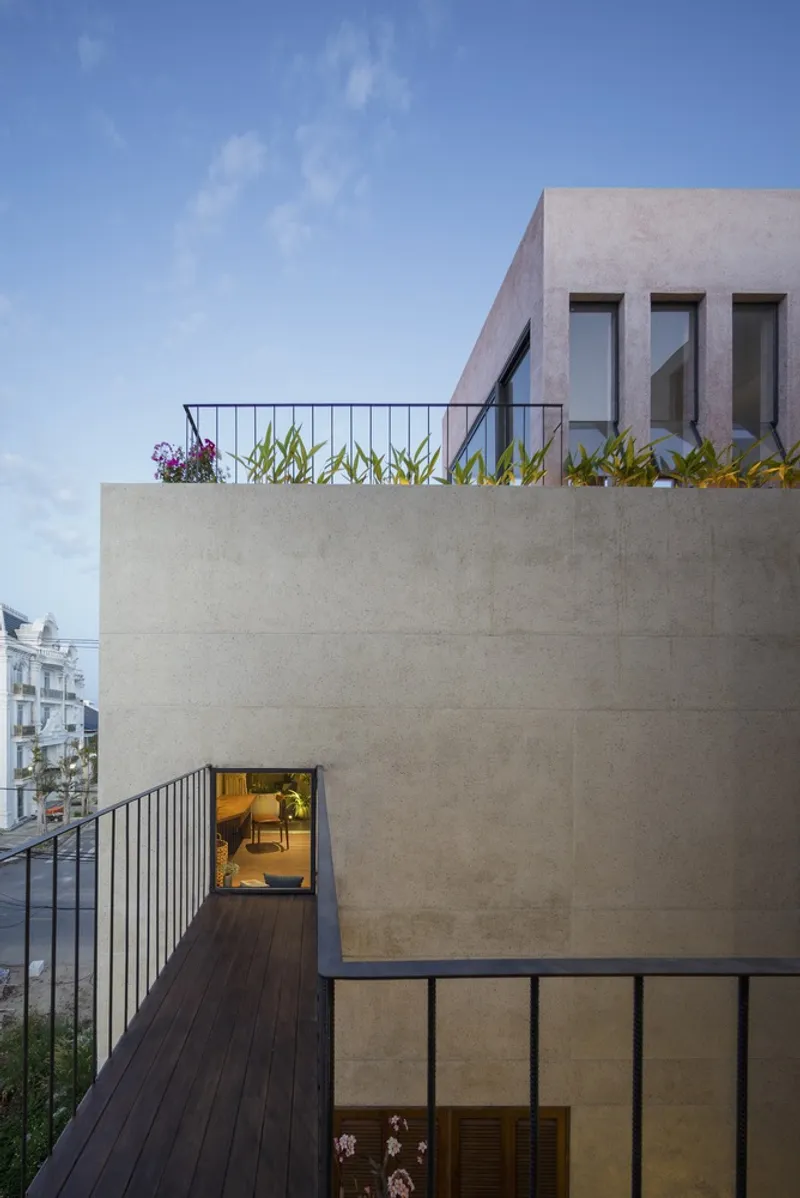
The client initially favored a luxurious European-modern aesthetic. However, the architects at H.a advocated for a design rooted in the cultural and material language of Vietnam’s central region. The result is an architectural narrative that respects local craftsmanship while embracing minimalistic modernity.
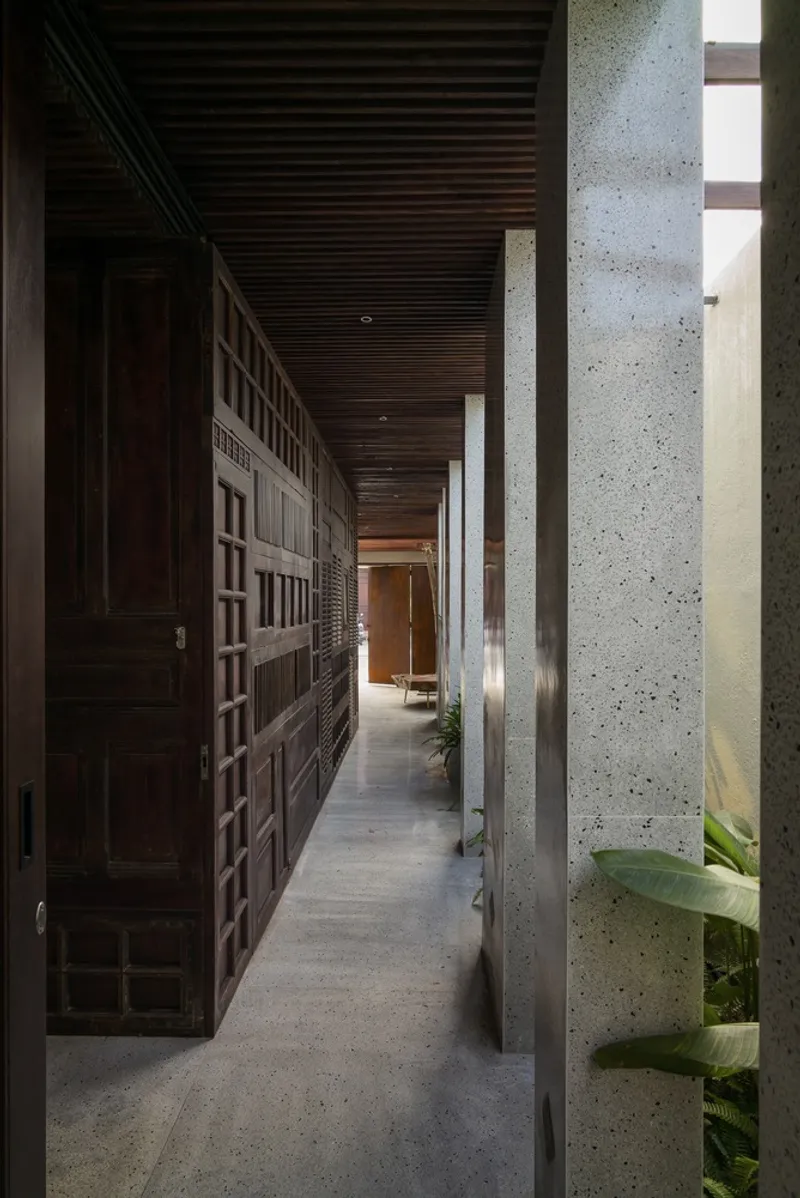
Da Nang, well known for its skilled artisans and construction materials—from handmade ceramic bricks to diverse natural stones—provided a rich palette for the design team. These local materials subtly reference Vietnam’s building traditions while offering durability and texture.
Keywords: vernacular Vietnamese architecture, local materials in modern homes, Da Nang house design, architectural identity, regional craftsmanship
Climate-Conscious Tropical Design
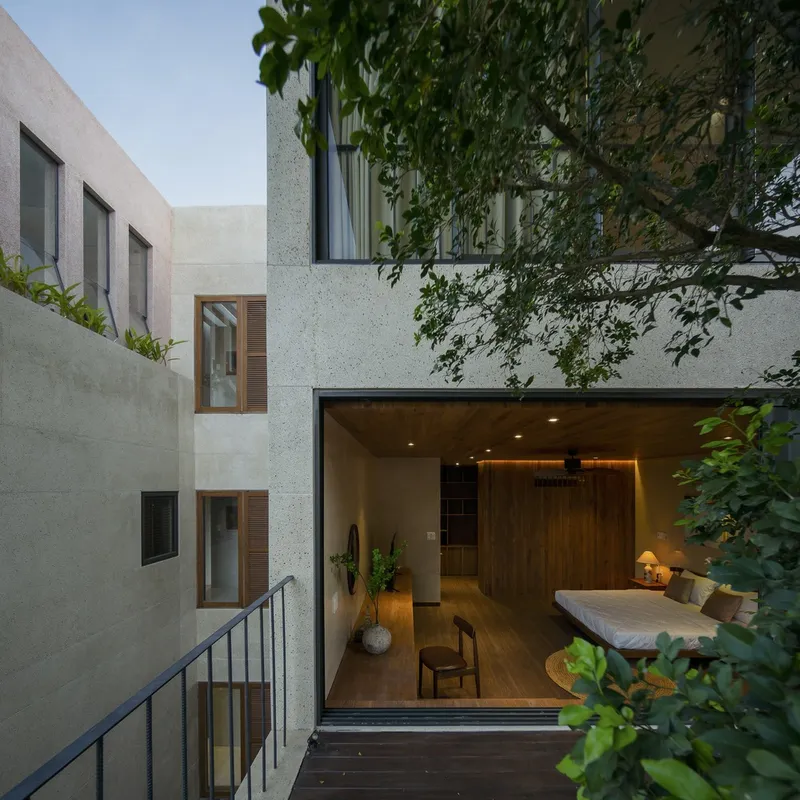
Da Nang’s tropical monsoon climate—with hot summers, strong westerly winds, and stormy wet seasons—shaped Sala Casa’s environmental response. The west-facing building is set back to create four open façades that promote cross-ventilation, while careful spatial zoning prevents heat build-up and water ingress.
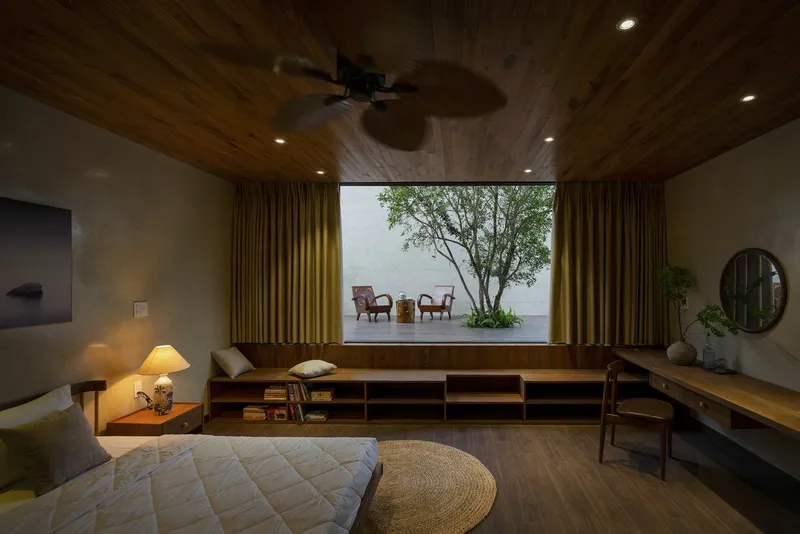
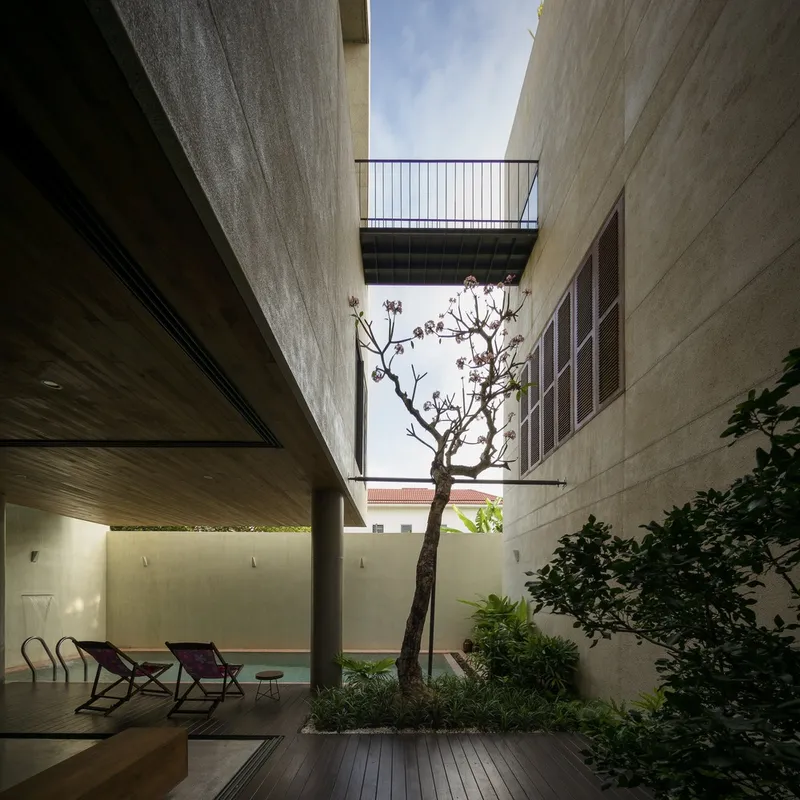
The design introduces buffer zones such as verandas, courtyards, shaded decks, and louvers that mitigate sun exposure and channel breezes. Inward-facing apertures reduce external thermal gain and create private garden courtyards, functioning as landscape oases for each villa.
Keywords: climate-responsive design, tropical house architecture, passive cooling, buffer spaces, cross-ventilation, energy-efficient home

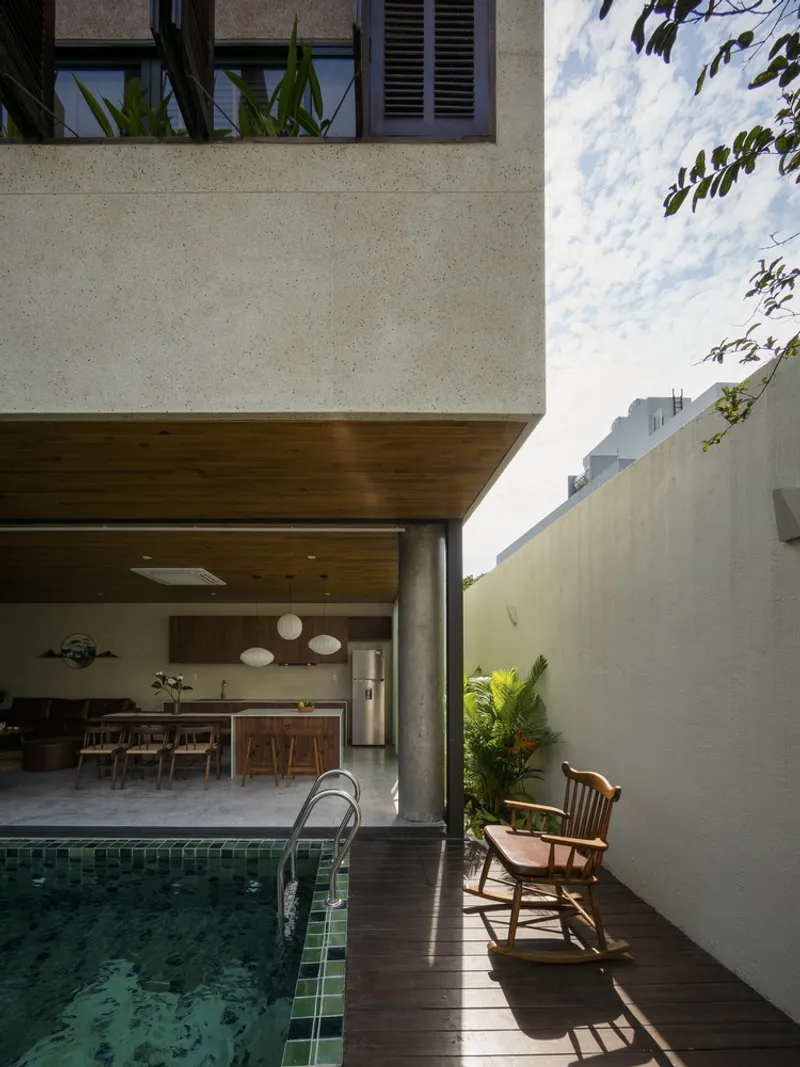
Spatial Strategy: A 2-in-1 Living Solution
Rather than treating the property as a singular mass, the house is broken down into two smaller villas separated by a landscaped gap. This not only grants each unit autonomy but allows for diversified usage: either as two rentable properties, one rental and one private dwelling, or a single grand retreat.
Each unit includes:
- A living room and kitchen
- Three to four bedrooms
- A private garden and saltwater swimming pool
- A rooftop deck for panoramic views of the Hàn River
This spatial strategy ensures privacy without sacrificing openness, providing luxury, flexibility, and livability in one cohesive design.
Keywords: split villa concept, urban villa in Vietnam, modular residential design, pool villa Da Nang, rooftop deck design
Traditional Materials, Modern Interpretation
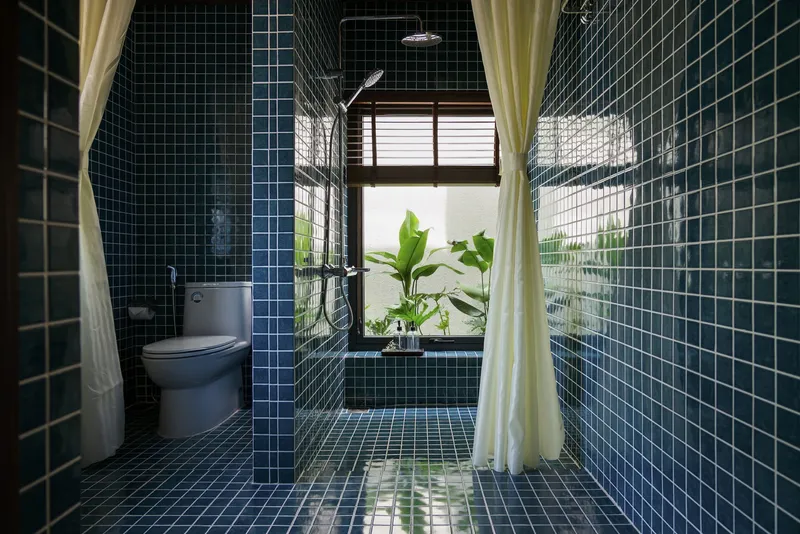
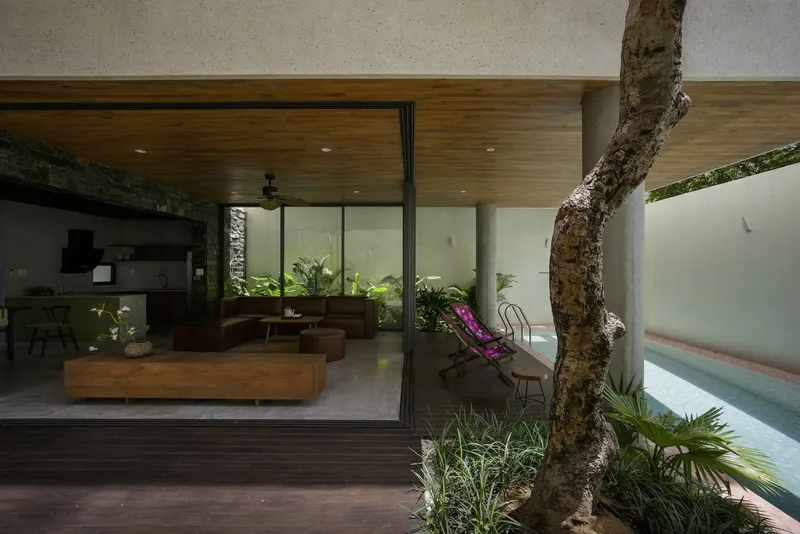
At the heart of Sala Casa’s identity is its material palette. Indigenous elements like terrazzo, hand-pressed bricks, natural wood, cement tiles, and handmade ceramics are employed in modern forms and restrained detailing. This treatment preserves the tactile richness and nostalgic beauty of traditional Vietnamese construction while embracing minimalism and spatial clarity.
Randomized details—such as uneven brick textures or varying wood grains—add warmth and authenticity to each interior. These subtle touches allow the architecture to tell stories of the land and its heritage, crafting an experience rooted in place and memory.
Keywords: modern vernacular architecture, traditional Vietnamese materials, minimalist tropical interiors, sustainable local sourcing, tactile architecture

Storytelling Through Architecture
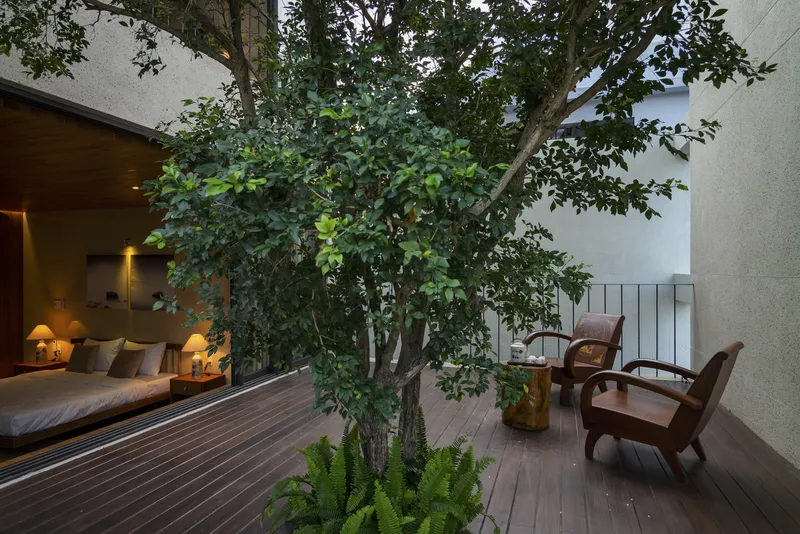
Sala Casa is more than just a well-located villa in Da Nang—it’s a study in harmonizing regional heritage with contemporary living demands. Through smart spatial planning, climate-responsive detailing, and the respectful use of local materials, H.a creates a residence that adapts to its context—socially, climatically, and culturally.
This project stands as an elegant, efficient, and emotionally resonant model for tropical housing in Vietnam's evolving urban landscape.
All photographs are works of
Quang Dam




Popular Articles
Popular articles from the community

AL-JANNAH: Sustainable Architecture and Permaculture for Afghan Widows
AL-JANNAH uses sustainable architecture and permaculture to create resilient oasis of housing, learning, work and renewal for Afghan widows.

Hill & Cross Opera: Sculptural Opera House Architecture Shaped by Tallinn’s Landscape and Identity
Hill & Cross Opera reimagines opera house architecture in Tallinn through its sculptural hill, civic plaza, glass wave and a luminous cross.

Co-Life: Senior Housing Design That Reconnects Older Adults With the City
Co-Life reimagines senior housing design through healing gardens, shared streets, workshops, and a sustainable community across generations.

Riyadh For All: Intergenerational Urban Design for Active Aging in Rabat
Riyadh For All reimagines urban design in Rabat with intergenerational co-living, adaptive courtyards, and Moroccan cultural exchange today.


Similar Reads
You might also enjoy these articles


Hodi-Mandai Geram
Project Function: Preservation and revitalization of the Intangible heritage and socio-spatial identity of the Hodi by Housing, Cultural Memory Center, Sacred Grove, landscape, local tourism economy


Olio Towers: A Mid-Rise for Performers That Fuses Housing, Rehearsal, and Stage
Located blocks from Houston's Theater District, this modular tower stacks living units around a central performance atrium.

Oasis: Modular Green Housing Carved into Dhaka's Urban Fabric
A shortlisted Plugin Housing entry reclaims unauthorized settlements in Dhaka with stepped concrete volumes, green roofs, and ventilation-driven design.

Black Hole: A Floating Megastructure for the Post-Physical Era
Emiliano Mazzarotto envisions a spherical, self-scaling arena where e-sports, digital hotels, and holographic stadiums replace traditional public space.


Explore Housing Competitions
Discover active competitions in this discipline



Challenge to reimagine the Iron Throne


Photograph architecture without architects


Illustrate the lost glory of Angkor Wat - Render Challenge


Design challenge to reuse E-waste
Comments (0)
Please login or sign up to add comments
No comments yet. Be the first to comment!