

Salinas del Rey Water Sports Center by DEB + El Equipo Mazzanti
Organic dune-inspired water sports center blending wood architecture, sustainability, and landscape integration to enhance tourism, recreation, and local coastal culture in Colombia.


A Coastal Landmark for Sports, Culture, and Sustainability in Juan de Acosta
Location: Juan de Acosta, Colombia Architects: DEB + El Equipo Mazzanti Lead Architects: Francisco Ricardo Marino, Catherine Jessurum, Giancarlo Mazzanti Area: 2,190 m² Year: 2022 Photography: Monica Barreneche, Sebastian Franco Manufacturers: Eternit, Serye
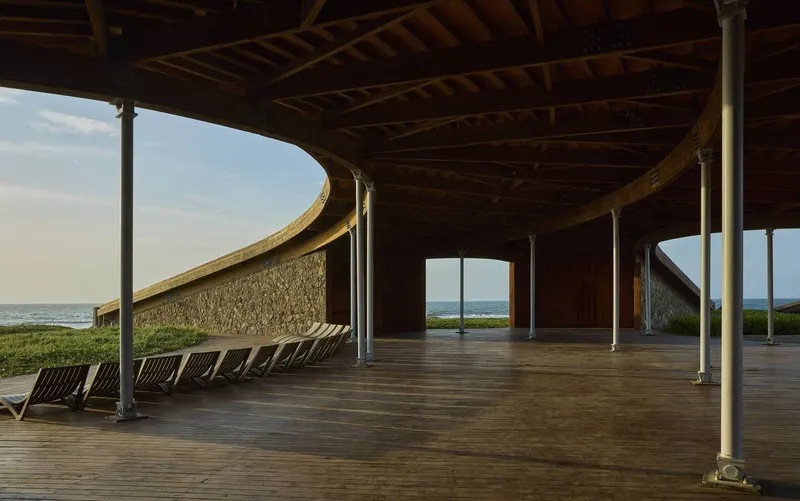
Merging Architecture with the Rhythm of the Sea
Located along Colombia’s vibrant Caribbean coastline, the Salinas del Rey Water Sports Center by DEB and El Equipo Mazzanti redefines the relationship between architecture, landscape, and sport. Recognized as one of the world’s best kitesurfing destinations, the beaches of Salinas del Rey offer exceptional wind and wave conditions. This architectural project enhances that natural advantage through a design that harmonizes with the topography while celebrating local culture, tourism, and sustainability.
The water sports complex responds to the growing demand for high-quality recreational facilities in the region. It provides infrastructure not only for kitesurfing enthusiasts but also for visitors seeking leisure, gastronomy, and connection with the coastal landscape.

Concept and Design: A Dune Transformed into Architecture
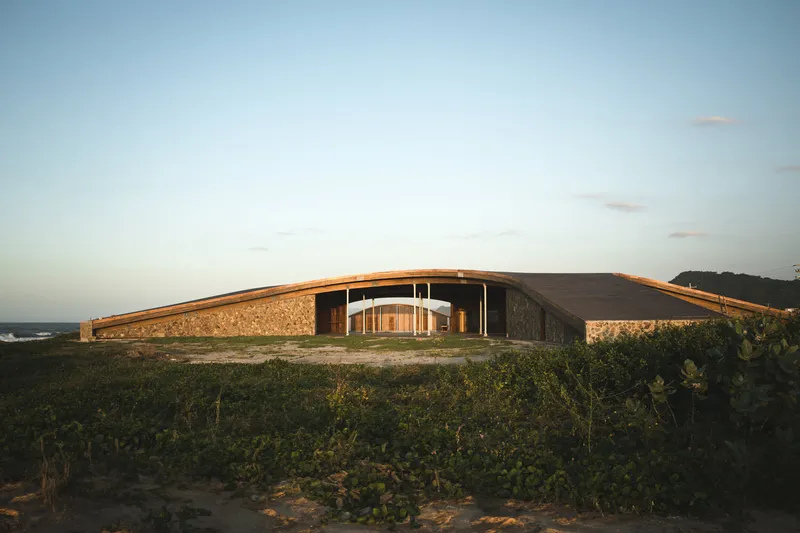
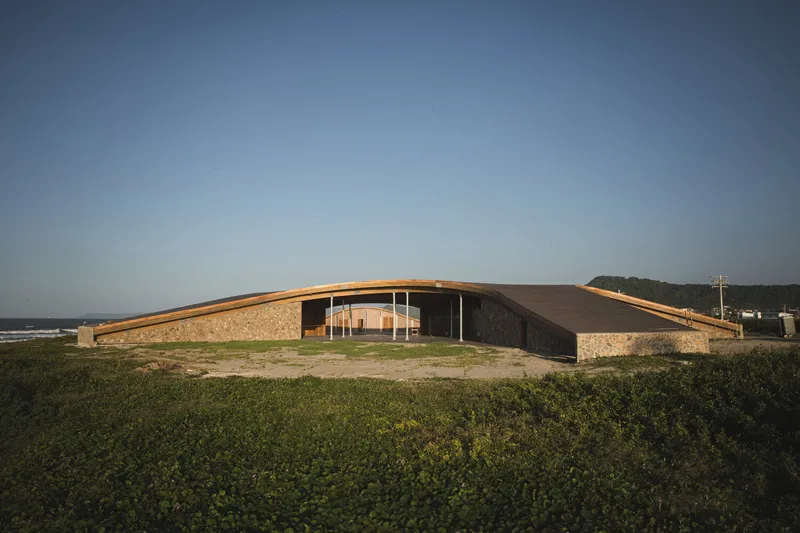
The architectural concept takes inspiration from the natural formation of sand dunes. These dunes, shaped by the coastal winds, become both metaphor and model for the building’s organic form. The main structure emerges as an abstract dune — a large, elevated canopy of sand that blends seamlessly with its surroundings.
This natural integration allows the building to function as an environmentally responsive shelter, improving thermal comfort and reducing the need for mechanical cooling. The flowing geometry also creates a sculptural profile that appears to rise and fall with the rhythm of the coast.
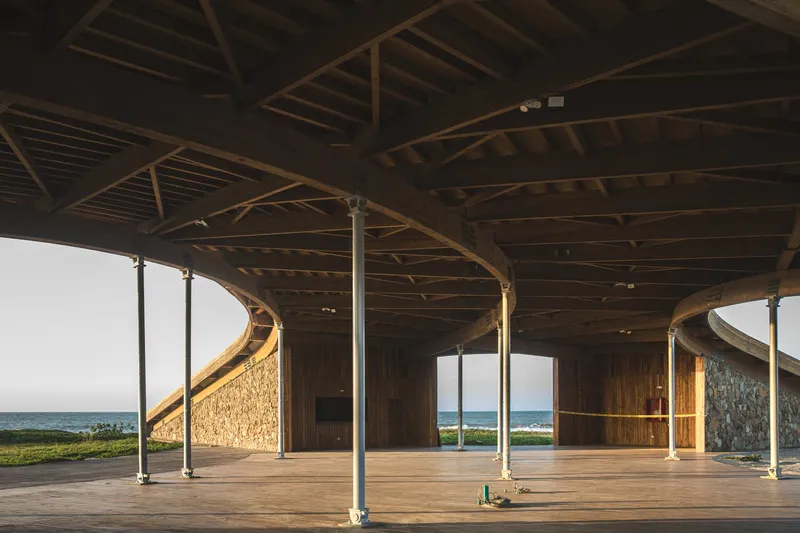
Spatial Organization: Three Layers of Coastal Experience
The project is organized into three primary components, each serving a distinct function while maintaining a cohesive architectural language:
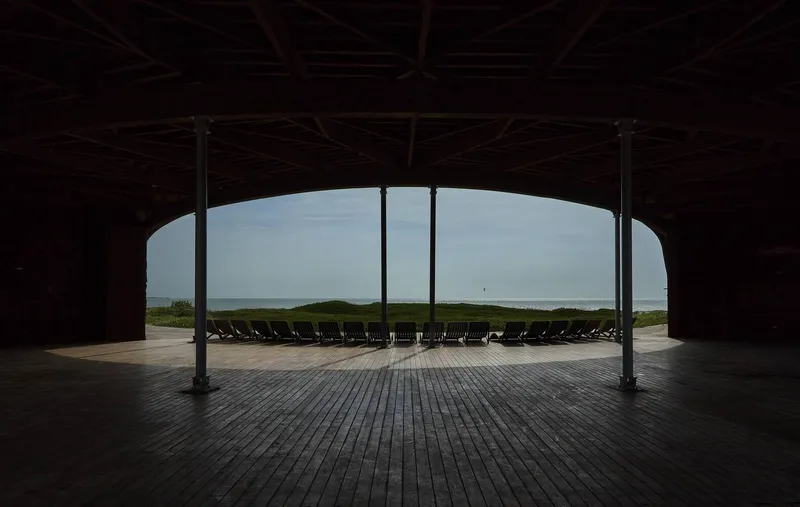
1. Dune Landscapes and Natural Barriers
The first layer comprises landscaped dunes that shield the complex from strong northwestern winds. These sculpted forms not only protect the structures but also serve as natural filters that preserve the integrity of the beach. They incorporate native vegetation and walking paths made from local materials, creating shaded corridors and gathering spaces for visitors.
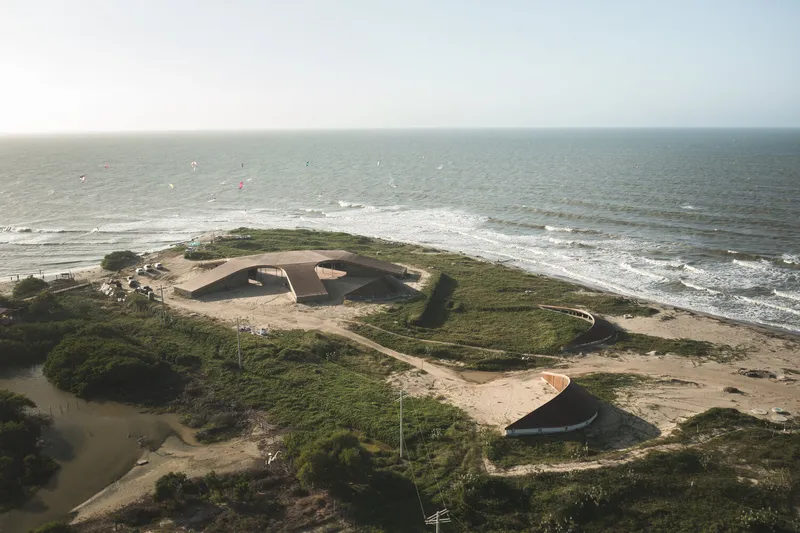
2. Main Building as a Sand Canopy
At the heart of the project lies the main building, which functions as both a sports hub and cultural pavilion. Beneath its undulating wooden roof, interior spaces accommodate training areas, administrative offices, and multipurpose rooms. The architecture emphasizes thermal performance, using the dune-inspired form to create natural air circulation and shaded interior environments.
3. Boardwalk and Public Connection
A winding wooden boardwalk connects the facility to the beach, acting as the main pedestrian artery. Elevated above the ground, it protects the site from flooding and erosion while offering panoramic views of the coastline. This pathway also links the parking zones with the recreational areas, reinforcing accessibility and continuity across the site.
Materiality: Crafting with Nature
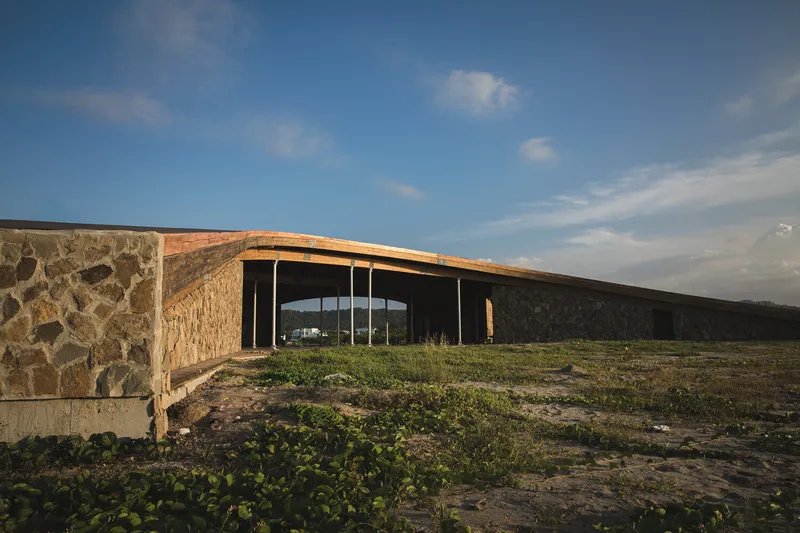
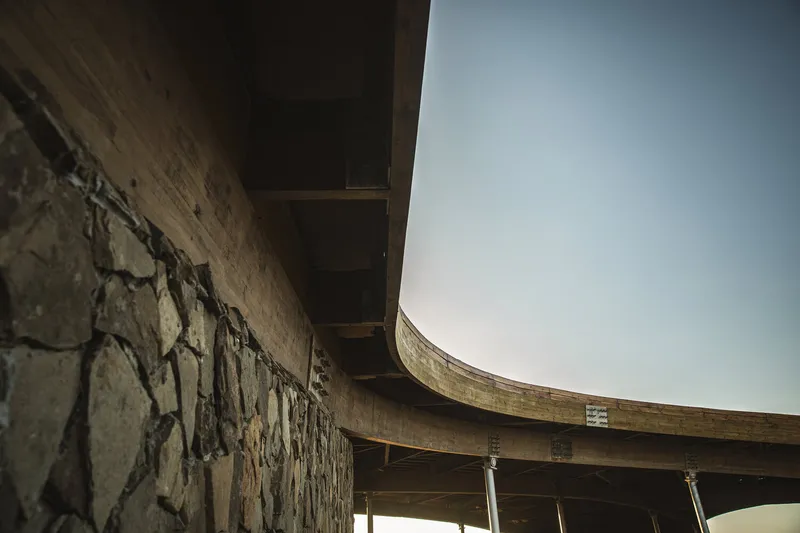
Wood is the primary material defining the project’s visual and tactile identity. Its flexibility allows it to adapt to the curved surfaces of the dune structure, while its natural tones complement the coastal palette of sand and vegetation. The use of local and sustainable materials reduces environmental impact and echoes the architects’ commitment to ecological construction.
Other materials, such as Eternit panels and Serye finishes, contribute to the building’s resilience in a marine environment, ensuring durability against humidity, wind, and salt exposure.
Cultural Integration and Ecological Vision
Beyond its architectural expression, the Salinas del Rey Water Sports Center serves as a catalyst for local economic growth and community identity. By integrating spaces for commerce, gastronomy, and recreation, it strengthens the link between tourism and local entrepreneurship. The introduction of a vegetation barrier made of native species protects the public beach area from excessive urbanization, ensuring that the coastline remains accessible and ecologically balanced.
The project’s landscape strategy emphasizes environmental stewardship, fostering a sustainable relationship between human activity and natural systems.
Architecture in Motion
The Salinas del Rey Water Sports Center is more than a sports complex — it is a living landscape, shaped by wind, sand, and human movement. DEB and El Equipo Mazzanti’s design transforms environmental conditions into architectural form, creating a space where culture, nature, and recreation coexist harmoniously.
Through its innovative use of organic design, sustainable materials, and ecological integration, this project stands as a model for future coastal architecture in Latin America, where the built environment becomes a continuation of the natural world.
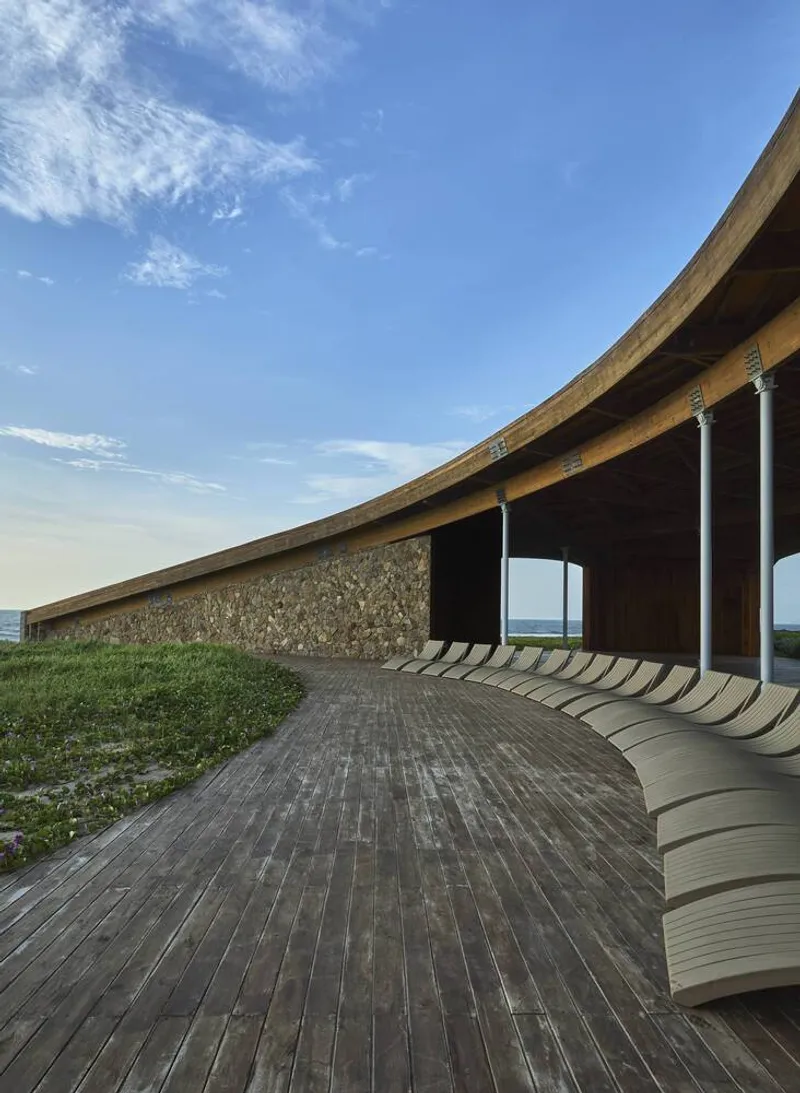
All photographs are works of Monica Barreneche, Sebastian Franco



Popular Articles
Popular articles from the community

EW PARK: Sustainable Architecture Reimagines the Future of Urban Parking
EW PARK reimagines city parking as a modular wooden tower combining automation, solar energy, electric mobility, and adaptable urban design.

Conexión: Biophilic Design Reimagines High-Rise Living in Hong Kong
Conexión reimagines high-rise living in Hong Kong through biophilic design, green facades, shared spaces, daylight, water and nature within.

Hill & Cross Opera: Sculptural Opera House Architecture Shaped by Tallinn’s Landscape and Identity
Hill & Cross Opera reimagines opera house architecture in Tallinn through its sculptural hill, civic plaza, glass wave and a luminous cross.
AL-JANNAH: Sustainable Architecture and Permaculture for Afghan Widows
AL-JANNAH uses sustainable architecture and permaculture to create resilient oasis of housing, learning, work and renewal for Afghan widows.

Similar Reads
You might also enjoy these articles


Hodi-Mandai Geram
Project Function: Preservation and revitalization of the Intangible heritage and socio-spatial identity of the Hodi by Housing, Cultural Memory Center, Sacred Grove, landscape, local tourism economy


Olio Towers: A Mid-Rise for Performers That Fuses Housing, Rehearsal, and Stage
Located blocks from Houston's Theater District, this modular tower stacks living units around a central performance atrium.

Oasis: Modular Green Housing Carved into Dhaka's Urban Fabric
A shortlisted Plugin Housing entry reclaims unauthorized settlements in Dhaka with stepped concrete volumes, green roofs, and ventilation-driven design.

Black Hole: A Floating Megastructure for the Post-Physical Era
Emiliano Mazzarotto envisions a spherical, self-scaling arena where e-sports, digital hotels, and holographic stadiums replace traditional public space.


Explore Sustainable Design Competitions
Discover active competitions in this discipline



Challenge to reimagine the Iron Throne


Photograph architecture without architects


Illustrate the lost glory of Angkor Wat - Render Challenge


Design challenge to reuse E-waste
Comments (0)
Please login or sign up to add comments
No comments yet. Be the first to comment!