

SANCTUARIA: Sustainable Architecture Creating a Haven for Humans and Wildlife
A sustainable architecture proposal where humans and wildlife coexist, restoring koala habitats through ecological and nature-sensitive design.


As urban expansion continues to reshape natural landscapes across the world, the relationship between humans and wildlife is becoming increasingly fragile. SANCTUARIA: A Place Within the Woods responds to this challenge through a thoughtful approach to sustainable architecture that seeks harmony rather than dominance. Designed by Rohan K Oommen, this Shortlisted entry of Haven 2020 proposes a sensitive architectural intervention where humans and animals can coexist while preserving the integrity of the natural environment.
Located in the forested landscapes of Mount Tamborine, Queensland, Australia, the project addresses the devastating impact of habitat loss and bushfires on local koala populations. Rather than imposing architecture upon nature, SANCTUARIA embraces the landscape, creating spaces that support ecological restoration, wildlife rehabilitation, environmental education, and human reflection.


Sustainable Architecture Inspired by Peace and Ecology
At the core of SANCTUARIA lies the concept of Peace Architecture, a design philosophy that advocates for reconciliation between human development and the natural world. The project recognizes that urbanization often disconnects people from nature while simultaneously threatening biodiversity.
SANCTUARIA challenges this pattern by offering an architectural solution that minimizes human impact while maximizing ecological benefits. The design creates a sanctuary where both people and wildlife can occupy the same territory without conflict, establishing clear yet gentle boundaries that respect natural habitats.
The architecture is deliberately lightweight and open, allowing the surrounding landscape to remain the primary experience. Buildings become quiet participants within the ecosystem rather than dominant objects.
Restoring Koala Habitats Through Ecological Design
The site was selected due to its proximity to regions heavily affected by Australian bushfires. These events significantly reduced koala populations and damaged critical habitat networks.
The project adopts a site-sensitive approach that focuses on habitat restoration through several key strategies:
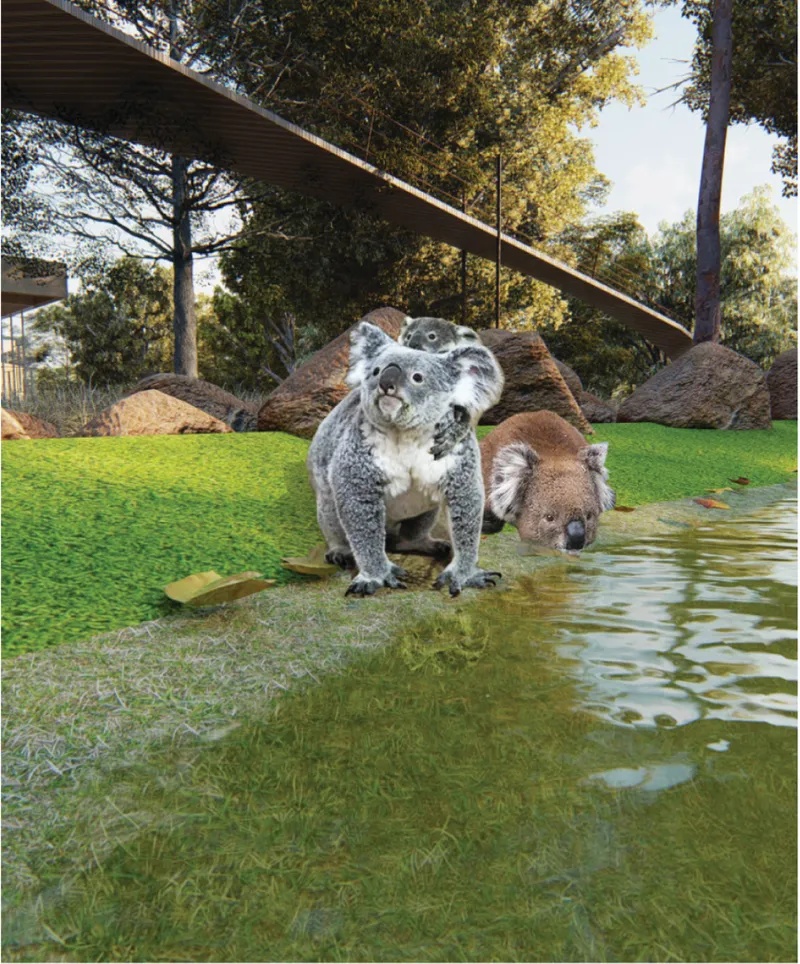
- Extensive planting of eucalyptus trees to provide food sources for koalas.
- Creation of wildlife corridors allowing free movement across the site.
- Preservation of existing vegetation and natural topography.
- Development of water retention systems and natural ponds.
- Reduction of human intervention zones to protect wildlife.
These measures transform the site into an active ecological landscape that supports biodiversity while creating educational opportunities for visitors.
Architecture That Follows the Landscape
The architectural language of SANCTUARIA is deeply influenced by the contours and ecological characteristics of the site. Rather than reshaping the land, the buildings adapt to it.
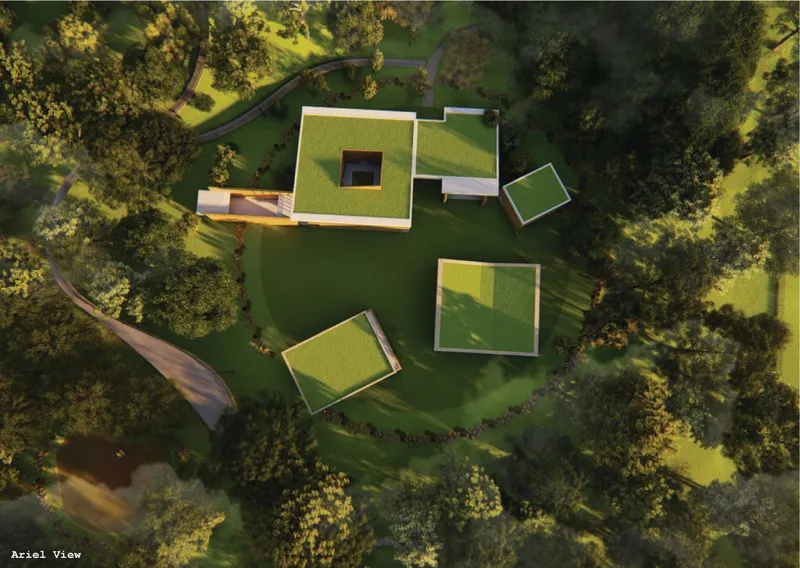
The structures are distributed across the landscape as a collection of interconnected pavilions, reducing visual impact and maintaining permeability between natural and built environments. Curving pathways guide visitors through the site while ensuring minimal disturbance to wildlife habitats.
This decentralized planning strategy creates an immersive experience where architecture and landscape merge seamlessly. Visitors are encouraged to engage with nature through observation, education, and reflection rather than consumption.
A Program Dedicated to Conservation and Learning
SANCTUARIA functions as more than a wildlife rehabilitation facility. It operates as a comprehensive center for conservation, research, education, and community engagement.
Visitor Center
The visitor center welcomes guests and provides educational resources about koala conservation, local ecology, and environmental stewardship. Exhibition spaces and information areas promote awareness of habitat loss and climate challenges.
Rehabilitation Center
The rehabilitation facilities support injured and displaced koalas through specialized treatment areas, diagnostic spaces, observation wards, laboratories, and recovery rooms. The design prioritizes animal welfare by minimizing stress and maintaining strong connections to natural surroundings.
Administration and Research Facilities
Office spaces, meeting rooms, libraries, and support facilities enable researchers, conservationists, and staff to coordinate wildlife management programs and ecological initiatives.
Community Spaces
Cafés, gathering areas, and educational environments encourage public participation in conservation efforts while strengthening the connection between people and nature.

Sustainable Materials and Passive Design Strategies
Material selection plays a crucial role in reinforcing the project's ecological objectives. The design employs materials that blend naturally into the landscape while reducing environmental impact.
Rammed Earth Construction
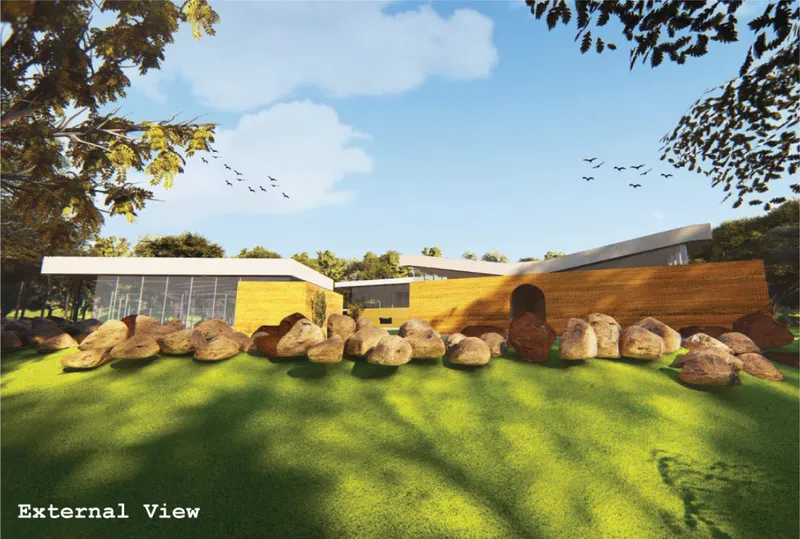
Rammed earth walls provide thermal mass, helping regulate indoor temperatures while creating a visual connection to the surrounding terrain. Their natural appearance allows the buildings to integrate harmoniously within the woodland setting.
Green Roof Systems
Vegetated roofs reduce heat gain, improve insulation, support biodiversity, and visually camouflage the buildings within the forest canopy. These roofs contribute significantly to passive cooling strategies.
Natural Stone Elements
Stone boulders and landscape features serve both ecological and symbolic purposes. They create subtle barriers between human and wildlife zones while maintaining a natural aesthetic.
Passive Cooling
The project minimizes energy consumption through:
- Natural ventilation
- Thermal mass construction
- Shaded outdoor circulation
- Green roofs
- Water features that moderate microclimates
Together, these strategies create comfortable spaces with reduced reliance on mechanical systems.
Water as a Tool for Ecological Regeneration
Water management is a defining feature of the proposal. The landscape is designed to collect, channel, and store rainwater through a network of ponds and natural drainage systems.
These water bodies serve multiple functions:
- Supporting wildlife habitats
- Replenishing groundwater reserves
- Reducing stormwater runoff
- Creating passive cooling effects
- Providing educational opportunities for visitors
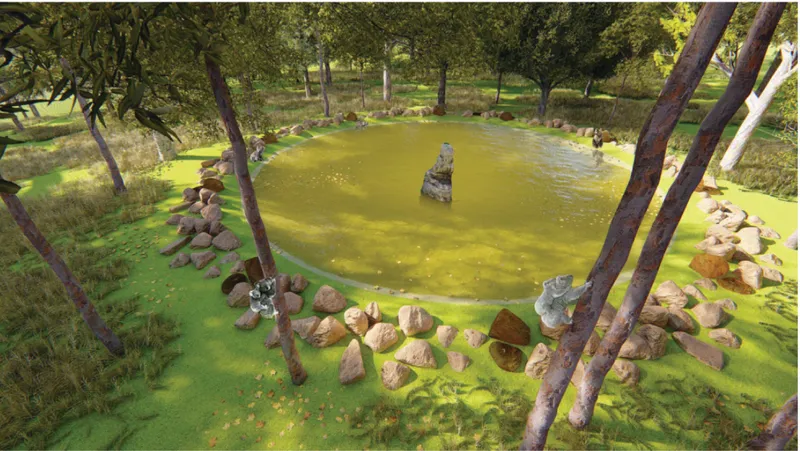
One of the most significant elements is the memorial pond, which symbolizes resilience and ecological recovery following bushfire destruction.
A Memorial to Wildlife Lost in Bushfires
Beyond its practical functions, SANCTUARIA includes a contemplative memorial dedicated to animals lost during bushfire events. The memorial pond and surrounding landscape provide a quiet space for reflection while emphasizing the urgent need for environmental protection.
This symbolic component strengthens the project's emotional narrative, transforming architecture into a medium for remembrance, awareness, and action.
Sustainable Architecture for a Shared Future
SANCTUARIA demonstrates how sustainable architecture can move beyond environmental performance metrics to address broader ecological and social challenges. By restoring habitats, supporting wildlife rehabilitation, and fostering human engagement with nature, the project establishes a model for future conservation-focused design.
Through sensitive planning, ecological restoration, passive environmental strategies, and a commitment to coexistence, SANCTUARIA reimagines architecture as a tool for healing both landscapes and communities.
In an era defined by climate change and biodiversity loss, the project offers a hopeful vision where architecture becomes an ally of nature rather than its adversary. It reminds us that meaningful design is not simply about creating buildings but about creating environments where all forms of life can thrive together.




Popular Articles
Popular articles from the community

AL-JANNAH: Sustainable Architecture and Permaculture for Afghan Widows
AL-JANNAH uses sustainable architecture and permaculture to create resilient oasis of housing, learning, work and renewal for Afghan widows.

The Earth Pod: 3D Printed Homes for Resilient Refugee Communities
The Earth Pod reimagines refugee housing through 3D printed homes made from clay, combining resilience, self-sufficiency, and rapid shelter.

Co-Life: Senior Housing Design That Reconnects Older Adults With the City
Co-Life reimagines senior housing design through healing gardens, shared streets, workshops, and a sustainable community across generations.

Riyadh For All: Intergenerational Urban Design for Active Aging in Rabat
Riyadh For All reimagines urban design in Rabat with intergenerational co-living, adaptive courtyards, and Moroccan cultural exchange today.

Similar Reads
You might also enjoy these articles

Eco Chapel: A Green Architecture Pavilion Designed in Symbiosis with the Forest
Eco Chapel uses green architecture to weave prayer, learning and reuse into a forest pavilion shaped by modular hexagonal canopies for life.
Kaffeebühnen: Coffee Shop Architecture Designed as a Civic Stage Between Vienna’s City and Park
Kaffeebühnen turns coffee shop architecture into a civic stage, linking Vienna’s park edge, urban life, warm timber yards, and coffee craft.
Healing Façade: Sustainable Architecture for Reforestation, Community, and Sacred Ecology in Ethiopia
Healing Façade reimagines sustainable architecture as a living wall that restores soil, catches water and renews Ethiopia's forest churches.


Urban Forest: A Vertical Ecosystem for 5,000 Workers in Singapore's Changi Business Park
Radially stacked pods and layered green decks turn a 7-acre plot into 47 acres of ecological workspace projected for 2040.

Comments (0)
Please login or sign up to add comments
No comments yet. Be the first to comment!