
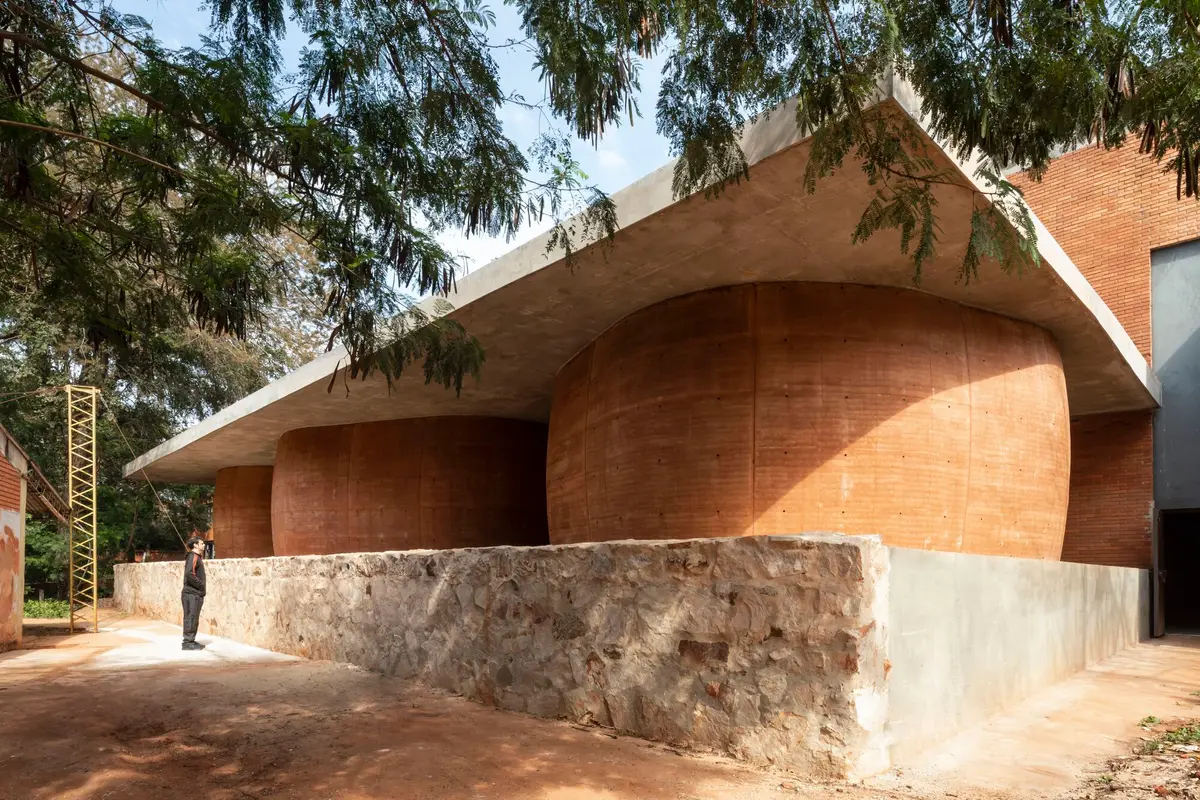
Sanitary Complex at the Faculty of Architecture, Design and Art – National University of Asunción
Sanitary Complex in Asunción features innovative rammed earth design, natural light, artisanal construction, sustainable materials, and sculptural, functional architecture.


The Sanitary Complex at the Faculty of Architecture, Design and Art of the National University of Asunción is a remarkable architectural intervention that blends material experimentation, structural innovation, and cultural relevance. Designed by Alberto Martinez, Guido Villalba, Yago García, and tda, the project responds to a National Preliminary Contest that challenged architects to rethink functional campus infrastructure through creative architectural language.
Concept – Architecture as Abstraction and Exaggeration
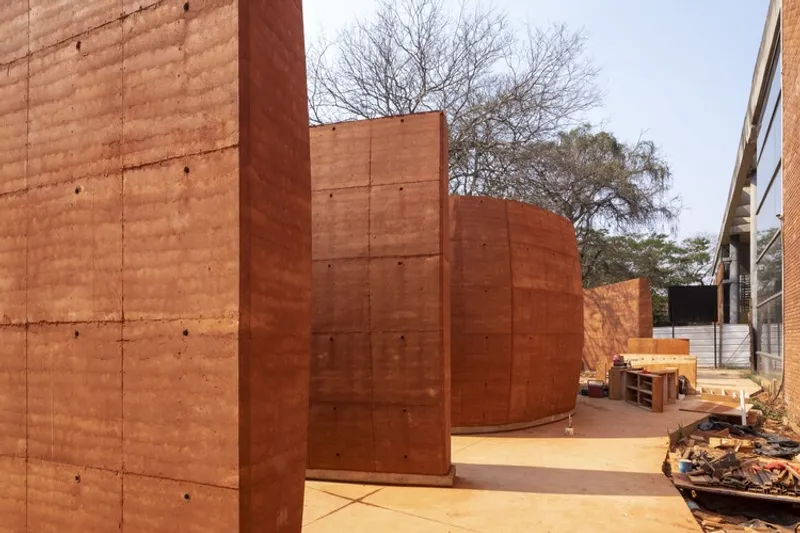
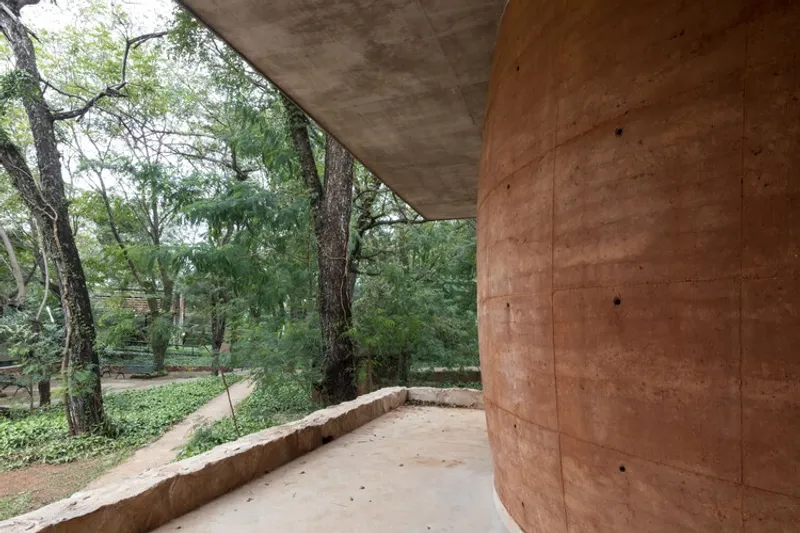
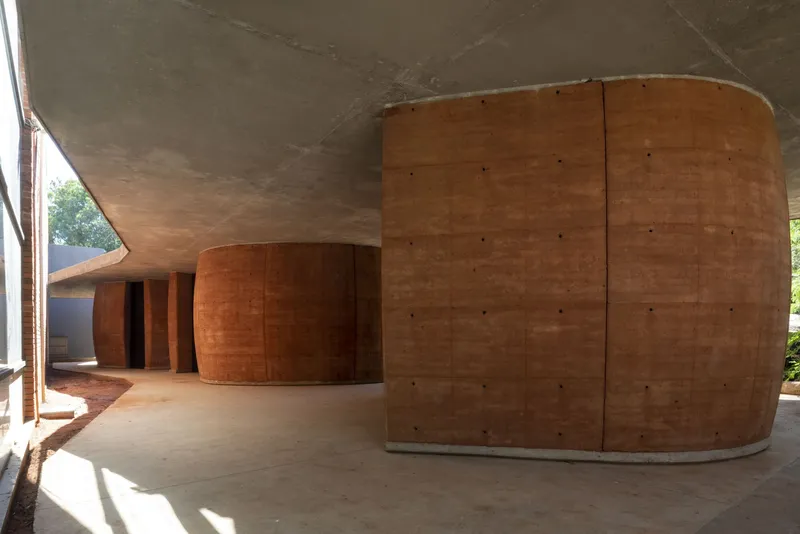
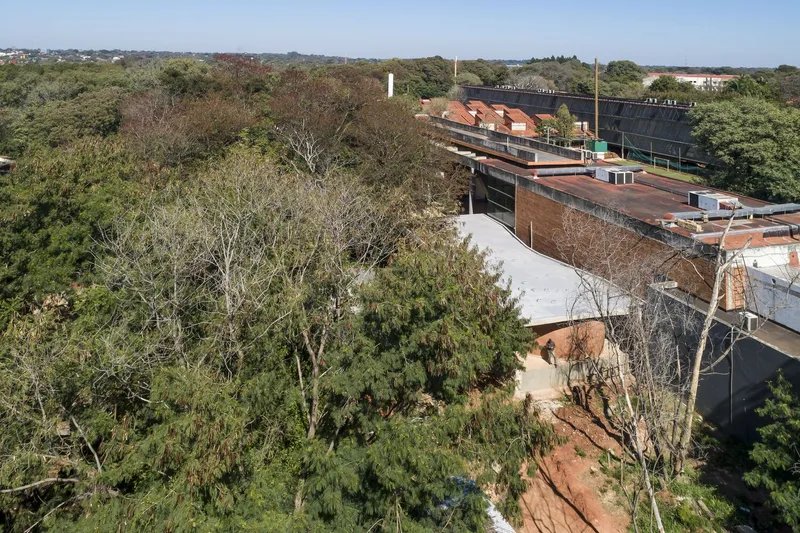
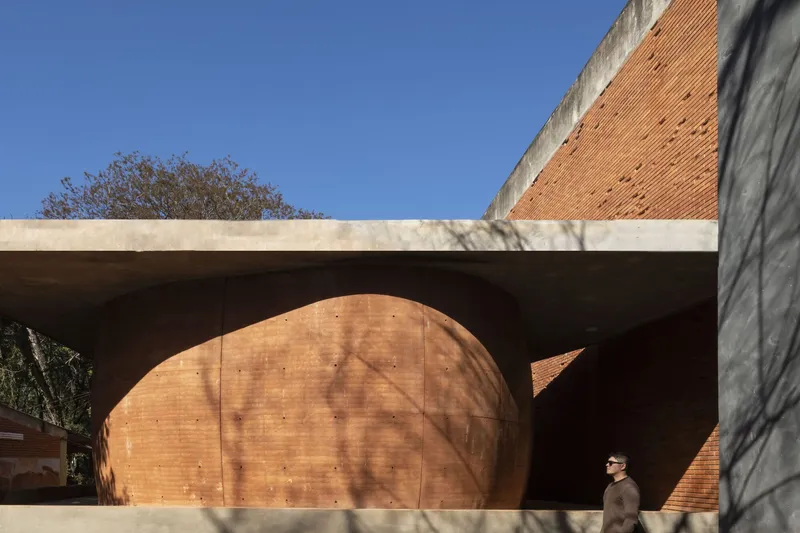
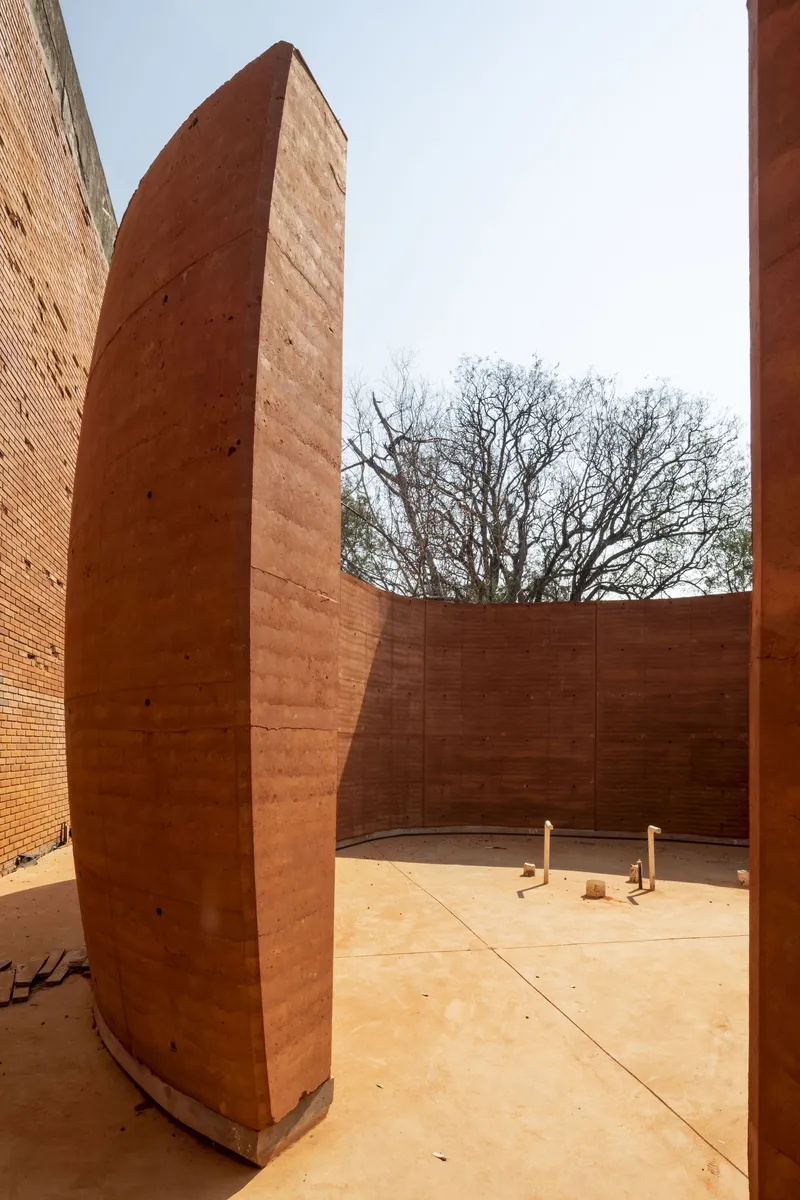
The design concept is rooted in abstraction. The architects envisioned the complex as three massive rocks set into the landscape, creating a spatial dialogue between the existing auditorium and the surrounding arboreal environment. These rocks, expressed through rammed earth construction, form a podium, three monolithic volumes, and a protective concrete plane above.
The reference to rocks is not merely symbolic—it establishes a deep connection with the earth as a raw, timeless material while also embodying the spirit of exaggeration in architectural creativity.
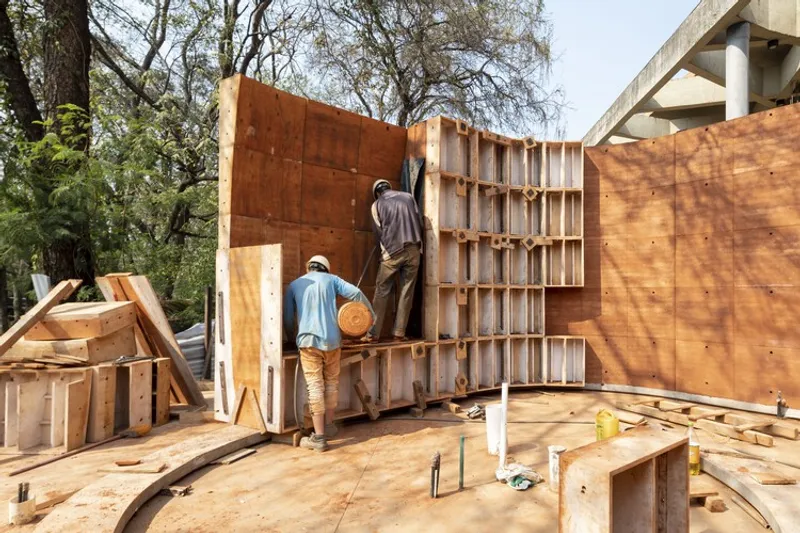
Structure – Rammed Earth and Artisanal Construction
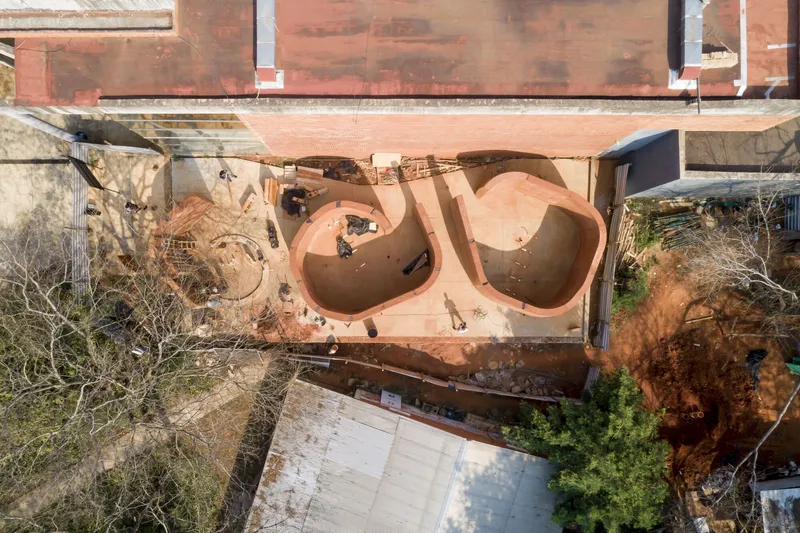
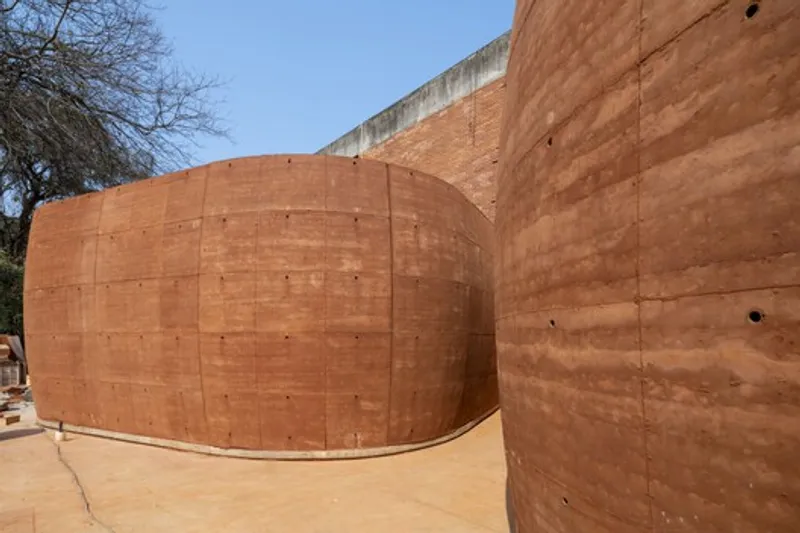
The most compelling challenge was how to construct these rock-like forms using rammed earth technology—a material historically associated with vertical and compressive systems. The architects pushed the boundaries of geometry and materiality, developing modules that allowed double-curved volumes to emerge without reliance on conventional industrialized systems.
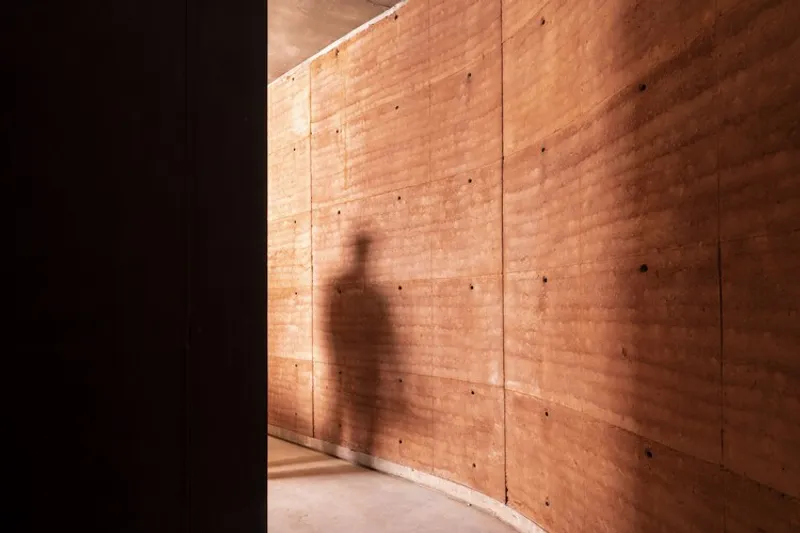
In Paraguay, where industrialization is limited, artisanal methods remain vital. This project celebrates that reality, transforming limitations into design strengths. The result is a set of expressive, monumental walls of load-bearing red earth combined with raw stone bases and a minimalist concrete roof slab.
Materiality – Brutal Honesty and Zero Maintenance
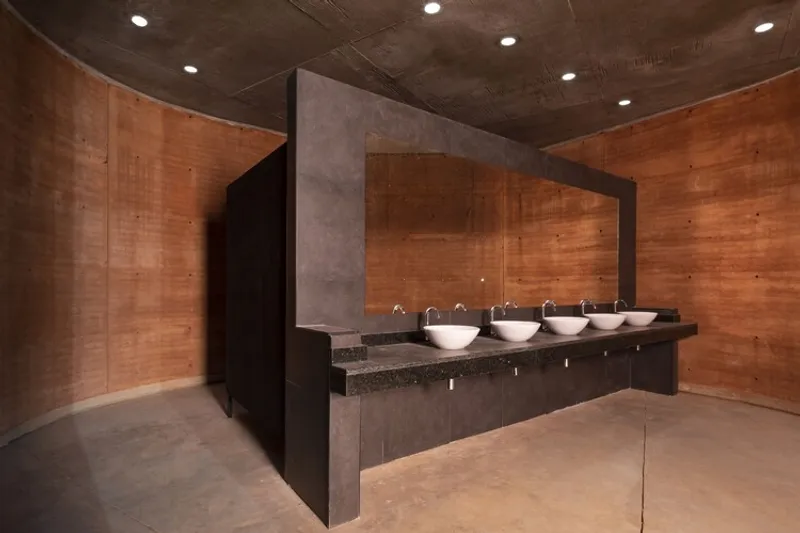
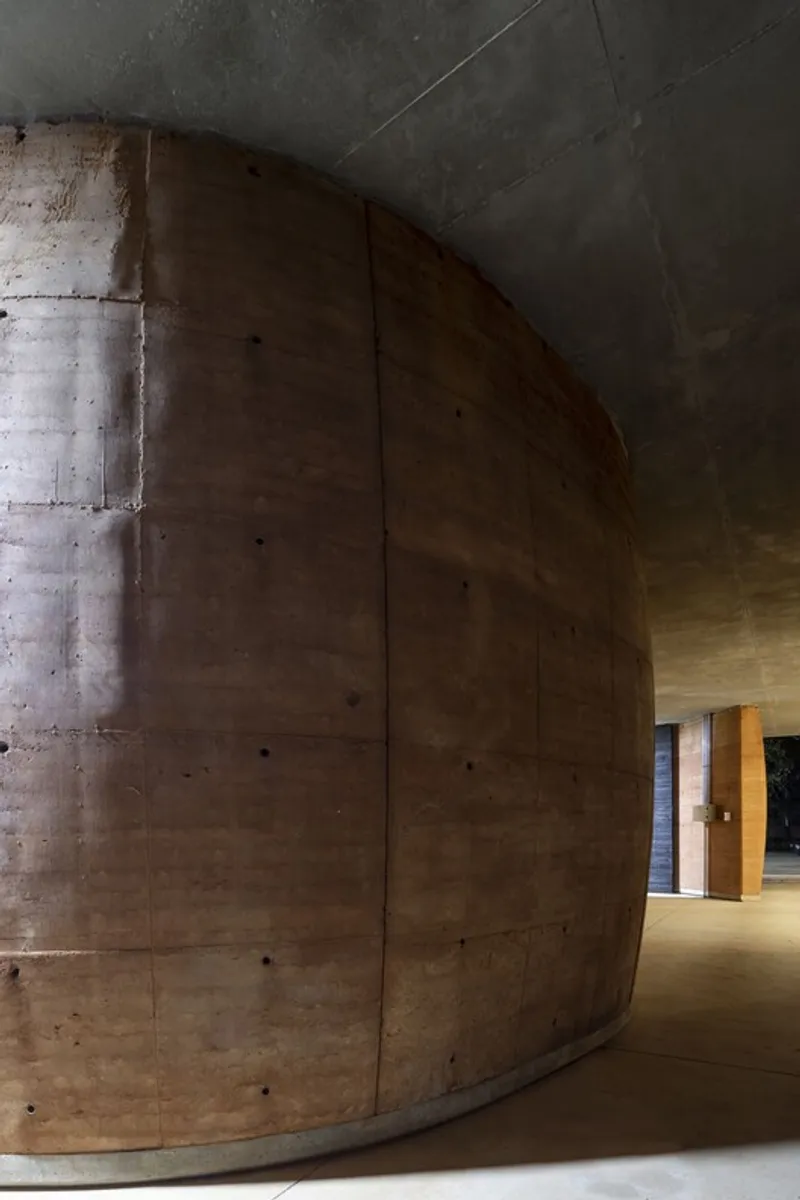
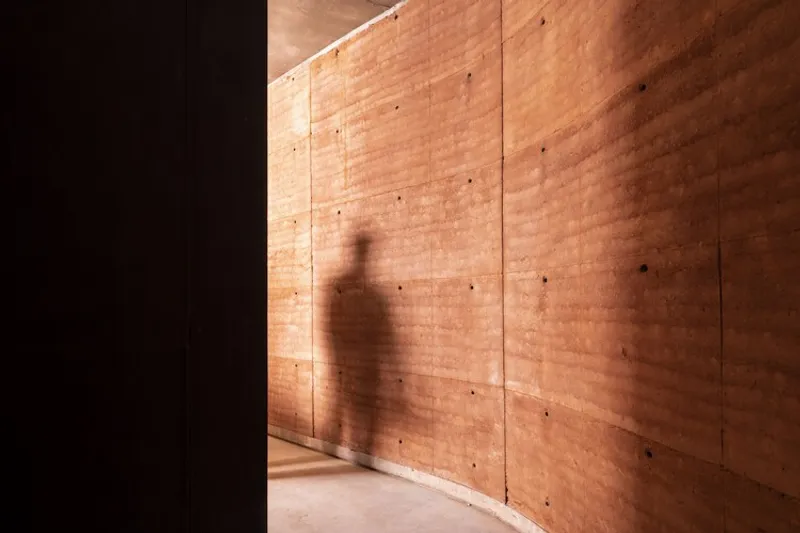
The Sanitary Complex embraces brutal honesty in material expression. The podium is built with raw stone, the walls with rammed earth, and the roof with bare concrete. Each element is intentionally exposed, requiring minimal maintenance while highlighting the beauty of natural textures.
Inside, light enters through slab perforations, ensuring soft, diffused illumination and natural ventilation. Doors made of lightweight wood are treated with the traditional Japanese Shou Sugi Ban technique, enhancing durability while allowing air circulation.
Experience – Light, Space, and Functionality
Though designed as a sanitary facility, the complex transcends its utilitarian function. It is both sculptural and functional, an exploration of how architecture can redefine simple programs with poetic exaggeration. The interstitial spaces between the “rocks” create a balance of light, shadow, and airflow, making the facility a comfortable, timeless environment that belongs to its place.
A Testament to Collective Intelligence
The Sanitary Complex of the Faculty of Architecture, Design and Art stands as a landmark of experimental architecture in Paraguay. It demonstrates how local resources, collective intelligence, and artisanal construction can produce innovative, sustainable, and timeless spaces. This project is not only a solution to a functional need but also a cultural statement of abstraction, exaggeration, and architectural honesty.
All the photographs are works of


Popular Articles
Popular articles from the community


ALGAL REALM: A Bio-Integrated Lunar Habitat Design for Life Beyond Earth
ALGAL REALM reimagines lunar habitat design with algae-powered life support, 3D-printed regolith, and vertical living for a lunar future.

Little Red Riding Hood: Architectural Design as a Journey Through Fear, Light, and Storytelling
Little Red Riding Hood reimagines the fairy tale through architectural design shaped by fear, light, scale, memory, uncertainty, and choice.

Conexión: Biophilic Design Reimagines High-Rise Living in Hong Kong
Conexión reimagines high-rise living in Hong Kong through biophilic design, green facades, shared spaces, daylight, water and nature within.

The Musturak Paradise: Senior Living Architecture for a Connected Future in Temara, Morocco
The Musturak Paradise reimagines senior living architecture in Temara via private homes, social spaces, culture, community, and shared care.

Similar Reads
You might also enjoy these articles


Hodi-Mandai Geram
Project Function: Preservation and revitalization of the Intangible heritage and socio-spatial identity of the Hodi by Housing, Cultural Memory Center, Sacred Grove, landscape, local tourism economy


Olio Towers: A Mid-Rise for Performers That Fuses Housing, Rehearsal, and Stage
Located blocks from Houston's Theater District, this modular tower stacks living units around a central performance atrium.

Oasis: Modular Green Housing Carved into Dhaka's Urban Fabric
A shortlisted Plugin Housing entry reclaims unauthorized settlements in Dhaka with stepped concrete volumes, green roofs, and ventilation-driven design.

Black Hole: A Floating Megastructure for the Post-Physical Era
Emiliano Mazzarotto envisions a spherical, self-scaling arena where e-sports, digital hotels, and holographic stadiums replace traditional public space.

Explore Architecture Competitions
Discover active competitions in this discipline

Challenge to reimagine the Iron Throne

Photograph architecture without architects

Illustrate the lost glory of Angkor Wat - Render Challenge

Design challenge to reuse E-waste
Comments (0)
Please login or sign up to add comments
No comments yet. Be the first to comment!