
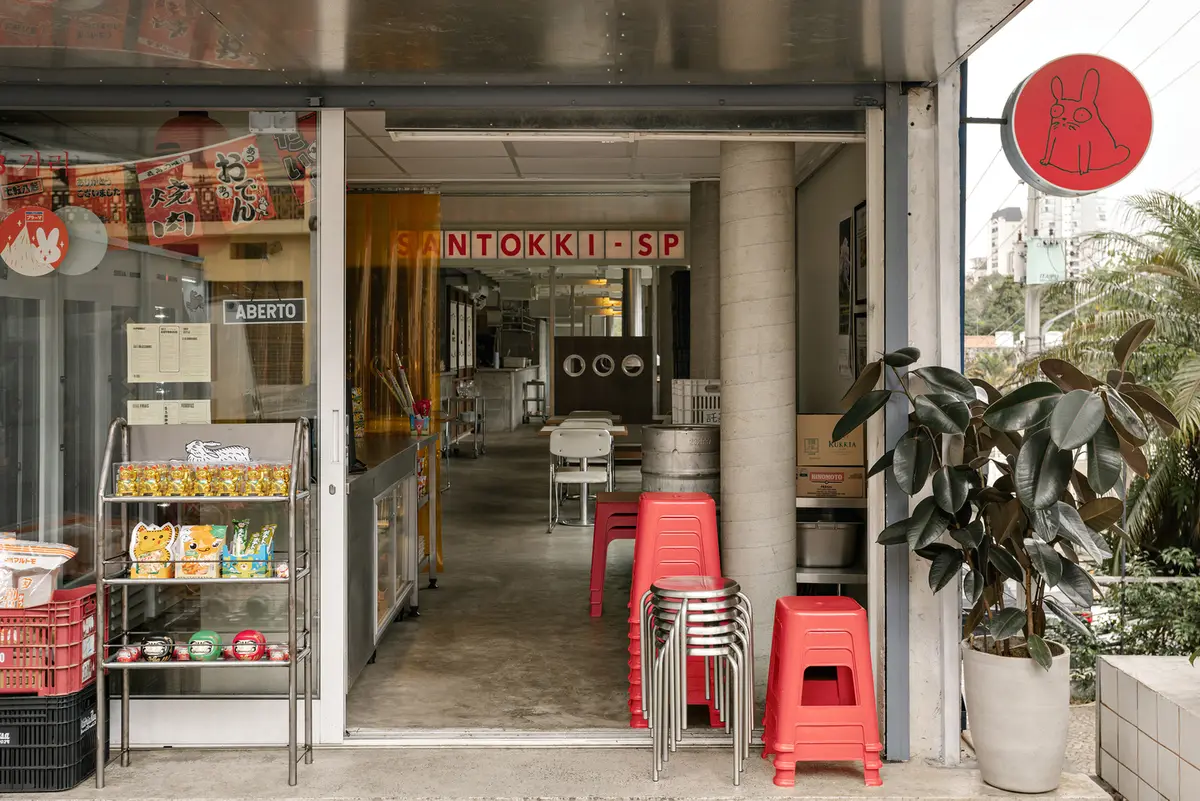
Santokki Restaurant: Asian Restaurant Interior Design with Industrial Aesthetic by Tadu Arquitetura
Santokki Restaurant blends industrial aesthetics and Asian influences into a spatially rich dining experience by Tadu Arquitetura in São Paulo.


A Global Influence in a Local Context
In the heart of São Paulo, Santokki Restaurant by Tadu Arquitetura redefines the experience of Asian dining through an immersive interior that blends global references with industrial rawness. The project is rooted in the idea of “creative Asian” cuisine—one that traverses multiple geographies, inspiring not only the food but also the spatial organization and architectural language. The concept weaves through cultural nodes like Chinatown, Seoul, Tokyo, Beijing, and São Paulo, resulting in an eclectic yet cohesive Asian restaurant interior design with industrial aesthetic.
Spatial Programming through Atmosphere and Identity
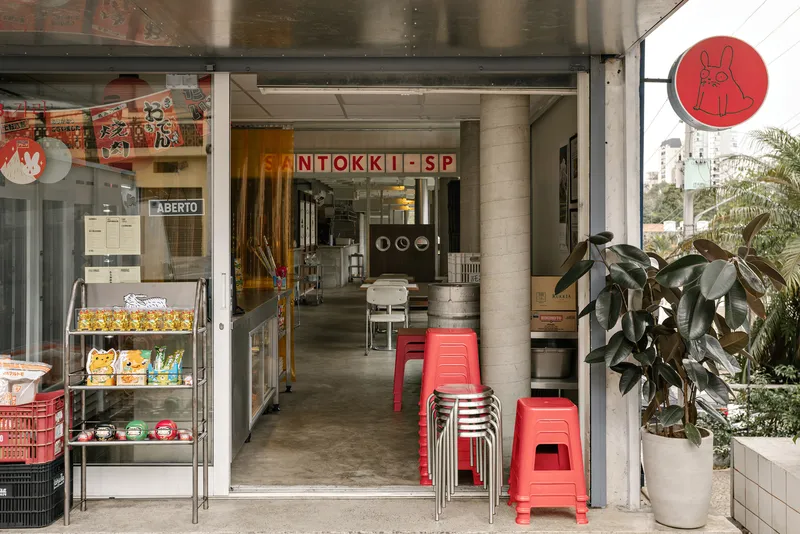
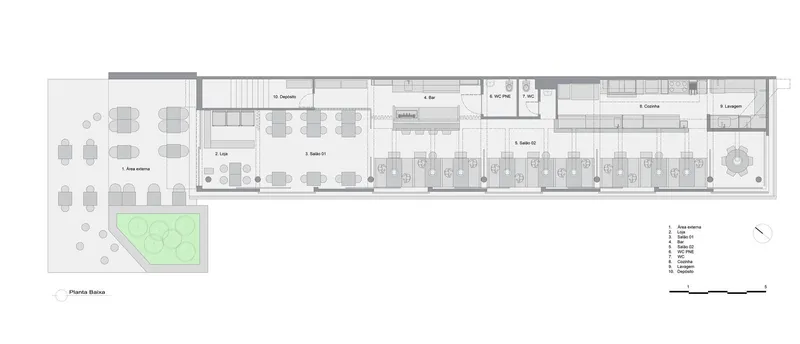
The spatial layout was conceived as a fragmented yet connected sequence of seven experiential zones, cut into the original rectangular floorplate. Each of these zones delivers a distinct sensory atmosphere—from informal street-side dining to intimate private rooms with sweeping city views. The journey begins at the sidewalk, where low tables and a souvenir shop invite passersby to engage casually with the space, blurring the boundary between city life and restaurant culture.
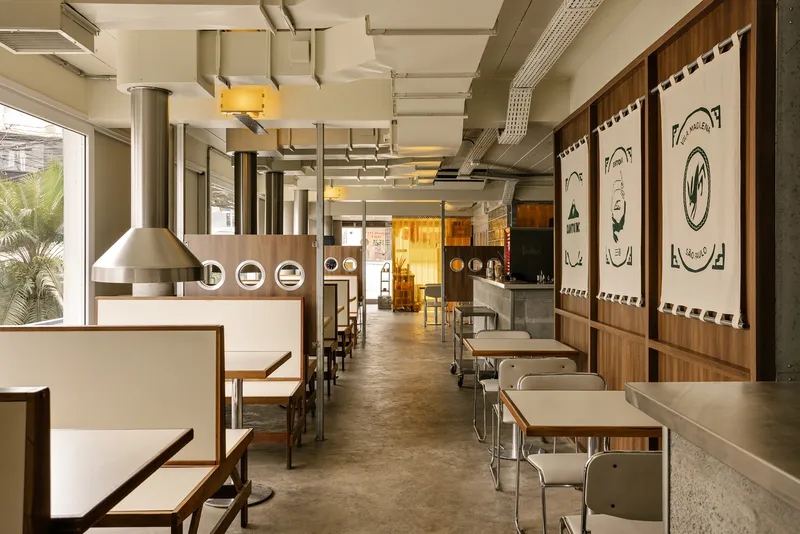
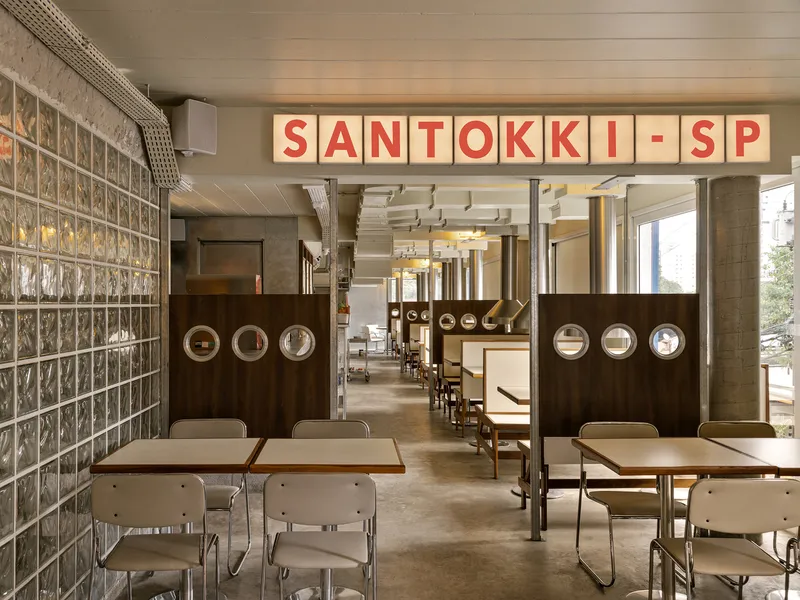
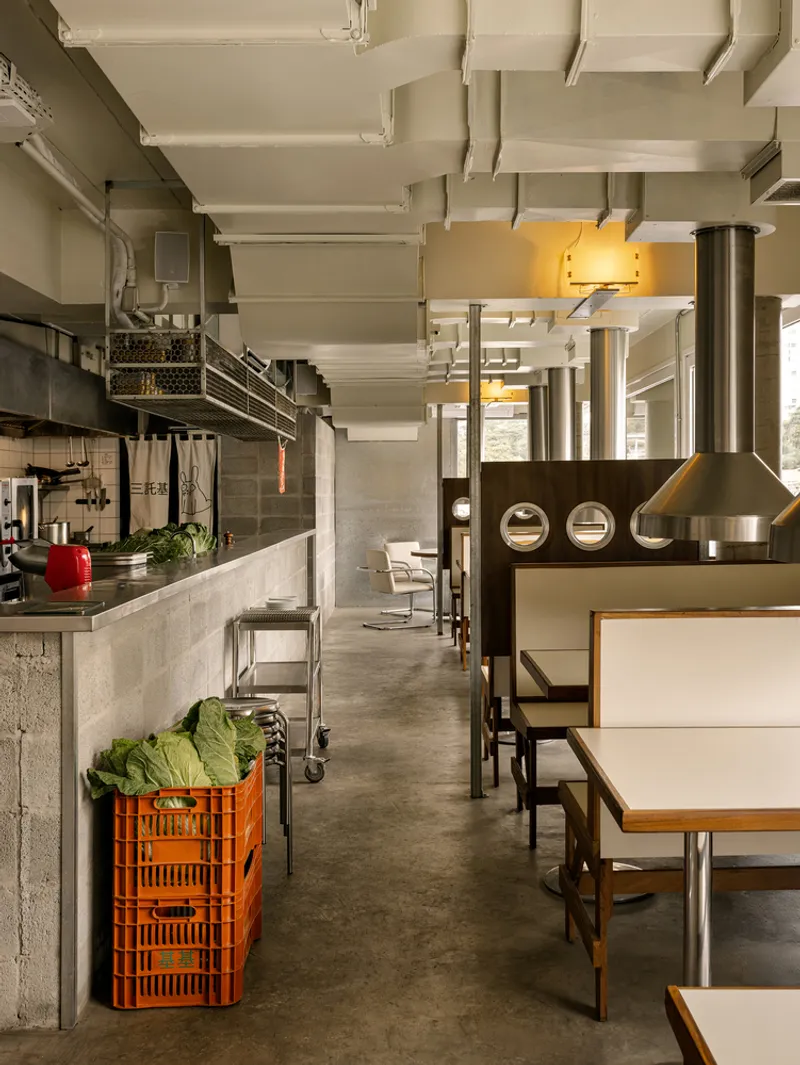
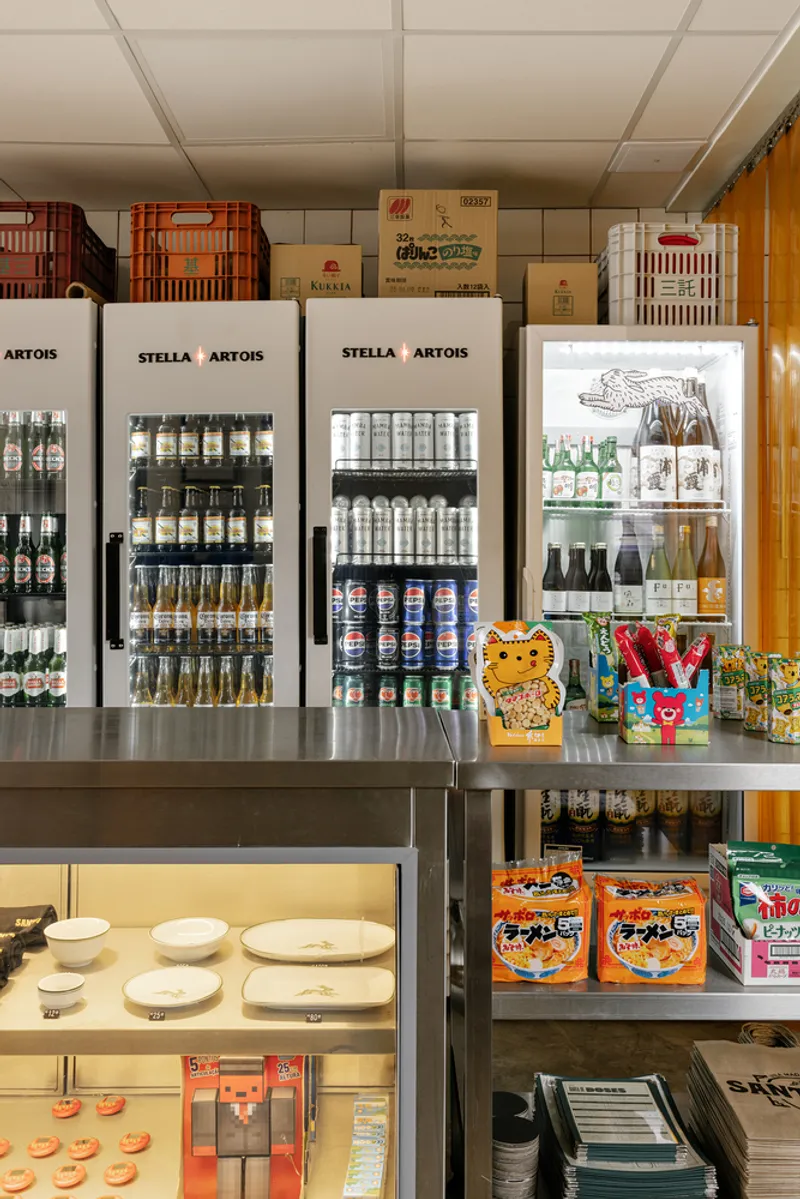
Beyond the vibrant orange curtain lies a foyer with two- and four-seat arrangements, leading to a specialized bar area that showcases Santokki’s signature drinks. The main dining room, featuring built-in Korean barbecue tables and visible exhaust systems, forms the heart of the experience. An open kitchen behind the dining space reinforces transparency and culinary artistry, allowing guests to engage with the preparation of vibrant, flavor-rich dishes.
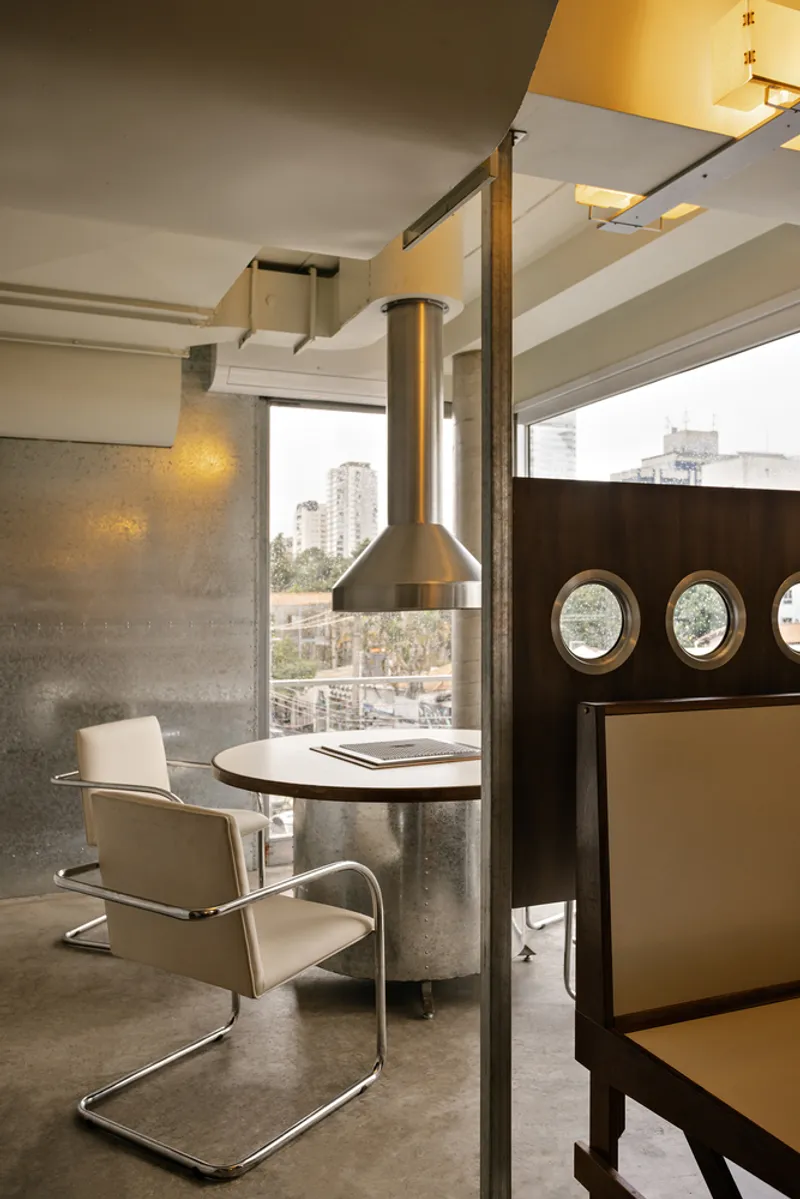
At the end of this spatial procession is a private dining room — a custom-designed setting for up to eight guests, specifically created to enhance group barbecue dining with a stunning panoramic view of São Paulo.
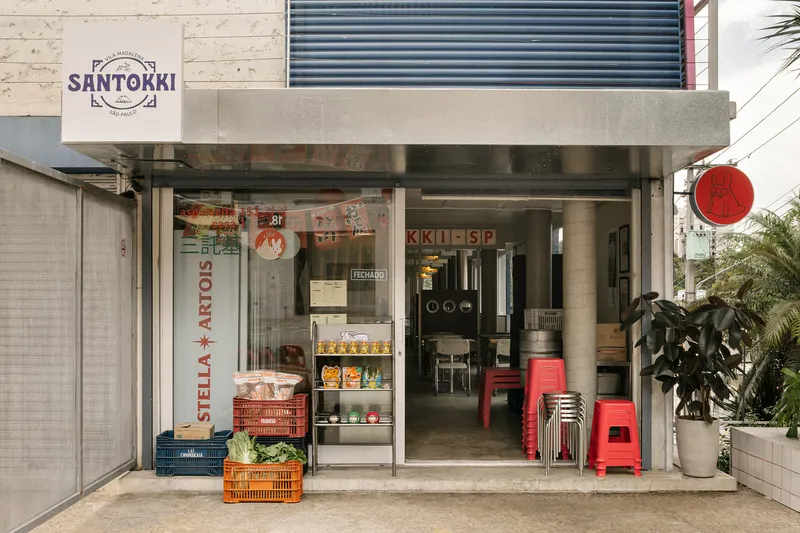
Designing Ambience with Industrial Warmth
What defines Santokki’s identity is not just its layout, but its interior design philosophy, which embraces unfinished materials and exposed systems as aesthetic choices. Cement floors, concrete block walls, visible cable trays, and raw steel conduits give the space an industrial backbone. But this harshness is softened through Asian-inspired design touches and warm material inserts.
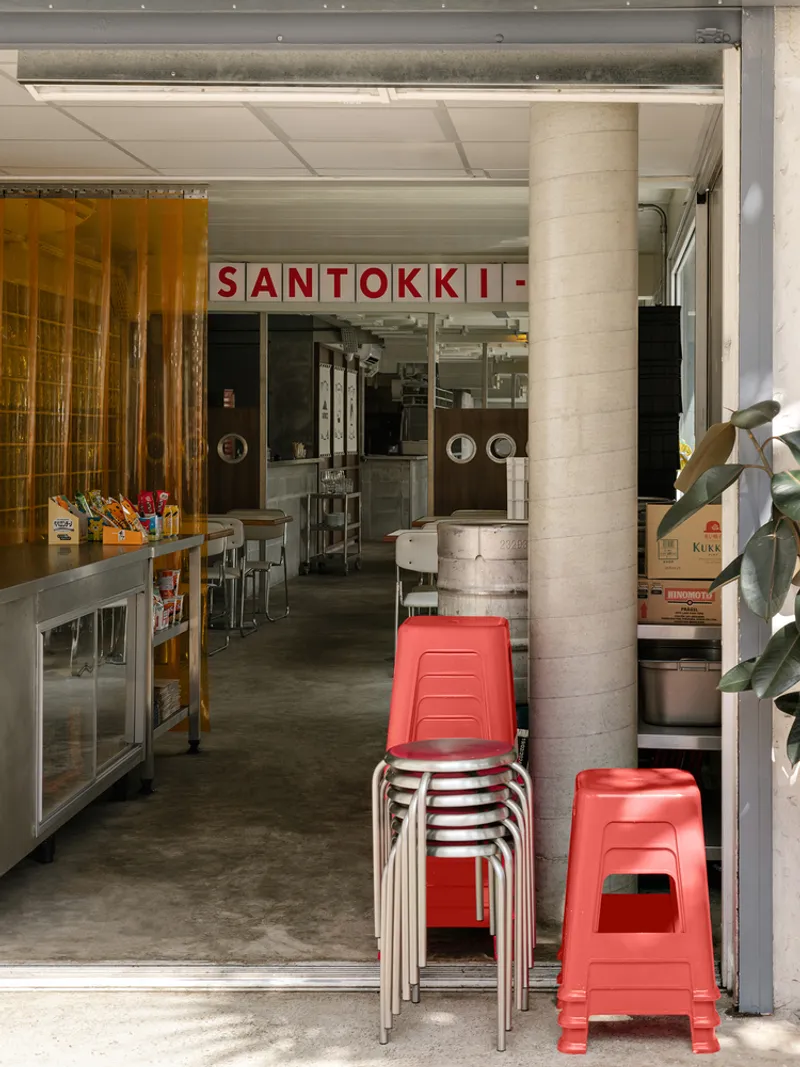
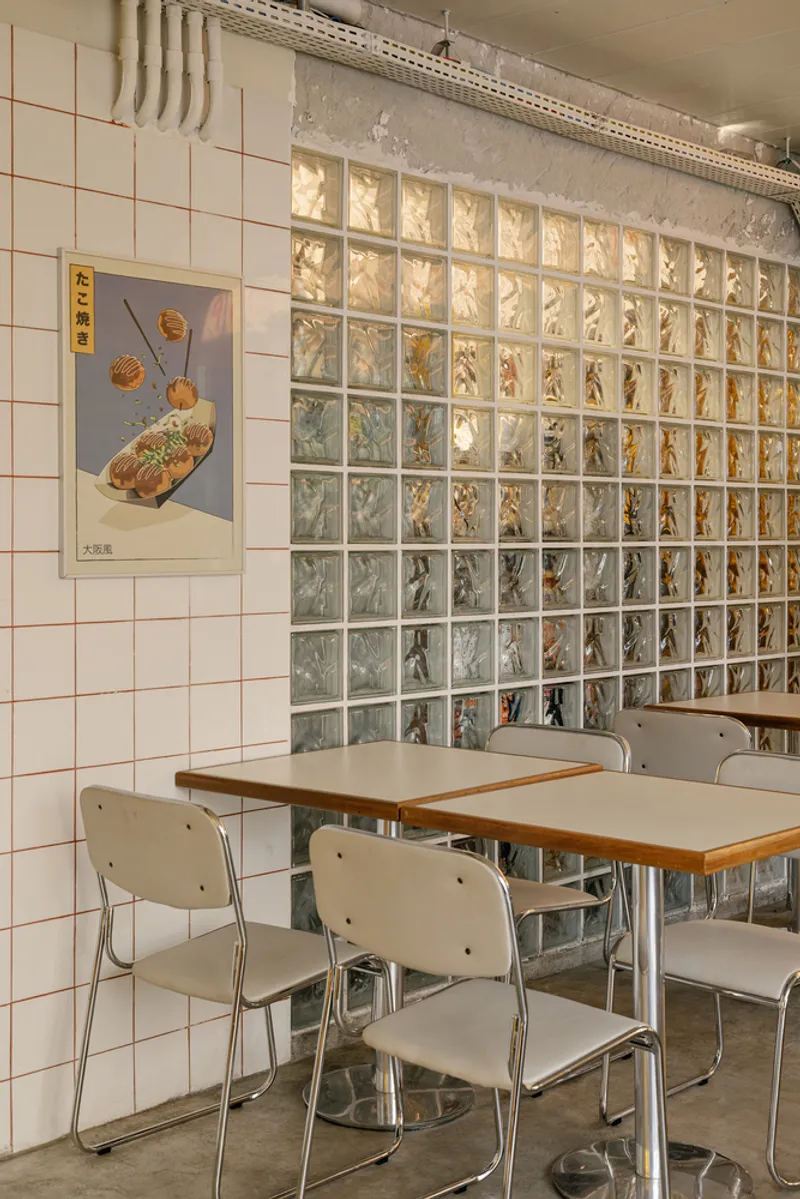
Wood and steel panels with large round portholes are used to subtly divide spaces without compromising visual permeability. Glass bricks, orange curtains, and dim lighting add layers of intimacy and color. The materials palette, though minimal and raw, creates an inviting and curated environment that matches the vibrancy of the food being served.
Furniture as Cultural Extension
The furniture collection in Santokki is entirely custom-made, drawing direct influence from traditional Asian restaurant seating. It favors lightweight, adaptable pieces that are easy to replace, affordable, and contextually appropriate. These loose elements further underline the architectural ethos of flexibility, functionality, and cultural authenticity. Alongside this, branding components such as signage, illuminated displays, and wall illustrations embed Santokki’s narrative into every corner of the space.
Architecture as a Flavorful Experience
At its core, Santokki is more than a dining space—it’s a multi-sensory architectural expression of culinary creativity and cultural fusion. Tadu Arquitetura’s careful attention to industrial textures, spatial choreography, and Asian visual language gives rise to a unique restaurant interior design that is grounded in identity while remaining globally resonant.
All Photographs are works of Arthur Duarte


Popular Articles
Popular articles from the community


David Macias Steps a Doorless Stone and Plaster House Down a Tropical Colombian Hillside
In the humid hills of Colombia, Threshold House replaces the front door with an open void and terraces its 850 m² down the slope instead of fighting it.

U.GA Architects Wraps an Oval Rooftop Pool in Curved Board-Formed Concrete on Busan's Jeollidan-gil
In Busan's Jeonpo-dong, a 454 m² mixed-use block stacks a neighborhood facility, guest rooms and an oval rooftop pool inside spiraling concrete walls.

David Ortega Stacks a Two-Story Mexico City Penthouse Around a Steel Stair and a Pergola-Shaded Roof Terrace
In Colonia Roma, a 300 m² penthouse uses oak joinery, a planted steel stair and a slatted roof pergola to make a new-build apartment feel like a house.

Jaramillo Van Sluys Arquitectura and Urbanismo Turn a Demolished Registry Lot in Quito into an Orchard Plaza
In Quito's Centro Histórico, a 2,800 m² plaza exposes the San Agustín convent wall and redraws its lost Augustinian orchard in volcanic stone.

Similar Reads
You might also enjoy these articles

Gil Mello Arquitetura Tilts a Single Roof Toward the Waterfalls on a Plateau Above Aiuruoca, Brazil
In Aiuruoca, Minas Gerais, a 200 m² house of local labor and reclaimed poles pairs a low valley veranda with a tall mountain one.
U.GA Architects Wraps an Oval Rooftop Pool in Curved Board-Formed Concrete on Busan's Jeollidan-gil
In Busan's Jeonpo-dong, a 454 m² mixed-use block stacks a neighborhood facility, guest rooms and an oval rooftop pool inside spiraling concrete walls.

Felipe Hess Arquitetos Turns a Blind Stone Wall to the Street and Opens a Brazilian House onto a Courtyard and Canal
A canal-front house in Brazil hides behind painted stone and planting, then opens to an olive-tree courtyard, a reed-ceilinged porch and a curving pool.
David Macias Steps a Doorless Stone and Plaster House Down a Tropical Colombian Hillside
In the humid hills of Colombia, Threshold House replaces the front door with an open void and terraces its 850 m² down the slope instead of fighting it.

Explore Architecture Competitions
Discover active competitions in this discipline

Challenge to reimagine the Iron Throne

Photograph architecture without architects

Illustrate the lost glory of Angkor Wat - Render Challenge

Design challenge to reuse E-waste
Comments (0)
Please login or sign up to add comments
No comments yet. Be the first to comment!