
Sar Street House – Contemporary Timber Home by Parsonson Architects in Wellington, New Zealand
Sar Street House by Parsonson Architects is a timber-framed, energy-efficient family home in Wellington, blending natural materials, sunlight, and panoramic harbor views.


A Contemporary Home Harmonizing with Nature
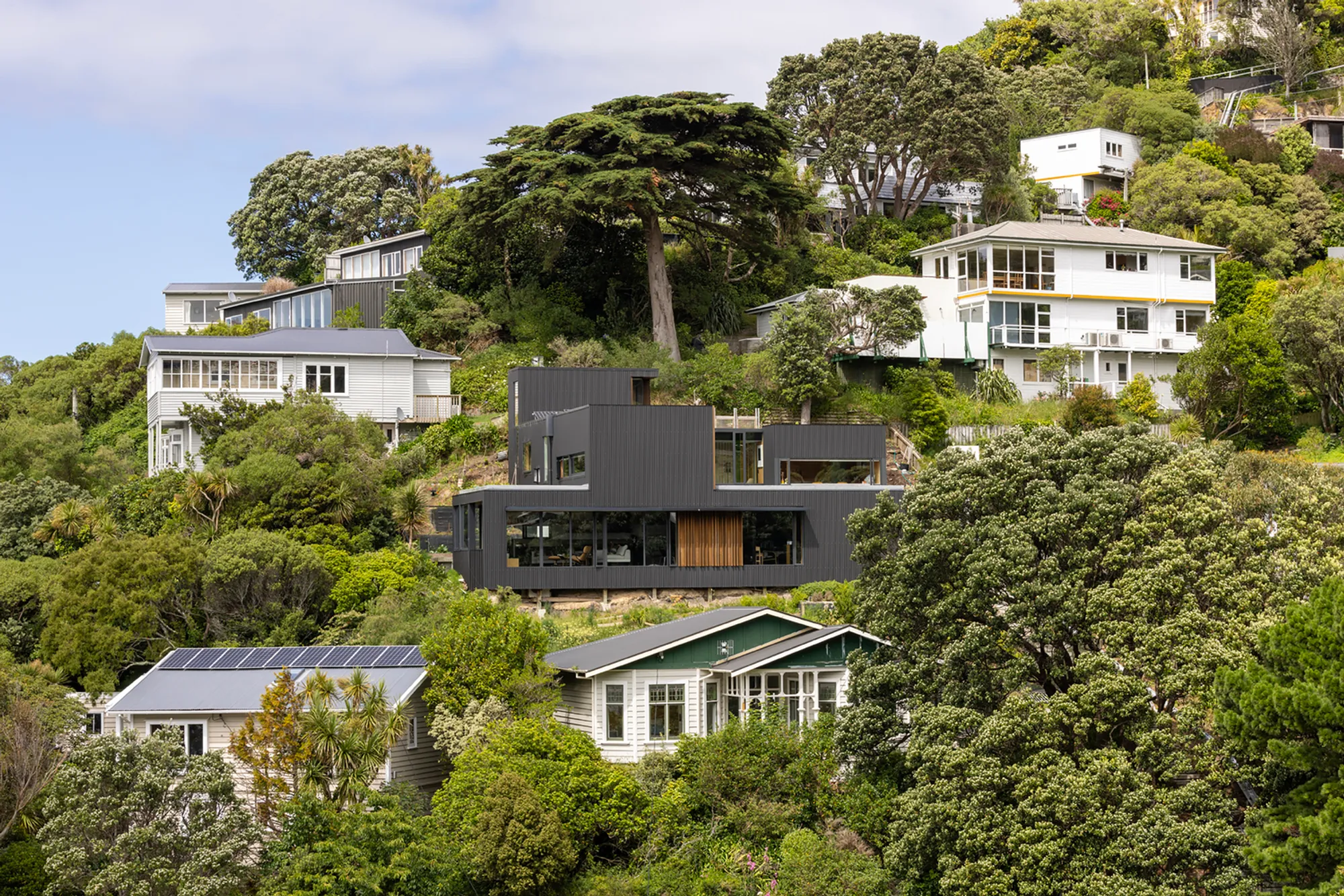
Nestled on the northern slopes of a steep, bush-covered valley overlooking Wellington Harbor, the Sar Street House is a modern family dwelling thoughtfully designed by Parsonson Architects. Serving as the architect’s own residence, this second dwelling embraces the site’s unique topography, offering a home that is both thermally efficient and energy-conscious, while remaining warm, well-ventilated, and highly functional for everyday family life.
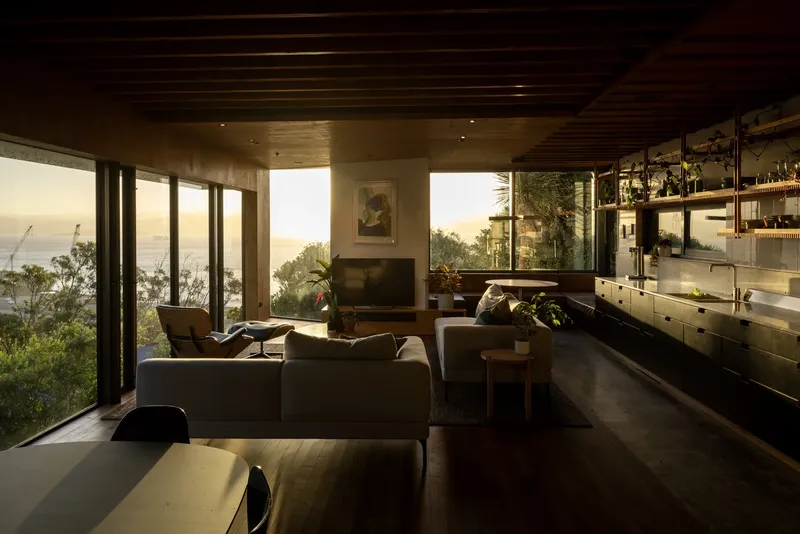
The house is perched approximately 30 meters above the street, creating a private sanctuary with panoramic views across the valley and the harbor. By stretching the living areas in an east-west orientation, the design maximizes sunlight throughout the day, bringing natural light into every corner of the home.
Site Integration and Functional Design
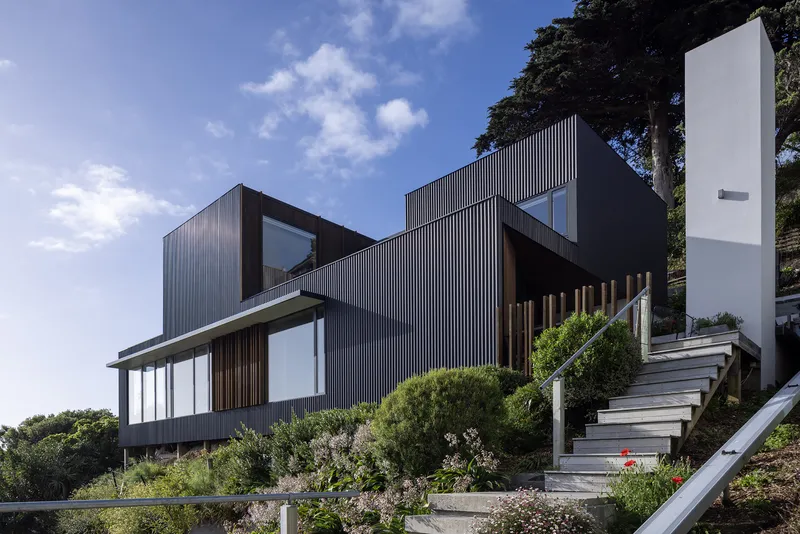
The site features a mix of mature trees and an existing 1920s villa/bungalow in the lower portion. The new dwelling is positioned sympathetically above the existing house, connected via a central stairway ‘spine’ that encourages both intended and accidental interactions between the two homes.
A series of terraced outdoor areas includes a trampoline and play space, fostering communal interaction with families from the neighboring property and creating a playful, family-friendly environment. This thoughtful integration demonstrates the architects’ commitment to responsive and context-driven design.
Materials and Construction
Given the uphill location, the house was constructed predominantly from timber framing, eliminating the need for heavy lifting equipment. Where retaining walls were necessary, light EPS blocks were utilized. Materials were selected for durability, low maintenance, and natural aesthetics, allowing the finishes to evolve gracefully over time.
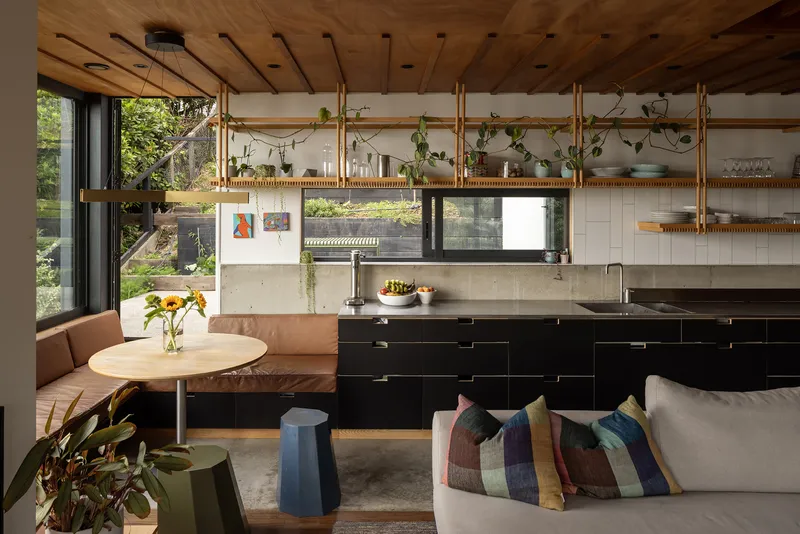
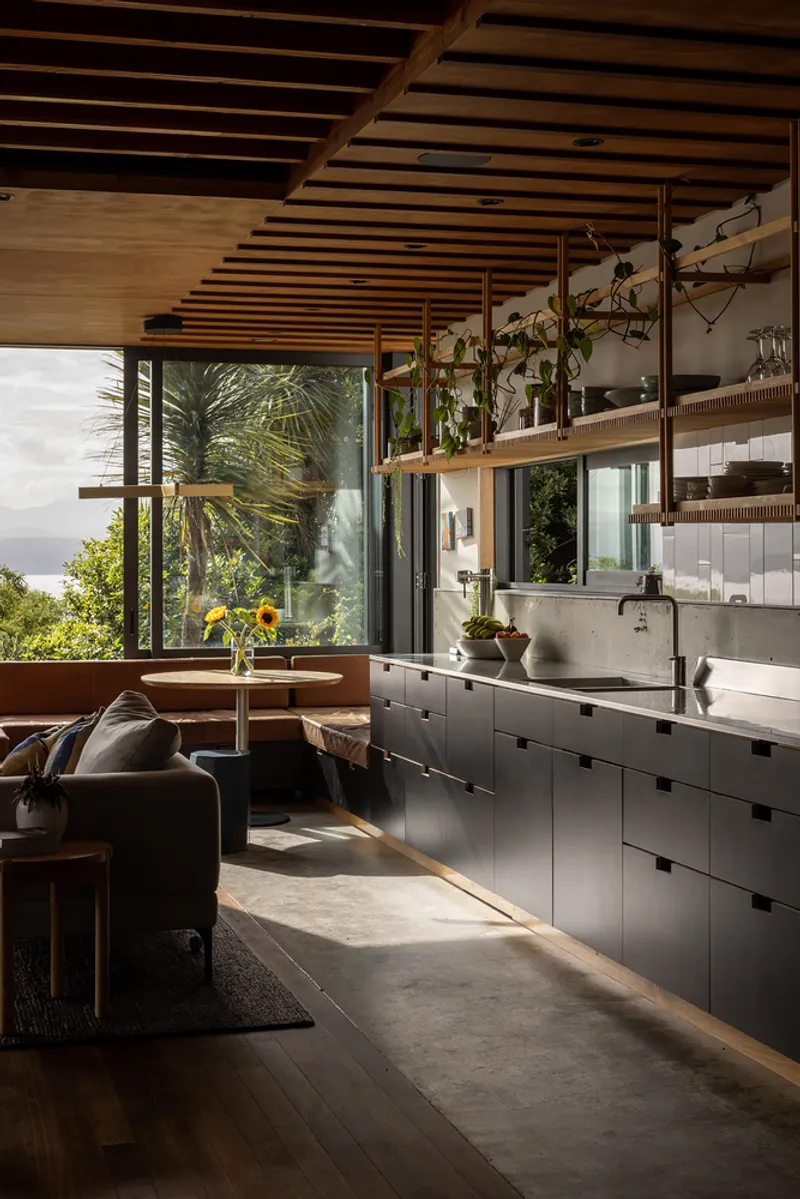
The exterior is clad primarily in corrugated Colorsteel, providing a cost-effective, minimal-maintenance solution. In areas more frequently encountered by residents or where the architectural form is emphasized, western red cedar adds texture, warmth, and a natural finish. Inside, a variety of timber species enrich the living spaces, offering visual warmth and tactile richness. Natural wood oils were applied to highlight the material’s patina, reinforcing a sense of connection between the home and its natural surroundings.
Interior Design and Spatial Experience
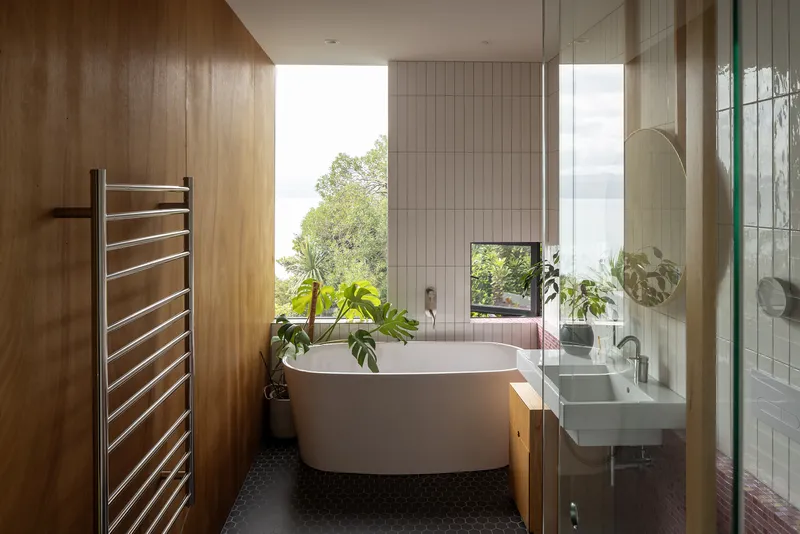
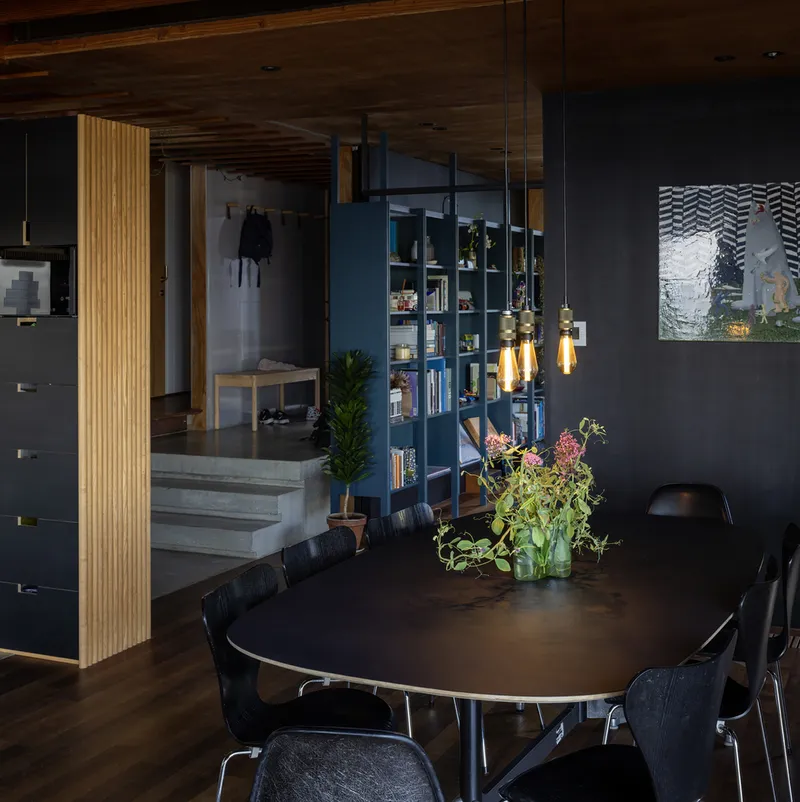
The interior of Sar Street House celebrates openness, light, and natural materials. Living, dining, and kitchen areas are interconnected, with large windows framing breathtaking views of the valley and harbor. Bedrooms and bathrooms are designed for comfort, with careful attention to ventilation, natural light, and privacy. The combination of timber beams, natural finishes, and neutral tones creates a serene and cohesive atmosphere throughout the home.
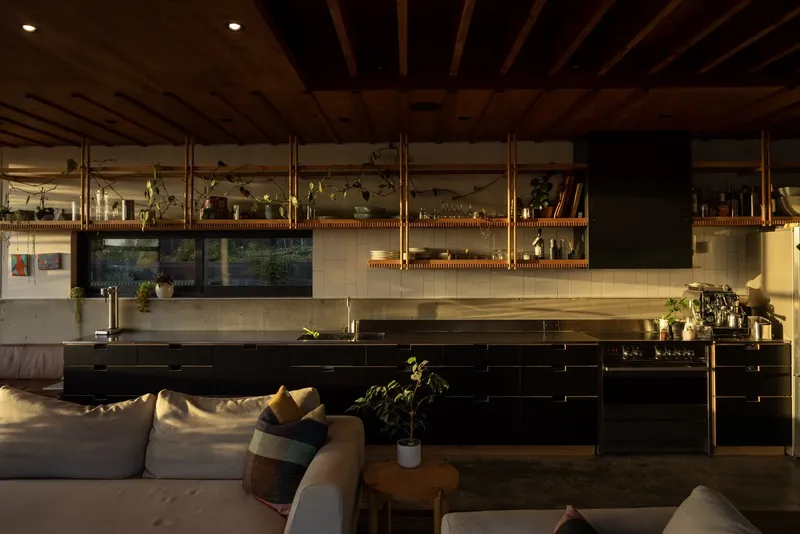
The architectural approach balances modern functionality with a sensitive response to site, climate, and family life, making it an exemplary model of contemporary residential design in New Zealand.
- Location: Northern slopes of Wellington Harbor, elevated 30 meters above street level.
- Design Concept: Contemporary, thermally efficient, family-oriented.
- Materials: Timber framing, Colorsteel cladding, western red cedar, natural wood oils.
- Sustainability: Energy-efficient, minimal maintenance, natural ventilation.
- Outdoor Spaces: Terraced play areas, trampoline, connection with neighboring dwellings.
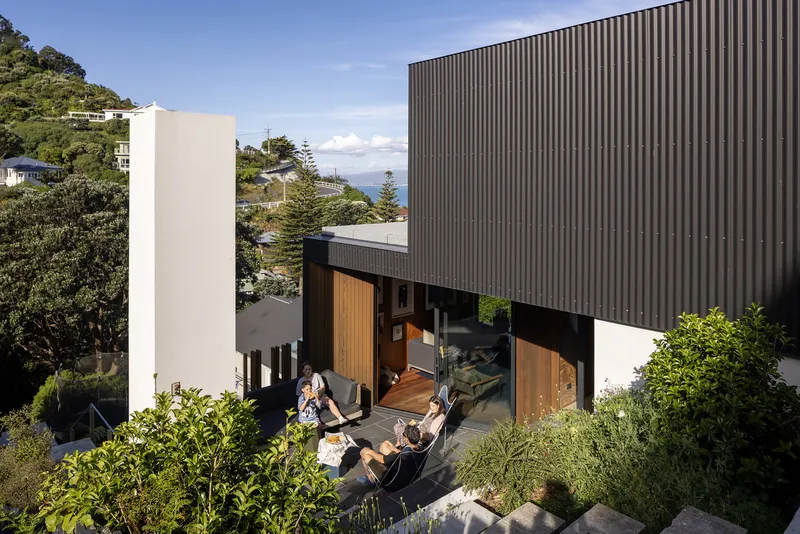
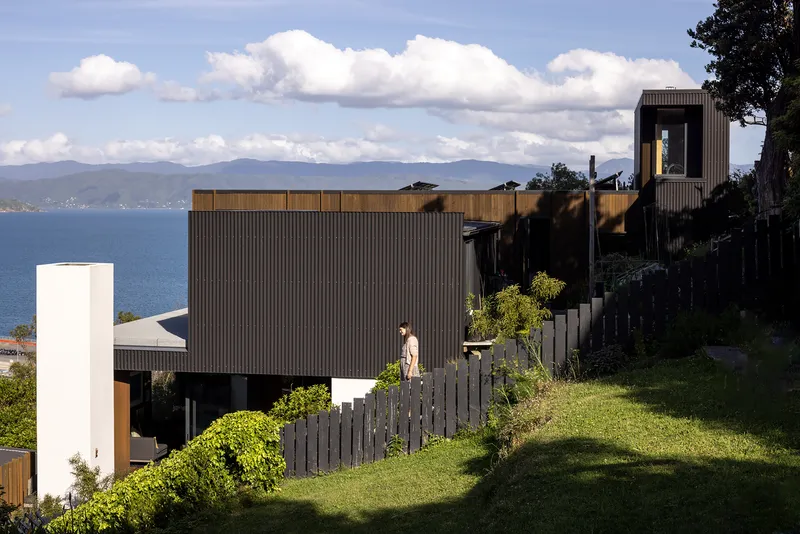
All photographs are works of Simon Devitt



Popular Articles
Popular articles from the community


Co-life: Sustainable Architecture for Age-Friendly Community Living
Co-life reimagines sustainable architecture for seniors through courtyards, rammed earth, shared gardens, and spaces designed for belonging.

Lunar Spiral: Space Architecture Shaped by the Mathematics of the Universe
Lunar Spiral reimagines space architecture through Fibonacci geometry, lunar regolith, levitating habitats, and self-sustaining Moon living.

Riyadh For All: Intergenerational Urban Design for Active Aging in Rabat
Riyadh For All reimagines urban design in Rabat with intergenerational co-living, adaptive courtyards, and Moroccan cultural exchange today.

Hill & Cross Opera: Sculptural Opera House Architecture Shaped by Tallinn’s Landscape and Identity
Hill & Cross Opera reimagines opera house architecture in Tallinn through its sculptural hill, civic plaza, glass wave and a luminous cross.


Similar Reads
You might also enjoy these articles


Hodi-Mandai Geram
Project Function: Preservation and revitalization of the Intangible heritage and socio-spatial identity of the Hodi by Housing, Cultural Memory Center, Sacred Grove, landscape, local tourism economy


Olio Towers: A Mid-Rise for Performers That Fuses Housing, Rehearsal, and Stage
Located blocks from Houston's Theater District, this modular tower stacks living units around a central performance atrium.

Oasis: Modular Green Housing Carved into Dhaka's Urban Fabric
A shortlisted Plugin Housing entry reclaims unauthorized settlements in Dhaka with stepped concrete volumes, green roofs, and ventilation-driven design.

Black Hole: A Floating Megastructure for the Post-Physical Era
Emiliano Mazzarotto envisions a spherical, self-scaling arena where e-sports, digital hotels, and holographic stadiums replace traditional public space.

Explore Housing Competitions
Discover active competitions in this discipline



Challenge to reimagine the Iron Throne


Photograph architecture without architects


Illustrate the lost glory of Angkor Wat - Render Challenge


Design challenge to reuse E-waste
Comments (0)
Please login or sign up to add comments
No comments yet. Be the first to comment!