

School Architecture in Copenhagen Meatpacking District: A Landmark of Learning, Food, and Movement
A new public school in Copenhagen’s Meatpacking District blends education, food culture, and community through bold functionalist architecture.


Reinventing Public Education Through Architecture
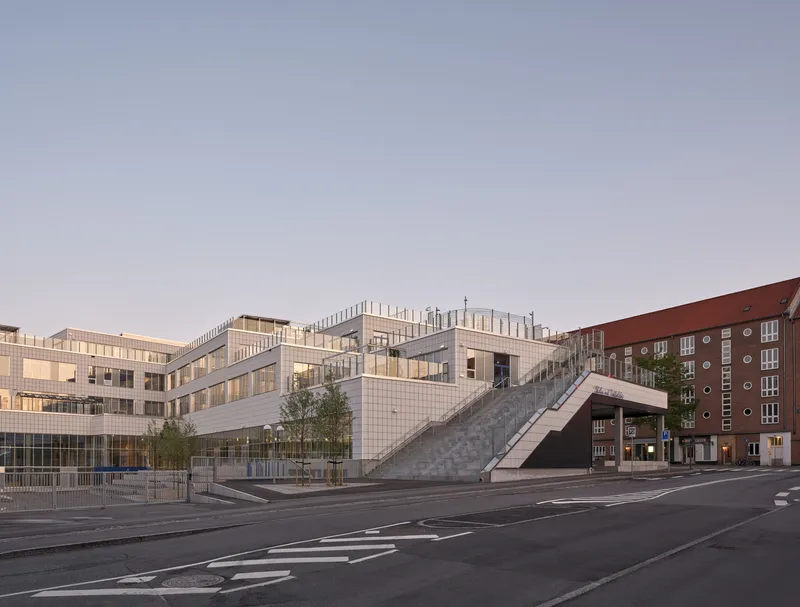
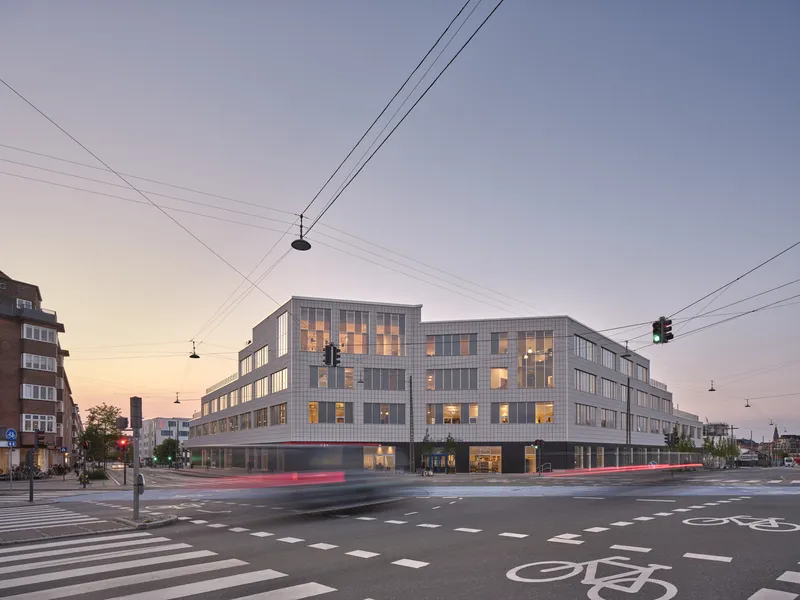
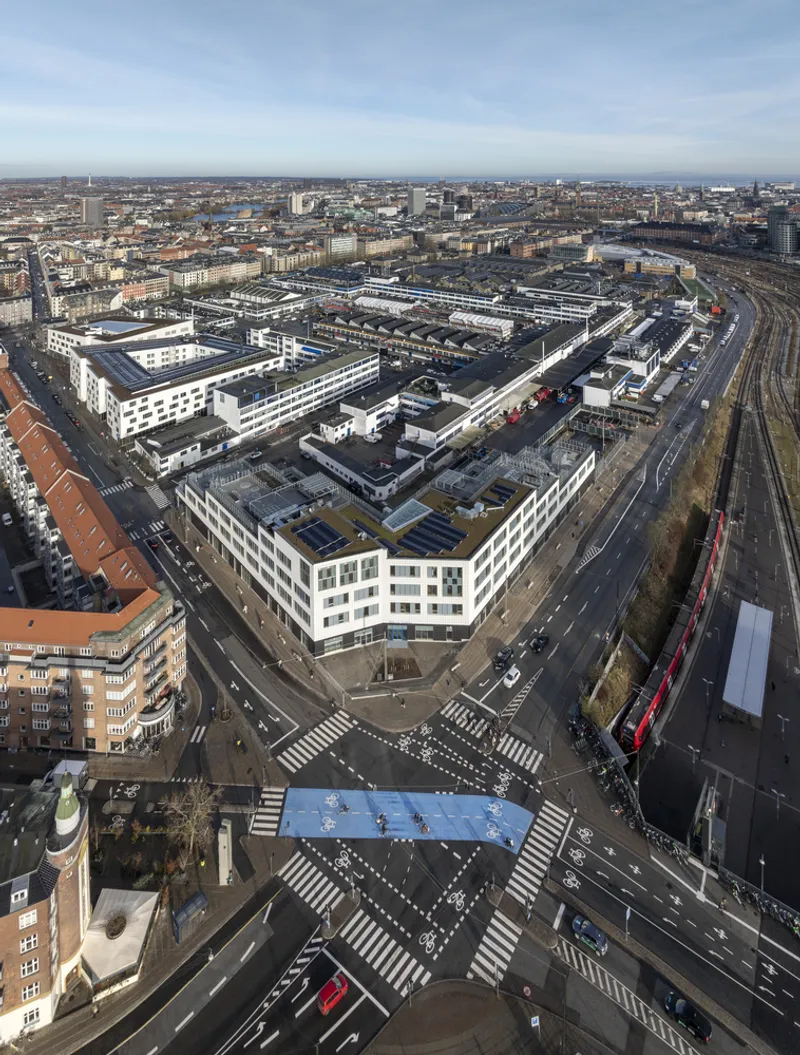
The new public school in Copenhagen’s historic Meatpacking District represents a bold evolution in school architecture in the Copenhagen Meatpacking District. Designed by NORD Architects in collaboration with BBP Arkitekter, the 12,500-square-meter facility redefines the role of education in the city through a focus on food culture, physical activity, and community engagement.
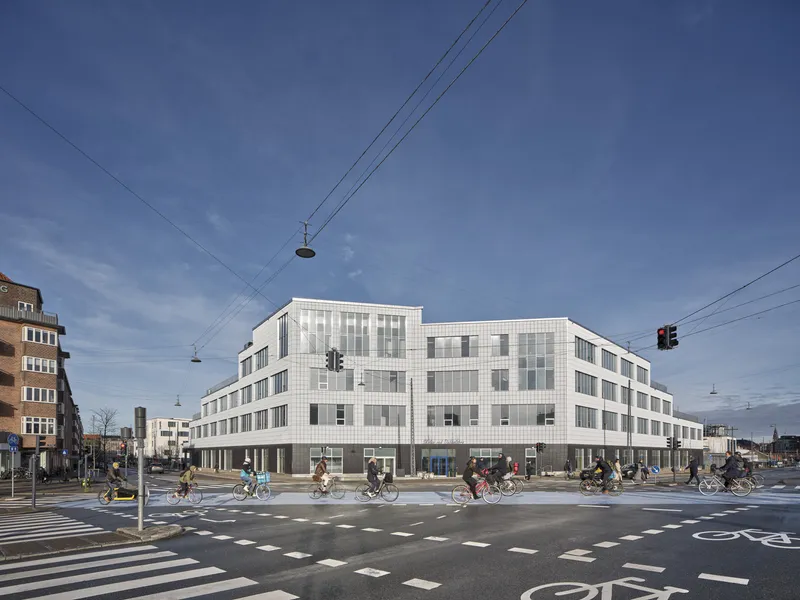


This is not just a place for academic learning—it is a civic institution that nurtures democratic participation, health awareness, and culinary citizenship, all wrapped in a built environment that bridges past and future. The school’s opening marks a milestone in the adaptive reuse and urban renewal of one of Denmark’s most historically industrial neighborhoods.


A Functionalist Heritage Reimagined
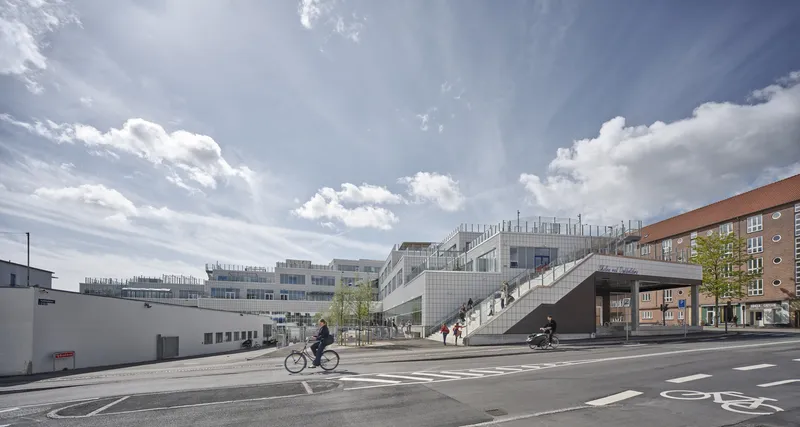
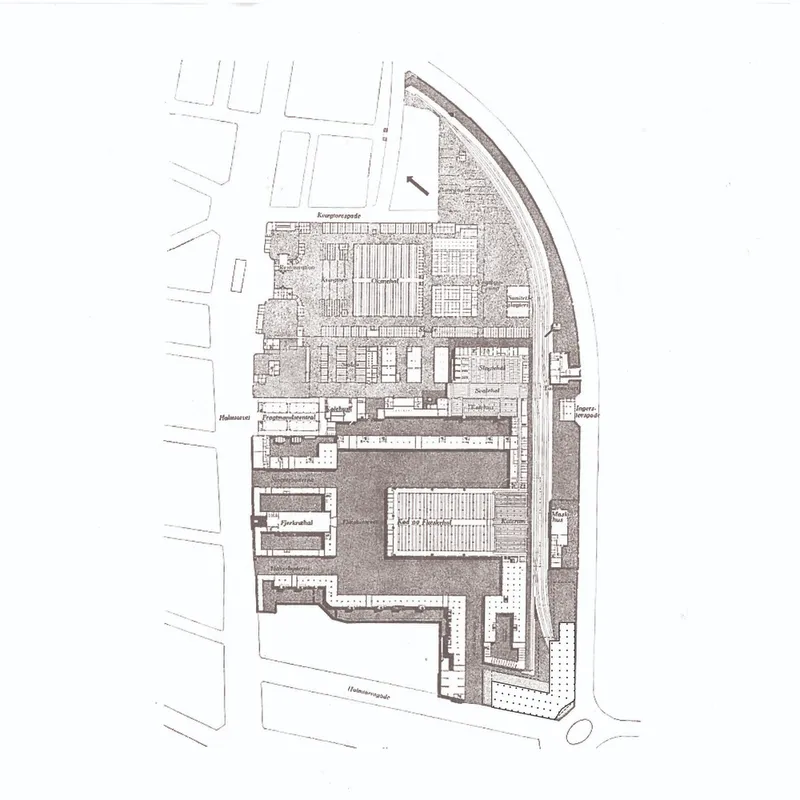
The school is deeply rooted in the architectural character of the White Meatpacking District. The area’s heritage of clean, white functionalism—originally inspired by the 1930 Stockholm World Exhibition—has been respectfully preserved and reinterpreted through a modern lens. The new design embraces the clean lines, tiled facades, and industrial material palette, while introducing human-centered features such as large windows, roof terraces, and high-ceilinged volumes.

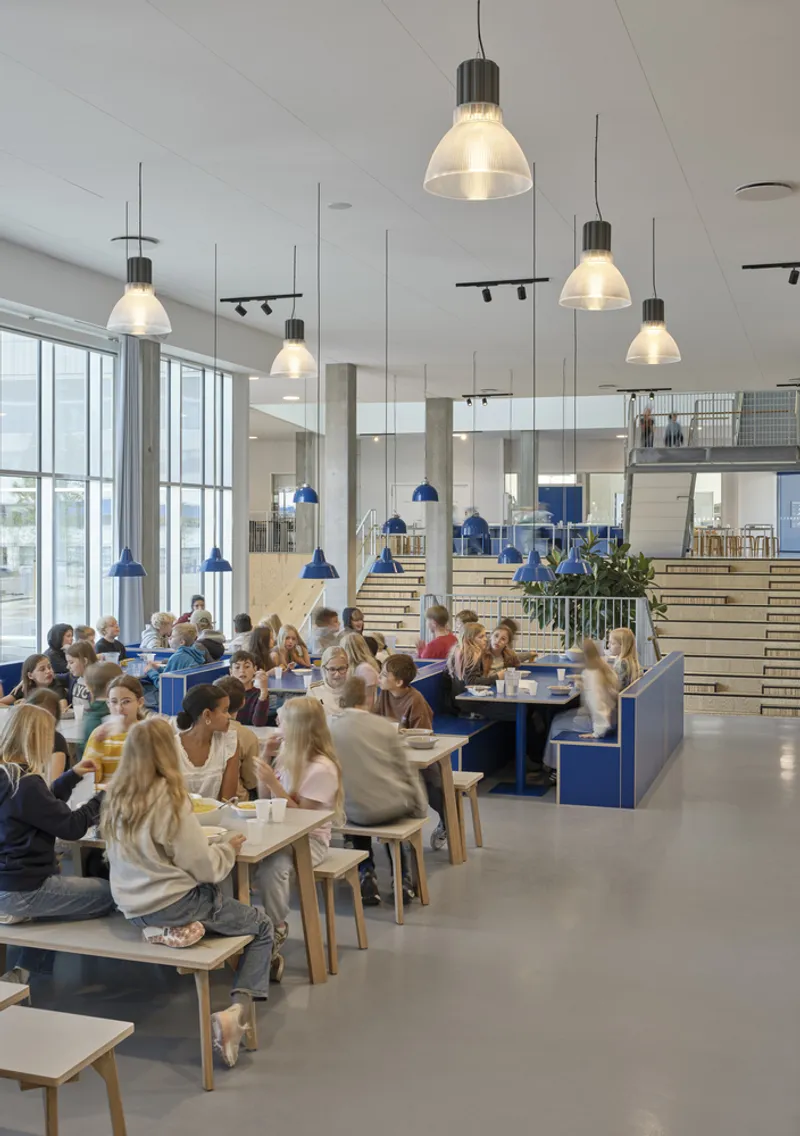
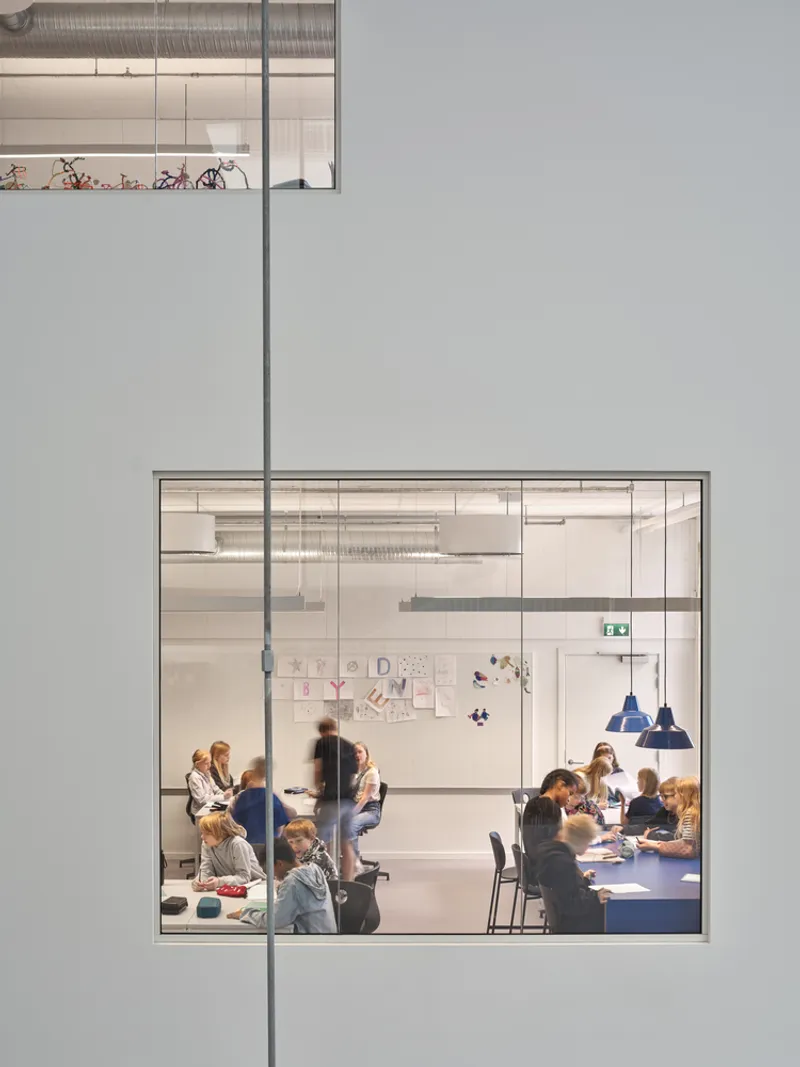
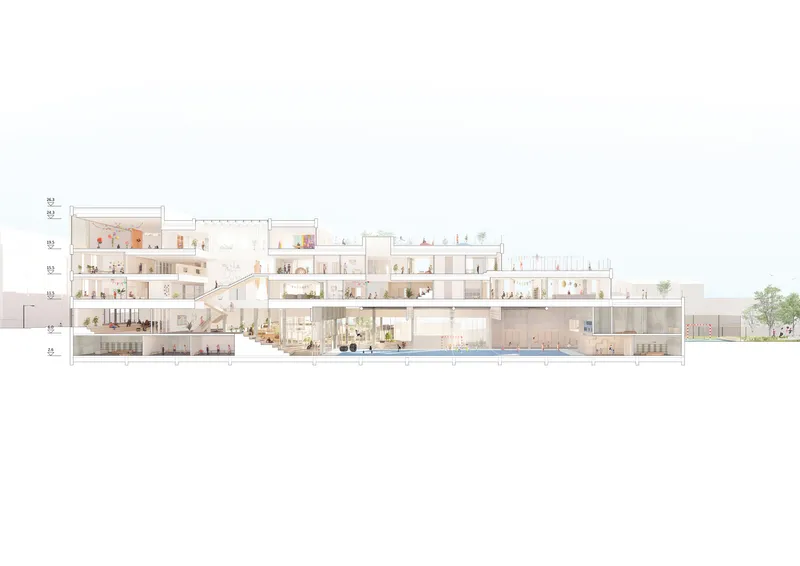
The Tumble Hall, a large corner sports facility with triple-height ceilings, becomes a civic landmark and a spatial anchor, linking the old and new layers of the district. Terraces and classrooms throughout the building offer panoramic views across Copenhagen, allowing the school to participate visually in the life of the city.

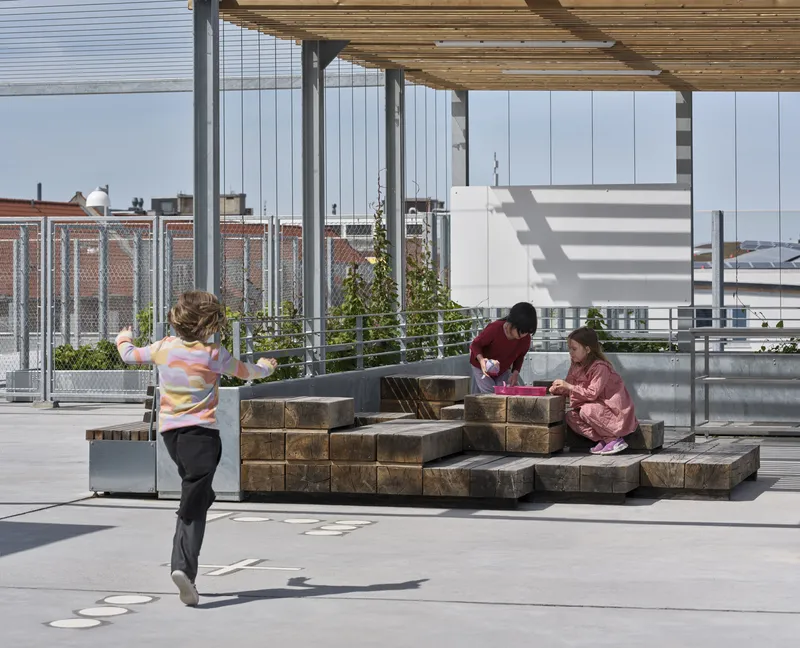
The Rooftop Schoolyard: A Vertical Landscape of Play
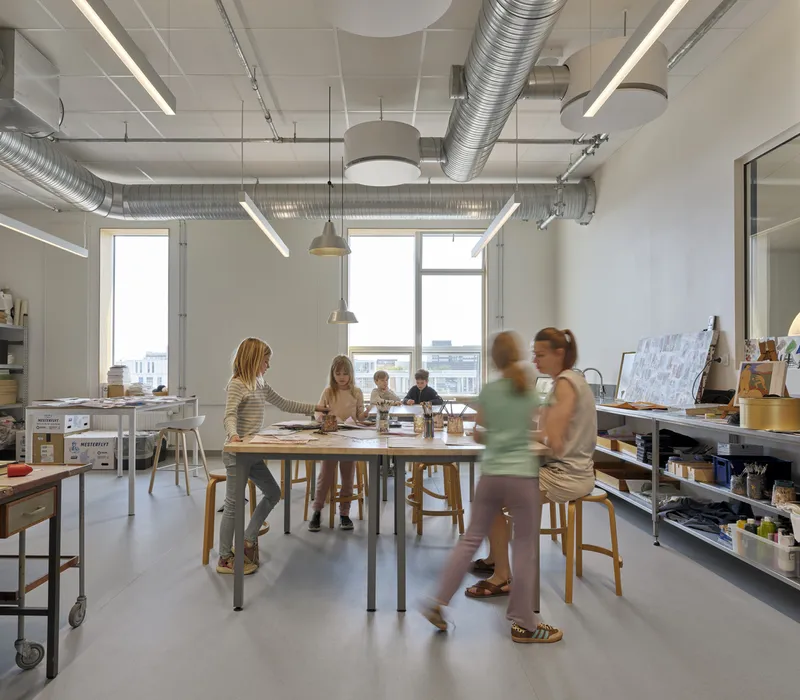
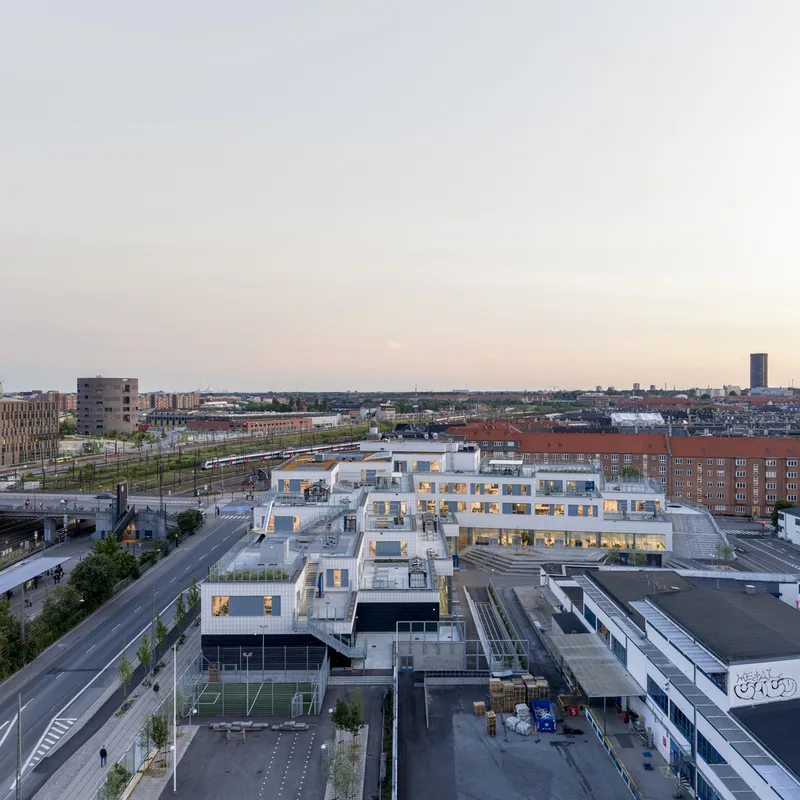
One of the most inventive features of the project is the rooftop schoolyard. Spanning three floors, this continuous outdoor loop provides space for exercise, education, and play. Rather than traditional flat playgrounds, this vertical solution weaves a landscape of terraces into the architectural fabric, connecting classrooms with outdoor learning zones.
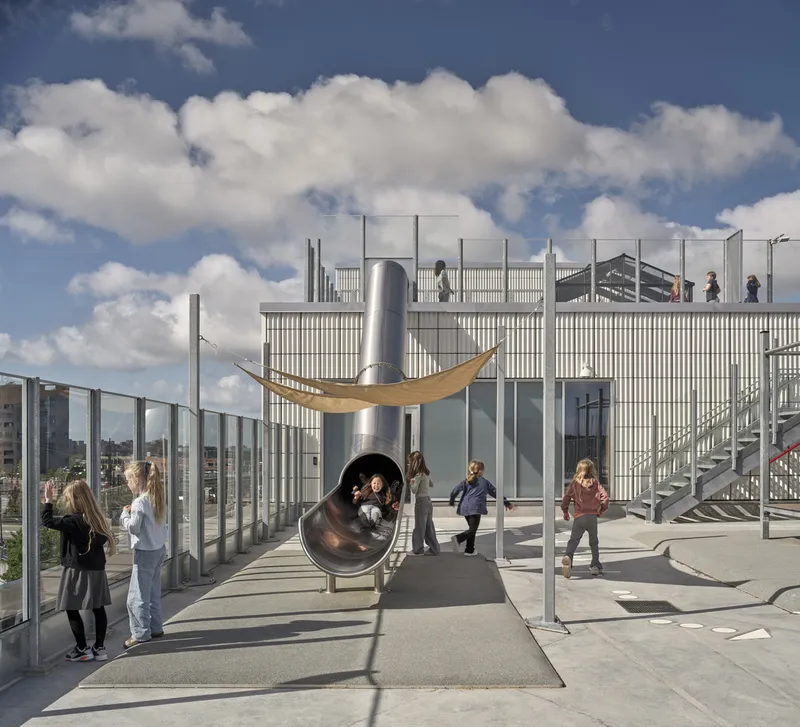
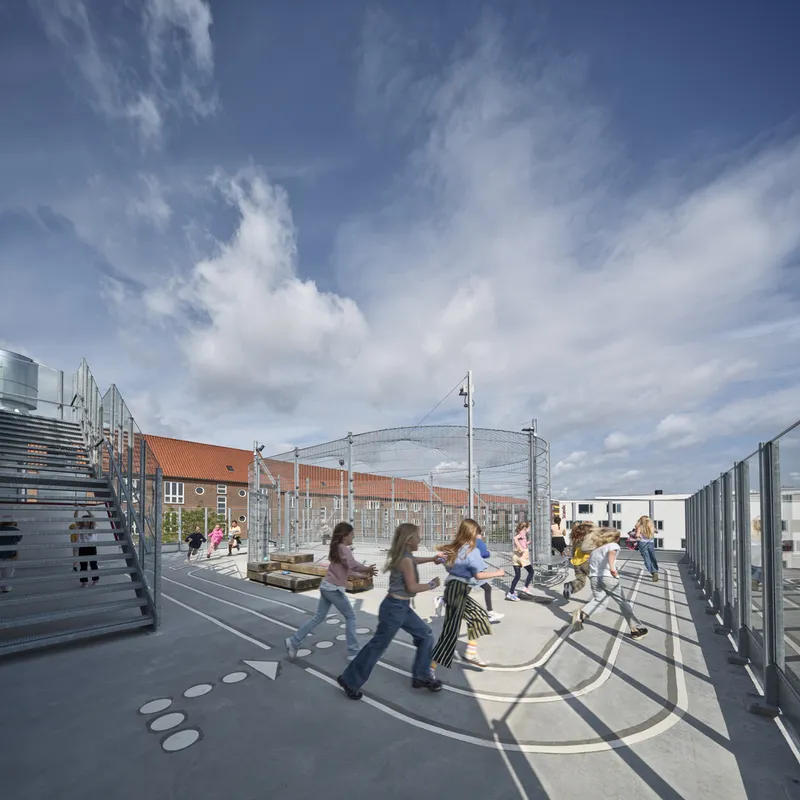

Children move freely between interior and exterior spaces, experiencing school as a dynamic environment of exploration. The Heart Space, a central atrium with a sculptural staircase and a playful slide, connects all levels both physically and visually, enhancing interaction and movement throughout the day.
A Food School for Culinary Citizenship
At the core of the school's identity is a new concept in public education: the food school. Here, food is not merely nourishment—it’s curriculum. The building includes a production kitchen and a teaching kitchen that are open to students during the day and to the local community after hours. Students not only learn to cook, but also to understand the cultural, social, and ecological dimensions of food.
This architectural expression of “food citizenship” draws inspiration from the district’s past as a hub of meat production, while promoting a future rooted in sustainability and shared cultural heritage. Kitchens and dining spaces connect directly to terraces, allowing students to grow herbs, cook meals, and share them outdoors.
Integrating Learning, Movement, and Civic Life
This school doesn’t end at the classroom door. With spaces designed to be open, fluid, and multifunctional, it invites the broader public into its ecosystem. The 1,250-square-meter sports hall can be subdivided and used by local associations in the evening. The teaching kitchens become community spaces. Rooftop terraces double as urban farms and event venues.
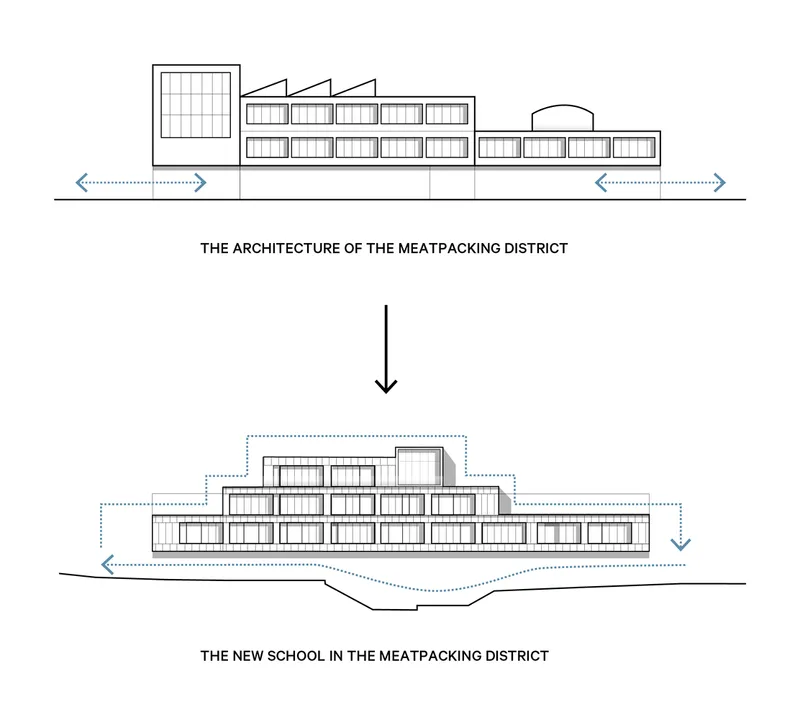
The result is a school that acts as an urban node—educational by day, civic by night. It’s a model for how public architecture can create shared spaces for movement, dialogue, and cultural continuity.
A Vision for Future Urban Schools
The Public School in the Meatpacking District is more than an architectural achievement. It is a civic experiment in how school architecture in the Copenhagen Meatpacking District can serve not only students, but entire neighborhoods. It demonstrates that schools can be spatially rich, socially inclusive, and deeply rooted in local identity.
As cities densify and diversify, this project stands as a blueprint for integrating educational, culinary, and communal life in one vertical, vibrant institution. In doing so, it honors the past while cultivating the next generation of engaged, healthy, and knowledgeable citizens.
All Photographs are works of Adam Mørk



Popular Articles
Popular articles from the community


Lunar Spiral: Space Architecture Shaped by the Mathematics of the Universe
Lunar Spiral reimagines space architecture through Fibonacci geometry, lunar regolith, levitating habitats, and self-sustaining Moon living.

Co-Life: Senior Housing Design That Reconnects Older Adults With the City
Co-Life reimagines senior housing design through healing gardens, shared streets, workshops, and a sustainable community across generations.

Co-life: Sustainable Architecture for Age-Friendly Community Living
Co-life reimagines sustainable architecture for seniors through courtyards, rammed earth, shared gardens, and spaces designed for belonging.

Riyadh For All: Intergenerational Urban Design for Active Aging in Rabat
Riyadh For All reimagines urban design in Rabat with intergenerational co-living, adaptive courtyards, and Moroccan cultural exchange today.
Similar Reads
You might also enjoy these articles

FAMM Arquitectura Organizes Ten Villas Around Courtyards and Jungle in Nosara, Costa Rica
El Molino pairs two elongated volumes with deep overhangs and timber louvers to build a compact coastal community five minutes from the beach.
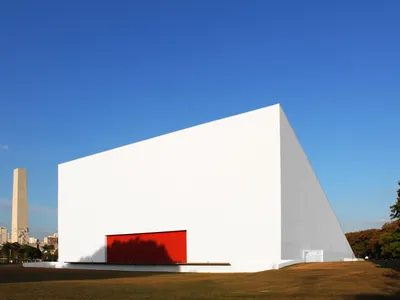
Oscar Niemeyer's Ibirapuera Park Pavilions Define São Paulo's Cultural Identity in Concrete and Curve
A constellation of modernist volumes set within São Paulo's most important urban park, conceived for the city's 400th anniversary in 1954.
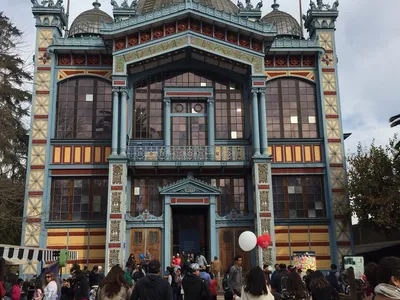
How Henri Picq's 1889 Paris Pavilion Traveled 11,000 Kilometers to Become Santiago's Artequín Museum
A prefabricated iron and glass pavilion built for the Paris Universal Exposition found a second life as a children's art museum in Chile.
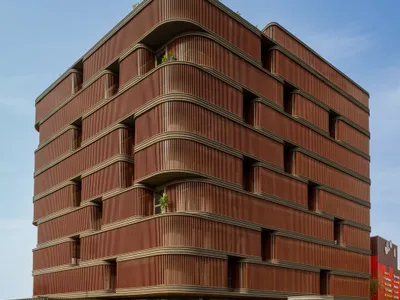
Sanjay Puri Architects Wraps a Jaipur Office Tower in Capsule-Shaped Green Buffers
A nine-level climate-responsive workplace near Jaipur Airport uses stacked planter terraces and aluminium screens to fight 40°C heat.


Explore Aa Architecture School Competitions
Discover active competitions in this discipline



Challenge to reimagine the Iron Throne


Photograph architecture without architects


Illustrate the lost glory of Angkor Wat - Render Challenge


Design challenge to reuse E-waste
Comments (0)
Please login or sign up to add comments
No comments yet. Be the first to comment!