
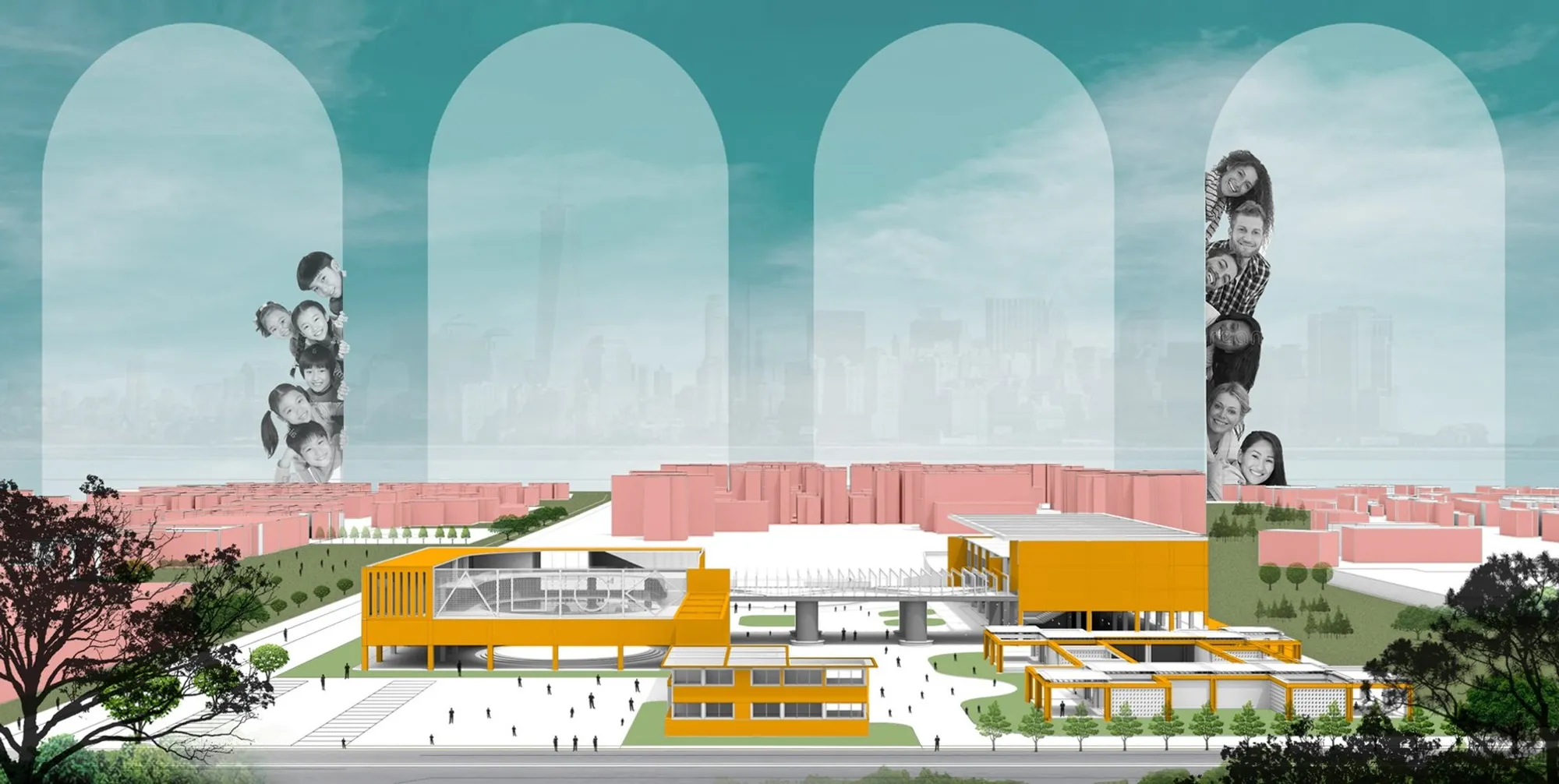
School of Thought: A Contemporary School Architecture Concept Redefining Educational Spaces
A contemporary school architecture concept redefining learning through emotional growth, collaboration, and adaptive education spaces.


Educational spaces are rapidly evolving in response to the changing emotional, social, and intellectual needs of students. Traditional school environments, once designed around rigid systems of discipline and repetitive learning patterns, are increasingly being questioned by architects and educators seeking more human-centered alternatives. The project School of Thought by Sreya Paul explores this transformation through a bold contemporary school architecture proposal that reimagines how students interact with learning, society, and themselves.
Recognized as an Editor’s Choice entry in the School Of Thought 2020 competition, the project proposes a learning environment that extends beyond classrooms and examinations. Instead, it introduces architecture as an active participant in education, creating spaces that nurture emotional development, collaboration, creativity, independence, and self-awareness.
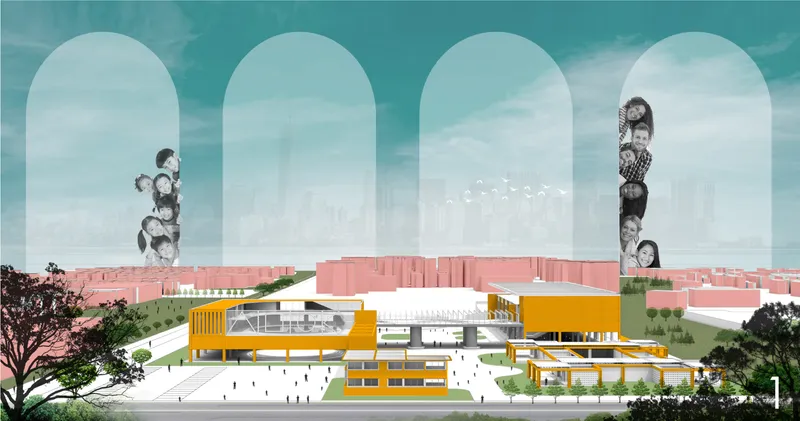
Contemporary School Architecture and the Future of Learning
The project begins with a strong critique of conventional education systems. Modern schools often operate within highly structured academic frameworks where students are pressured to conform to predefined standards and responsibilities. In many cases, these systems unintentionally suppress creativity, emotional intelligence, and independent thought.
School of Thought challenges this condition by proposing a contemporary school architecture model centered on experiential learning and adaptive environments. The project imagines the school not simply as a place for receiving information, but as a dynamic ecosystem where students develop social awareness, practical skills, emotional intelligence, and personal identity.
The architectural language reflects this philosophy through a balance of openness and enclosure. Spaces are designed to create moments of interaction, reflection, and exploration while maintaining a strong sense of belonging and security for students navigating the critical stages of adolescence.
Architecture as a Tool for Emotional and Social Development
One of the most compelling aspects of the project is its emphasis on emotional and social growth. Rather than focusing solely on academic achievement, the design acknowledges the psychological and emotional realities of contemporary student life.
The conceptual diagrams highlight key educational values such as:
- Social development
- Emotional development
- Collaboration
- Technical inquiry
- Skills and creativity
- Hands-on workshops
- Knowledge exchange
These values are translated into spatial experiences throughout the campus. Open collaborative zones encourage communication and teamwork, while adaptable modules allow students to shape and personalize their learning environments.
The project recognizes that students learn differently when they feel emotionally connected to their surroundings. Through carefully considered circulation, gathering spaces, open courtyards, and interactive learning zones, the architecture creates an atmosphere where students can engage with both their peers and their own thoughts.
A Modular Approach to Contemporary Educational Design
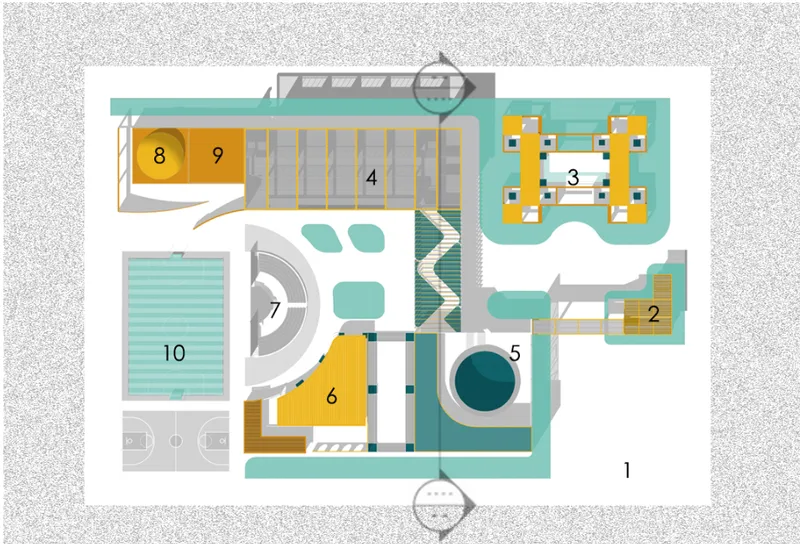
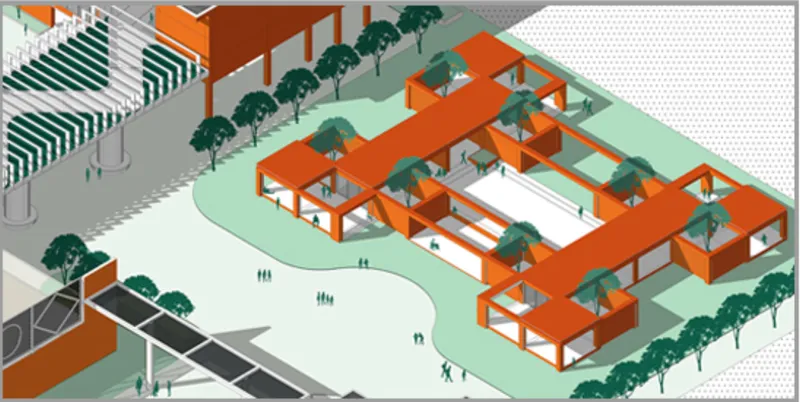
The masterplan is organized using a strategic grid-based system that combines discipline with flexibility. This modular framework allows the campus to function efficiently while maintaining openness and fluidity across the site.
The design process introduces concepts such as radial movement patterns, deployable modules, human-scale interventions, and dynamic transitions between spaces. These principles help establish an educational environment that feels adaptable rather than restrictive.
The modular strategy also allows different functions to coexist harmoniously within the campus. Academic blocks, collaborative activity zones, meditation spaces, amphitheaters, workshops, and playgrounds are connected through a coherent circulation network that promotes interaction and movement.
This approach reflects broader trends in contemporary school architecture where flexibility and user participation are becoming central to educational design.
Human-Centered Educational Spaces
The project strongly emphasizes human-scale architecture. The spaces are intentionally designed to feel approachable and relatable for students rather than monumental or institutional.
Large educational campuses can often create feelings of alienation, especially for younger users. School of Thought counters this through carefully proportioned volumes, open courtyards, visual transparency, and adaptable classrooms.
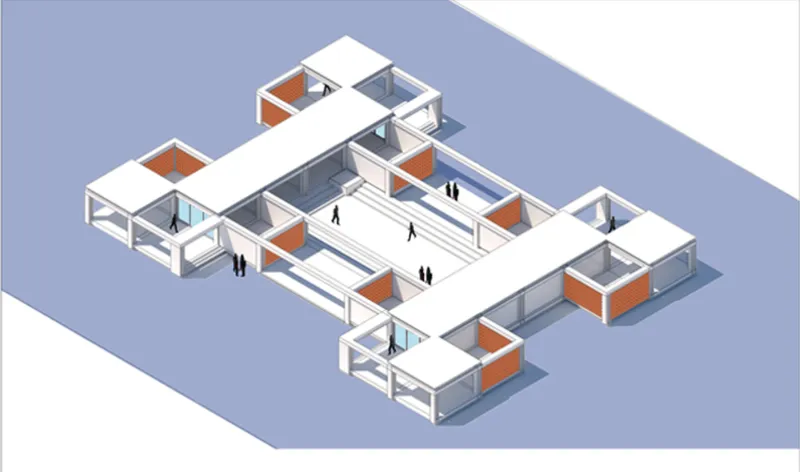
The proposal also introduces deployable classroom modules that students can modify according to different activities and collaborative needs. This flexibility empowers students to actively participate in shaping their learning experiences rather than passively occupying static spaces.
By encouraging personalization and interaction, the architecture supports independent thinking and self-expression, two qualities that are increasingly essential within modern educational systems.
Open Spaces and Community Interaction
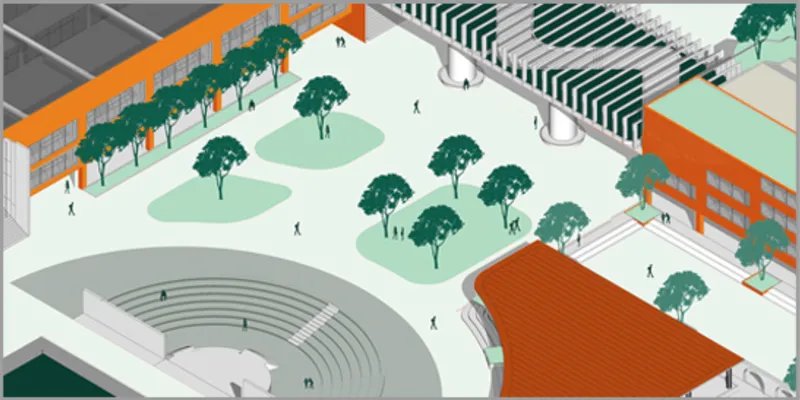
Another defining feature of the project is its integration of public and semi-public gathering spaces. Amphitheaters, open platforms, courtyards, and communal activity zones create opportunities for social interaction beyond conventional classroom settings.
The open-air theater and collaborative learning spaces function as cultural and intellectual hubs where students can engage in performances, discussions, workshops, and collective activities.
These elements transform the school into a miniature urban environment where learning happens through observation, communication, and participation. This aligns closely with contemporary pedagogical approaches that value interdisciplinary and experiential learning.
The architectural composition also creates strong visual connections across the campus. Open corridors, bridges, and transparent interfaces reinforce the idea of learning as a shared and collective process.

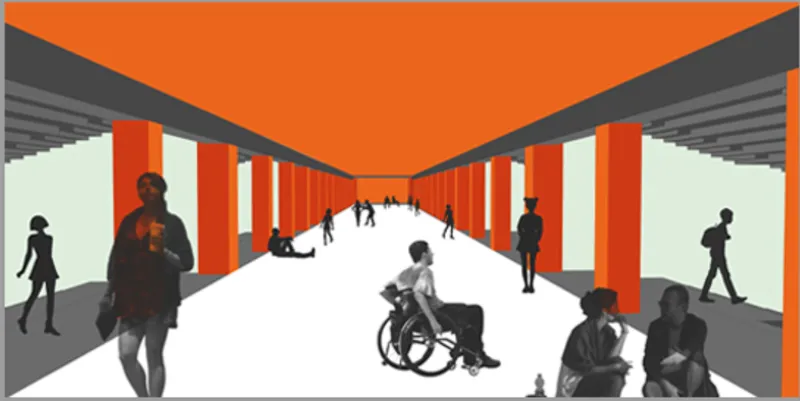
Spatial Flexibility and Adaptive Learning Environments
Adaptability plays a major role in the project’s architectural identity. Rather than assigning rigid functions to each space, the design allows environments to evolve according to different educational activities.
The classroom typologies challenge traditional linear learning systems by introducing more flexible arrangements. Instead of isolated classrooms disconnected from one another, the proposal creates interconnected educational zones that support collaboration and interdisciplinary learning.
Meditation spaces, laboratories, workshops, and informal interaction zones are integrated into the academic blocks, ensuring that learning is not confined to a single format.
This spatial flexibility reflects the growing global demand for schools that can respond to changing educational practices and technological advancements.
Contemporary School Architecture and Environmental Experience
The visual identity of the project reinforces its conceptual intentions. The use of open courtyards, natural ventilation strategies, shaded pathways, and transitional outdoor spaces creates a calming environmental experience.
The architecture avoids excessive formal complexity and instead focuses on clarity, movement, and interaction. The muted material palette and carefully framed open spaces create a peaceful atmosphere that contrasts with the stress and rigidity often associated with educational institutions.
Natural light also plays an important role throughout the project. Openings, courtyards, and semi-covered circulation areas allow daylight to penetrate deep into the campus, improving both environmental quality and psychological comfort.
The relationship between architecture and landscape further enhances the sense of openness and freedom within the design.
Redefining Educational Architecture Through Experience
School of Thought ultimately presents architecture as more than a physical container for classrooms. The project argues that educational environments directly influence how students think, communicate, and grow.
By integrating emotional awareness, collaboration, flexibility, and community engagement into the design process, the proposal demonstrates how contemporary school architecture can become a catalyst for personal and social transformation.
The project also reflects a broader shift within architecture where schools are increasingly being designed as holistic ecosystems rather than isolated academic facilities.
In a rapidly changing world shaped by technological advancement, social complexity, and evolving cultural values, educational architecture must adapt accordingly. School of Thought responds to this challenge with a design language that prioritizes humanity, creativity, and adaptability.
A Vision for Future Educational Spaces
As educational institutions continue to evolve, projects like School of Thought provide valuable insight into the future of learning environments. The proposal demonstrates that architecture has the power to shape not only physical spaces but also human behavior, emotional well-being, and intellectual growth.
By creating spaces where students can collaborate, reflect, explore, and express themselves freely, the project establishes a compelling vision for the next generation of schools.
Designed by Sreya Paul, this Editor’s Choice entry from School Of Thought 2020 successfully reimagines the role of architecture within education. Through its thoughtful integration of spatial flexibility, emotional awareness, and collaborative design principles, the project stands as an inspiring example of contemporary school architecture focused on the holistic development of students.
School of Thought is not simply a school design proposal. It is an architectural statement about the importance of creating learning environments where students can discover identity, independence, and purpose within an increasingly complex contemporary world.




Popular Articles
Popular articles from the community


Riyadh For All: Intergenerational Urban Design for Active Aging in Rabat
Riyadh For All reimagines urban design in Rabat with intergenerational co-living, adaptive courtyards, and Moroccan cultural exchange today.

Co-Life: Senior Housing Design That Reconnects Older Adults With the City
Co-Life reimagines senior housing design through healing gardens, shared streets, workshops, and a sustainable community across generations.

Lunar Spiral: Space Architecture Shaped by the Mathematics of the Universe
Lunar Spiral reimagines space architecture through Fibonacci geometry, lunar regolith, levitating habitats, and self-sustaining Moon living.

Conexión: Biophilic Design Reimagines High-Rise Living in Hong Kong
Conexión reimagines high-rise living in Hong Kong through biophilic design, green facades, shared spaces, daylight, water and nature within.


Similar Reads
You might also enjoy these articles

Eco Chapel: A Green Architecture Pavilion Designed in Symbiosis with the Forest
Eco Chapel uses green architecture to weave prayer, learning and reuse into a forest pavilion shaped by modular hexagonal canopies for life.
Kaffeebühnen: Coffee Shop Architecture Designed as a Civic Stage Between Vienna’s City and Park
Kaffeebühnen turns coffee shop architecture into a civic stage, linking Vienna’s park edge, urban life, warm timber yards, and coffee craft.
Healing Façade: Sustainable Architecture for Reforestation, Community, and Sacred Ecology in Ethiopia
Healing Façade reimagines sustainable architecture as a living wall that restores soil, catches water and renews Ethiopia's forest churches.


Urban Forest: A Vertical Ecosystem for 5,000 Workers in Singapore's Changi Business Park
Radially stacked pods and layered green decks turn a 7-acre plot into 47 acres of ecological workspace projected for 2040.


Explore Architecture Competitions
Discover active competitions in this discipline



Challenge to reimagine the Iron Throne


Photograph architecture without architects


Illustrate the lost glory of Angkor Wat - Render Challenge


Design challenge to reuse E-waste
Comments (0)
Please login or sign up to add comments
No comments yet. Be the first to comment!