
Ses Veles Housing by Alventosa Morell Arquitectes + Joan Josep Fortuny Giró – Regenerative Island Housing Rooted in Local Craft and Climate Logic
Six climate-responsive homes in Mallorca built with local materials, passive strategies, and circular construction, merging vernacular tradition with near-zero energy performance.


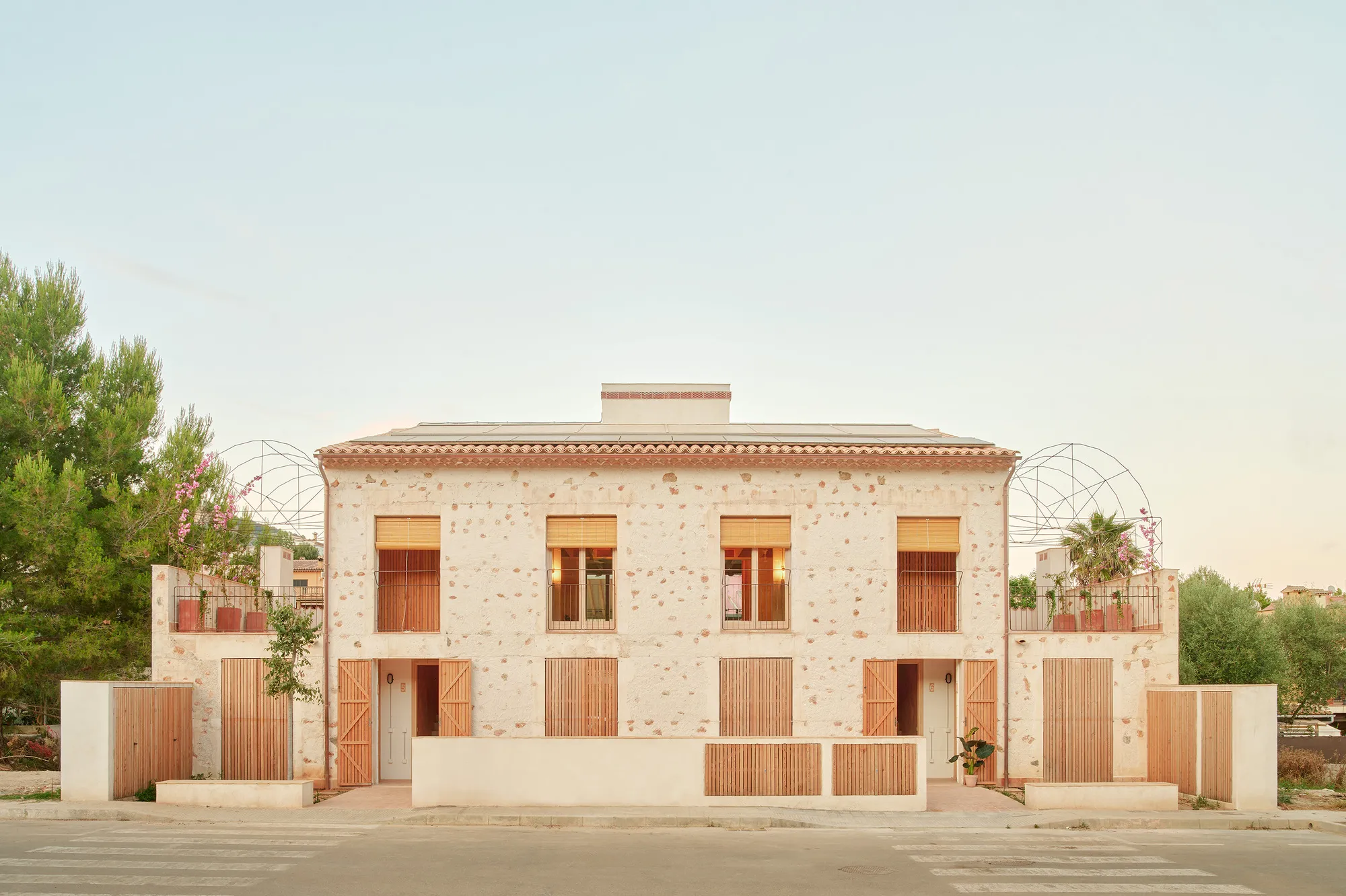
Located in Puigpunyent, Mallorca, the Ses Veles Housing project—developed by the Balearic Housing Institute (IBAVI) and designed by Alventosa Morell Arquitectes in collaboration with Joan Josep Fortuny Giró—is a pioneering model of low-impact, locally rooted, and climate-responsive residential architecture. Conceived as an alternative to carbon-intensive construction and rising housing costs, the project revives vernacular building trades and materials while implementing contemporary passive-energy strategies.

The result is a 400 m² residential ensemble that merges social housing with environmental stewardship, demonstrating how island culture, self-sufficiency, and regenerative design can shape the future of Mediterranean housing.
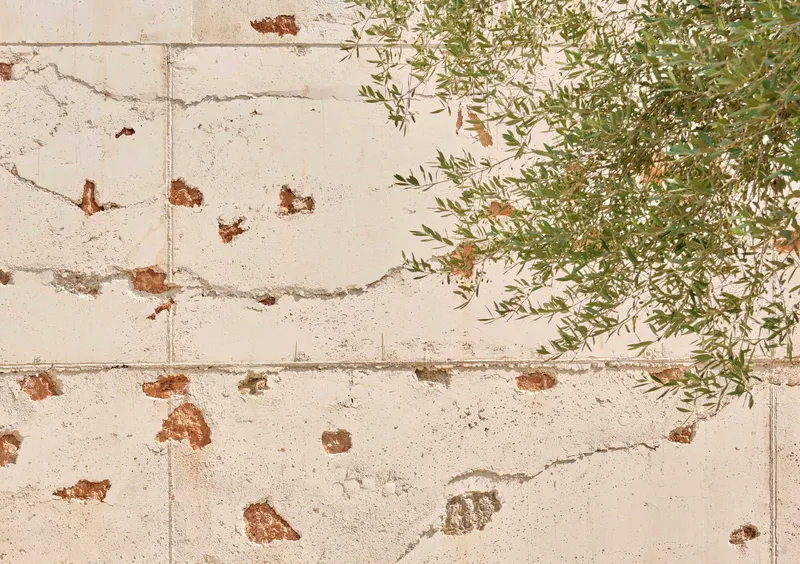
A Housing Model Built on Local Economy and Circular Construction
The designers approached the project from the principle of territorial regeneration, emphasizing local labor, accessible construction systems, and materials sourced from the island itself. This philosophy restores traditional expertise—such as lime-based construction and ceramic partitioning—while reducing transportation emissions and supporting regional industries.
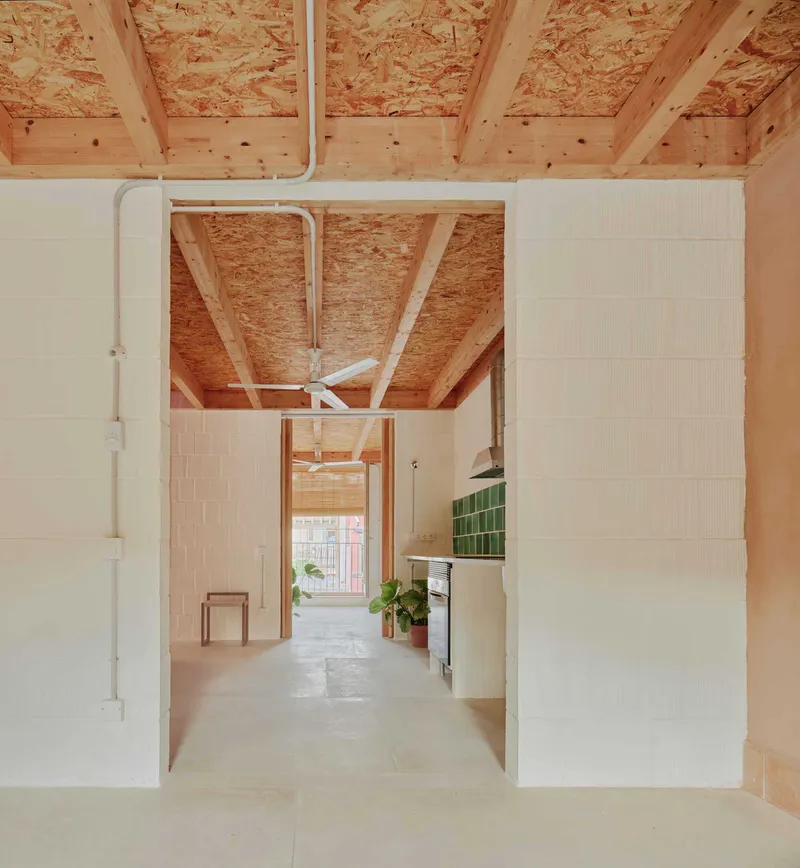
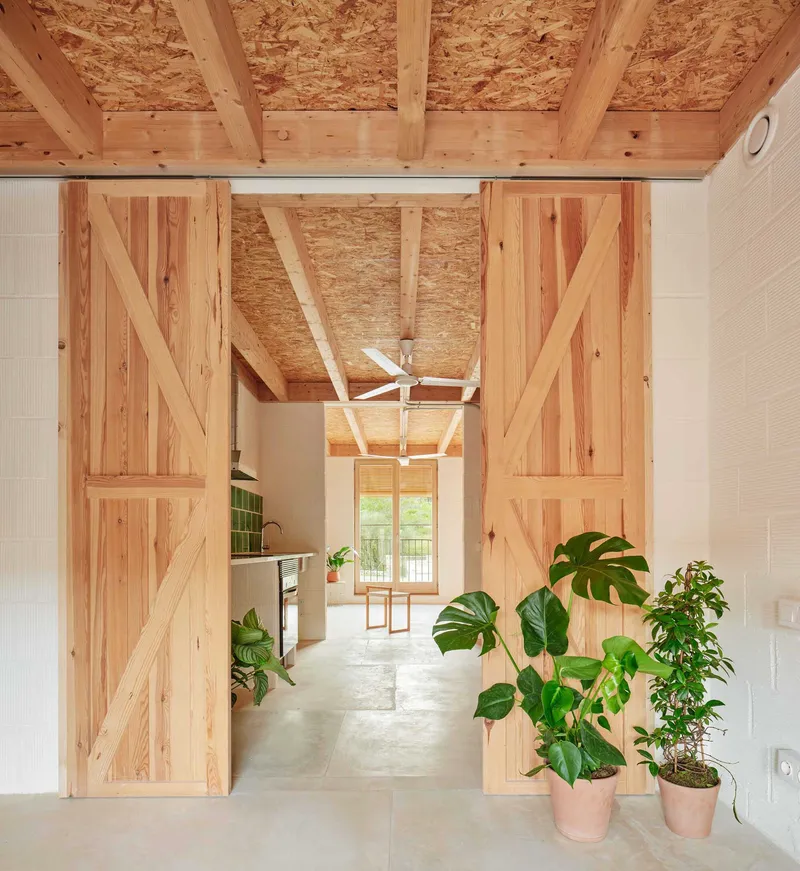
Key material strategies include:
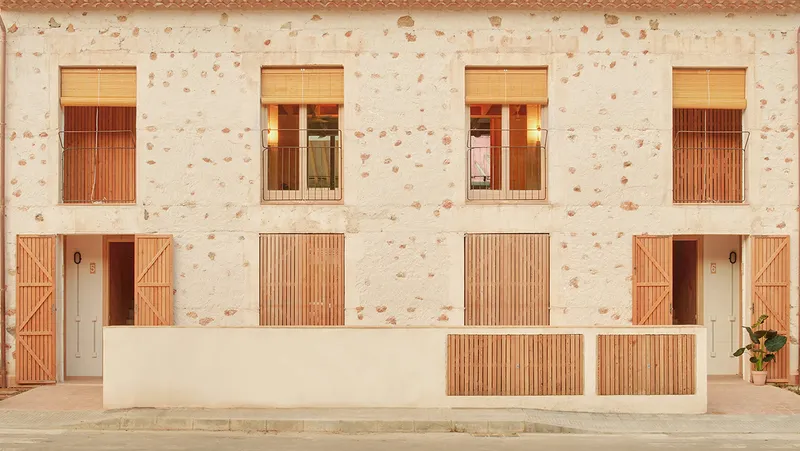
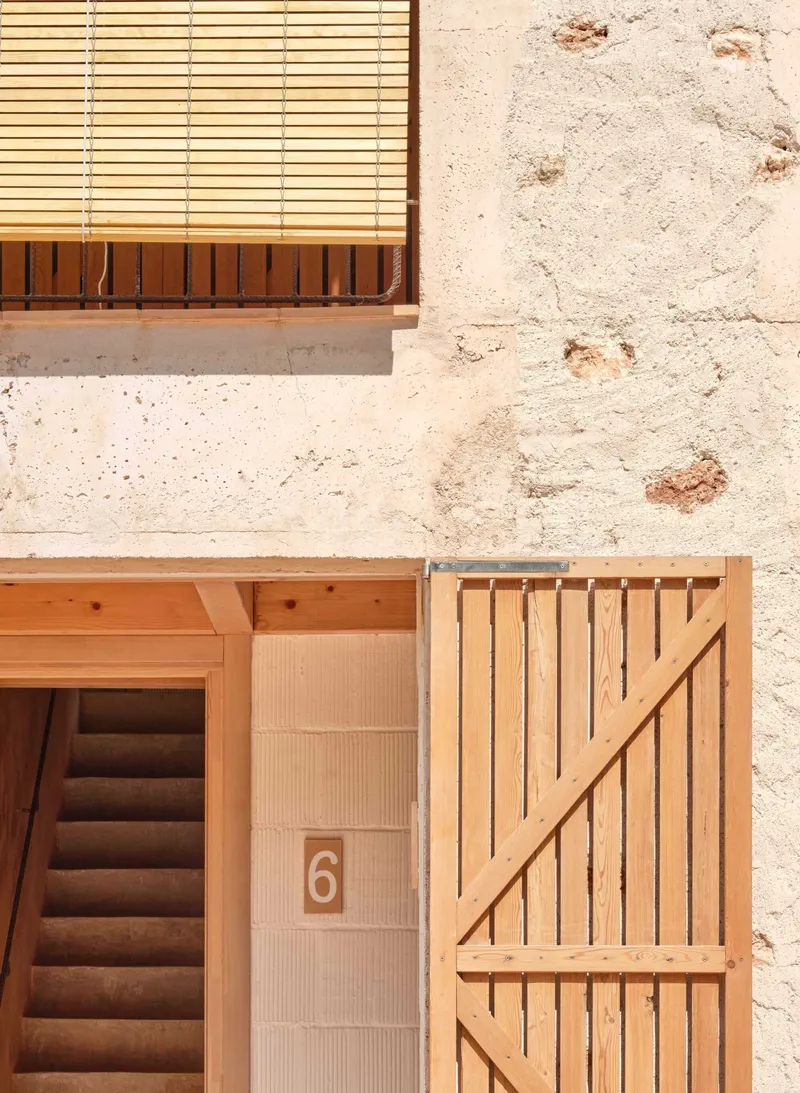
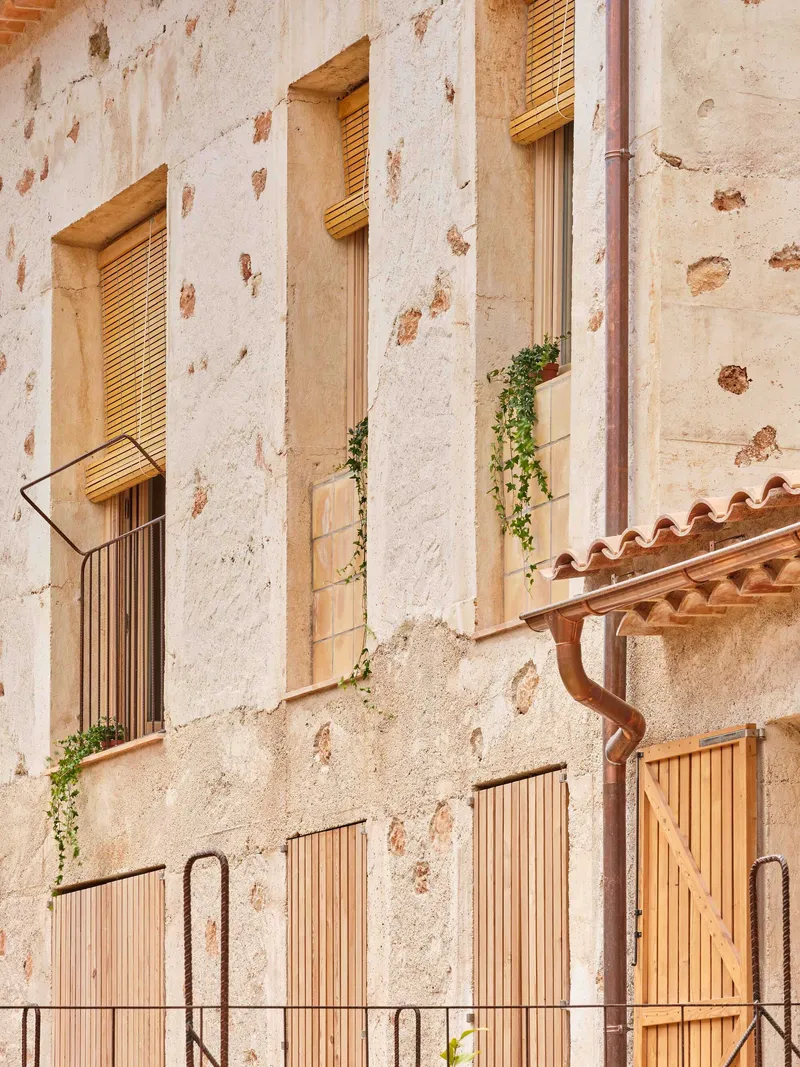
- Cyclopean lime façades, using stone and earth from the on-site excavation.
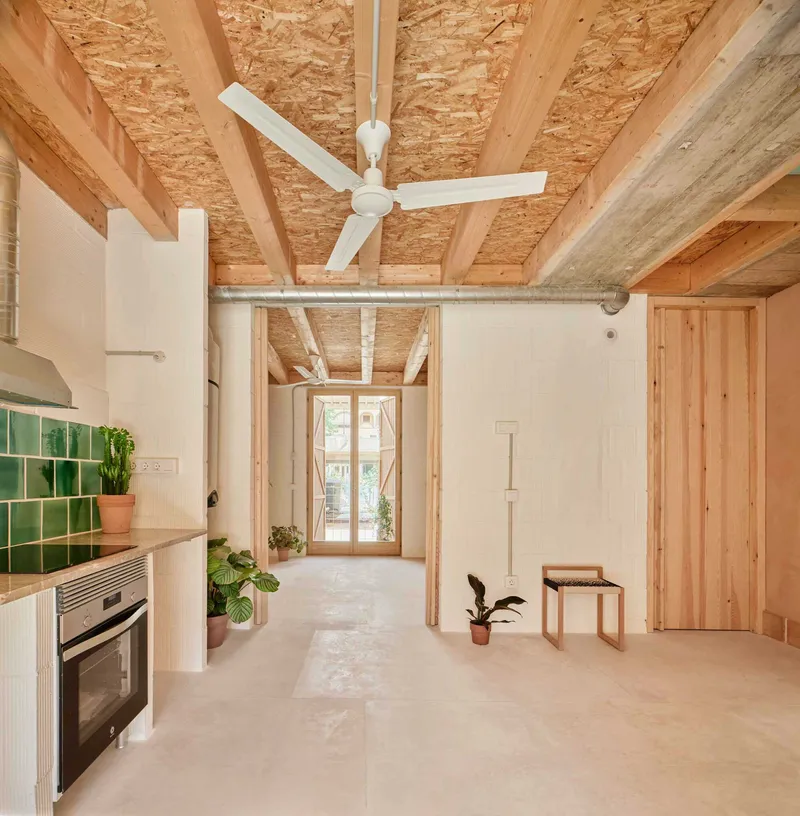
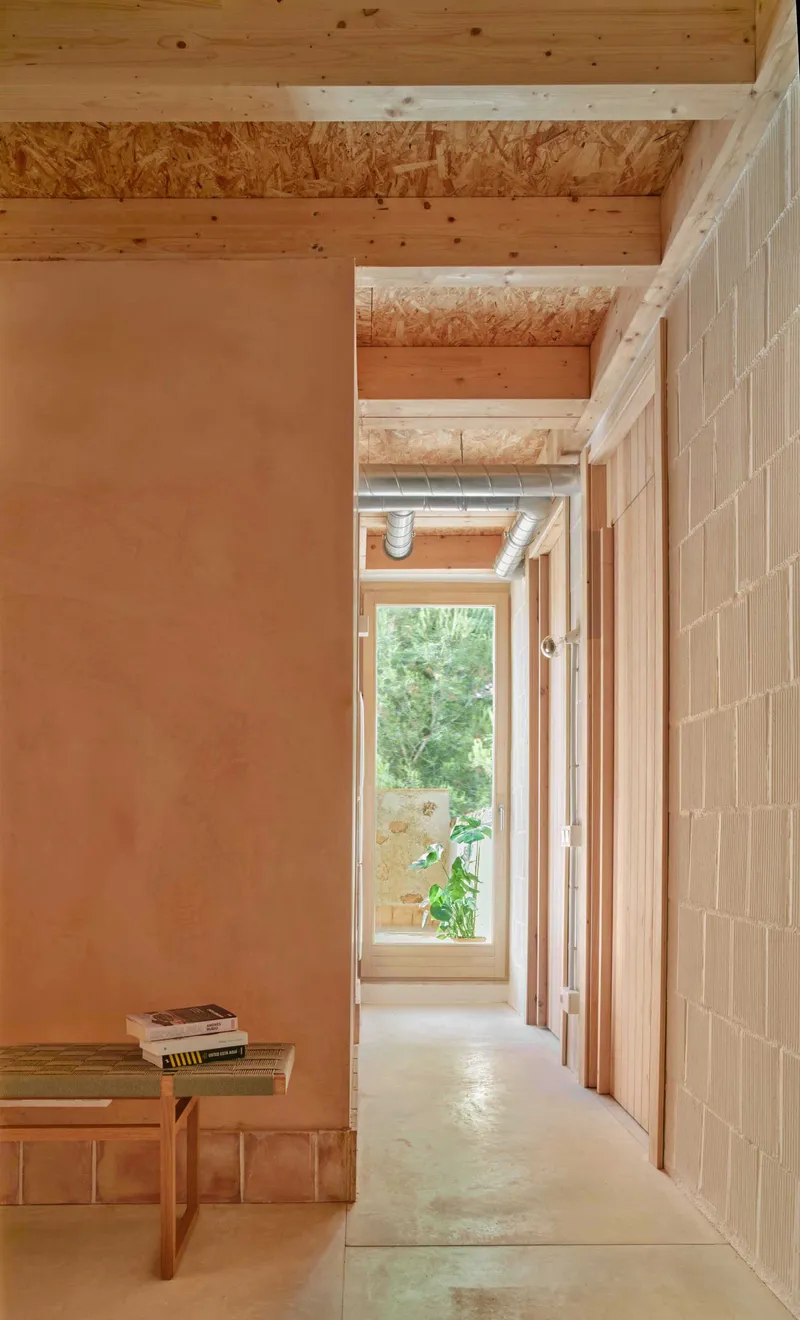
- Ceramic partition walls filled with leftover quarry sand.
- Clay-and-straw finishes that enhance breathability and thermal regulation.
- FSC-certified wood floors and carpentry supporting sustainable forestry.
- Lime-based interior flooring, local roof tiles, and exterior pavements sourced within Mallorca.
This material palette not only roots the project in Mallorcan identity but also strengthens its environmental and economic sustainability.
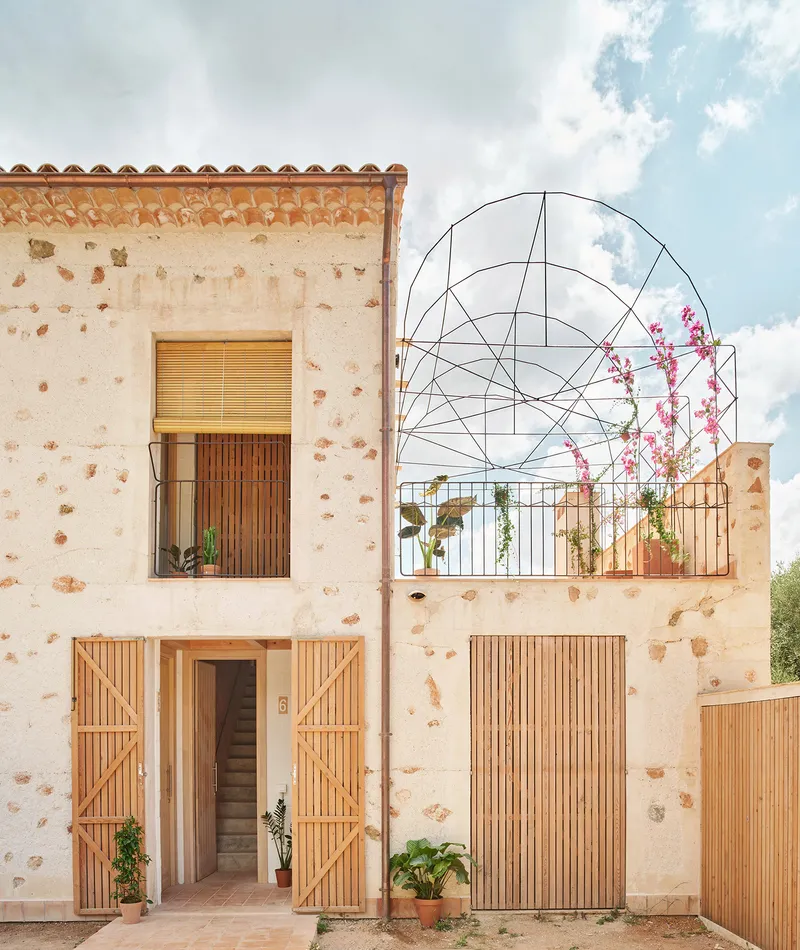
Spatial Configuration – Six Climate-Adapted Homes Under a Gabled Roof
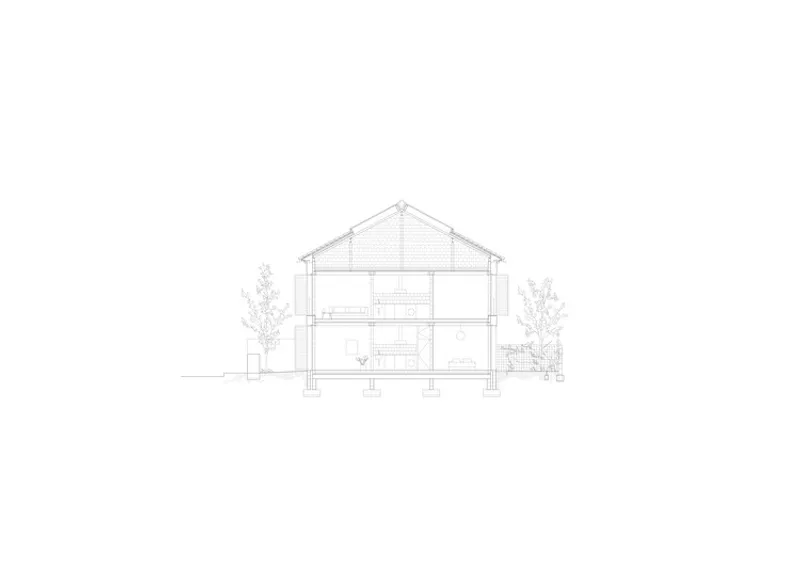
The building contains six dwellings, distributed across two levels beneath a traditional gabled roof:
- Ground Floor: Four one-bedroom units with private gardens.
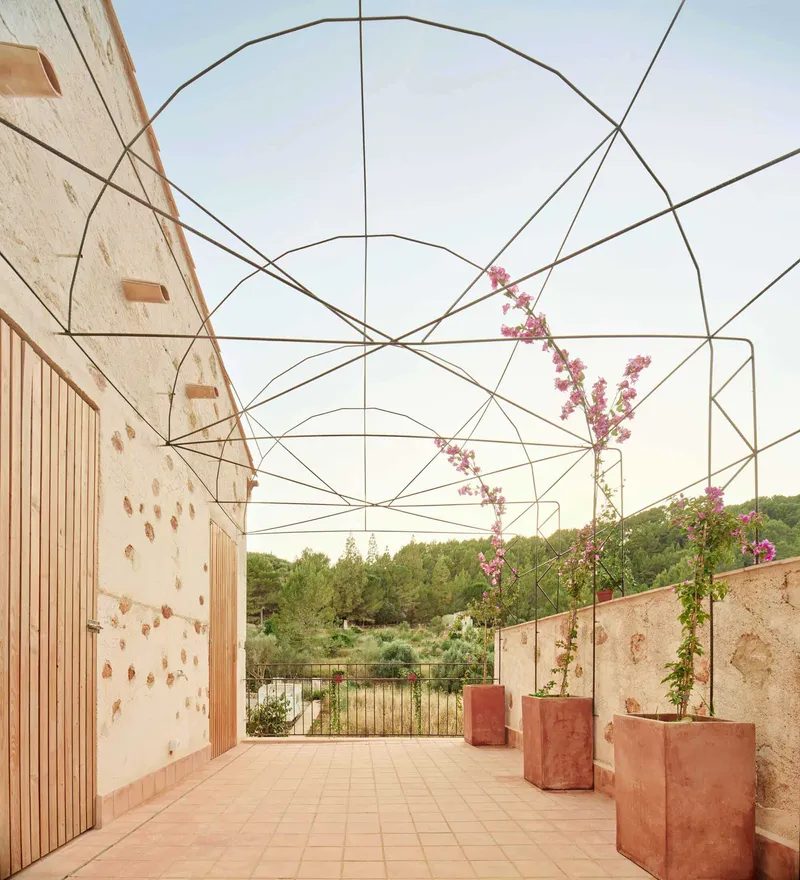
- Upper Floor: Two two-bedroom units with deep exterior terraces.

The interior organization is based on three structural bays, generating open, adaptable layouts in which the kitchen becomes the social core of each home. Spaces flow into one another to maximize flexibility, daylight access, and natural ventilation.
The simplicity of the plan echoes Mallorcan vernacular architecture while addressing contemporary needs for efficiency and comfort.
Passive Strategies and Thermal Intelligence
Climate sensitivity shapes every aspect of Ses Veles:
- Winter solar gain optimized through orientation and thermal mass.
- Summer cooling demand reduced through shading, cross ventilation, and hygroscopic materials.
- High thermal inertia in floors and walls stabilizes indoor temperatures.
- Breathable, humidity-regulating materials ensure healthy indoor environments.
- A Trombe roof captures heat in winter and ventilates in summer, achieving seasonal self-regulation.
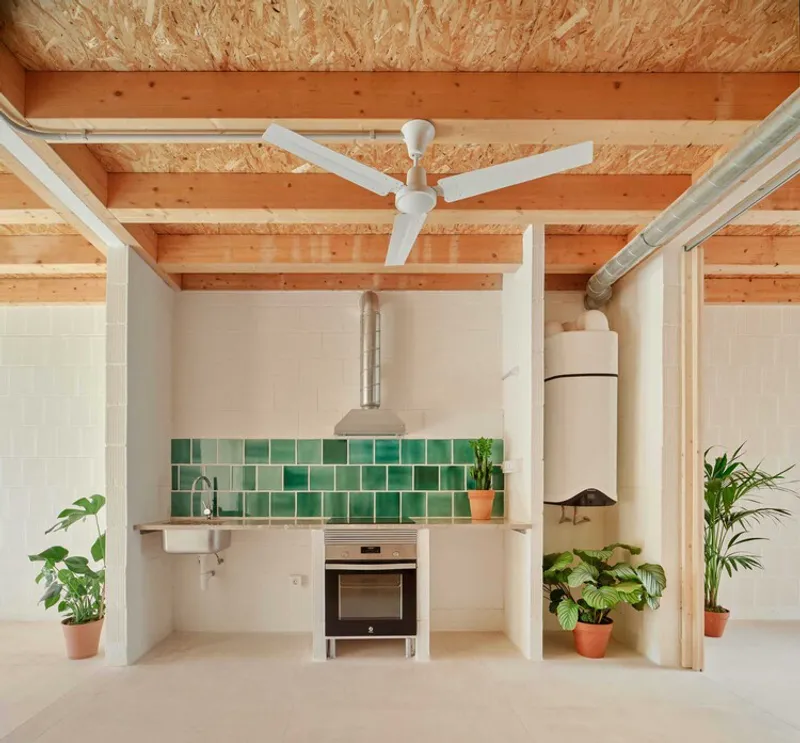
Private patios serve as buffer zones that filter air, mediate user-controlled ventilation, and extend daily living outdoors.
These strategies enable the building to operate entirely without active heating or cooling systems.
Near-Zero Energy and Circularity Metrics
The project achieves exceptional environmental performance:
- NZEB consumption of just 1.7 kWh/m²·year
- CO₂ emissions reduced by 50% compared to conventional housing
- Waste reduced by 60% through reuse and material circularity
- Low embodied carbon of 230 kg CO₂/m²
- Materials designed for future disassembly and reuse

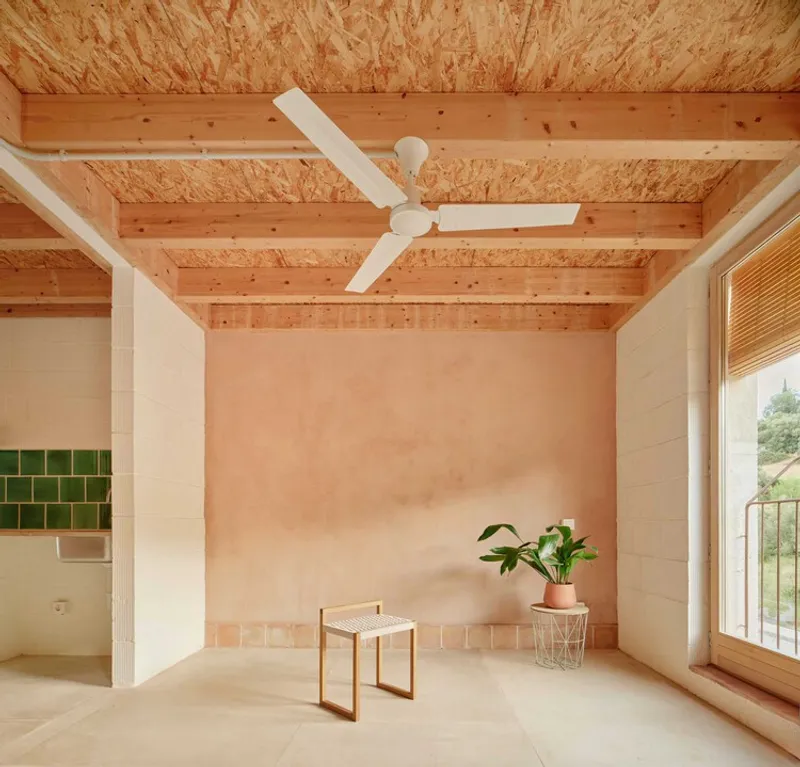
Through rigorous Life Cycle Analysis and cradle-to-cradle thinking, the project positions itself as a benchmark for Mediterranean eco-social housing.
Architecture in Dialogue With Island Culture
Ses Veles is more than a housing development—it is an act of cultural continuity. By reviving indigenous materials, reactivating local craft economies, and adopting climate-adapted building strategies, it proposes a new form of contemporary Mediterranean living that is both technically progressive and deeply rooted in place.
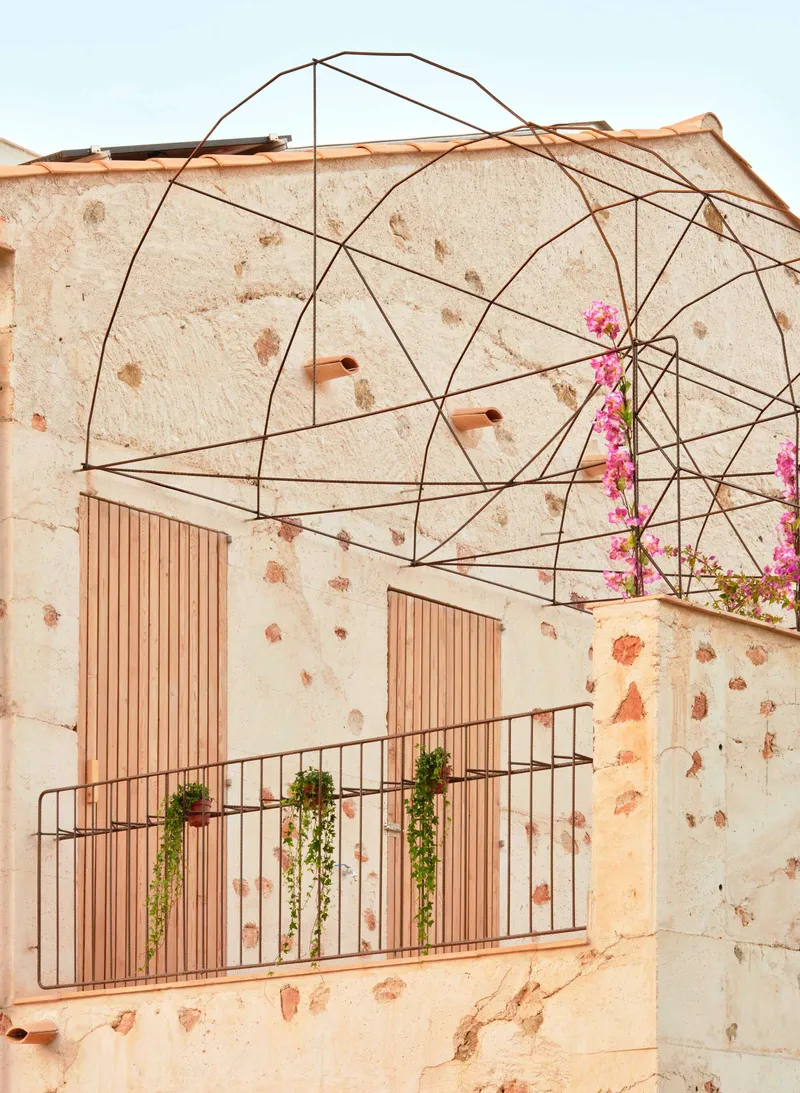
The project strengthens local identity, reduces environmental impact, and demonstrates that social housing can lead rather than follow in the transition to regenerative architecture.

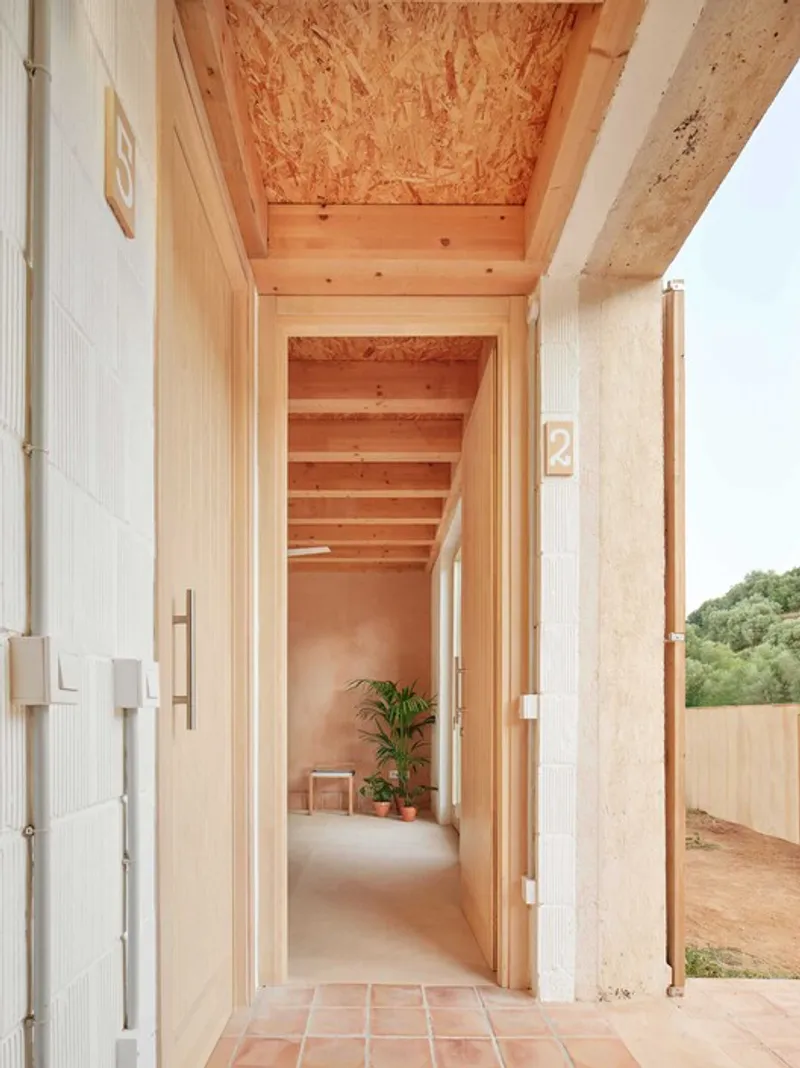
All the Photographs are works of José Hevia




Popular Articles
Popular articles from the community

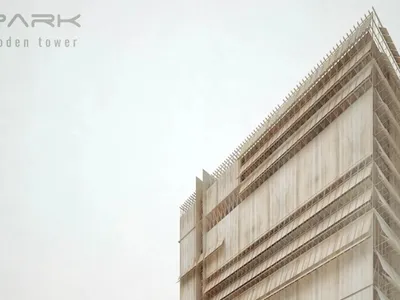
EW PARK: Sustainable Architecture Reimagines the Future of Urban Parking
EW PARK reimagines city parking as a modular wooden tower combining automation, solar energy, electric mobility, and adaptable urban design.

Co-life: Sustainable Architecture for Age-Friendly Community Living
Co-life reimagines sustainable architecture for seniors through courtyards, rammed earth, shared gardens, and spaces designed for belonging.

Co-Life: Senior Housing Design That Reconnects Older Adults With the City
Co-Life reimagines senior housing design through healing gardens, shared streets, workshops, and a sustainable community across generations.
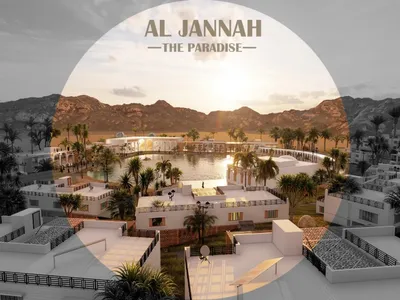
AL-JANNAH: Sustainable Architecture and Permaculture for Afghan Widows
AL-JANNAH uses sustainable architecture and permaculture to create resilient oasis of housing, learning, work and renewal for Afghan widows.


Similar Reads
You might also enjoy these articles


Hodi-Mandai Geram
Project Function: Preservation and revitalization of the Intangible heritage and socio-spatial identity of the Hodi by Housing, Cultural Memory Center, Sacred Grove, landscape, local tourism economy


Olio Towers: A Mid-Rise for Performers That Fuses Housing, Rehearsal, and Stage
Located blocks from Houston's Theater District, this modular tower stacks living units around a central performance atrium.

Oasis: Modular Green Housing Carved into Dhaka's Urban Fabric
A shortlisted Plugin Housing entry reclaims unauthorized settlements in Dhaka with stepped concrete volumes, green roofs, and ventilation-driven design.

Black Hole: A Floating Megastructure for the Post-Physical Era
Emiliano Mazzarotto envisions a spherical, self-scaling arena where e-sports, digital hotels, and holographic stadiums replace traditional public space.


Explore Housing Competitions
Discover active competitions in this discipline



Challenge to reimagine the Iron Throne


Photograph architecture without architects


Illustrate the lost glory of Angkor Wat - Render Challenge


Design challenge to reuse E-waste
Comments (0)
Please login or sign up to add comments
No comments yet. Be the first to comment!