
SHADIUM
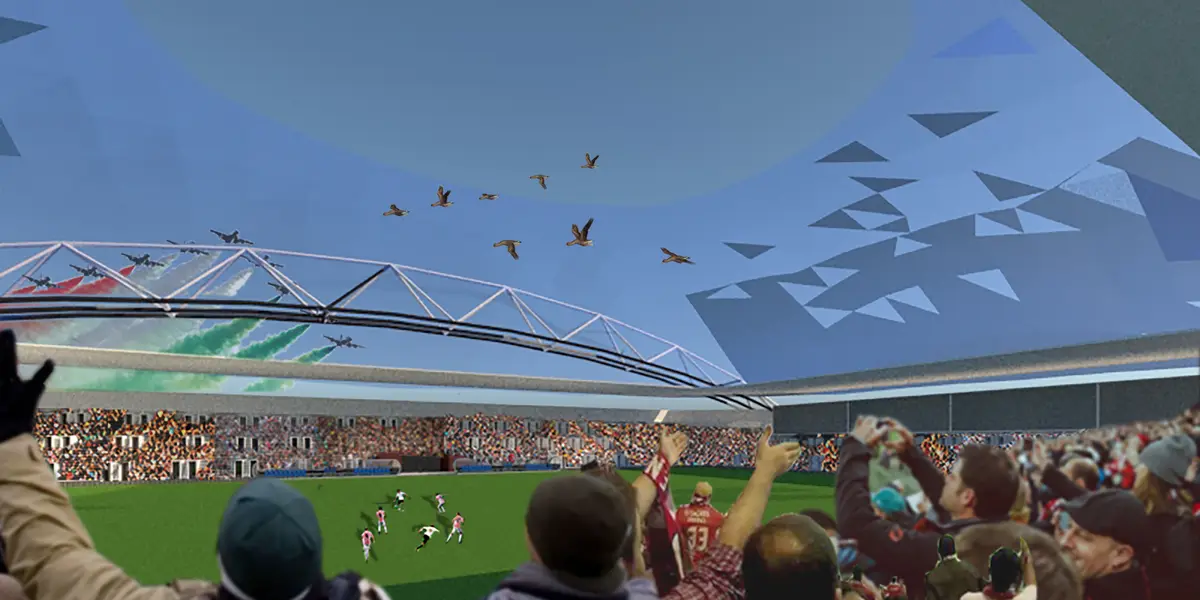
Stadium as a shading device, a reversed multifunctional residential stadium.
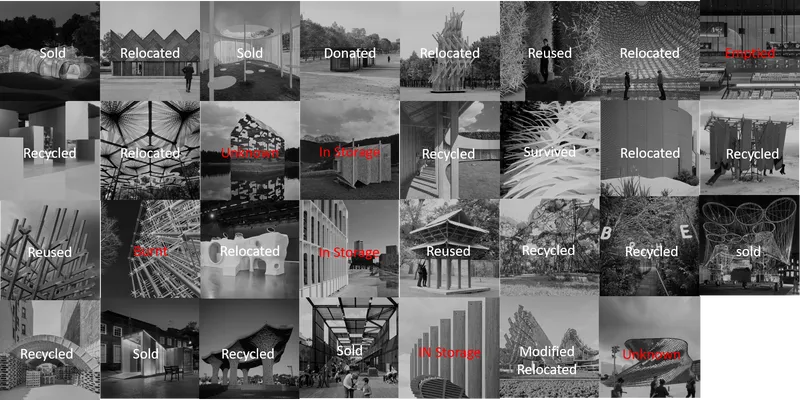
We start the conversation by discussing what is the actual problem of a buldings that have the value of multifunction and eternal. so we dig through our mind of what history has said about it and we found an article wrote by Anna Winston published in June 14, 2016 on Dezeen.com titled "Burnt, recycled, sold : the fate of 2015's temporary pavilions". The article compiled 31 pavilions from the expos and we then concluded that theres 3 main thing that happen to those pavilions which is Recycled, Reuse, and Relocated. From that point we then try to analyze which intervention will better fit a stadium. While relocating needed much more resources in transition, recycling it seems less rational given the complexity of a stadium itself. So, the most practical intervention is to reused it. The next question is what would be the best replacing program to be used.
In order to answer the mentioned question, we believe that we should look at the context which is the site itself. The site, which is located in Des Moines, Iowa, is suitable for a multi-functional building with the main function of a football stadium and apartments. With the existence of a multifunctional building, besides adding functions, it also adds to the income in it. Especially football sports buildings that may have a lifespan that cannot be sustainable, with the existence of an apartment it can complete the vacant functions that are and will occur later.
To understand what replacing program that fit the stadium and the context, We must first understand what’s the people around the site is needed and will need in the future. Luckily, there has been a research about what is it and how is it The Greater Des Moines in the next 50 years will looks like, called The Tomorrow Plan. This plan has concluded 4 Goals to achieve a vision of a collaborative, vibrant, and dynamic region of lasting value, equity, and diversity. Each of it has it’s own strategies and initiatives in which all the element of the region will need to do. Here are 5 maps that shows the progress of each goals which will affect any part of the region, concerning the distribution of: The population growth; Employment growth; DART BUS route; Public housing; and Job cluster.
Our analysis concluded that the the site will be better maximize it’s potential if it become a residential area. It’s the response of the high growthof population, job and employment near the site especially in the 2030-2040phase. and considering that the site is only hundred of meters away from the nearest DART BUS route, it will further enhance public transport accessibility of the site
After we reviewed the guidelines for this project, we undertook literacy studies, precedent studies and exploration of form and mass. Through this, several things are arranged including site analysis, community analysis, analysis of users and building functions, space requirements and so on. With the existing analysis, the shape and mass are formed as well as a working image.
Apartments are long-term residences and meet the needs of Des Moines residents themselves. Residential in the city center has affordable and fast access to the economy. This is an advantage for housing in this city. To support the functions of stadiums and apartments, commercial and public spaces such as minimarkets, cafes, shops and open spaces can be created.
To fulfill a multifunctional stadium, we put in our mind that the residential function should play the main role. So instead of fitting a residential unit to a stadium typology, we consider the otherway around. The result is a residential unit which could sometimes turn as a fully functioning stadium. Therefore when the stadium reach it’s lifespan, it needs nothing to do as the building itself has initially functioning as a residential units.
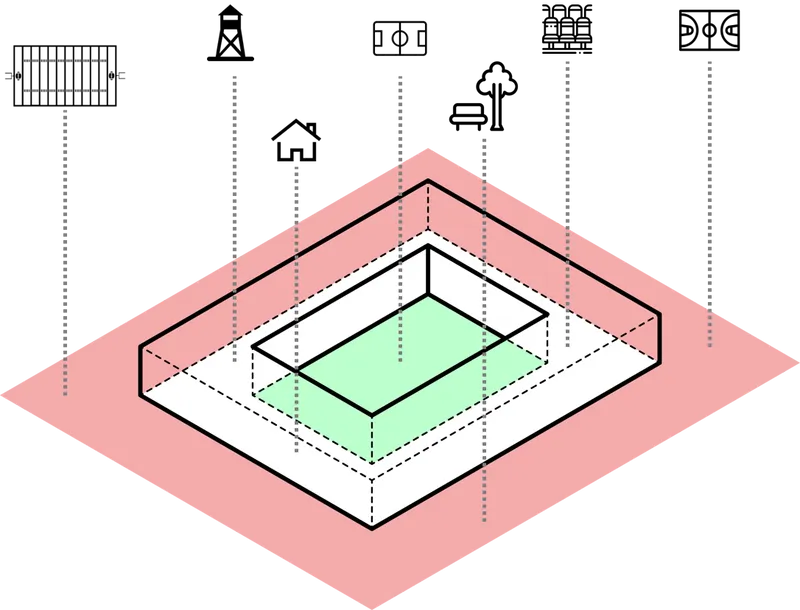
Then there is a problem when we put a stadium shaped residential mass, with the opening on the opposite side of the spectator orientation. The problem is inequity of natural light access throughout the all part of the massing. Because the lower part of the mass would be too wide for the natural light to reach the unit.
So we come up with the solution of a SHADIUM , stadium as a shading device of the residential unit. By reversing the opening parallel to the spectators orientation and making a gap between tribune step a transparent plane.
The afterlife use of the court will also be the main issue when the stadium reach it’s usable life. Therefore an adding value is needed to anticipate stalling moment of the court. We then come up with the idea of an undercourt unit residential. The main problem of putting a daily usable space under the court is again the natural light and fresh air access to the unit. the solution is by slicing the pitch into several part in which could rotated, make a vertical opening to provide the units under the court a daily access to natural light. When finally comes for the stadium to say good bye, the rotated part could permanently opened and the residential will function as it is.
References (1)

Popular Articles
Popular articles from the community


The Musturak Paradise: Senior Living Architecture for a Connected Future in Temara, Morocco
The Musturak Paradise reimagines senior living architecture in Temara via private homes, social spaces, culture, community, and shared care.

Lunar Spiral: Space Architecture Shaped by the Mathematics of the Universe
Lunar Spiral reimagines space architecture through Fibonacci geometry, lunar regolith, levitating habitats, and self-sustaining Moon living.

Co-Life: Senior Housing Design That Reconnects Older Adults With the City
Co-Life reimagines senior housing design through healing gardens, shared streets, workshops, and a sustainable community across generations.

Little Red Riding Hood: Architectural Design as a Journey Through Fear, Light, and Storytelling
Little Red Riding Hood reimagines the fairy tale through architectural design shaped by fear, light, scale, memory, uncertainty, and choice.

Similar Reads
You might also enjoy these articles

Day and Night Park: A Time-Based Urban Newsstand in Beijing
A temporary urban newsstand in Beijing blending travel, light, and reading through poetic colors, compact form, and community-focused design.

Modernist Patio Renovation in El Masnou, Barcelona by Oliver Segura Arquitectura + Cebrià Arquitectura
Modernist patio renovation blending tradition and innovation with a movable pool, leveled floors, and Catalan materials in El Masnou.
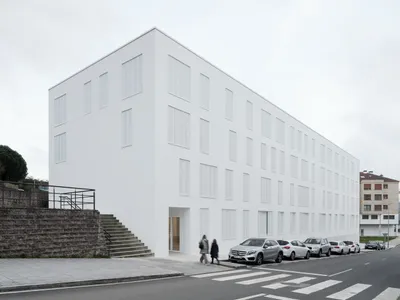
Alto Residencial Coop: Cooperative Housing Development in Santiago de Compostela by Carbajo Barrios Arquitectos
A linear cooperative housing complex blending white volumes and perforated metal façades, enhancing community living, natural light, privacy, and urban integration.
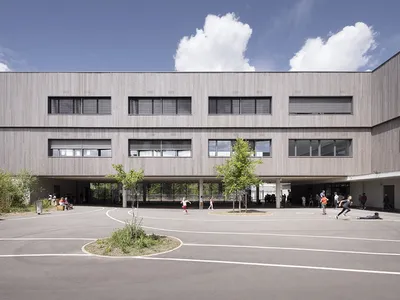
Vil Genis School by BPA ARCHITECTURE – Massy, France
Vil Genis School in Massy, France, features sustainable design, south-facing classrooms, community integration, accessible spaces, and modern educational architecture.

Explore Stadium Competitions
Discover active competitions in this discipline


Challenge to design a barrier free sports center

Challenge to design an outdoor ice-rink and park

Challenge to design mud housing for contemporary communities
Comments (0)
Please login or sign up to add comments
No comments yet. Be the first to comment!