

Shenzhen Yeahka C4 Office Design by JSPA Design: A Bold Workplace Transformation in Shenzhen
Innovative Shenzhen office design featuring floating meeting rooms, sculptural staircase, vertical voids, raw concrete textures, and transparent, collaborative workspace environments.


The Shenzhen Yeahka C4 Office Design by JSPA Design is a striking example of contemporary workplace architecture that redefines spatial openness, vertical connectivity, and material expression. Located in the dynamic urban fabric of Shenzhen, China, this 6,000-square-meter office renovation transforms three floors of the Kexing Science Park into an innovative, light-filled corporate headquarters. Completed in 2021, the project reflects a forward-thinking approach to office interior design, blending structural honesty with experiential spatial planning.

Concept and Design Strategy: Returning to Structural Authenticity
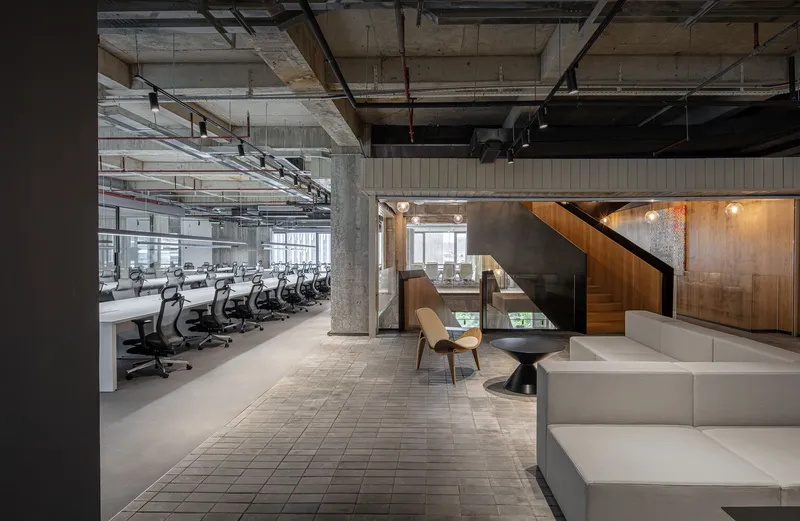
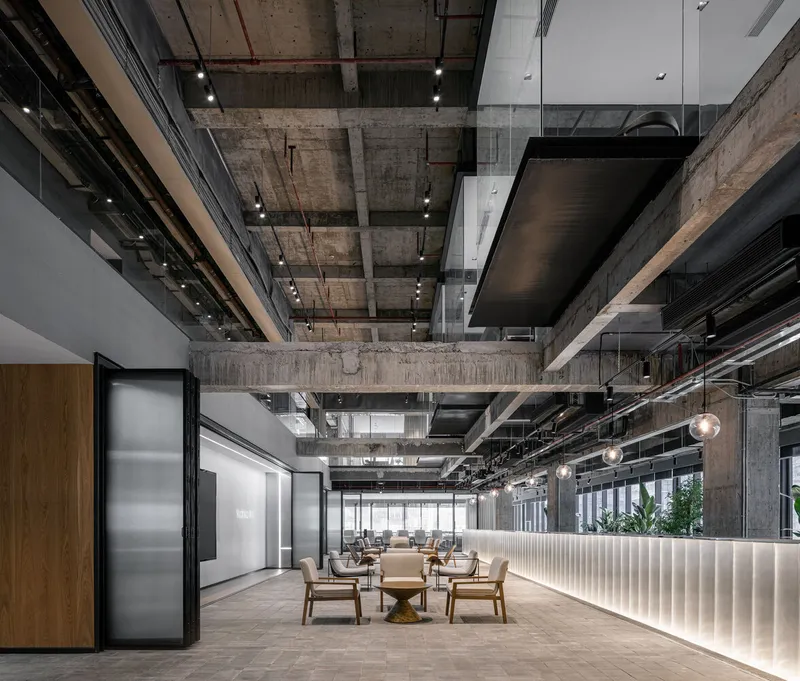
At the core of the design philosophy is a radical simplification process. The architects removed all unnecessary cladding and decorative elements to reveal the building’s original concrete structure. This approach not only celebrates raw materiality but also establishes a neutral framework for spatial experimentation. By stripping the building back to its essentials, JSPA Design created a canvas that emphasizes openness, flexibility, and architectural clarity.
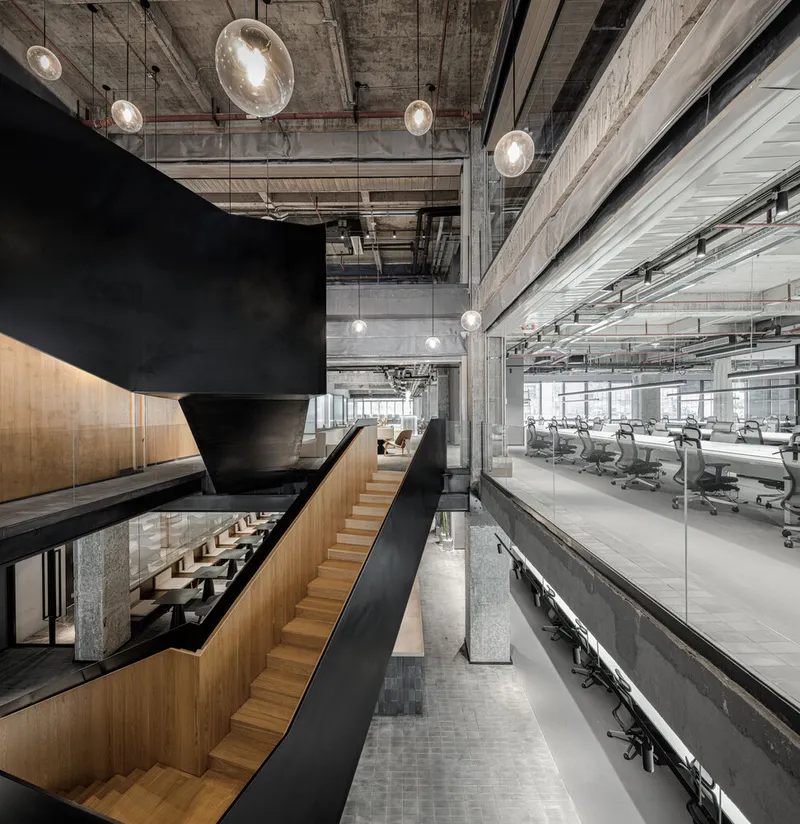
A key intervention in the project is the introduction of vertical voids carved through the concrete slabs. These openings connect the three floors both visually and physically, allowing natural light to penetrate deep into the interior. This strategy enhances spatial continuity while fostering a sense of unity across different levels of the office.
Entrance and Public Spaces: Transparency and Interaction
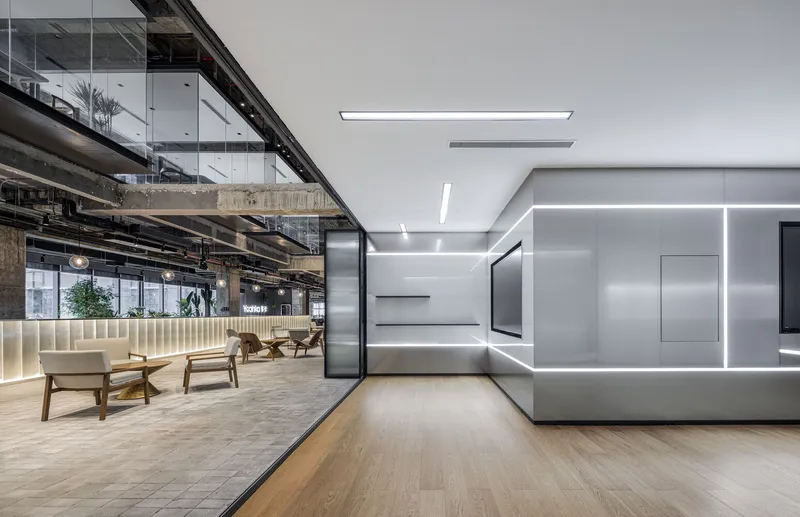
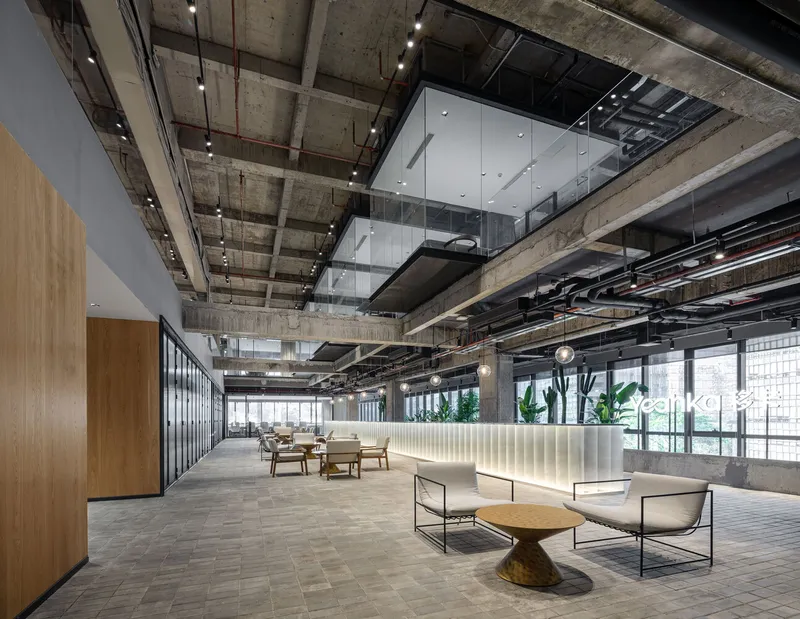
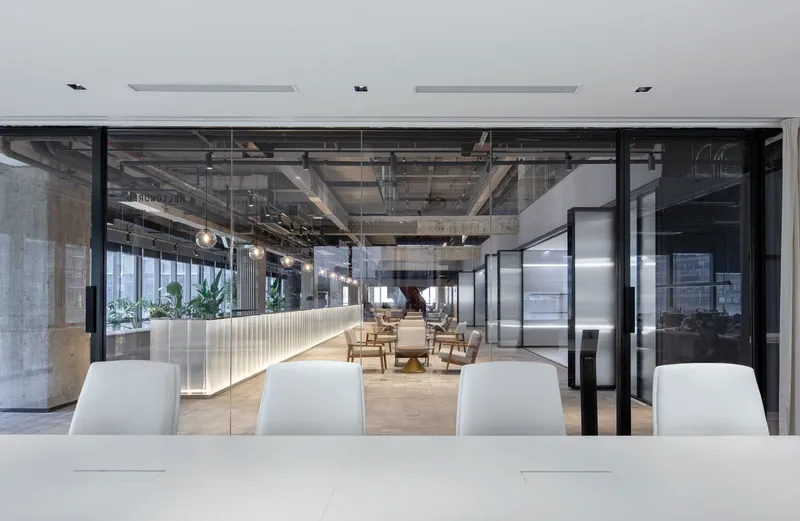
Positioned on the middle floor, the main entrance acts as a central hub for public and semi-public functions. It integrates reception, café, event space, and product exhibition areas into a single linear layout. This elongated, transparent strip enables uninterrupted visual connections from one side of the building to the other, reinforcing openness and accessibility.
The reception area is defined by a sculptural desk placed along the façade, complemented by a curated landscape of cacti that subtly filters exterior views. This integration of natural elements introduces a soft contrast to the otherwise industrial palette, enhancing the user experience.
Floating Meeting Rooms: A Dramatic Spatial Gesture
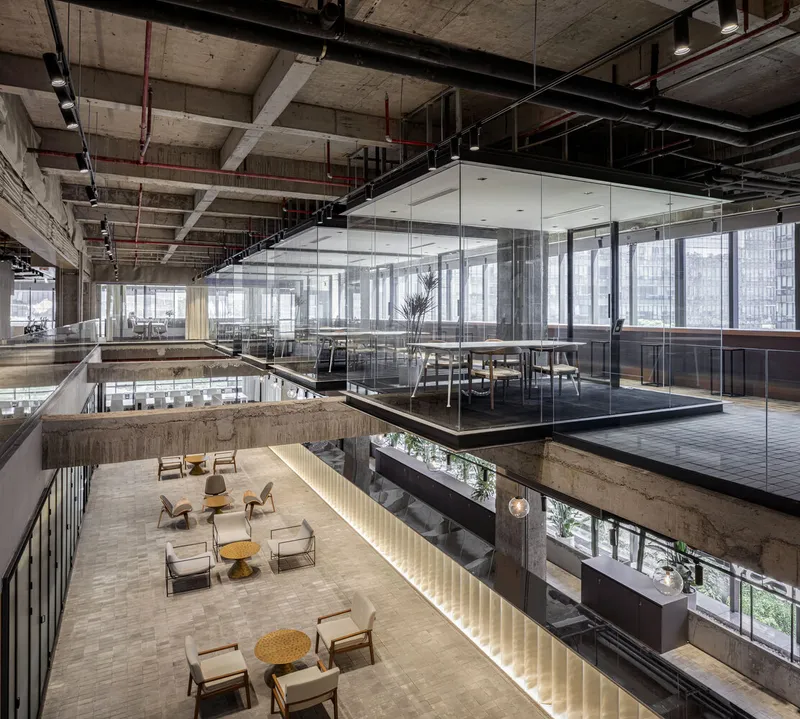
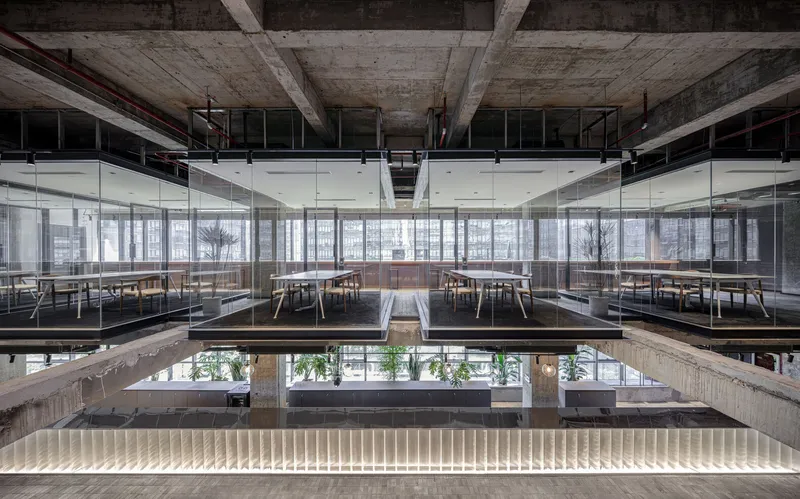
One of the most distinctive features of the project is the series of cantilevered meeting rooms suspended within a large केंद्रीय void. These glass-enclosed volumes appear to float above the reception area, creating a dramatic and immersive spatial effect. Their positioning generates a dynamic interplay between transparency and separation, allowing visitors to visually engage with workplace activities without direct interaction.
These suspended meeting spaces act as both functional rooms and architectural showcases, highlighting the company’s collaborative culture. The design creates a unique tension between openness and privacy, redefining conventional office layouts.
Sculptural Staircase: The Vertical Circulation Core
The central void also houses the project’s primary vertical circulation element, a sculptural staircase composed of overlapping L-shaped structures. Designed to appear as if it is floating without support, the staircase introduces a sense of movement and lightness despite its robust form. This architectural feature serves as both a functional connector and a visual centerpiece, reinforcing the project's emphasis on vertical integration.
Workspace Organization: Flexible and Human-Centric
The office workspaces are organized into smaller clusters, promoting a more intimate and efficient working environment. Glass partitions are used to define meeting rooms and private offices while maintaining visual continuity throughout the space. This modular arrangement supports collaboration while ensuring individual focus areas.
The design carefully balances openness with functionality, creating a workplace that adapts to different modes of working. Employees benefit from both shared and private environments, enhancing productivity and comfort.

Material Palette: Industrial Meets Refined
Materiality plays a crucial role in shaping the identity of the Shenzhen Yeahka office. The architects introduced concrete block pavements, typically used in outdoor public spaces, into the interior environment. This unconventional choice adds texture and authenticity, transforming a common material into a defining design element.
The roughness of concrete is juxtaposed with sleek finishes such as glass, stainless steel, and reglit panels. Strategic lighting enhances these contrasts, emphasizing the tactile qualities of each material. This interplay between raw and refined surfaces creates a visually engaging and contemporary office atmosphere.
Natural Light and Spatial Experience
By opening up the floor slabs and maximizing transparency, the design ensures that natural light flows freely across all levels. This not only reduces reliance on artificial lighting but also improves the overall well-being of occupants. The interplay of light, shadow, and material textures adds depth and richness to the spatial experience.

A New Paradigm in Office Design
The Shenzhen Yeahka C4 Office Design by JSPA Design exemplifies how thoughtful architectural interventions can transform conventional office environments into dynamic, interconnected spaces. Through the strategic use of voids, transparency, and material contrasts, the project creates a workplace that is both functional and visually compelling. It stands as a benchmark for modern office interior design, emphasizing flexibility, collaboration, and spatial innovation.

All photographs are works of
Shengliang Su


Popular Articles
Popular articles from the community


Manzana Morphosis: Stretching Barcelona's Grid into a Living Landscape for 2050
A radical reworking of the Eixample manzana turns density into a tool for generous public space, vertical ecology, and environmental performance.

Aquadapt: An Underwater Habitat That Rewrites Its Rooms by the Hour
Curved modules ring the seabed while one shell shifts from breakfast room to cinema, farm and football pitch as residents' needs change.


David Ortega Stacks a Two-Story Mexico City Penthouse Around a Steel Stair and a Pergola-Shaded Roof Terrace
In Colonia Roma, a 300 m² penthouse uses oak joinery, a planted steel stair and a slatted roof pergola to make a new-build apartment feel like a house.

The Amber Palace Opera: A Geological Fiction Surfaces on Tallinn's Baltic Waterfront
Pierre Brillard reimagines a Baltic legend as a public landscape, opera house, and waterfront promenade rooted in Tallinn's coastal identity.

Similar Reads
You might also enjoy these articles

Cube Design Draws an Ecological Corridor Between Two Shenzhen Hills with the Nankai Building
Beside Shenzhen's container docks, the Nankai Building pairs stacked balconies with a climbing green screen to connect two hillsides across its height.

Praksis A and Studio Sted Bend a Red Timber Cabin Across the Granite of Norway's Southern Coast
On the southern Norwegian coast, a 105 m² cabin follows the rock on slender posts, pairing red cladding outside with pine, brick and plywood within.
David Ortega Stacks a Two-Story Mexico City Penthouse Around a Steel Stair and a Pergola-Shaded Roof Terrace
In Colonia Roma, a 300 m² penthouse uses oak joinery, a planted steel stair and a slatted roof pergola to make a new-build apartment feel like a house.

PARALELA and LB2 Thread a Public Walkway Through the Base of a Las Condes Residential Tower
In Las Condes, Santiago, the Hamlet Building gives its fenceless ground floor to a 70-metre wooded passage linking two streets and the metro.

Explore Architecture Competitions
Discover active competitions in this discipline

Challenge to reimagine the Iron Throne

Photograph architecture without architects

Illustrate the lost glory of Angkor Wat - Render Challenge

Design challenge to reuse E-waste
Comments (0)
Please login or sign up to add comments
No comments yet. Be the first to comment!