
Shinsegae Namsan: Mixed-Use Commercial Architecture in Seoul by Robert A.M. Stern Architects
A landmark in Seoul, Shinsegae Namsan merges corporate and cultural functions through refined mixed-use commercial architecture and civic design.


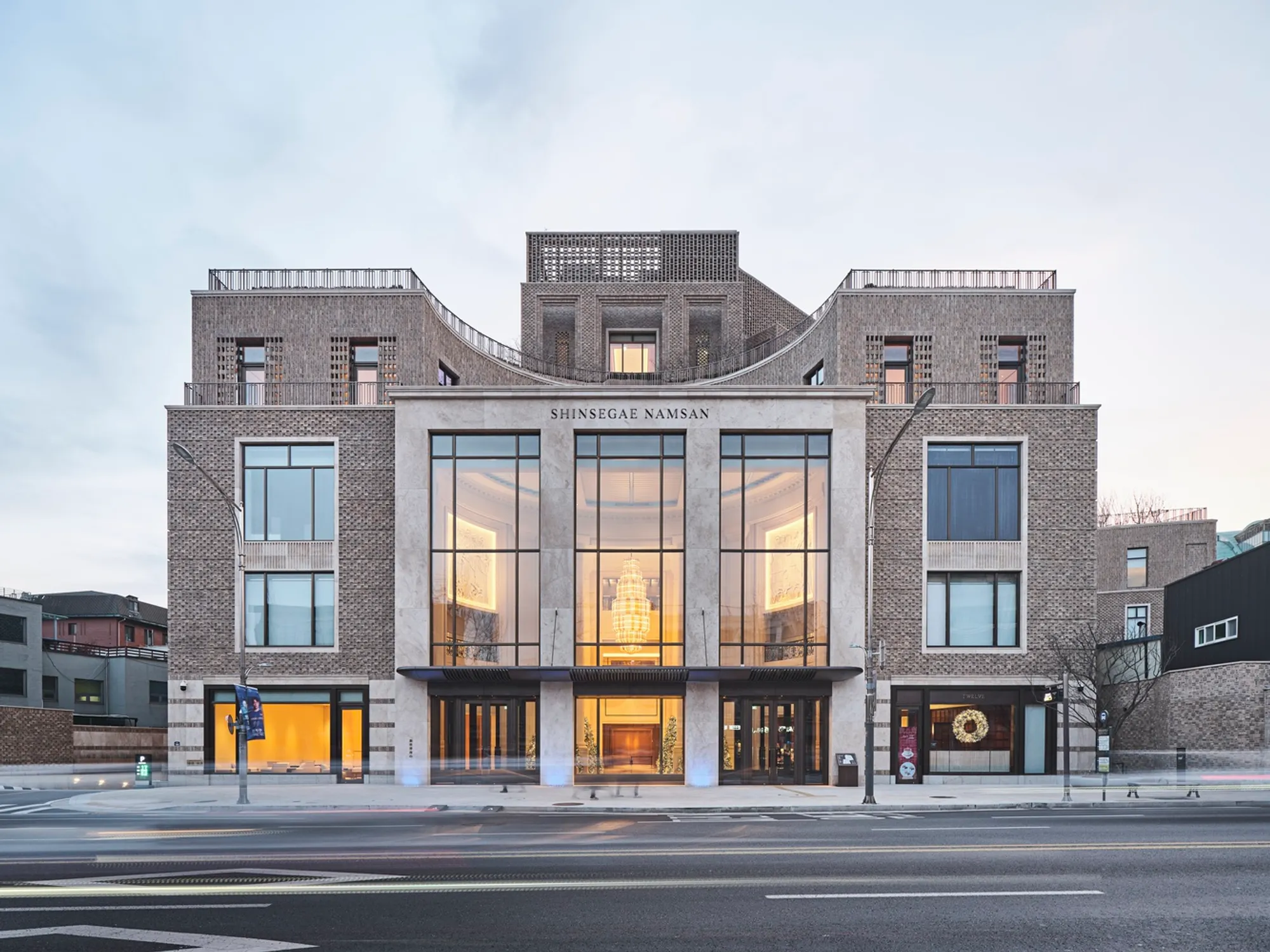
Shinsegae Namsan marks Robert A.M. Stern Architects’ (RAMSA) debut in South Korea with a refined and contextually rooted example of mixed-use commercial architecture in Seoul. Designed in collaboration with Haeahn Architecture, the seven-story building elegantly combines corporate training spaces and cultural facilities for retail giant Shinsegae. Located in the Jung District with commanding views of Namsan Mountain, the project introduces a civic-minded landmark that integrates public and private uses through a highly crafted architectural language.
A Dual-Purpose Program Bridging Commerce and Culture
The 200,000-square-foot structure serves two primary functions: a corporate training center for Shinsegae's nationwide staff and a vibrant cultural venue for the public. The ground floor features a publicly accessible multipurpose space, Trinity Hall, equipped to host concerts, lectures, film screenings, and galas. Above, flexible training rooms and offices are organized to support Shinsegae’s internal operations, allowing the building to operate as both a productive work environment and a public-facing institution.
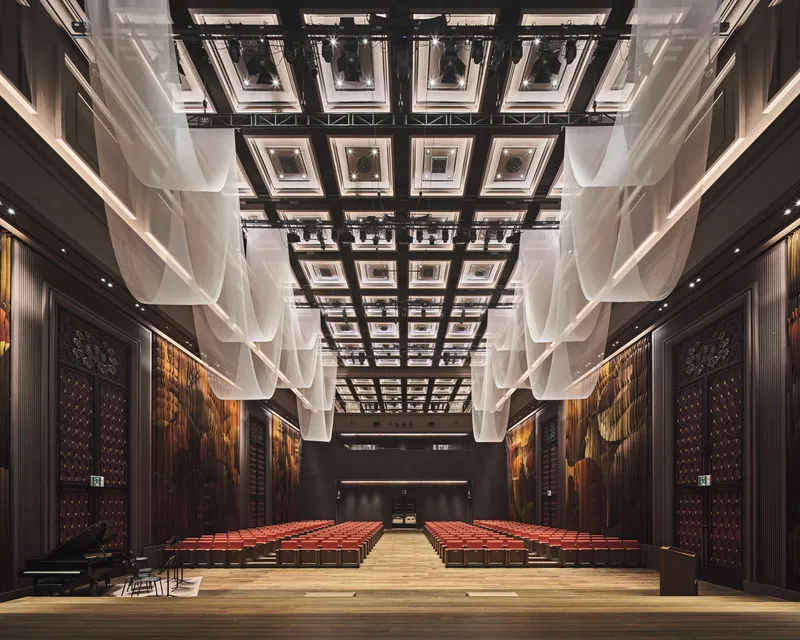
RAMSA partner Gemma Kim describes the project as “a building for a company renowned across Korea, and simultaneously, a cultural amenity for the people of Seoul.” This hybrid ambition is central to the building's identity, where civic generosity and corporate prestige coexist.
Sculpting the Site with Curved Geometry
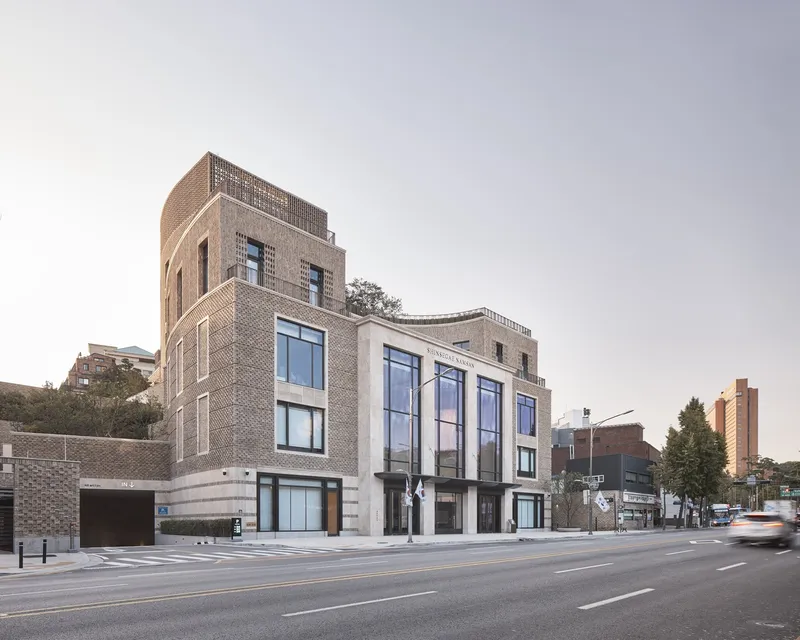
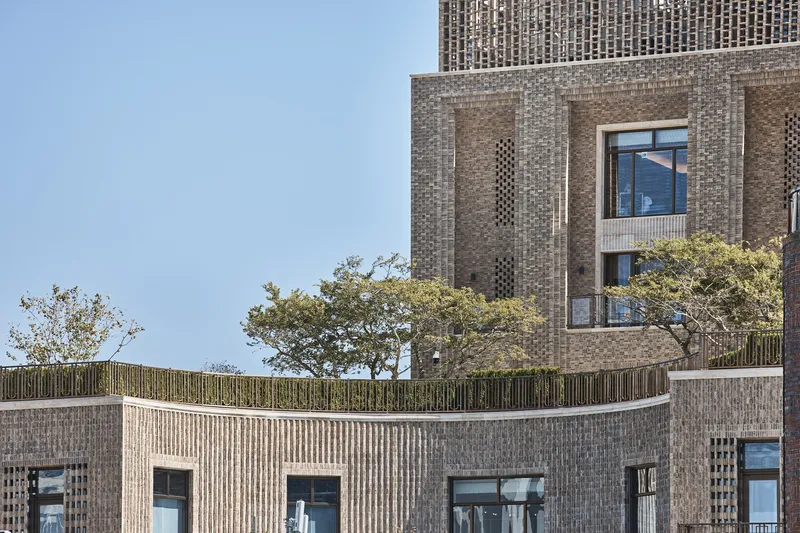
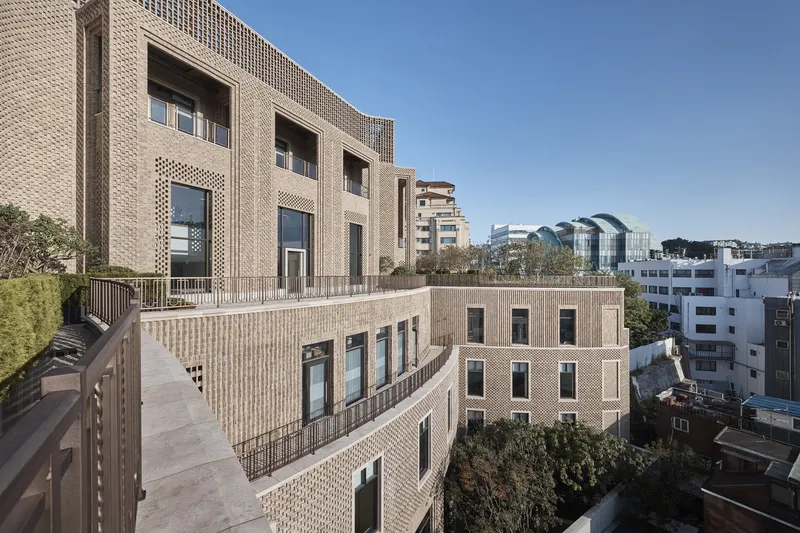
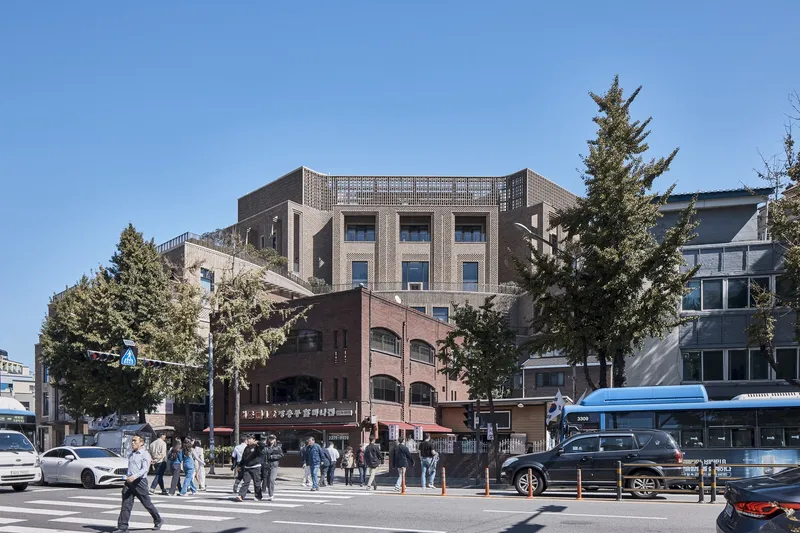
Situated along Jangchungdan-ro, Shinsegae Namsan is a response to its sloped site, urban edge, and panoramic context. Curving geometries define the building’s massing, optimizing solar exposure and framing views toward the city. These soft contours also create natural transitions between public and private zones. The building gradually steps back from the street, reducing its scale and making room for terraced gardens and a rooftop landscape.
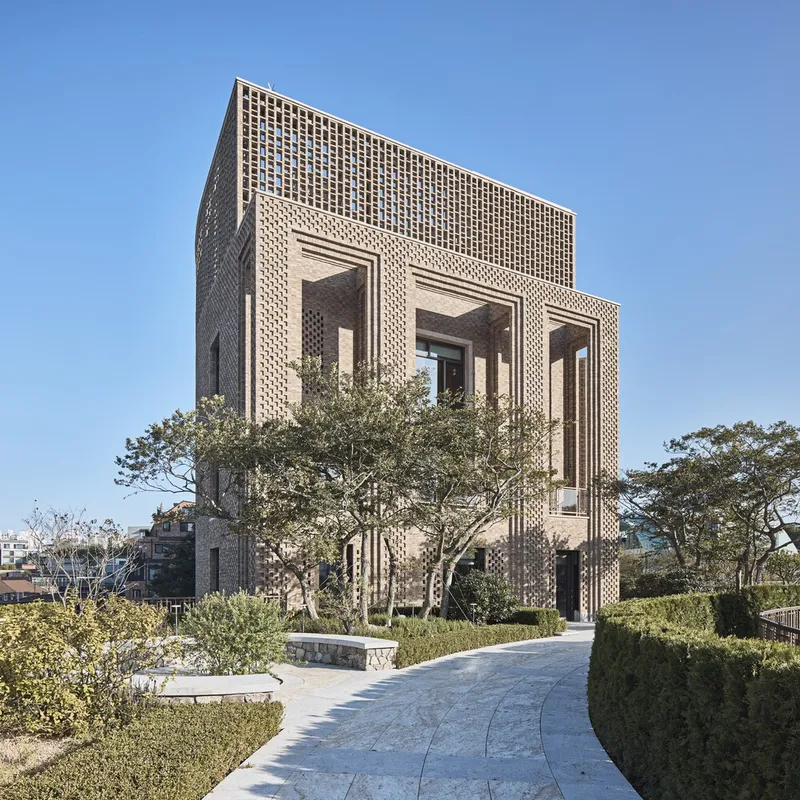
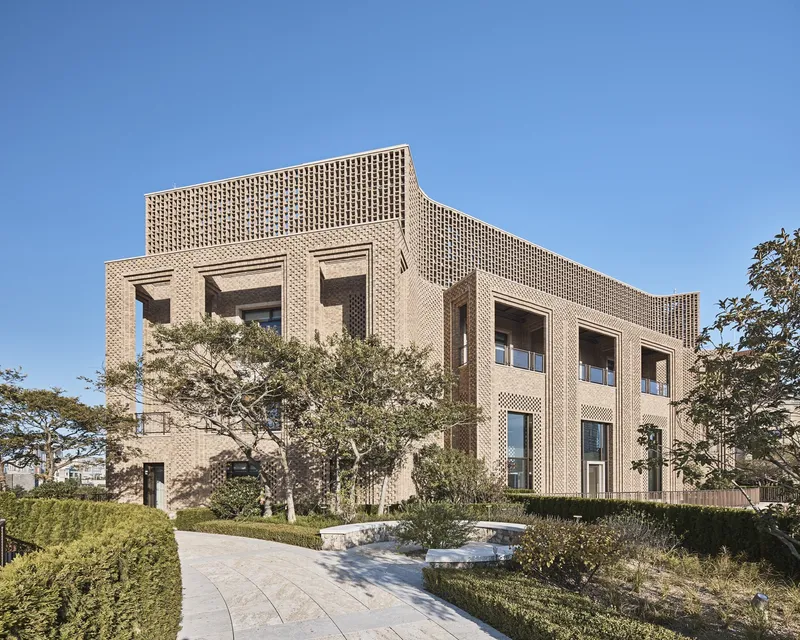
The dynamic curves also serve functional needs. They align with solar paths, offer natural light to interior spaces, and contribute to an intuitive circulation flow. The horseshoe-shaped atrium, which acts as the heart of the project, is an architectural gesture that connects multiple entrances and distributes access throughout the building.
A Textured Brick Façade Rooted in Craft
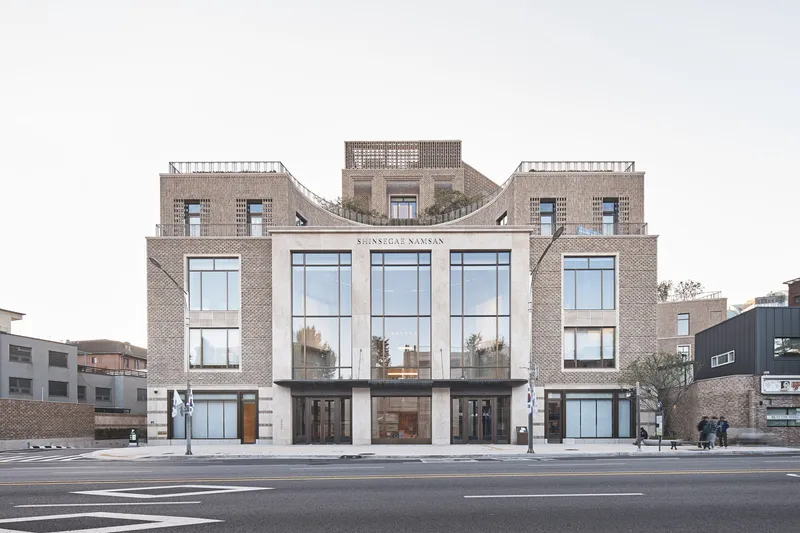
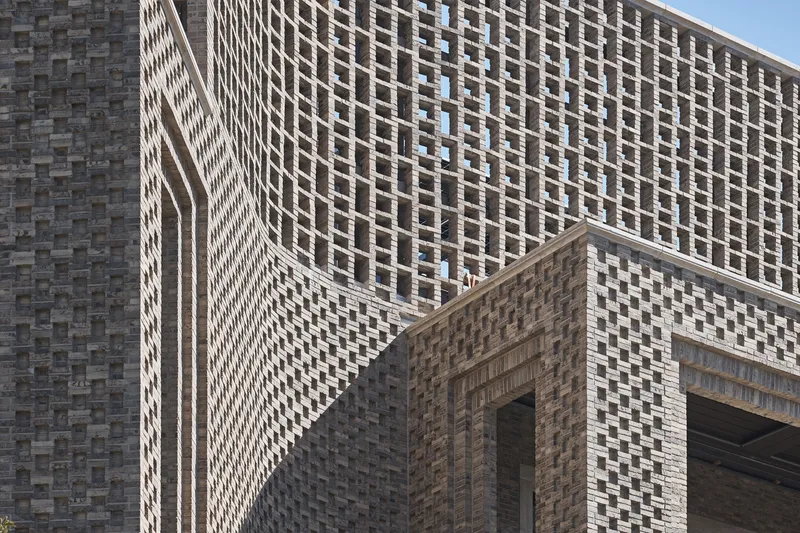
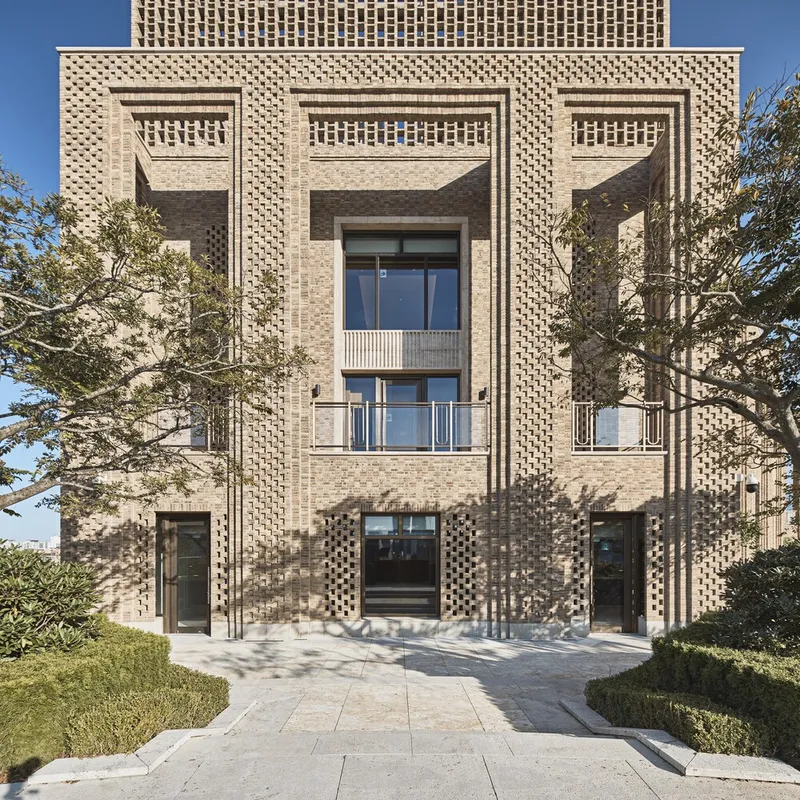
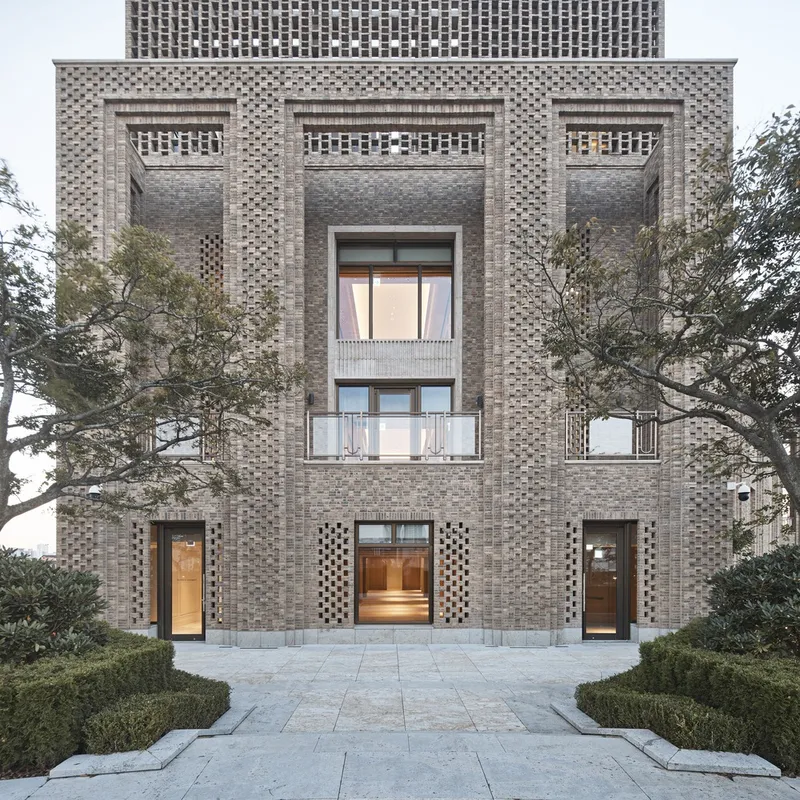
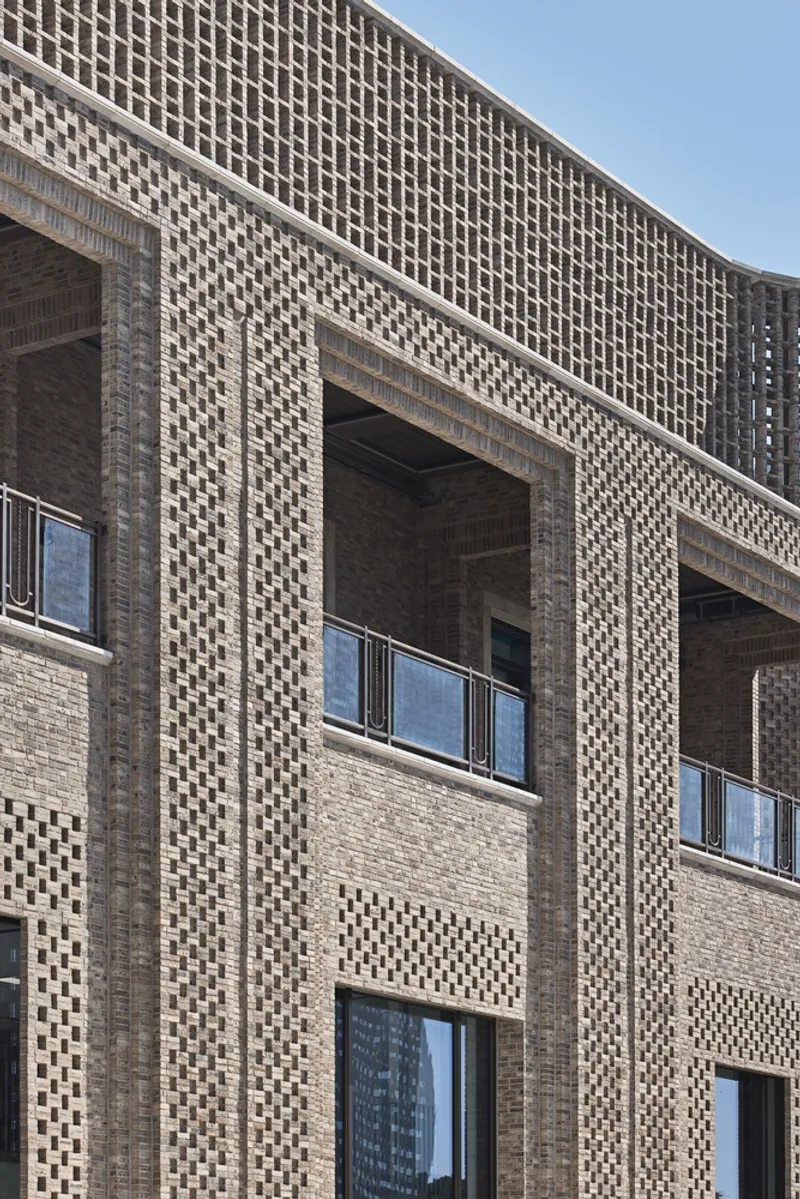
One of the building’s most defining features is its monolithic brick façade. The hand-moulded, recessed brick pattern provides a sense of depth and craftsmanship, setting the tone for a design that bridges tradition and innovation. Facing the street, a rusticated limestone façade forms a central pavilion enclosing a triple-height atrium, reinforcing the building’s institutional presence.
Brick screens in front of glazed windows offer privacy, solar shading, and texture, helping to modulate light and shadow across the elevations. RAMSA’s decades-long expertise in masonry—especially influenced by New York’s historical precedents—comes through in the façade’s articulation and sophistication. Design lead Dan Lobitz notes that this façade strategy was essential to reduce the building’s visual weight while establishing a local architectural identity.
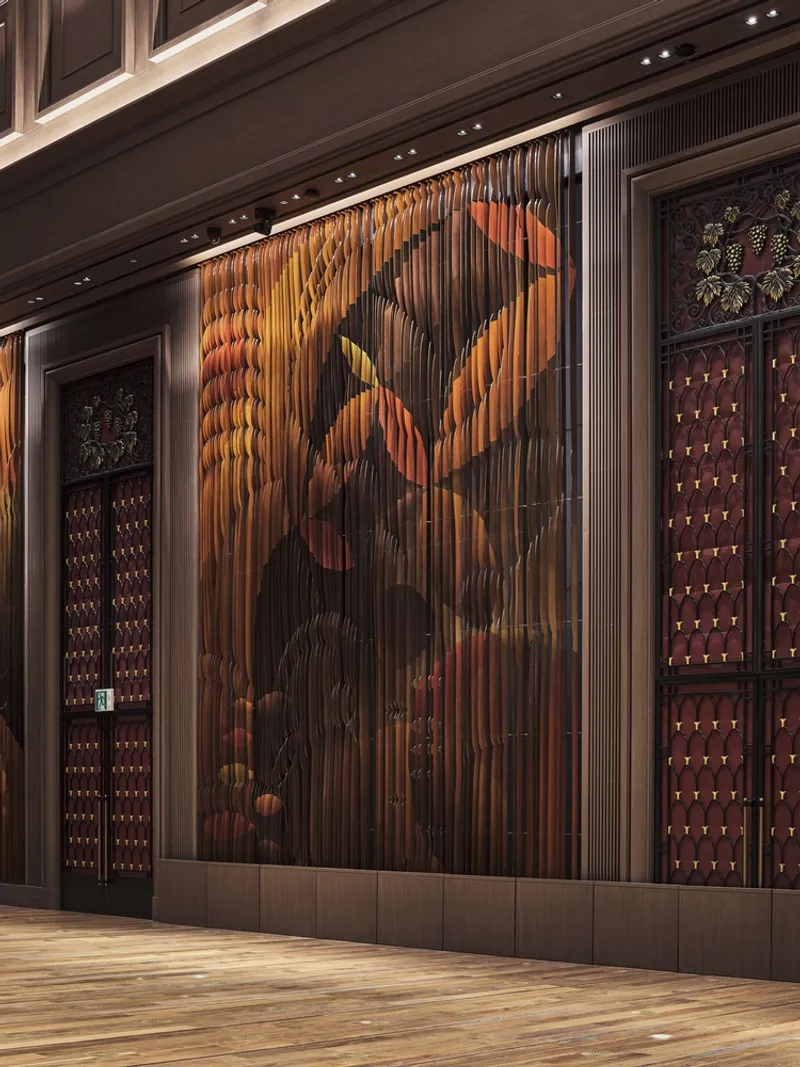
Cultural Infrastructure with Transformable Interiors
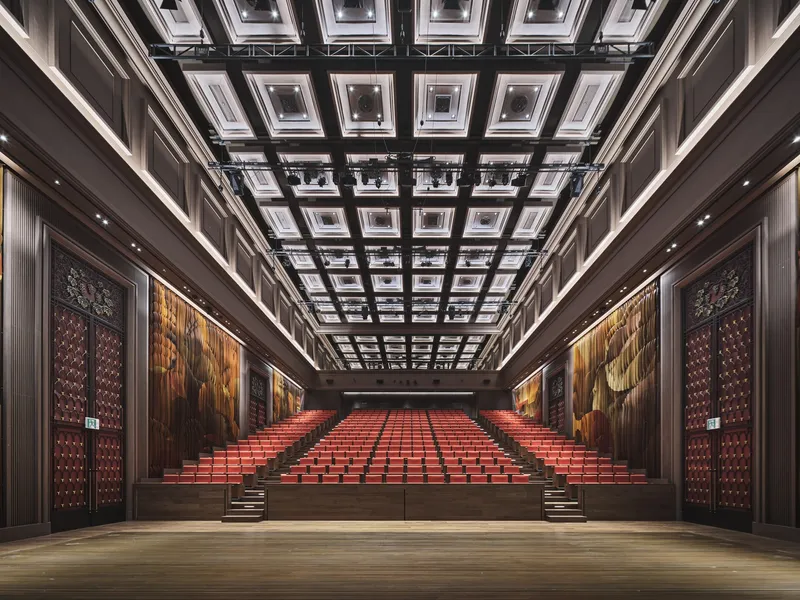
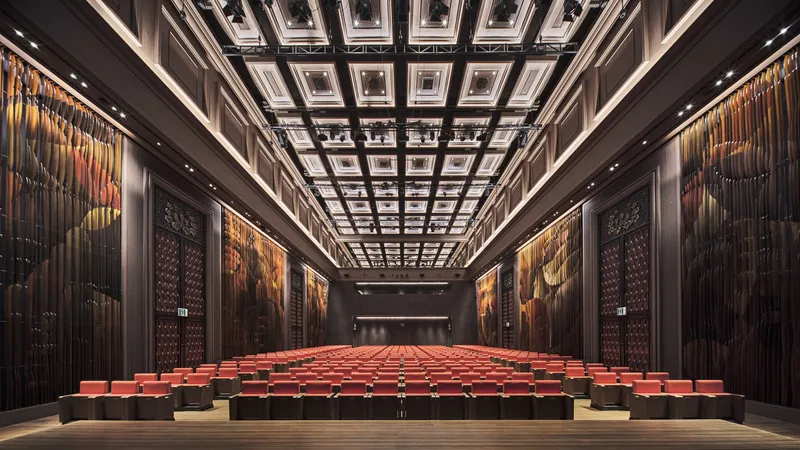
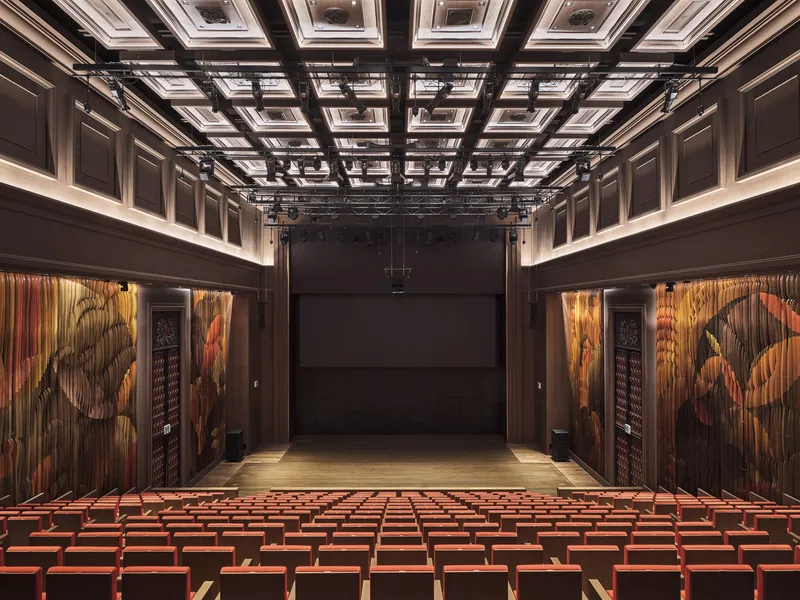
The centerpiece of Shinsegae Namsan’s cultural ambition is Trinity Hall—a 471-seat multipurpose venue co-designed with acoustic specialists Nagata Acoustics. Trinity Hall features a fully transformable seating system, where retractable seats can disappear into the floor, creating a flat space ideal for fashion shows, galas, or exhibitions.
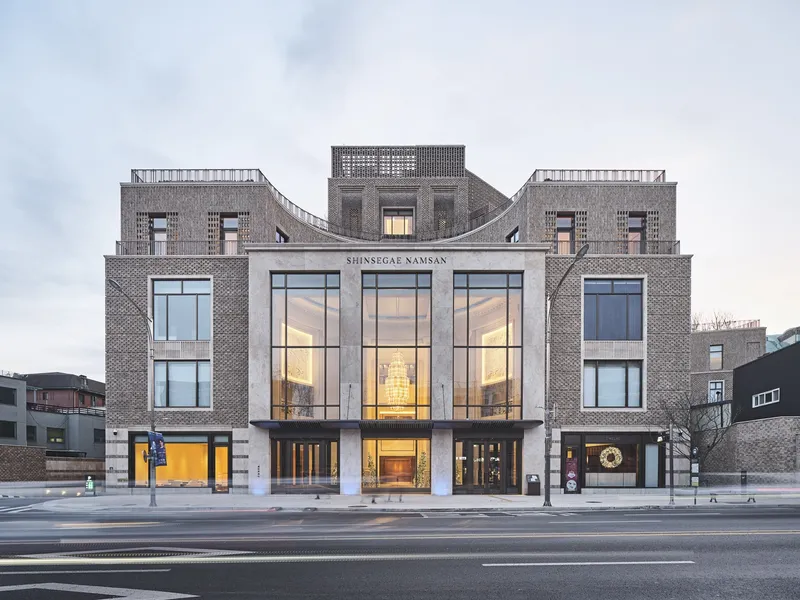
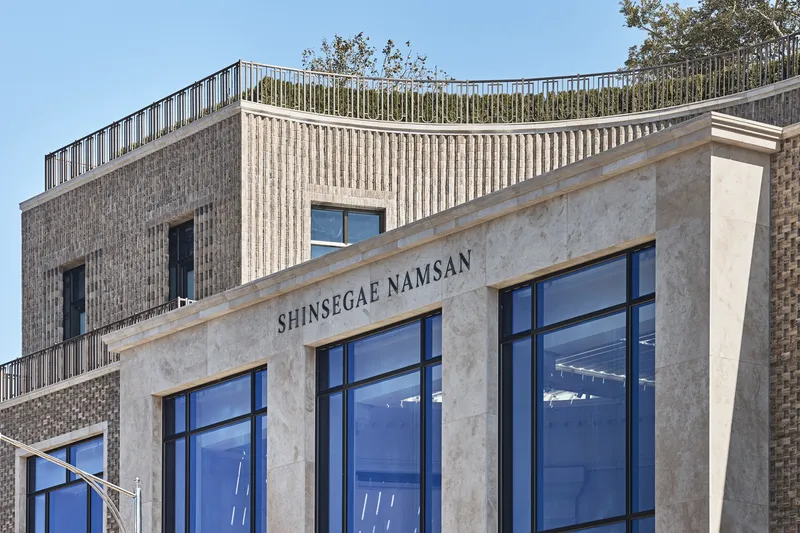
This adaptability ensures that the building can support a wide range of events without architectural compromise. The presence of cultural amenities within a commercial and corporate setting reflects a new direction in Seoul’s urban architecture—one that encourages inclusivity, programmatic hybridity, and spatial generosity.
A Contemporary Landmark for Seoul
Shinsegae Namsan is more than a corporate headquarters or cultural venue; it is a masterful example of mixed-use commercial architecture in Seoul. Through its balanced program, curving geometries, and intricate façade detailing, the project exemplifies how architecture can elevate commercial functions while enhancing urban life. With this project, RAMSA and Haeahn Architecture offer a refined model for future developments in dense city centers—where civic culture and corporate infrastructure can not only coexist but enrich one another.
All Photographs are works of Namsun Lee



Popular Articles
Popular articles from the community


Co-life: Sustainable Architecture for Age-Friendly Community Living
Co-life reimagines sustainable architecture for seniors through courtyards, rammed earth, shared gardens, and spaces designed for belonging.

Co-Life: Senior Housing Design That Reconnects Older Adults With the City
Co-Life reimagines senior housing design through healing gardens, shared streets, workshops, and a sustainable community across generations.

Play: Fragments of Their World
Familiar architecture becomes modular playground design, creating safe spaces where displaced children can learn, connect, imagine and play.

Lunar Spiral: Space Architecture Shaped by the Mathematics of the Universe
Lunar Spiral reimagines space architecture through Fibonacci geometry, lunar regolith, levitating habitats, and self-sustaining Moon living.


Similar Reads
You might also enjoy these articles

FAMM Arquitectura Organizes Ten Villas Around Courtyards and Jungle in Nosara, Costa Rica
El Molino pairs two elongated volumes with deep overhangs and timber louvers to build a compact coastal community five minutes from the beach.
Oscar Niemeyer's Ibirapuera Park Pavilions Define São Paulo's Cultural Identity in Concrete and Curve
A constellation of modernist volumes set within São Paulo's most important urban park, conceived for the city's 400th anniversary in 1954.
How Henri Picq's 1889 Paris Pavilion Traveled 11,000 Kilometers to Become Santiago's Artequín Museum
A prefabricated iron and glass pavilion built for the Paris Universal Exposition found a second life as a children's art museum in Chile.
Sanjay Puri Architects Wraps a Jaipur Office Tower in Capsule-Shaped Green Buffers
A nine-level climate-responsive workplace near Jaipur Airport uses stacked planter terraces and aluminium screens to fight 40°C heat.


Explore Architecture Competitions
Discover active competitions in this discipline



Challenge to reimagine the Iron Throne


Photograph architecture without architects


Illustrate the lost glory of Angkor Wat - Render Challenge


Design challenge to reuse E-waste
Comments (0)
Please login or sign up to add comments
No comments yet. Be the first to comment!