
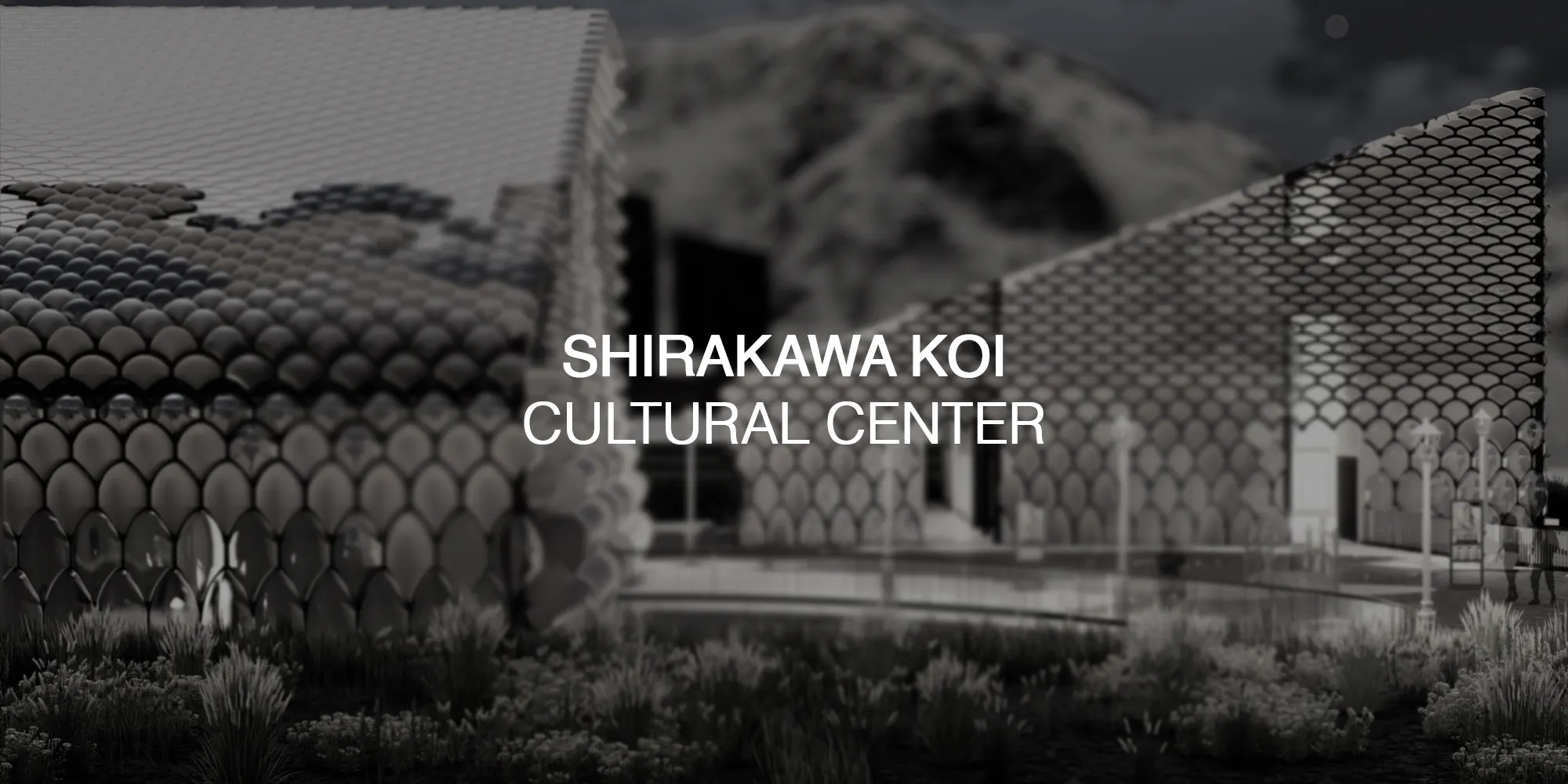
SHIRAKAWA-KOI
An exploration of culture with material tectonics

Cultural Context
Culture is an aspect that reveals human evolution to its finest and most creative. It has evolved as spiritual and material values developed by specific groups over the world according to their understanding of themselves and the regional context.
Culture has thus formed an effective label and identity for a complex whole which includes morals; beliefs, art forms, knowledge and any other capabilities or customs acquired by man over time. They have unconsciously influenced our views, values, fears, hopes and perspectives toward other ideologies. Similarly, architecture is a product of the culture that it was designed for. It reflects the identity of a particular region and helps to maintain cultural integrity.
Architecture also acts as a physical medium which passes down past histories, ideas and ways of living. Although in today’s world with accelerating globalism, expansion of a homogenous culture and trends, architecture as well as other elements of distinct cultures are dying or are being overlooked.
For some time Shirakawa-Go was known as 'the last unexplored area of Japan'. Although since the village was declared a world heritage site in the 90s, the region is more than explored. Tourism has touched more than millions a year and is only increasing. Concerned about how it is impacting the landscape and its residents, in the past years, villagers have started implementing strategies that slow and reduce the tourist influx. Although the need for better management is crucial. How can the rich heritage of Shirakawa-go and a need for management and services come together to serve both?
Material Tectonics
In Japanese culture; all life has meaning and value, illustrated in their deep respect for nature. They strive to work in harmony with their surroundings, as opposed to taming it or imposing too much on it.
As an exploration, the modern Japanese architecture involves tectonic systems that is inspired by their deep respect to traditional craftsmanship and Kengo Kuma’s GC Prostho was taken as a precedent in order to formulate a strategy that establishes our own material tectonics.
The Koi, which is a freshwater fish that can be found across the country is the key concept in the project. The koi mainly symbolizes fortune because it is known to swim against the current of the flowing rivers and overcome great obstacles by climbing even waterfalls, the koi fish symbolize strength, courage, patience, balance, and success through perseverance. In addition to its significance to the country’s culture, the koi features a geometric scale and organic pattern which offer a suitable reference for a tectonic system that ties in architecture with nature.
Cultural Architecture
Moreover, in the context of Japan, silkworms that produce silk by eating leaves from the mulberry trees are placed in the attic of Gasshou houses -which is a key feature in Shirakawa-Go- and are heavily reliant on the environment for their development with variables such as temperature that needs to be regulated and maintained constantly in different seasons of the year, which leads to the production of woven fabric used for clothing in traditional holidays and festivals such as the kimono clothing. As a consequence, our project utilizes this position in the workshop and allows for a silkworm farm along with a fabric production area since communal production is a prominent aspect in the context of Shirakawa-Go.
Traditional architecture in Japan offers a multitude of elements significant for the project such as the tatami flooring, shoji/fusuma (moveable screens), and pitched roofs.
The standard size of tatami mats is a 2:1 ratio. Floors were covered completely in tatami, though now it is more common to find at least one room covered. Spaces and circulation in the buildings of our project are arranged in the tatami proportions. The bigger scale tatami pattern defines the organization of the spaces and the flooring in main hallways are laid-out with tatami mats. This alludes back to the modular and mathematical Japanese tendency in architecture which typically found in plan. On a macro scale in our project, the organic landscape connects our masses with nature using the culturally significant koi fish. The natural pattern alludes and bridges the orthogonal nature of the plan with the irregularities of the surrounding landscape which references a dialectic with the organic landscape and the integration of that context with the architecture in traditional Japan.
In winter, Shirakawa-Go is an area heavily affected by the dense snow accumulation which is why the pitched roofs of the Gasshou-style houses are angled at 60 mimicking the Buddhist prayer hands. Thus, the project is influenced by the Gasshou-style houses’ pitched roofs and follows a similar form.
As a result, our project integrates all those culturally appropriate and site-specific elements in order to facilitate a cultural center for both the communal nature of the local people and the curious nature of the multitude of tourists that come often which bridges the gaps of cultures and introduce a rich history for its visitors.
Conservation of culture
In the cultivation of the building, the project aims to connect the local residents of Shirakawa Go with the tourists by using the architecture as a medium.
The learning building aims to introduce the culture, values, tradition, and way of life of the local residents and teach about the significance of the rich site with an adjacent café building to witness the beauty of the surrounding landscape and nature of the site.
The management building provides structure to the site and maintains security and insures efficiency throughout the project.
The buildings include a tectonic system that can be manufactured and panelized using the workshop building to manage and preserve the buildings as well as provide areas for manufacturing for the locals for the village's needs and deep sense of communal crafting.
To preserve the local culture of Shirakawa-go, the center features a workshop that would:
-Aid in the construction process of the building by providing a space for the local craftsmen to fabricate the façade’s koi fish units.
-Provides space and jobs for the local craftsmen to fabricate pieces to be displayed in the exhibition space.
-Ensures the building’s longevity as it acts as a place for maintenance
-Preserves the historical social tradition of thatching, but instead of with thatch – it’s done with the koi fish façade units instead.

Popular Articles
Popular articles from the community


EW PARK: Sustainable Architecture Reimagines the Future of Urban Parking
EW PARK reimagines city parking as a modular wooden tower combining automation, solar energy, electric mobility, and adaptable urban design.
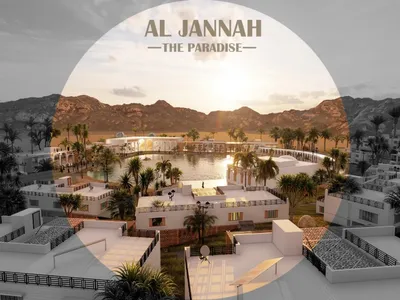
AL-JANNAH: Sustainable Architecture and Permaculture for Afghan Widows
AL-JANNAH uses sustainable architecture and permaculture to create resilient oasis of housing, learning, work and renewal for Afghan widows.

Conexión: Biophilic Design Reimagines High-Rise Living in Hong Kong
Conexión reimagines high-rise living in Hong Kong through biophilic design, green facades, shared spaces, daylight, water and nature within.

The Musturak Paradise: Senior Living Architecture for a Connected Future in Temara, Morocco
The Musturak Paradise reimagines senior living architecture in Temara via private homes, social spaces, culture, community, and shared care.

Similar Reads
You might also enjoy these articles

The Rhythm of Seasons
A Farmers' Market Connecting Nature and the City

More Than a Building-Designing a Living System
More Than a Building-Designing a Living System
Base Beyond
DESERT COMPOUND ARID: TOURISM OF ABSENCE AND ABUNDANCE




Comments (0)
Please login or sign up to add comments
No comments yet. Be the first to comment!