
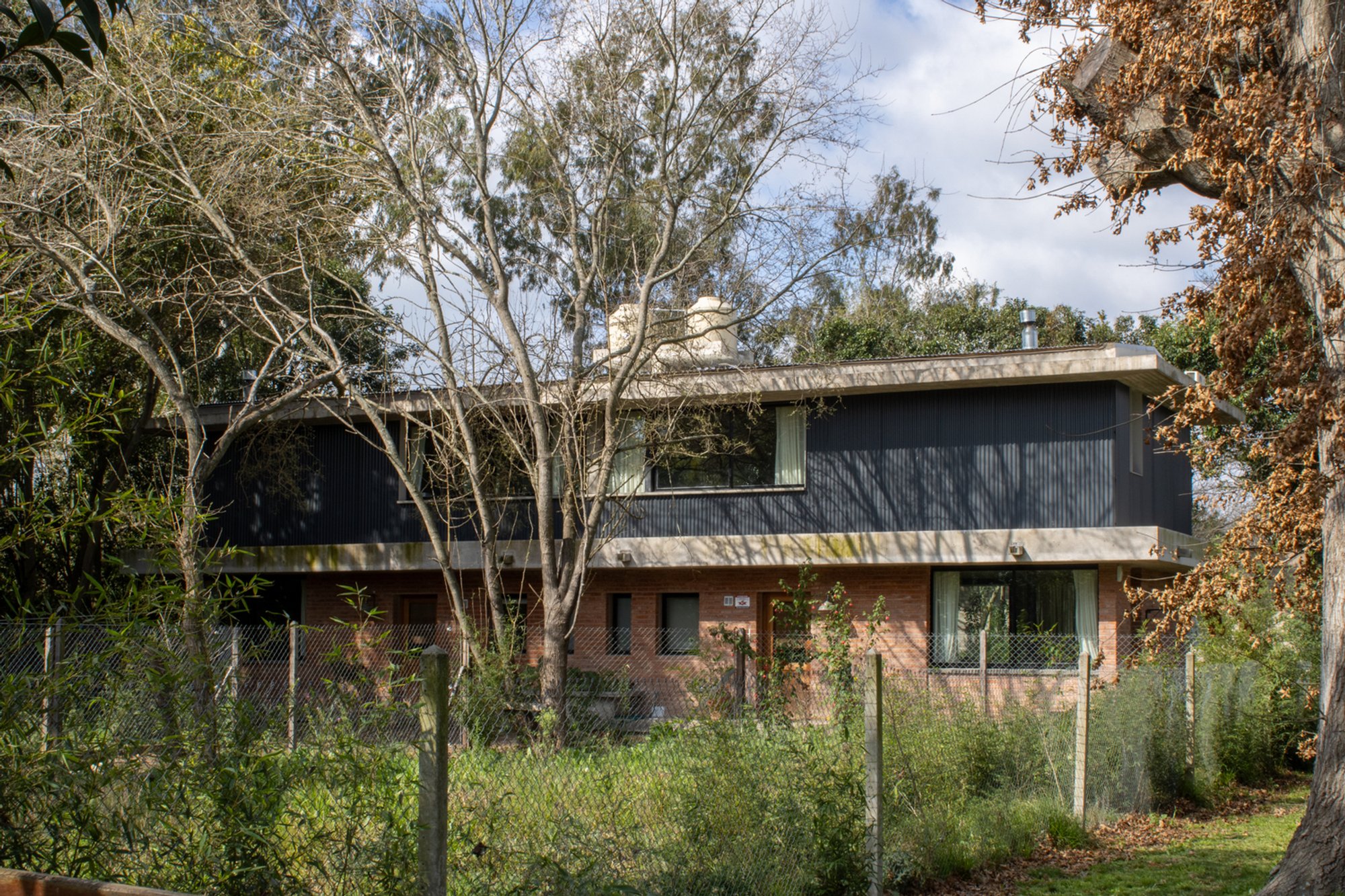
Sister Houses by Simón Albina
Twin brick houses in City Bell by Simón Albina feature mirrored layouts, recycled materials, and warm, low-maintenance interiors embracing sustainability.

The Sister Houses project by architect Simón Albina is a contemporary residential development located in the tranquil City Bell neighborhood of La Plata, Argentina. Nestled at the end of a quiet street adjacent to the Ecological Park, these two homes are designed as mirrored counterparts, sharing both pedestrian and vehicular access while maintaining a distinct sense of identity for each residence.
A Dual Reflection of Domestic Life in City Bell
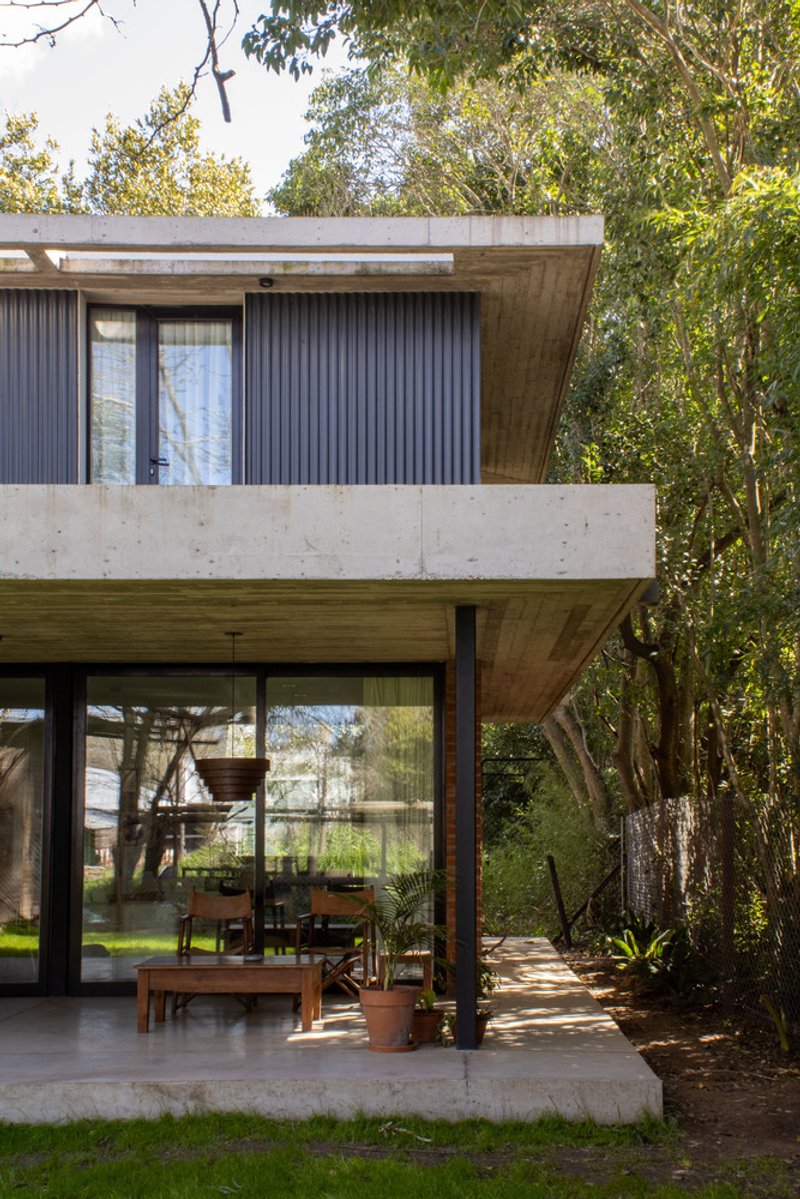
Nestled in the quiet neighborhood of City Bell, La Plata, the Sister Houses by Simón Albina reinterpret suburban living through a thoughtful balance of shared identity and individual expression. Situated at the end of a street bordering the Ecological Park, the two homes are designed as mirrored counterparts — similar yet subtly distinct — connected by a shared pedestrian and vehicular access.
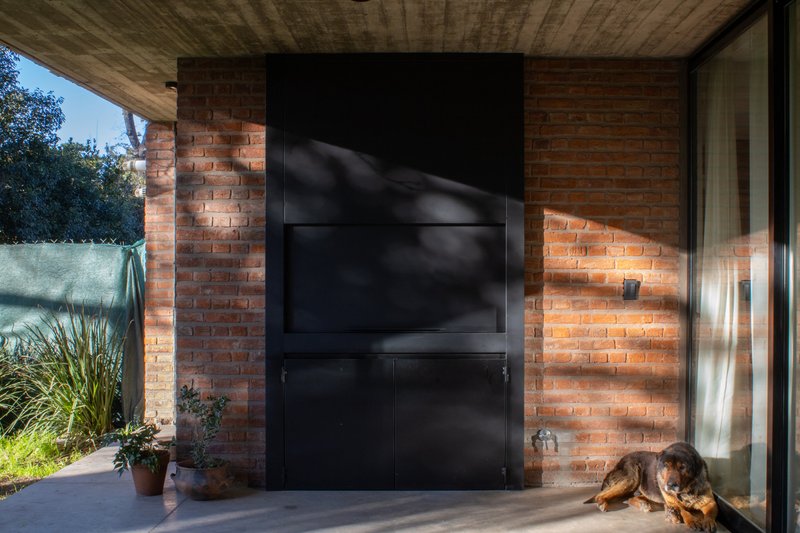
Each residence sits on a 12.5 x 22-meter lot, with a 3-meter setback at the front for parking and a private garden unfolding at the rear. The twin houses embrace openness and greenery, with gallery spaces and gardens acting as natural extensions of indoor life.
Material Authenticity and Timeless Expression
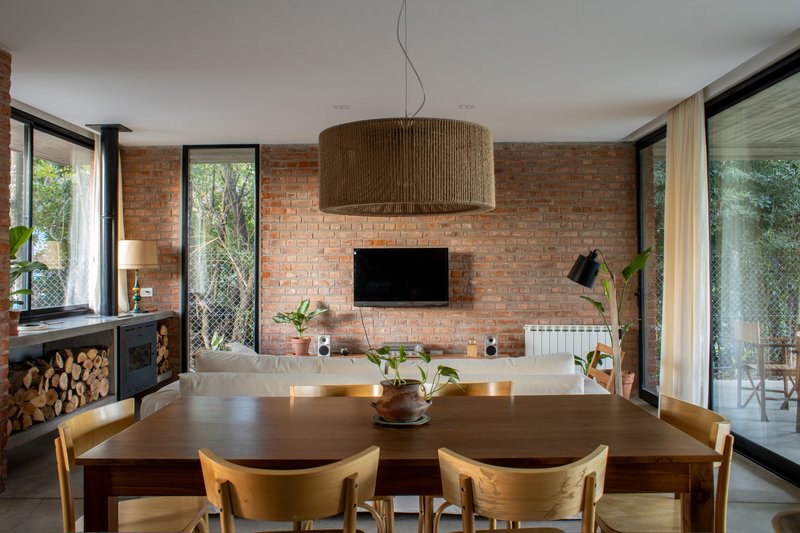
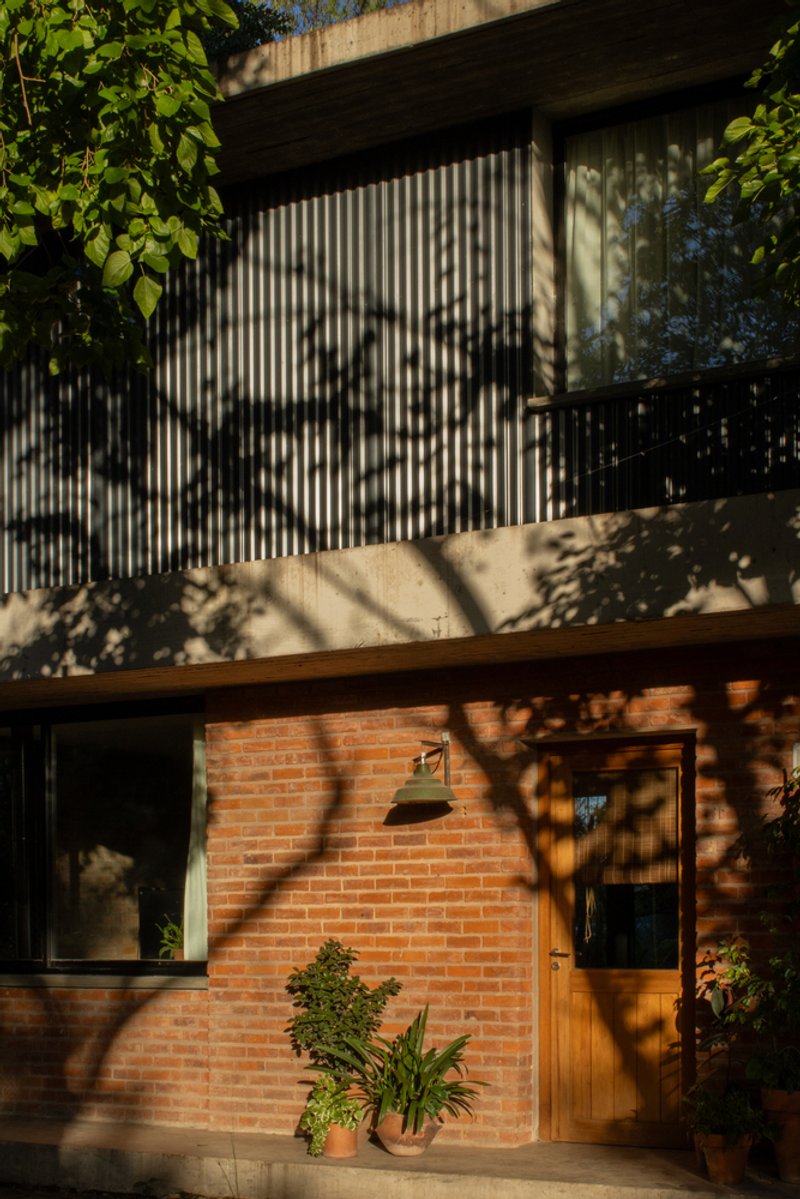
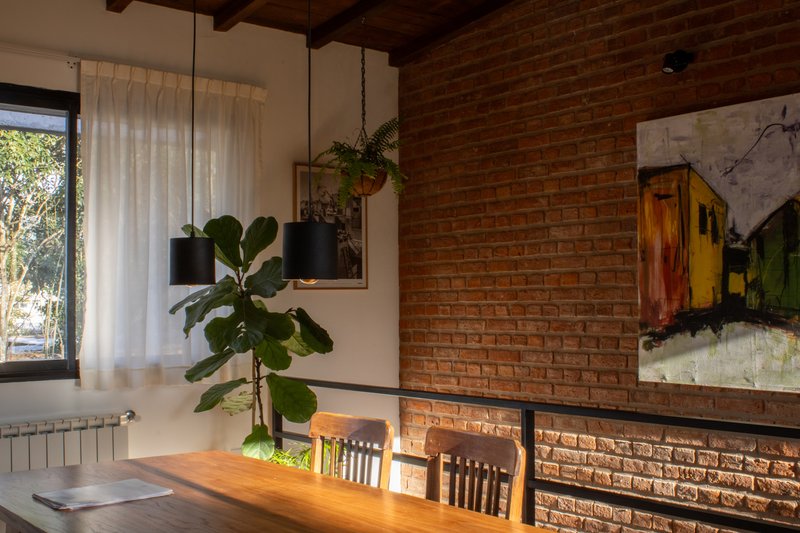
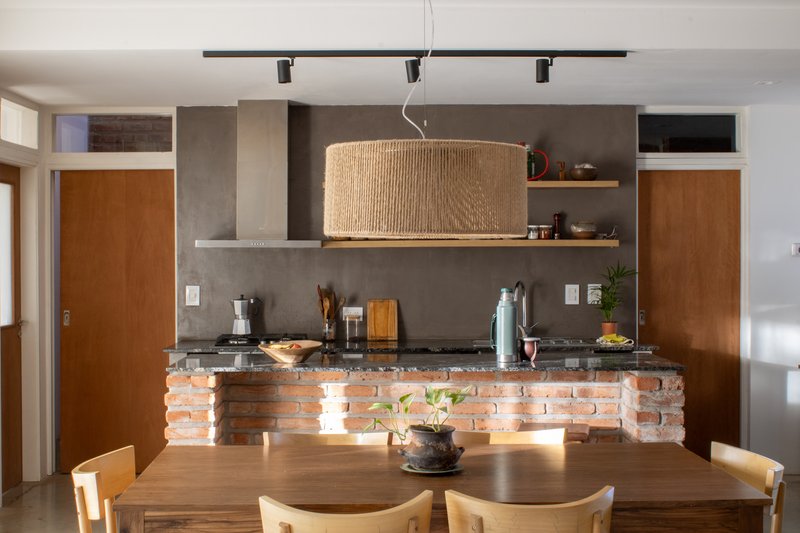
Exposed brickwork defines the architectural language of the houses, grounding them in a sense of permanence and familiarity. This tactile material palette is enriched with concrete elements and gray corrugated metal, creating a dialogue of textures that distinguishes the functional layers of each home.
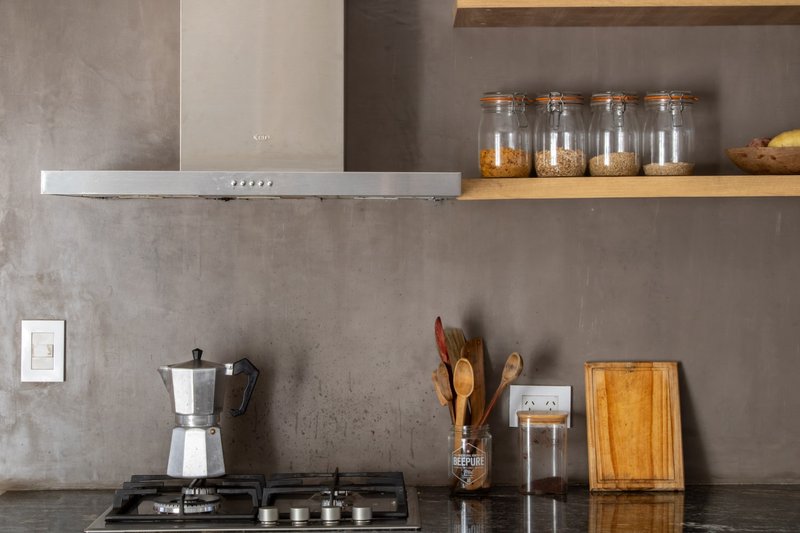
Albina’s material selection prioritizes low maintenance and emotional resonance. “We chose materials that the users connect with — elements they’ve lived alongside for years,” the architect explains. This philosophy underscores a belief that architecture should foster identity through material memory, rather than stylistic repetition.
Spatial Organization: Public Below, Private Above
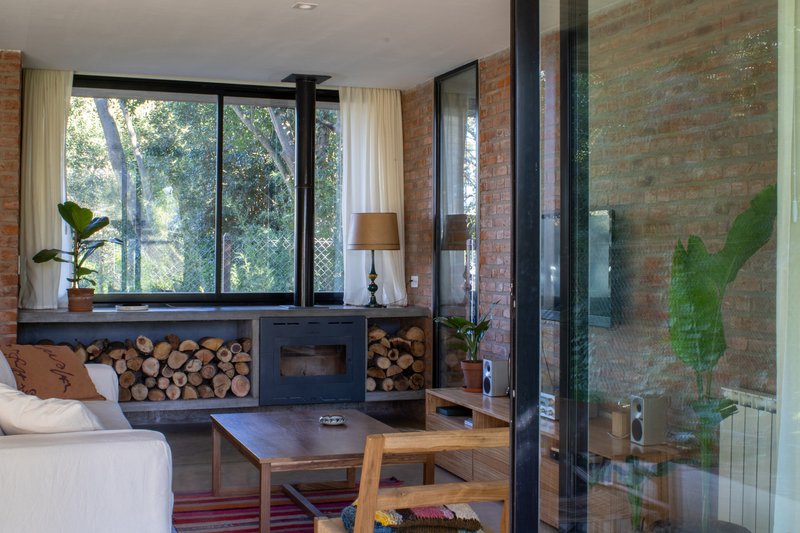
On the ground floor, both homes host public and social spaces — living, dining, and kitchen areas designed as flexible, continuous zones adaptable to different uses and gatherings. Complementing these are service spaces, such as laundries and utility rooms, which connect directly to the exterior for practicality and flow.
The upper level houses more intimate functions: studies, bedrooms, and bathrooms, arranged with a focus on privacy between the two dwellings. This separation of private and public realms allows each family to maintain autonomy while enjoying the quiet harmony of mirrored design.
Sustainability Through Reuse
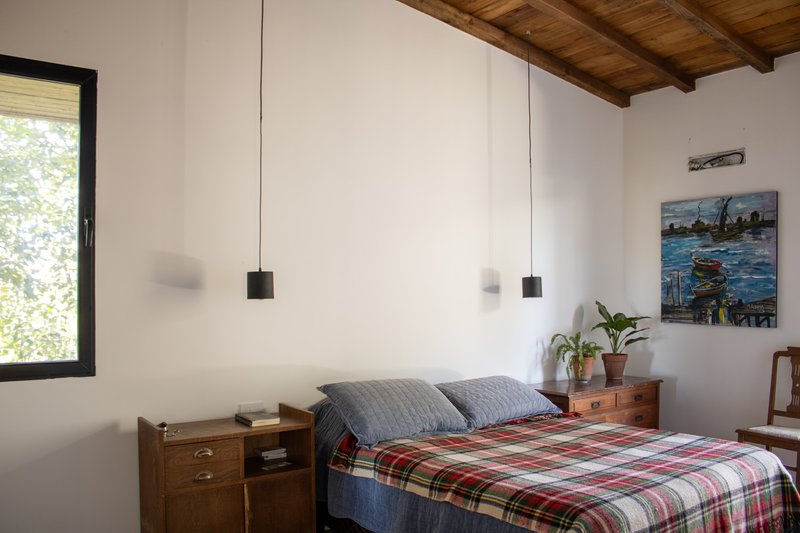
In keeping with Albina’s sustainable ethos, the project incorporates recycled materials from demolished houses. The pinotea wood flooring on the upper levels, along with exposed ceiling beams, introduces warmth and texture — a subtle contrast to the solidity of brick and concrete. These reclaimed materials give the interiors a layered character, blending old narratives with new architecture.
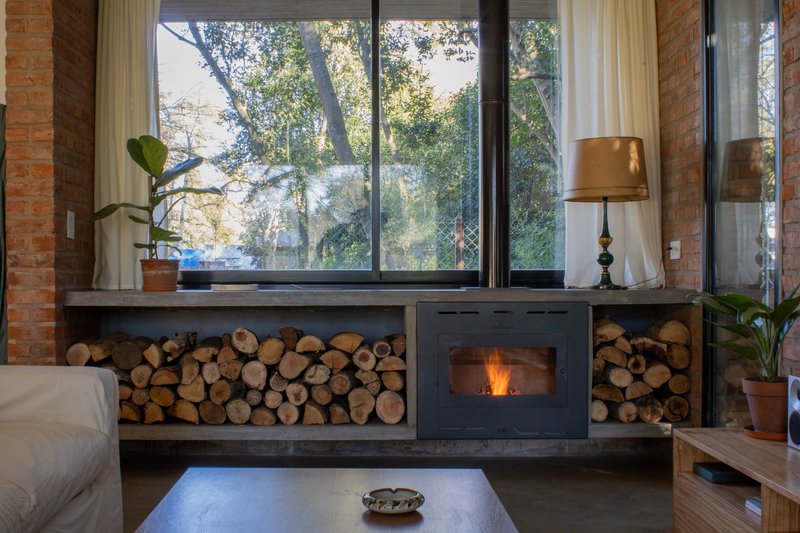
Natural light plays a key role in the spatial experience. While front-facing windows invite the soft glow of the afternoon sun, large rear openings frame the gardens and ensure privacy from the street. This balance of light and enclosure reinforces the sense of calm and domestic intimacy that defines both homes.
A Poetic Dialogue of Two Homes
The Sister Houses stand as a poetic architectural duet — two homes sharing structure, materials, and philosophy, yet each reflecting its own rhythm of life. Through simple gestures, local materials, and conscious reuse, Simón Albina crafts a contextual architecture that resonates with the people and the place it inhabits.
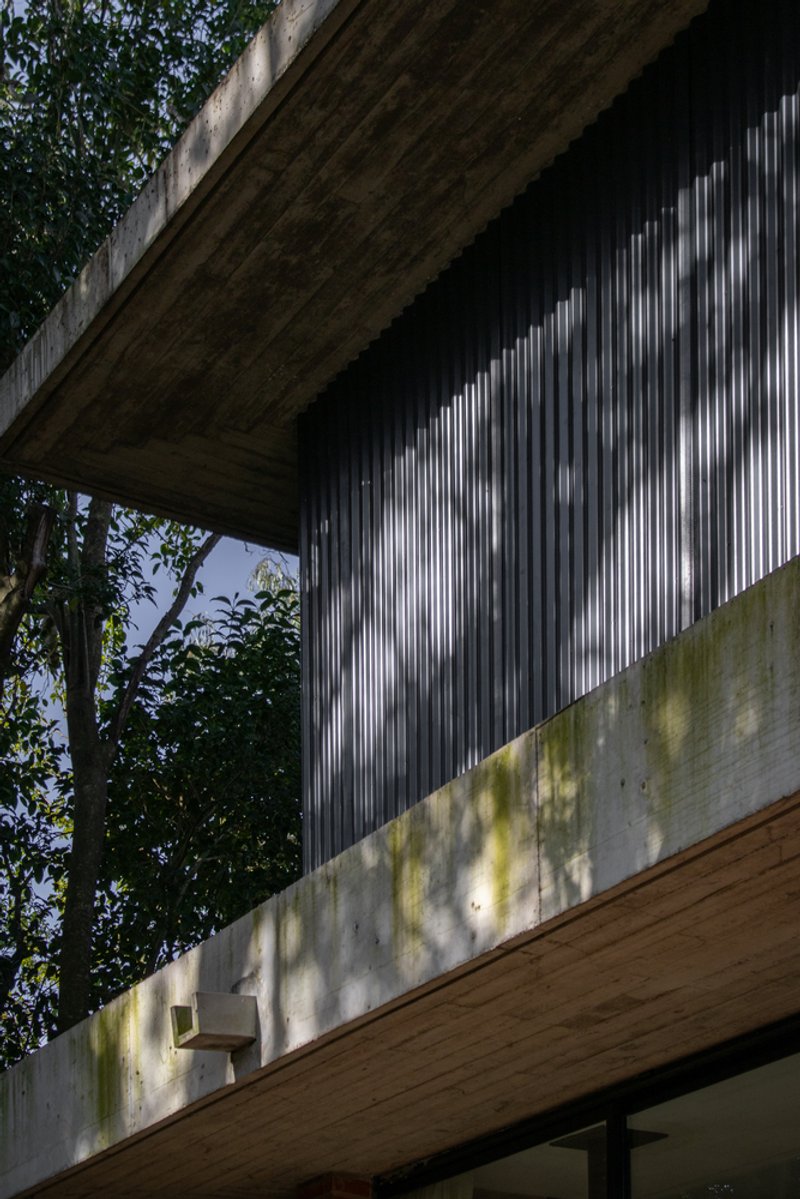
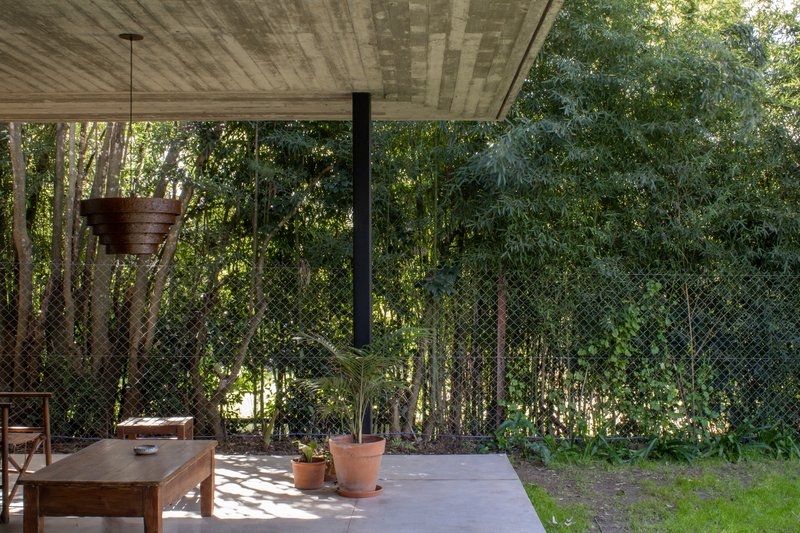
All photographs are works of Simón Albina




Popular Articles
Popular articles from the community

20 Most Popular Furniture Design Projects of 2025
Modular street systems, parametric benches, and insect hotels: the furniture design projects that captivated architects on uni.xyz in 2025.

Studio Gram Unfurls a Concrete Curve Through an Adelaide Queen Anne Villa
In Rose Park, a billowing concrete threshold stitches a century-old house to a sun-chasing pavilion organized around an existing pool.
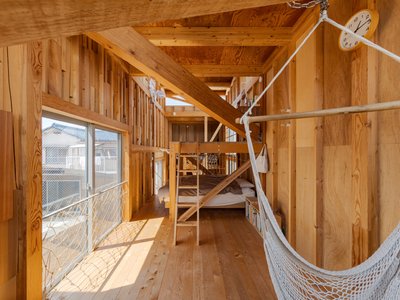
1-1 Architects Builds a Nagoya House and Office from Decades of Stockpiled Timber
A 69-square-meter tower in dense residential Nagoya transforms surplus lumber into a home and workplace for a construction company.
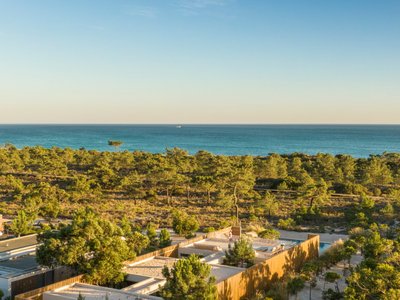
BICA Arquitectos Buries a Coastal Home in a Man-Made Dune on Portugal's Tróia Peninsula
A 300-square-meter house of timber, sand mortar, and travertine dissolves into the dune landscape it helped regenerate on the Alentejo coast.


Similar Reads
You might also enjoy these articles
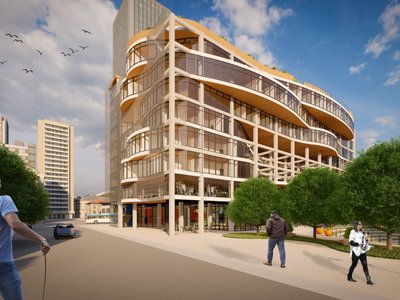
Olio Towers: A Mid-Rise for Performers That Fuses Housing, Rehearsal, and Stage
Located blocks from Houston's Theater District, this modular tower stacks living units around a central performance atrium.
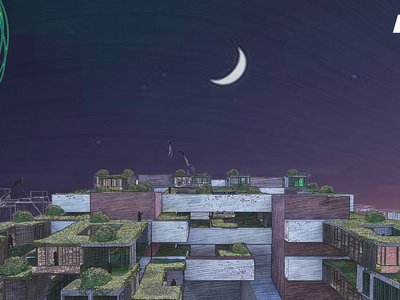
Oasis: Modular Green Housing Carved into Dhaka's Urban Fabric
A shortlisted Plugin Housing entry reclaims unauthorized settlements in Dhaka with stepped concrete volumes, green roofs, and ventilation-driven design.

Black Hole: A Floating Megastructure for the Post-Physical Era
Emiliano Mazzarotto envisions a spherical, self-scaling arena where e-sports, digital hotels, and holographic stadiums replace traditional public space.
Compact & Sustainable Living in Piraeus: A Four-Level Family Home Built Around Light and Air
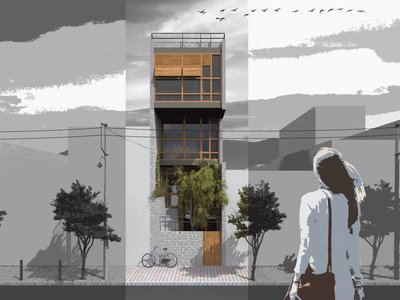
A narrow townhouse in one of Greece's densest port cities uses a central atrium and passive strategies to house three generations under one roof.


Explore Architecture Competitions
Discover active competitions in this discipline




The International Standard for Design Portfolios


The Global Benchmark for Architecture Dissertation Awards


The Global Benchmark for Graduation Excellence


Challenge to design mud housing for contemporary communities
Comments (0)
Please login or sign up to add comments
No comments yet. Be the first to comment!