
Snøhetta gives the 1980s landmark a breath of fresh air
The most striking change that Snøhetta has made it to the museum's exterior

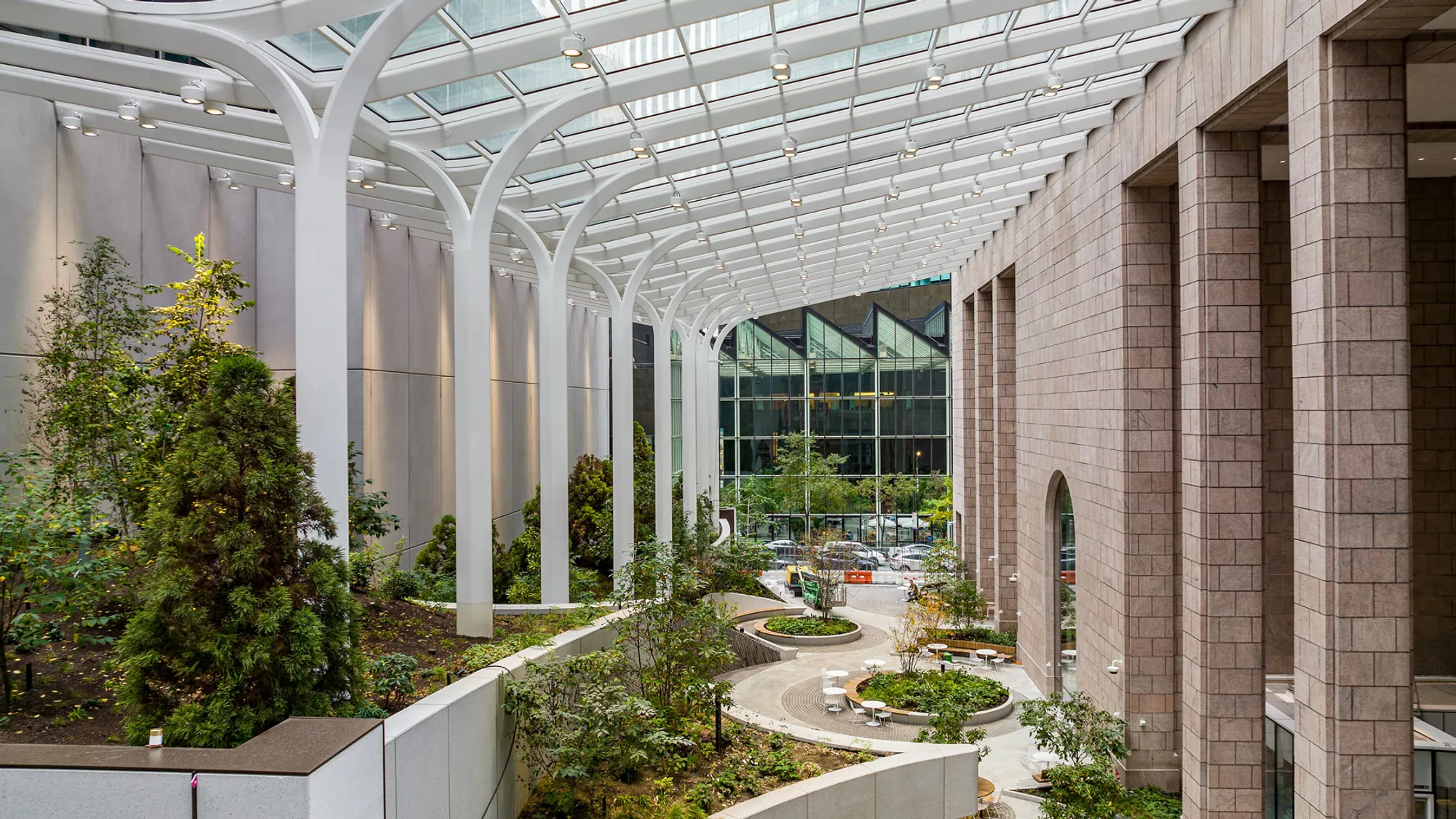
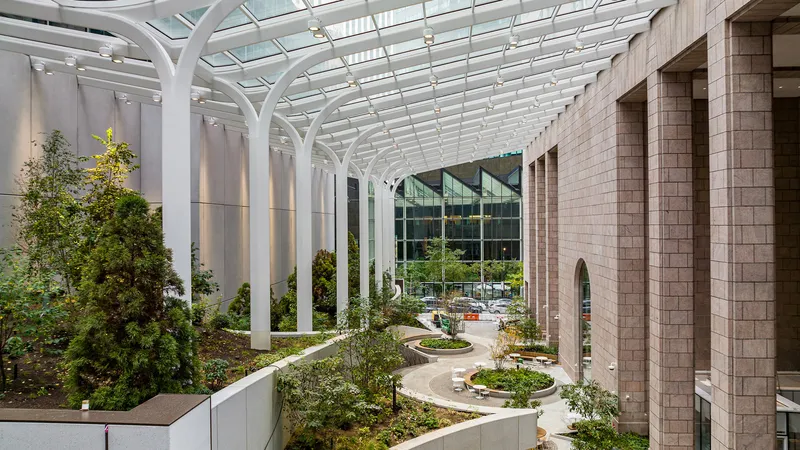 Snøhetta’s reimagining of 550 Madison's public space is a 21,000-square-foot garden-atrium-galleria sheltered by a glass canopy. Photo © Barrett Doherty
The AT&T Building, designed by Philip Johnson and John Burgee, opened on Madison Avenue to much fanfare in 1984. The building's "Chippendale" top was a focal point for many onlookers. However, recent changes to the Postmodern icon, carried out by Norwegian architecture firm Snøhetta, have shifted attention to the building's street-level spaces - particularly the newly transformed garden to the west of the building.
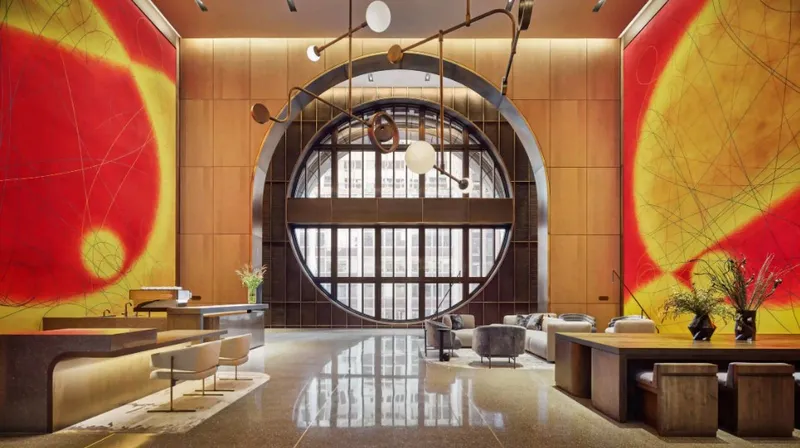 550 Madison's amenities spaces in the building's "Sky Lobby" were designed by Rockwell Group. Photo © Nikolas Koenig
Johnson-Burgee's original design for the building included an open arcade on its east, north, and south facades, as well as a galleria covered by a glass barrel vault on the west. In 1991, Sony purchased the building and enclosed the galleria with glazing, retail space.
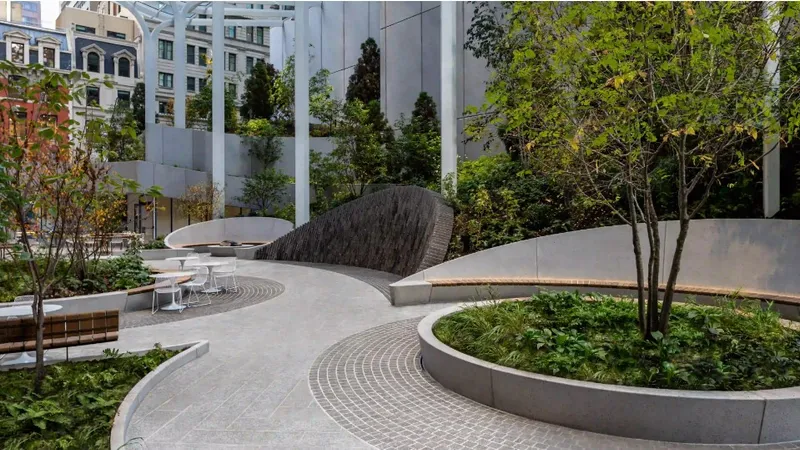 Over half of the outdoor space is devoted to plantings, which will be irrigated by rainwater collected from the canopy and stored in cisterns. Photo © Barrett Doherty
550 Madison, formerly known as the Sony Building, has undergone a major renovation that has transformed the space into a modern, open-air retail and office complex. The renovation, designed by architecture firm Snøhetta, has retained the retail space at the front of the building while also returning the galleria to a covered, open-air space.
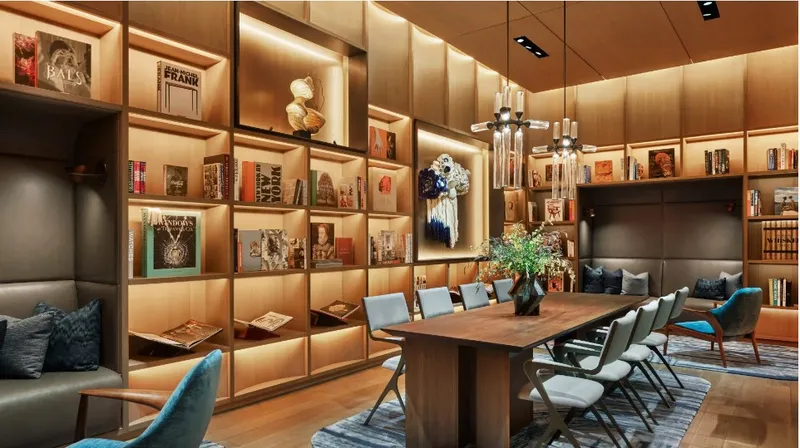 An amenity space by Rockwell Group. Photo © Nikolas Koenig
In order to create this new design, Snøhetta demolished a low annexe that had previously housed a Sony store and enlarged the plaza to 21,000 square feet, an increase from the previous 13,000 square feet. The new design features a garden space topped by a curved glass canopy supported by steel columns.
According to Craig Dykers, a founding partner of Snøhetta, "We removed a lot more than we added" in the renovation process. The result is a modern, open-air space that is sure to be a popular destination for both tourists and locals alike.
Breaking the long, linear space into a series of circular "rooms" creates a more intimate setting with curving wood tables and stone planters. The addition of 50 trees and 200+ flowering shrubs, grasses, bulbs, and forbs gives the garden a more natural feel. The west side of the garden features a granite crescent with a heated bench curving around a freestanding "hearth". The pavilion in the corner is complete with food kiosks and an elegant restroom with gender-neutral toilet stalls.
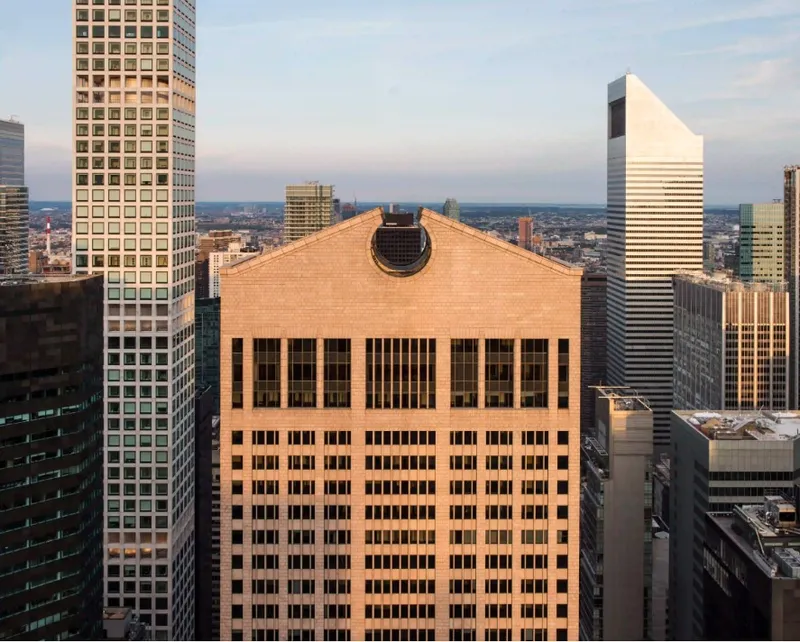 550 Madison's distinctive "Chippendale" top. Photo © Alex Fradkin
"The space isn't just a galleria, an atrium, or a garden - it's a bit of all three," says Dykers. More than half the space is devoted to plantings, which will be irrigated by rainwater collected from the canopy and stored in cisterns. By opening the space up on the north and south sides, the firm hopes to better connect it with the rest of the neighbourhood and make this part of Midtown Manhattan more vibrant.
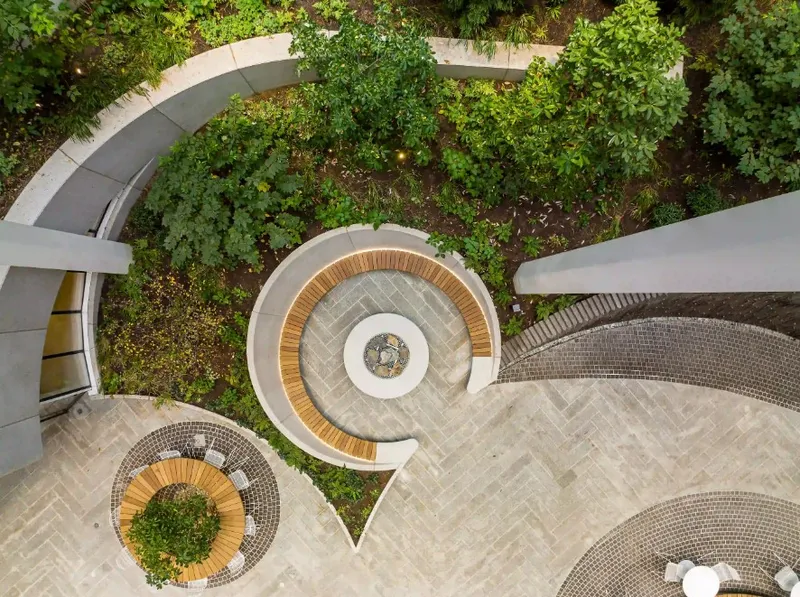 Aerial view of the gardens. Photo © Barrett Doherty
The architects of Snøhetta made extensive changes to the inside of the tower as well. Although their initial plan - to remove the rose granite base and replace it with a wavy glass curtain wall - was met with uproar from preservationists and ultimately rejected, they were still able to install extensive glazing in the back wall of the building, overlooking the garden. By rotating the elevator core 90 degrees, they created an axis from the main entrance on Madison Avenue through the lobby, where a new arched window offers views out to the planted plaza.
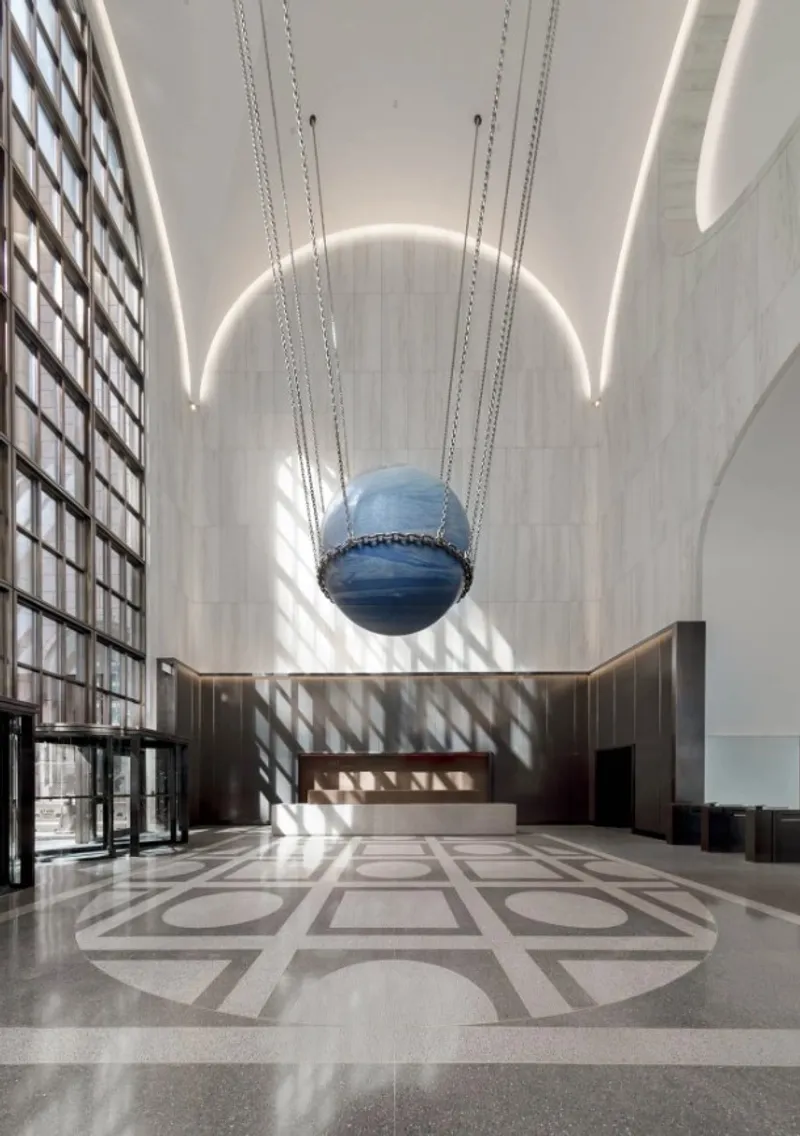 The Gensler-designed lobby interior (1); Interior view of the gardens.
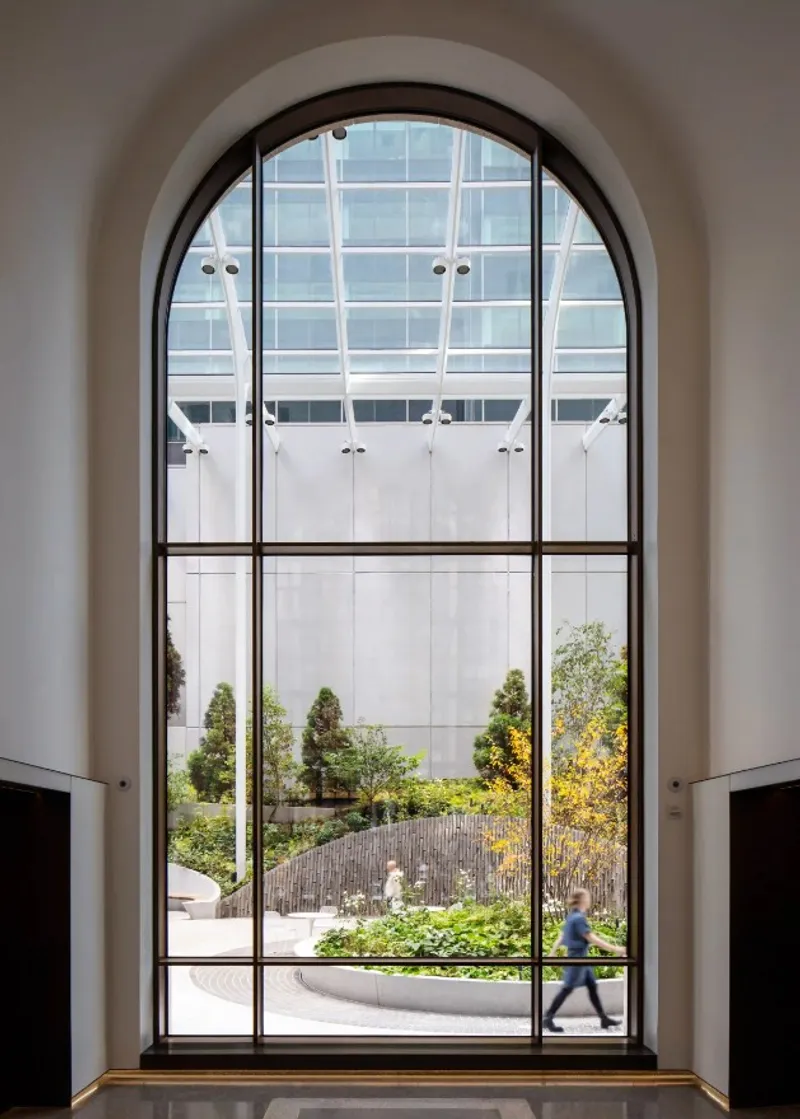 The Gensler-designed lobby interior (1); Interior view of the gardens.
Employers and building owners are hoping to create healthier work environments and attractive outdoor spaces to convince workers to come back to the office. The new 550 Madison is a test of how effective such efforts will be.
References (2)



Popular Articles
Popular articles from the community


Co-life: Sustainable Architecture for Age-Friendly Community Living
Co-life reimagines sustainable architecture for seniors through courtyards, rammed earth, shared gardens, and spaces designed for belonging.

Co-Life: Senior Housing Design That Reconnects Older Adults With the City
Co-Life reimagines senior housing design through healing gardens, shared streets, workshops, and a sustainable community across generations.

Play: Fragments of Their World
Familiar architecture becomes modular playground design, creating safe spaces where displaced children can learn, connect, imagine and play.

Lunar Spiral: Space Architecture Shaped by the Mathematics of the Universe
Lunar Spiral reimagines space architecture through Fibonacci geometry, lunar regolith, levitating habitats, and self-sustaining Moon living.


Similar Reads
You might also enjoy these articles
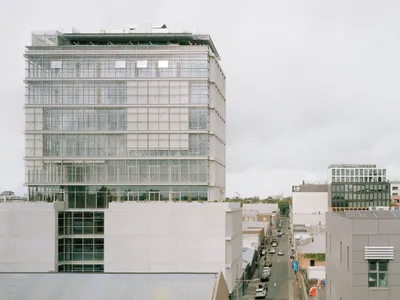
116 Rokeby Building, Collingwood
Sustainable Collingwood office building featuring double-skin façade, natural ventilation, rooftop amenities, and carbon-neutral design focused on wellbeing and longevity.
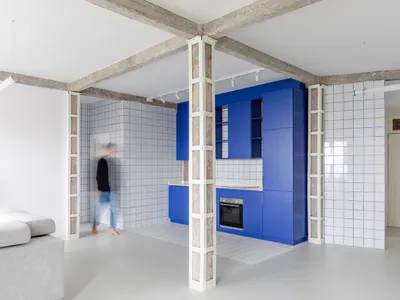
Contemporary Apartment Renovation in Spain: RV House by BIAN Opens Up to the Sea
A minimalist 1930s apartment in Santander is transformed into a flexible, sea-facing home through contemporary Spanish renovation.
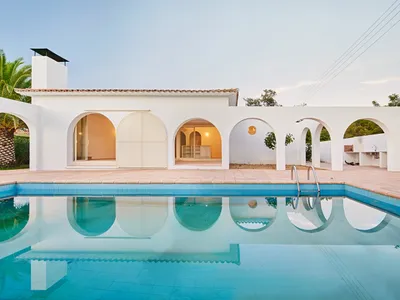
3 Marías House: A Contemporary Mediterranean Courtyard Retreat by Bajet Giramé + Burckhardt
Mediterranean courtyard home blending traditional architecture with modern design, terracotta flooring, flexible interiors, sustainable climate strategies, and garden integration.
NZ10 Apartment by auba studio: Adaptive Reuse in Palma de Mallorca
Adaptive reuse apartment transforms bakery into light-filled home with patios, privacy layers, and wood interiors enhancing urban living experience.


Explore Landscape Design Competitions
Discover active competitions in this discipline




Challenge to reimagine the Iron Throne


Photograph architecture without architects


Illustrate the lost glory of Angkor Wat - Render Challenge


Design challenge to reuse E-waste
Comments (0)
Please login or sign up to add comments
No comments yet. Be the first to comment!