
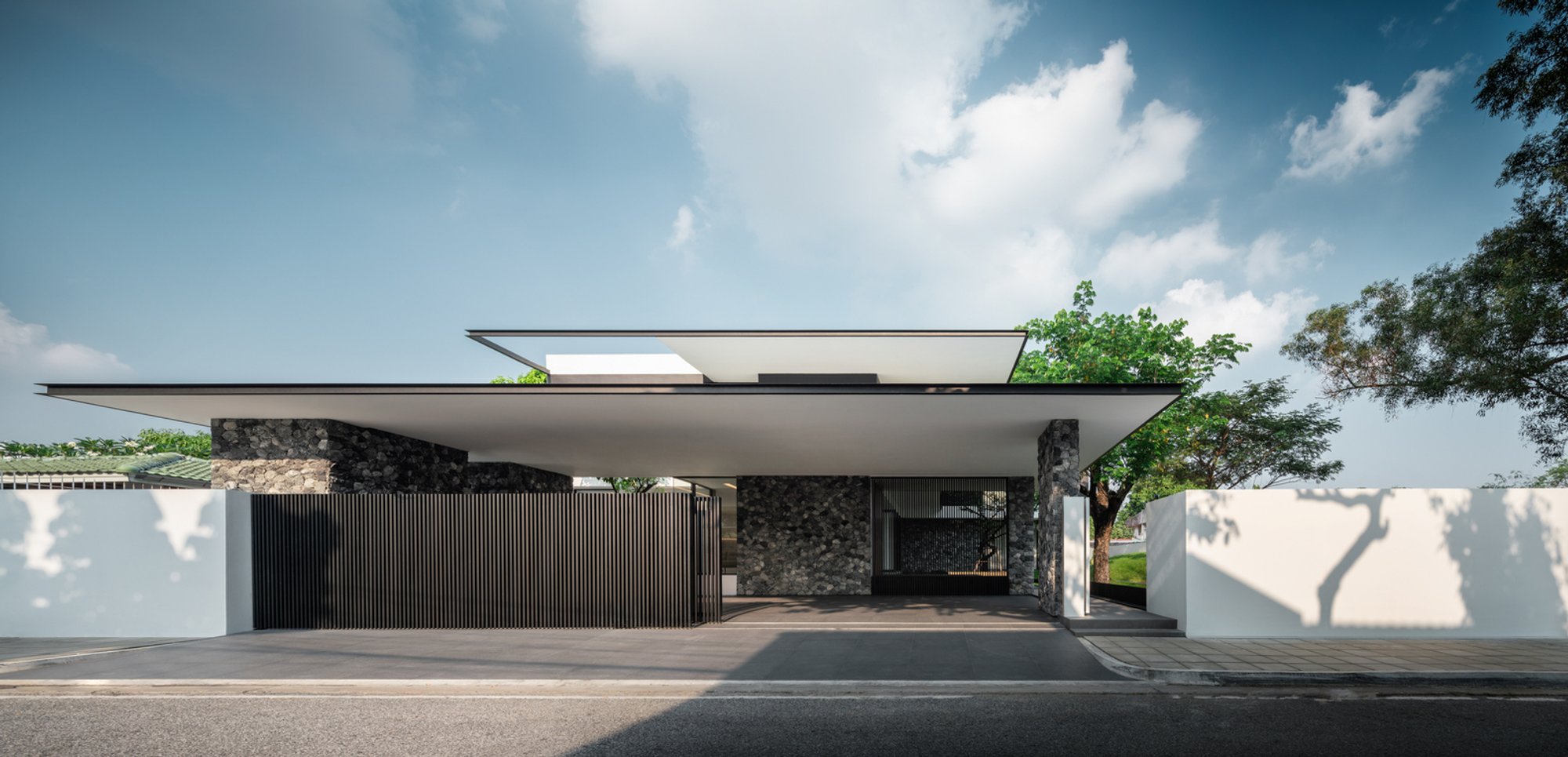
Soffit House by Ayutt and Associates design
A restrained tropical residence in Bangkok featuring extended soffits, layered gardens, curated views, and climate-responsive indoor-outdoor living spaces throughout carefully.

Soffit House by Ayutt and Associates design is a contemporary residential project in Bangkok, Thailand, defined by restraint, climate responsiveness, and a refined reinterpretation of traditional tropical architecture. Designed as a practical, low-maintenance family home, the house prioritizes everyday livability while responding sensitively to its urban context and humid climate.
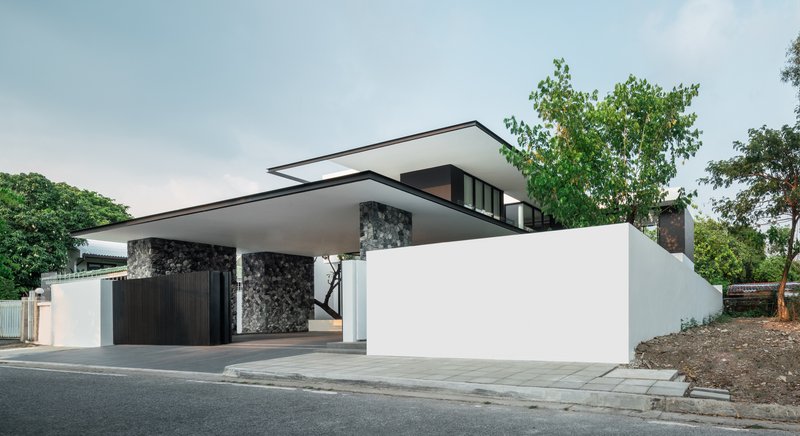
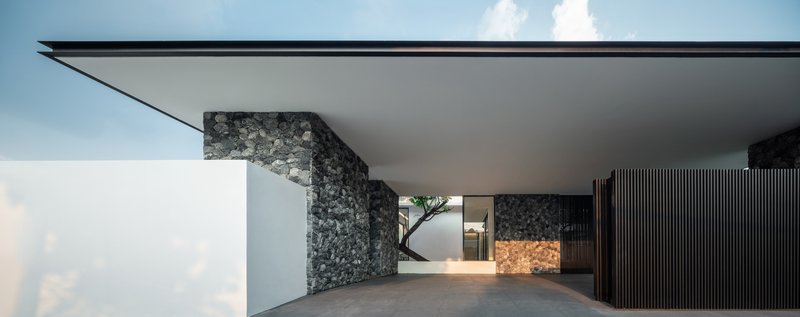
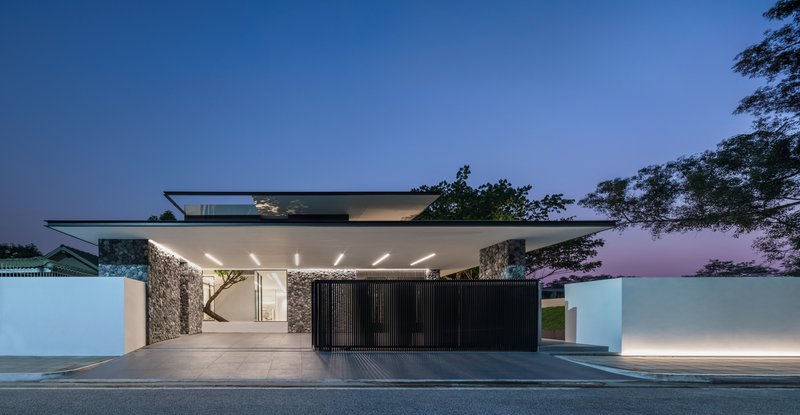
At the core of the design is a single architectural gesture: the extended horizontal soffit. These razor-thin cantilevered eaves stretch outward like floating planes, shielding the house from harsh tropical sun and heavy rainfall while visually softening the building’s presence within its established residential neighborhood. Rather than mimicking surrounding forms directly, the house adopts a measured architectural language that blends quietly into its context, achieving both distinction and discretion.
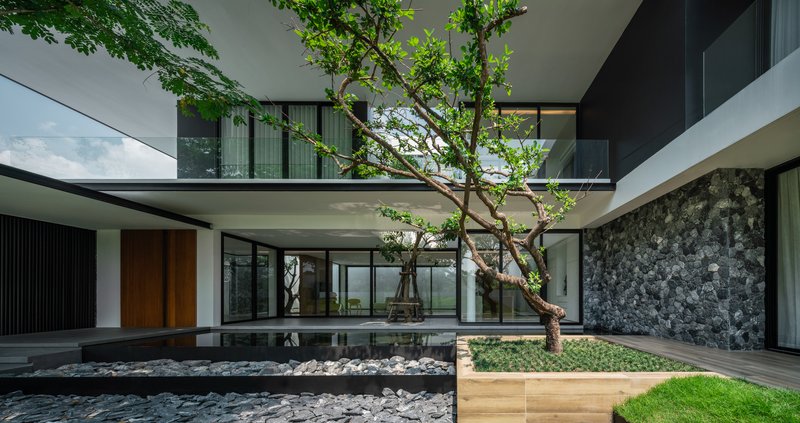
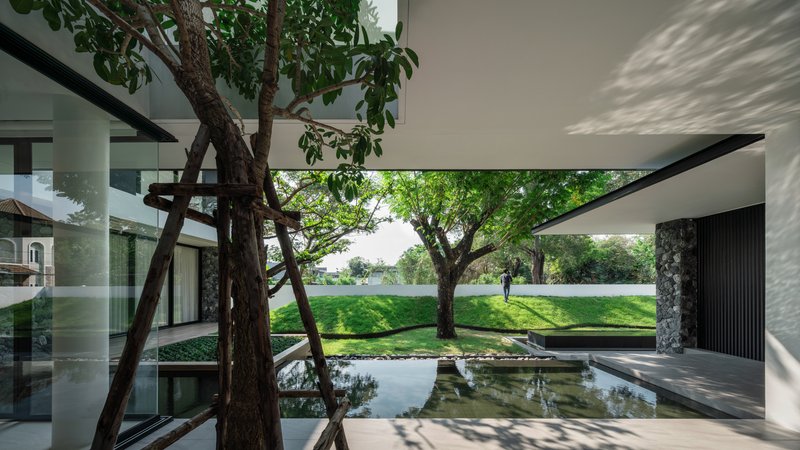
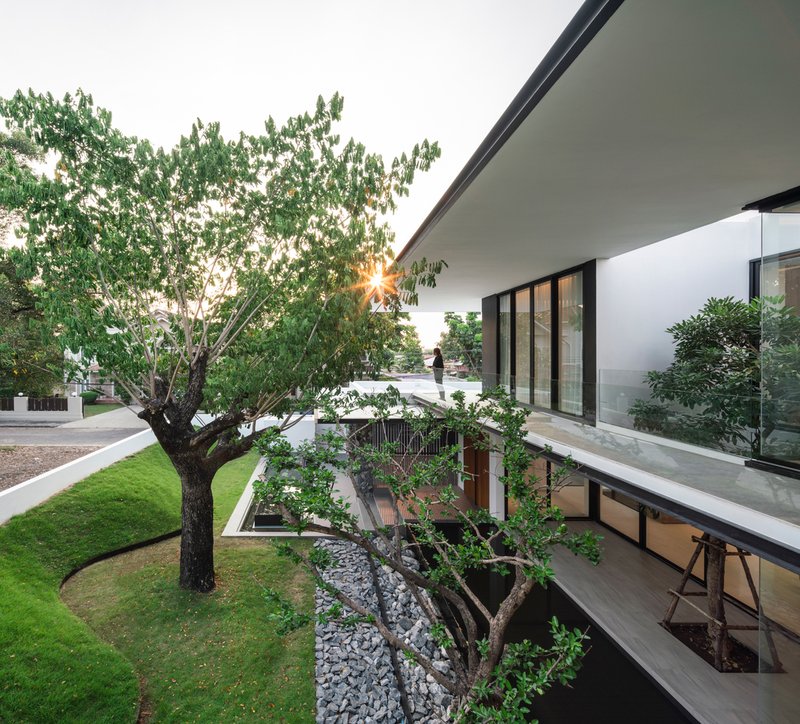
The site sits between an empty plot and a gabled-roof bungalow, conditions that informed the building’s massing, orientation, and landscape strategy. The garden is positioned adjacent to the vacant land, allowing greenery to visually extend beyond the property line. Gently undulating landscape mounds reduce fence height, blur boundaries, and create a seamless connection between owned and borrowed landscapes. This approach enhances privacy while expanding the perceived spatial depth of the site.
Lighting plays a crucial role in shaping the architectural experience. By night, soft illumination highlights the landscape and architectural planes, transforming the white soffit into a canvas for shadows cast by swaying trees. The angled soffit blocks direct views from the street, ensuring privacy without resorting to solid barriers, while also contributing ambient light back to the neighborhood, subtly activating the streetscape after dark.
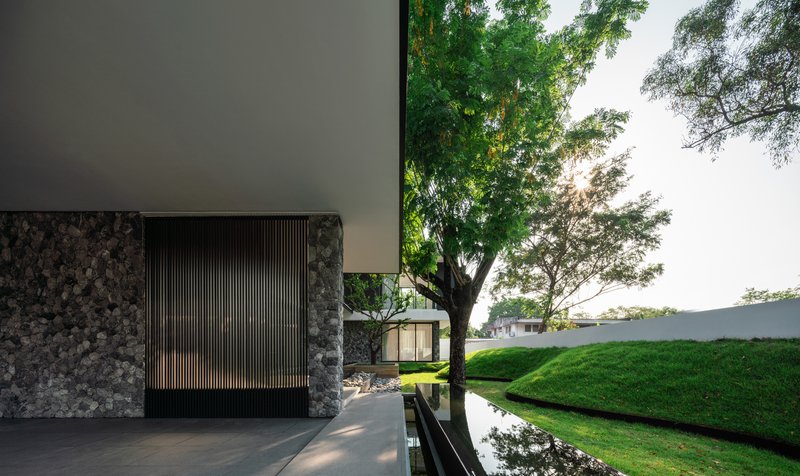
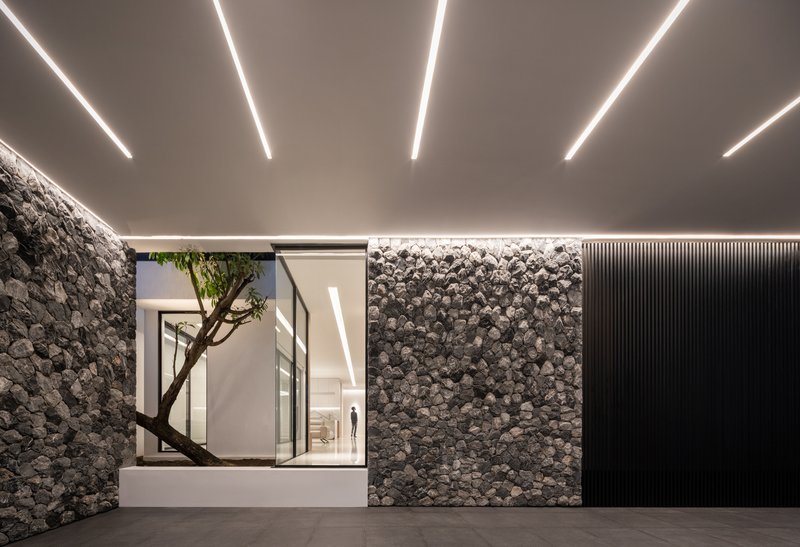
Entry into the house is choreographed as a gradual reveal. Visitors are guided along a path flanked by a linear reflecting pool and a louvered vertical screen that filters views and light. This vertical articulation contrasts deliberately with the dominant horizontal roof planes, intensifying the visual tension between solidity and lightness while elevating the soffit as the project’s defining architectural element.
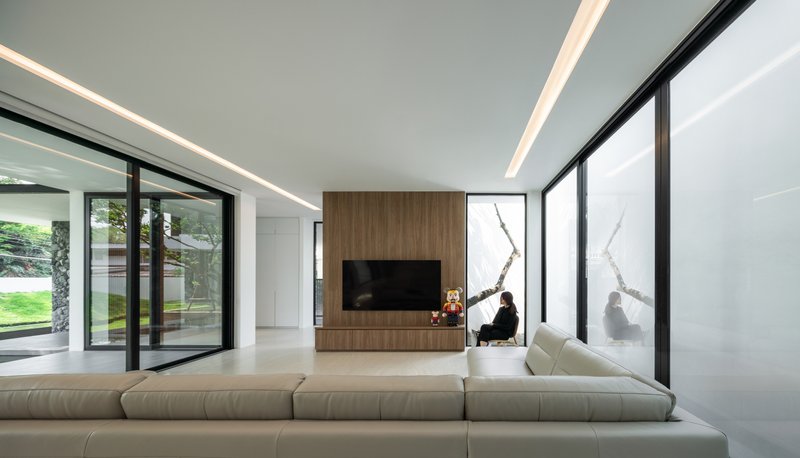
Inside, the living and dining spaces are wrapped on two sides by floor-to-ceiling sliding glass doors, dissolving the boundary between interior and exterior. When opened, the spaces extend seamlessly into the garden, encouraging open-air living throughout the year. The cantilevered roof projects over three meters, providing shade, reducing glare, and allowing the interiors to remain naturally ventilated and protected from rain.
Views are carefully layered to maximize spatial richness: a tree integrated through the covered deck forms the foreground, the landscaped garden occupies the mid-ground, and the vegetation of the adjacent empty plot completes the background. This visual composition expands the sense of openness while maintaining privacy. Instead of relying on curtains or screens, privacy is achieved through curated viewpoints, strategic offsets, and architectural framing.
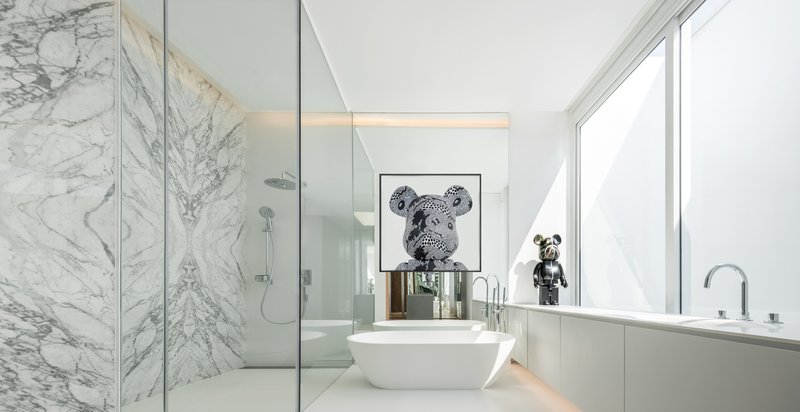
A lightwell adjacent to the living space introduces daylight deep into the plan while promoting cross-ventilation. Offset from the solid wall, it expands the spatial perception of the interior and continues vertically to the upper floor, where it brings natural light into the bathroom. From the bathtub, residents can look upward and catch a framed glimpse of the sky, reinforcing the home’s constant dialogue with nature.
Moving upstairs, a full-width clerestory window frames shifting views of sky and neighboring foliage. As one ascends the staircase, the framed composition subtly changes, transforming everyday movement into a dynamic spatial experience. This careful layering of elements allows the house to feel breathable and expansive despite its urban density.
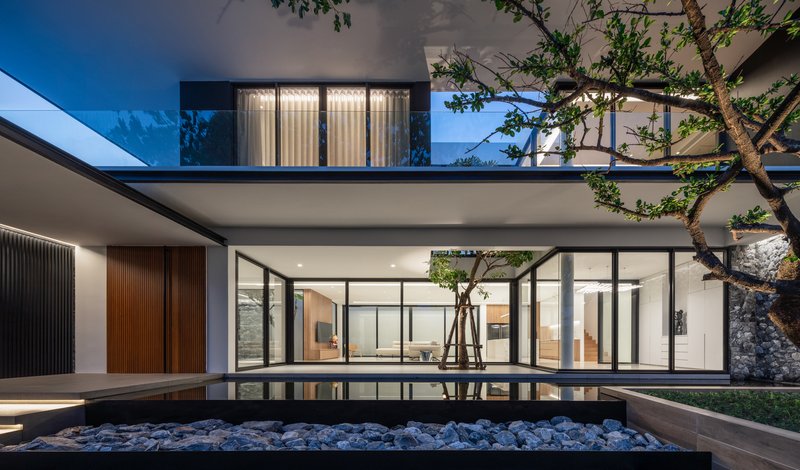
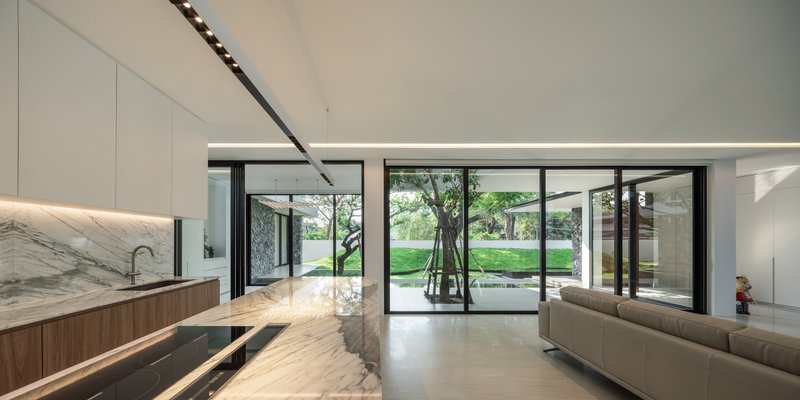
Soffit House draws inspiration from traditional tropical homes, distilled into a contemporary architectural language that is simple, muted, and deeply connected to climate and landscape. The reimagined soffit expands the functional and aesthetic role of the tropical eave, proving that thoughtful architectural restraint can deliver comfort, sustainability, and spatial richness.
All photographs are works of Chalermwat Wongchompoo | Sofography




Popular Articles
Popular articles from the community

20 Most Popular Office Building Projects of 2025
From biophilic workspaces in India to net-positive energy offices in New Delhi, 20 office building projects that defined architecture in 2025.

Fausto Terán and Toro Fuse Japanese Craft with Mexican Tradition in a Lakeside Retreat
Nakamura House pairs Shou-Sugi-Ban charred pine with handmade clay tile at the foot of Atlangatepec Lagoon in Mexico.
Takeshi Hosaka Architects Suspends a Concrete Cross Above a Yokohama Cemetery
A 28-square-meter burial renovation in Yokohama lifts the symbol of resurrection into the sky so mourners see it against heaven.
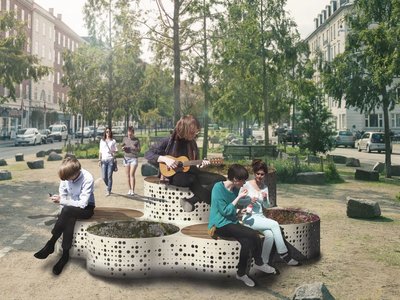
20 Most Popular Furniture Design Projects of 2025
Modular street systems, parametric benches, and insect hotels: the furniture design projects that captivated architects on uni.xyz in 2025.

Similar Reads
You might also enjoy these articles
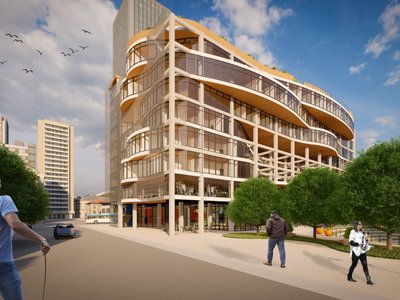
Olio Towers: A Mid-Rise for Performers That Fuses Housing, Rehearsal, and Stage
Located blocks from Houston's Theater District, this modular tower stacks living units around a central performance atrium.
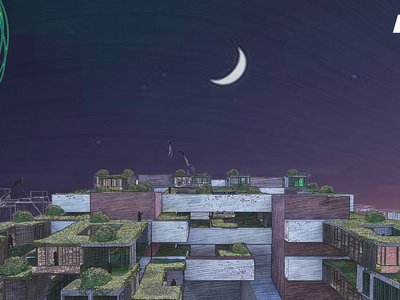
Oasis: Modular Green Housing Carved into Dhaka's Urban Fabric
A shortlisted Plugin Housing entry reclaims unauthorized settlements in Dhaka with stepped concrete volumes, green roofs, and ventilation-driven design.

Black Hole: A Floating Megastructure for the Post-Physical Era
Emiliano Mazzarotto envisions a spherical, self-scaling arena where e-sports, digital hotels, and holographic stadiums replace traditional public space.
Compact & Sustainable Living in Piraeus: A Four-Level Family Home Built Around Light and Air
A narrow townhouse in one of Greece's densest port cities uses a central atrium and passive strategies to house three generations under one roof.


Explore Architecture Competitions
Discover active competitions in this discipline




The International Standard for Design Portfolios


The Global Benchmark for Architecture Dissertation Awards


The Global Benchmark for Graduation Excellence


Challenge to reimagine the Iron Throne
Comments (0)
Please login or sign up to add comments
No comments yet. Be the first to comment!