
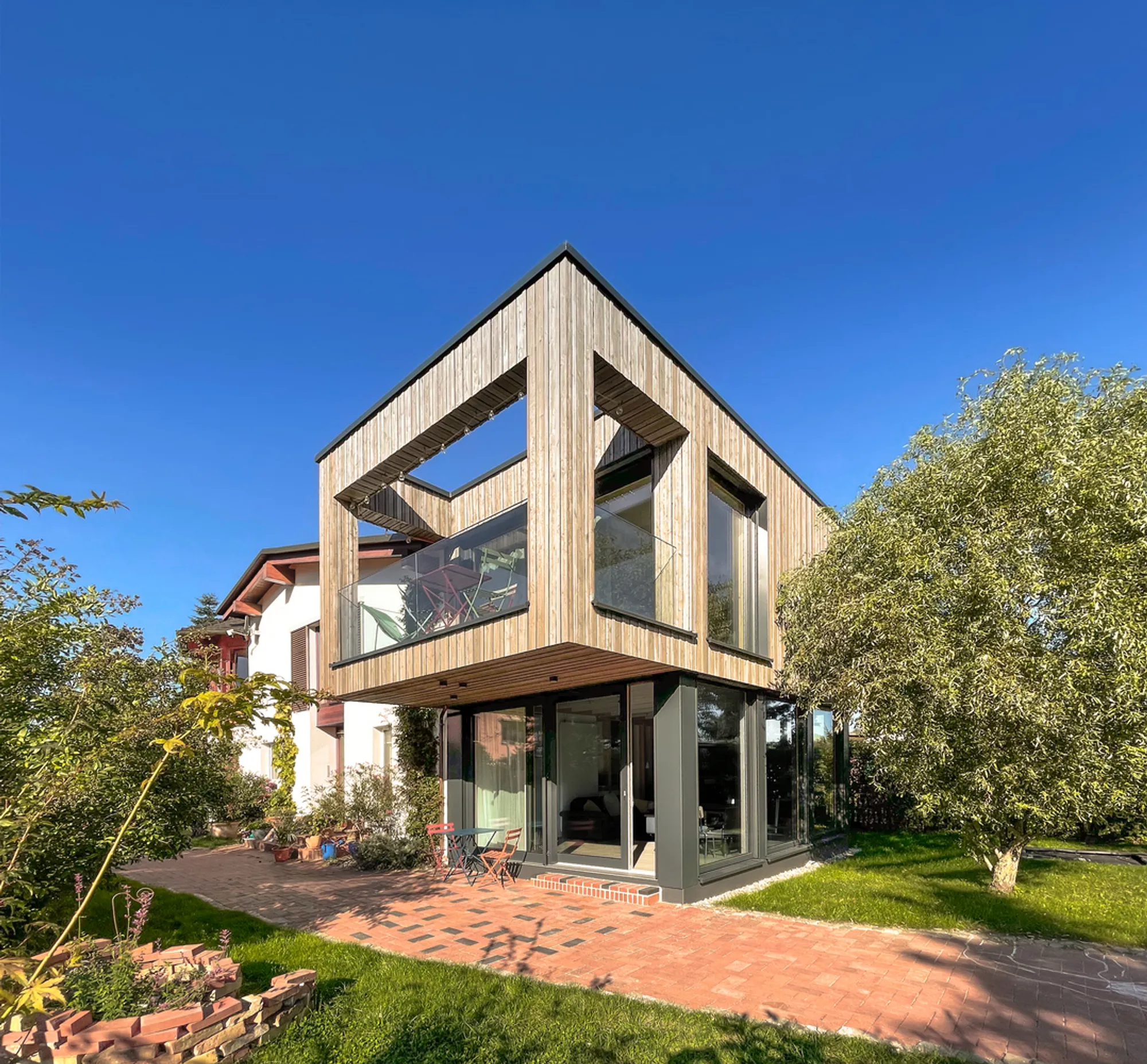
Sonnenwinkel House by Carolus Zschieschang: A Contemporary Timber Extension in Leipzig
Contemporary timber house extension in Leipzig featuring cantilevered volume, larch façade, transparent ground floor, garden integration, and sustainable architecture design.


The Sonnenwinkel House, designed by Carolus Zschieschang, represents a thoughtful example of contemporary residential architecture that combines modern living concepts with sustainable building techniques. Located in Leipzig, Germany, this compact 51-square-meter residential extension, completed in 2022, demonstrates how small-scale architectural interventions can transform existing homes while respecting their urban and historical context.
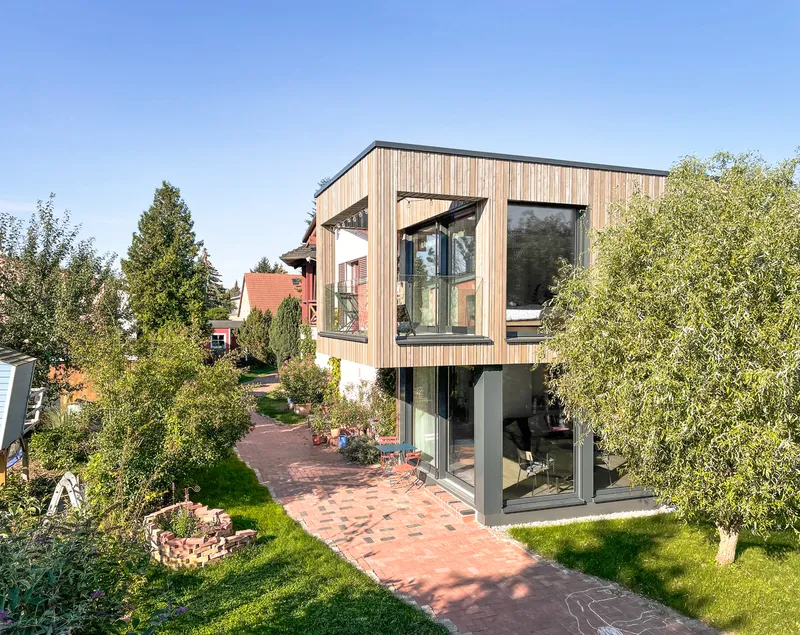
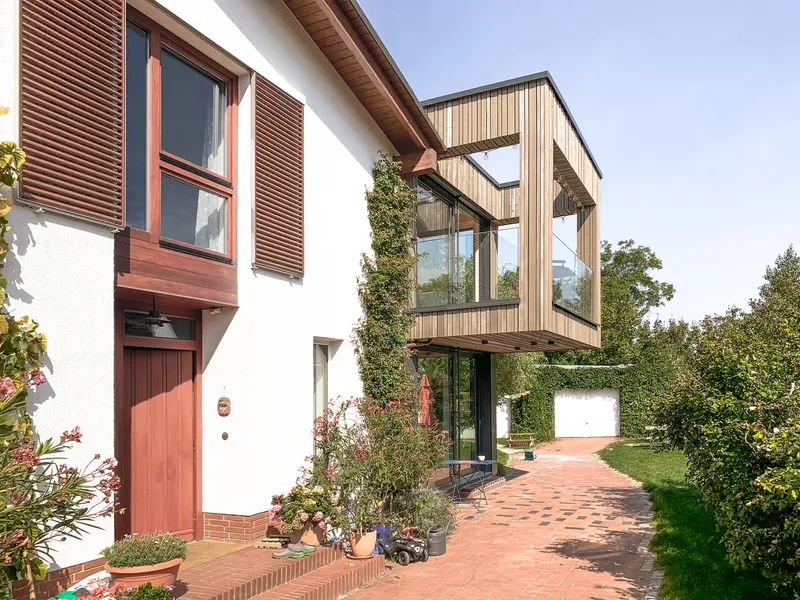
Rather than replacing the existing structure, the project introduces a two-story annex that discreetly integrates with the original residential building. The extension is positioned behind the older structure, creating a subtle architectural surprise. Visitors approaching the house first encounter the original building, but as they move around it toward the entrance, the new addition gradually reveals itself. The upper level cantilevers outward, appearing to float above the ground floor and producing a striking architectural gesture that contrasts with the modest scale of the property.
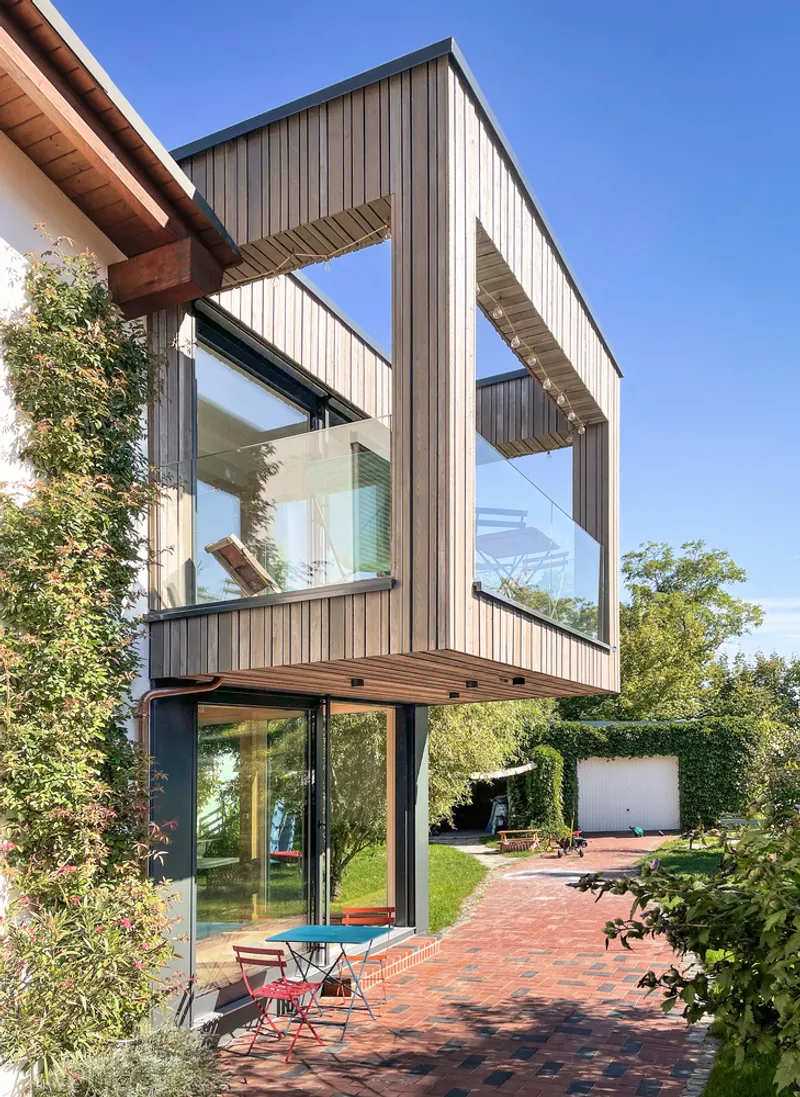
Contextual Architecture and Urban Integration
Leipzig is a rapidly growing city, and projects like the Sonnenwinkel House extension demonstrate how architects can responsibly increase density within existing neighborhoods. Instead of expanding horizontally or replacing the original house, the design adds vertical space through a compact annex that respects the surrounding urban fabric.
The extension contributes to the densification of an established residential settlement, allowing additional living space while maintaining the character of the area. This approach reflects a broader architectural strategy increasingly adopted in European cities, where adaptive reuse and smart extensions offer sustainable alternatives to demolition and new construction.
By harmonizing the historic residential structure with contemporary architecture, Carolus Zschieschang successfully bridges past and present, creating a dialogue between traditional urban housing and modern architectural innovation.
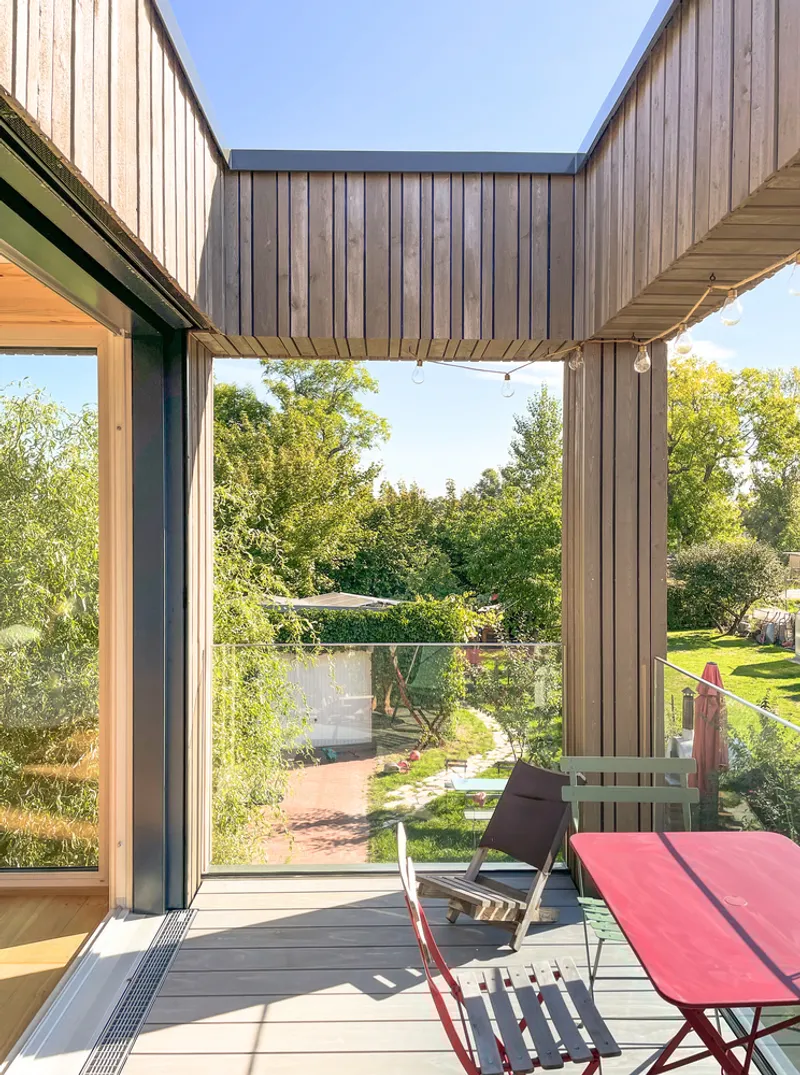
Dynamic Timber Facade Design
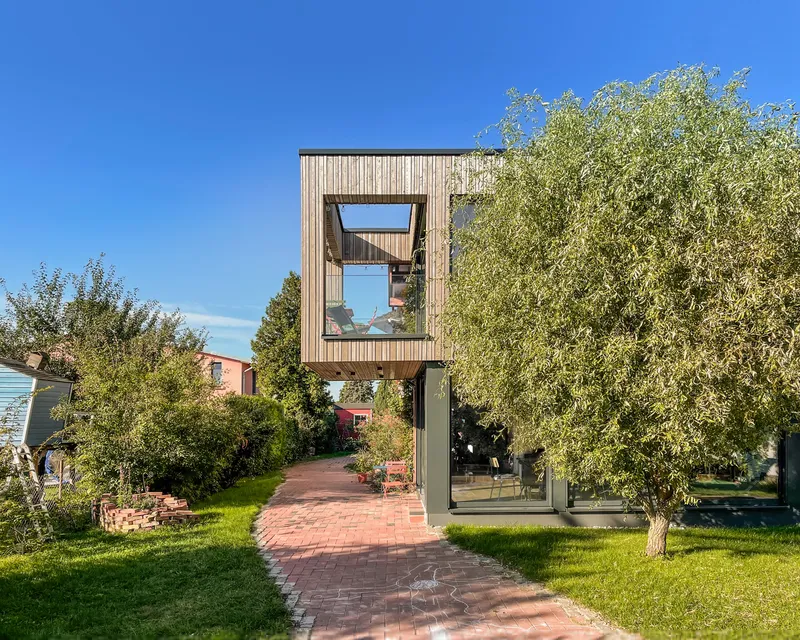
One of the most striking features of the Sonnenwinkel House is its textured timber façade, which brings warmth and visual complexity to the building's exterior. The upper floor is clad in pre-greyed larch wood boards, arranged vertically with varying widths and depths. This layered approach introduces rhythm and movement to the facade, creating subtle shadows that shift throughout the day.
The natural weathered appearance of the larch boards reinforces the building’s connection to natural materials and sustainable construction practices. Over time, the wood continues to age gracefully, enhancing the organic character of the architecture.
To accentuate the texture of the wooden façade, the grooves between the boards are darkened, producing delicate contrasts that emphasize the vertical arrangement of the cladding. Depending on the weather conditions and changing daylight, the façade presents a constantly evolving visual expression, demonstrating how materiality can play an active role in architectural perception.
Transparent Ground Floor and Garden Connection
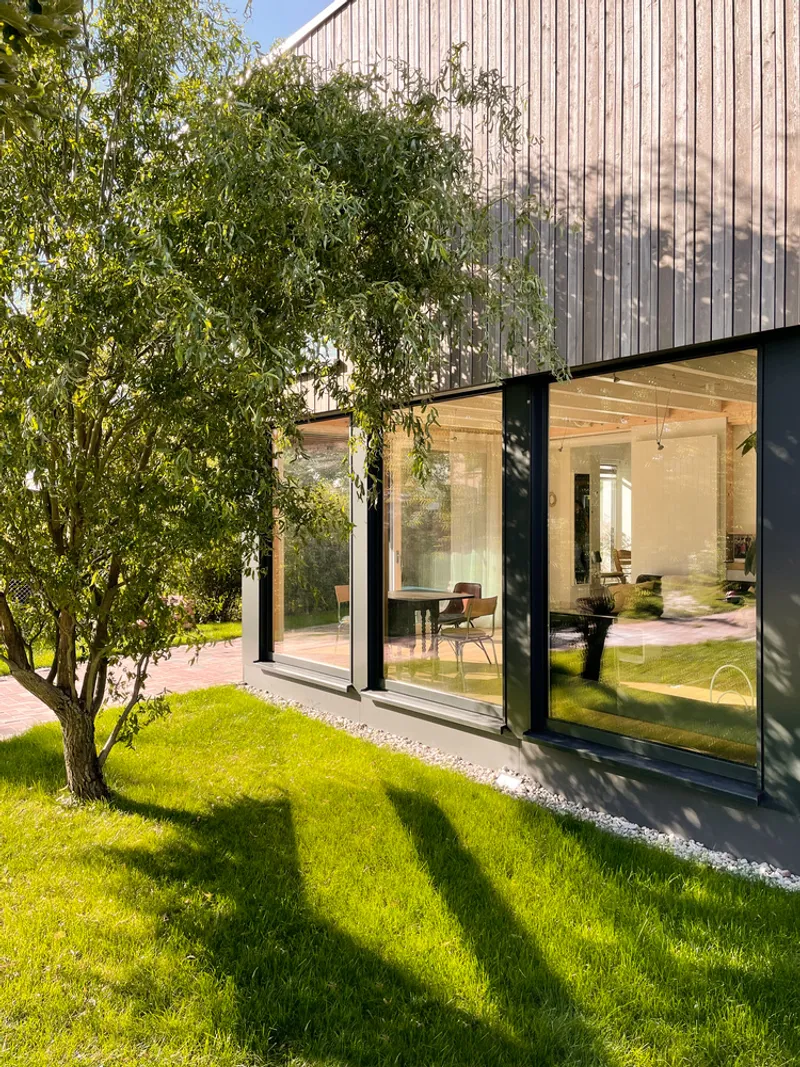
While the upper level emphasizes privacy and enclosure, the ground floor embraces openness and transparency. Large floor-to-ceiling glass panels define the lower façade, creating a seamless visual and physical connection between the interior living space and the surrounding garden.
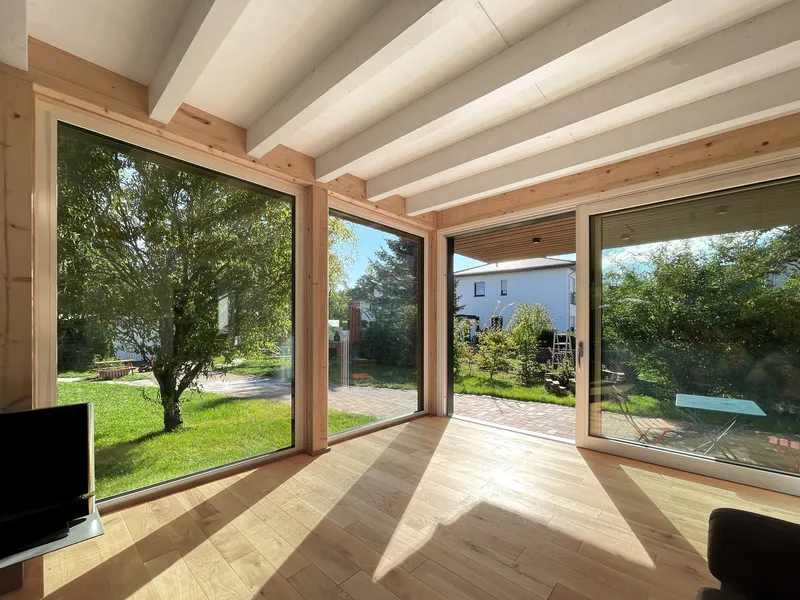
This level is designed as a flexible living area, capable of adapting to multiple functions depending on the needs of its occupants. A large lift-and-slide glass door allows the entire space to open directly toward the garden, effectively extending the interior into the outdoor landscape.
The structural elements of the building, wooden columns and the concrete base, are externally clad with aluminum panels, providing protection while maintaining a clean, modern aesthetic. The result is a contemporary ground floor that balances structural clarity with minimal visual obstruction, maximizing views and daylight penetration.
Through this transparent design strategy, the architects establish a strong indoor-outdoor relationship, a hallmark of contemporary residential architecture focused on wellbeing and spatial fluidity.
Private Upper Floor with Panoramic Balcony Views
In contrast to the transparent ground floor, the upper level prioritizes privacy and calmness, functioning primarily as a bedroom space. The more enclosed façade ensures a sense of retreat, while still allowing controlled views toward the surrounding landscape.
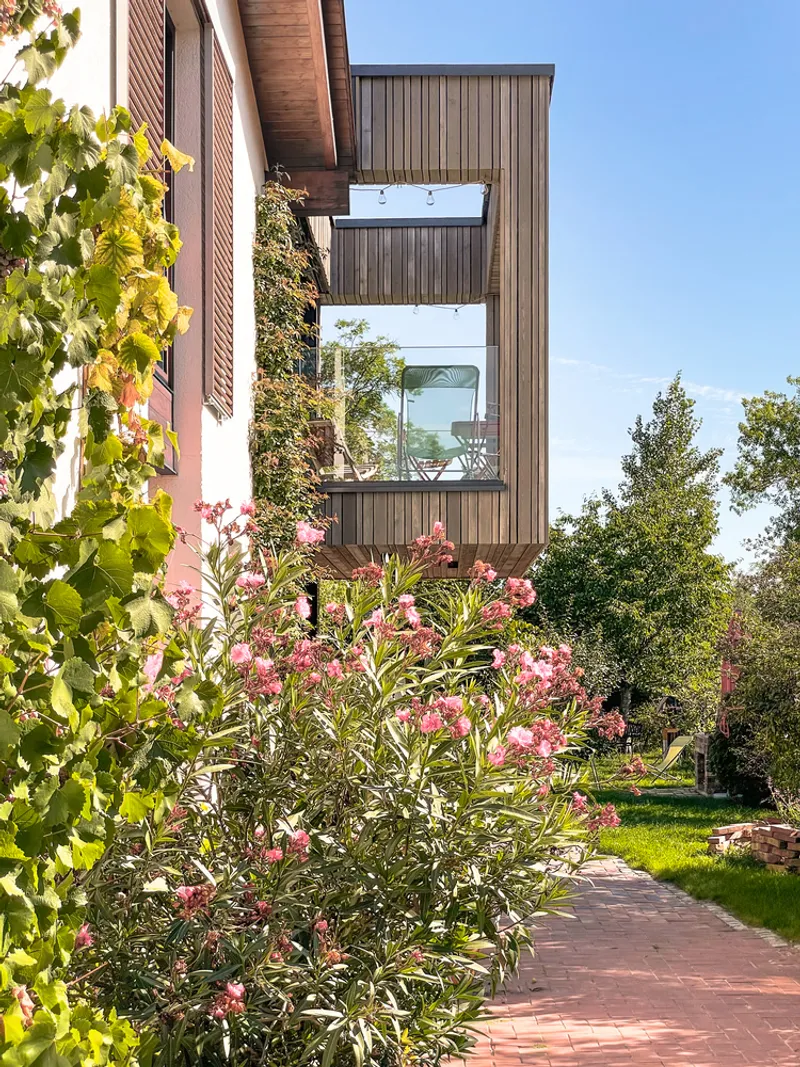
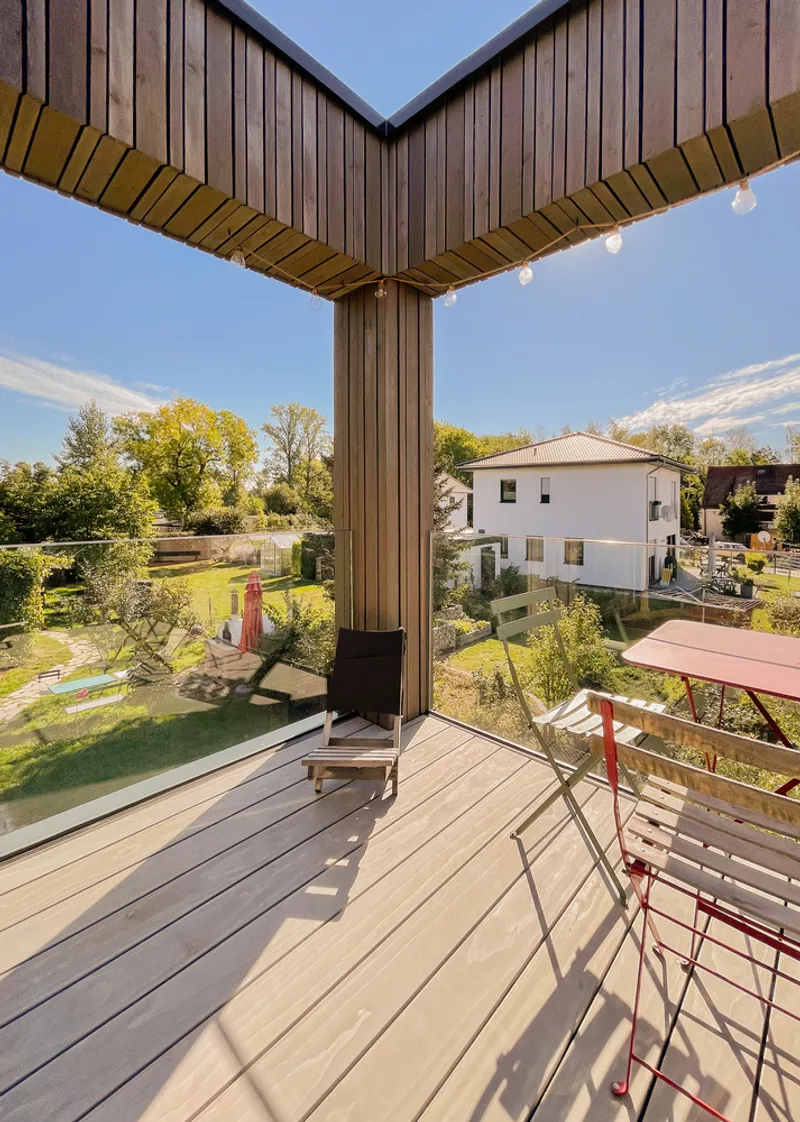
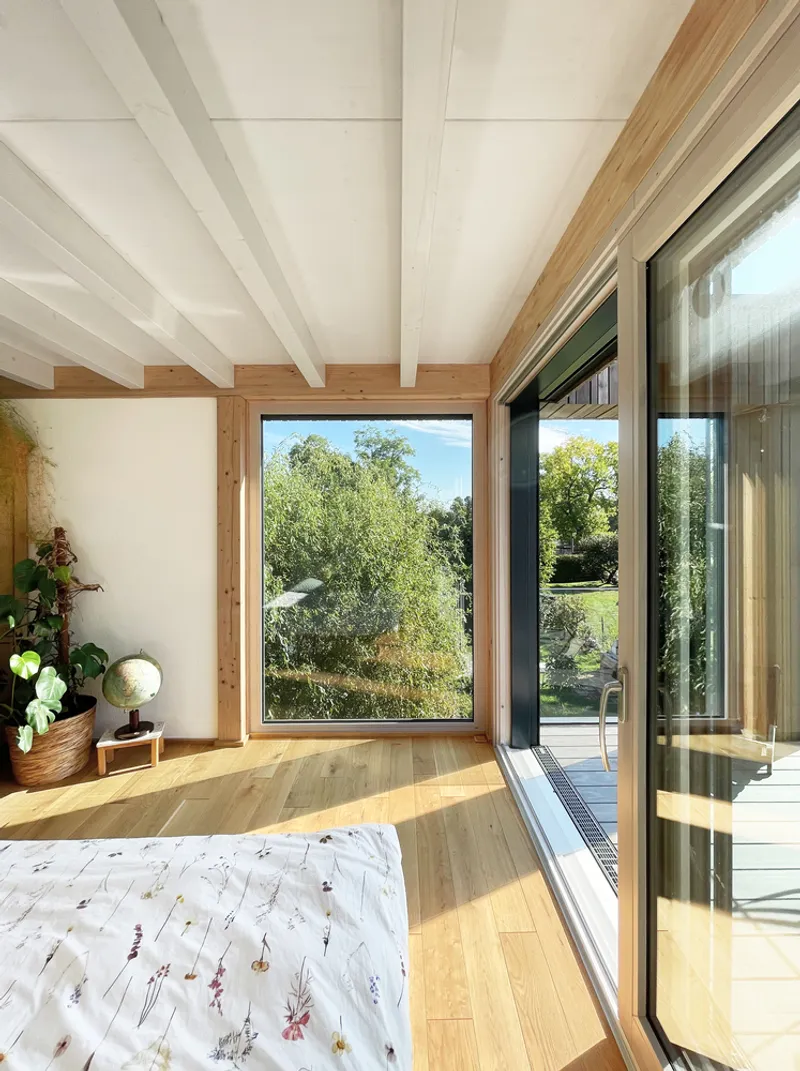
A second large lift-and-slide door connects the bedroom to a balcony, offering panoramic views over three sides of the garden. This elevated outdoor platform enhances the living experience by providing a quiet vantage point within the property.
The cantilevered design of the upper floor also contributes to the building’s architectural identity, emphasizing the visual impression of the volume hovering above the transparent base.
Warm and Minimal Interior Architecture
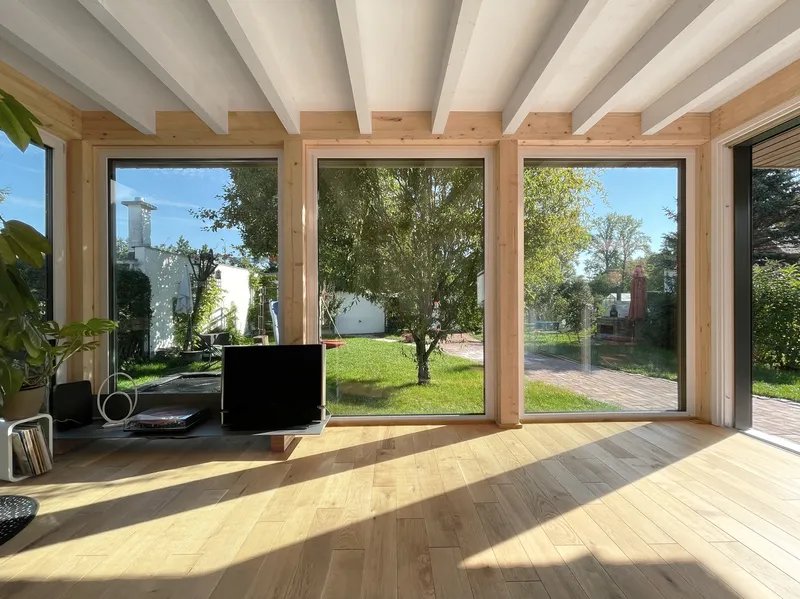
Inside the Sonnenwinkel House, the architects celebrate the natural beauty of timber construction. The structural wooden framework remains largely visible, giving the interiors a warm and tactile atmosphere.
Some elements, such as the wooden columns, retain their natural color, emphasizing the authenticity of the material. Others, including the exposed beams, are finished with a transparent white coating. This subtle treatment brightens the interior spaces while preserving the wood grain and texture, creating a balanced combination of warmth and luminosity.
The interior palette remains deliberately minimal, allowing natural light, material textures, and spatial openness to define the character of the home. This restrained design approach aligns with contemporary architectural principles that prioritize clarity, sustainability, and functional flexibility.
Sustainable Materials and Construction
Sustainability plays a significant role in the architectural concept of the Sonnenwinkel House. The extension relies heavily on timber construction, a renewable material known for its low environmental impact and excellent structural performance.
The wooden structure was realized by Basan. Bauwerke aus Holz, a construction company specializing in timber architecture. The use of prefabricated wooden elements helped streamline the building process while reducing construction waste.
By combining wood, glass, aluminum, and concrete, the project achieves a balanced composition of materials that enhance durability while maintaining a strong ecological approach.
The emphasis on natural materials, compact design, and adaptive reuse reflects the growing movement toward sustainable residential architecture in urban environments.
Compact Living with Architectural Impact
Although the extension measures only 51 square meters, the Sonnenwinkel House demonstrates how thoughtful design can maximize spatial quality within a limited footprint. The project successfully transforms a small residential property into a dynamic and modern living environment.
Through the interplay of transparency and enclosure, natural materials, and cantilevered volumes, Carolus Zschieschang creates a house that feels both intimate and architecturally expressive.
The project stands as an example of how compact architecture, sustainable materials, and contextual design strategies can reshape urban housing in rapidly evolving cities like Leipzig.




Popular Articles
Popular articles from the community


Co-Life: Senior Housing Design That Reconnects Older Adults With the City
Co-Life reimagines senior housing design through healing gardens, shared streets, workshops, and a sustainable community across generations.

Hill & Cross Opera: Sculptural Opera House Architecture Shaped by Tallinn’s Landscape and Identity
Hill & Cross Opera reimagines opera house architecture in Tallinn through its sculptural hill, civic plaza, glass wave and a luminous cross.

Riyadh For All: Intergenerational Urban Design for Active Aging in Rabat
Riyadh For All reimagines urban design in Rabat with intergenerational co-living, adaptive courtyards, and Moroccan cultural exchange today.

The Ocean Hive: Sustainable Architecture for a Self-Sufficient Civilization at Sea
The Ocean Hive imagines sustainable architecture at sea, where modular habitats, algae, wave power and ocean waste sustain a growing colony.

Similar Reads
You might also enjoy these articles

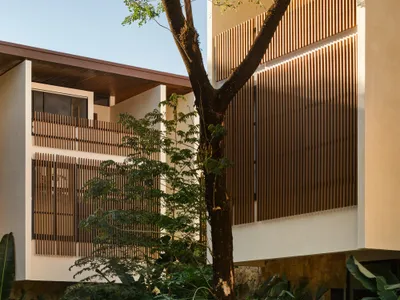
FAMM Arquitectura Organizes Ten Villas Around Courtyards and Jungle in Nosara, Costa Rica
El Molino pairs two elongated volumes with deep overhangs and timber louvers to build a compact coastal community five minutes from the beach.
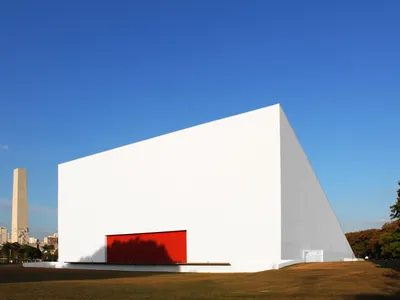
Oscar Niemeyer's Ibirapuera Park Pavilions Define São Paulo's Cultural Identity in Concrete and Curve
A constellation of modernist volumes set within São Paulo's most important urban park, conceived for the city's 400th anniversary in 1954.
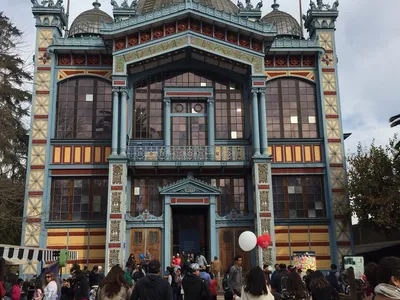
How Henri Picq's 1889 Paris Pavilion Traveled 11,000 Kilometers to Become Santiago's Artequín Museum
A prefabricated iron and glass pavilion built for the Paris Universal Exposition found a second life as a children's art museum in Chile.
Sanjay Puri Architects Wraps a Jaipur Office Tower in Capsule-Shaped Green Buffers
A nine-level climate-responsive workplace near Jaipur Airport uses stacked planter terraces and aluminium screens to fight 40°C heat.

Explore Architecture Competitions
Discover active competitions in this discipline



Challenge to reimagine the Iron Throne


Photograph architecture without architects


Illustrate the lost glory of Angkor Wat - Render Challenge


Design challenge to reuse E-waste
Comments (0)
Please login or sign up to add comments
No comments yet. Be the first to comment!