
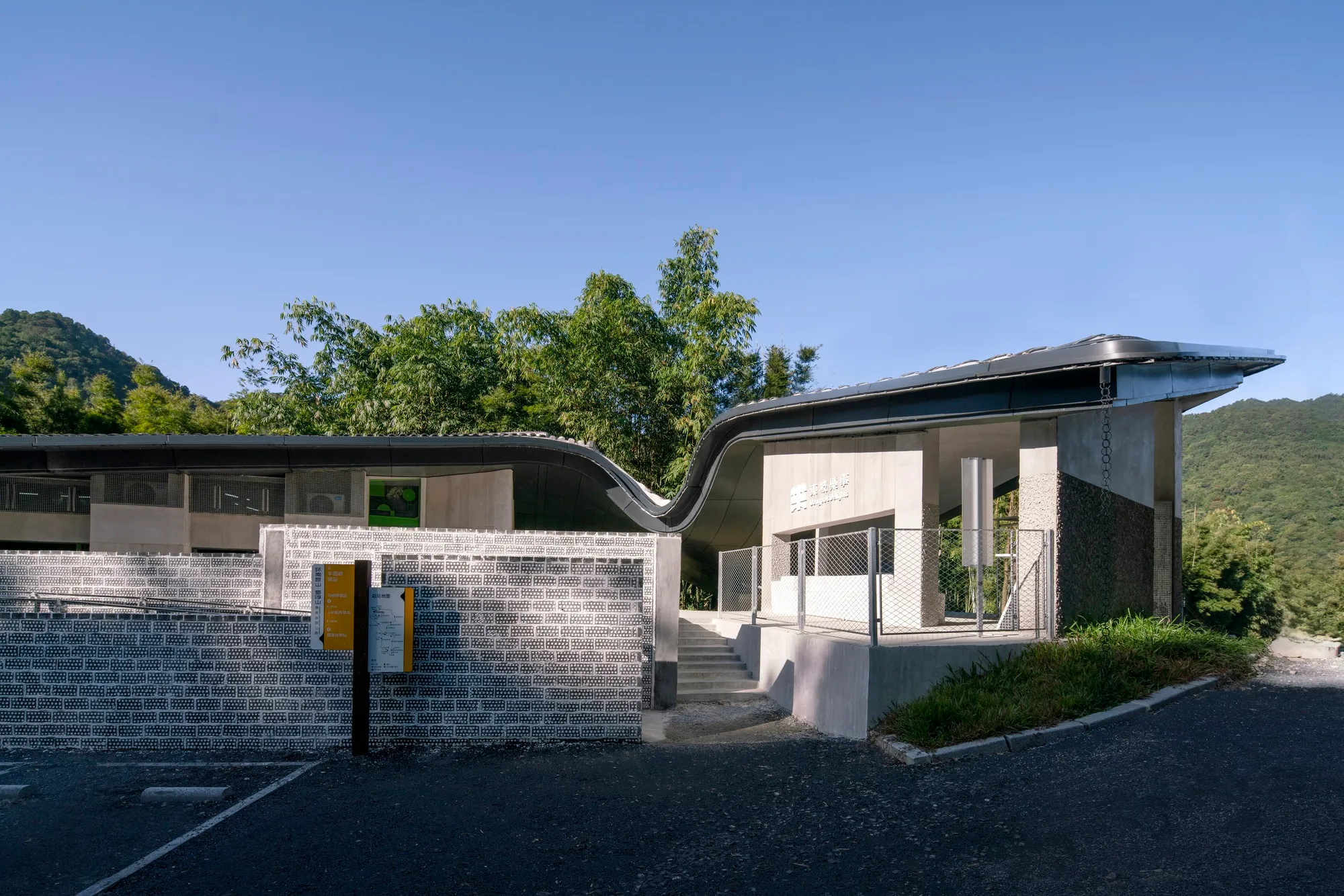
Su Dongpo’s Pleasures at Banhu Ridge by AOMOMO Studio + Shanghai Jiao Tong University, Huizhou, China
A poetic mountain rest stop blending curved forms, nature, and light, creating a contemplative pause within a dynamic landscape journey.


Set along a dramatic hairpin bend on Banhu Ridge in Huizhou, China, Su Dongpo’s Pleasures by AOMOMO Studio and Shanghai Jiao Tong University is a poetic architectural intervention that transforms a roadside rest stop into a contemplative landscape experience. Positioned between a busy mountain road and dense bamboo forests, the 460 m² structure responds to challenging terrain with a design that is both adaptive and expressive.
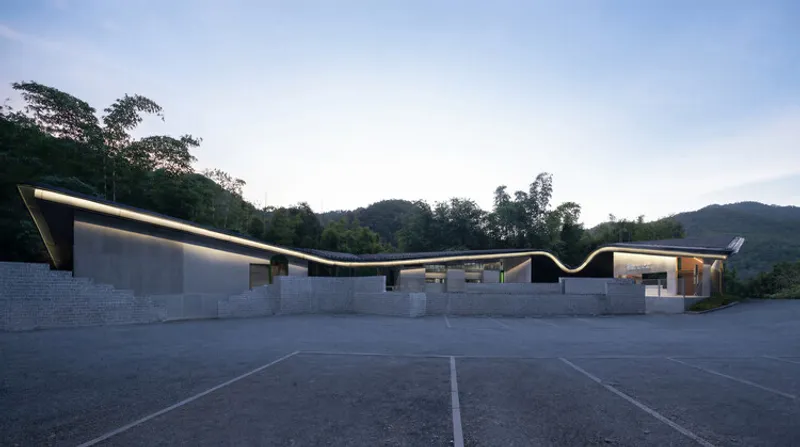
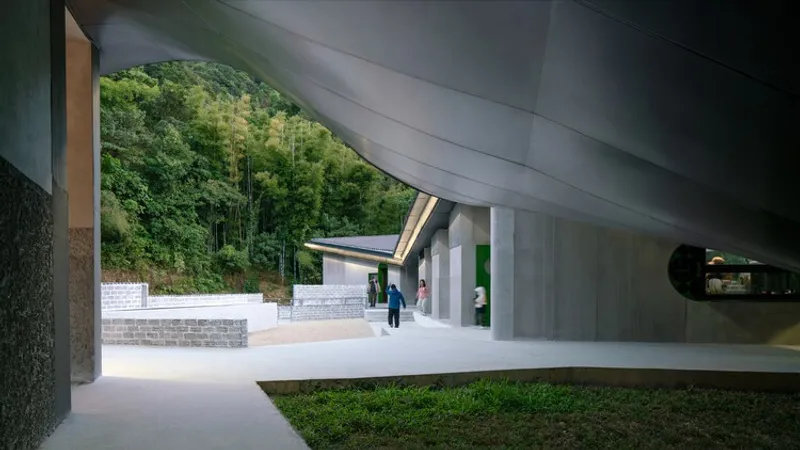
Rather than resisting the constraints of the site, the building embraces them. Its crescent-shaped form follows the curvature of the road, echoing the natural bend of the mountain path. Through a carefully executed cantilever system, the architecture negotiates steep elevation changes, allowing it to hover lightly above the terrain while maintaining a strong connection to its surroundings.
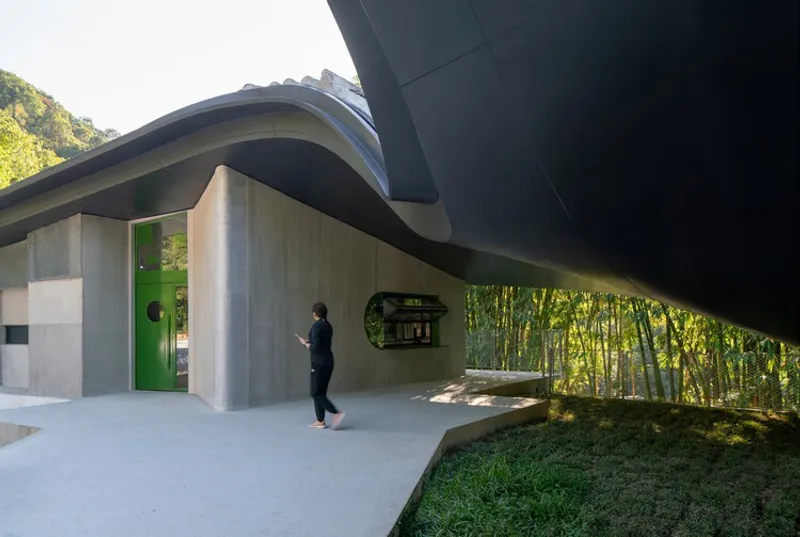
The project is conceived as more than a functional stop, it is an experiential pause. Inspired by the poetic legacy of Su Dongpo, the space is designed as a “comma” within the journey, encouraging visitors to slow down, observe, and reconnect with nature. The architecture becomes a mediator between movement and stillness, offering moments of reflection along an otherwise continuous route.
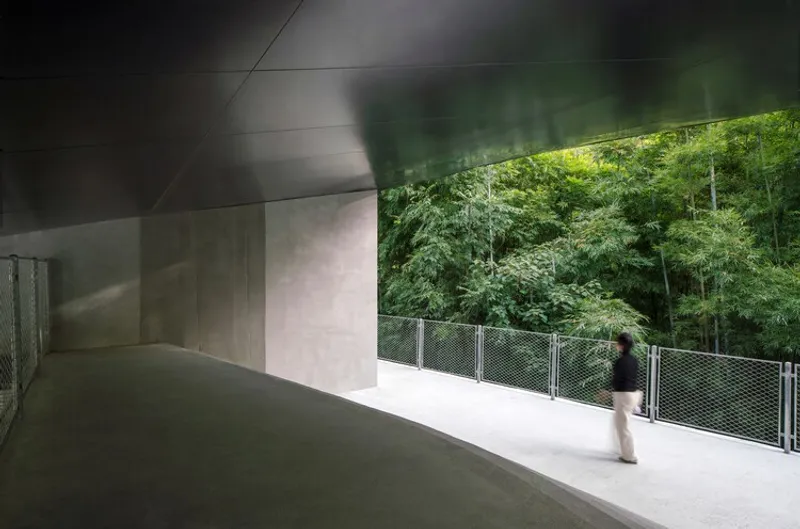
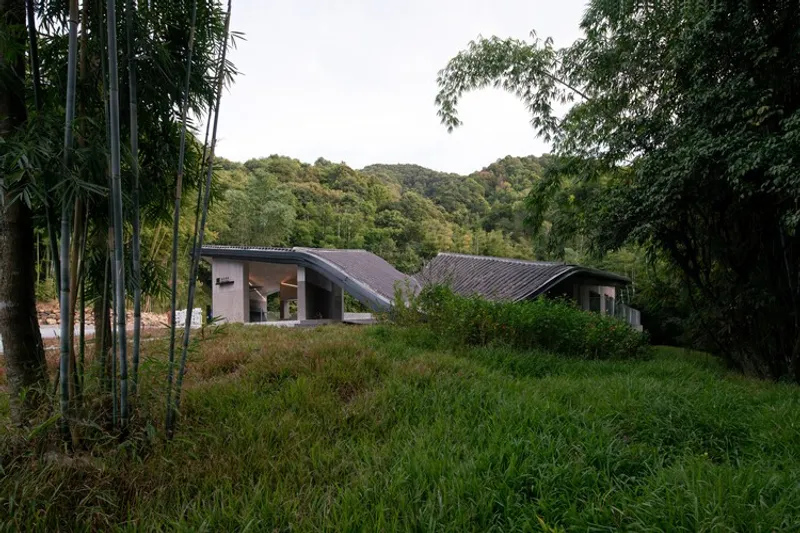
At the heart of the design is a central courtyard where a golden trumpet tree pierces through the roof, creating a striking visual and symbolic focal point. This gesture reinforces the integration of nature and architecture, allowing the building to grow around existing elements rather than replacing them. The courtyard acts as a living core, bringing light, air, and seasonal change into the interior.
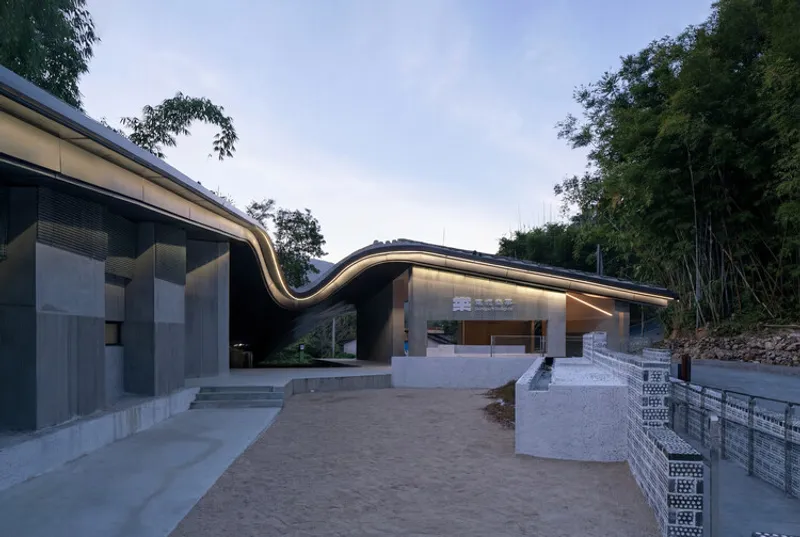
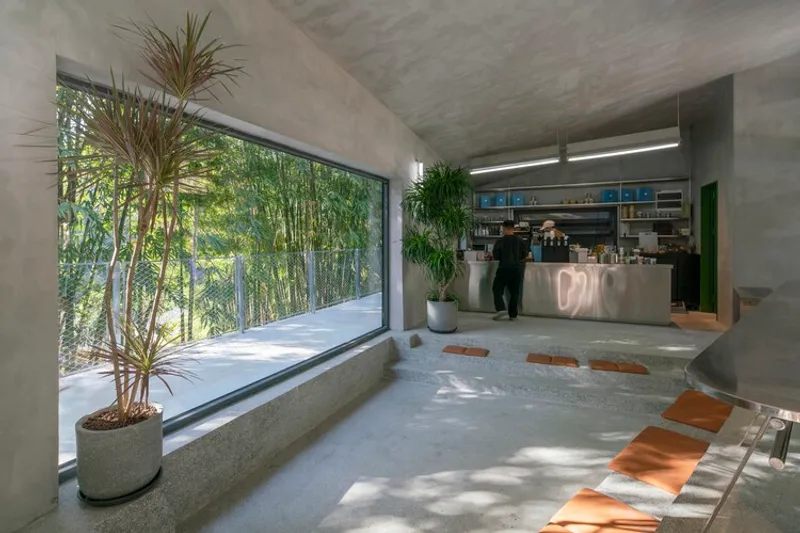
The program is organized under three gently sloping roofs that flow seamlessly into one another. These forms recall the rhythm of traditional Lingnan architecture while maintaining a contemporary expression. Beneath them, spaces are arranged to support a variety of functions: a bicycle rest area, a café, sanitation facilities, and viewing platforms. Each space is carefully positioned to engage with the landscape, offering framed views of bamboo forests, terraces, and distant mountains.
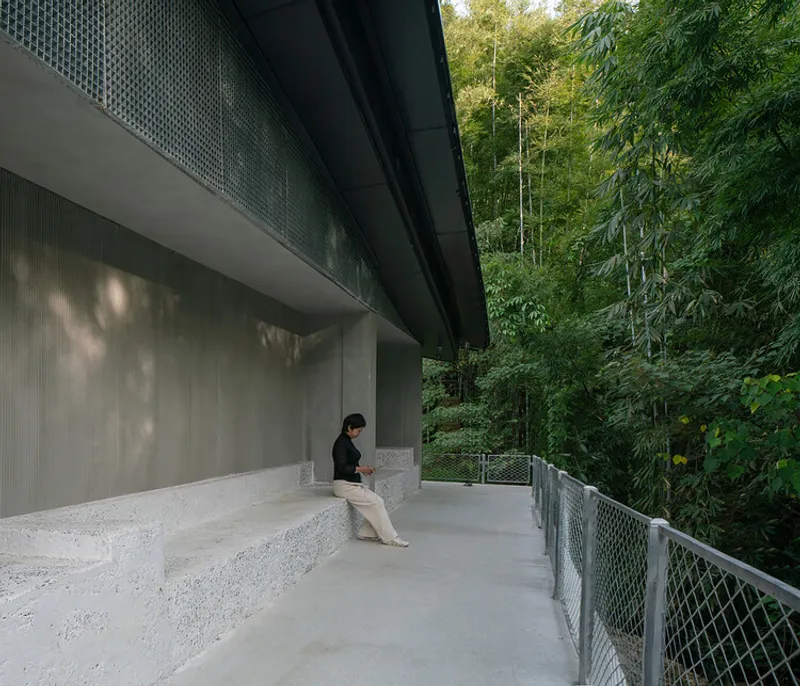
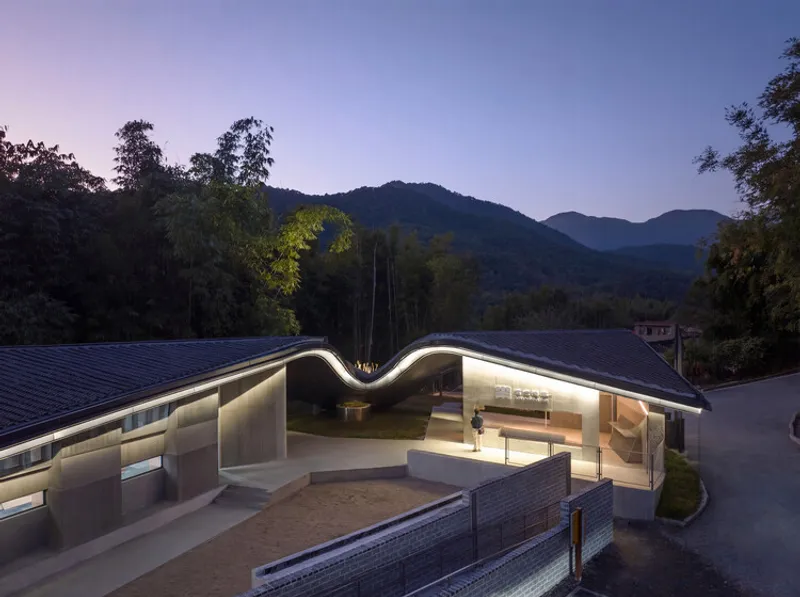
Materiality reinforces the project’s connection to place. Rough concrete surfaces evoke the texture of local villages, while curved blue-tile roofs reference regional architectural traditions. The interplay between heavy concrete and delicate natural elements, such as bamboo shadows and filtered light, creates a dynamic sensory experience.
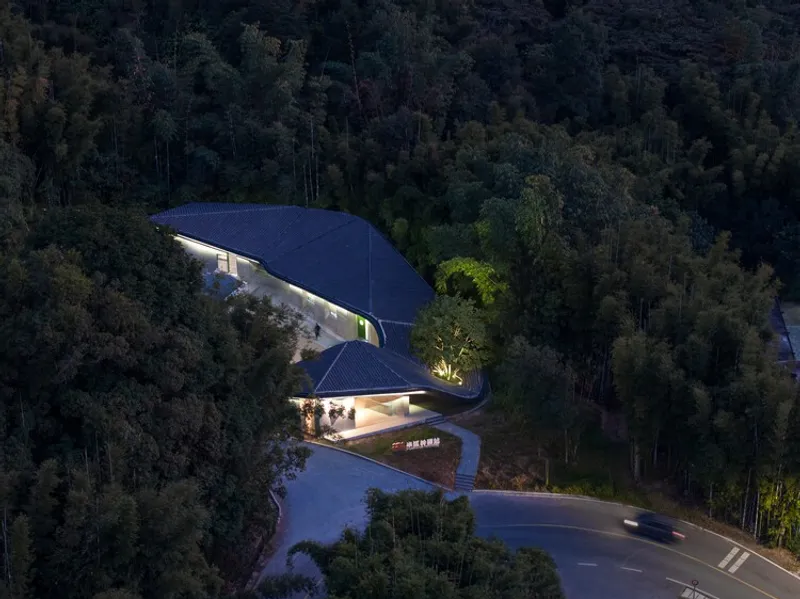
Light plays a central role in shaping the atmosphere. Perforated concrete walls allow shifting patterns of light and shadow to animate the interior, while reflections in glass surfaces mirror the surrounding greenery. As the day progresses, the building transforms, responding to changes in light, weather, and movement.
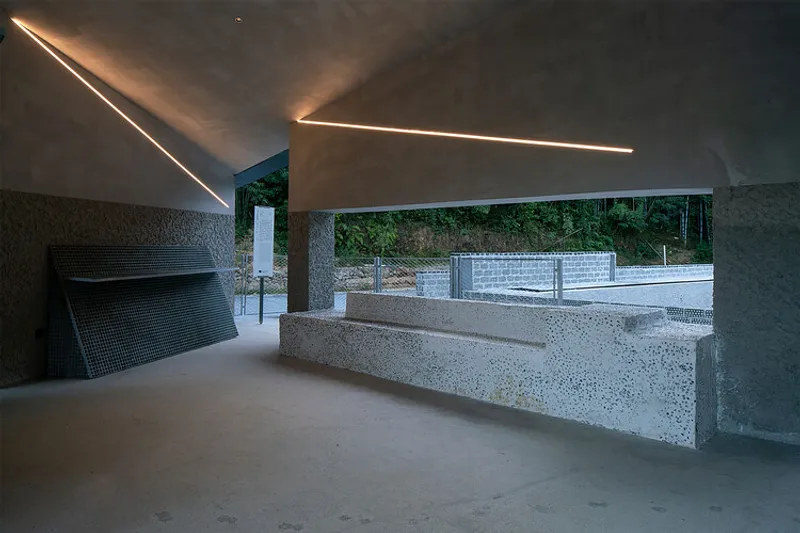
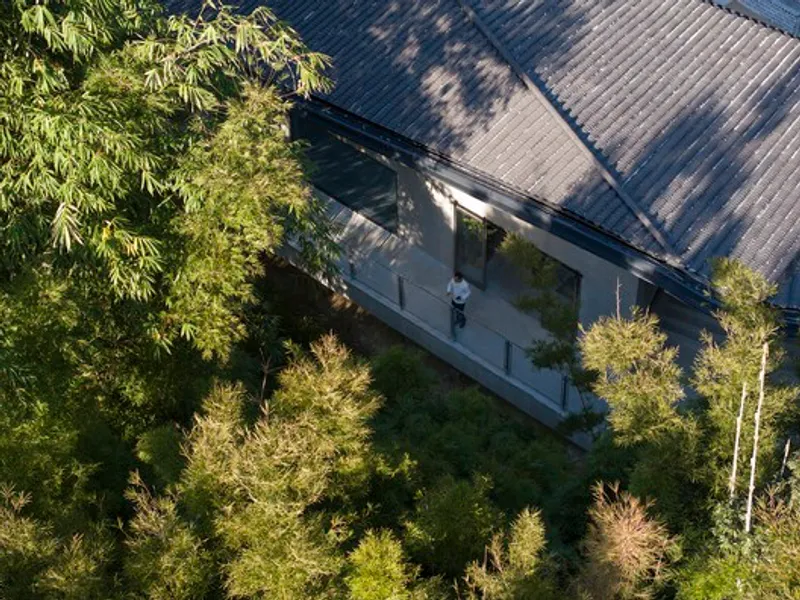
The viewing platforms extend the architectural experience outward, framing the landscape like a living painting. Visitors become participants within this composition, their presence adding a dynamic layer to the static scenery. Mist, wind, and light continuously alter the perception of space, blurring the boundary between observer and environment.
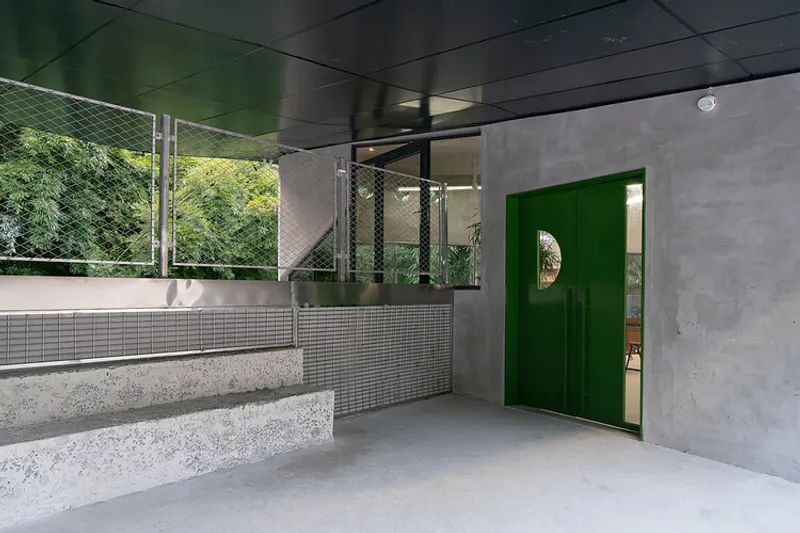
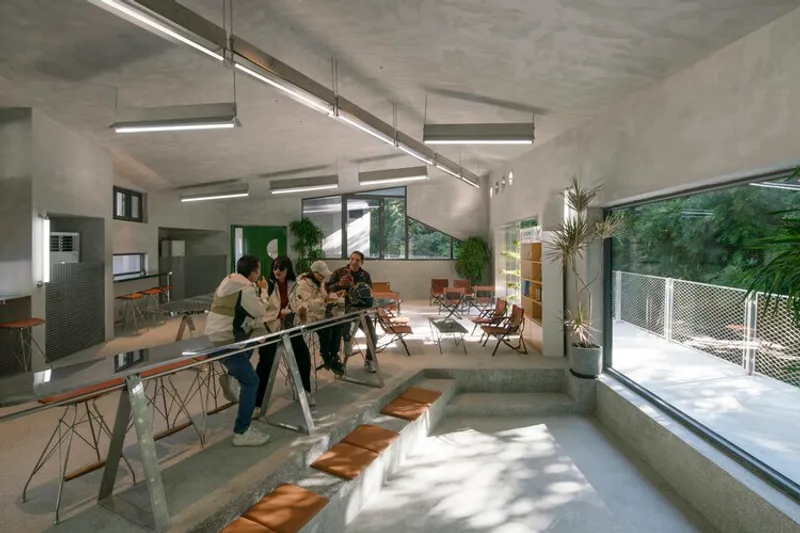
Furniture and interior elements adopt a tectonic language, combining steel, glass, and concrete to create a subtle contrast with the organic surroundings. This balance between industrial precision and natural softness enhances the overall spatial richness.
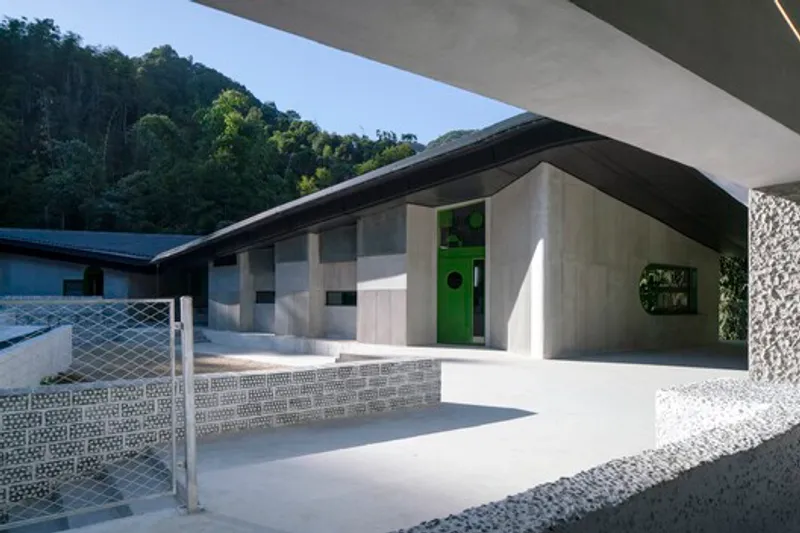
Ultimately, Su Dongpo’s Pleasures at Banhu Ridge is an architecture of pause and poetry. It transforms a utilitarian function into a cultural and emotional experience, where landscape, memory, and movement converge. By aligning design with the rhythms of nature and the spirit of place, the project offers a timeless reflection on how architecture can elevate even the most transient moments of daily life.
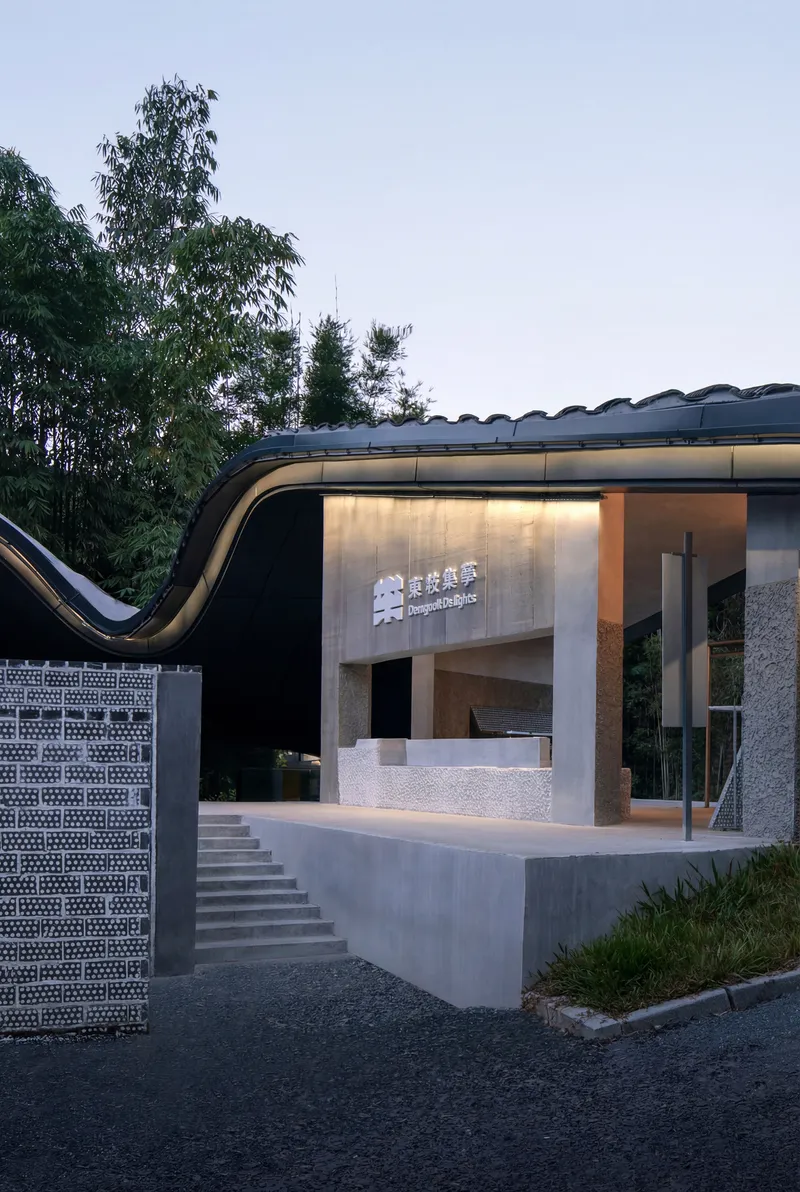
All the Photographs are works of ZY Architectural Photography



Popular Articles
Popular articles from the community


Co-Life: Senior Housing Design That Reconnects Older Adults With the City
Co-Life reimagines senior housing design through healing gardens, shared streets, workshops, and a sustainable community across generations.

Play: Fragments of Their World
Familiar architecture becomes modular playground design, creating safe spaces where displaced children can learn, connect, imagine and play.

The Earth Pod: 3D Printed Homes for Resilient Refugee Communities
The Earth Pod reimagines refugee housing through 3D printed homes made from clay, combining resilience, self-sufficiency, and rapid shelter.

Riyadh For All: Intergenerational Urban Design for Active Aging in Rabat
Riyadh For All reimagines urban design in Rabat with intergenerational co-living, adaptive courtyards, and Moroccan cultural exchange today.


Similar Reads
You might also enjoy these articles

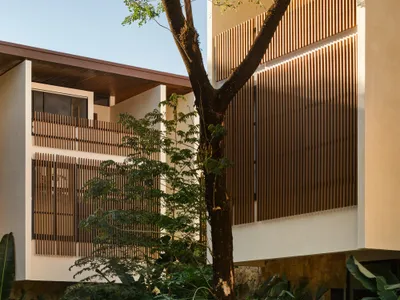
FAMM Arquitectura Organizes Ten Villas Around Courtyards and Jungle in Nosara, Costa Rica
El Molino pairs two elongated volumes with deep overhangs and timber louvers to build a compact coastal community five minutes from the beach.
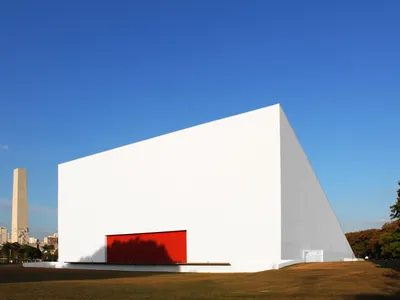
Oscar Niemeyer's Ibirapuera Park Pavilions Define São Paulo's Cultural Identity in Concrete and Curve
A constellation of modernist volumes set within São Paulo's most important urban park, conceived for the city's 400th anniversary in 1954.
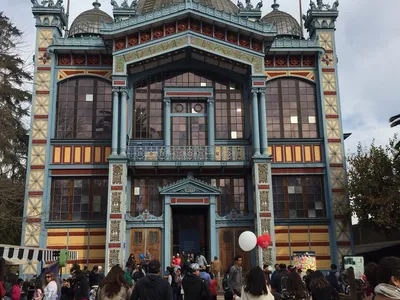
How Henri Picq's 1889 Paris Pavilion Traveled 11,000 Kilometers to Become Santiago's Artequín Museum
A prefabricated iron and glass pavilion built for the Paris Universal Exposition found a second life as a children's art museum in Chile.
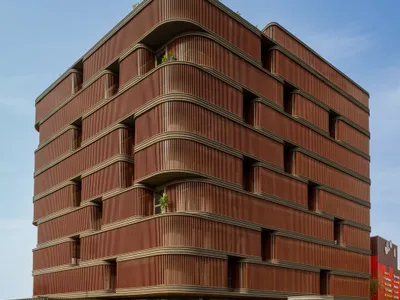
Sanjay Puri Architects Wraps a Jaipur Office Tower in Capsule-Shaped Green Buffers
A nine-level climate-responsive workplace near Jaipur Airport uses stacked planter terraces and aluminium screens to fight 40°C heat.
Explore Architecture Competitions
Discover active competitions in this discipline



Challenge to reimagine the Iron Throne


Photograph architecture without architects


Illustrate the lost glory of Angkor Wat - Render Challenge


Design challenge to reuse E-waste
Comments (0)
Please login or sign up to add comments
No comments yet. Be the first to comment!