
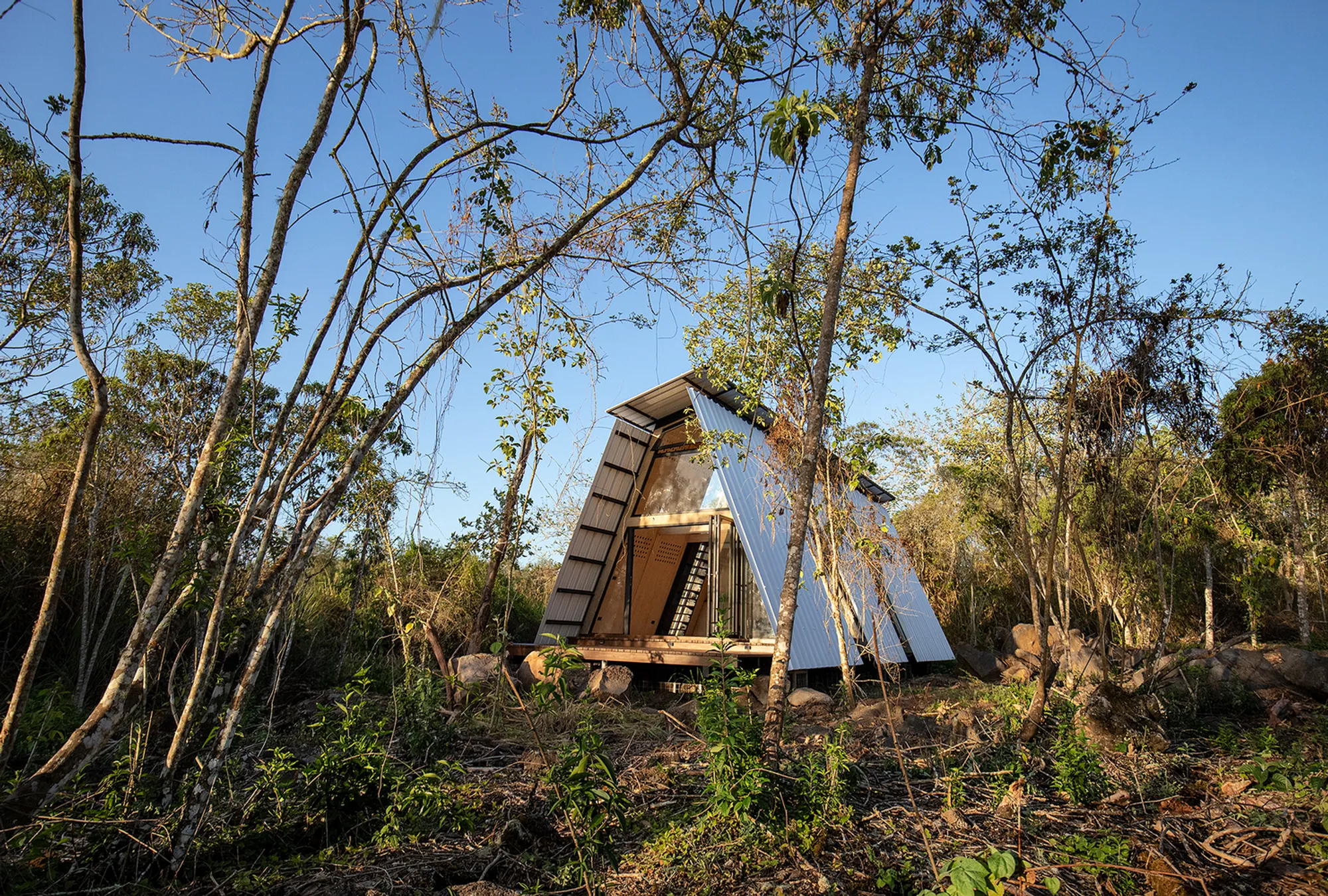
Sula Prefabricated Home by Diana Salvador: A Lightweight, Low-Impact Vision in the Galápagos
A sustainable, prefabricated home in the Galápagos by Diana Salvador, designed for low impact, mobility, and climate-responsive living.


Project Name: Sula Prefabricated Home Architect: Diana Salvador Location: Puerto Ayora, Santa Cruz Island, Galápagos, Ecuador Photography: JAG Studio Manufacturers: Arkos, Edimca, Er Servicios, Lopez Metal Works, Madebú, Rothoblass, Technoswiss
A Sustainable Prefabricated House Designed for Island Life
The Sula Prefabricated Home, designed by Ecuadorian architect Diana Salvador, represents a powerful statement about sustainable architecture, prefabrication, and respectful coexistence with fragile environments. Conceived for Catalina and her family—long-time residents of the Galápagos Islands—this lightweight, modular home brings forward a low-carbon construction approach crafted with precision, care, and ecological responsibility.
Constructed in just two months in Quito, the house was meticulously fabricated using nearly 2,000 custom-made components and over 17,000 screws, combining wood, metal, aluminum, and glass. After its completion, it was transported in two trucks and two shipping containers across land and sea to its final site in Puerto Ayora on Santa Cruz Island. The final assembly took just one month, handled by a small but specialized team of ten.
Prefabrication as a Conscious Design Statement
The name “Sula,” referencing a genus of seabirds native to the Galápagos (commonly known as boobies), underscores the home's deep ties to its context. But beyond symbolic naming, the Sula Home stands as a prototype—part of a broader architectural experiment to validate prefabrication as a viable and sustainable construction system in sensitive ecosystems.
Prefabricating the home off-site not only streamlined logistics and reduced on-site disturbance but also minimized environmental impact, promoting a scalable and replicable housing model. Diana Salvador’s work reframes prefabrication as not merely a method of efficiency but a tool for ecological stewardship and social change.
Climate-Responsive and Flexible Architecture
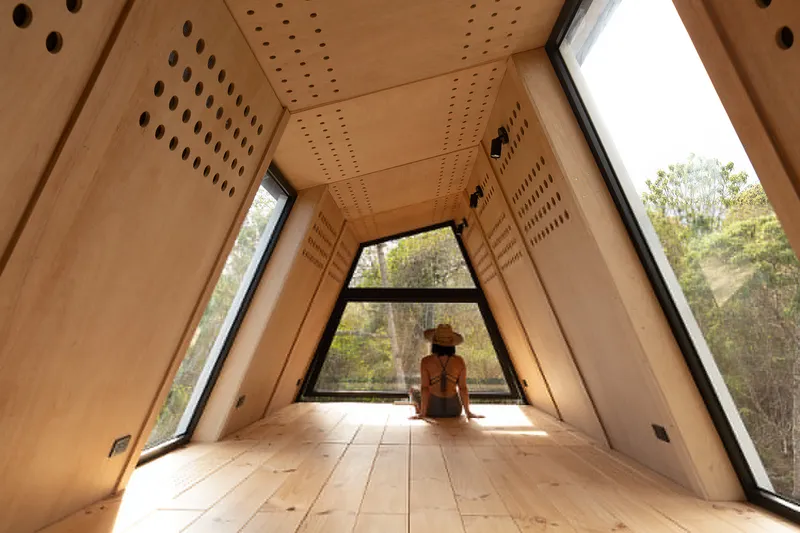
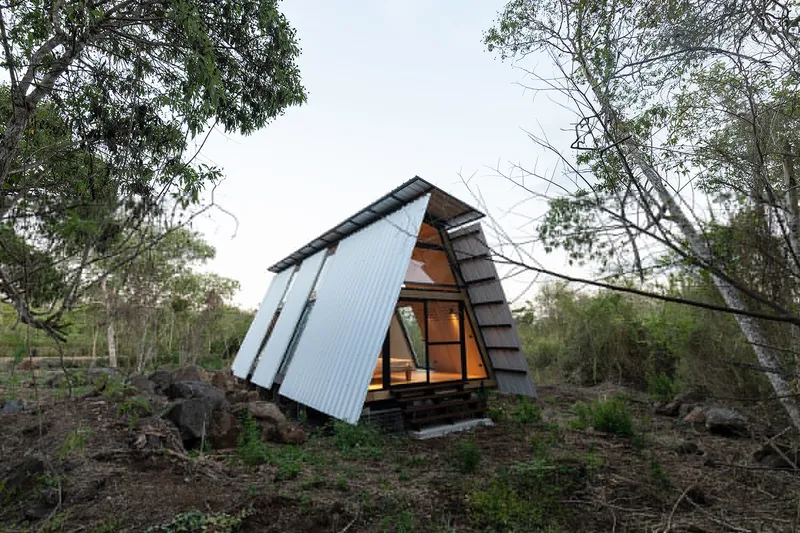
From its elevated structure to its thermal envelope, every aspect of the Sula Prefabricated Home is grounded in bioclimatic principles. By raising the structure off the ground, the design creates a cool air chamber beneath the floor that helps regulate interior temperatures naturally. The double-skin façade integrates ventilation cavities and structural beams while enabling passive cooling and cross-ventilation.
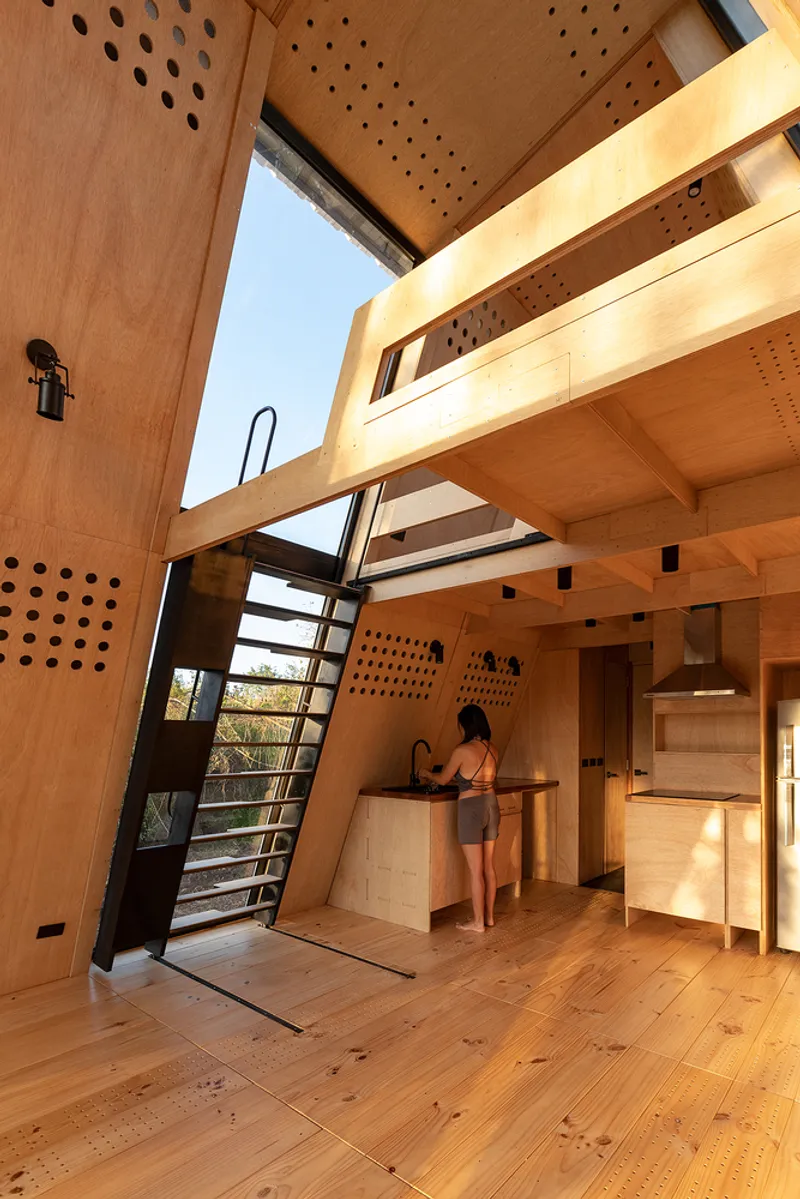
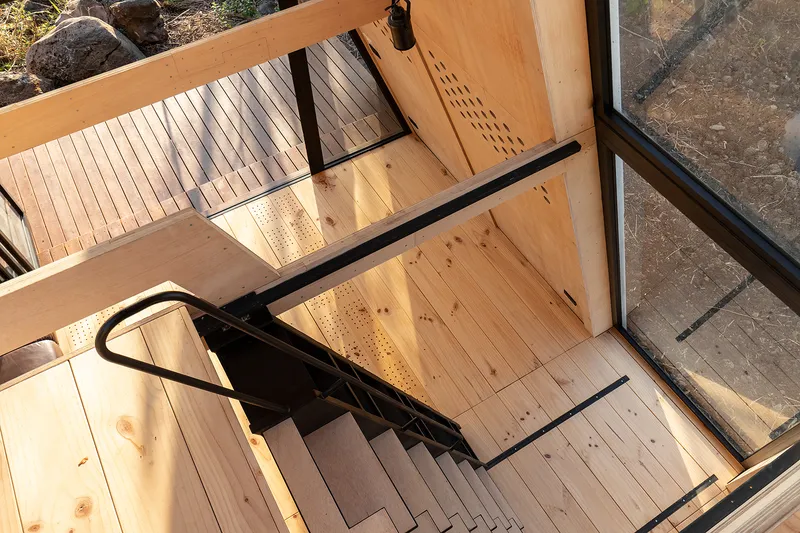
Openings in the floors and walls allow for dynamic airflow, while the minimal use of concrete was replaced by gabion-based foundations—a strategic decision that allows disassembly and relocation without damaging the soil. This reversible design emphasizes the home’s non-invasive relationship with its site, underscoring a profound respect for nature.
Material Honesty and Construction Efficiency
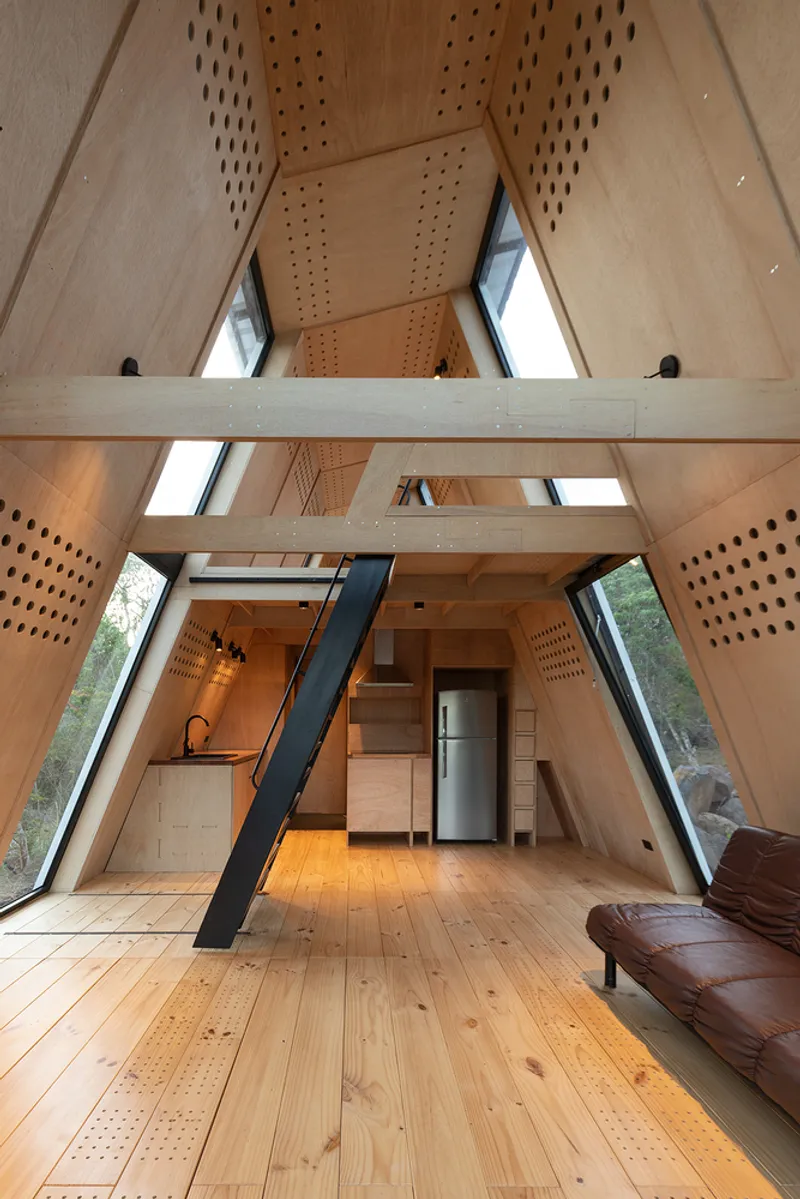
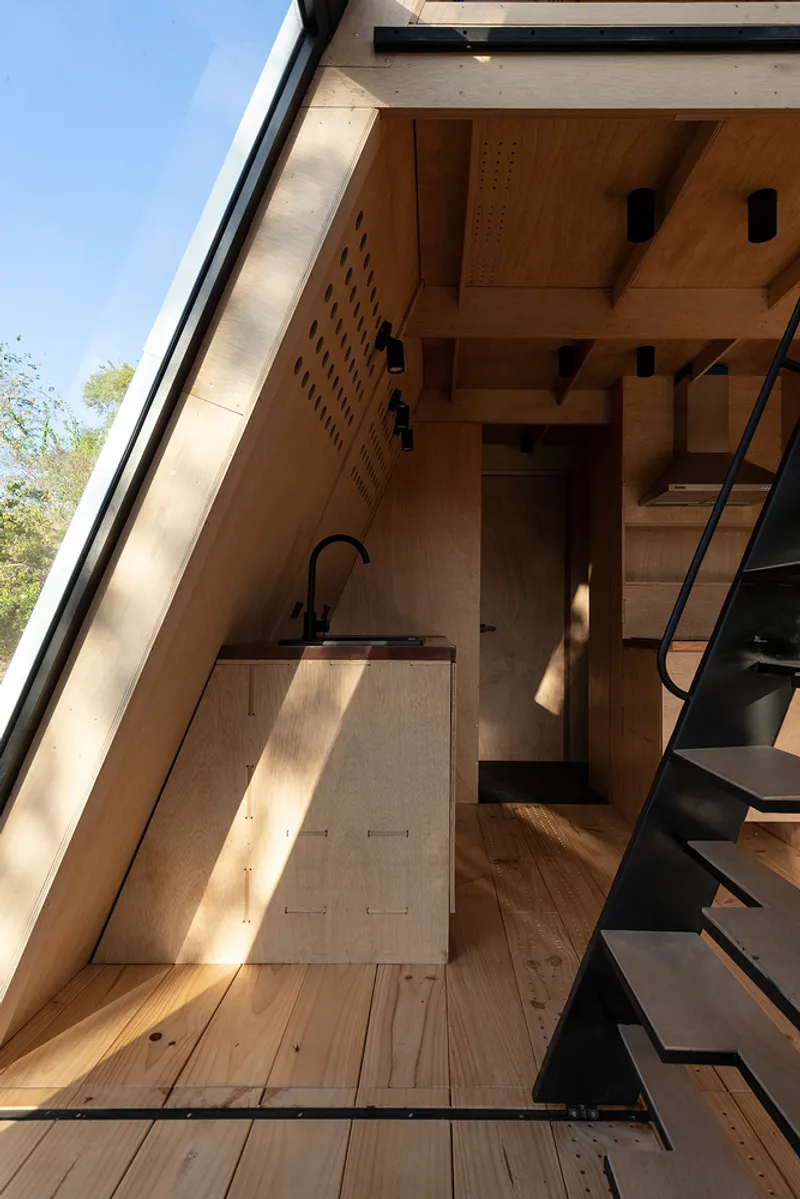
The home employs a simple yet refined palette of five materials: wood, stone, metal, glass, and PVC. Each element was chosen for its durability, lightness, and adaptability, with plywood serving as the dominant material for structural components, interior walls, built-in furniture, and ceilings. Prefabricated panels were machine-cut for precision and optimized use, reducing waste and on-site labor.
PVC sheets were selected for the roofing system, functioning as lightweight, waterproof "umbrellas" that shade and protect the home. These material choices reflect a desire to build with clarity, economy, and ecological balance, resulting in a residence that feels both deliberate and harmonious.
Architecture with a Human and Feminine Perspective
Beyond technical achievements, the Sula Home is deeply personal. Diana Salvador’s narrative intertwines architectural innovation with her own reflections on womanhood, motherhood, and the challenges of practicing architecture in a male-dominated field. Her voice echoes throughout the project—a testament to resilience, care, and purpose-driven design.
This home is more than a shelter—it is a symbol of change, a call to rethink our values, and a manifesto for mindful living. It challenges conventional construction, advocates for female leadership in architecture, and redefines what it means to create habitat in the Anthropocene.
“Let us at least be kind to ourselves. Let’s create a habitat in which we don’t have to just survive—but one that truly makes us feel alive.” — Diana Salvador
A Prefabricated Home That Travels Lightly, Lives Deeply
The Sula Prefabricated Home is a scalable, mobile, and climate-conscious architectural response to contemporary challenges. By combining prefabrication, sustainability, low-impact construction, and bioclimatic performance, it sets a new benchmark for environmentally attuned housing in remote and ecologically sensitive regions.




Popular Articles
Popular articles from the community


Riyadh For All: Intergenerational Urban Design for Active Aging in Rabat
Riyadh For All reimagines urban design in Rabat with intergenerational co-living, adaptive courtyards, and Moroccan cultural exchange today.

The Musturak Paradise: Senior Living Architecture for a Connected Future in Temara, Morocco
The Musturak Paradise reimagines senior living architecture in Temara via private homes, social spaces, culture, community, and shared care.

Hill & Cross Opera: Sculptural Opera House Architecture Shaped by Tallinn’s Landscape and Identity
Hill & Cross Opera reimagines opera house architecture in Tallinn through its sculptural hill, civic plaza, glass wave and a luminous cross.

Play: Fragments of Their World
Familiar architecture becomes modular playground design, creating safe spaces where displaced children can learn, connect, imagine and play.


Similar Reads
You might also enjoy these articles


Hodi-Mandai Geram
Project Function: Preservation and revitalization of the Intangible heritage and socio-spatial identity of the Hodi by Housing, Cultural Memory Center, Sacred Grove, landscape, local tourism economy


Olio Towers: A Mid-Rise for Performers That Fuses Housing, Rehearsal, and Stage
Located blocks from Houston's Theater District, this modular tower stacks living units around a central performance atrium.

Oasis: Modular Green Housing Carved into Dhaka's Urban Fabric
A shortlisted Plugin Housing entry reclaims unauthorized settlements in Dhaka with stepped concrete volumes, green roofs, and ventilation-driven design.

Black Hole: A Floating Megastructure for the Post-Physical Era
Emiliano Mazzarotto envisions a spherical, self-scaling arena where e-sports, digital hotels, and holographic stadiums replace traditional public space.
Explore Architecture Competitions
Discover active competitions in this discipline



Challenge to reimagine the Iron Throne


Photograph architecture without architects


Illustrate the lost glory of Angkor Wat - Render Challenge


Design challenge to reuse E-waste
Comments (0)
Please login or sign up to add comments
No comments yet. Be the first to comment!