
PLANT Atelier Peter Kis Lifts a University Campus Above the Budapest Hillside at Corvinus Gellert
A white concrete frame and glass complex terraces down one of Budapest's iconic hills, merging student life with the tree canopy.


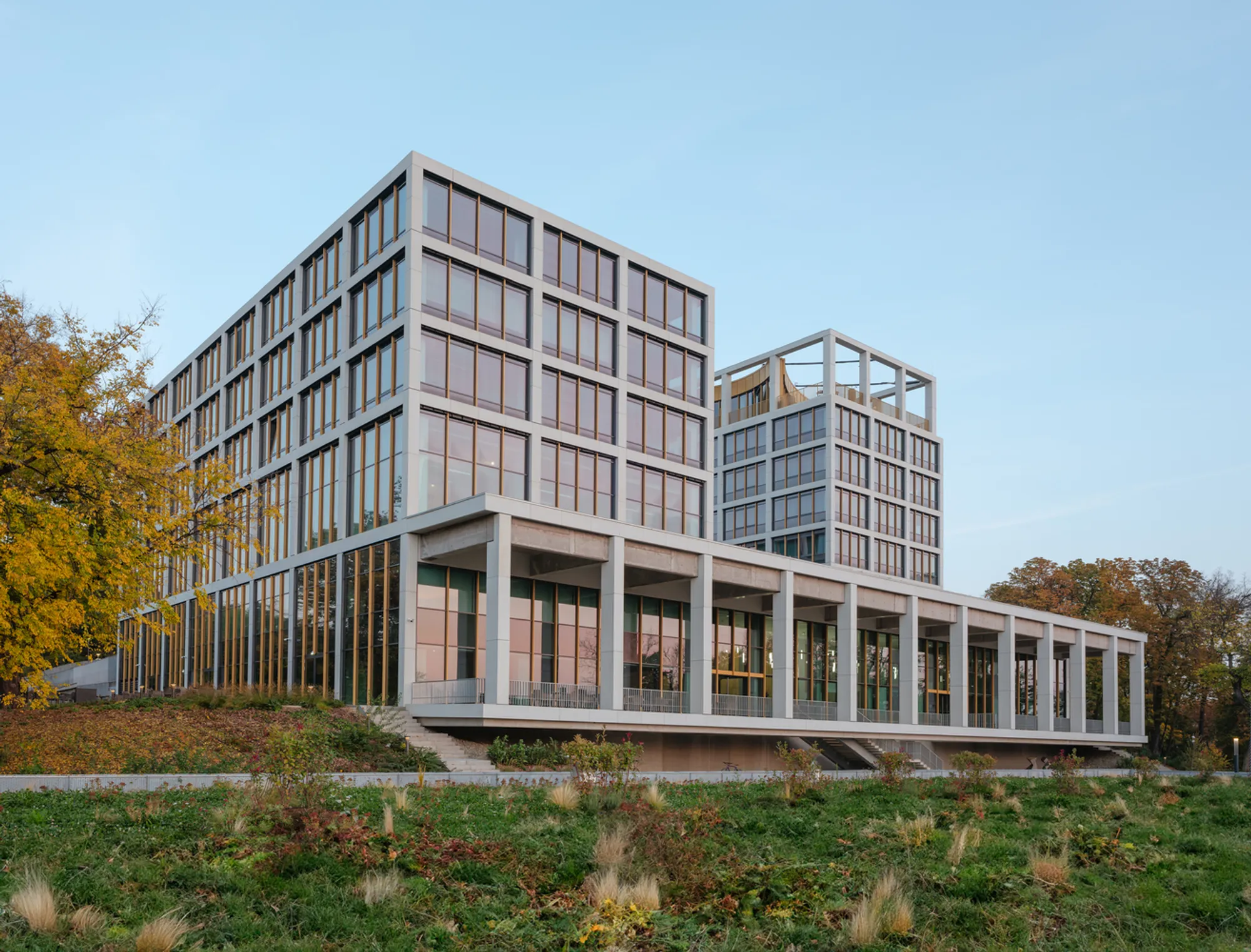
Budapest's Gellért Hill is one of those rare urban landscapes where topography and identity are inseparable. Building a university campus on its slopes is therefore not just a logistical problem but a cultural proposition. PLANT – Atelier Peter Kis answered that proposition with the Corvinus Gellért Campus, a complex of interconnected volumes raised on pilotis and organized around a white structural grid that reads like a modernist interpretation of the hill's own geological strata. The project sits somewhere between civic monument and inhabited landscape, treating the slope not as an obstacle but as a generative force.
What makes the campus genuinely interesting is how it distributes program vertically across the gradient. Underground parking, sports facilities, academic spaces, residences, dining terraces, and a rooftop basketball court all stack and shift according to the terrain. Rather than flattening the site and placing a box on a plinth, PLANT allows the section to follow the hill. The result is a building that has multiple ground levels, multiple horizons, and an unusually rich relationship between inside and outside at every floor.
A Structural Grid as Architectural Identity
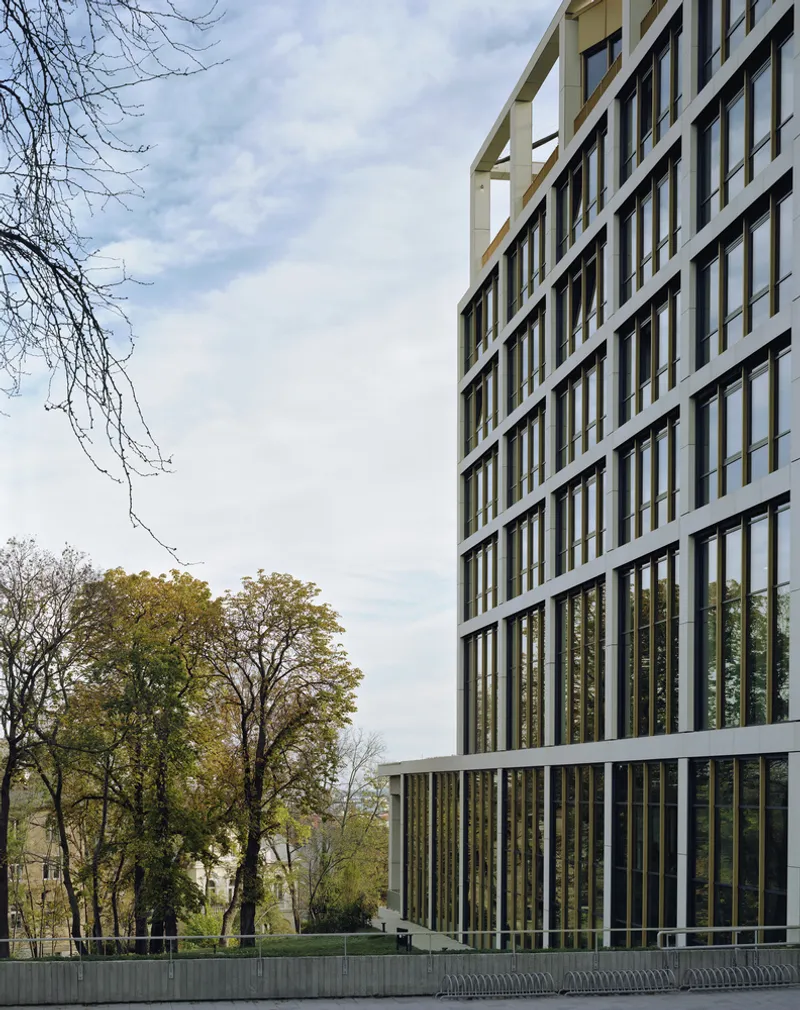
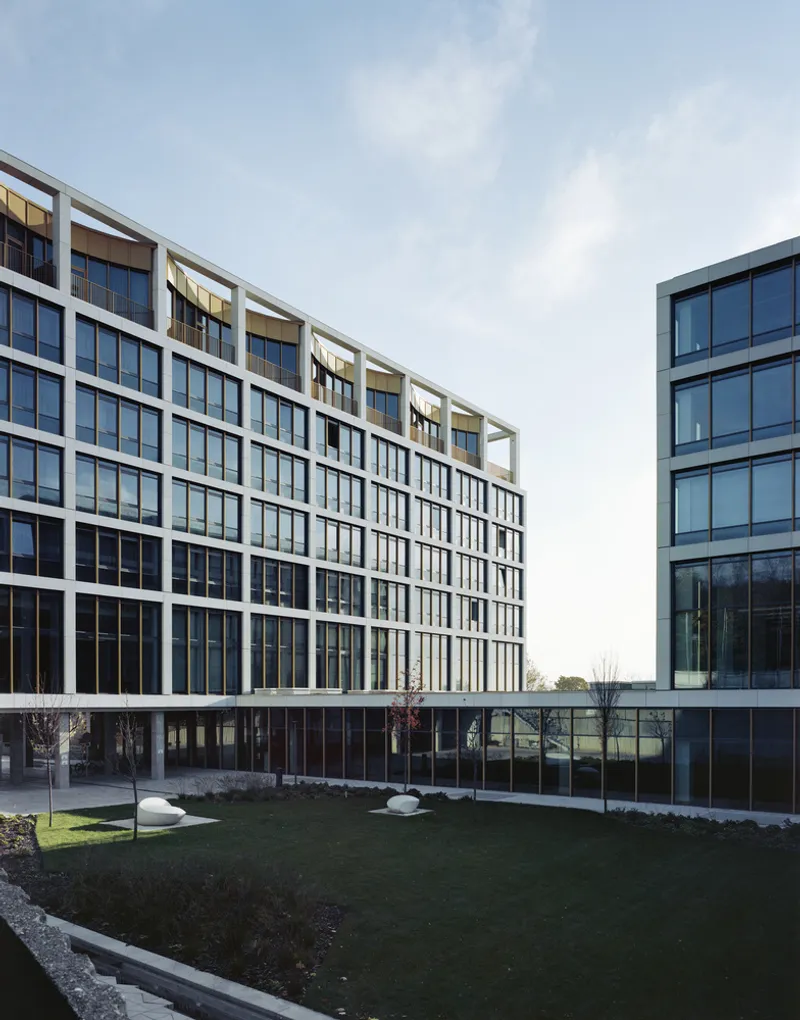
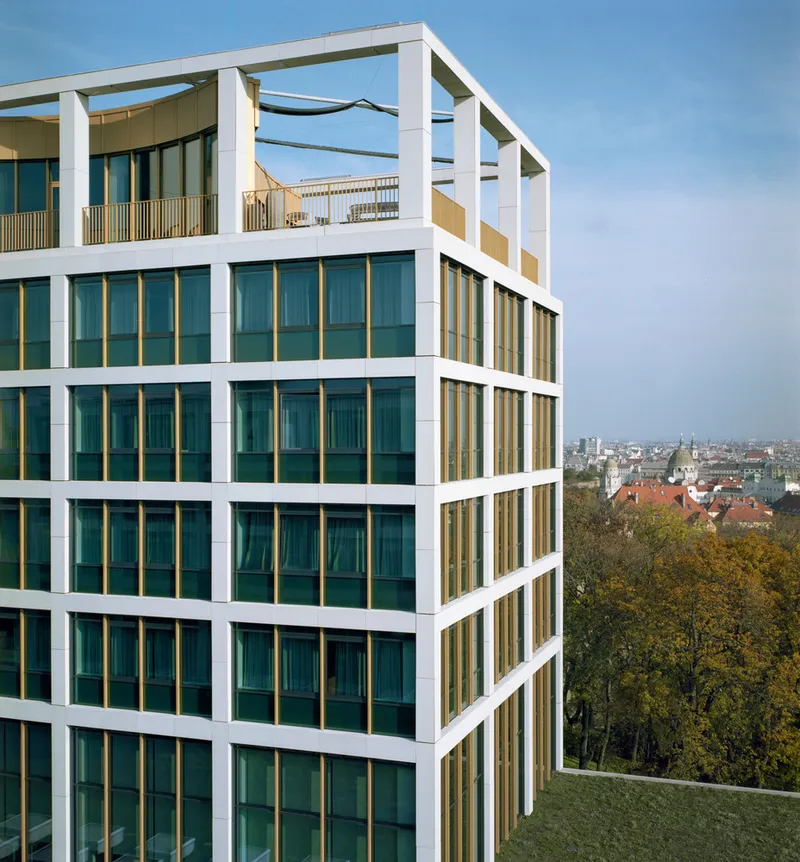
The most immediately legible move is the white concrete frame that wraps the building's facades. It is not mere decoration applied over a curtain wall; it is the primary organizational device, setting up a rhythm of bays that accommodates glazing, bronze-toned vertical fins, opaque panels, and recessed balconies within a single coherent system. The grid is large enough to be read from across the Danube yet fine enough to create varied conditions at the scale of an individual room.
The interplay between the frame and its infill materials is where the facade gains depth. Some bays are fully transparent, others deploy perforated metal screens or golden panels that catch late afternoon light. The effect is a kind of controlled irregularity: the grid stays disciplined while the contents shift from floor to floor, registering the different programs behind the glass.
Elevating the Ground Plane
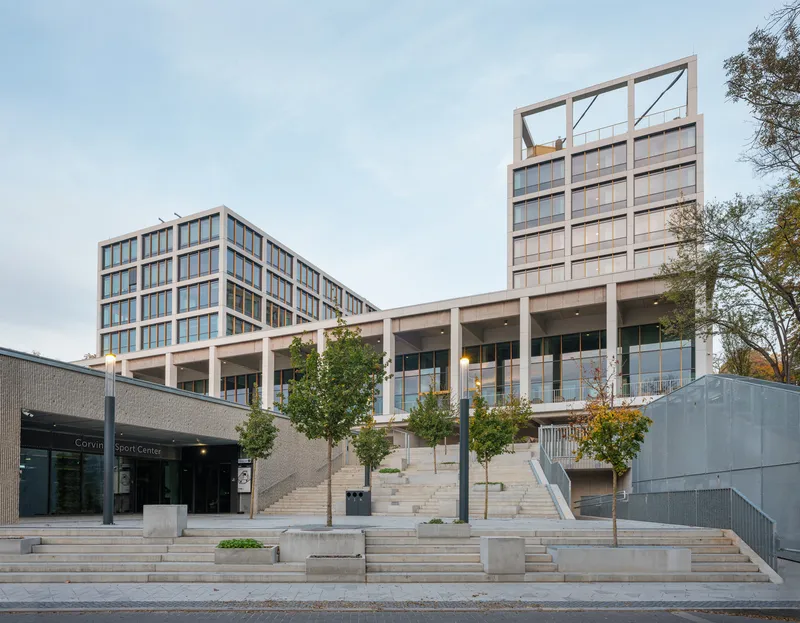
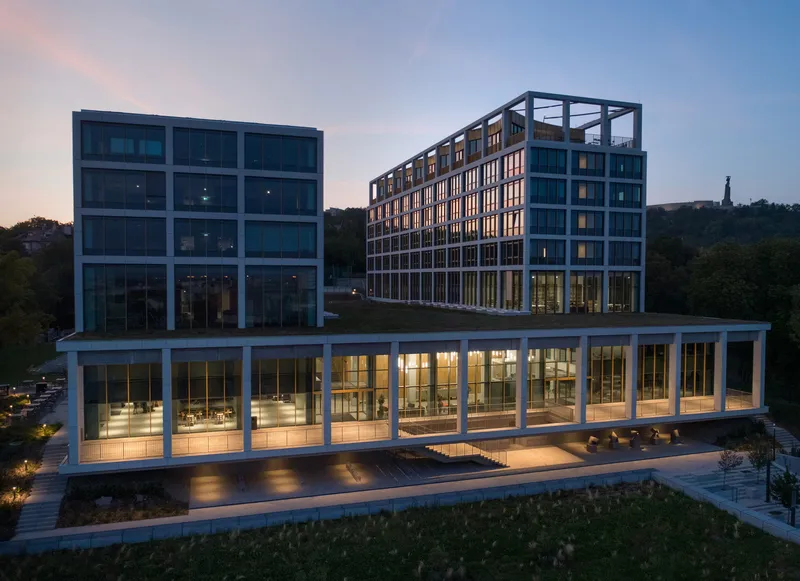
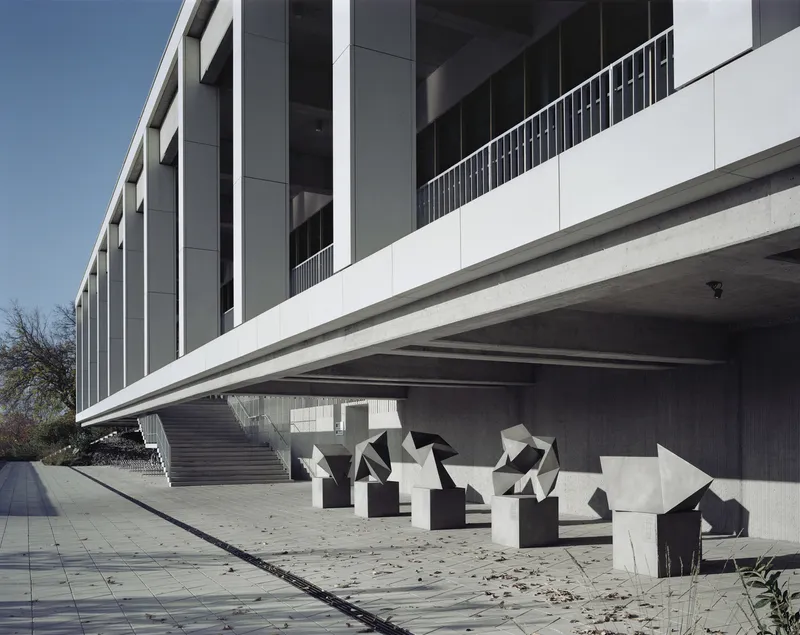
The pilotis here are not a Corbusian citation for its own sake. Lifting the building creates a porous ground level that allows the hillside landscape to flow through and beneath the structure. Terraced plazas with young trees cascade toward the campus entrance, while the covered underside of the volumes becomes a sheltered public zone populated with sculptural installations and outdoor seating. At dusk, the illuminated glass pavilion base glows beneath the heavier residential blocks above, inverting the typical heavy-base-light-top composition.
The cantilevered soffit over the sculpture terrace deserves particular attention. Exposed concrete beams and angular cutout windows turn the ceiling into an event, creating a dramatic threshold between the open plaza and the enclosed galleries above. It is an honest expression of structure that also works as spatial theater.
Living in the Canopy
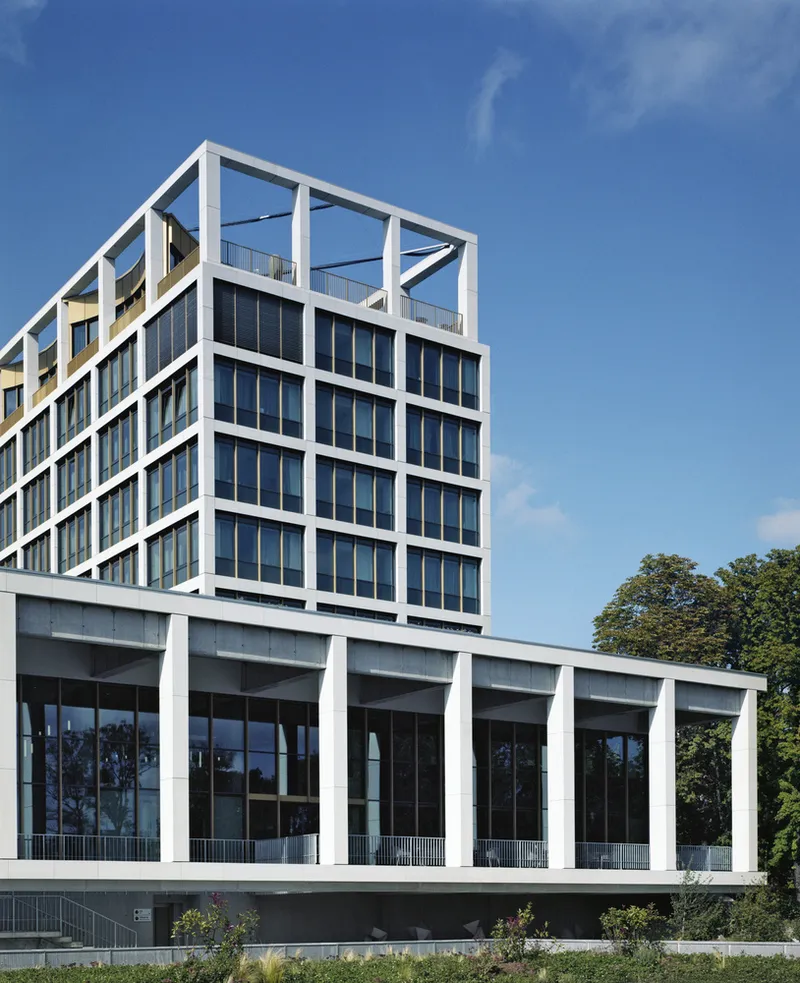
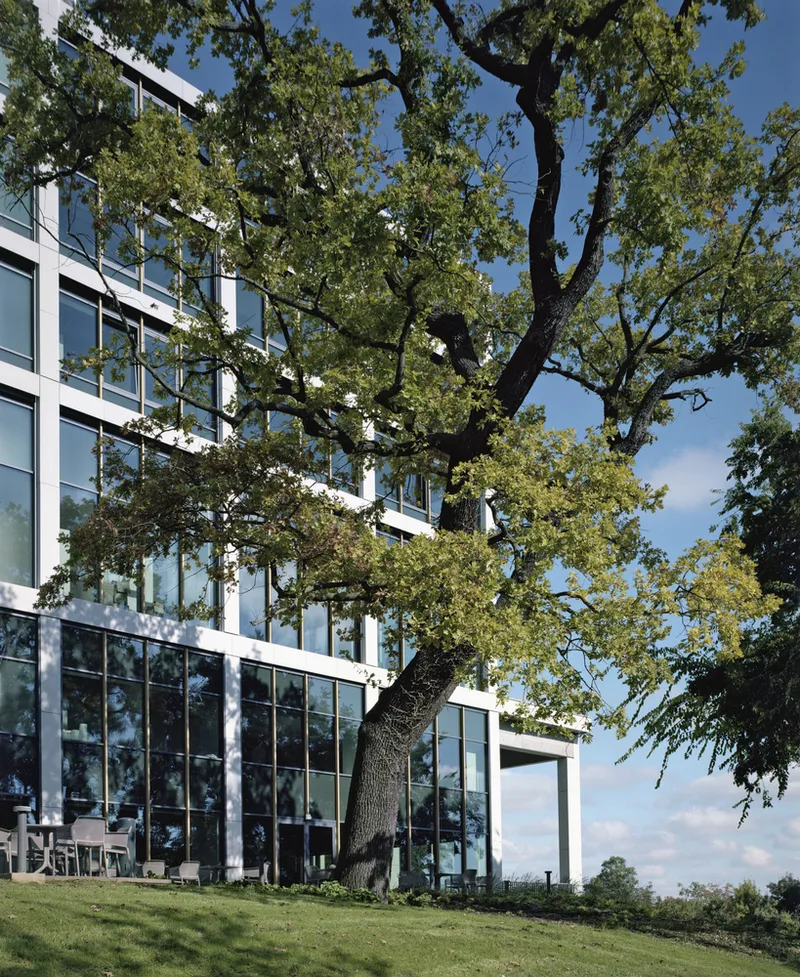
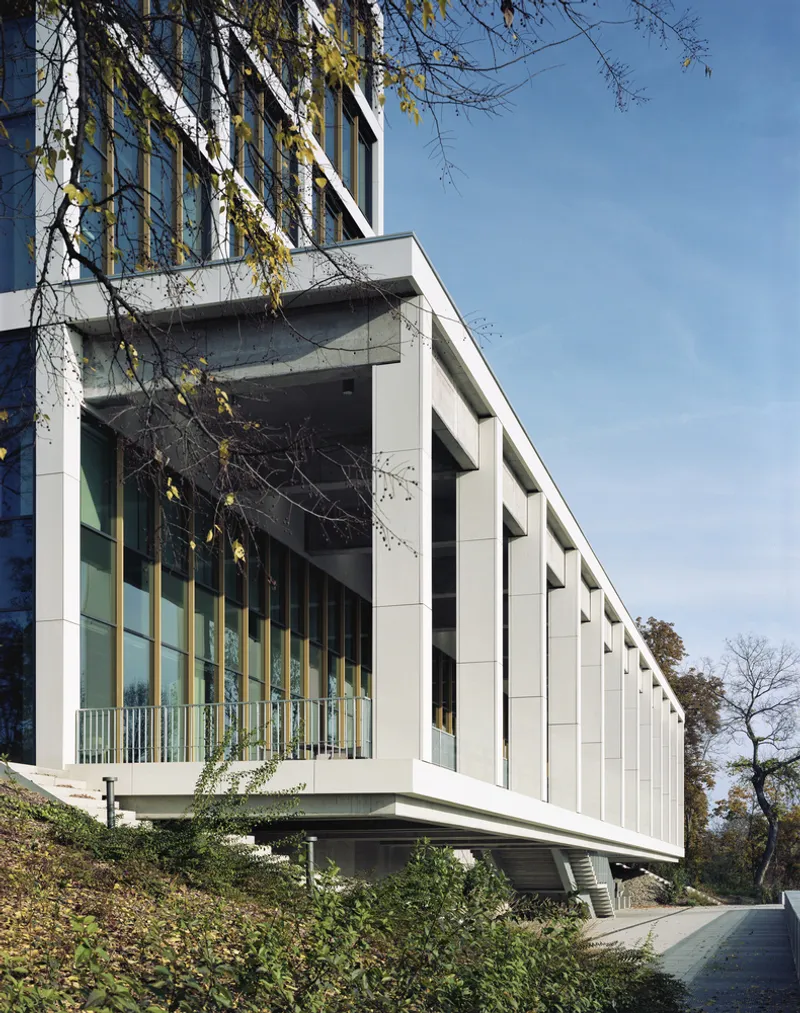
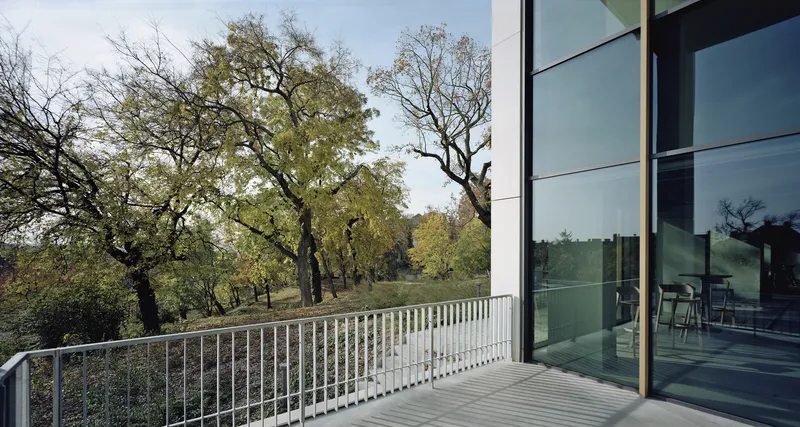
The relationship between the building and its mature deciduous trees is one of the project's quiet triumphs. Rather than clearing the site, PLANT positioned the volumes to coexist with existing oaks and other large specimens. At several points the tree canopy reaches the same height as the occupied floors, so students look out into branches rather than down at pavement. The seasonal cycle transforms the campus: in autumn, golden foliage echoes the bronze facade panels; in winter, bare trunks reveal the full extent of the structural grid.
Seen from below, the white concrete volumes seem to float above a naturalized meadow of grasses, their elevated position reinforcing the sense that the architecture is a guest on the hillside rather than an imposition upon it.
Interior Atmospheres: From Lobby to Auditorium
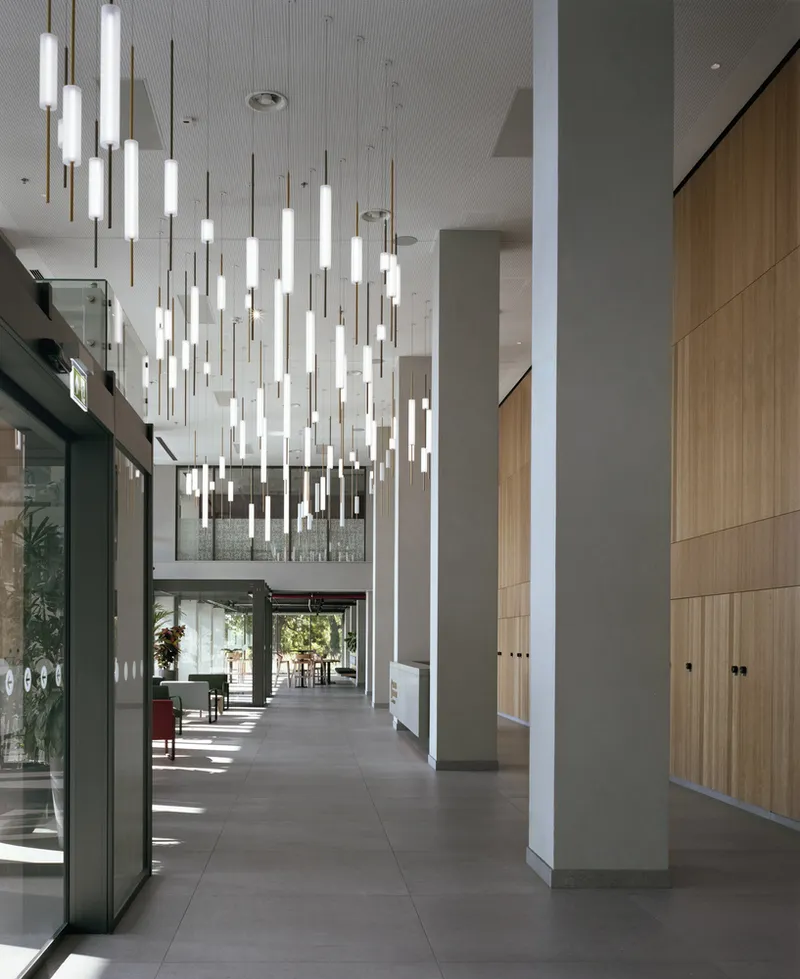
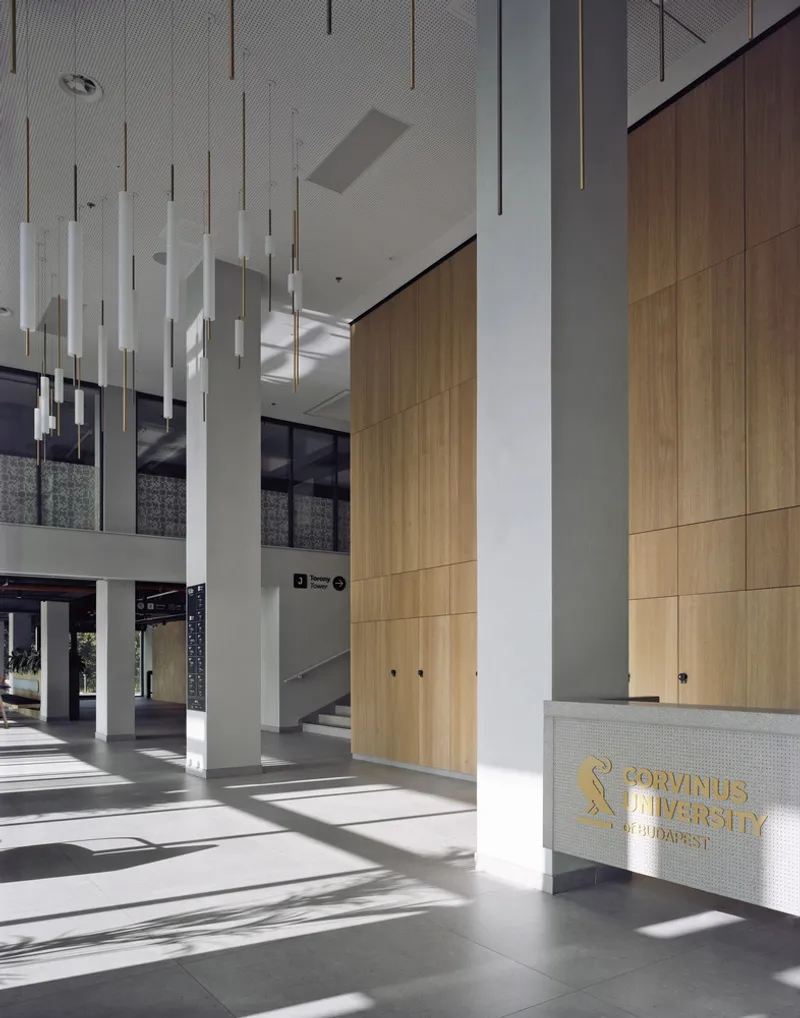
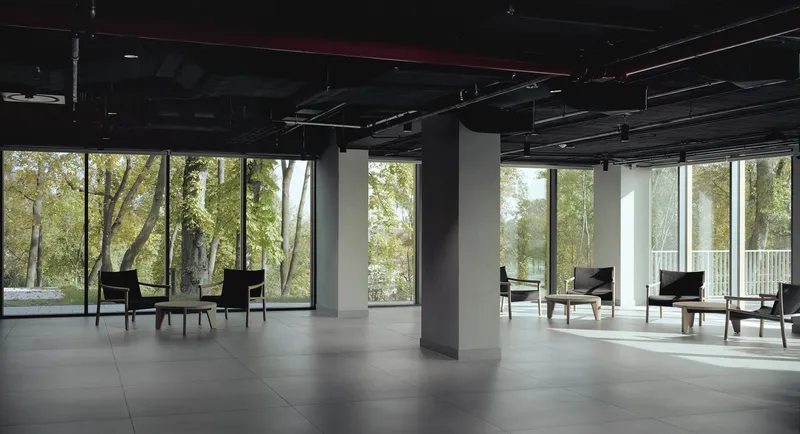
The double-height lobbies anchor the interior experience. Clusters of suspended tubular pendant lights drop at varying heights against timber-clad walls and gray concrete columns, establishing a warm, almost residential tone for what is essentially an institutional threshold. Morning sunlight enters through full-height glazing and bounces off the wood surfaces, softening the concrete palette.
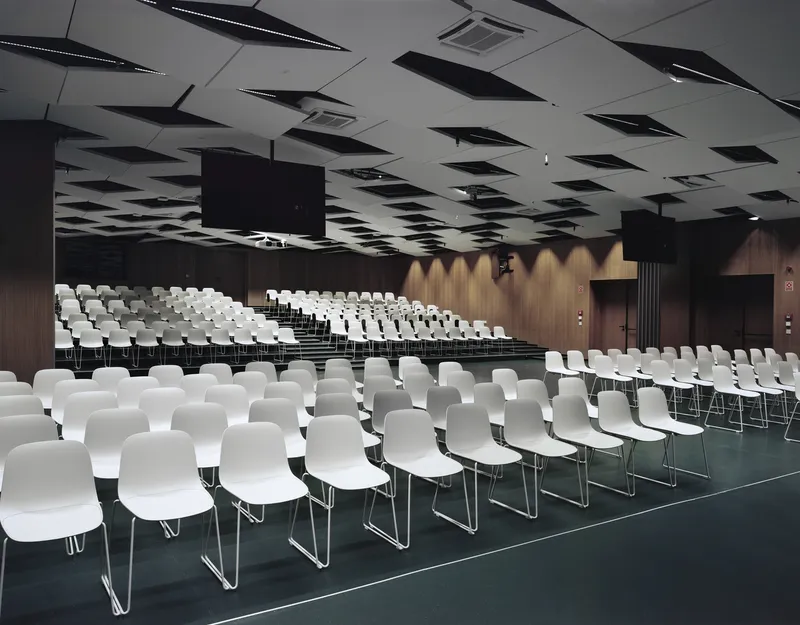
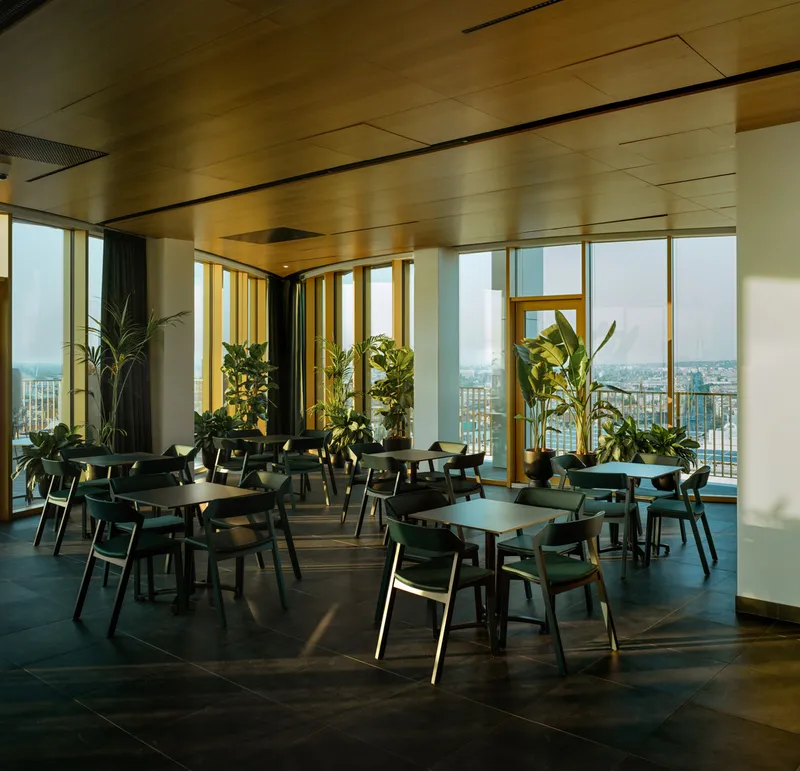
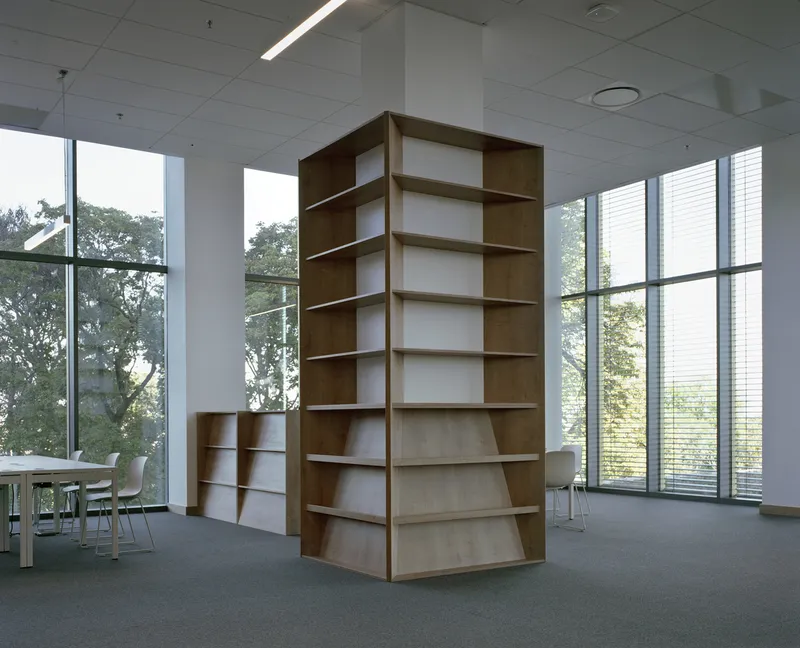
The auditorium takes a different tack: angled black acoustic panels create a ceiling landscape that absorbs sound and diffuses light, lending the room a focused, introverted character. The dining area, by contrast, opens up completely. Timber ceiling panels, potted palms, and full-height windows to the trees make the cafeteria feel more like a well-designed restaurant than a campus refectory. The freestanding timber shelving units with curved edges add a furniture-scale warmth that large institutional buildings often lack.
Rooftop Sports and Outdoor Life
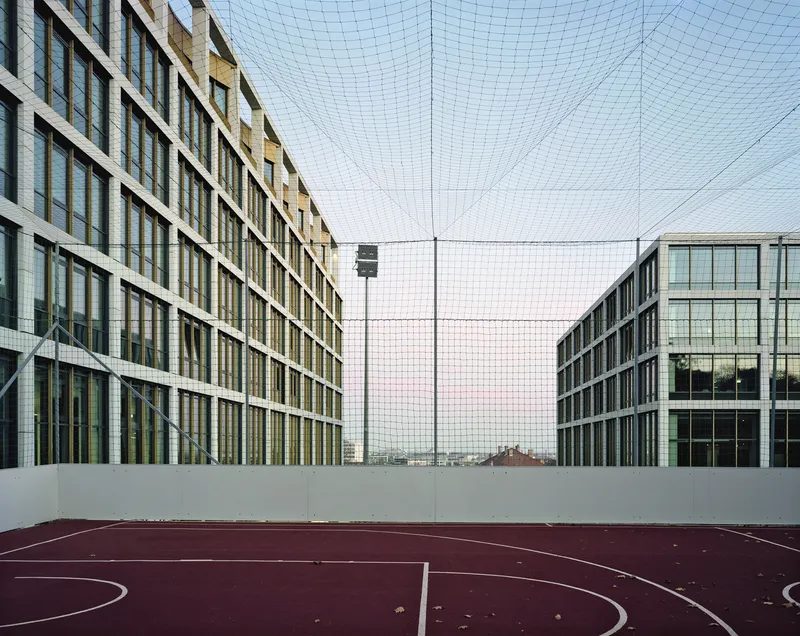
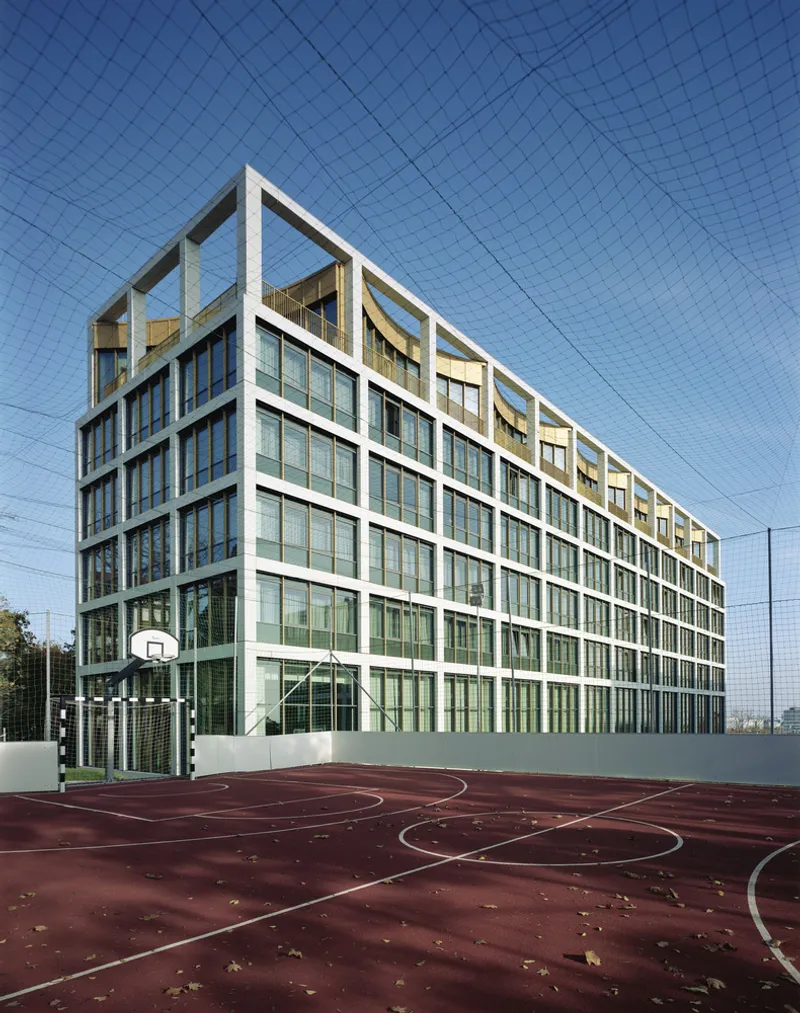
Placing a basketball court on the roof between two glazed blocks is a bold gesture that pays off at dusk, when the maroon playing surface catches the last light and the surrounding net enclosure frames the sky. It is a move that maximizes the limited site footprint while creating one of the most memorable recreational spaces in any European university campus. The court is visible from the surrounding slopes, turning athletic activity into a kind of public spectacle.
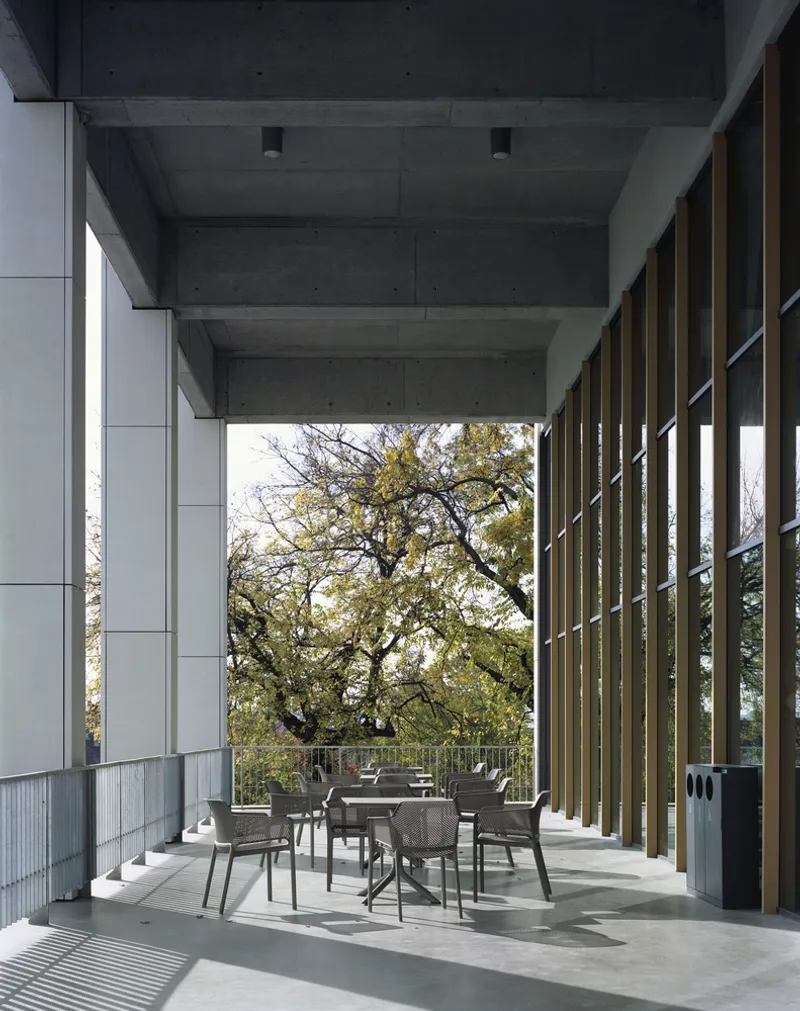
At the building's edges, covered terraces with ribbed concrete ceilings and vertical timber screens extend the usable outdoor space. These semi-enclosed zones function as study spots, social gathering areas, and dining terraces, blurring the boundary between architecture and landscape in a way that feels genuinely sustainable rather than performatively green.
Gallery and Exhibition Spaces
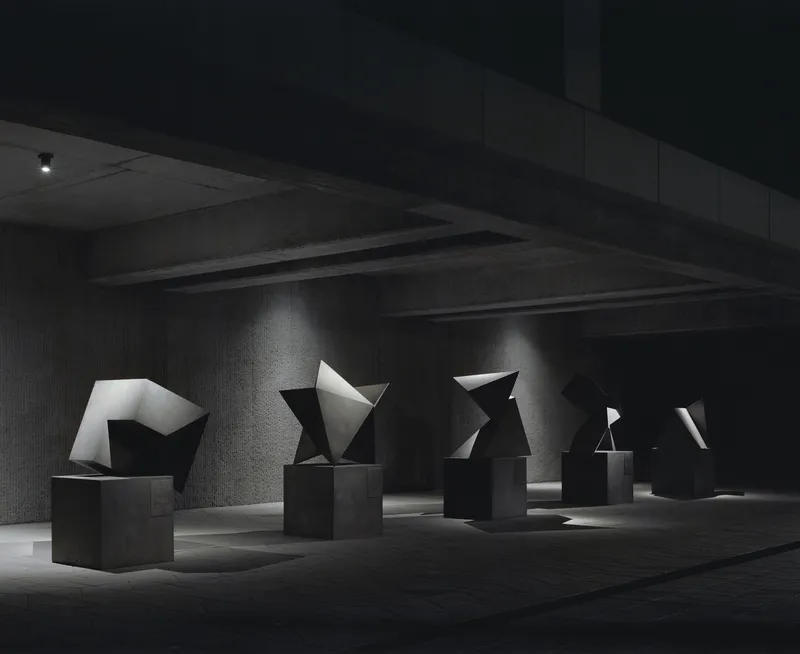
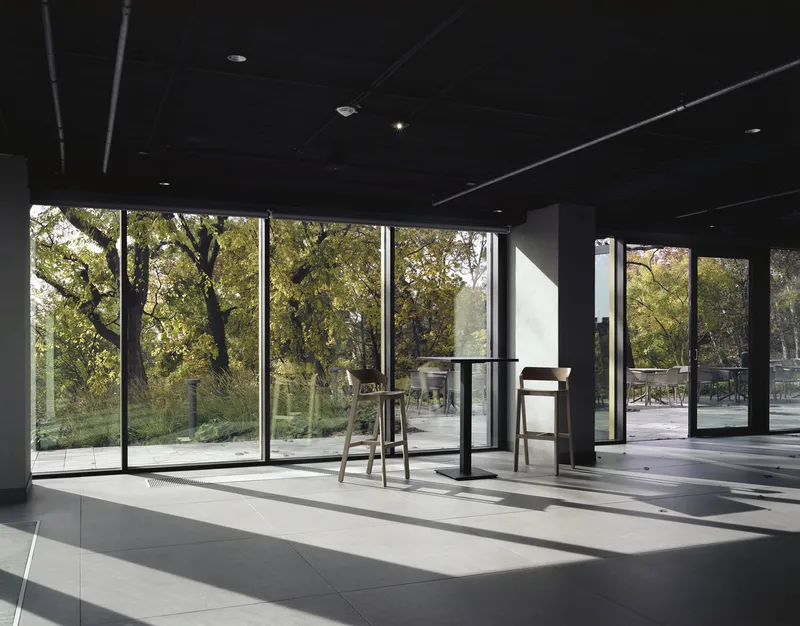
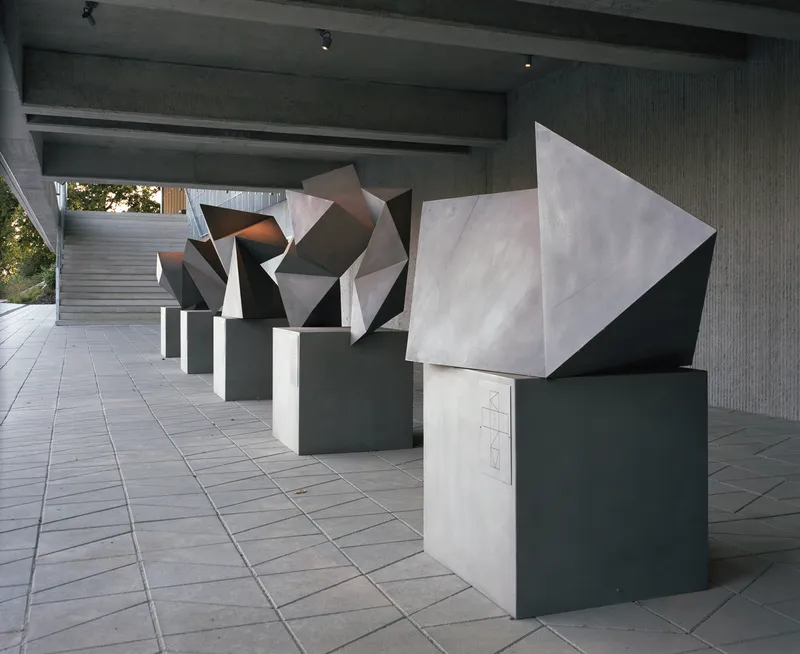
The campus integrates gallery spaces that benefit from the exposed concrete structure. Angular geometric sculptures on pedestals are displayed beneath heavy beams and dramatic spot lighting, giving the rooms a raw, almost industrial gallery character. Elsewhere, floor-to-ceiling glass walls dissolve the gallery boundary entirely, framing views of sunlit trees as a backdrop to the art. The covered walkway lined with faceted sculptures functions simultaneously as circulation and curated exhibition, a reminder that a well-designed campus should provoke encounters with ideas at every turn.
Details and Light
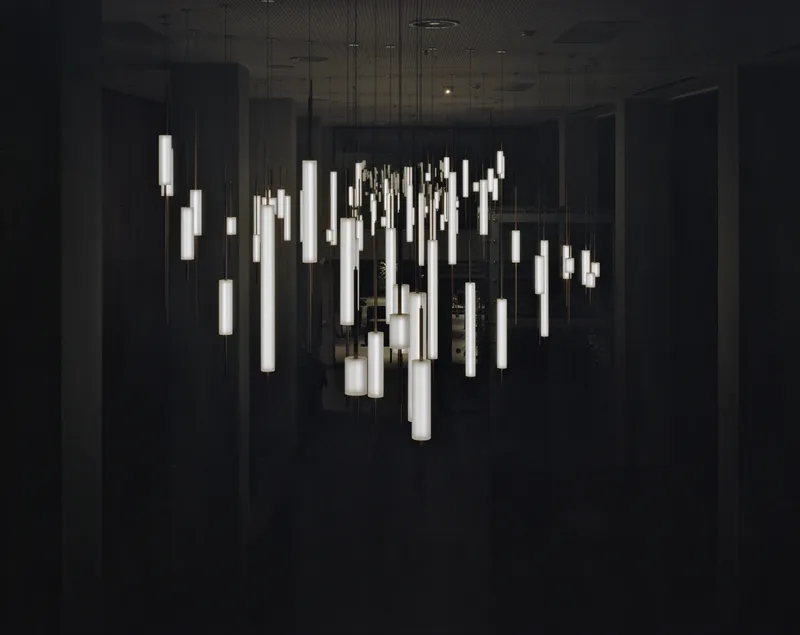
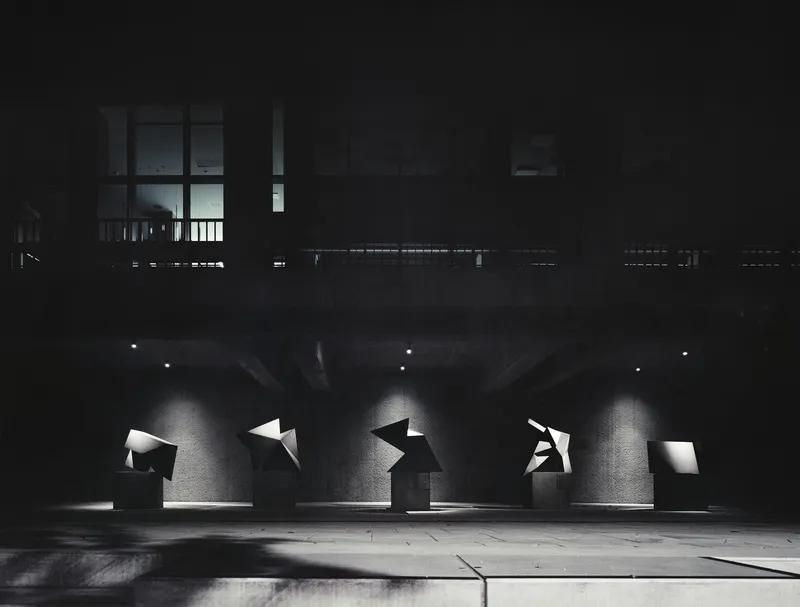
PLANT's attention to detail is evident in the lighting design. The cluster of cylindrical pendants hung at staggered heights against a dark wall is a small composition that carries real visual weight. It suggests an office that thinks about atmosphere, not just floorplates. The angular cutout windows in the concrete ceiling, illuminated by spotlights at night, turn structure into ornament without relying on applied decoration.
Glass-railed terraces with reflective facade panels catch the autumn palette, and the interplay between transparency and opacity shifts as you move through the building. It is a project that rewards close looking.
Plans and Drawings
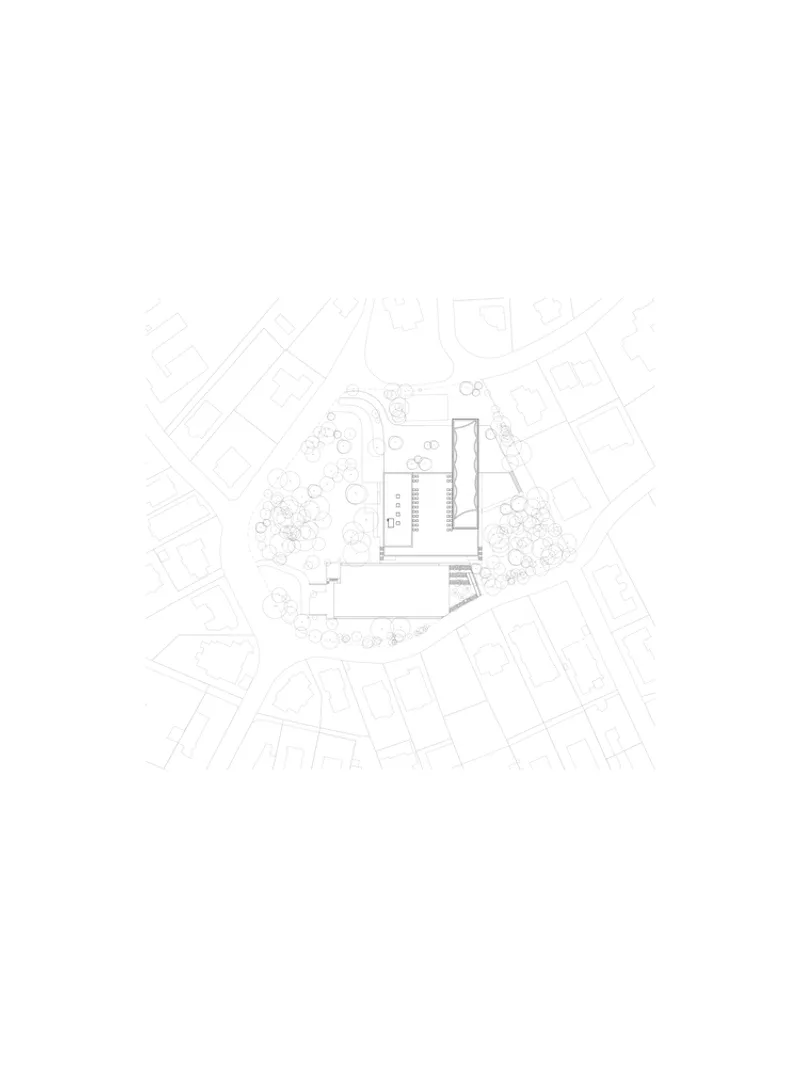
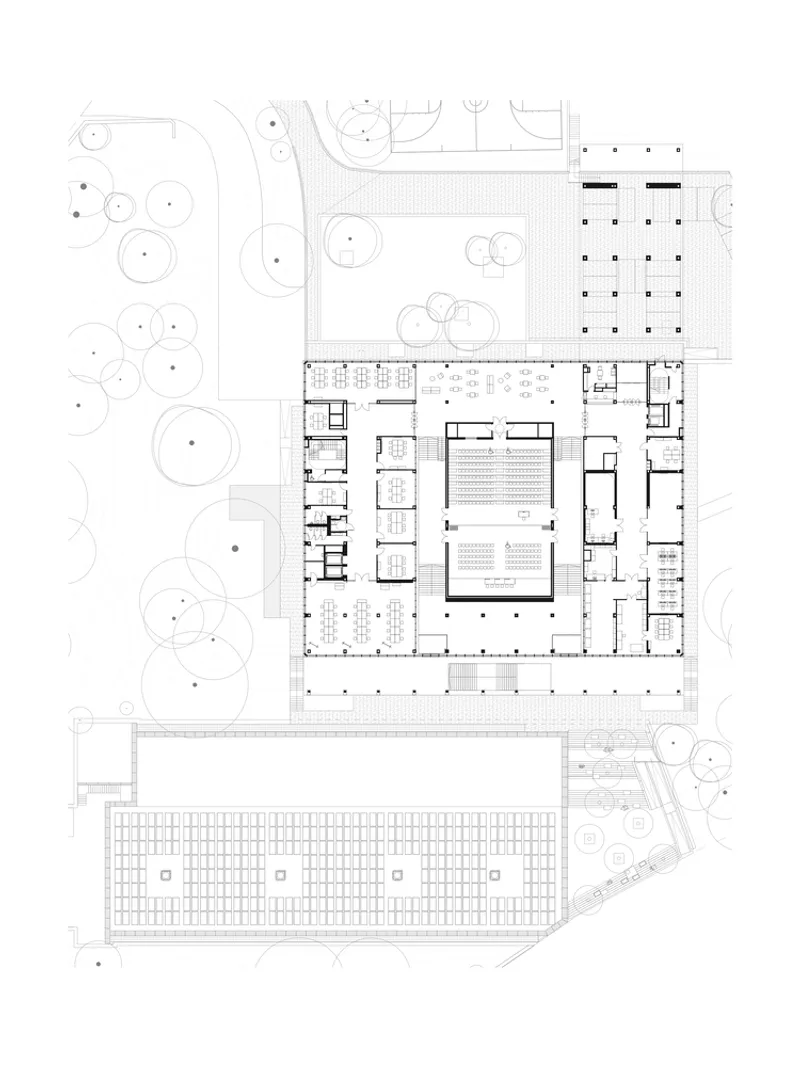
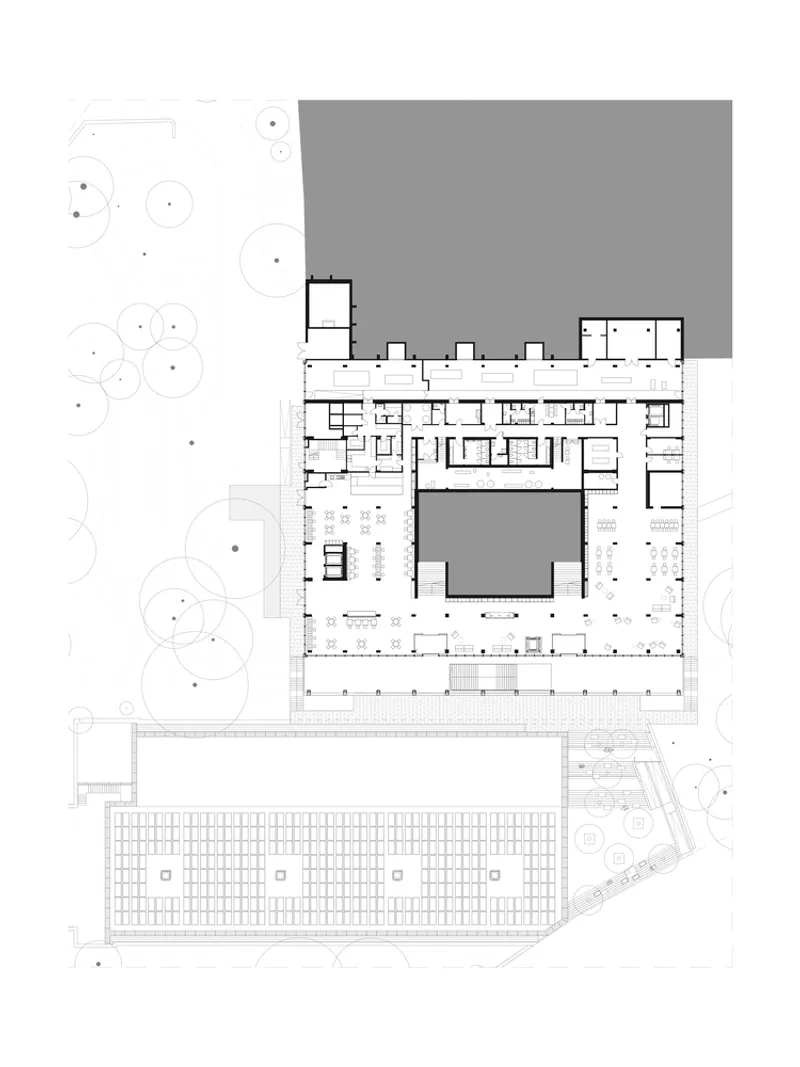
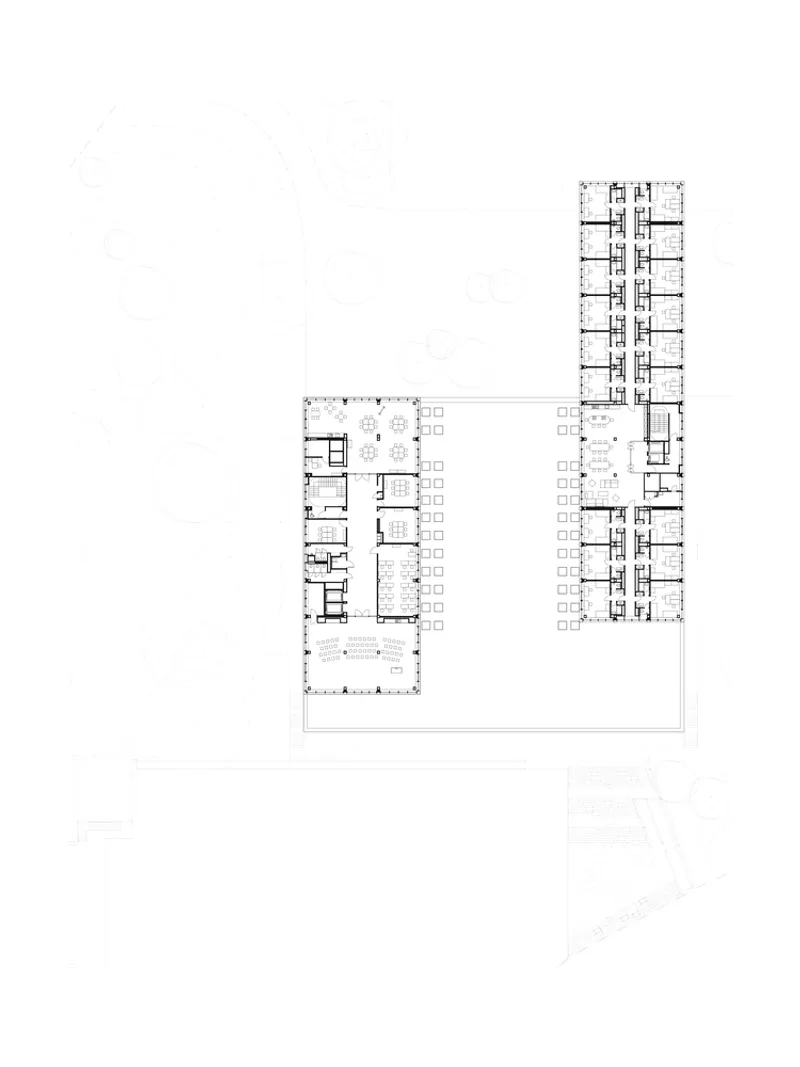
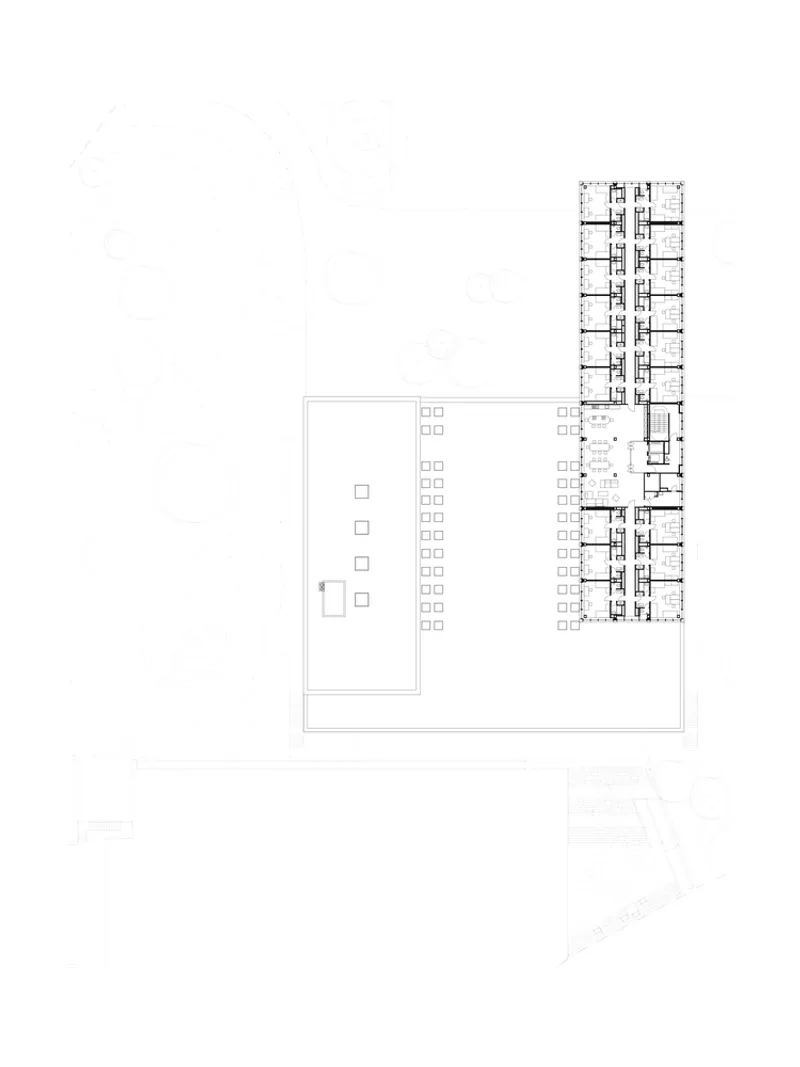
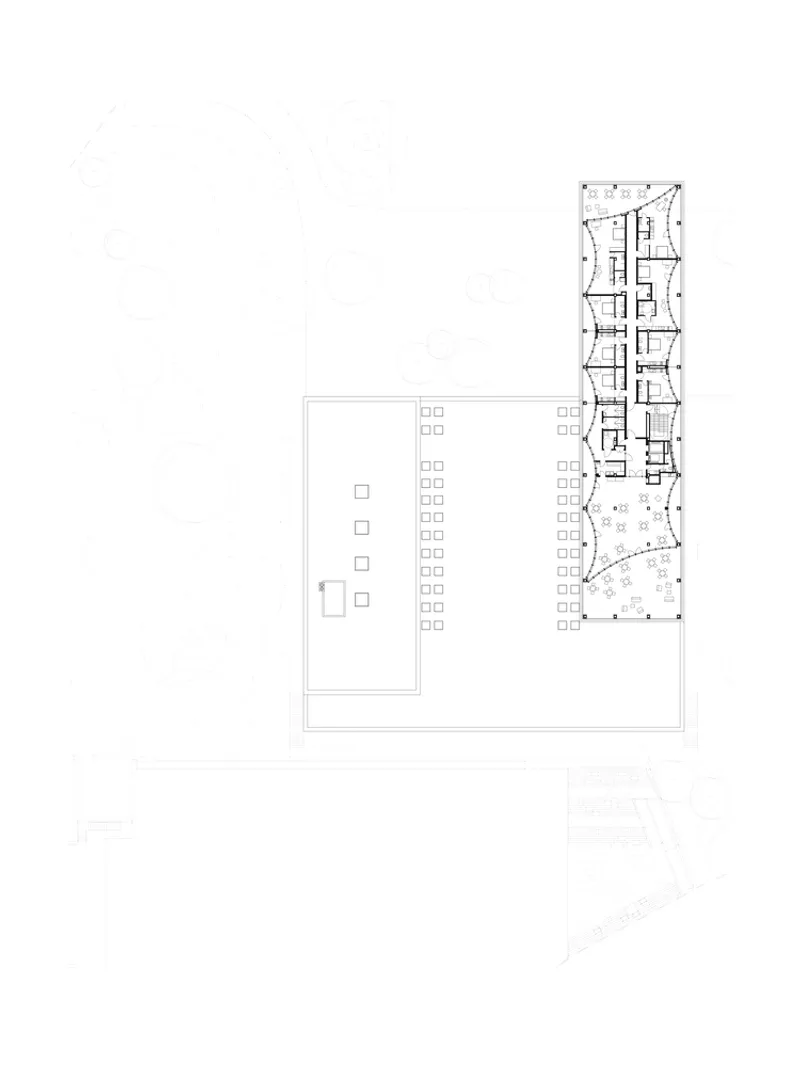
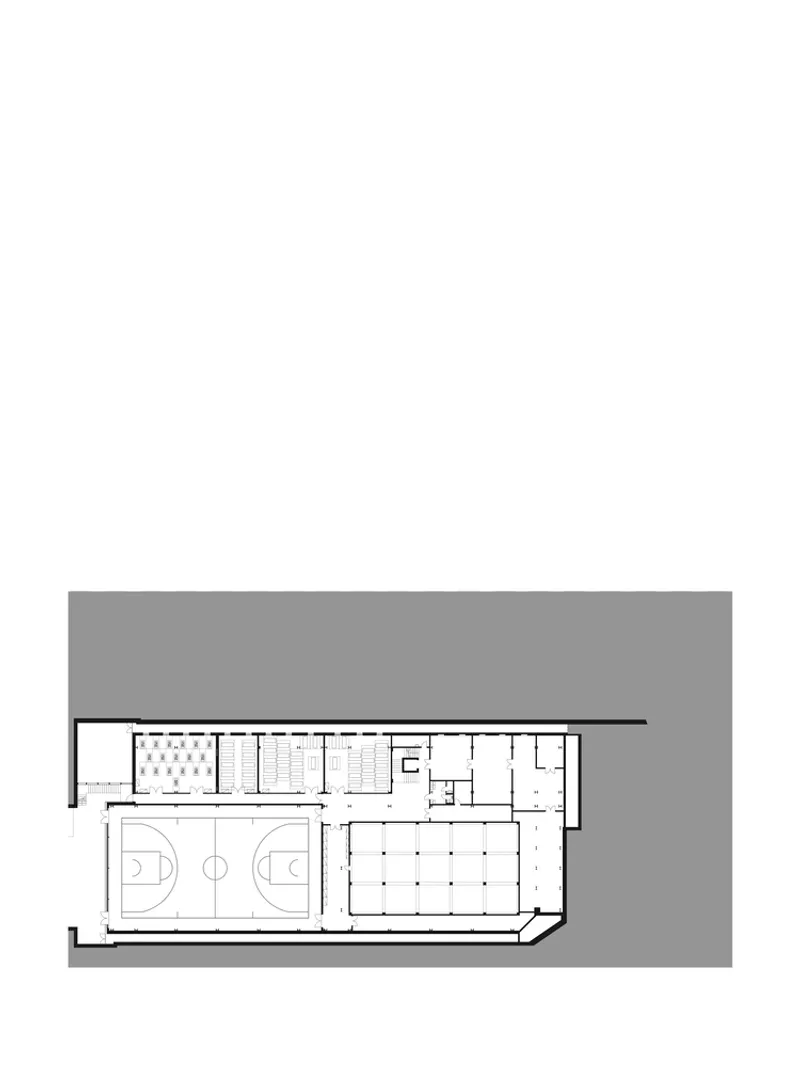
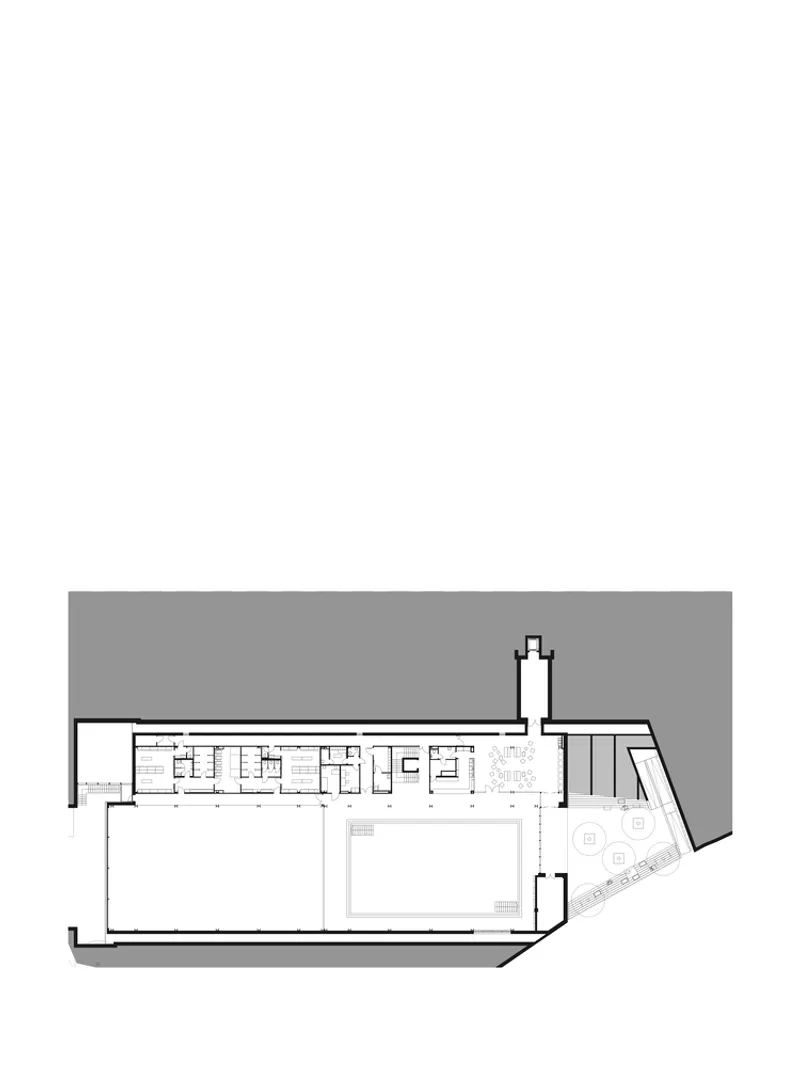
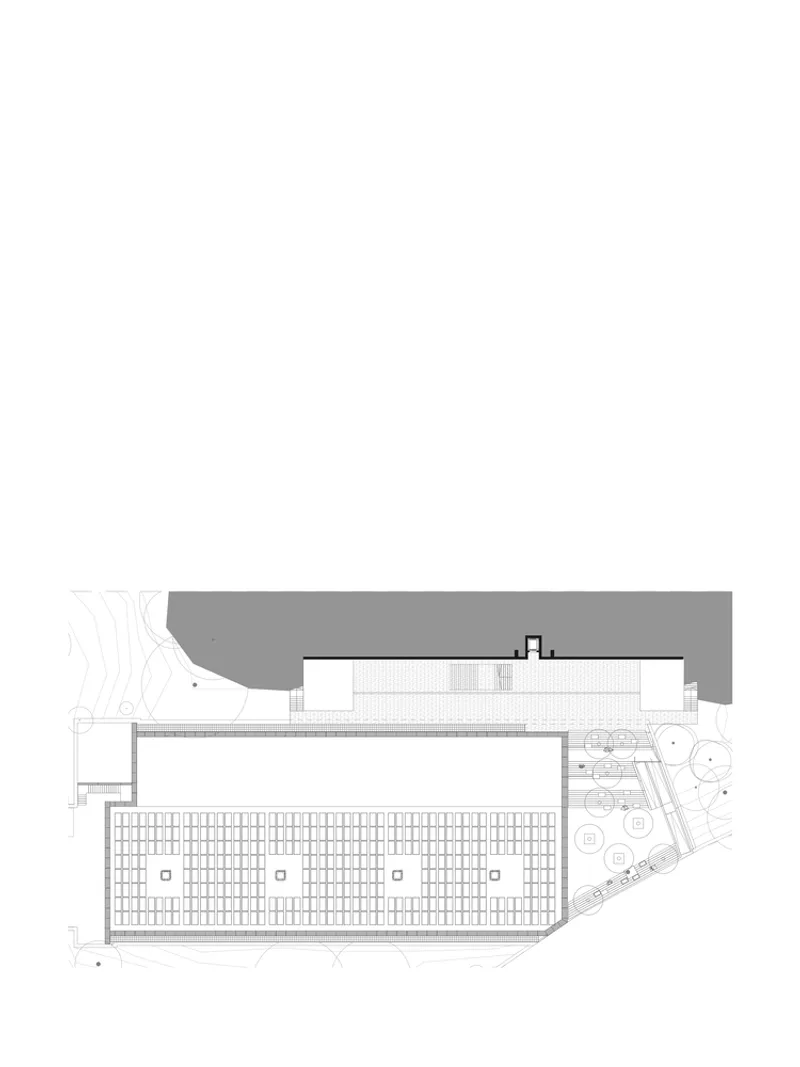
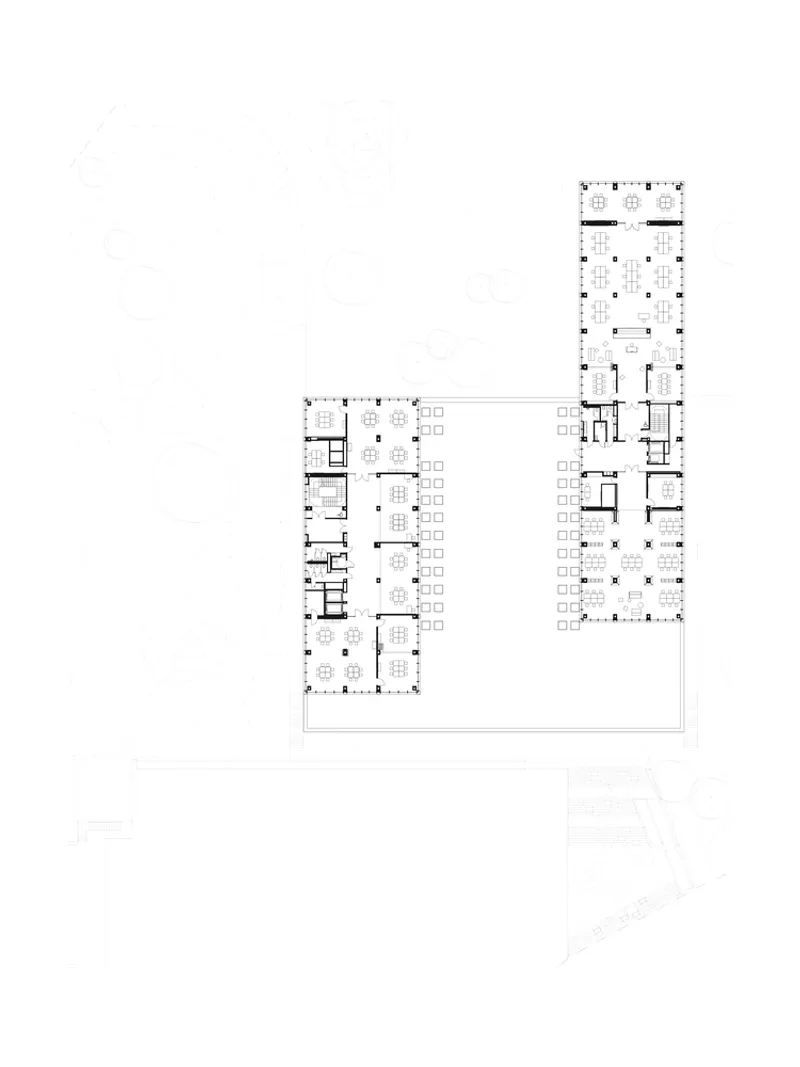
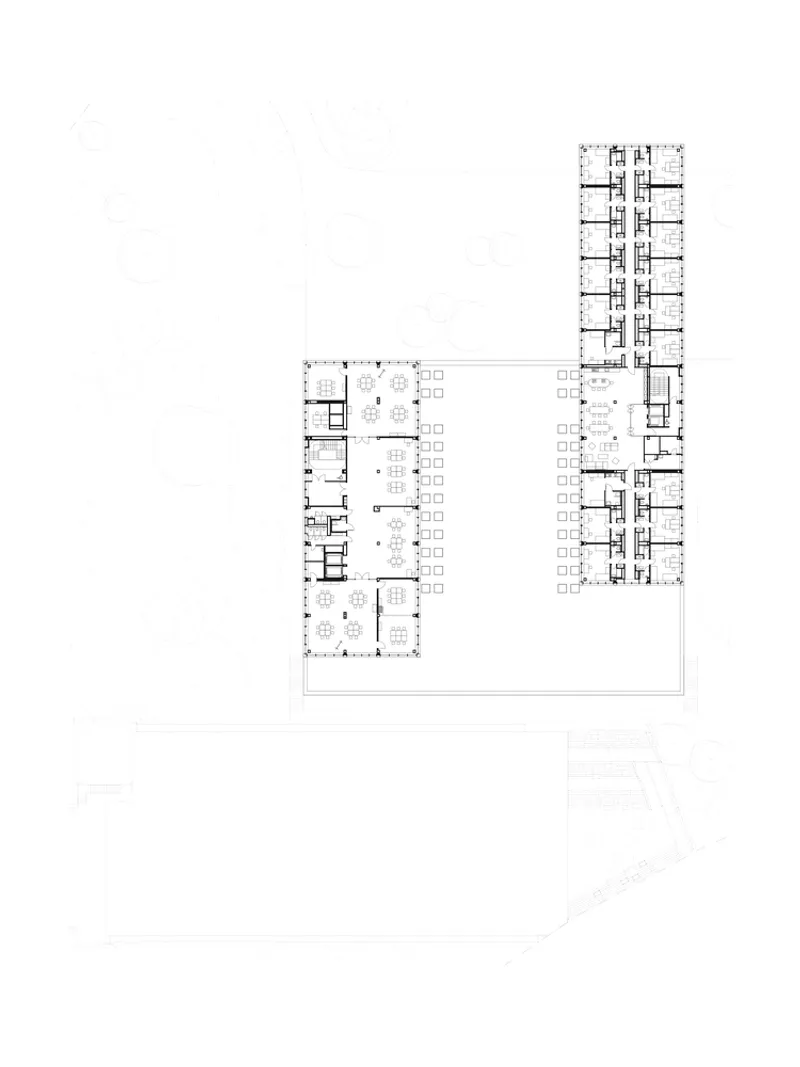
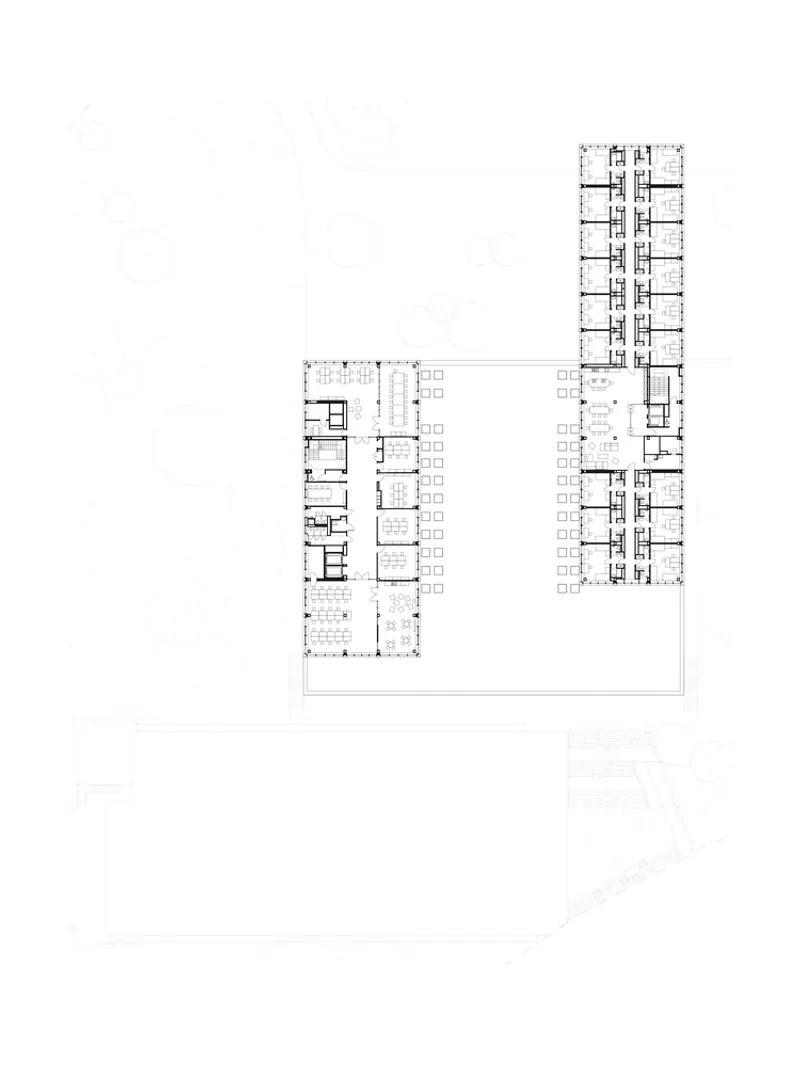
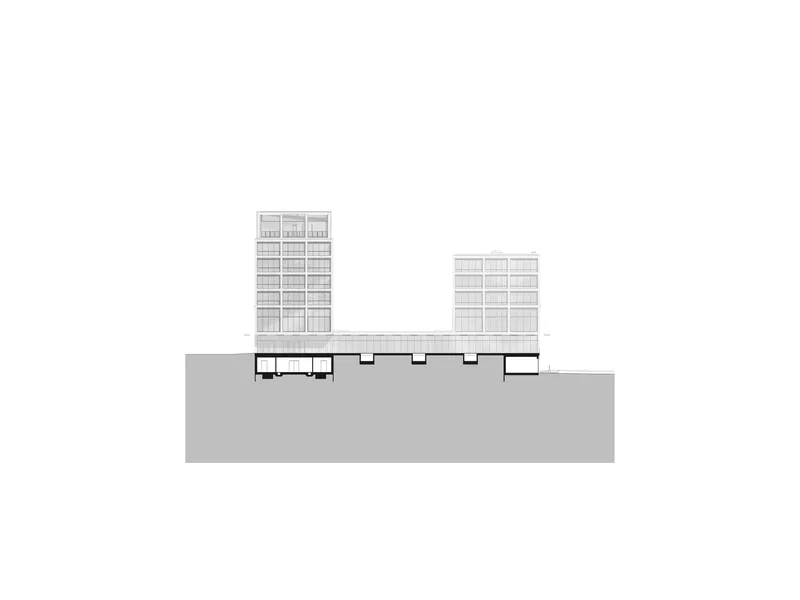
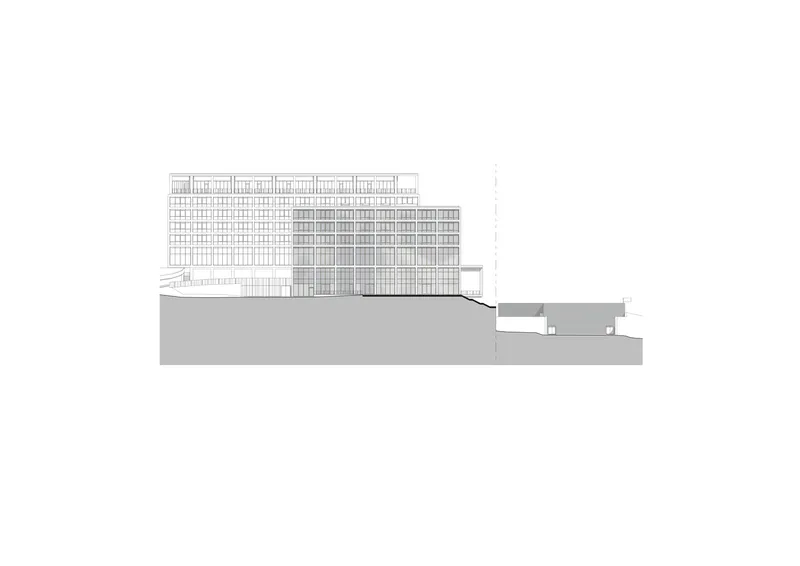
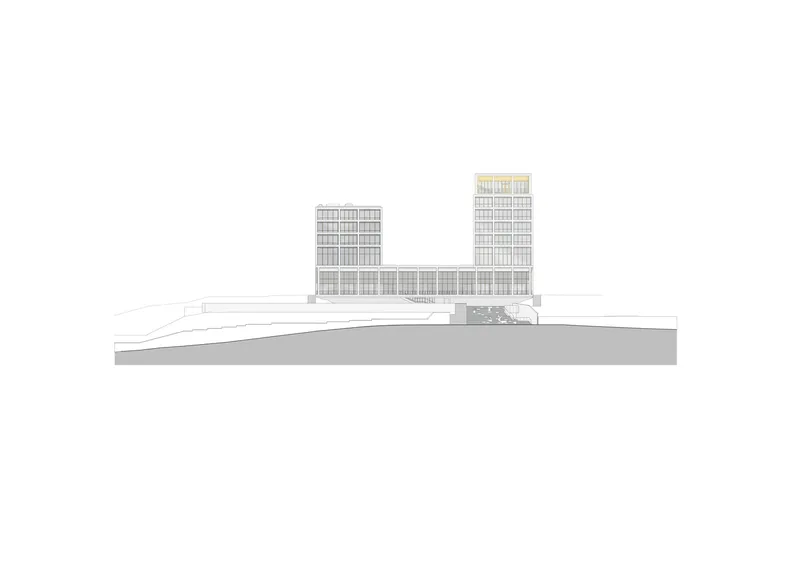
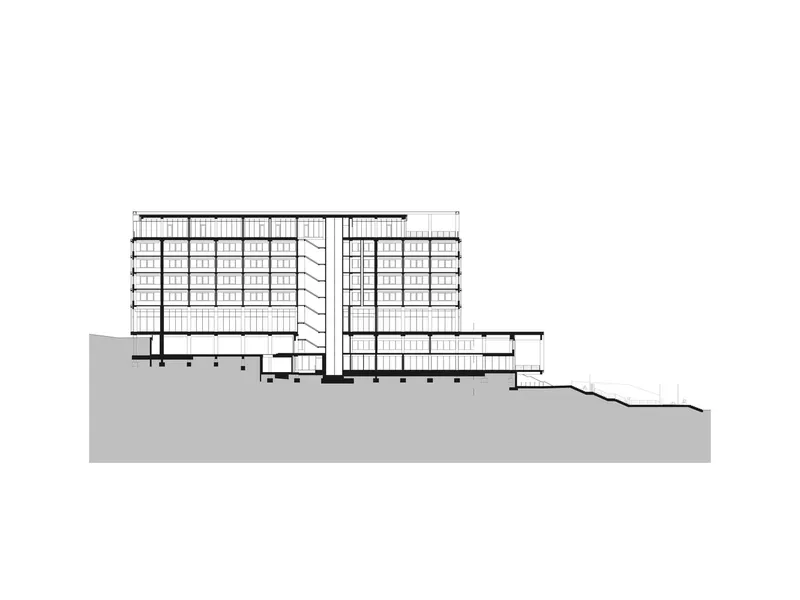
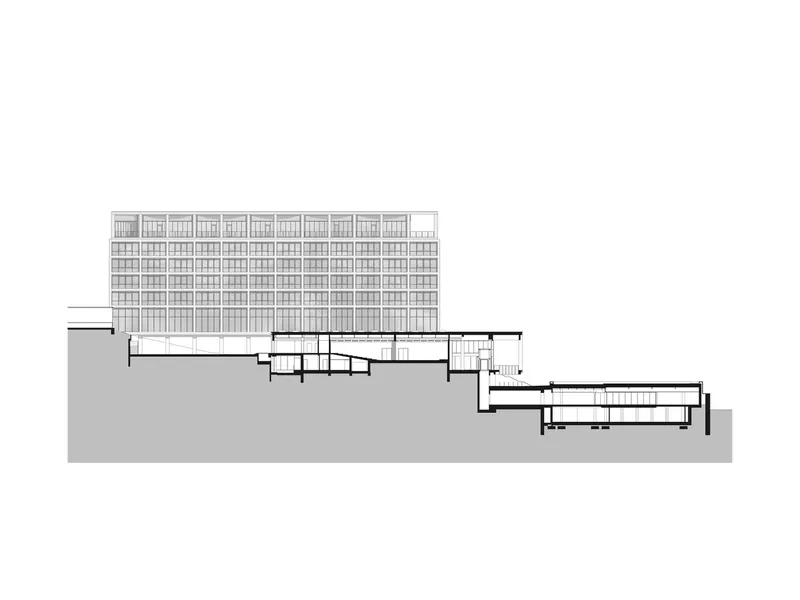
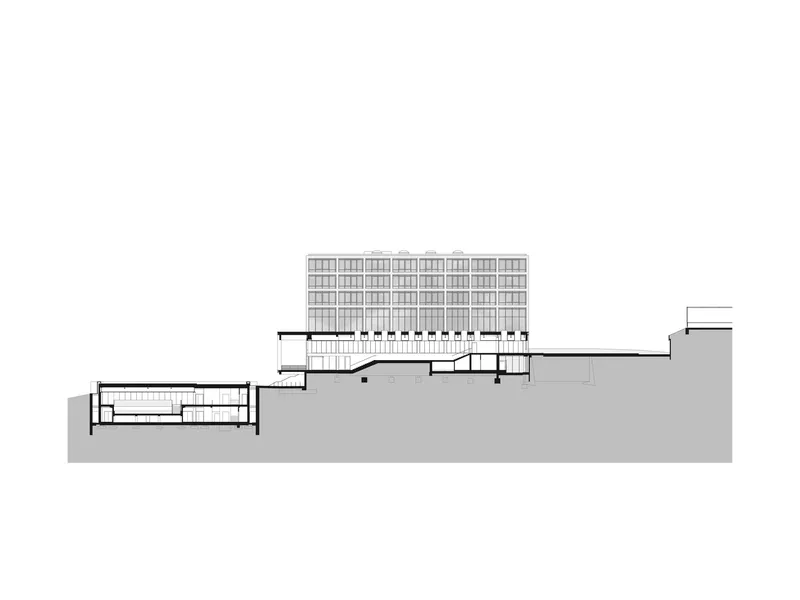
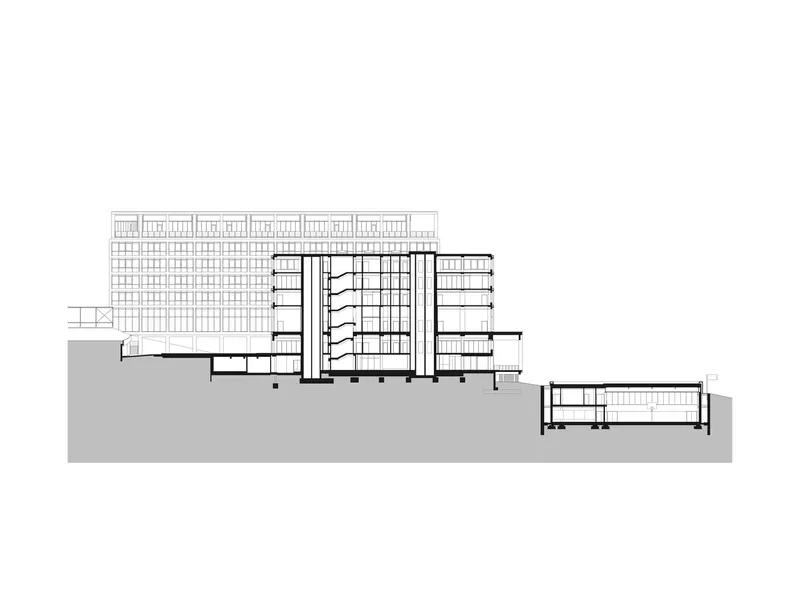
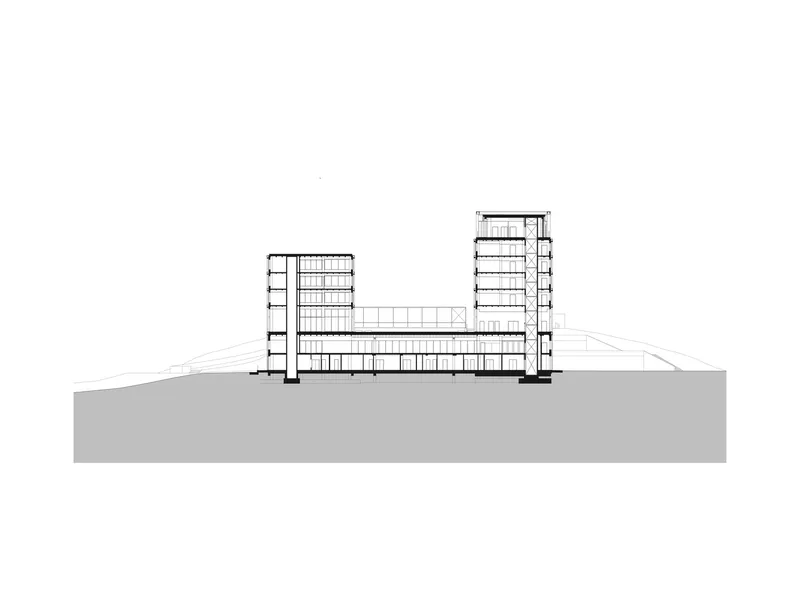
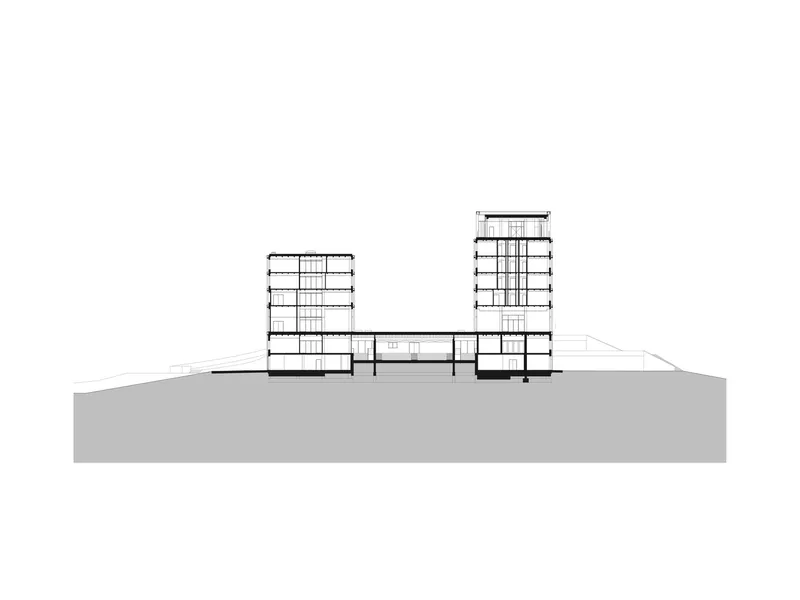
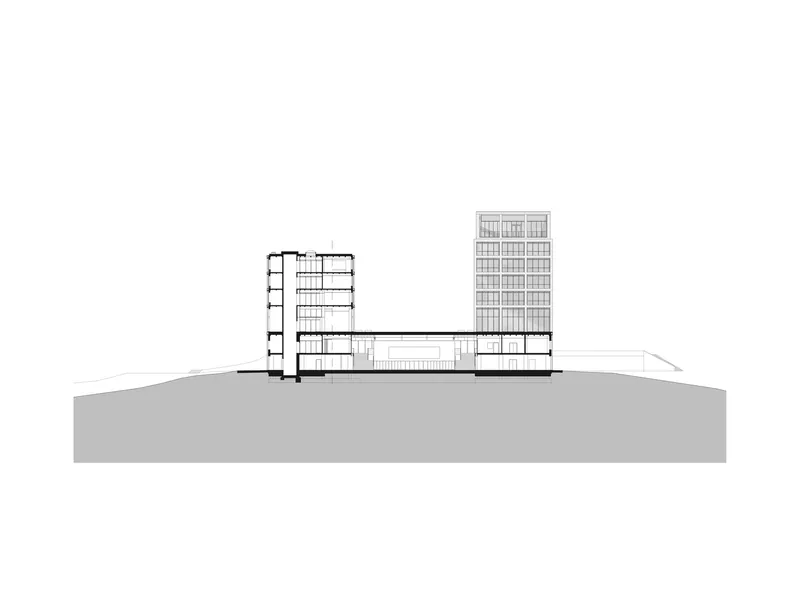
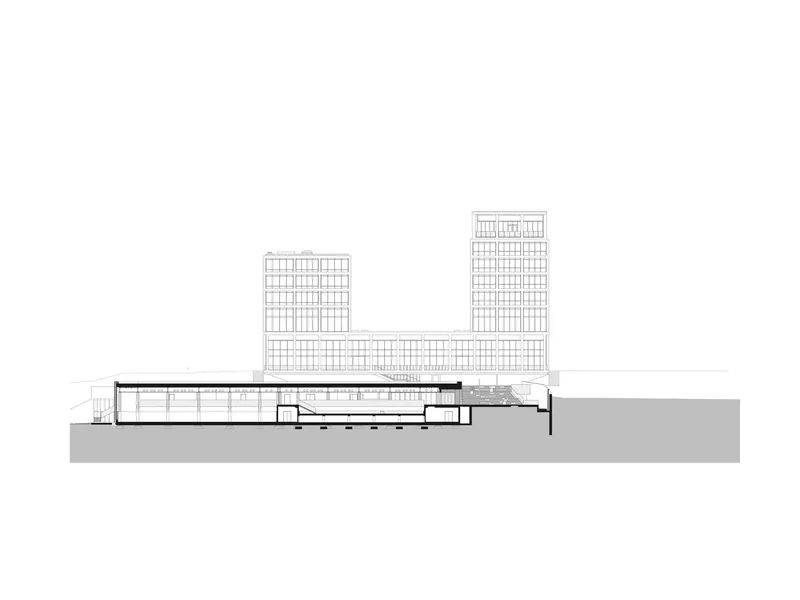
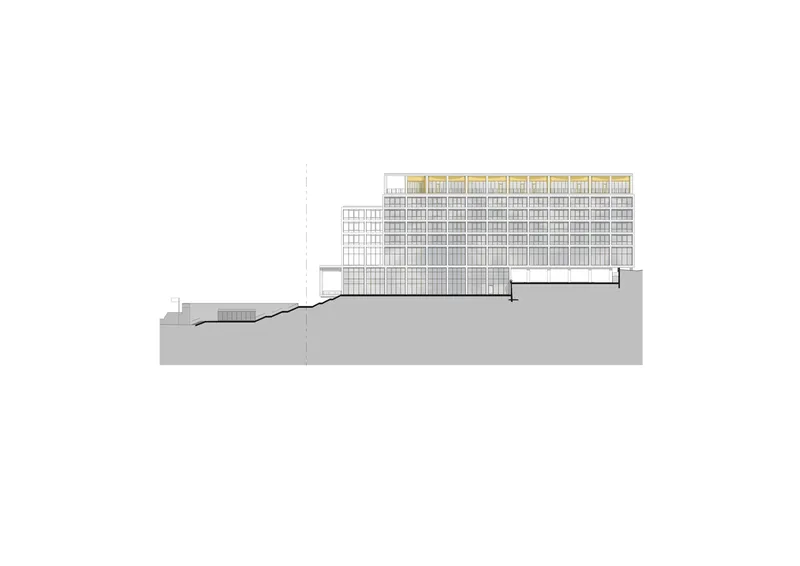
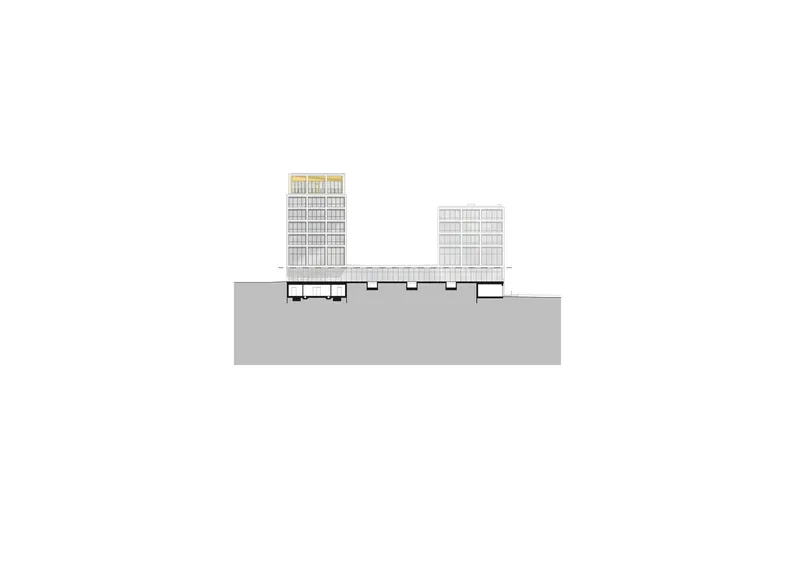
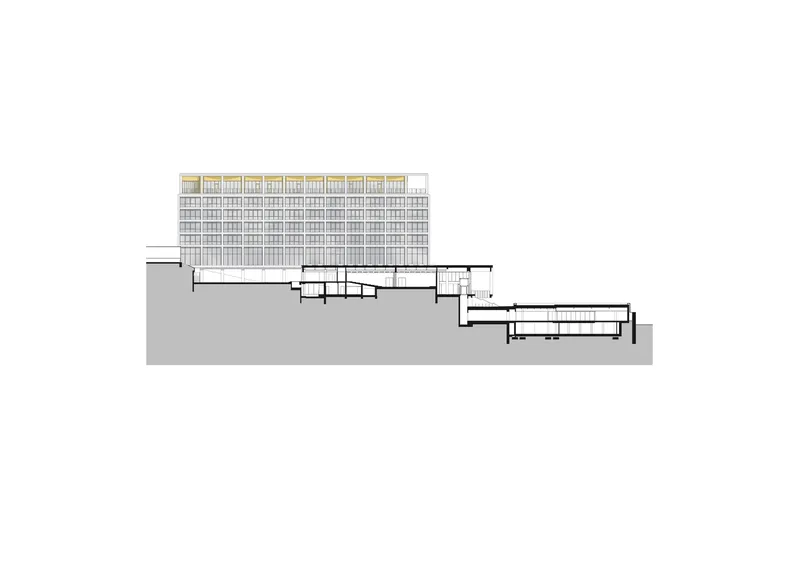
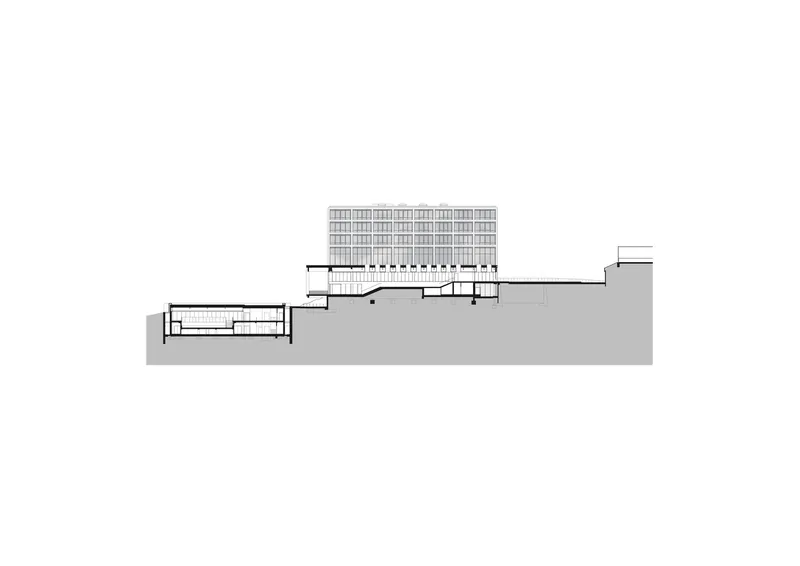
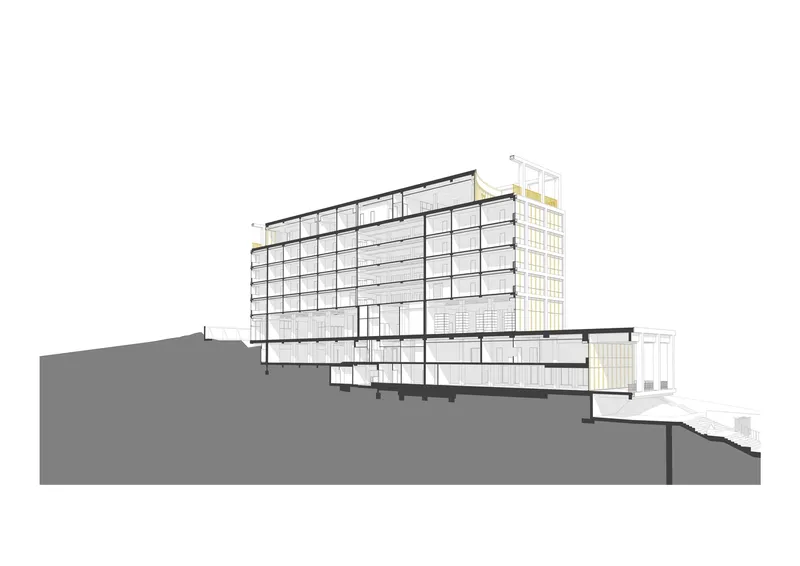
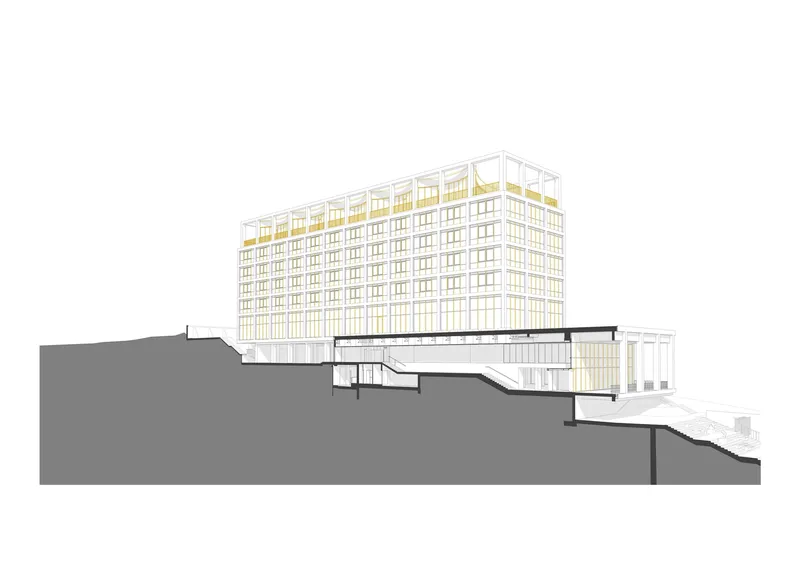
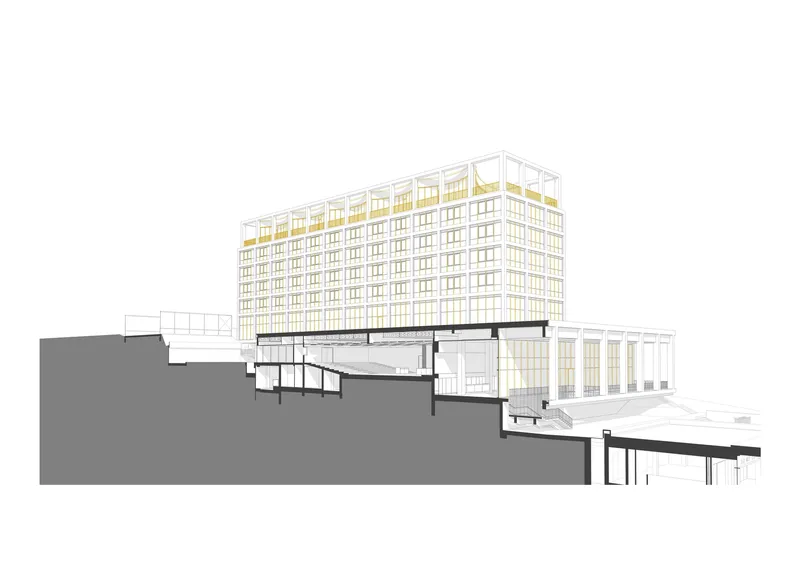
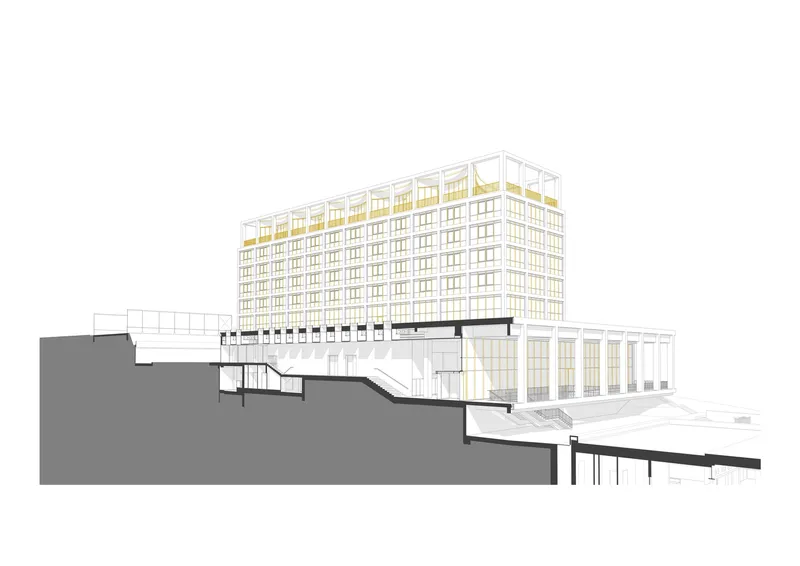
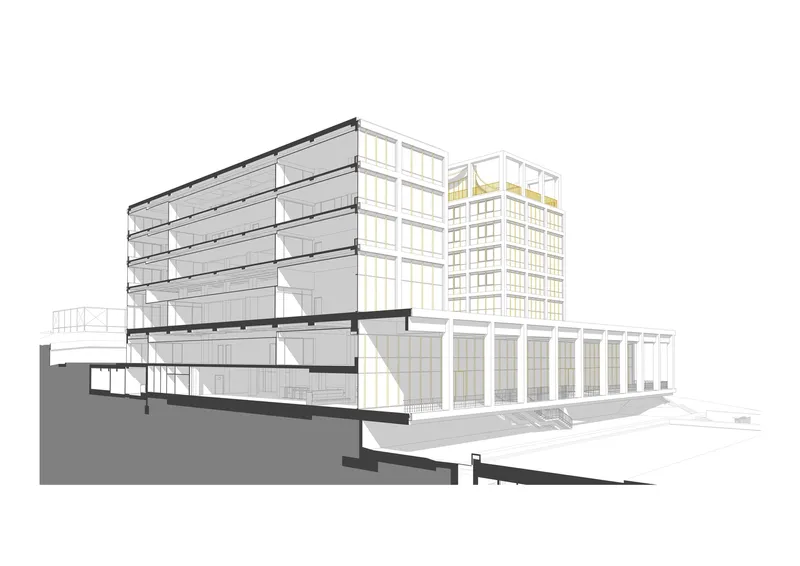
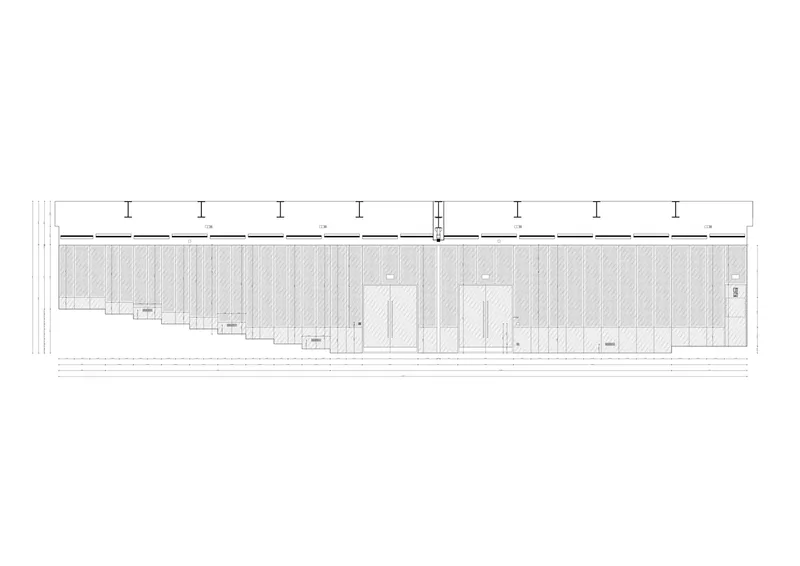
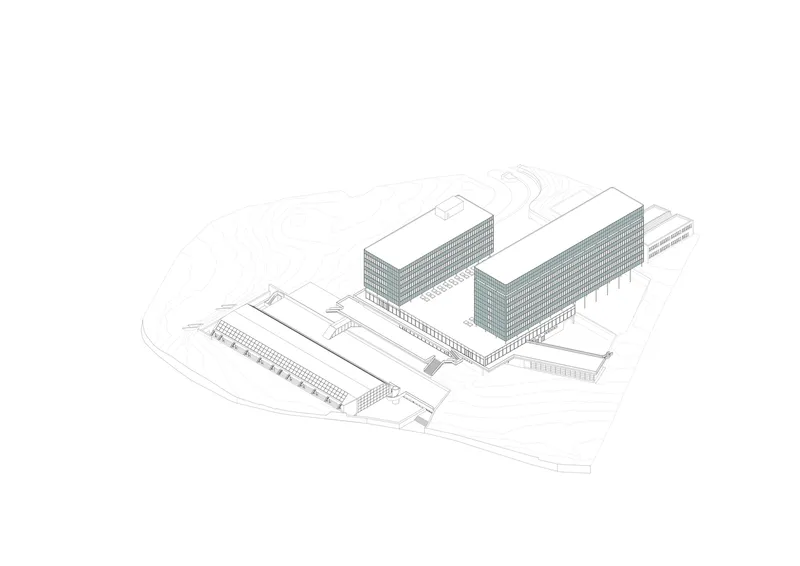
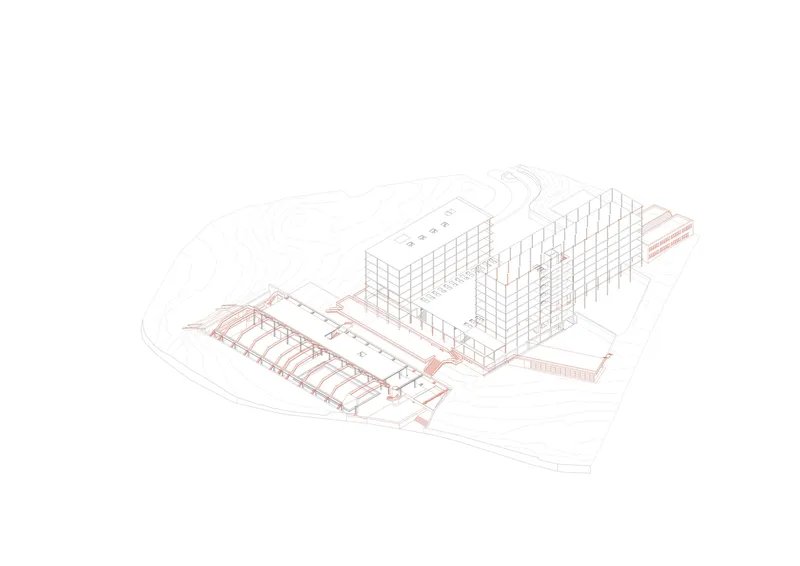
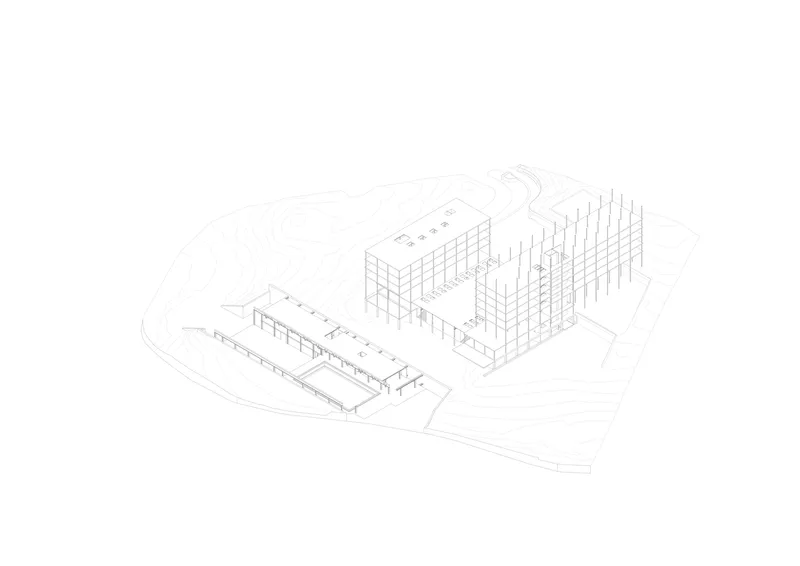
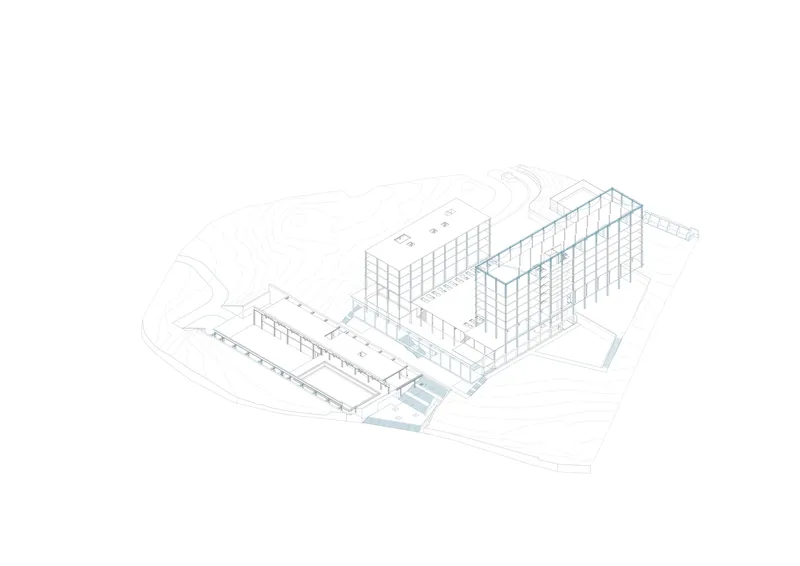
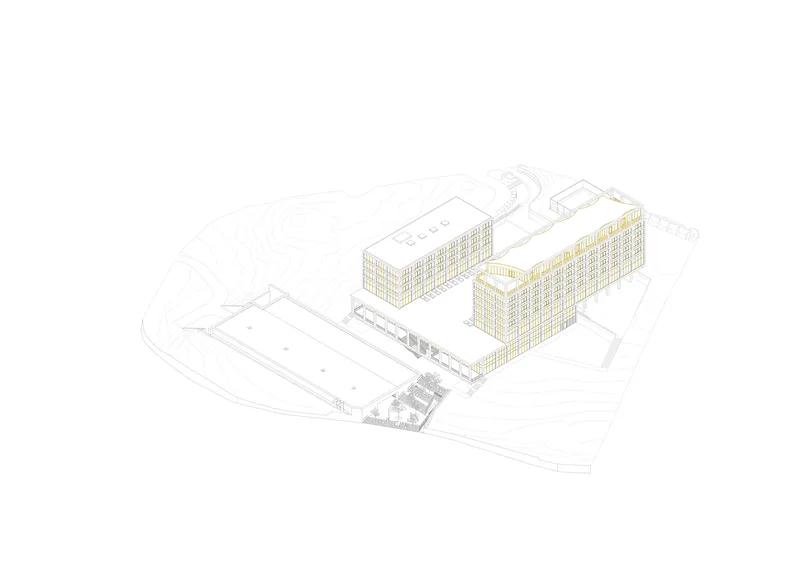
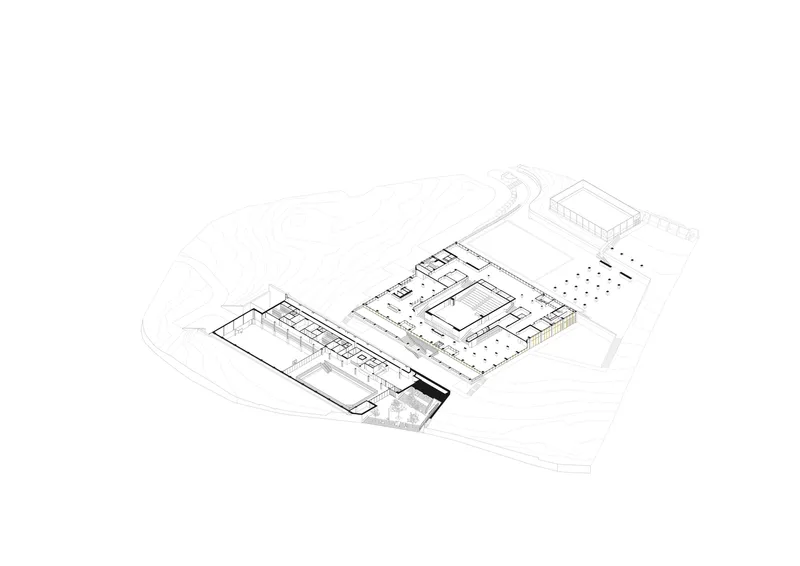
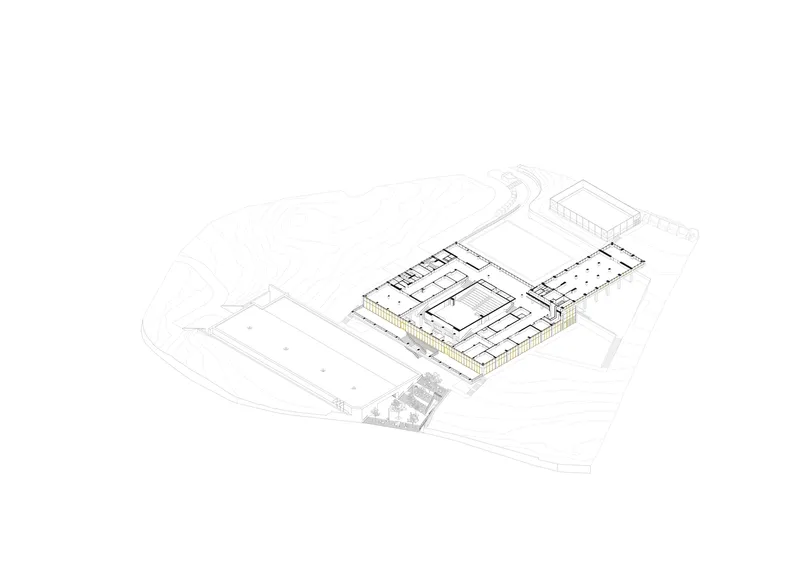
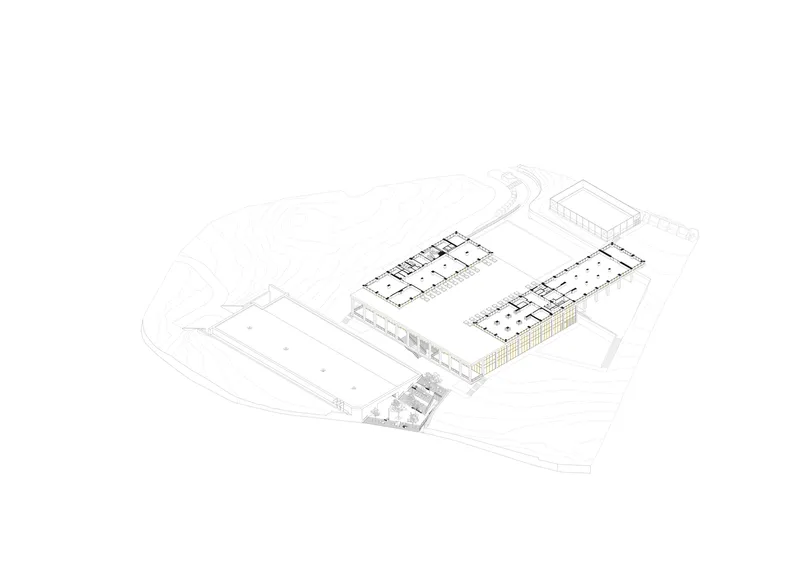
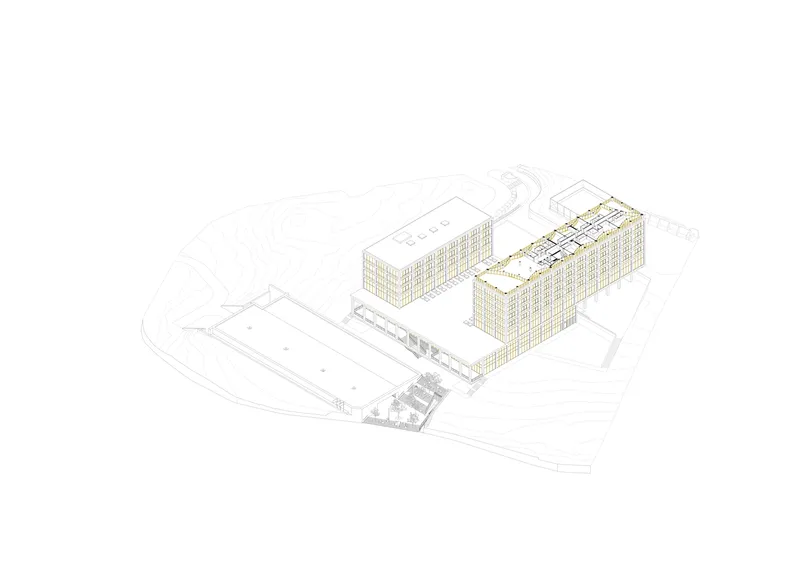
The drawings reveal the full ambition of the project. The site plan shows an L-shaped footprint wrapping courtyards and preserving existing landscape, while the floor plans demonstrate how PLANT stacks residential units in the tower wings above a shared podium of communal, academic, and athletic spaces. Section drawings are particularly instructive: the building steps down the hillside gradient, carving out subterranean parking and sports halls while maintaining visual connections to the tree canopy at every occupied level.
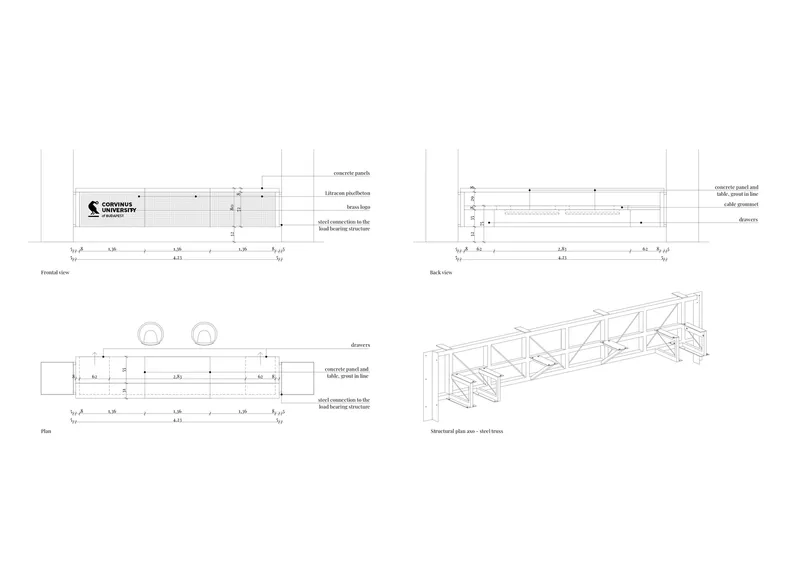
The axonometric studies isolate different systems: the red-line structural frame, the yellow residential volumes, the black ground-floor colonnade. Together they show a layered design methodology in which each component can be understood independently yet only makes full sense in combination. The technical section of the truss system confirms that the engineering is as carefully resolved as the spatial composition, with annotated steel connections supporting the long-span cantilevered terraces.
Why This Project Matters
University campuses built in the last decade tend to fall into two camps: the mega-institutional slab wrapped in a sustainability narrative, or the fragmented village of pavilions that never quite coheres. The Corvinus Gellért Campus avoids both traps. Its white structural grid provides legibility and civic presence while the terraced section and landscape integration give it the intimacy and variety of a hillside settlement. It is a building that works at the urban scale and at the human scale simultaneously.
PLANT – Atelier Peter Kis has produced a campus that takes its site seriously, not as a constraint to be overcome but as a collaborator. The rooftop basketball court, the canopy-level terraces, and the gallery walkways are not gimmicks; they are the logical consequences of designing with topography and climate rather than against them. For a discipline that too often treats sustainability as a checklist, this project offers a richer proposition: that the most sustainable architecture is the kind people actually want to inhabit.
Corvinus Gellért Campus by PLANT – Atelier Peter Kis, Budapest, Hungary. Photography by Balazs Turos and Zalan Peter Salat + Csaba Villanyi.
About the Studio
Share Your Own Work on uni.xyz
If projects like this are the kind of work you want to make, uni.xyz is a place to publish your own, find collaborators, and enter design competitions.




Popular Articles
Popular articles from the community


The Earth Pod: 3D Printed Homes for Resilient Refugee Communities
The Earth Pod reimagines refugee housing through 3D printed homes made from clay, combining resilience, self-sufficiency, and rapid shelter.

The Ocean Hive: Sustainable Architecture for a Self-Sufficient Civilization at Sea
The Ocean Hive imagines sustainable architecture at sea, where modular habitats, algae, wave power and ocean waste sustain a growing colony.

The Musturak Paradise: Senior Living Architecture for a Connected Future in Temara, Morocco
The Musturak Paradise reimagines senior living architecture in Temara via private homes, social spaces, culture, community, and shared care.

Lunar Spiral: Space Architecture Shaped by the Mathematics of the Universe
Lunar Spiral reimagines space architecture through Fibonacci geometry, lunar regolith, levitating habitats, and self-sustaining Moon living.
Similar Reads
You might also enjoy these articles


Hodi-Mandai Geram
Project Function: Preservation and revitalization of the Intangible heritage and socio-spatial identity of the Hodi by Housing, Cultural Memory Center, Sacred Grove, landscape, local tourism economy


Olio Towers: A Mid-Rise for Performers That Fuses Housing, Rehearsal, and Stage
Located blocks from Houston's Theater District, this modular tower stacks living units around a central performance atrium.

Oasis: Modular Green Housing Carved into Dhaka's Urban Fabric
A shortlisted Plugin Housing entry reclaims unauthorized settlements in Dhaka with stepped concrete volumes, green roofs, and ventilation-driven design.

Black Hole: A Floating Megastructure for the Post-Physical Era
Emiliano Mazzarotto envisions a spherical, self-scaling arena where e-sports, digital hotels, and holographic stadiums replace traditional public space.

Explore Educational Building Competitions
Discover active competitions in this discipline



Challenge to design public laboratory


Challenge to reimagine the Iron Throne


Photograph architecture without architects


Illustrate the lost glory of Angkor Wat - Render Challenge
Comments (0)
Please login or sign up to add comments
No comments yet. Be the first to comment!