

Sustainable CLT House Design in São Paulo: Piedade House by Nitsche Arquitetos
This article explores a sustainable and efficient CLT house design by Nitsche Arquitetos in São Paulo's mountainous countryside.


Introduction to CLT House Design in the Brazilian Countryside
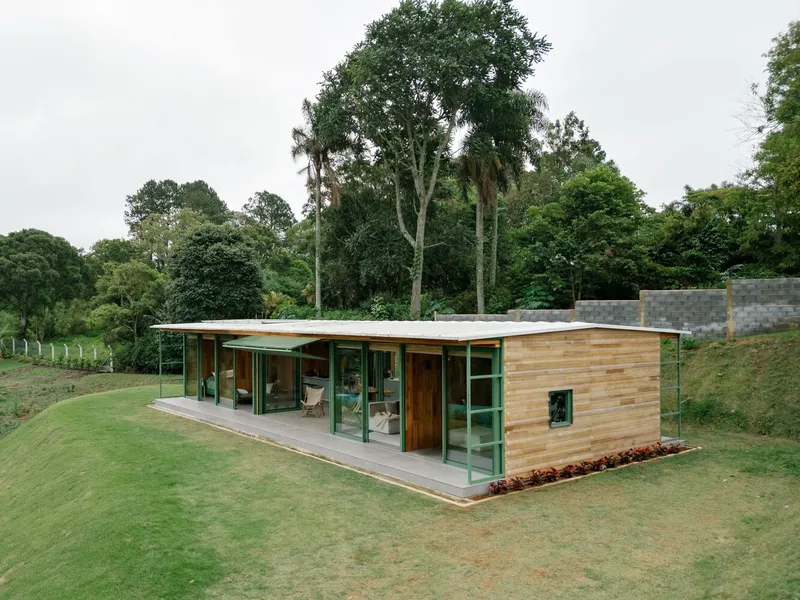
Piedade House, designed by Nitsche Arquitetos, is a refined example of CLT house design that harmoniously blends sustainable materials with efficient construction techniques. Located in the mountainous region of São Paulo's interior, the 140-square-meter home showcases how timber architecture can be adapted to meet climate-specific and client-driven demands without compromising on design integrity or environmental responsibility.
Functional Simplicity and Architectural Efficiency
At the core of the project is the architectural principle of functional simplicity. The house consists of two compact volumes that house all essential functions: bedrooms, bathrooms, kitchen, and living space. These two blocks are connected by a transparent-roofed central balcony, a transitional space designed to harness sunlight and provide shelter, especially crucial during colder winter months in the mountainous climate.
This spatial configuration is both programmatically effective and experientially rich, offering a sense of openness and continuity while maintaining thermal comfort and spatial privacy.
Embracing Cross-Laminated Timber for Rapid and Low-Impact Construction
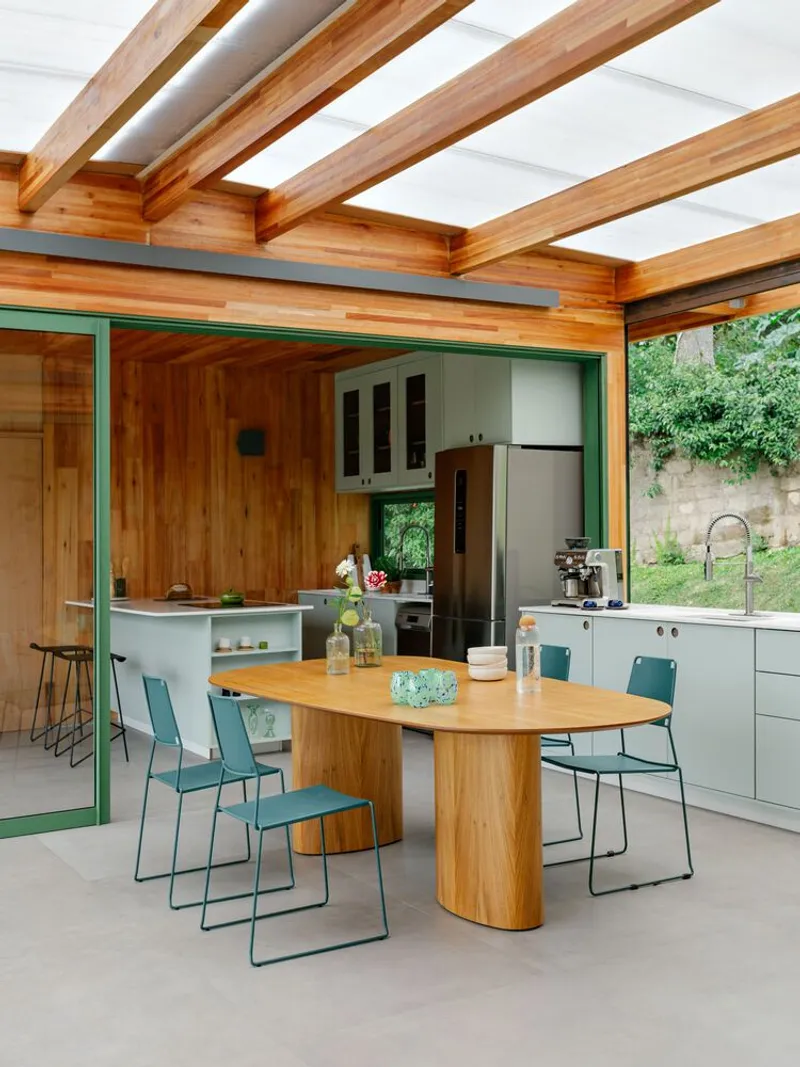
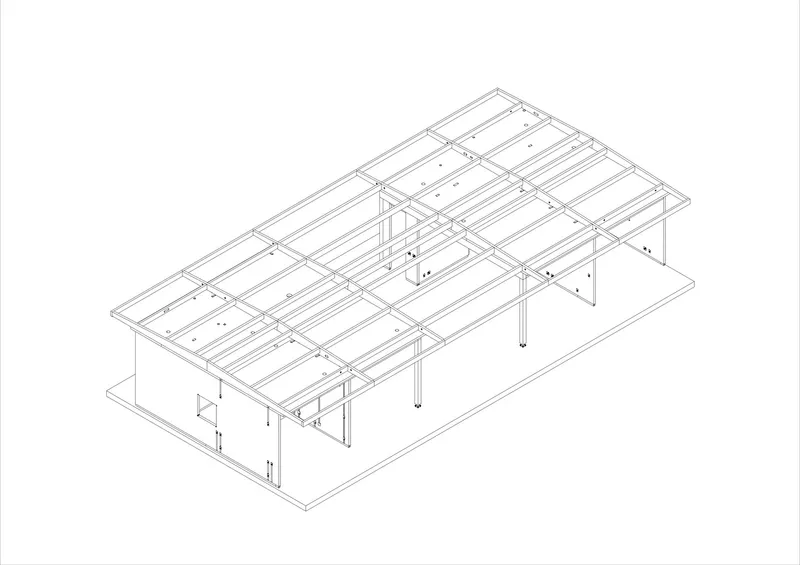
The highlight of the project is its use of cross-laminated timber (CLT)—a structural choice that allows for fast assembly, low carbon emissions, and aesthetic warmth. The entire structural frame of the house was assembled in under one week, demonstrating the time-saving advantage of prefabricated wood systems in residential construction.
CLT not only reduces the project's ecological footprint by storing carbon and using less energy than traditional materials like concrete or steel, but it also provides a tactile and visual richness to the interiors. The exposed timber panels reflect the project's sustainable ethos while creating a warm and inviting atmosphere.

Architectural Response to Climate and Light
The house’s translucent roofing plays a dual role. It shields the CLT panels from direct rain exposure, prolonging their durability, and simultaneously allows filtered daylight into the central balcony and overhanging eaves. This design move reduces the need for artificial lighting during the day and enhances passive solar gain, contributing to the home's overall energy efficiency.
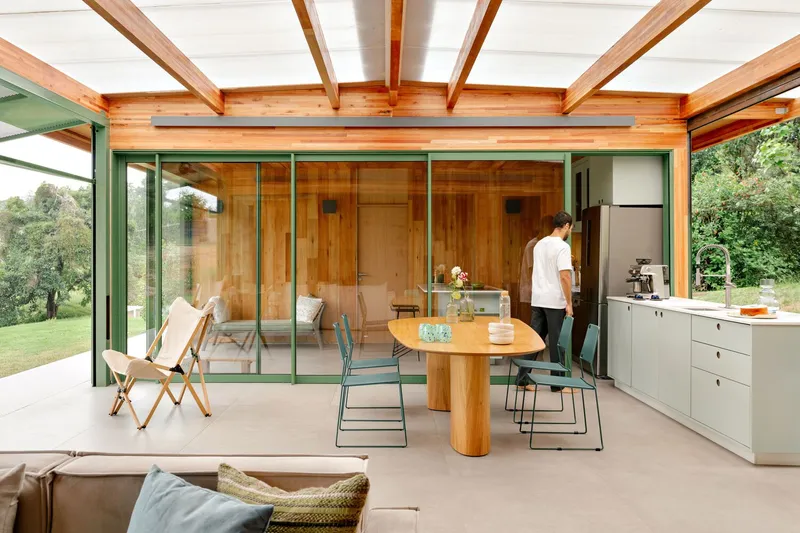

Such light-filtering strategies exemplify how CLT house design can go beyond structural logic to create poetic and comfortable living environments that are deeply in tune with natural cycles.
Balancing Sustainability and Design Innovation
Piedade House is a case study in how contemporary architectural design can be both budget-conscious and environmentally forward-thinking. The project’s modest footprint, use of renewable materials, and rapid assembly process offer a replicable model for rural and suburban housing in regions with similar environmental conditions.
By focusing on CLT house design, Nitsche Arquitetos has created a home that is both a shelter and a statement—one that invites future conversations about sustainable living, regional adaptation, and architectural simplicity.

A New Standard for Efficient Timber Homes
The Piedade House demonstrates how CLT house design can meet the evolving demands of residential architecture in a way that is fast, beautiful, and environmentally responsible. In doing so, it paves the way for a new standard in sustainable construction, offering inspiration for architects, developers, and homeowners looking to build smarter in both urban and rural contexts.


All Photographs are works of Arthur Duarte


Popular Articles
Popular articles from the community


Opera on the Sea: Driftwood Logic Shapes a Timber Opera House on Estonia's Coast
Trevor Orgill's opera house translates the entangled drift of floating timber into a civic building where wood, water, and music converge.
Temporary Home for Dogs: A Reversed Zoo Rethinks Animal Shelter Architecture
In Bucharest, a sinuous corridor and freed landscape flip the logic of containment, designing a shelter that works to make itself unnecessary.
Tsunami Convergenics: Turning Catastrophic Ocean Forces into Underwater Housing Infrastructure
A speculative underwater settlement off the coast of Onagawa, Japan, treats tsunamis and typhoons as energy sources rather than threats.
Faces of the Soviet Avant-Garde: Turning Moscow's Street Names into an Open-Air Museum
A network of sculptural installations across a Moscow residential district transforms forgotten architect names into spatial encounters with cultural memor

Similar Reads
You might also enjoy these articles

FAMM Arquitectura Organizes Ten Villas Around Courtyards and Jungle in Nosara, Costa Rica
El Molino pairs two elongated volumes with deep overhangs and timber louvers to build a compact coastal community five minutes from the beach.
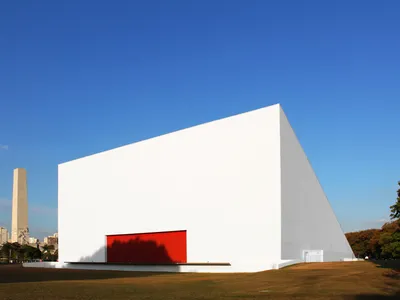
Oscar Niemeyer's Ibirapuera Park Pavilions Define São Paulo's Cultural Identity in Concrete and Curve
A constellation of modernist volumes set within São Paulo's most important urban park, conceived for the city's 400th anniversary in 1954.
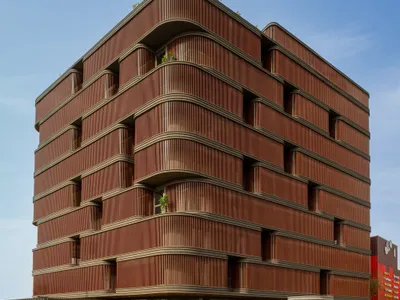
Sanjay Puri Architects Wraps a Jaipur Office Tower in Capsule-Shaped Green Buffers
A nine-level climate-responsive workplace near Jaipur Airport uses stacked planter terraces and aluminium screens to fight 40°C heat.
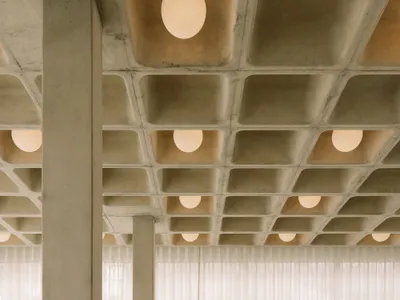
RHO Converts a Berlin Spree-Side Industrial Courtyard into Enkime's 1,000 m² Agency Headquarters
A social media agency's new home in Charlottenburg trades glossy branding for concrete waffle ceilings, glazed tile, and sheer curtains.

Explore Architecture Competitions
Discover active competitions in this discipline

Challenge to reimagine the Iron Throne

Photograph architecture without architects

Illustrate the lost glory of Angkor Wat - Render Challenge

Design challenge to reuse E-waste
Comments (0)
Please login or sign up to add comments
No comments yet. Be the first to comment!