
Sustainable Community Housing Design: Innovating with Tradition at Asase Yaa Village
This article delves into Asase Yaa Village, showcasing its role as a pioneering sustainable community housing design in Ghana.


Introduction to Asase Yaa Village
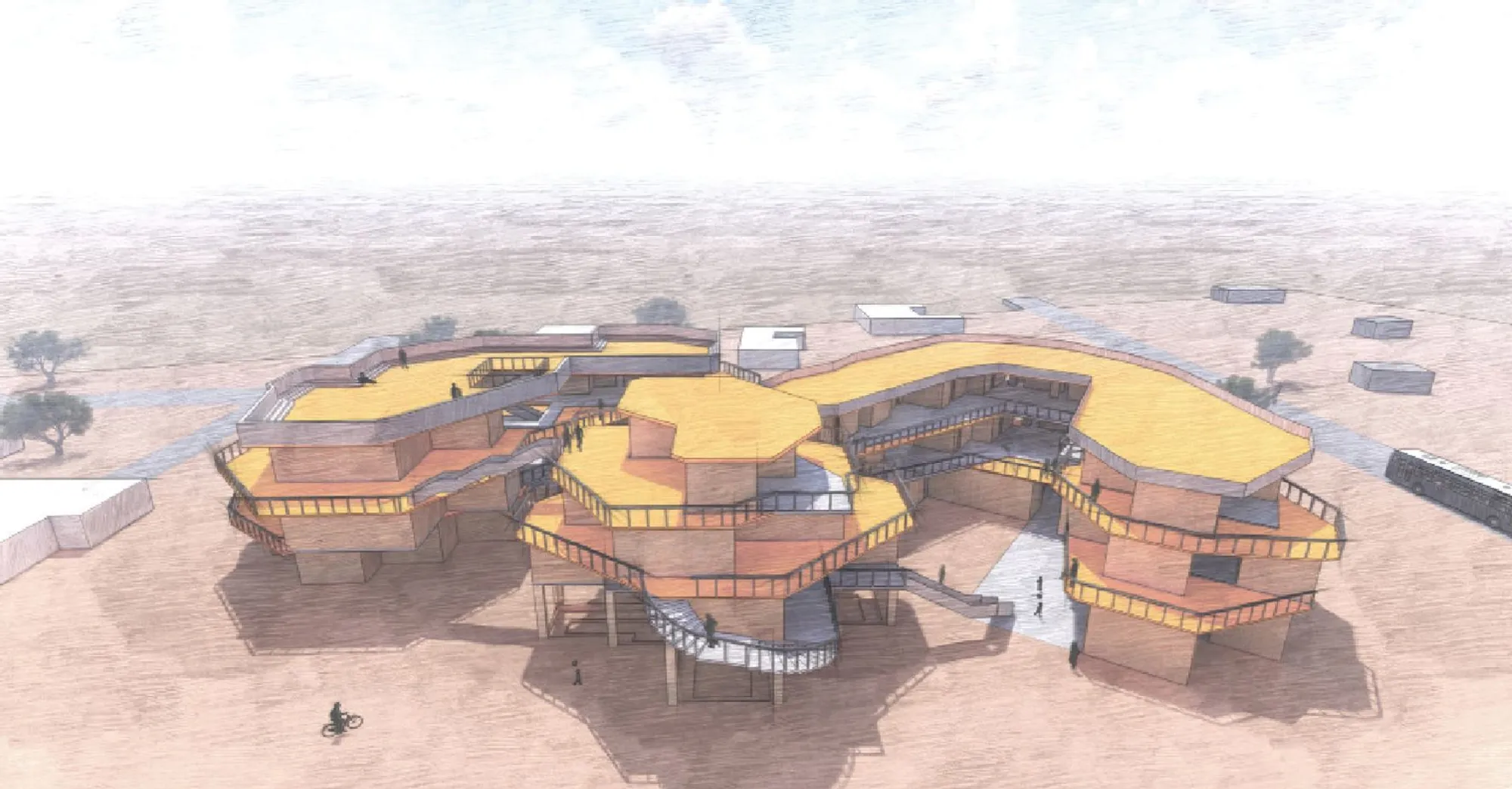
In the heart of Bolgatanga, Ghana, a revolutionary project, Asase Yaa Village, emerges as a beacon of sustainable community housing design. This project is not just a mere construction; it is a revival, an innovation, and a cultural homage. The Earth Made Housing Competition has brought forward a vision crafted by the collaborative genius of Tychelle Causey, Giovanni Montrel, and Jaisha Victorian, who have embedded three core values into the design: utilization of vernacular architecture, expansion of earth brick design, and creation of spaces for cultural traditions.
The Pillars of Design and Methodology
Vernacular Architecture and Cultural Traditions
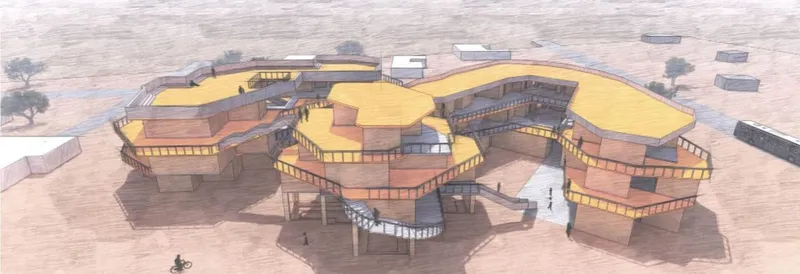
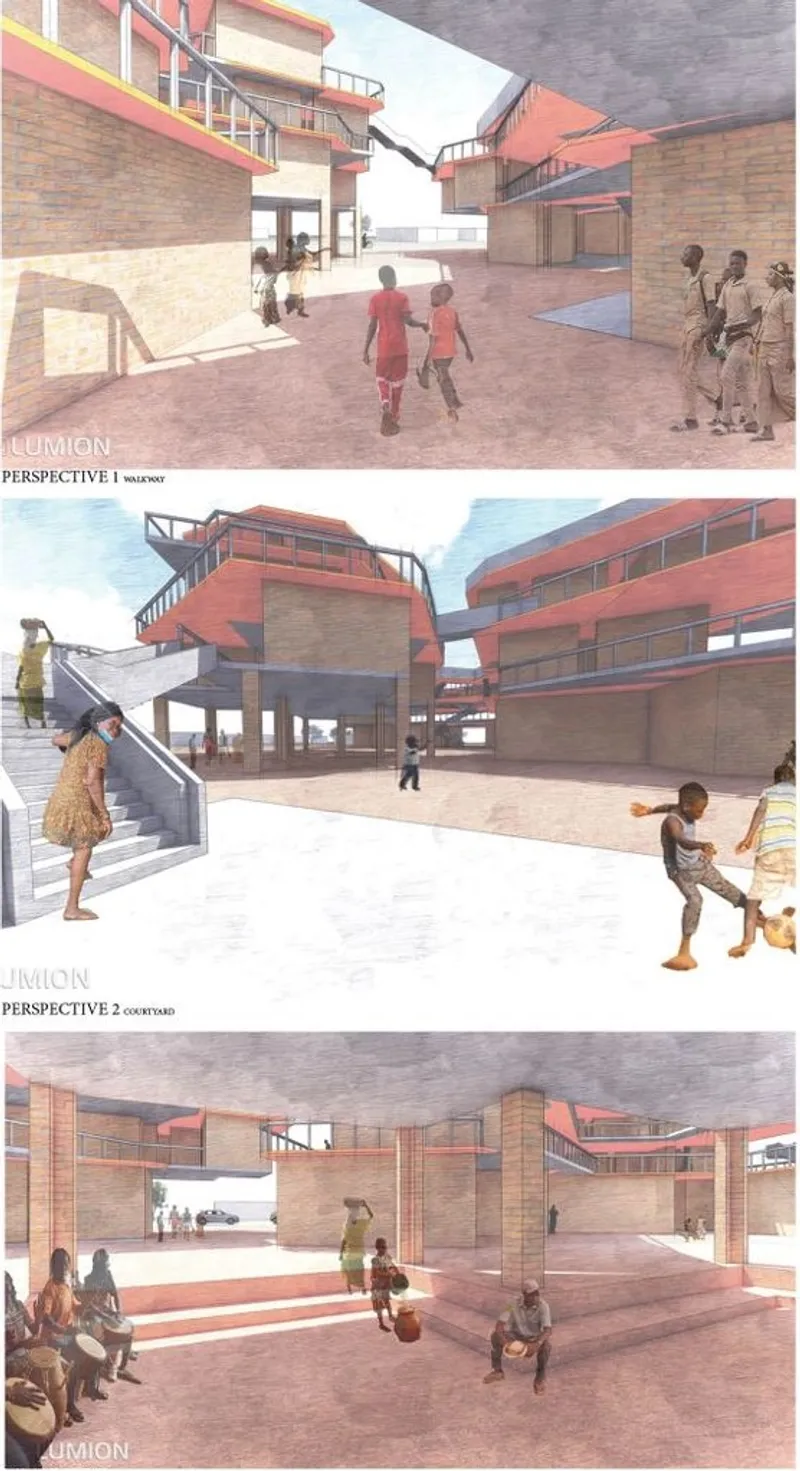
The design of Asase Yaa Village by BWA draws its inspiration from the rich tapestry of family life, culture, and traditions intrinsic to Bolgatanga. The architecture encloses the local community's traditions and culture, standing near a fair trade market akin to Bolga Fair Trade, aiming to alleviate poverty through crafts.
Innovating Earth Brick Design
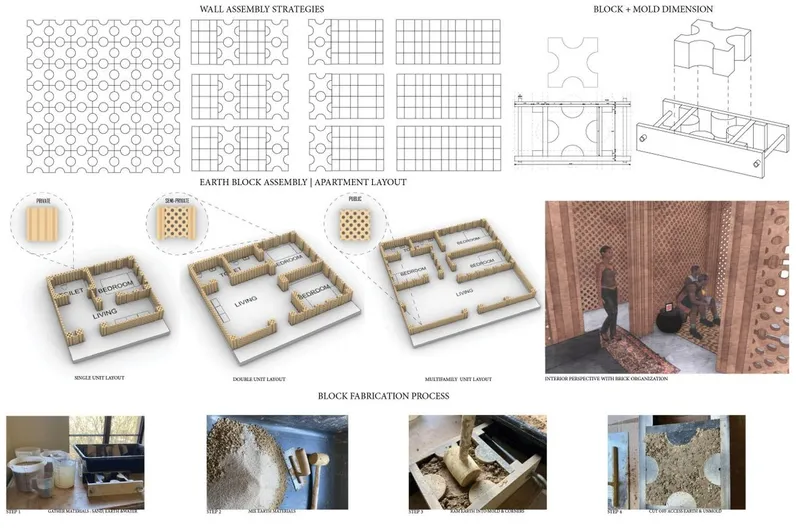
Materiality plays a pivotal role, with the earth block design aiming for practical durability while allowing airflow and natural lighting. A unique combination of earth, water, and fibrous materials like sand, rose petals, coconut husk, and pine needles have been experimented with to enhance the brick's robustness.
Community-Centric Spaces
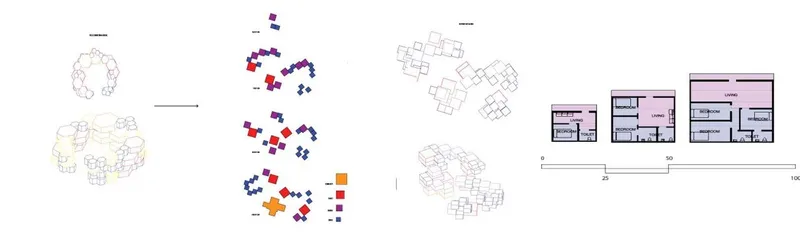
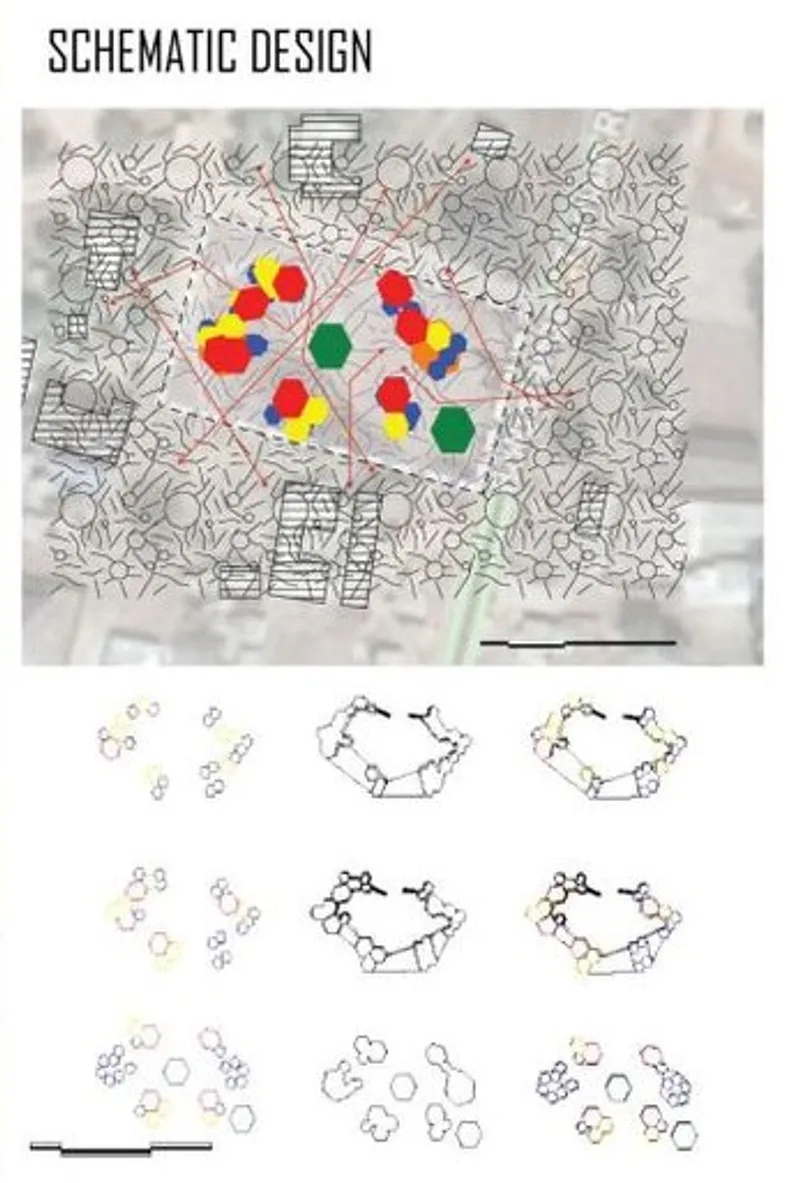
Site organization and building circulation are tailored for community engagement, featuring spaces for drum circles, weaving, and other traditional practices. The housing types—single, double, and family—are designed considering the extended family dynamics prevalent in Africa, contrasting modern Western homes.
A Focus on Sustainability and Practicality
Earth Fabrication Process
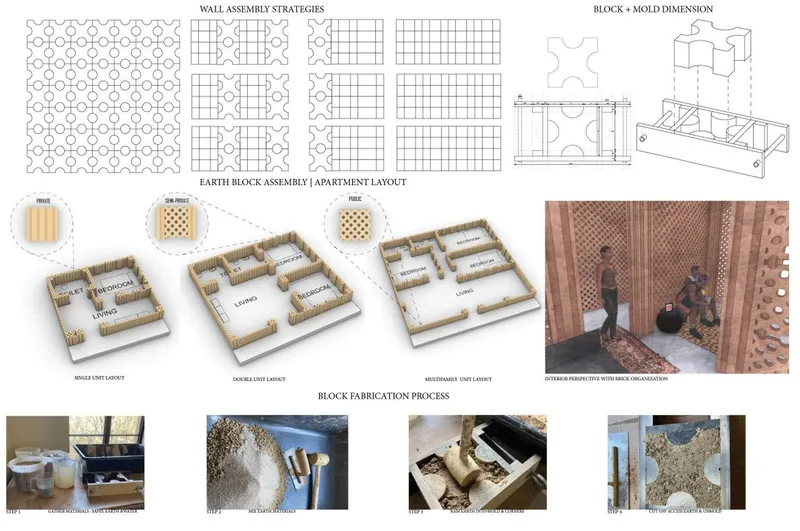
The fabrication process of the earth block is a testament to sustainable building techniques. It presents a multi-faceted application, from structural support to air fluidity and privacy levels dictated by brick porosity.
Assembly and Layout
The brick's design is cleverly integrated into the building's layout, ensuring that each apartment—be it a single unit, a double unit, or a multifamily unit—has its own distinct level of privacy and communal space, as depicted in the detailed renderings and drawings.
The Architectural Blueprint
Site Plans and Sections
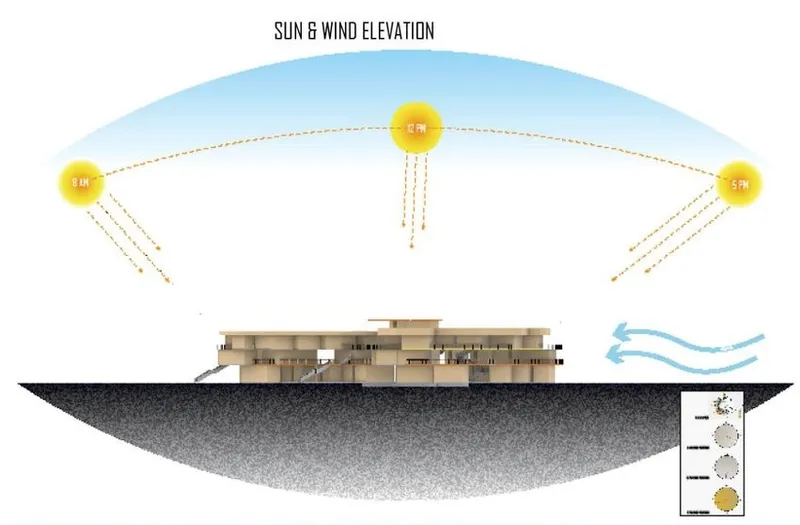
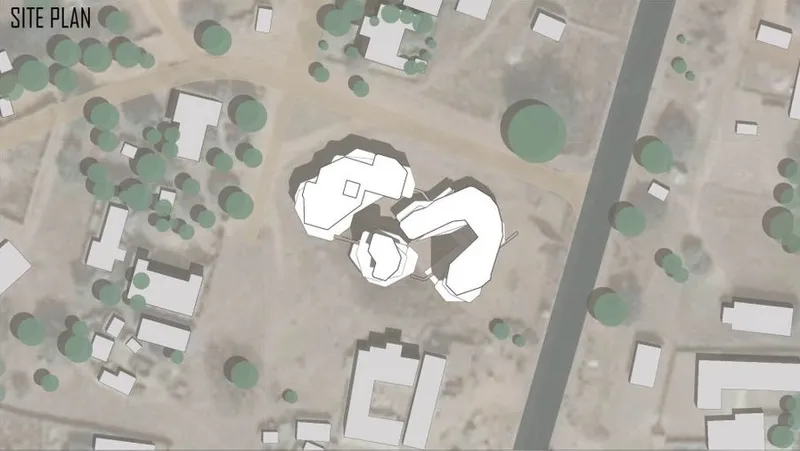
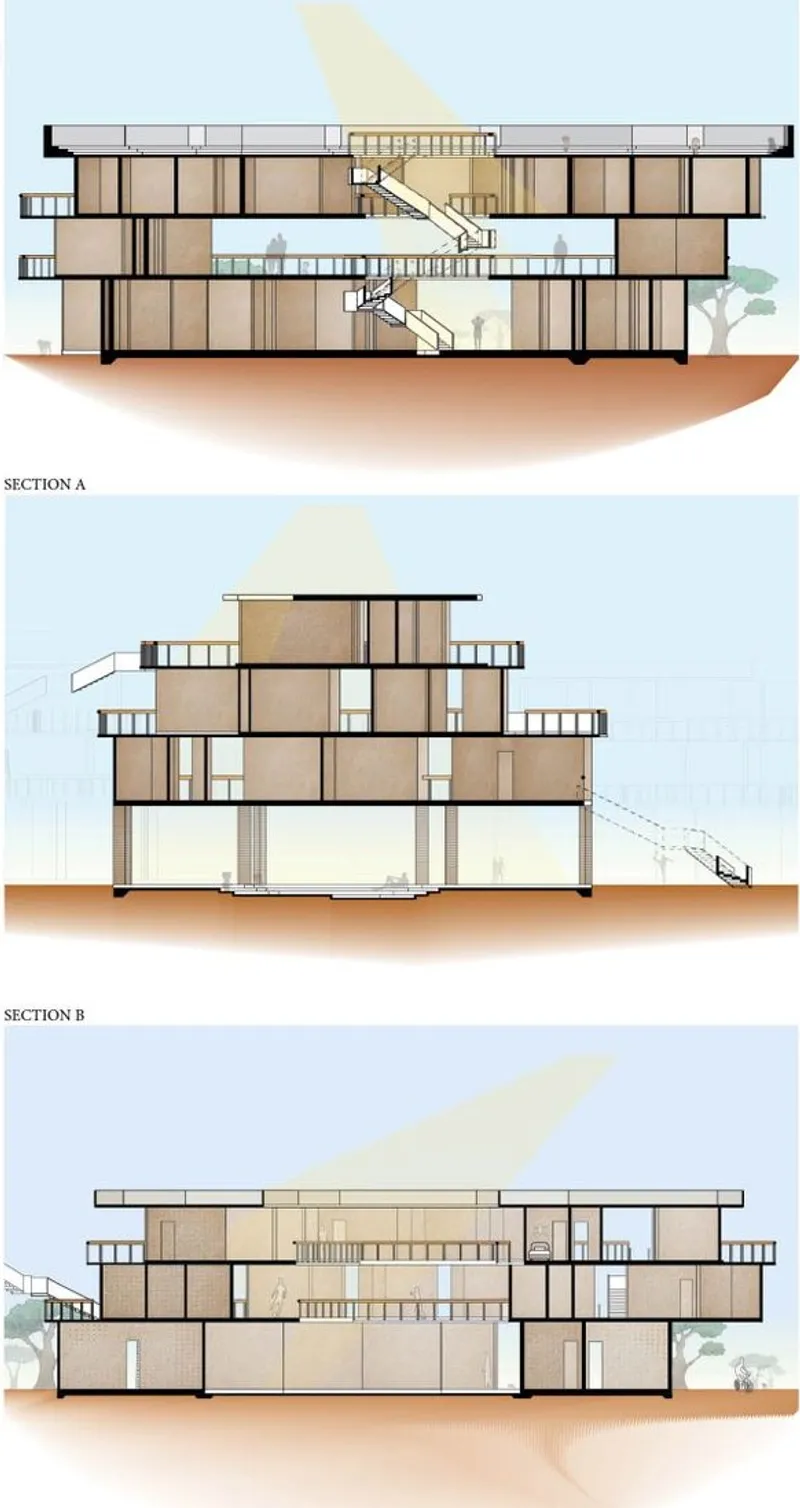
The meticulous site plans and sectional drawings reveal the intricate details of the architectural vision, showcasing the strategic placement of buildings to optimize natural resources like sun and wind for lighting and ventilation.
Wall Assembly and Structural Integrity
Wall assembly strategies highlight the innovative approach to construction, ensuring that the structural integrity is maintained without compromising on the cultural aesthetic.
Asase Yaa Village is more than a housing complex; it's a model for future sustainable community housing design. It merges traditional practices with innovative construction techniques to create a living space that is both environmentally friendly and culturally rich. This project sets a precedent for architects, designers, and communities around the world to follow, showcasing that sustainability and tradition can go hand in hand in modern architecture.




Popular Articles
Popular articles from the community


Co-life: Sustainable Architecture for Age-Friendly Community Living
Co-life reimagines sustainable architecture for seniors through courtyards, rammed earth, shared gardens, and spaces designed for belonging.

The Ocean Hive: Sustainable Architecture for a Self-Sufficient Civilization at Sea
The Ocean Hive imagines sustainable architecture at sea, where modular habitats, algae, wave power and ocean waste sustain a growing colony.

Play: Fragments of Their World
Familiar architecture becomes modular playground design, creating safe spaces where displaced children can learn, connect, imagine and play.

Co-Life: Senior Housing Design That Reconnects Older Adults With the City
Co-Life reimagines senior housing design through healing gardens, shared streets, workshops, and a sustainable community across generations.


Similar Reads
You might also enjoy these articles

Day and Night Park: A Time-Based Urban Newsstand in Beijing
A temporary urban newsstand in Beijing blending travel, light, and reading through poetic colors, compact form, and community-focused design.

Modernist Patio Renovation in El Masnou, Barcelona by Oliver Segura Arquitectura + Cebrià Arquitectura
Modernist patio renovation blending tradition and innovation with a movable pool, leveled floors, and Catalan materials in El Masnou.

Alto Residencial Coop: Cooperative Housing Development in Santiago de Compostela by Carbajo Barrios Arquitectos
A linear cooperative housing complex blending white volumes and perforated metal façades, enhancing community living, natural light, privacy, and urban integration.
Vil Genis School by BPA ARCHITECTURE – Massy, France
Vil Genis School in Massy, France, features sustainable design, south-facing classrooms, community integration, accessible spaces, and modern educational architecture.

Explore Housing Competitions
Discover active competitions in this discipline



Challenge to reimagine the Iron Throne


Photograph architecture without architects


Illustrate the lost glory of Angkor Wat - Render Challenge


Design challenge to reuse E-waste
Comments (0)
Please login or sign up to add comments
No comments yet. Be the first to comment!