

Minoram: A Waldorf School in Australia Shaped by Curves, Color and Filtered Light
A shortlisted Experiential entry where lobed roofs, perforated canopies and a planted courtyard turn light and shadow into learning tools.


Most school buildings treat daylight as a utility, something to maximise and then control with blinds. Minoram treats it as a teacher. This proposal for a Waldorf school in Australia is built around a single sustained idea: that the interplay of light and shadow, inside and outside the building, can set the emotional temperature of learning. Perforated roofs, a circular sky opening and a rippling timber ceiling all work toward an atmosphere calm enough for focus and loose enough for invention.
Designed by Hani Mansurnejad, Reza Shahriari and Arad Kabiri, the project was shortlisted in the Experiential competition on uni.xyz. The team frames the campus as a place for both academic achievement and personal growth, with collaborative learning areas, flexible classrooms and courtyards meant to cultivate the soft skills that Waldorf education prizes. What makes the entry worth a closer look is how consistently that ambition is translated into form, colour and light rather than left as a statement of intent.
A Round Opening to the Sky at the Heart of the Plan

The circular planted courtyard is the project's thesis in miniature. A large tree, palms, a clipped hedge and a single boulder sit beneath a round roof opening, so the sky arrives as a defined disc rather than an open field. The effect is closer to an atrium than a playground: a contained garden where shade shifts across the ground through the day and gives children a readable, living clock.
Choosing a circle here matters. It has no front and no back, which suits a pedagogy that resists rigid hierarchy, and it sets up the curved geometry that the rest of the building picks up and extends.
Soft Thresholds From Lobby to Sand Play


The lobby avoids the institutional reception desk. Curved plywood chairs, round woven pendant lamps and a planted curved counter give the entry the warmth of a domestic room, while a timber staircase rising behind it signals vertical movement through the school without making a monument of it. Materials stay tactile and natural, which keeps the scale friendly to younger users.
Outside, the covered sand play area shows the light strategy at its most literal. A perforated white roof breaks the sun into dappled patterns over a round planter and timber play structures. In a climate as bright as Australia's, this is a sensible move: children can play outdoors in filtered shade, and the shifting pattern on the sand becomes part of the game.
A Rippling Timber Ceiling Over the Classroom

The classroom is where the design's sensory agenda feels most considered. A wavy, layered timber ceiling floats above blue tables and wooden chairs, framed by orange columns and glass walls. The undulating soffit softens the box of the room and catches daylight unevenly, so the space reads differently from morning to afternoon.
The colour choices are bold but disciplined. Orange structure and blue furniture against warm timber create a clear palette that young students can read, and the glass walls keep the courtyards and gardens in constant view, supporting the team's aim of integrating learning with the surrounding environment.
The Roof as a Shaded Social Deck

Rather than surrender the roof to services, the designers turn it into a terrace. Tall round tables and black mesh stools sit beneath another perforated canopy, with palms visible beyond a yellow parapet. It is a space for older students, teachers or informal gatherings, and it extends the school's collaborative areas into the open air while keeping the same dappled shade that defines the ground-level spaces.
Lobed Rooftops That Read From Above and Below

The elevation and aerial views reveal how the curves accumulate into a whole. A wavy white facade gives the street a soft, continuous edge, while from above the rooftops resolve into a cluster of lobed forms set among green lawns beside a road. The building looks less like a single block and more like a gathering of rounded rooms, a reading that matches the communal, child-scaled character of the interiors.
Why This Project Matters
Minoram makes a persuasive case that environmental comfort and pedagogical intent can share the same architectural language. The perforated canopies, the sky-lit courtyard and the rippling ceiling are not decoration layered onto a standard school; they are the mechanisms through which the building moderates sun, frames nature and shapes mood. That coherence is what lifts the entry above the many school proposals that list sustainability and wellbeing as goals without giving them spatial form.
There is room for the scheme to say more about construction, climate performance and how classrooms flex in practice. Still, as a shortlisted vision, it offers a clear lesson for designers of learning spaces: start with how a child will feel standing under a patch of filtered light, and let the plan, the roof and the palette follow from there.
View the Full Project
About the Designers
Designers: Hani Mansurnejad, Reza Shahriari, Arad Kabiri
Enter a Design Competition on uni.xyz
uni.xyz runs architecture and design competitions year-round that reward proposals with spatial conviction and real site intelligence.
Project credits: Minoram by Hani Mansurnejad, Reza Shahriari, Arad Kabiri.


Popular Articles
Popular articles from the community

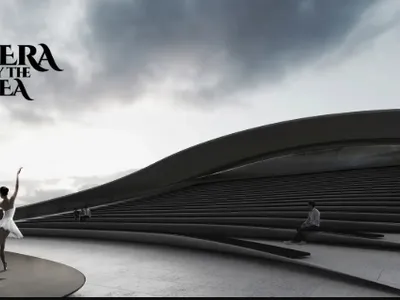
Opera by the Sea Estonia: Three Shells Dissolving Architecture into Tallinn's Coastline
A winning opera house proposal replaces monumental form with interconnected shells that blur the boundary between building, park and Baltic Sea.

Opera on the Sea: Driftwood Logic Shapes a Timber Opera House on Estonia's Coast
Trevor Orgill's opera house translates the entangled drift of floating timber into a civic building where wood, water, and music converge.
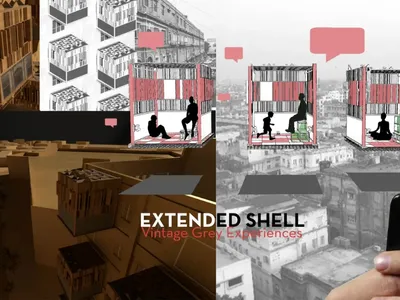
Extended Shell: Retrofitting Kolkata's Balconies as Living Urban Thresholds
A modular retrofit system recovers the social and environmental intelligence of Kolkata's historic verandas for contemporary Park Street residents.
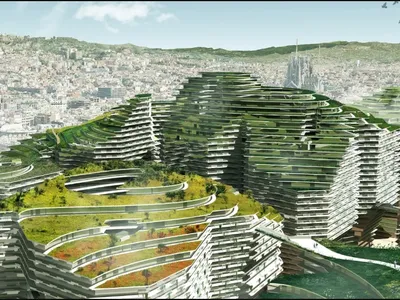
Manzana Morphosis: Stretching Barcelona's Grid into a Living Landscape for 2050
A radical reworking of the Eixample manzana turns density into a tool for generous public space, vertical ecology, and environmental performance.

Similar Reads
You might also enjoy these articles


Hodi-Mandai Geram
Project Function: Preservation and revitalization of the Intangible heritage and socio-spatial identity of the Hodi by Housing, Cultural Memory Center, Sacred Grove, landscape, local tourism economy


Olio Towers: A Mid-Rise for Performers That Fuses Housing, Rehearsal, and Stage
Located blocks from Houston's Theater District, this modular tower stacks living units around a central performance atrium.

Oasis: Modular Green Housing Carved into Dhaka's Urban Fabric
A shortlisted Plugin Housing entry reclaims unauthorized settlements in Dhaka with stepped concrete volumes, green roofs, and ventilation-driven design.

Black Hole: A Floating Megastructure for the Post-Physical Era
Emiliano Mazzarotto envisions a spherical, self-scaling arena where e-sports, digital hotels, and holographic stadiums replace traditional public space.

Explore Educational Building Competitions
Discover active competitions in this discipline

Challenge to design public laboratory

Challenge to reimagine the Iron Throne

Photograph architecture without architects

Illustrate the lost glory of Angkor Wat - Render Challenge
Comments (0)
Please login or sign up to add comments
No comments yet. Be the first to comment!