
Sustainable Smart Hostels: Revolutionizing Urban Living with AI and Modularity
Exploring the Plug-In Hostel: AI integration, modular design, and sustainable living in urban architectural innovation.


Embracing the Future with Plug-In Hostel by Thanos Stergiou
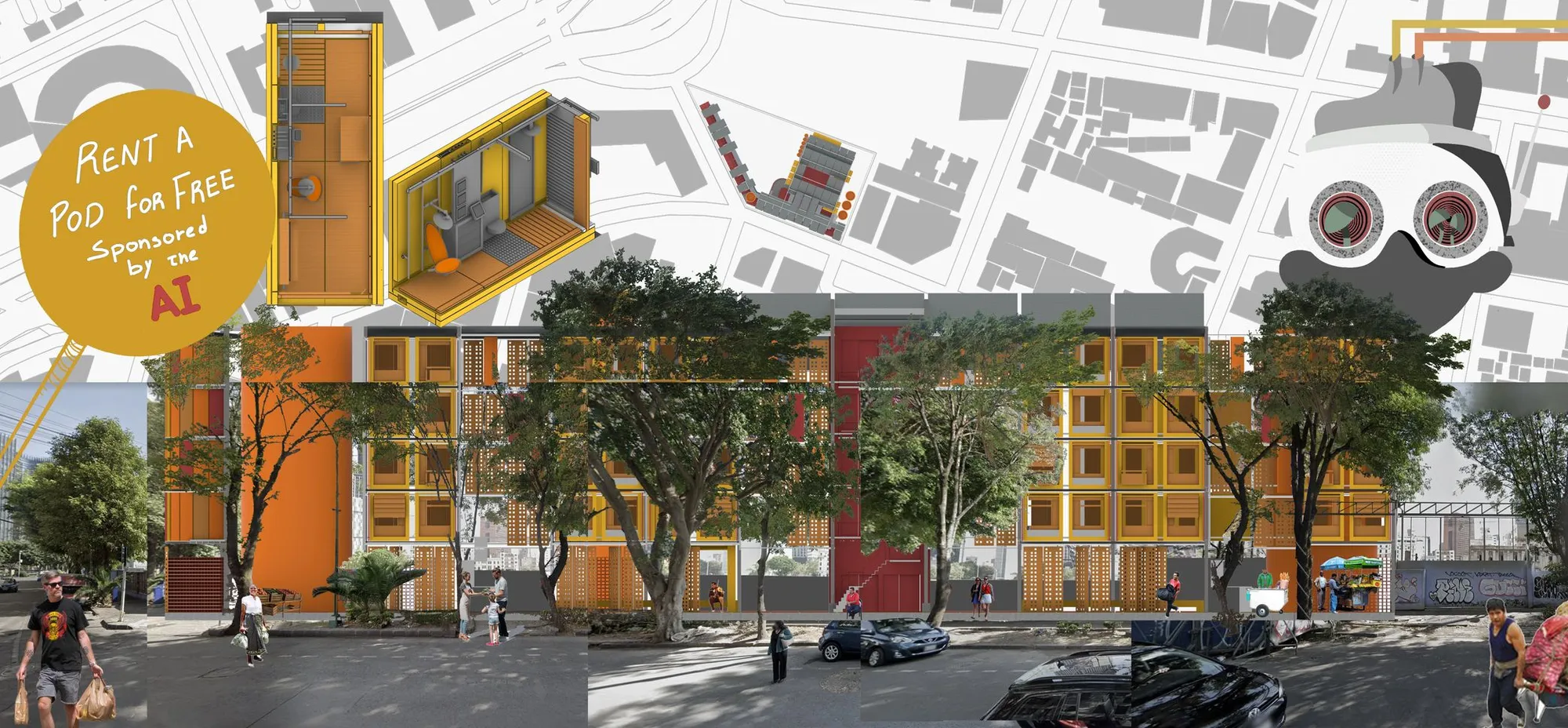
In the heart of the city where the fabric of urban life weaves a story of constant change, the "Plug-In Hostel" emerges as a beacon of innovation, sustainability, and connectivity. Created by the visionary architect Thanos Stergiou, this uncommon capsule hostel elevates the concept of communal living by seamlessly blending smart technology with environmental consciousness, defining a new category of sustainable smart hostels.
AI: The Heartbeat of a Self-Sustaining Ecosystem
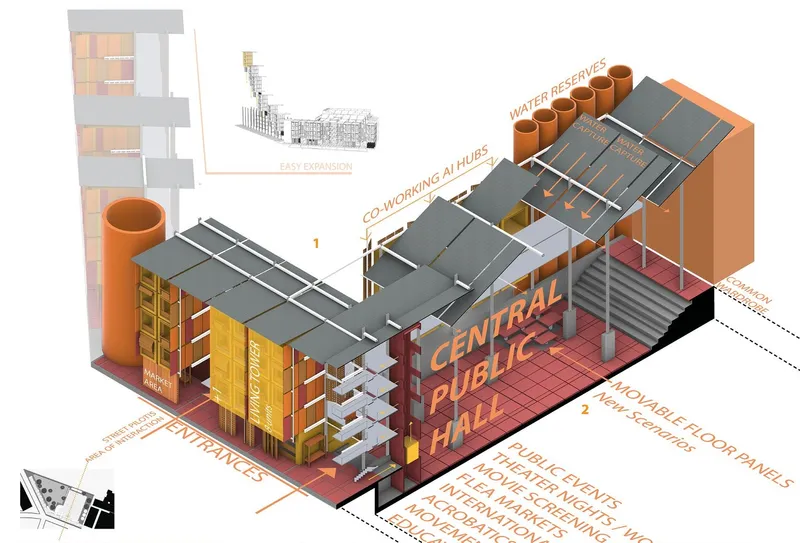
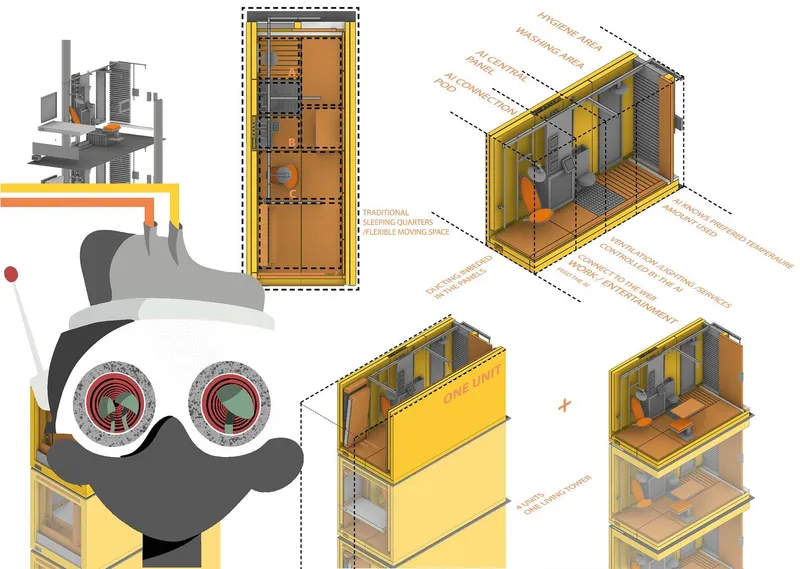
At the core of the Plug-In Hostel is an Artificial Intelligence (AI) system that breathes life into the building. From individual rooms to public amenities, the AI oversees a network of data collection and processing units that suggest new activities and spatial configurations. This integration not only facilitates a dynamic interaction among residents but also fosters a self-sustaining environment that continually evolves with its occupants' needs.
A Harmonious Blend of Public and Private Spaces
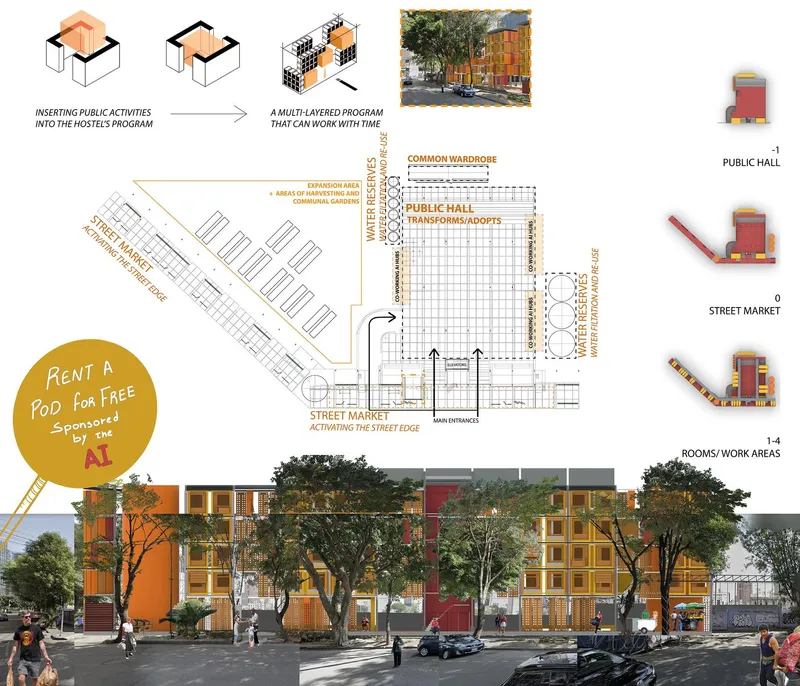
Breaking the barriers between the local community and travelers, the Plug-In Hostel's largest areas are open to the public, inviting a stable flow of interaction that fuels the local economy and cultural exchange. The design eschews the traditional exclusion of locals, integrating the nearby market life directly into the hostel's ecosystem.
A Modular Approach to Urban Architecture
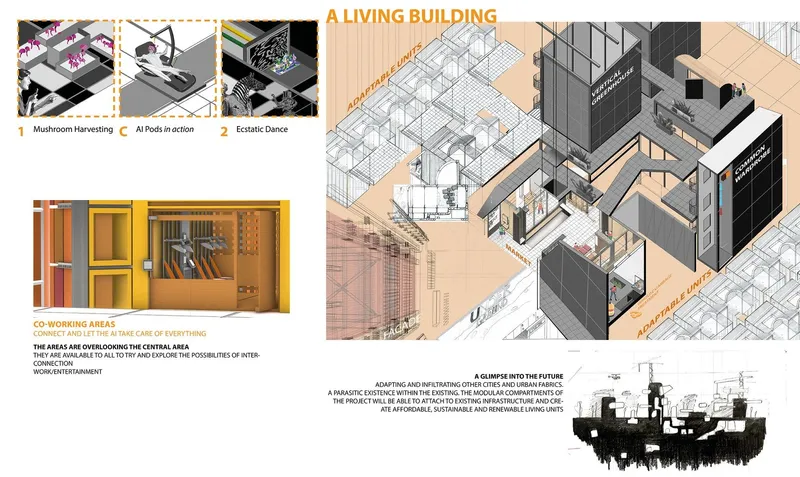
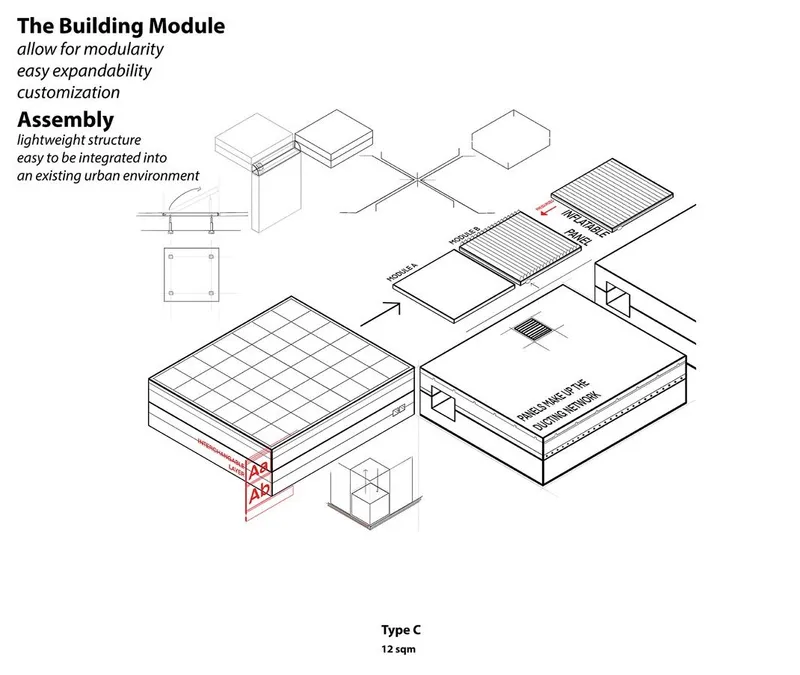
With the adaptability at its architectural core, the Plug-In Hostel embodies modularity and ease of expansion. The lightweight building modules can be customized and integrated into existing urban landscapes, promising an easy adaptation to the changing demands of city life.
Diverse Living Typologies for a Transient World
Accommodating various durations of stay, the hostel offers three living typologies: sleeping pods for short stays, adaptive rooms for weekly residents, and clusters for long-term occupants. The automated zoning ensures that each unit is optimally utilized, striking a balance between privacy and community.
The Public Hall: A Hub of Co-Living and Co-Working
The central public hall is more than just a space; it's a nexus for creativity and collaboration. Overlooking the central area, co-working spaces are equipped with advanced AI to facilitate work and entertainment, enabling a true interconnection of experiences.
A Glimpse into a Sustainable Urban Future
The Plug-In Hostel isn't just a building; it's a glimpse into the future of sustainable smart hostels. It proposes a parasitic existence within existing city infrastructures, offering affordable, sustainable, and renewable living spaces that adapt to various urban fabrics.




Popular Articles
Popular articles from the community


The Musturak Paradise: Senior Living Architecture for a Connected Future in Temara, Morocco
The Musturak Paradise reimagines senior living architecture in Temara via private homes, social spaces, culture, community, and shared care.

EW PARK: Sustainable Architecture Reimagines the Future of Urban Parking
EW PARK reimagines city parking as a modular wooden tower combining automation, solar energy, electric mobility, and adaptable urban design.

The Ocean Hive: Sustainable Architecture for a Self-Sufficient Civilization at Sea
The Ocean Hive imagines sustainable architecture at sea, where modular habitats, algae, wave power and ocean waste sustain a growing colony.

Riyadh For All: Intergenerational Urban Design for Active Aging in Rabat
Riyadh For All reimagines urban design in Rabat with intergenerational co-living, adaptive courtyards, and Moroccan cultural exchange today.


Similar Reads
You might also enjoy these articles

Day and Night Park: A Time-Based Urban Newsstand in Beijing
A temporary urban newsstand in Beijing blending travel, light, and reading through poetic colors, compact form, and community-focused design.

Modernist Patio Renovation in El Masnou, Barcelona by Oliver Segura Arquitectura + Cebrià Arquitectura
Modernist patio renovation blending tradition and innovation with a movable pool, leveled floors, and Catalan materials in El Masnou.

Alto Residencial Coop: Cooperative Housing Development in Santiago de Compostela by Carbajo Barrios Arquitectos
A linear cooperative housing complex blending white volumes and perforated metal façades, enhancing community living, natural light, privacy, and urban integration.

Vil Genis School by BPA ARCHITECTURE – Massy, France
Vil Genis School in Massy, France, features sustainable design, south-facing classrooms, community integration, accessible spaces, and modern educational architecture.

Explore Urban Design Competitions
Discover active competitions in this discipline



Challenge to reimagine the Iron Throne


Photograph architecture without architects


Illustrate the lost glory of Angkor Wat - Render Challenge


Design challenge to reuse E-waste
Comments (0)
Please login or sign up to add comments
No comments yet. Be the first to comment!