
Sustainable Social Housing Architecture: HARQUITECTES’ Innovative Urban Mining Approach in Palma
HARQUITECTES’ social housing in Palma uses urban mining and sustainable materials, blending innovative structure with community-centered design.

Introduction to Sustainable Social Housing Architecture
In the heart of Palma, Spain, HARQUITECTES has set remarkable precedent in sustainable social housing architecture with their project, Social Housing Units 2104. Completed in 2024, this innovative residential complex not only provides quality housing primarily for elderly residents but also embodies an ecological and resourceful construction methodology known as urban mining. By repurposing demolition materials from the original site, the architects have seamlessly integrated sustainability, structural innovation, and community-focused design into a single urban intervention.
The Urban Mining Concept in Social Housing Design
The site originally housed a small, disused three-story school built with structural sandstone (marès) walls and concrete-ceramic ceilings, which failed to meet current urban planning standards. Due to its poor condition, demolition was inevitable. However, instead of discarding the old building materials, HARQUITECTES implemented urban mining — harvesting valuable materials directly from the demolished structure to serve as building resources for the new social housing.
This approach transformed demolition rubble into foundational construction elements, exemplifying circular economy principles and drastically reducing material waste and the environmental footprint of the project.
Innovative Material Reuse and Construction Techniques
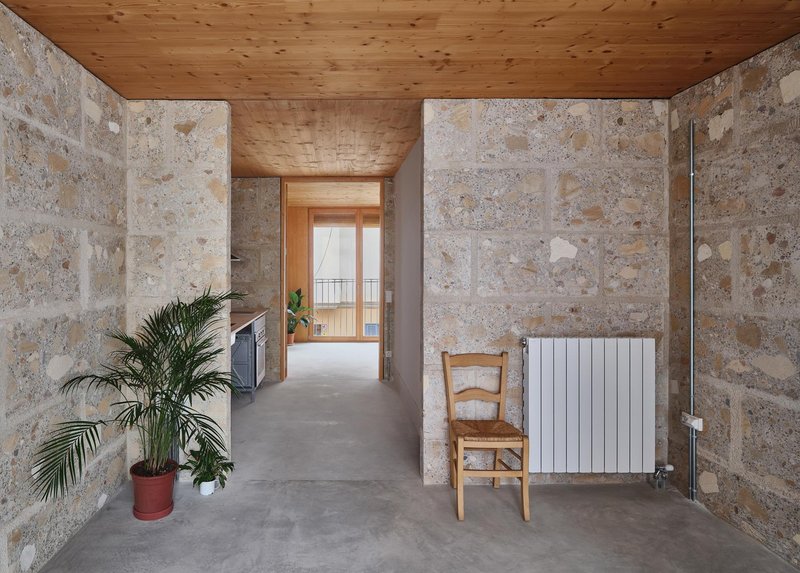
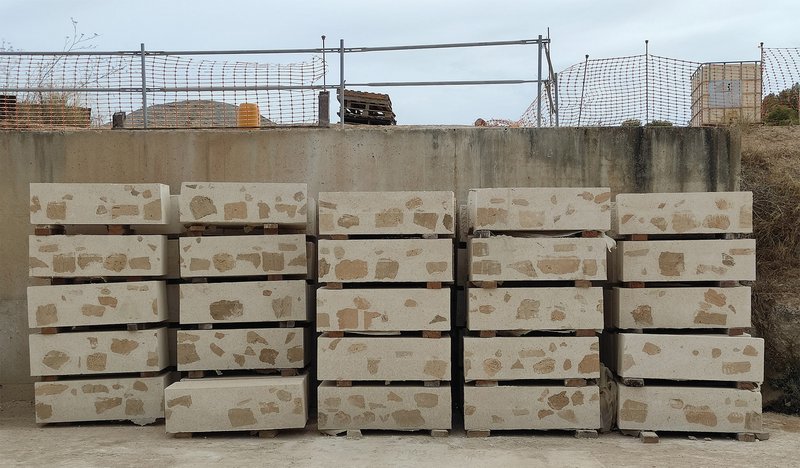
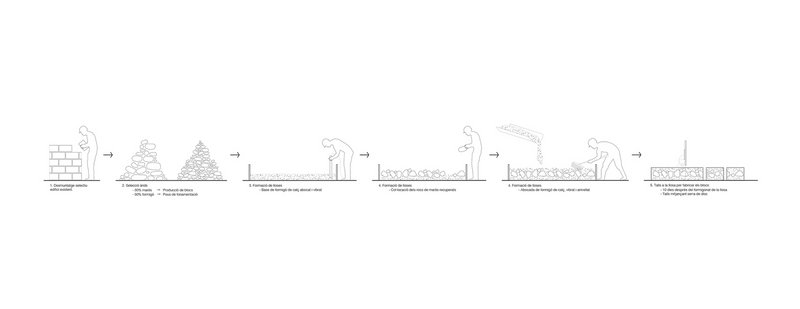
Following demolition, the rubble was meticulously sorted by material type. Ceramic and concrete fragments, totaling 140 cubic meters, were repurposed and poured into the foundation pits and semi-basement walls. Meanwhile, approximately 160 cubic meters of sandstone were crushed and integrated into the production of around 3,000 large cyclopean concrete blocks.
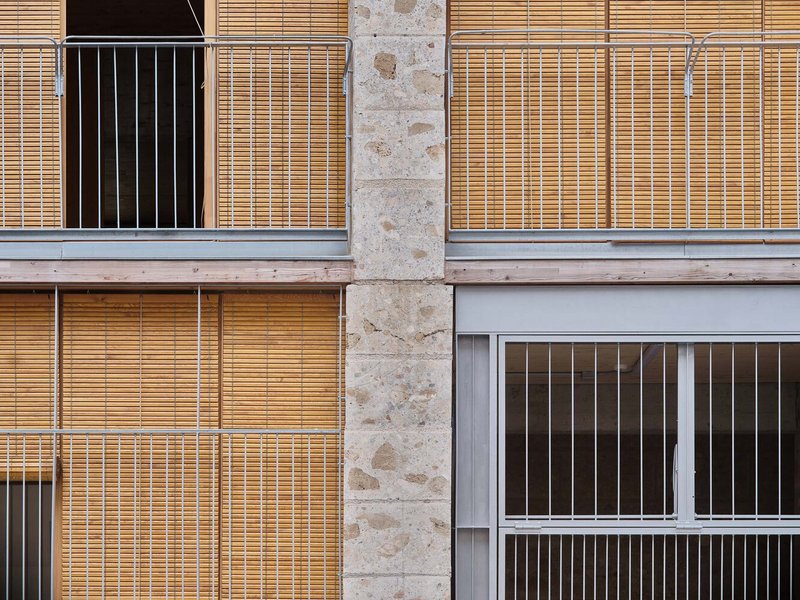
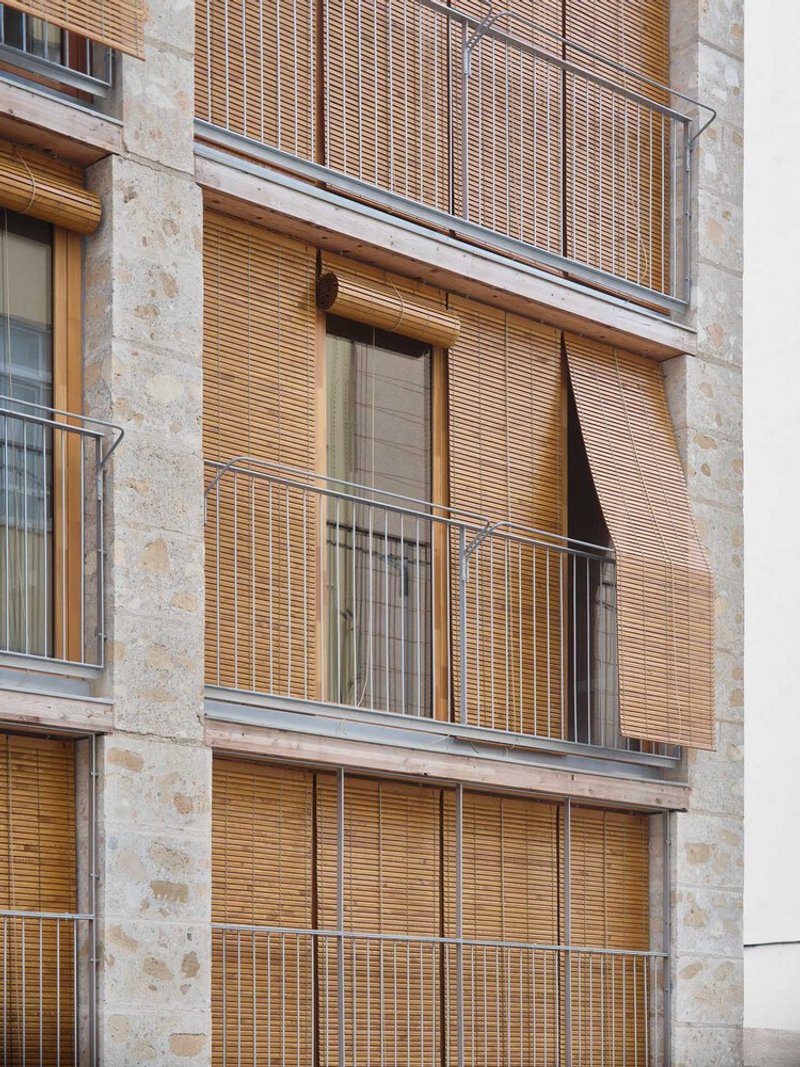
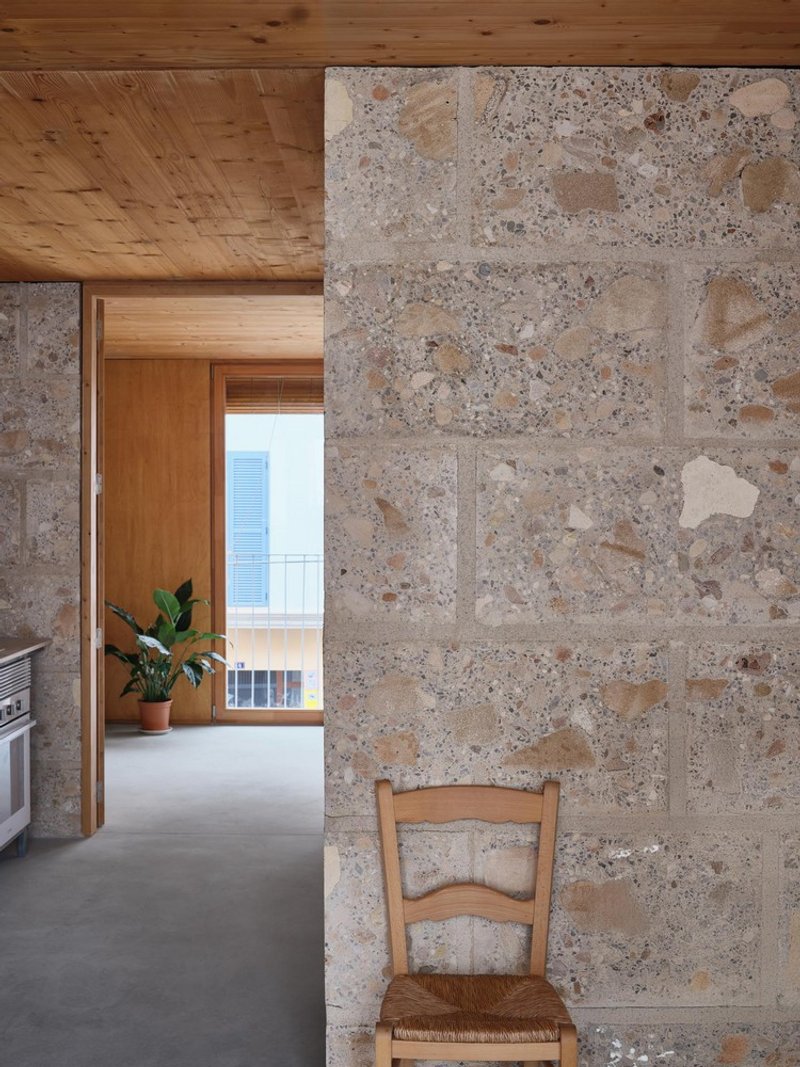
These prefabricated blocks combined cement, lime, and recycled marès stone, constituting 40% of the block volume. Each block, sizable at approximately 135 cm long and 42 cm high, revealed natural stone faces by cutting slabs with precision saws, enhancing their aesthetic appeal while retaining structural integrity.
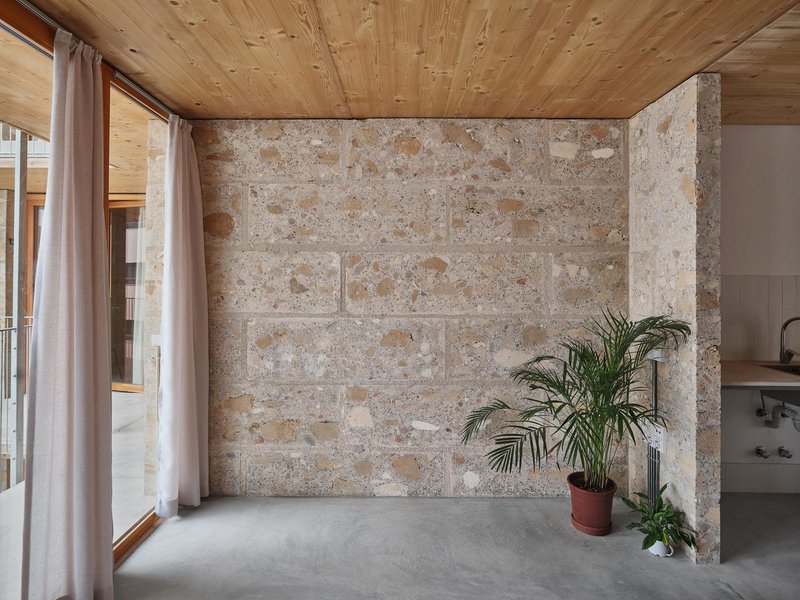
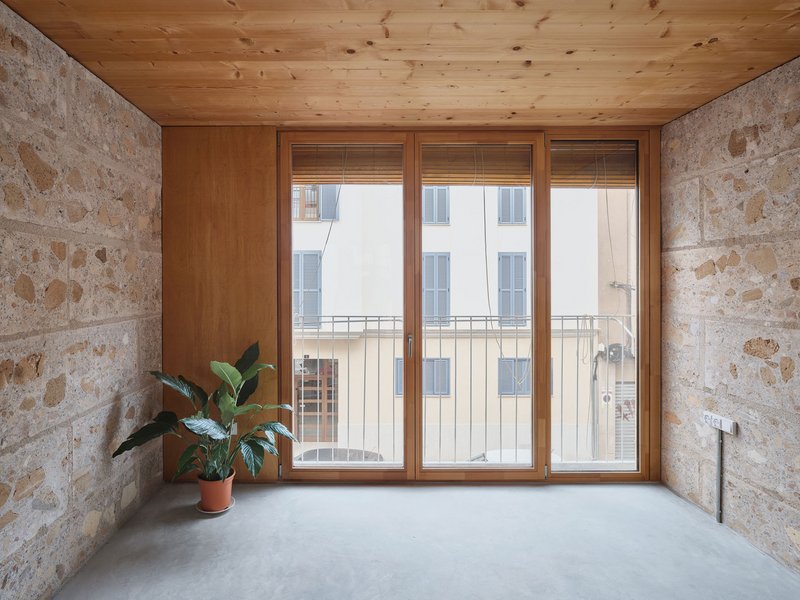
Differentiating the structural loads, blocks for upper floors were made of 100% lime concrete, optimizing weight and durability. The lower floors utilized a lime-cement mixture, demonstrating thoughtful material engineering tailored to specific architectural demands.
Structural and Spatial Organization of the Building
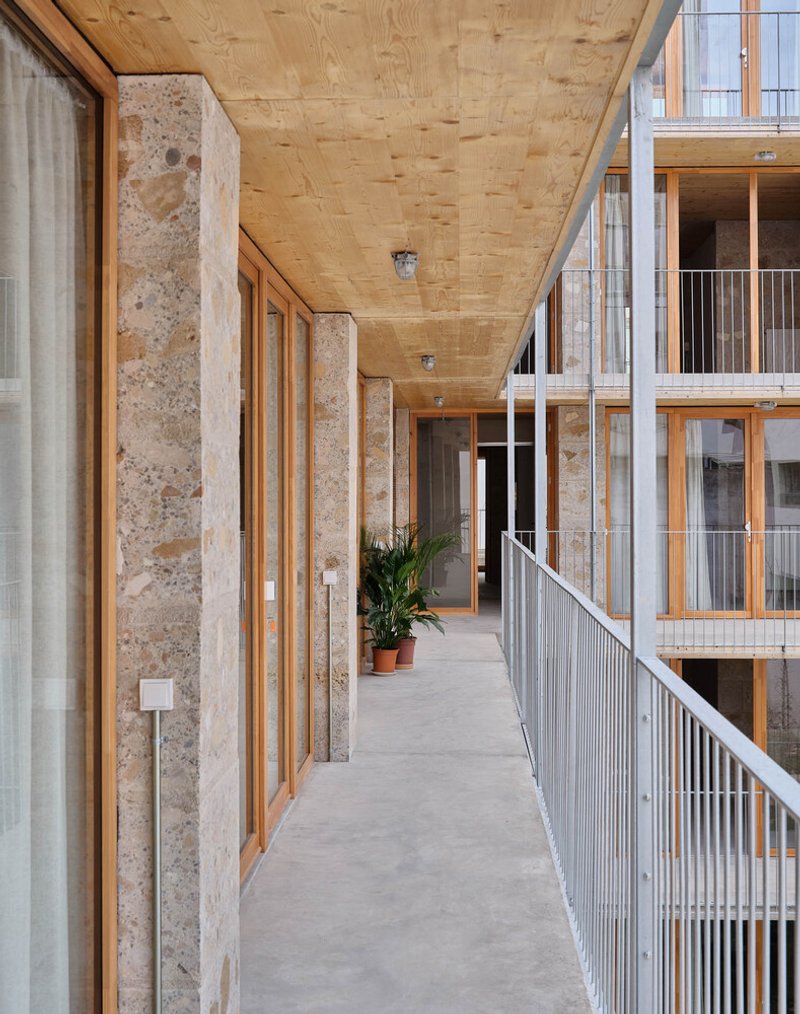
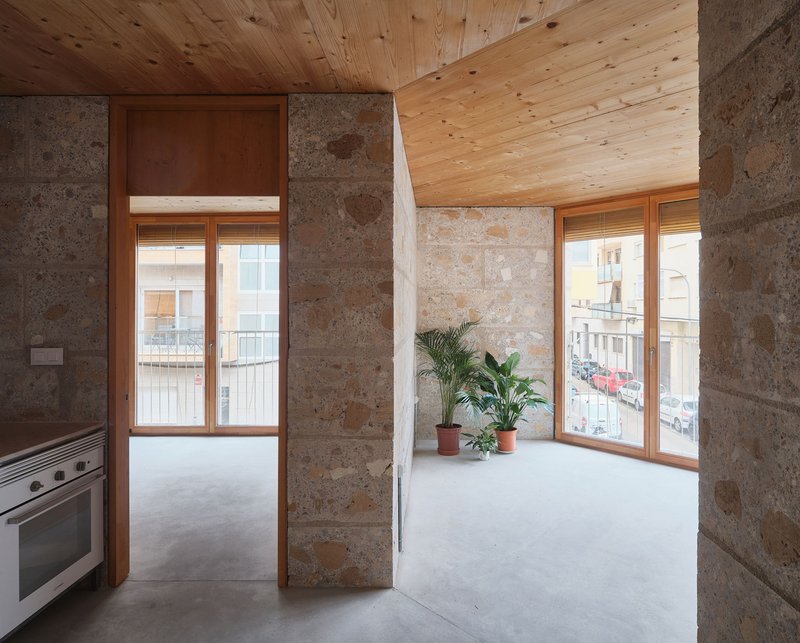
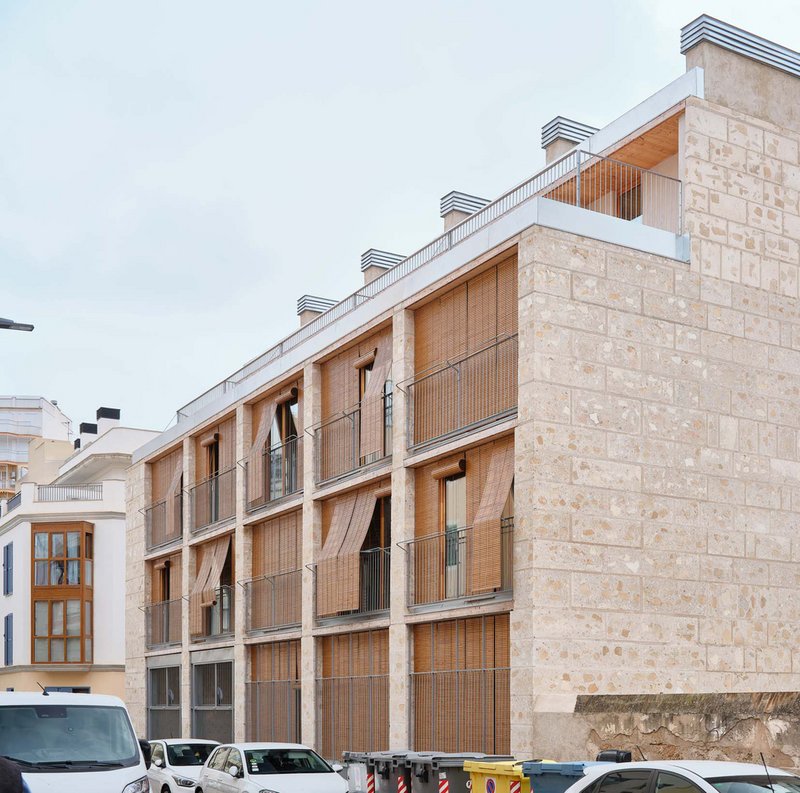
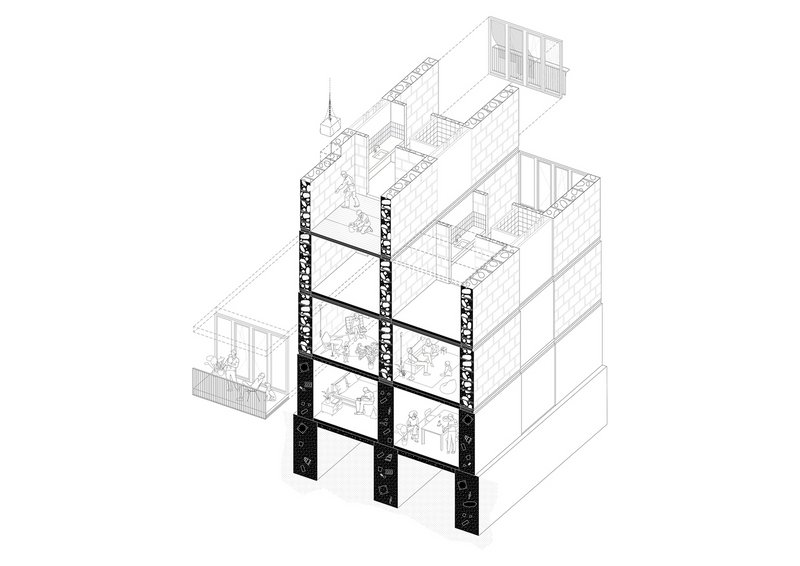
The prefabricated blocks were arranged to form load-bearing walls perpendicular to the street, supporting cross-laminated timber ceilings. Wall thickness progressively reduced by 10 cm per floor, allowing direct support of timber panels and speeding up construction.
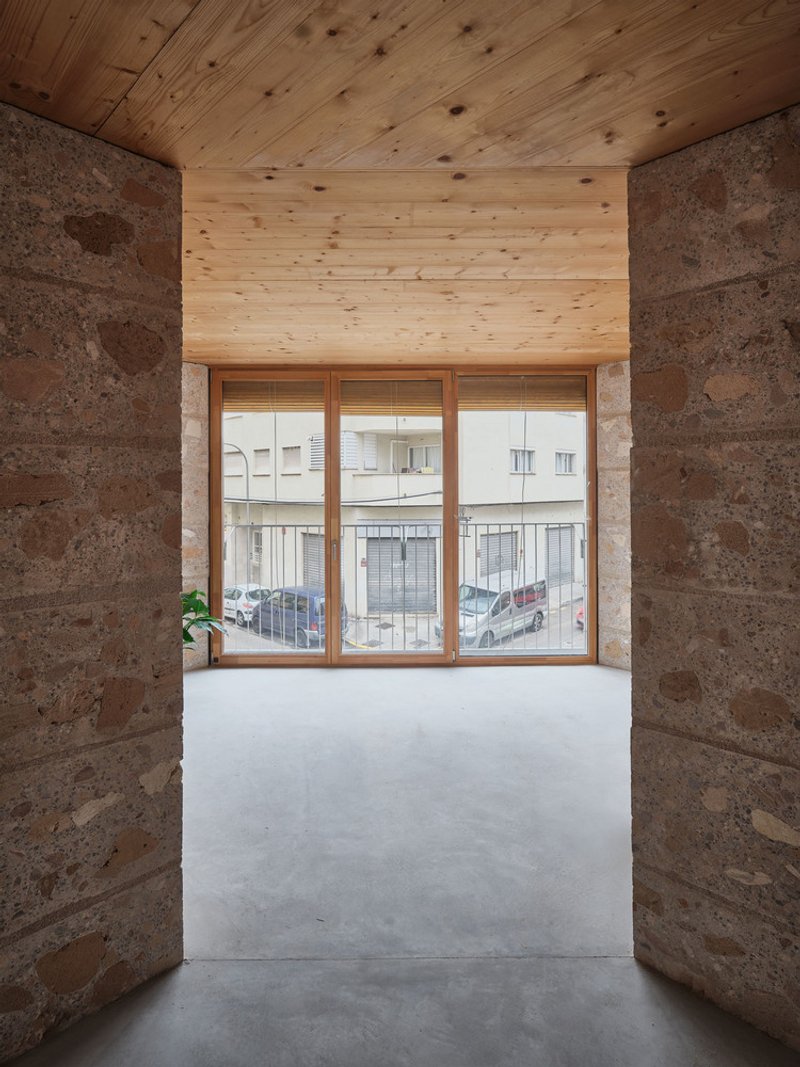
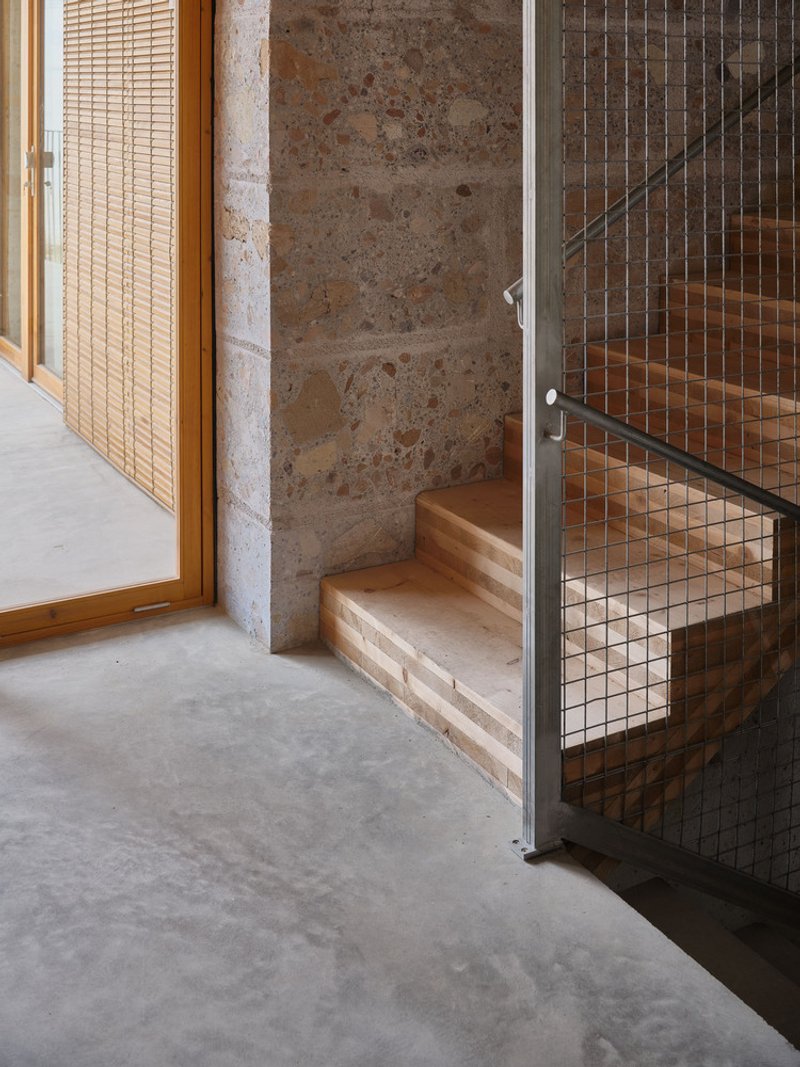
Inside, 13 cm thick partition walls made from cut cyclopean concrete blocks tied together the building’s structure along with the stair and elevator core. This efficient modular system provided not only strength but also spatial clarity.
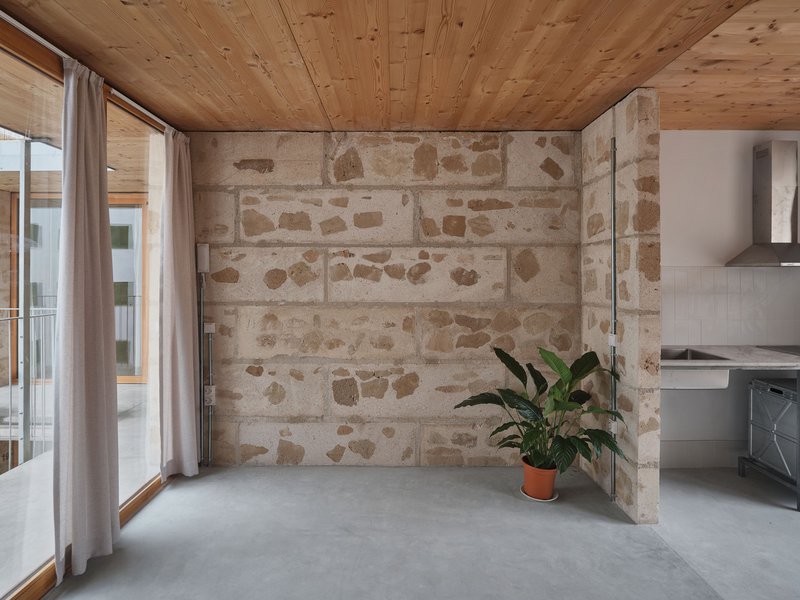
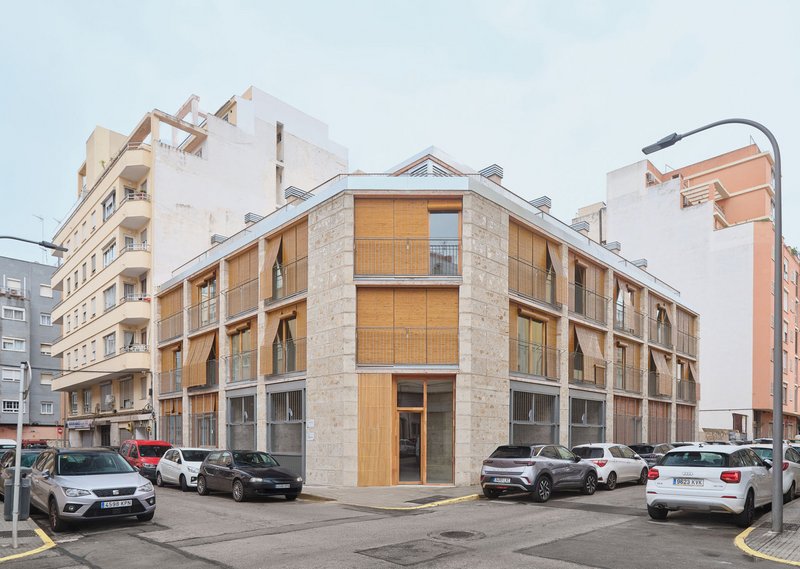
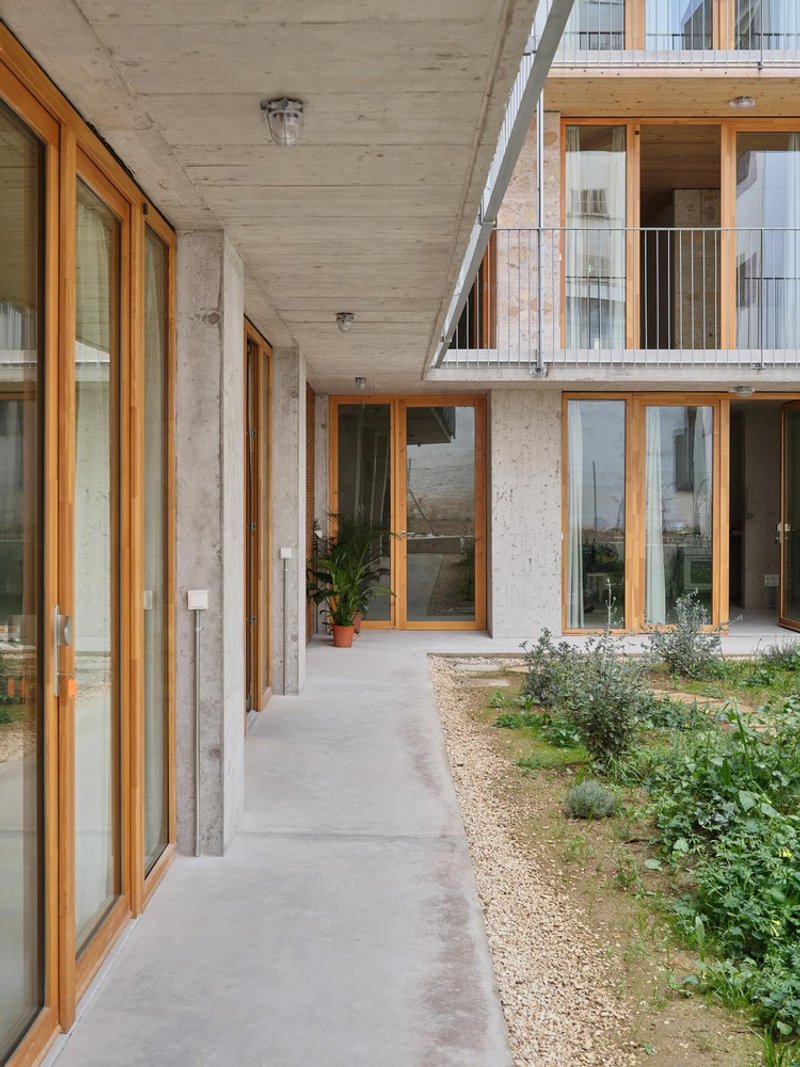
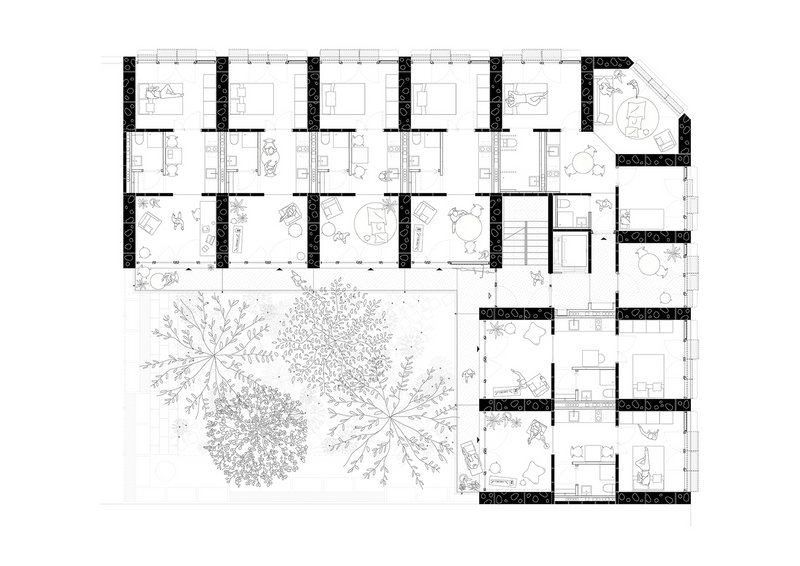
The building’s layout centers around a stair core located at the corner, which opens onto a walkway facing an interior garden. Apartments, primarily through-units, are accessed from this communal corridor, with the semi-basement and attic floors featuring shallower depths and double structural spans. Top-floor units boast expansive terraces, while each floor incorporates shared communal spaces such as laundry rooms and lounges, enhancing social interaction and community well-being.
Façade Expression and Environmental Considerations
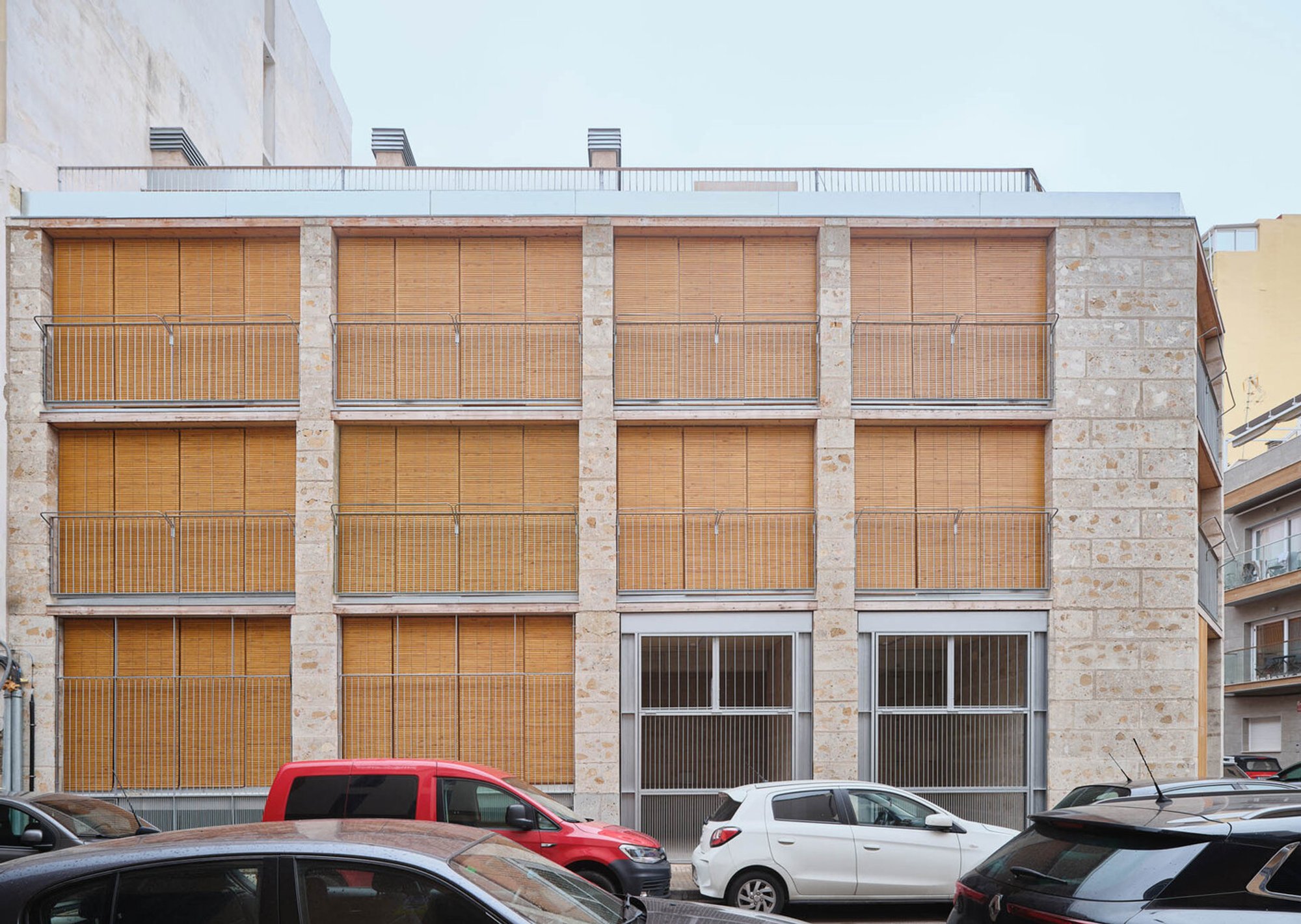
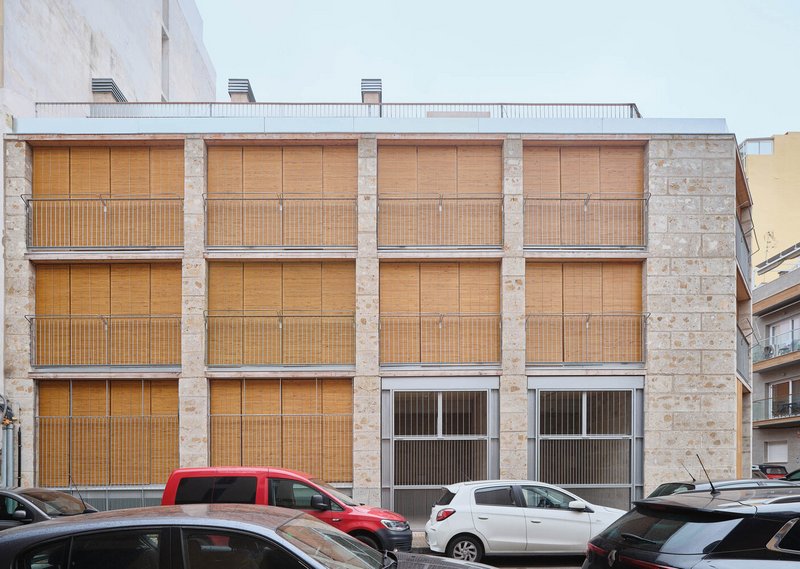
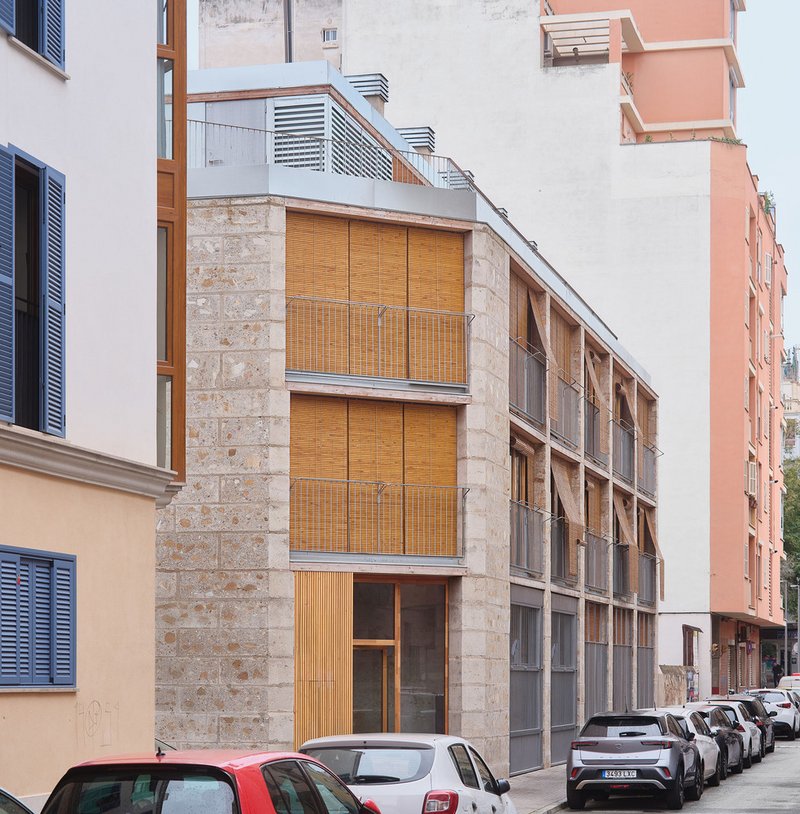
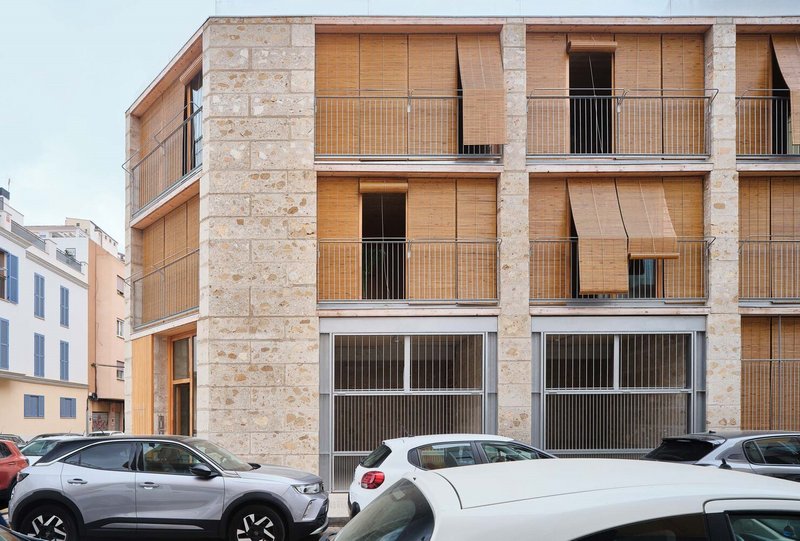
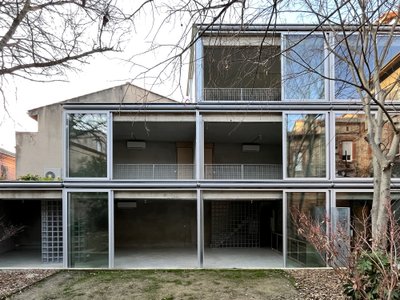
The building’s façade is a raw and honest display of its structural system. The vertical end walls of the prefabricated block walls, diminishing with each floor, support horizontal timber ceilings. Floor-to-ceiling wooden balconies function as the primary façade element for each apartment, featuring lateral opaque strips and Venetian blinds designed to protect residents from harsh eastern and western sunlight. This combination ensures energy efficiency while maintaining a warm, natural aesthetic.
A Model for Future Sustainable Social Housing
HARQUITECTES’ Social Housing Units 2104 exemplifies how sustainable social housing architecture can respond innovatively to urban challenges. By embracing urban mining and material reuse, the project redefines ecological responsibility within the construction industry, offering a replicable model for future affordable housing initiatives worldwide. The integration of thoughtful spatial planning, structural innovation, and environmental sensitivity positions this development as a landmark achievement in sustainable residential architecture.
All Photographs are works of Adrià Goula


Popular Articles
Popular articles from the community

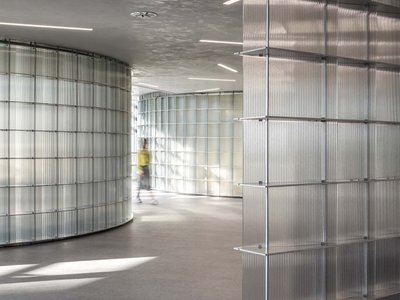
HCCH Studio Wraps a Shanghai High-Rise Office in Curved Walls of Translucent Glass
A 1,000 square meter fit-out in Lujiazui replaces the typical tech-office palette with layered glass, micro-cement, and quiet rigor.
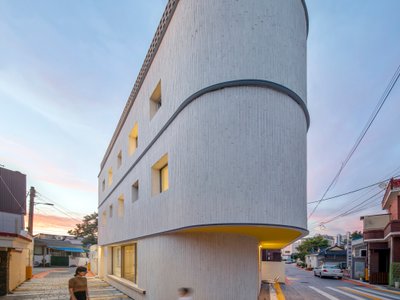
YOAP Architects Round a Corner in Yeongcheon with a Cylindrical Community Hub
A 197-square-meter brick and ribbed-clad tower turns a forgotten alley corner in South Korea into a public garden with a low threshold.
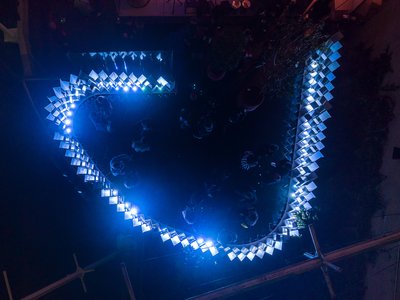
Rojkind Arquitectos and Think Parametric Build a Glueless Pavilion from 67 Interlocking Panels
A serpentine fiber-cement installation in Chapultepec Park celebrates a decade of architectural media in Mexico City.
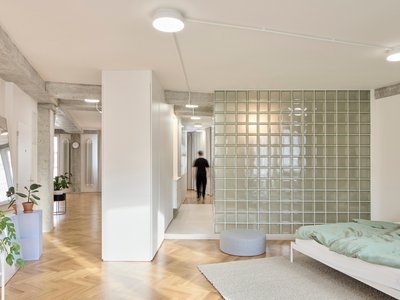
RDTH architekti Rips Out Nearly Every Wall in a Prague Apartment and Replaces Them with Furniture
A 101-square-meter post-war flat in Prague trades rigid partitions for a single rotated furniture block, curtains, and glass concrete.

Similar Reads
You might also enjoy these articles
CSADI Carves a Jade Blade into the Qinling Mountains for China's First Ecology Museum
A 43,788 square meter terraced museum in Shangluo draws its form from a Xia Dynasty artifact and steps down toward the valley below.
Ippolito Fleitz Group Identity Architects Turn Eight Floors in Shanghai into a Vertical Creative City
Publicis Groupe's new headquarters in Xintiandi reimagines the office as a courtyard-driven urban landscape stacked across eight floors.
Díaz Webster Arquitectura Carves Light and Air into a Compact Zapopan House
A 237-square-meter residence in western Zapopan uses courtyards and double-height voids to dissolve the boundary between interior and garden.
BAST Slots a Four-Story Glass House into a Narrow Gap Between Toulouse Townhouses
In the dense Bonnefoy district, a stepped infill building merges home and office while preserving a majestic hackberry tree.


Explore Architecture Competitions
Discover active competitions in this discipline




The International Standard for Design Portfolios


The Global Benchmark for Architecture Dissertation Awards


The Global Benchmark for Graduation Excellence


Challenge to reimagine the Iron Throne
Comments (0)
Please login or sign up to add comments
No comments yet. Be the first to comment!