

SUZAO Architects Wedge a 60 m² Exhibition Pavilion Between Chongqing's Past and Its Vertical Future
A luminous timber-and-metal box negotiates the gap between a historic guild hall and a mountain city's relentless skyline.


Chongqing is one of those cities that resists tidy descriptions. It is vertical, layered, subtropical, and restless, a place where highways tunnel through apartment buildings and pedestrian bridges land on the eighth floor. Inserting anything new into this landscape is less an act of composition than of negotiation. SUZAO Architects understood this when they placed a 60 m² temporary exhibition hall on a sliver of ground between the historic Huguang Guild Hall and the glass towers crowding the ridge behind it. The result is a small building that punches well above its weight.
What makes the pavilion compelling is not its size but its posture. It leans into the contradictions of its site, framing the Dongshuimen Bridge and the Yangtze River through angular apertures while reflecting passing traffic in a mirrored underbelly. At 60 square meters the program is minimal: a café, a reception area, a small exhibition space. Yet the building operates as a kind of optical instrument, calibrating views of heritage, infrastructure, and nature into a single, tightly edited experience.
A Lantern on the Street Edge


Photographed at dusk, the pavilion reveals its primary urban trick: it glows. Gridded translucent panels turn the timber frame into a lantern that registers against the dark mass of surrounding towers. Long-exposure car light trails streak past, emphasizing how small and still the building is relative to the velocity of the street. The triangular metal facade, angled toward the intersection, works as both a signal and a deflection, catching the eye of drivers while directing pedestrians toward the entrance.
The warm yellow of the metal cladding and the cooler glow of the backlit panels create two distinct registers of light. One is solid, opaque, almost industrial; the other is diffuse and inviting. Together they give the pavilion a double reading: robust enough to hold the streetscape, delicate enough to suggest interiority.
The Cantilever and the Mirror
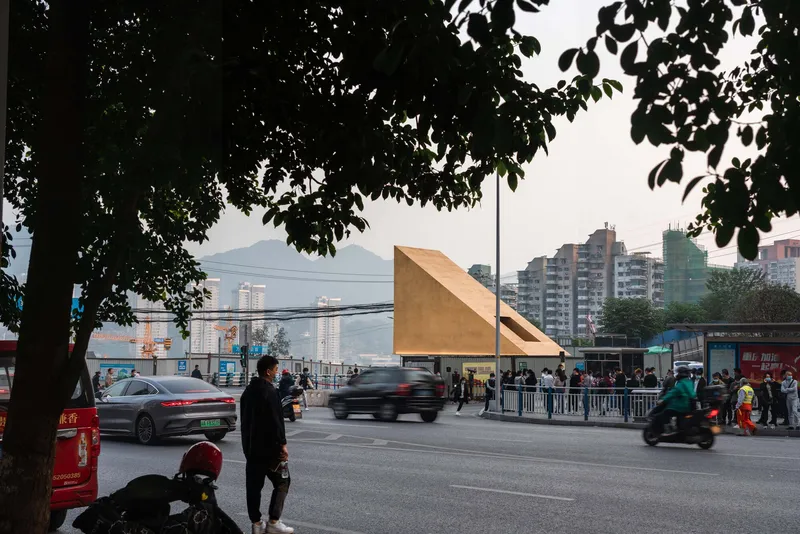
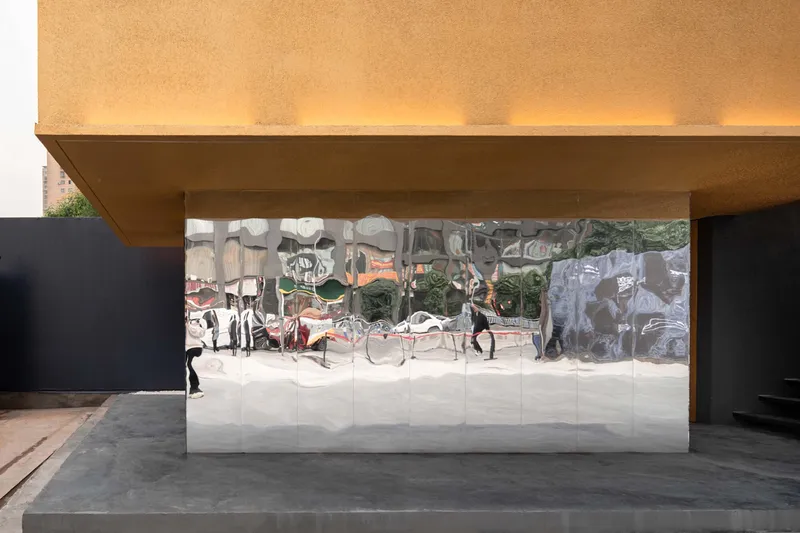
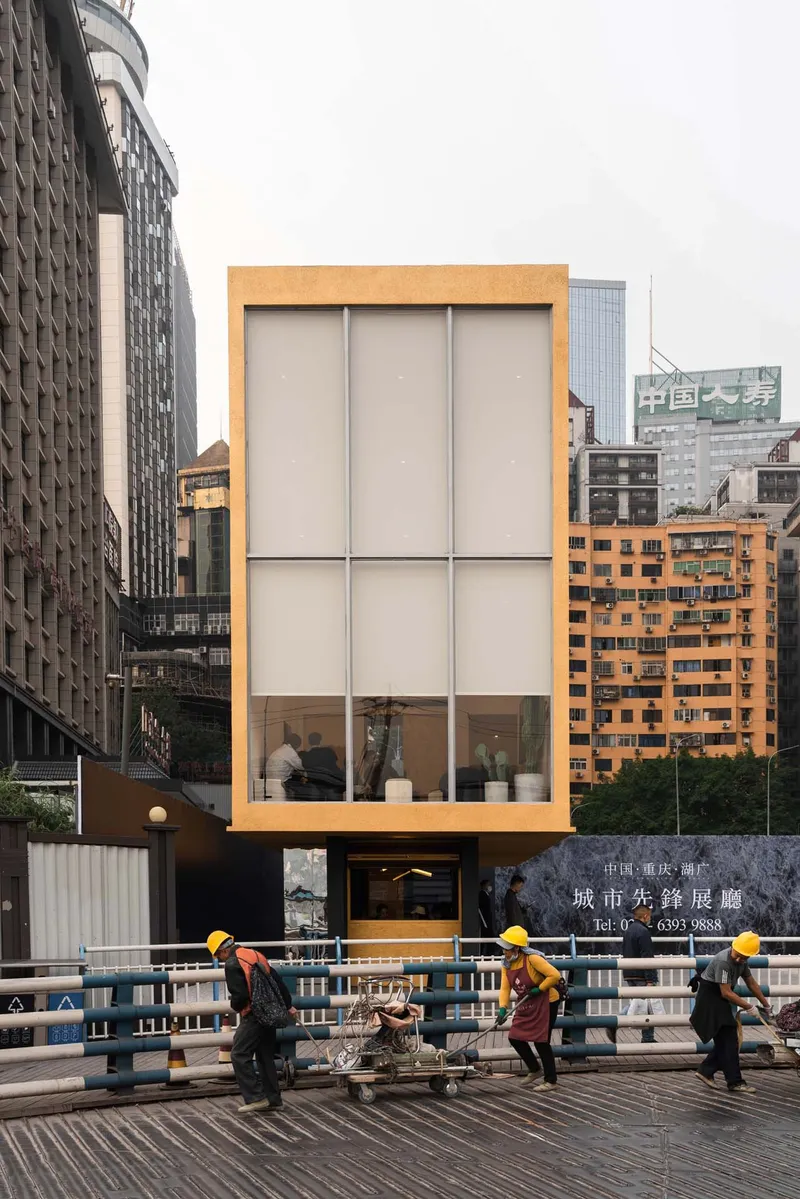
The most theatrical gesture is the cantilevered volume that pushes out over the sidewalk. Framed by tree branches from above and reflected traffic from below, it transforms a structural move into a spatial event. Beneath the overhang, a mirrored wall doubles the streetscape, pulling pedestrians into the building's image before they have decided to enter. It is a generous trick: the mirror gives back more space than the cantilever takes.
From the elevated vantage point, the cantilever also reframes the relationship between the pavilion and the road workers, vendors, and commuters passing below. The building hovers just above the everyday texture of the city, neither aloof nor grounded, occupying a middle register that keeps it socially legible.
Framing the Bridge, Framing the City
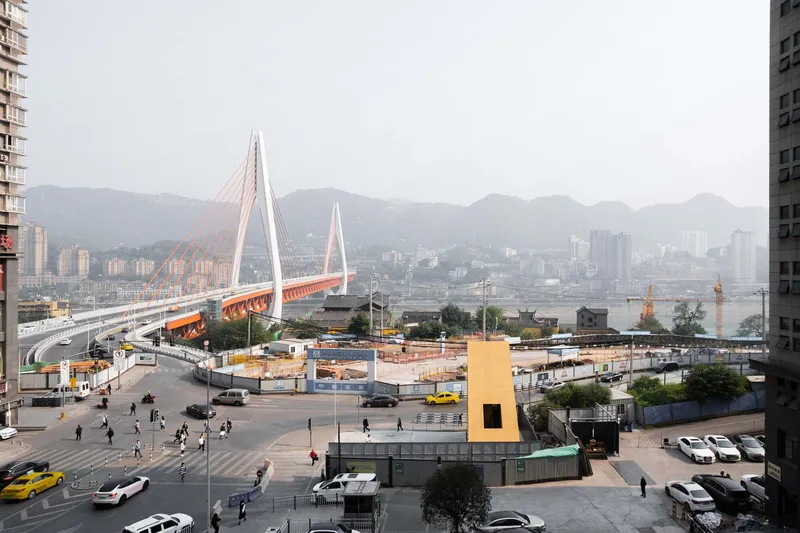
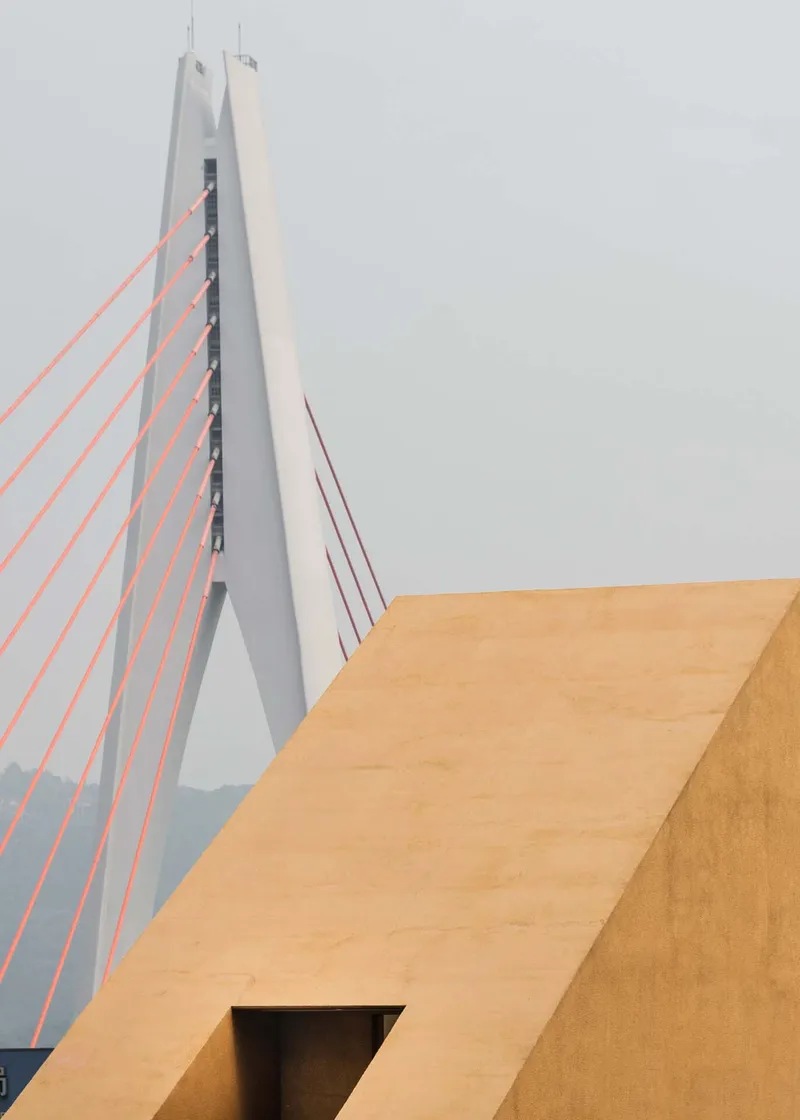

SUZAO Architects clearly understood that the Dongshuimen Bridge, with its red cables and white pylon, is the most photogenic neighbor any small building could ask for. Several apertures and facade angles are calibrated specifically to capture fragments of the bridge against the ochre surfaces of the pavilion. The effect is cinematic: the triangular window in one view crops the cable-stayed structure into an abstract composition, while the punched windows on the yellow rendered facade frame the red cables like a Joseph Cornell box.
These framed views do something important for a building this small. They expand its perceived territory. You are not just inside 60 square meters; you are inside a relationship with the bridge, the mountains, and the river. The pavilion borrows grandeur without trying to compete.
Angular Views and Ochre Walls

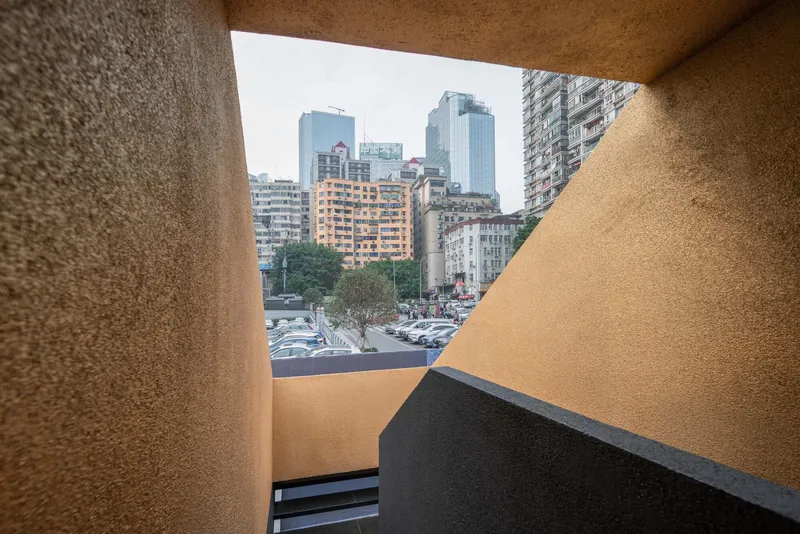

Seen from across the intersection, the triangular metal facade reads as a sharp, sculptural object set against the softer chaos of taxis, pedestrians, and street furniture. The ochre tone recurs on the interior, where textured walls surround a triangular window that captures the urban skyline in a single, precise frame. It is a palette decision that ties the building's exterior presence to its interior atmosphere, lending warmth and coherence to what could otherwise feel like a collection of clever details.
The yellow metal-clad kiosk form, elevated slightly above street level, reinforces the pavilion's identity as something between furniture and architecture. Pedestrians walk past it the way they might walk past a newsstand or a food cart, which is exactly the right scale of encounter for a temporary structure in a dense urban fabric.
Interior Restraint
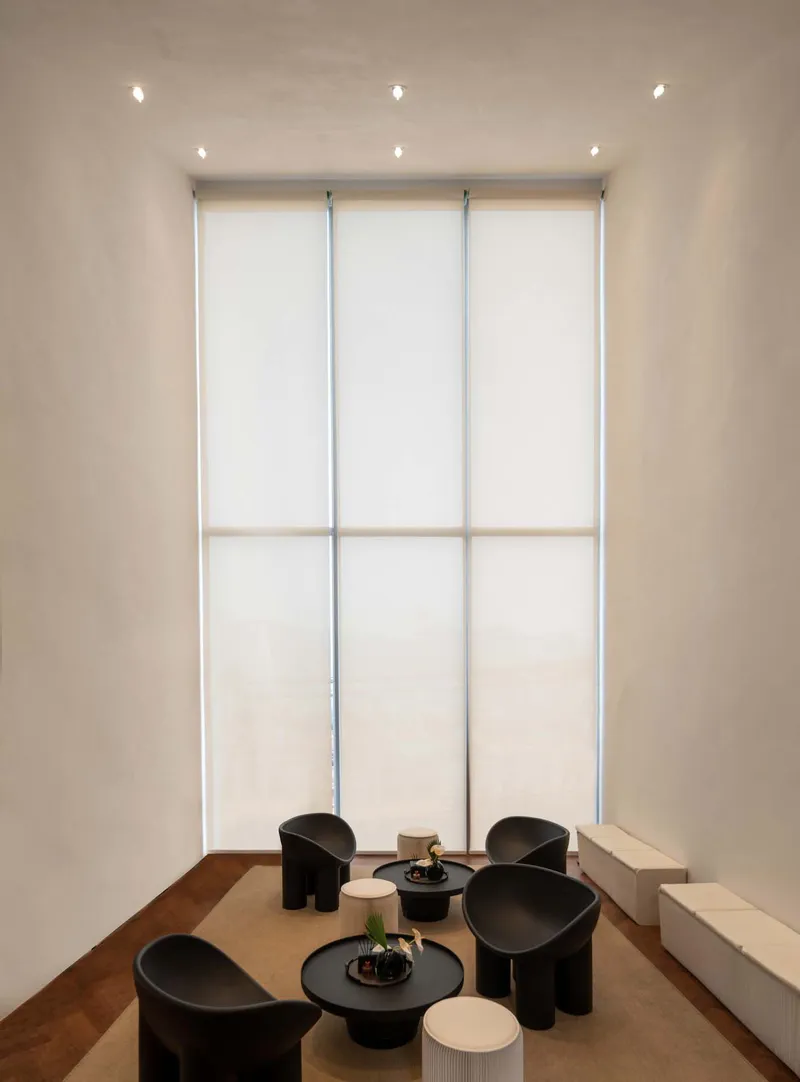
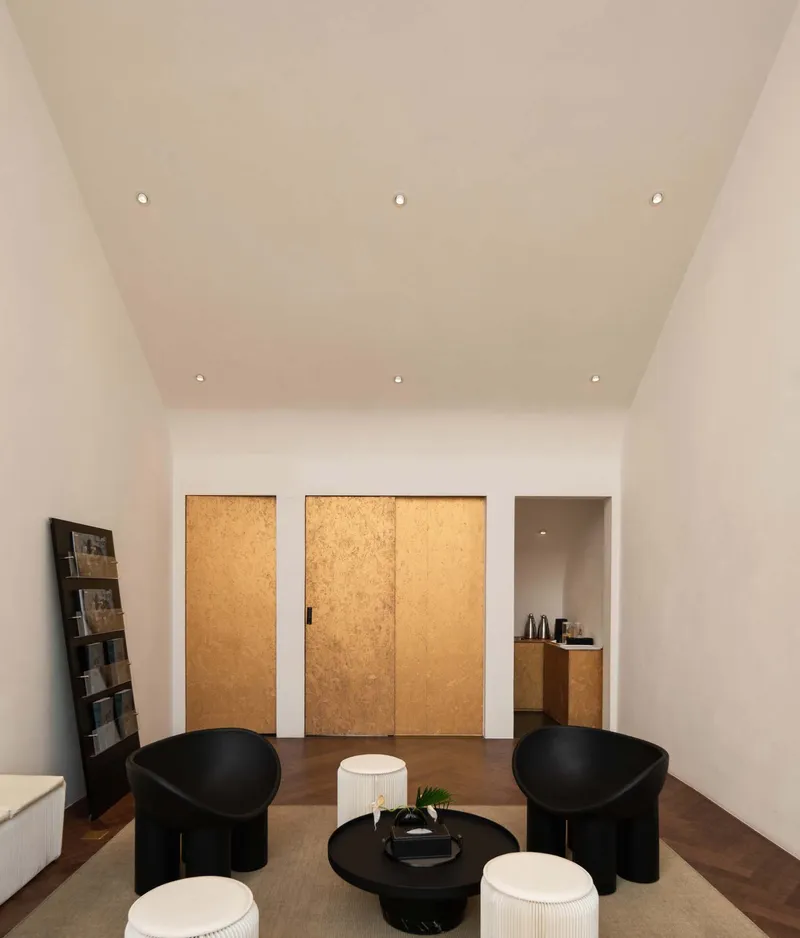
Inside, the pavilion trades spectacle for calm. The seating area pairs dark circular furniture with translucent backlit wall panels, creating a lounge-like atmosphere that feels surprisingly spacious. Cork-clad sliding doors and recessed spotlights in a white room offer acoustic and visual softness, a welcome contrast to the hard urban context outside. SUZAO Architects clearly resisted the temptation to carry every exterior material through to the interior. The result is a progression from metal and glass to wood, cork, and polished concrete that rewards entry.
A polished concrete wall catches angled daylight through a geometric glass door, producing a stripe of shadow that shifts throughout the day. It is a quiet moment in a building that otherwise earns its keep through bold formal moves, and it suggests that the architects are just as interested in atmosphere as they are in geometry.
Stair and Section

The angular white stair section reveals how tightly the interior is packed. Every level change serves double duty, creating storage, defining thresholds, and generating the stepped profile that gives the pavilion its distinctive silhouette from the street. The three-story reading, visible in the full street-level photograph, is achieved not through height alone but through this careful stacking of half-levels and mezzanines.
Plans and Drawings


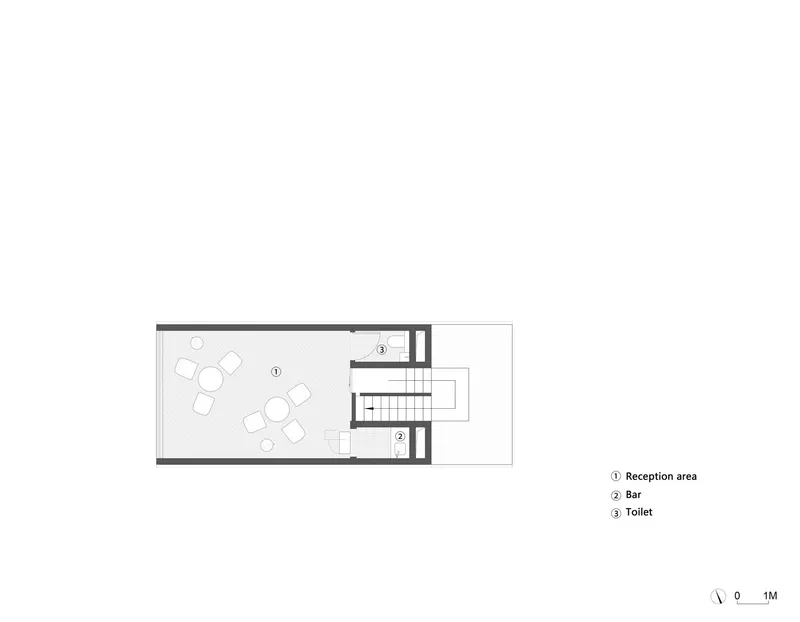
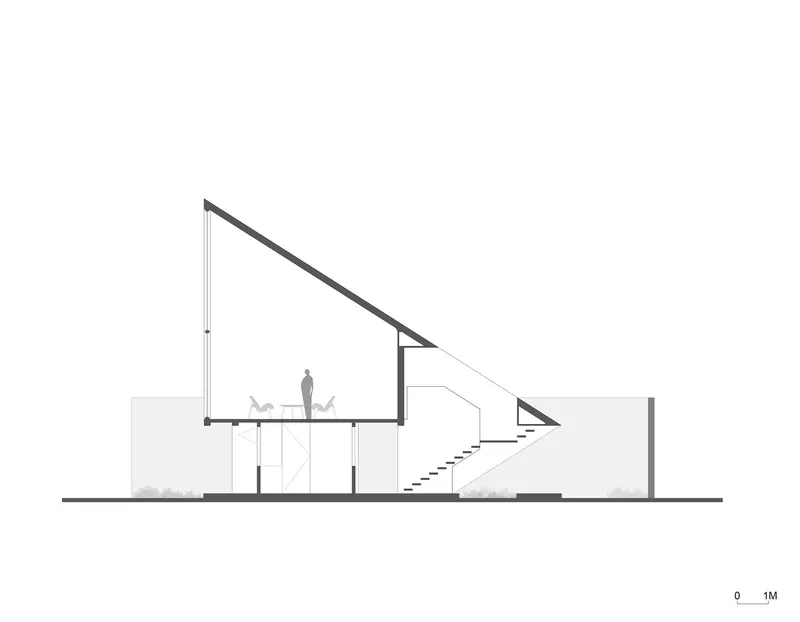
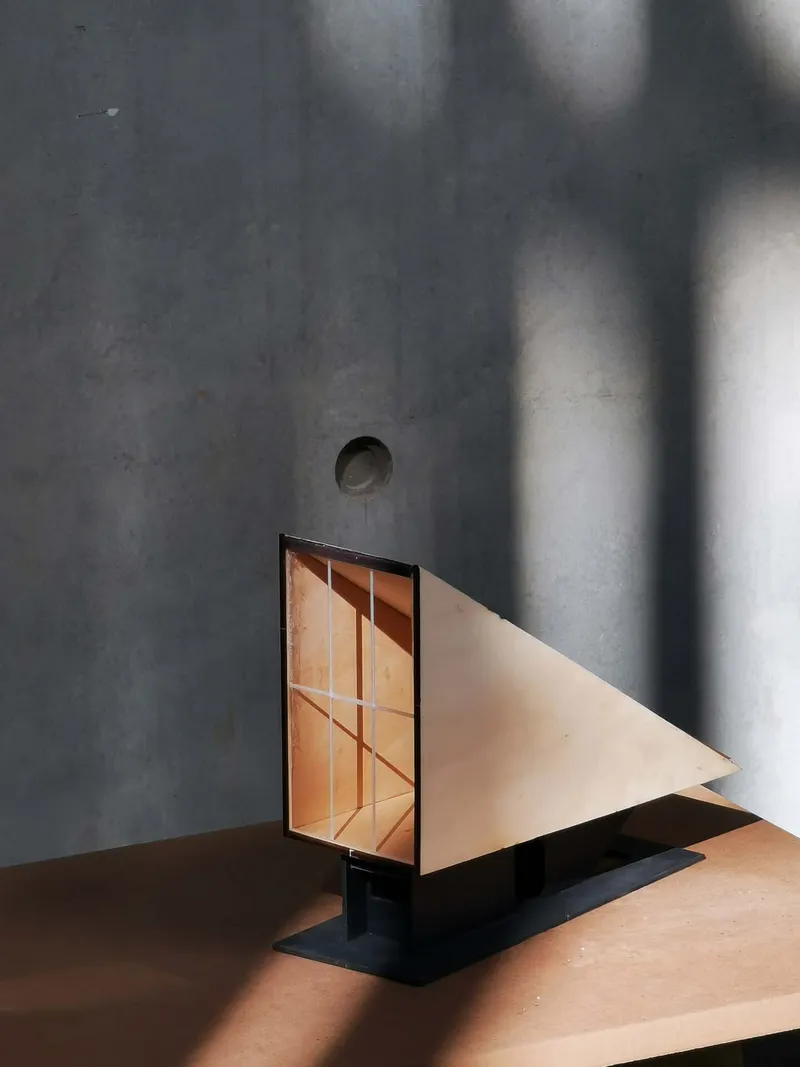
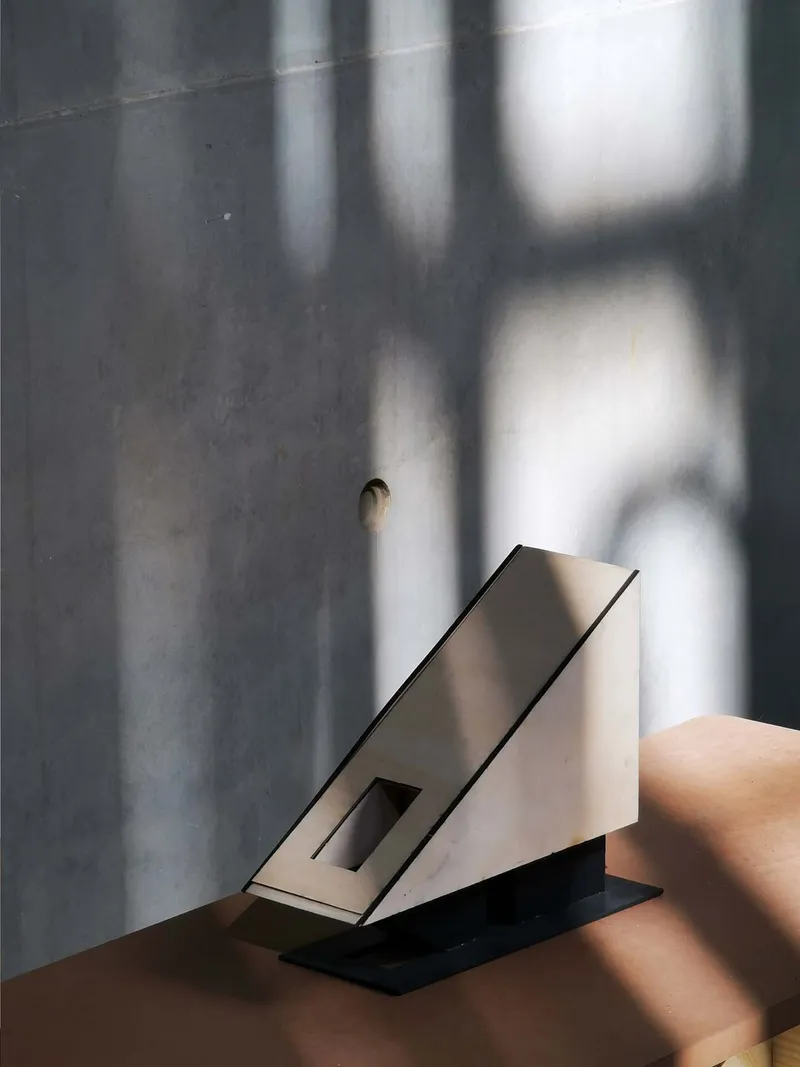
The sectional diagram tells the story most clearly: a progressive volumetric increase from low rectangular forms to tall triangular profiles, like a bar chart of ambition. The aerial site plan shows the pavilion's position on a peninsula bounded by roadways and water, a leftover piece of urban land that suddenly reads as strategic. Floor plans reveal a café and reception area with a bar and toilet facilities, squeezed into a footprint that leaves room for landscaped grounds and circular tree plantings. The section drawing confirms the sloped roof profile and the central staircase that stitches the double-height spaces together.
Why This Project Matters
The Chongqing Huguang City Exhibition Hall matters because it demonstrates that a temporary, 60 m² building can hold its own in one of the world's most architecturally overwhelming cities. SUZAO Architects did not try to match the scale of the surrounding towers or the spectacle of the cable-stayed bridge. Instead, they built a precise optical device that borrows from its context while giving something back: a place to sit, a framed view, a warm glow on a dark street corner.
The project is also a reminder that the space between heritage and modernity is not a void to be filled but a threshold to be designed. By positioning themselves between the Huguang Guild Hall and the high-rises, the architects turned an awkward leftover site into the most interesting piece of ground in the neighborhood. That is a skill worth paying attention to, regardless of square footage.
Chongqing Huguang City Exhibition Hall by SUZAO Architects. Lead architects: Jie Du, Wen Dong, Xiaowen Yin. Chongqing, China. 60 m². Completed 2022. Photography by DONG建筑影像.
About the Studio
SUZAO Architects
Share Your Own Work on uni.xyz
If projects like this are the kind of work you want to make, uni.xyz is a place to publish your own, find collaborators, and enter design competitions.


Popular Articles
Popular articles from the community

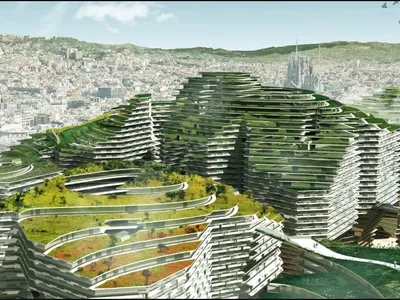
Manzana Morphosis: Stretching Barcelona's Grid into a Living Landscape for 2050
A radical reworking of the Eixample manzana turns density into a tool for generous public space, vertical ecology, and environmental performance.
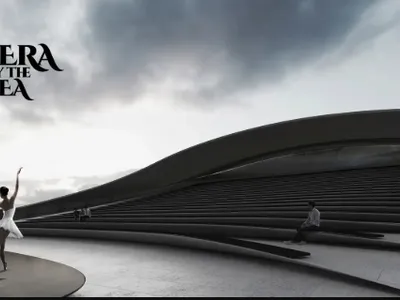
Opera by the Sea Estonia: Three Shells Dissolving Architecture into Tallinn's Coastline
A winning opera house proposal replaces monumental form with interconnected shells that blur the boundary between building, park and Baltic Sea.

Faces of the Soviet Avant-Garde: Turning Moscow's Street Names into an Open-Air Museum
A network of sculptural installations across a Moscow residential district transforms forgotten architect names into spatial encounters with cultural memor

Tsunami Convergenics: Turning Catastrophic Ocean Forces into Underwater Housing Infrastructure
A speculative underwater settlement off the coast of Onagawa, Japan, treats tsunamis and typhoons as energy sources rather than threats.

Similar Reads
You might also enjoy these articles

Pixel Gardens: One Repeated Module Stacked Into a Terraced Social Housing Tower for Famagusta
Salem Bader's shortlisted housing tower builds a vertical neighbourhood from one repeated module, offsetting units to carve terraces, light and air.

Bao Huynh Watercolor Atelier: A Serene Art Retreat in Hội An
Bao Huynh Watercolor Atelier in Hội An blends multifunctional art spaces, sustainable design, local materials, and family-friendly living in a serene environment.

Atelier Macri Concept Store Interior Design by CASE-REAL
Atelier Macri store features a "ko" counter, walnut wood details, cork displays, blending retail, gallery, and seamless customer experiences.

Manuel Vargas Izquierdo Stadium and High-Performance Sports Center: Architectural Excellence in Jalpa de Méndez
The Manuel Vargas Izquierdo Stadium blends sustainable design, inclusive sports facilities, and cultural-inspired architecture, revitalizing Jalpa de Méndez’s public spaces.

Explore Exhibition Hall Competitions
Discover active competitions in this discipline

Challenge to design a portable theatre

Challenge to design a portable music platform

Challenge to design an open learning module for the elderly

Bring back Drive In's
Comments (0)
Please login or sign up to add comments
No comments yet. Be the first to comment!