

TAC.T BRIDGE by TAISEI DESIGN Planners Architects & Engineers
TAC.T BRIDGE in Yokohama is a sustainable pedestrian bridge using small-diameter timber and eco-friendly concrete for long-span, durable construction.


The TAC.T BRIDGE at the Taisei Advanced Center of Technology in Yokohama is an exemplary model of sustainable architecture, demonstrating the potential of commercially available small-diameter timber for long-span construction. Designed by TAISEI DESIGN Planners Architects & Engineers, this 26-meter pedestrian bridge seamlessly connects laboratory and office buildings, enhancing mobility on-site while offering researchers a serene space to enjoy natural light, breezes, and the sounds of nature.
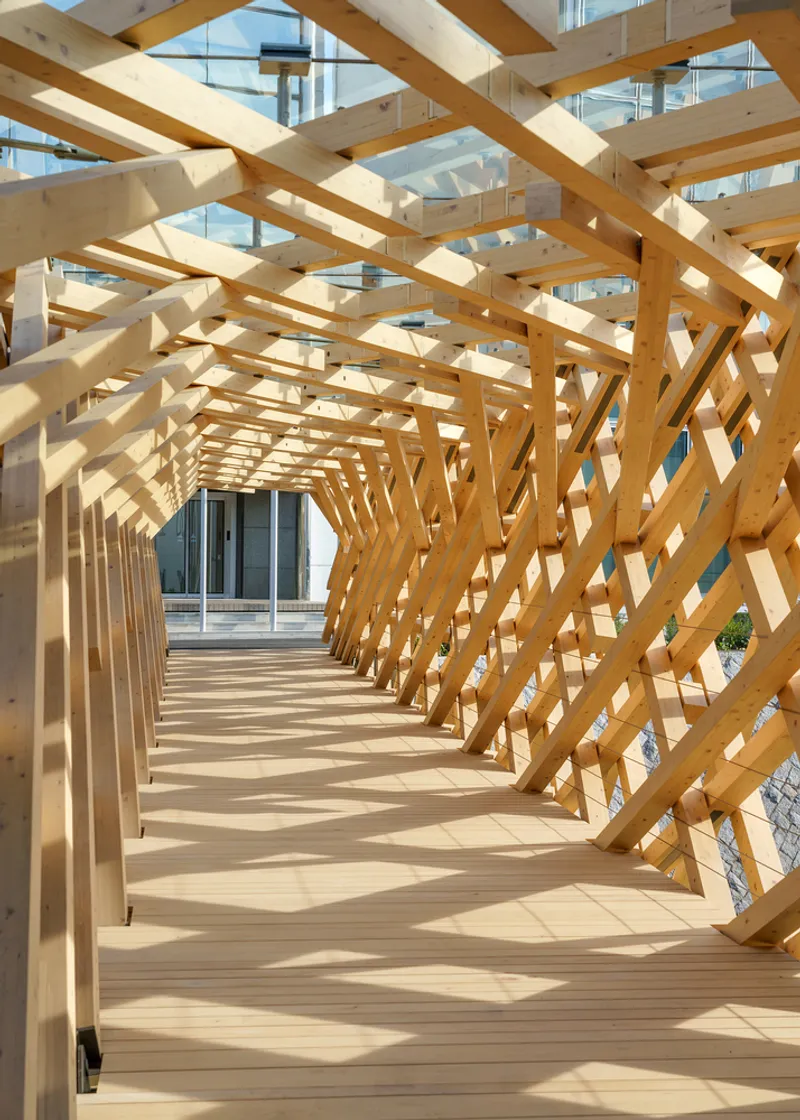

Sustainable Materials and Eco-Friendly Design
Amid growing interest in timber construction as part of a sustainable society, TAC.T BRIDGE showcases eco-conscious engineering. Traditionally, small-diameter timber has been used for residential construction, with limitations in outdoor and long-span applications due to moisture, UV exposure, and durability concerns. This project overcomes these challenges by integrating:
- Long-span timber and prestressed frame system for structural strength
- T-WOOD COAT® wood protection to ensure weather resistance and longevity
- T-eConcrete® eco-friendly concrete for bridge pier footings, reducing CO₂ emissions
By leveraging these innovations, the bridge maximizes the constructability, replaceability, and durability of small-diameter timber while promoting the broader use of sustainable building materials.


Engineering Innovation and Longevity
To achieve this ambitious design, new bolt connections and reinforced timber elements were developed, enabling the use of 120 x 120 mm small-diameter timber for long-span outdoor construction. The lightweight nature of small-diameter timber allows for efficient construction and easy replacement of structural members, extending the lifespan of timber structures in outdoor environments.


Contribution to a Decarbonized Society
TAC.T BRIDGE represents a significant step forward in the application of sustainable timber and eco-friendly concrete in infrastructure projects. By broadening the potential of wood in large-scale outdoor constructions, it promotes carbon reduction, renewable material usage, and innovative architectural solutions, contributing directly to the vision of a decarbonized and environmentally responsible society.


All Photographs are works of Kazuhisa Adachi



Popular Articles
Popular articles from the community

AL-JANNAH: Sustainable Architecture and Permaculture for Afghan Widows
AL-JANNAH uses sustainable architecture and permaculture to create resilient oasis of housing, learning, work and renewal for Afghan widows.

Co-Life: Senior Housing Design That Reconnects Older Adults With the City
Co-Life reimagines senior housing design through healing gardens, shared streets, workshops, and a sustainable community across generations.
EW PARK: Sustainable Architecture Reimagines the Future of Urban Parking
EW PARK reimagines city parking as a modular wooden tower combining automation, solar energy, electric mobility, and adaptable urban design.

The Earth Pod: 3D Printed Homes for Resilient Refugee Communities
The Earth Pod reimagines refugee housing through 3D printed homes made from clay, combining resilience, self-sufficiency, and rapid shelter.


Similar Reads
You might also enjoy these articles


Hodi-Mandai Geram
Project Function: Preservation and revitalization of the Intangible heritage and socio-spatial identity of the Hodi by Housing, Cultural Memory Center, Sacred Grove, landscape, local tourism economy


Olio Towers: A Mid-Rise for Performers That Fuses Housing, Rehearsal, and Stage
Located blocks from Houston's Theater District, this modular tower stacks living units around a central performance atrium.

Oasis: Modular Green Housing Carved into Dhaka's Urban Fabric
A shortlisted Plugin Housing entry reclaims unauthorized settlements in Dhaka with stepped concrete volumes, green roofs, and ventilation-driven design.

Black Hole: A Floating Megastructure for the Post-Physical Era
Emiliano Mazzarotto envisions a spherical, self-scaling arena where e-sports, digital hotels, and holographic stadiums replace traditional public space.


Explore Foot Bridge Competitions
Discover active competitions in this discipline



Challenge to reimagine the Iron Throne


Photograph architecture without architects


Illustrate the lost glory of Angkor Wat - Render Challenge


Design challenge to reuse E-waste
Comments (0)
Please login or sign up to add comments
No comments yet. Be the first to comment!