
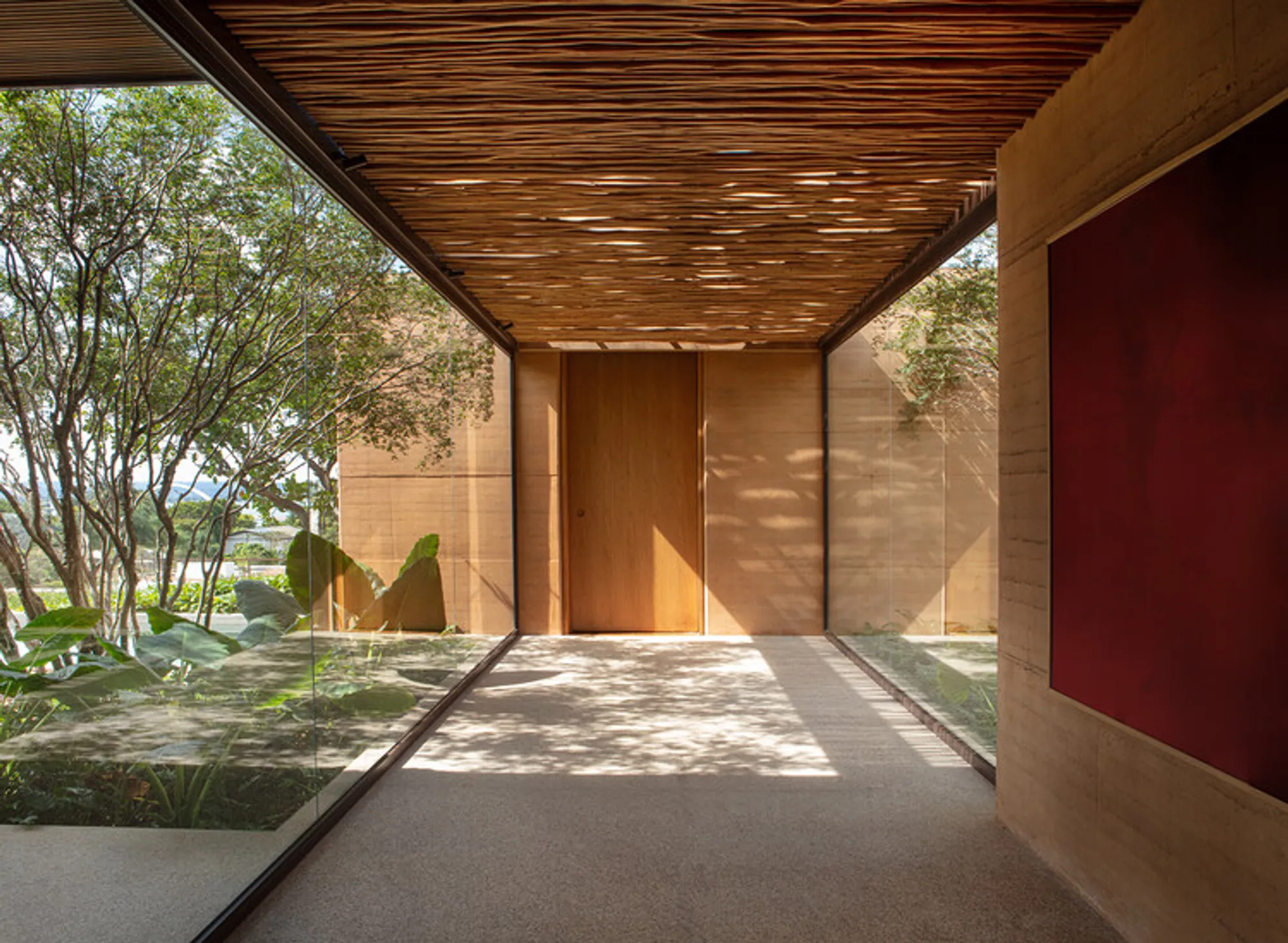
Taipa Residence by Valéria Gontijo + Arquitetos – A Minimalist Earth House Rooted in Brazilian Vernacular Architecture
Taipa Residence by Valéria Gontijo unites rammed earth, minimalism, and sustainability, creating a warm, tactile, and nature-connected retreat in Brasília.


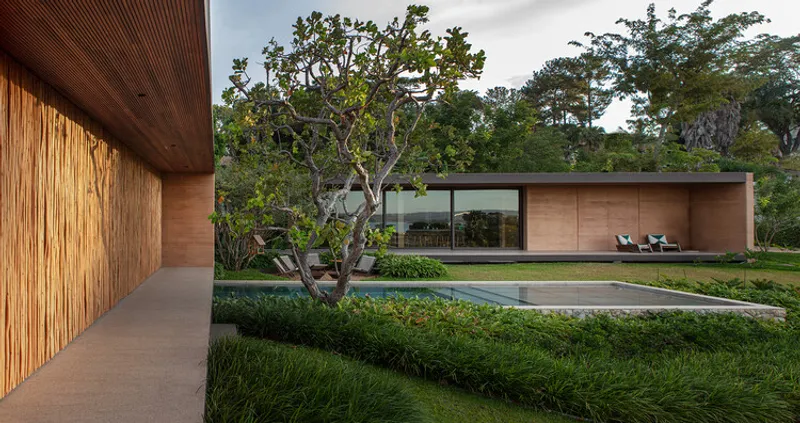
Nestled in the serene landscape of Lago Sul, Brasília, the Taipa Residence by Valéria Gontijo + Arquitetos redefines the intersection between vernacular tradition and contemporary design. Completed in 2024, this 620 m² single-story home stands as a manifesto for sustainable, sensorial, and site-integrated living.
A Contemporary Interpretation of Vernacular Earth Architecture
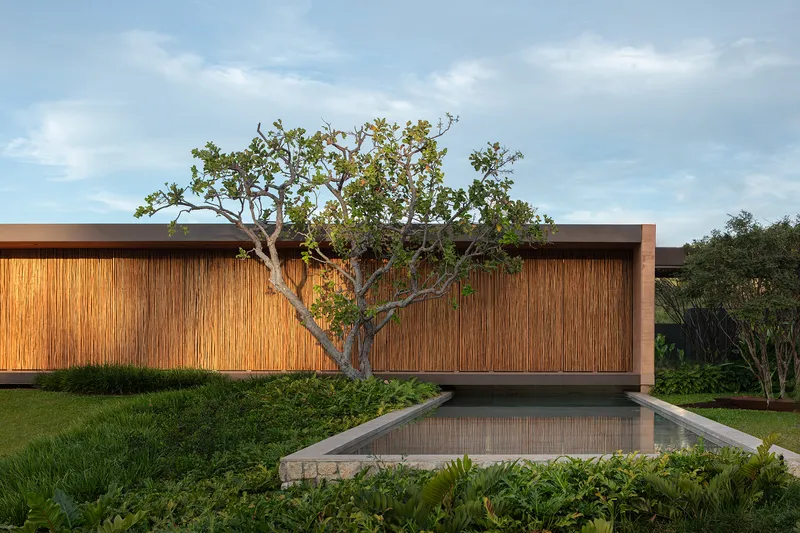
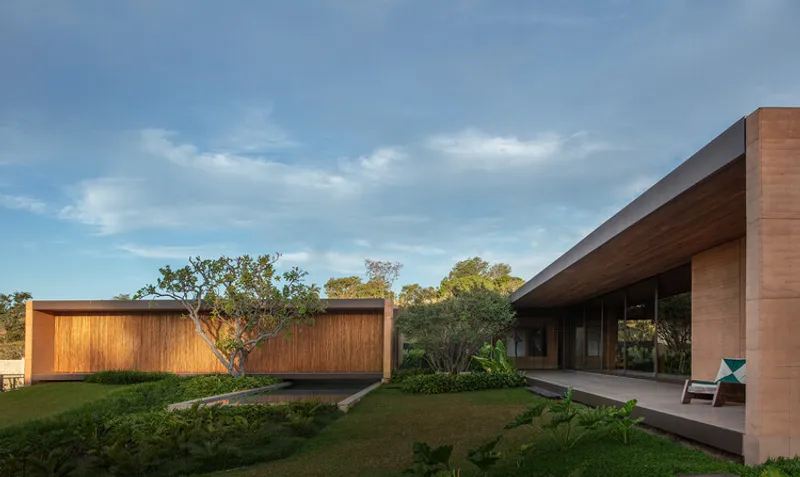
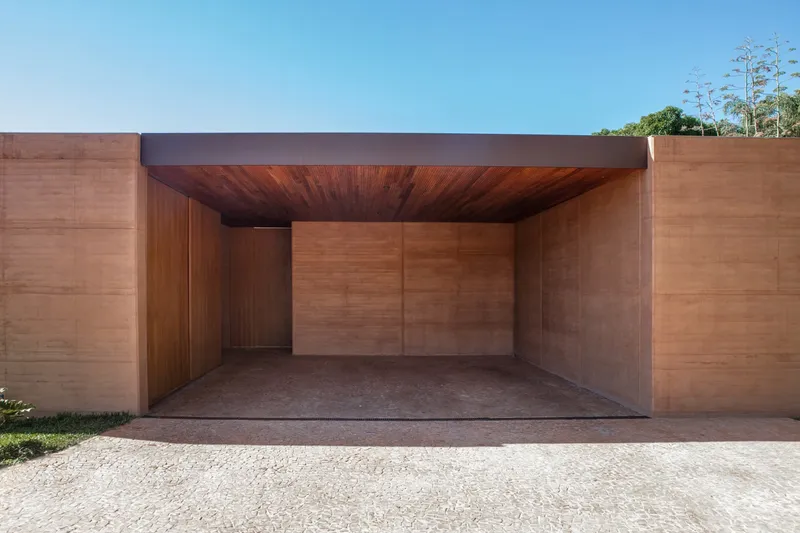
The project’s soul lies in its use of taipa, or rammed earth construction — an ancient technique that compresses local soil within wooden molds to form solid structural walls. This method not only anchors the home to its land but also enhances thermal and acoustic comfort, creating an environment that breathes naturally. The architects embraced this raw, tactile material as a rebellion against industrial uniformity — choosing instead to celebrate imperfection, texture, and the beauty of earth itself.
Valéria Gontijo explains, “We were drawn to taipa precisely because it escapes the codes of concrete and stone. We wanted something experimental yet pure.” The result is a house that feels both primitive and refined, echoing Brazil’s natural landscape through its warm tones and earthy tactility.
Design That Flows With the Landscape
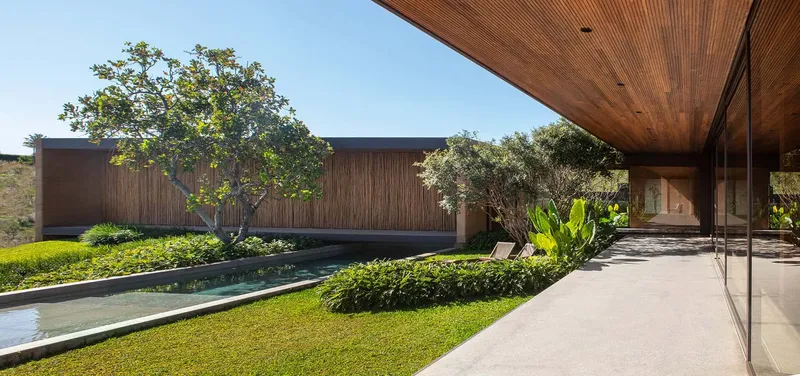
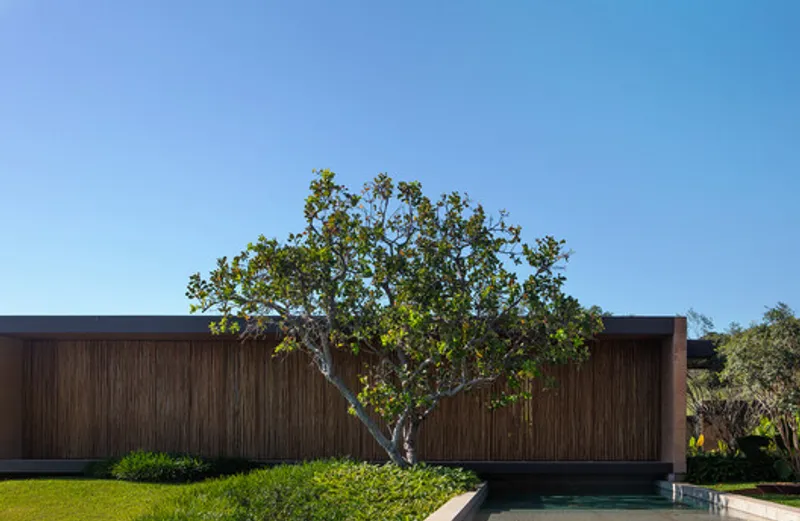
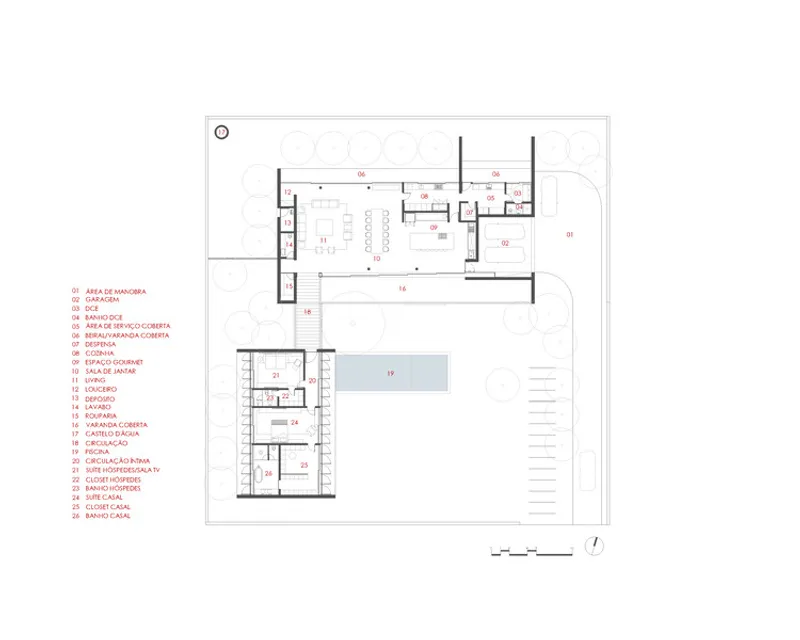
Positioned on a gently sloping plot overlooking Lake Paranoá, the residence adopts an L-shaped configuration, ensuring privacy while maintaining an intimate relationship with the outdoors. The layout maximizes cross-ventilation and natural light, allowing each room to open to lush garden views.
The program is intentionally compact yet generous in feeling: two suites, an open-plan living room, gourmet kitchen, covered veranda, two-car garage, and a pool area that extends toward the horizon. Every inch of the home was designed to evoke togetherness — a space for slow living, where architecture becomes an emotional experience.
Material Palette and Sensory Experience
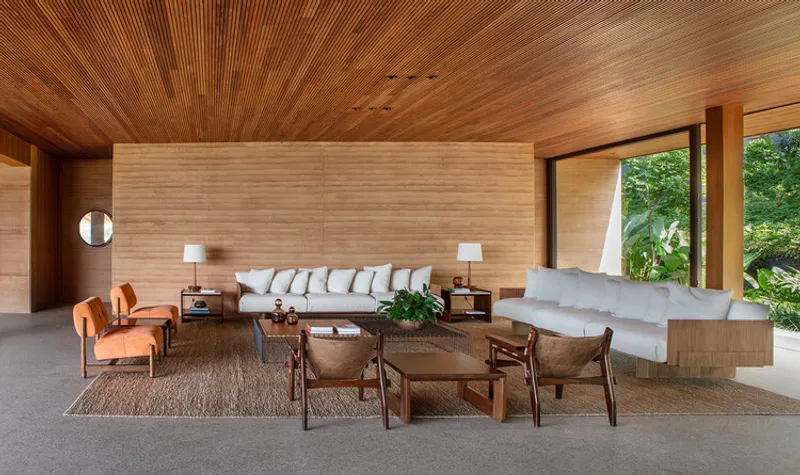
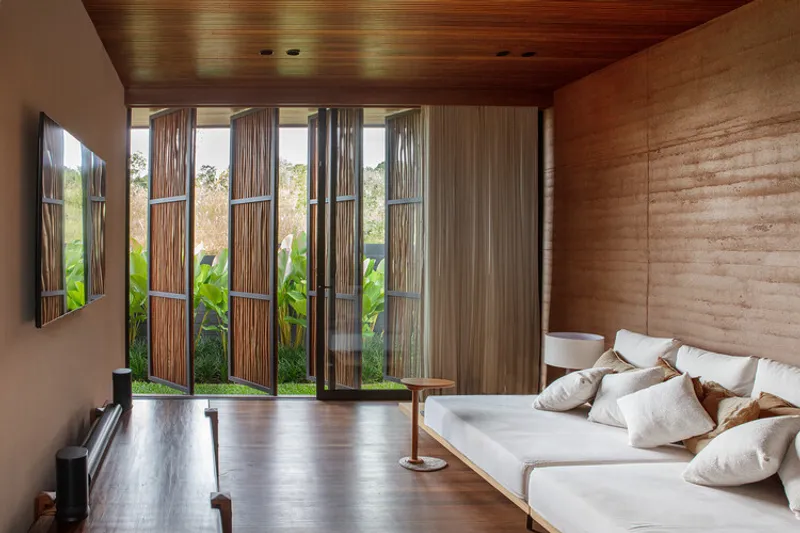
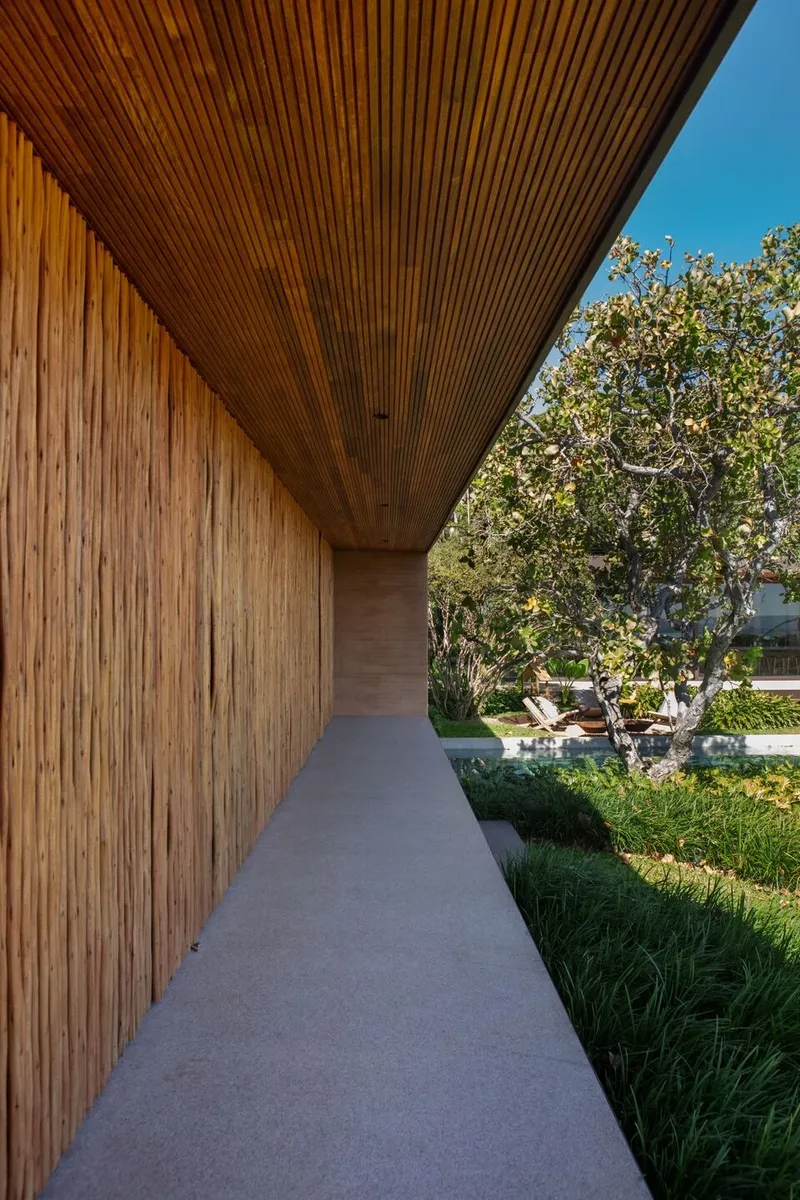
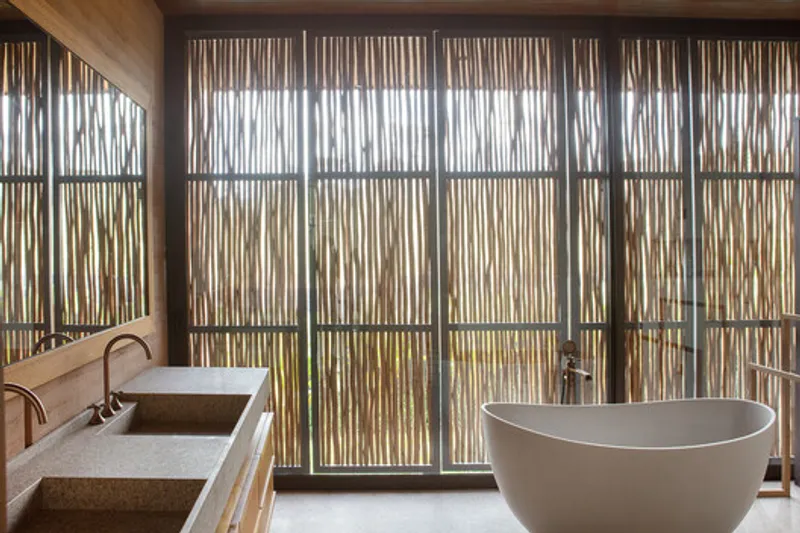
The tactile quality of the residence defines its atmosphere. Inside, reclaimed wood, rustic granite floors, and biribinha latticework add texture and warmth, while natural light filters softly across rammed earth walls. The low ceilings create a cozy, grounded feel — a deliberate move to foster intimacy and comfort.
The gourmet area, seamlessly integrated with the living and dining spaces, reflects the clients’ love for cooking and hosting. As Valéria notes, “This house is about receiving and celebrating. It’s sensorial — you feel the texture of the walls, the sound, the filtered light. It’s a house that embraces you.”
Craftsmanship and Local Collaboration
A defining aspect of Taipa Residence is its collaborative construction process. Local artisans, guided by specialists, executed the taipa technique with care and precision. The client’s personal involvement deepened the project’s authenticity, blending traditional craftsmanship with modern architectural oversight.
The first of four residences in a family compound, Taipa Residence sets the tone for the ensemble — each designed to reinterpret the vernacular in its own way, creating an architectural dialogue between heritage and modernity, simplicity and sophistication.
A New Brazilian Minimalism
Through its material honesty, environmental responsiveness, and human-centered design, Taipa Residence transcends mere aesthetics — it is a statement on how architecture can be sustainable, emotional, and deeply local. By merging ancient building wisdom with modern spatial clarity, the project proposes a new path for Brazilian minimalism — one that is grounded, tactile, and alive.
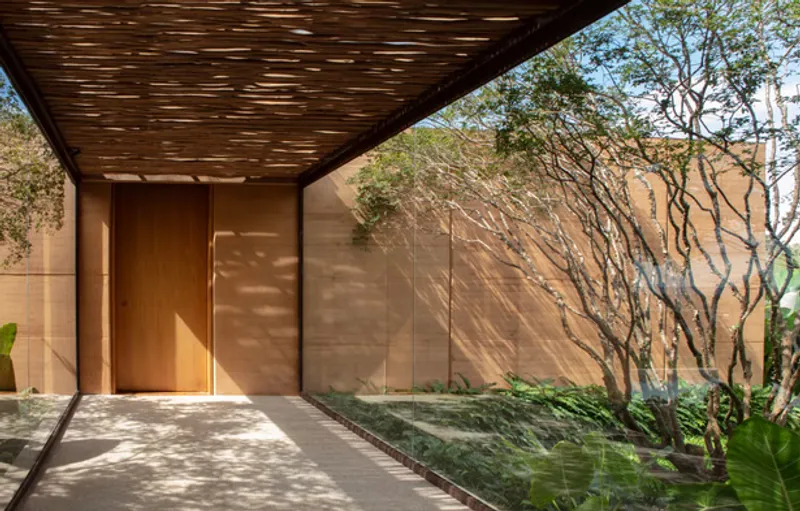
All the photographs are works of Front




Popular Articles
Popular articles from the community


The Musturak Paradise: Senior Living Architecture for a Connected Future in Temara, Morocco
The Musturak Paradise reimagines senior living architecture in Temara via private homes, social spaces, culture, community, and shared care.

The Ocean Hive: Sustainable Architecture for a Self-Sufficient Civilization at Sea
The Ocean Hive imagines sustainable architecture at sea, where modular habitats, algae, wave power and ocean waste sustain a growing colony.

Play: Fragments of Their World
Familiar architecture becomes modular playground design, creating safe spaces where displaced children can learn, connect, imagine and play.

Conexión: Biophilic Design Reimagines High-Rise Living in Hong Kong
Conexión reimagines high-rise living in Hong Kong through biophilic design, green facades, shared spaces, daylight, water and nature within.

Similar Reads
You might also enjoy these articles


Hodi-Mandai Geram
Project Function: Preservation and revitalization of the Intangible heritage and socio-spatial identity of the Hodi by Housing, Cultural Memory Center, Sacred Grove, landscape, local tourism economy


Olio Towers: A Mid-Rise for Performers That Fuses Housing, Rehearsal, and Stage
Located blocks from Houston's Theater District, this modular tower stacks living units around a central performance atrium.

Oasis: Modular Green Housing Carved into Dhaka's Urban Fabric
A shortlisted Plugin Housing entry reclaims unauthorized settlements in Dhaka with stepped concrete volumes, green roofs, and ventilation-driven design.

Black Hole: A Floating Megastructure for the Post-Physical Era
Emiliano Mazzarotto envisions a spherical, self-scaling arena where e-sports, digital hotels, and holographic stadiums replace traditional public space.


Explore Architecture Competitions
Discover active competitions in this discipline



Challenge to reimagine the Iron Throne


Photograph architecture without architects


Illustrate the lost glory of Angkor Wat - Render Challenge


Design challenge to reuse E-waste
Comments (0)
Please login or sign up to add comments
No comments yet. Be the first to comment!