

Taken from the Ocean and Returned to the Ocean
Transforming abandoned offshore oil rigs into thriving marine ecology centers where adaptive reuse architecture reconnects people and oceans.


As the world continues to consume natural resources at an unprecedented rate, architecture is increasingly challenged to address the environmental consequences left behind by industrial development. One of the most striking examples of this challenge can be found offshore, where thousands of aging oil platforms stand as remnants of a century of resource extraction.
The project "Taken from the Ocean and Returned to the Ocean" by 圆圆 林, an Editor's Choice entry of Proximity Island 2019, explores how adaptive reuse architecture can transform these industrial relics into ecological infrastructure that supports marine biodiversity, scientific research, environmental education, and human engagement with the ocean.
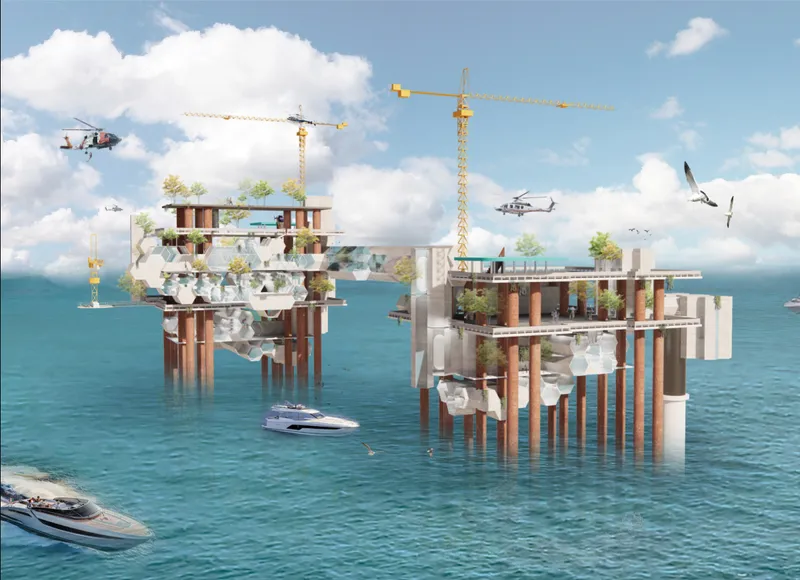
Rather than viewing abandoned oil rigs as obsolete structures awaiting demolition, the proposal reimagines them as opportunities for environmental restoration. The project creates a new relationship between architecture, nature, and society by converting offshore platforms into regenerative marine ecosystems that actively contribute to ocean health.
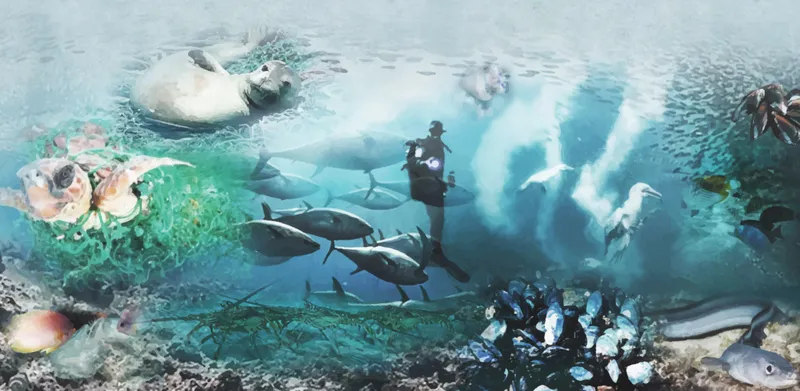
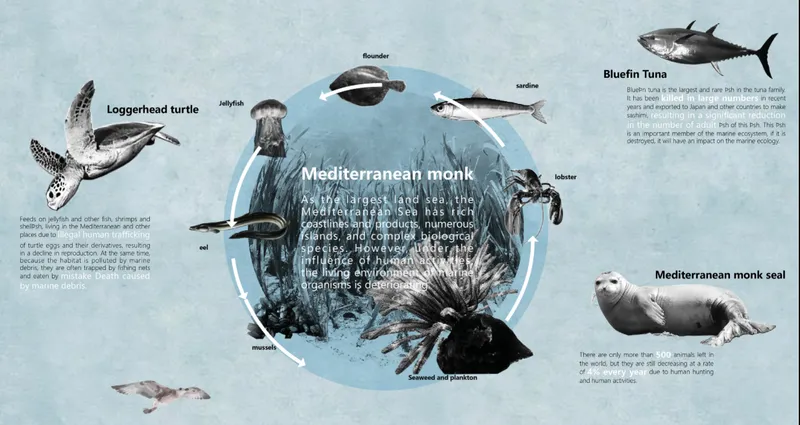
The Environmental Legacy of Offshore Oil Platforms
For decades, offshore oil rigs have played a significant role in supporting global energy demands. Yet as many of these structures reach the end of their operational lifespan, they leave behind complex environmental challenges.
Across the world's oceans, thousands of decommissioned platforms require extensive resources for dismantling. The removal process often disrupts marine habitats that have developed around the structures over time. Coral colonies, fish populations, shellfish communities, and other marine species frequently establish thriving ecosystems beneath and around platform foundations.
At the same time, marine environments face increasing threats from plastic pollution, industrial waste, overfishing, and habitat destruction. The Mediterranean Sea, one of the project's primary areas of investigation, has become a powerful example of this ecological crisis.
The proposal recognizes a critical opportunity: instead of destroying these established habitats through costly dismantling operations, existing offshore platforms can become foundations for ecological regeneration.
Adaptive Reuse Architecture Beyond the Land
Adaptive reuse architecture is commonly associated with warehouses, factories, and historic buildings. This project expands that concept into the marine environment.
The design treats the oil platform as a valuable structural framework rather than industrial waste. Existing foundations, support systems, transportation networks, and spatial configurations are preserved and reinterpreted to serve new ecological and social functions.
By extending the life cycle of offshore infrastructure, the project reduces demolition waste while simultaneously creating a platform for environmental recovery.
The result is an architectural strategy that views obsolete infrastructure not as an endpoint but as the beginning of a new ecological narrative.
Learning from Marine Ecosystems
A detailed ecological analysis informed the project's development.
Research into Mediterranean marine life revealed a complex web of biological relationships involving monk seals, bluefin tuna, loggerhead turtles, jellyfish, seaweed, mussels, eels, sardines, lobsters, and countless other species.
Many of these organisms are increasingly threatened by:
- Plastic pollution
- Habitat loss
- Marine litter
- Industrial activity
- Shipping traffic
- Overfishing
- Climate change
The proposal responds by designing architecture that functions as habitat rather than merely shelter.
Instead of imposing human systems onto nature, the project studies ecological patterns and integrates them directly into the architectural framework.
Hexagonal Design Inspired by Nature
A key design element is the adoption of the hexagon as the project's primary spatial module.
The hexagonal geometry offers structural efficiency, adaptability, and spatial flexibility. Similar patterns appear throughout natural systems, from honeycombs to biological formations found within marine environments.
The modular approach allows the architecture to expand, adapt, and evolve over time while maintaining structural integrity in challenging offshore conditions.
This geometry also creates interconnected spaces capable of supporting a wide range of functions, including research laboratories, museums, marine habitats, educational facilities, and public gathering areas.
Artificial Reefs and Marine Restoration
One of the project's most innovative contributions lies in its artificial reef system.
Marine debris and collected plastic waste are processed and transformed into biodegradable reef structures. These reef components are designed to encourage the growth of marine organisms and create new habitats for aquatic life.
Experimental studies conducted during the design process investigated biological growth patterns and the interaction between marine organisms and biodegradable materials.
Over time, these artificial reef systems become living ecological infrastructure, supporting biodiversity while helping restore damaged marine environments.
This strategy transforms pollution into an environmental resource, creating a circular relationship between waste management and ecosystem restoration.
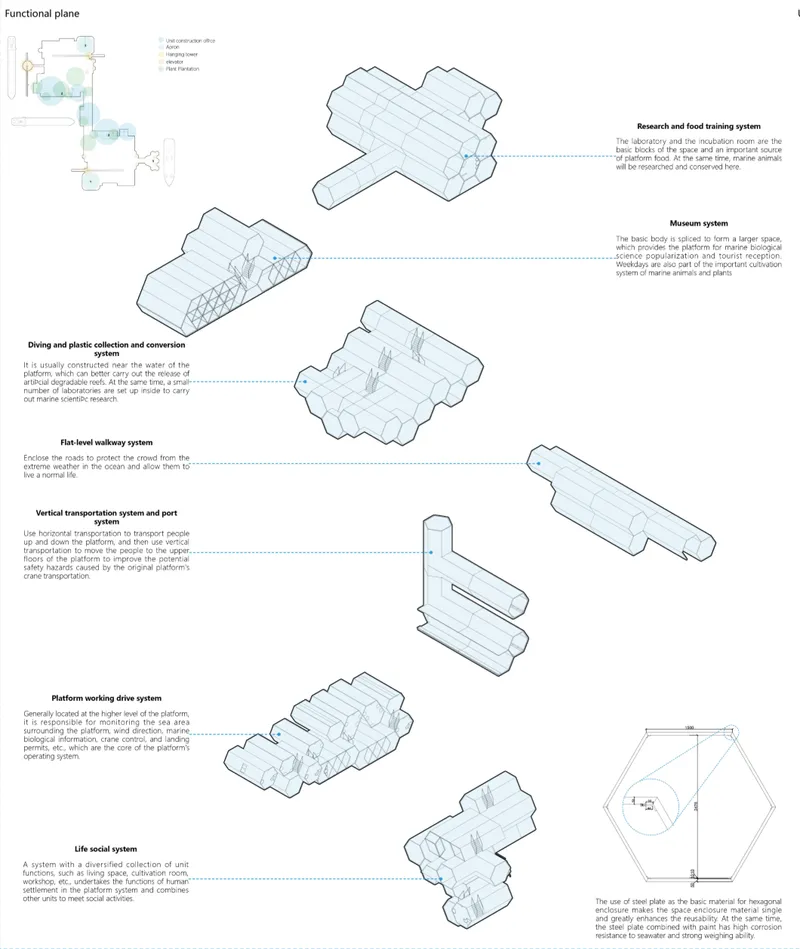
A Multi-Layered Program for Ocean Conservation
The repurposed platform accommodates a diverse range of interconnected programs.
Marine Research Facilities
Research laboratories provide scientists with dedicated spaces to study marine ecosystems, biodiversity, climate impacts, and conservation strategies.
The offshore location offers direct access to marine habitats, creating opportunities for long-term ecological monitoring.
Ocean Education Center
Educational spaces introduce visitors to the challenges facing contemporary oceans.
Through exhibitions, immersive experiences, and scientific displays, the project promotes public awareness of marine conservation issues and encourages environmental stewardship.
Marine Museum
The museum serves as a cultural platform that communicates the history of offshore infrastructure alongside the ecological importance of marine environments.
Visitors gain a deeper understanding of the relationship between industrial development and environmental responsibility.
Diving and Exploration Facilities
Controlled diving programs allow researchers and visitors to experience underwater ecosystems directly.
These spaces strengthen the emotional connection between people and the ocean, transforming abstract environmental concerns into personal experiences.
Community and Social Spaces
Observation decks, gathering spaces, and recreational areas create opportunities for people to engage with the marine environment while supporting tourism and public participation.
Architecture as a Bridge Between Humanity and Nature
At its core, the project proposes a new philosophy of environmental architecture.
The oil platform once represented humanity's extraction of resources from nature. Through adaptive reuse, it becomes a symbol of restoration and reciprocity.
The proposal reframes industrial infrastructure as an opportunity to repair ecological damage while creating meaningful public experiences.
Instead of remaining scars on the ocean, these structures become bridges connecting people with marine ecosystems and environmental knowledge.
The architecture actively participates in ecological recovery, transforming from a tool of extraction into an instrument of regeneration.
A Vision for the Future of Offshore Infrastructure
As thousands of offshore platforms approach decommissioning worldwide, the need for innovative reuse strategies continues to grow.
"Taken from the Ocean and Returned to the Ocean" demonstrates how adaptive reuse architecture can address environmental challenges while creating new cultural, scientific, and ecological value.
By combining marine conservation, circular design principles, environmental education, and habitat restoration, the project offers a compelling model for the future of offshore infrastructure.
Rather than removing these structures from the sea, the proposal suggests a more meaningful alternative: allowing architecture to give back to the ocean that once sustained it.
In doing so, the project creates a future where humans and nature are not separated by industry but connected through thoughtful design, shared responsibility, and ecological renewal.




Popular Articles
Popular articles from the community


The Ocean Hive: Sustainable Architecture for a Self-Sufficient Civilization at Sea
The Ocean Hive imagines sustainable architecture at sea, where modular habitats, algae, wave power and ocean waste sustain a growing colony.

Riyadh For All: Intergenerational Urban Design for Active Aging in Rabat
Riyadh For All reimagines urban design in Rabat with intergenerational co-living, adaptive courtyards, and Moroccan cultural exchange today.

Co-life: Sustainable Architecture for Age-Friendly Community Living
Co-life reimagines sustainable architecture for seniors through courtyards, rammed earth, shared gardens, and spaces designed for belonging.

The Earth Pod: 3D Printed Homes for Resilient Refugee Communities
The Earth Pod reimagines refugee housing through 3D printed homes made from clay, combining resilience, self-sufficiency, and rapid shelter.

Similar Reads
You might also enjoy these articles

Eco Chapel: A Green Architecture Pavilion Designed in Symbiosis with the Forest
Eco Chapel uses green architecture to weave prayer, learning and reuse into a forest pavilion shaped by modular hexagonal canopies for life.
Kaffeebühnen: Coffee Shop Architecture Designed as a Civic Stage Between Vienna’s City and Park
Kaffeebühnen turns coffee shop architecture into a civic stage, linking Vienna’s park edge, urban life, warm timber yards, and coffee craft.
Healing Façade: Sustainable Architecture for Reforestation, Community, and Sacred Ecology in Ethiopia
Healing Façade reimagines sustainable architecture as a living wall that restores soil, catches water and renews Ethiopia's forest churches.


Urban Forest: A Vertical Ecosystem for 5,000 Workers in Singapore's Changi Business Park
Radially stacked pods and layered green decks turn a 7-acre plot into 47 acres of ecological workspace projected for 2040.
Explore Architecture Competitions
Discover active competitions in this discipline



Challenge to reimagine the Iron Throne


Photograph architecture without architects


Illustrate the lost glory of Angkor Wat - Render Challenge


Design challenge to reuse E-waste
Comments (0)
Please login or sign up to add comments
No comments yet. Be the first to comment!