

Tallowwood Cabin: A Bushfire-Resilient Secondary Dwelling in the Australian Bush
A compact, bushfire-resilient cabin blending timber warmth and concrete durability, lightly positioned within dense Australian bushland for multigenerational living.


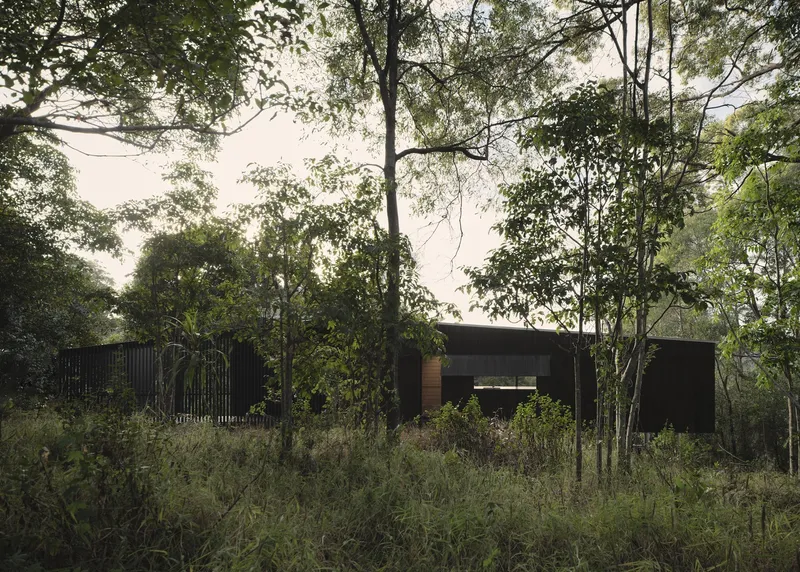
Nestled within a densely vegetated six-hectare property in Tallebudgera, Australia, Tallowwood Cabin by Fouché Architects is a carefully considered secondary dwelling designed for multigenerational living. Conceived as a modest home for the client’s father, the project responds to a complex matrix of environmental, regulatory, and budgetary constraints while demonstrating a refined approach to sustainable residential architecture in a sensitive bushland setting.

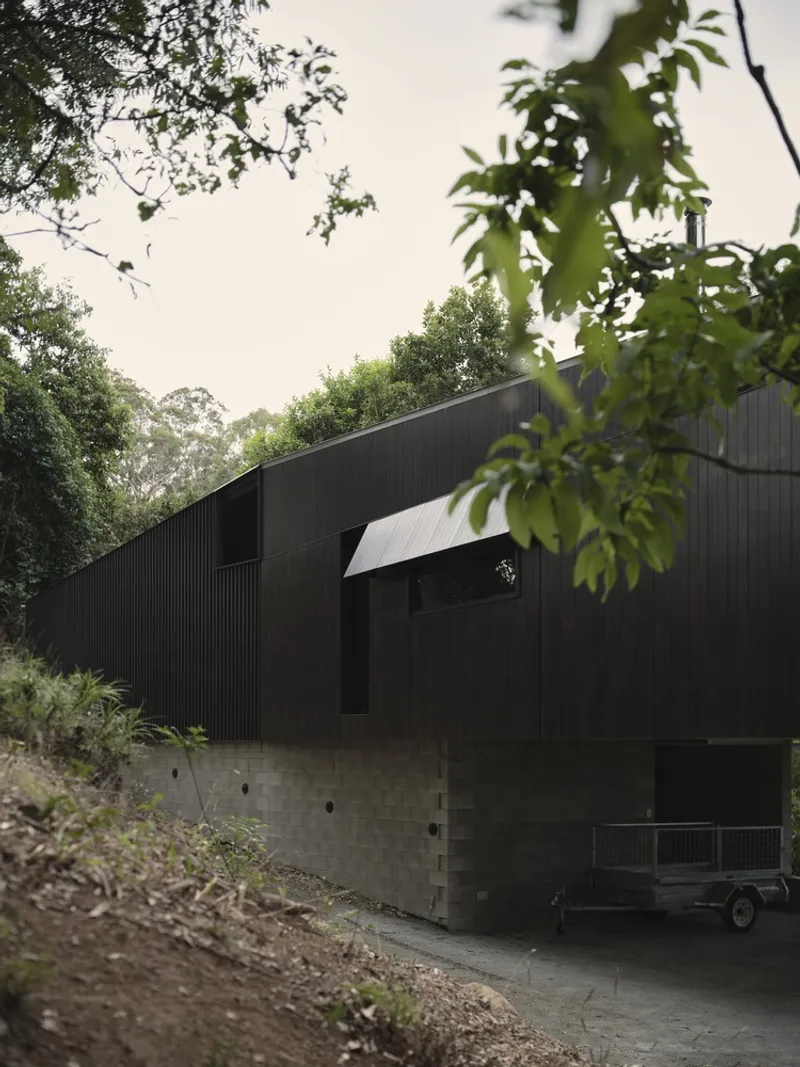
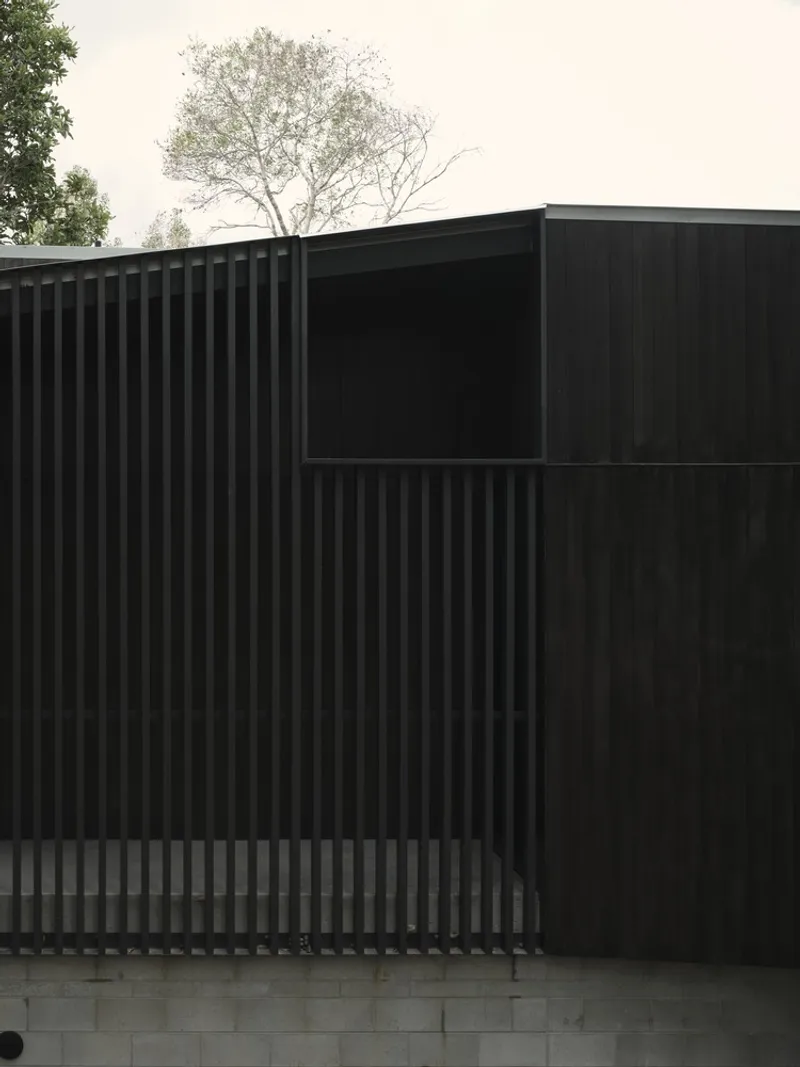
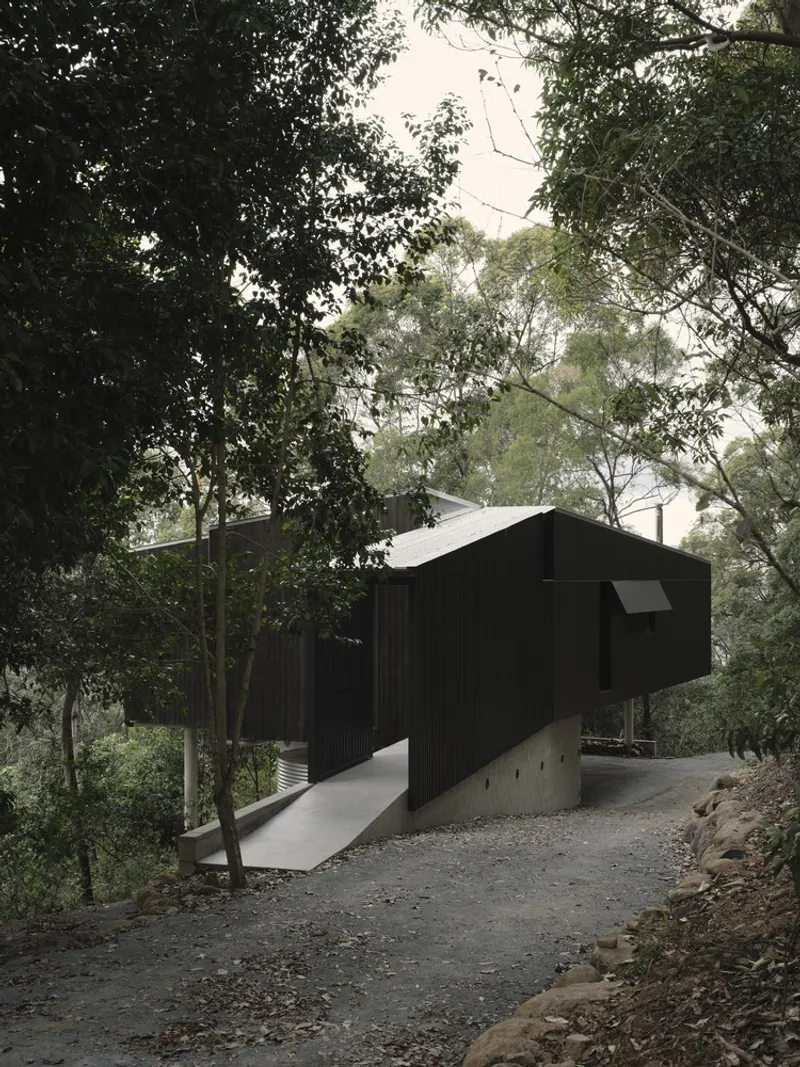
Almost the entirety of the site is occupied by established native trees and understorey planting, forming an important ecological habitat for koalas and other native fauna. As a result, only a small clearing near the western boundary of the property was suitable for development. This limitation, combined with a strong desire to preserve the surrounding landscape, led to a design strategy that emphasizes minimal site disturbance and a light physical footprint.

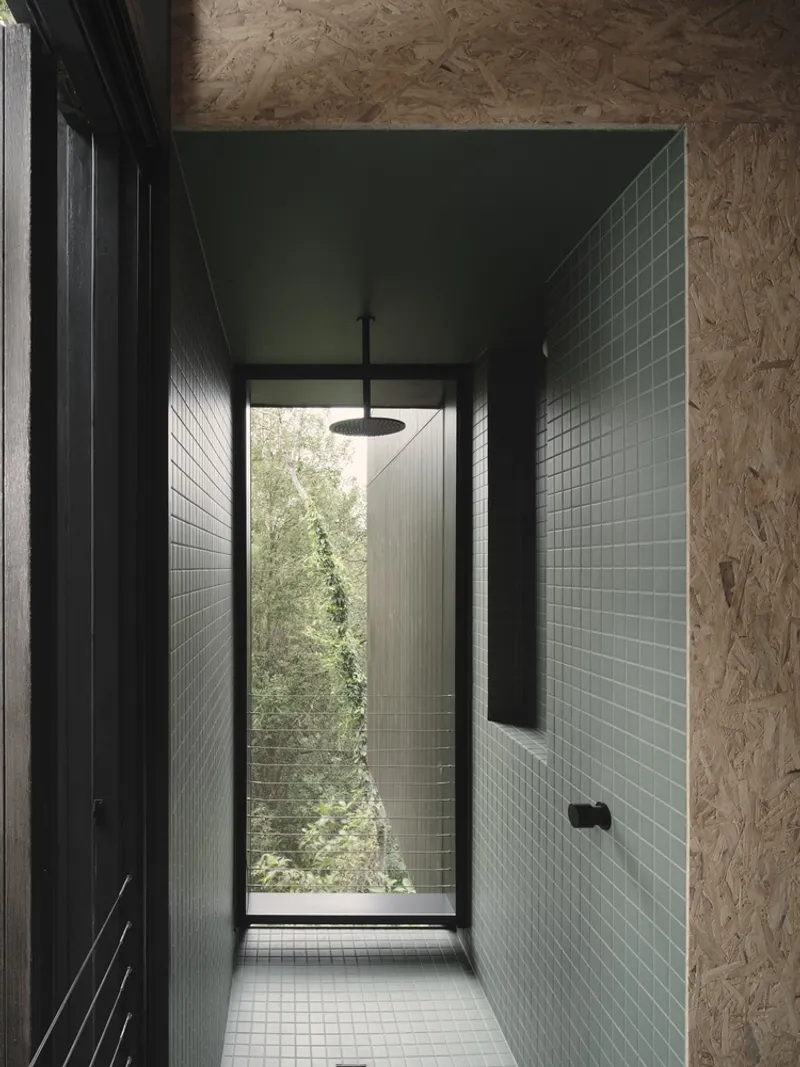
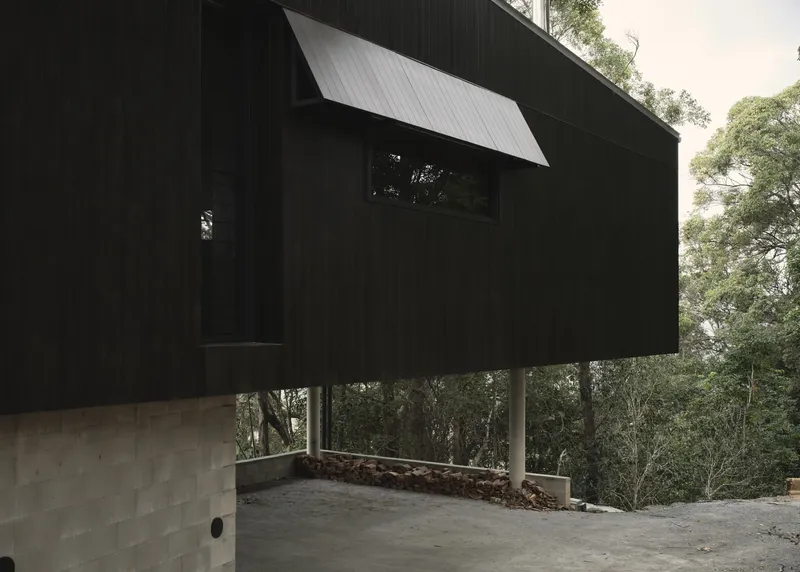
Bushfire risk played a critical role in shaping the project. The cabin was required to meet BAL-FZ (Flame Zone) standards, the highest bushfire attack level in Australia, due to the proximity of vegetation and the absence of defendable canopy setbacks. Achieving this stringent performance level within a tight budget demanded careful coordination between architecture, structure, and material selection. The result is a building envelope that performs robustly in extreme environmental conditions while remaining visually recessive within its bushland context.
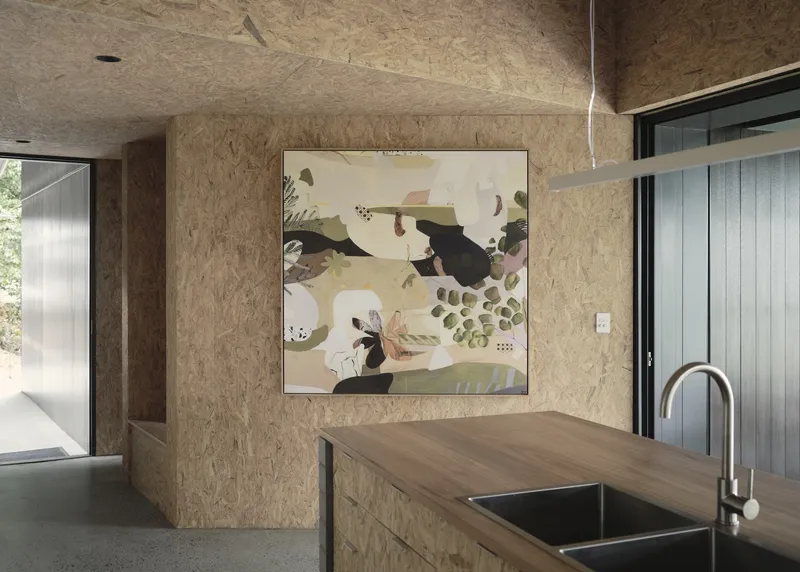

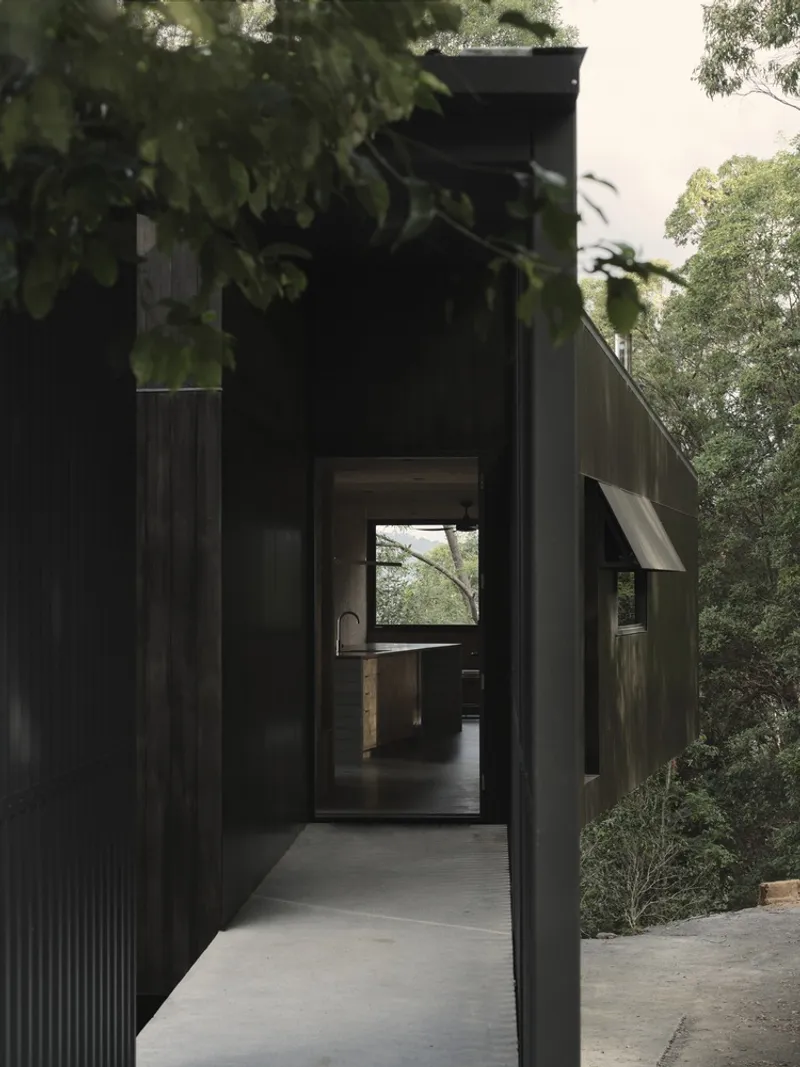
The cabin’s form is informed by access constraints, views through the tree canopy, and a desire to elevate the building lightly above the ground. Its external skin is both durable and understated, designed to weather naturally and blend seamlessly with the surrounding forest. The use of restrained materials allows the architecture to recede, placing emphasis on the landscape rather than competing with it.
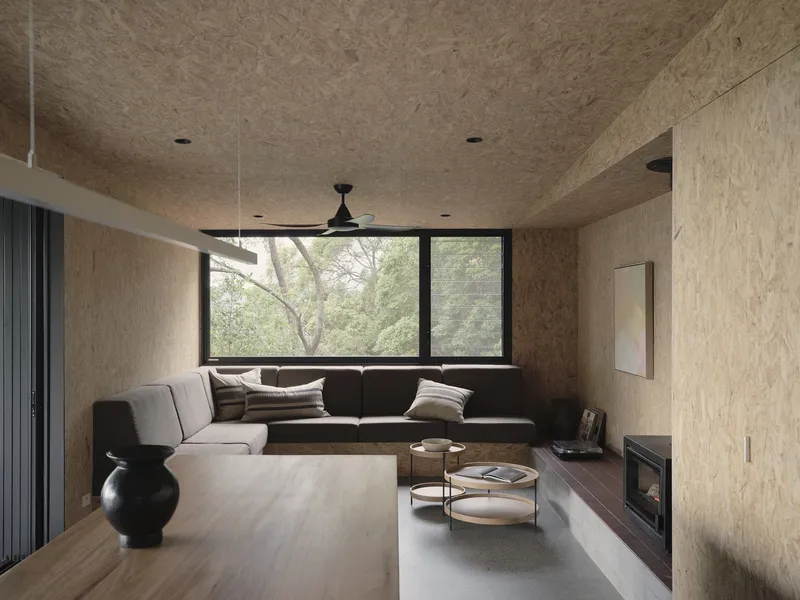

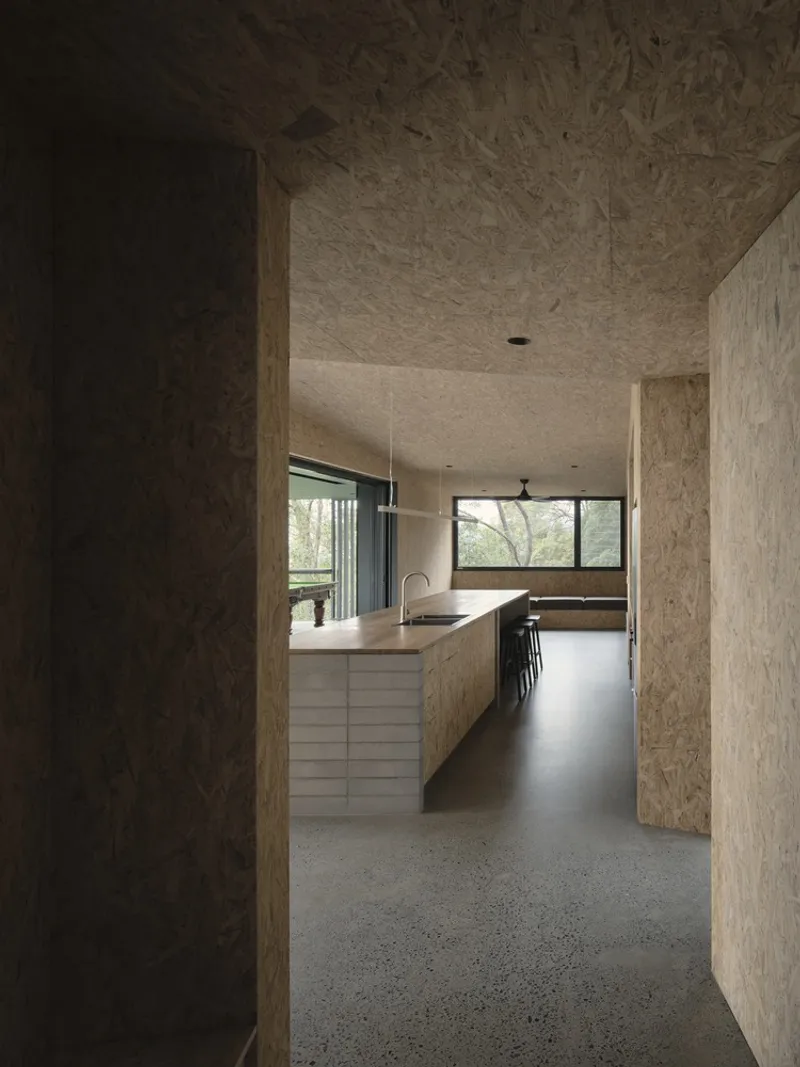
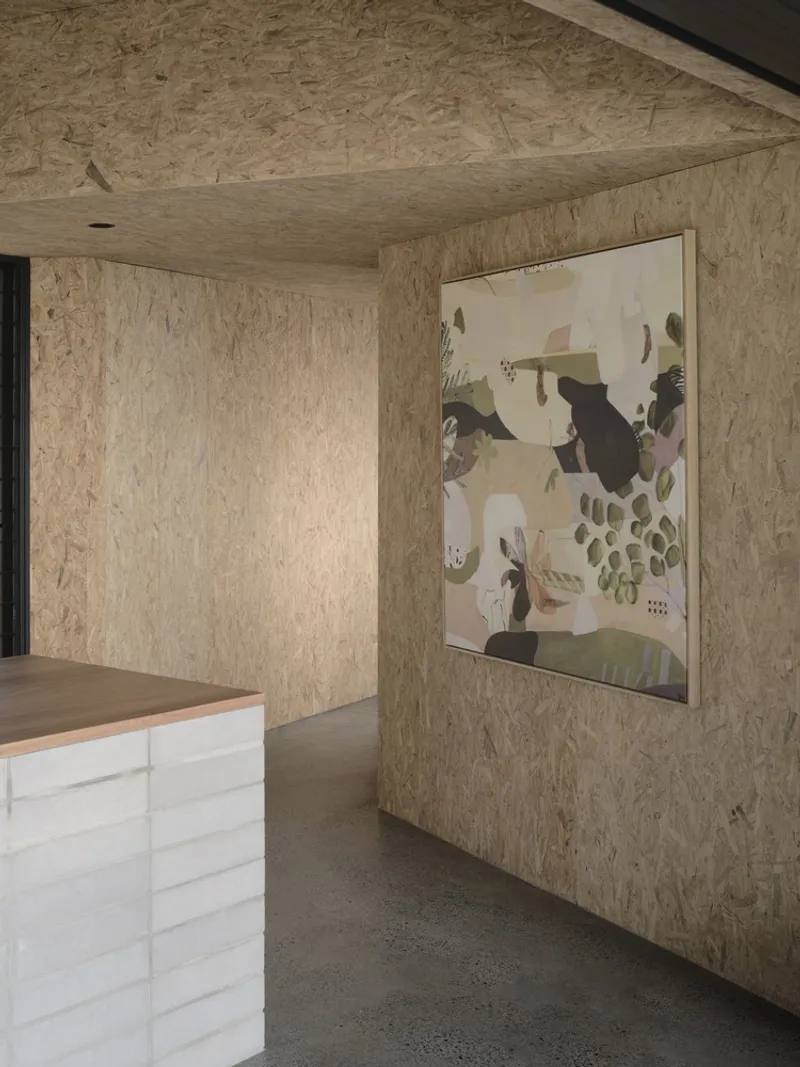
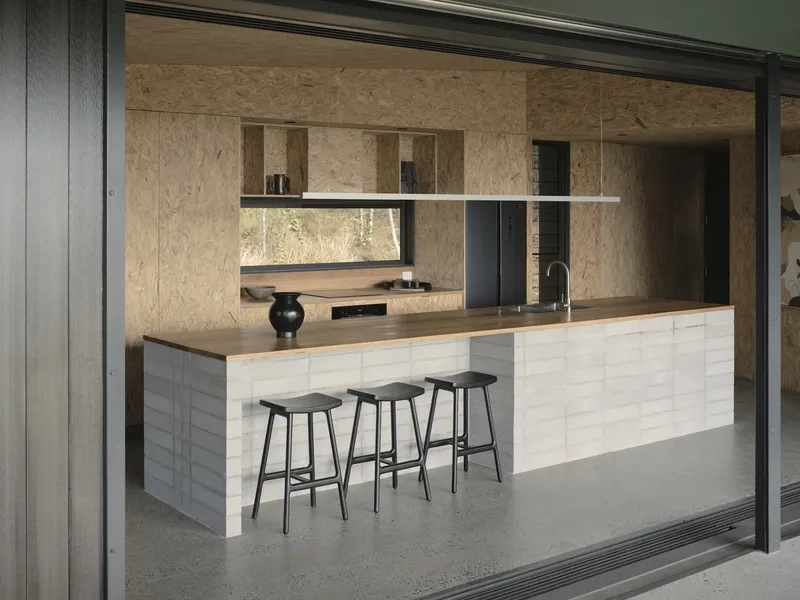
Inside, the material palette is simple, honest, and tactile. Cool concrete floors provide thermal mass and durability, while warm timber walls and ceilings introduce a sense of comfort and intimacy. This contrast enhances the cabin’s atmosphere, balancing robustness with domestic warmth.
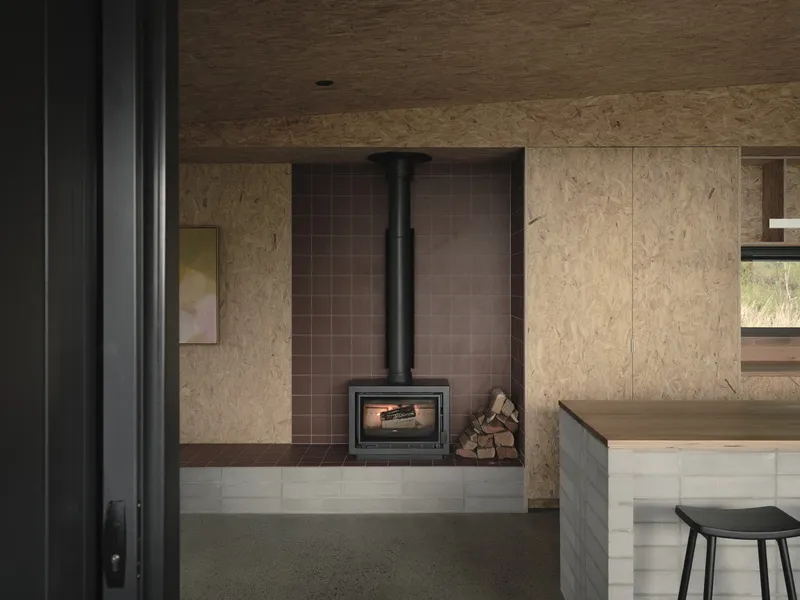
The internal layout is intentionally free from excess. A linear living space accommodates the kitchen, dining, and lounge areas within a compact yet highly efficient footprint. The kitchen island doubles as a dining table, while built-in seating, a fireplace, and integrated storage line the perimeter, maximizing usable space without clutter. Large stacking doors open the living area onto a deck, framing expansive views across the green canopy and extending the living space outdoors.
The private program consists of two modest bedrooms and a bathroom, designed to feel generous despite their compact size. Large windows draw in light and views, visually expanding the rooms, while operable openings in the bathroom introduce ventilation and an almost open-air quality, reinforcing the home’s close relationship with nature.
At its core, Tallowwood Cabin is an exercise in architectural restraint and environmental responsiveness. By carefully negotiating planning restrictions, bushfire regulations, and ecological considerations, Fouché Architects have delivered a quiet, durable, and deeply contextual dwelling that supports multigenerational living while respecting the fragile landscape it inhabits.
Project Details
Architects: Fouché Architects Lead Architect: Rayne Fouché Location: Tallebudgera, Australia Area: 162 m² Year: 2023 Photographs: David Chatfield Builders: Minarco Structural Engineers: Grain Structural Studio
All photographs are works of
David Chatfield


Popular Articles
Popular articles from the community


David Macias Steps a Doorless Stone and Plaster House Down a Tropical Colombian Hillside
In the humid hills of Colombia, Threshold House replaces the front door with an open void and terraces its 850 m² down the slope instead of fighting it.

GROUP A Strips a 1969 Rotterdam Harbor Headquarters to Its Frame and Wraps It in Timber Louvers
In Rotterdam's M4H harbor district, Ferro Offices reuses a 1969 frame, adds one timber storey and reaches BREEAM-NL Outstanding.

longwave studio Reorganizes a 112 m² Tainan Apartment Around the Daily Routines of a Family and Two Cats
In Tainan, Taiwan, birch plywood, rust-red furniture and a freestanding plaster wall link arrival, storage, work and family life in one apartment.

David Ortega Stacks a Two-Story Mexico City Penthouse Around a Steel Stair and a Pergola-Shaded Roof Terrace
In Colonia Roma, a 300 m² penthouse uses oak joinery, a planted steel stair and a slatted roof pergola to make a new-build apartment feel like a house.

Similar Reads
You might also enjoy these articles

Gil Mello Arquitetura Tilts a Single Roof Toward the Waterfalls on a Plateau Above Aiuruoca, Brazil
In Aiuruoca, Minas Gerais, a 200 m² house of local labor and reclaimed poles pairs a low valley veranda with a tall mountain one.

U.GA Architects Wraps an Oval Rooftop Pool in Curved Board-Formed Concrete on Busan's Jeollidan-gil
In Busan's Jeonpo-dong, a 454 m² mixed-use block stacks a neighborhood facility, guest rooms and an oval rooftop pool inside spiraling concrete walls.

Felipe Hess Arquitetos Turns a Blind Stone Wall to the Street and Opens a Brazilian House onto a Courtyard and Canal
A canal-front house in Brazil hides behind painted stone and planting, then opens to an olive-tree courtyard, a reed-ceilinged porch and a curving pool.
David Macias Steps a Doorless Stone and Plaster House Down a Tropical Colombian Hillside
In the humid hills of Colombia, Threshold House replaces the front door with an open void and terraces its 850 m² down the slope instead of fighting it.

Explore Housing Competitions
Discover active competitions in this discipline

Challenge to reimagine the Iron Throne

Photograph architecture without architects

Illustrate the lost glory of Angkor Wat - Render Challenge

Design challenge to reuse E-waste
Comments (0)
Please login or sign up to add comments
No comments yet. Be the first to comment!