
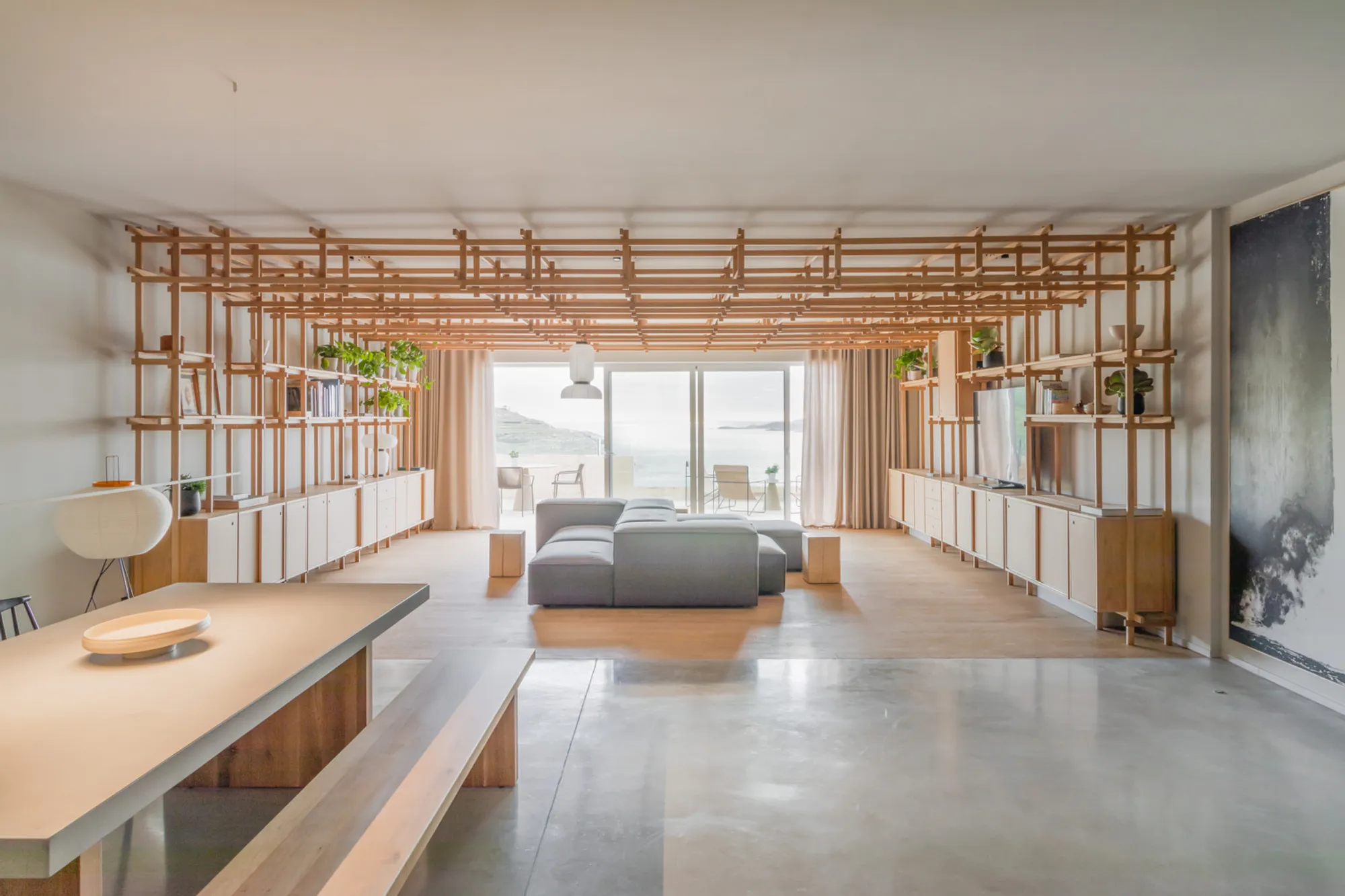
Tanizaki’s Shadows Apartment by Chris Briffa Architects: A Wabi-Sabi Retreat Inspired by Light and Shadow
A serene cliffside retreat blending Japanese wabi-sabi aesthetics with Mediterranean light, crafted through shadow play, timber, and stone.


Perched dramatically on a cliffside in Gozo, Malta’s sister island, Tanizaki’s Shadows Apartment by Chris Briffa Architects is a poetic reinterpretation of traditional Japanese aesthetics filtered through the Mediterranean light. This 220 m² holiday home is not merely a retreat—it’s a spatial essay inspired by Junichirō Tanizaki’s seminal text In Praise of Shadows, brought to life through the dialogue between architecture, nature, and craft.


A Concept Rooted in Tanizaki’s Philosophy
The project began on a winter morning, when architect Chris Briffa stood inside a long, nondescript apartment blinded by intense eastern sunlight. It was during his return ferry ride, while reading Tanizaki’s essay, that an idea began to form—a vision of a home that celebrates shadow over glare, subtlety over spectacle.
Five years later, that vision materialized into a home co-created with Stephen, a master carpenter and the client. Together, they explored the aesthetics of restraint, atmosphere, and craftsmanship, infusing the space with serenity, tactility, and intentional ambiguity.


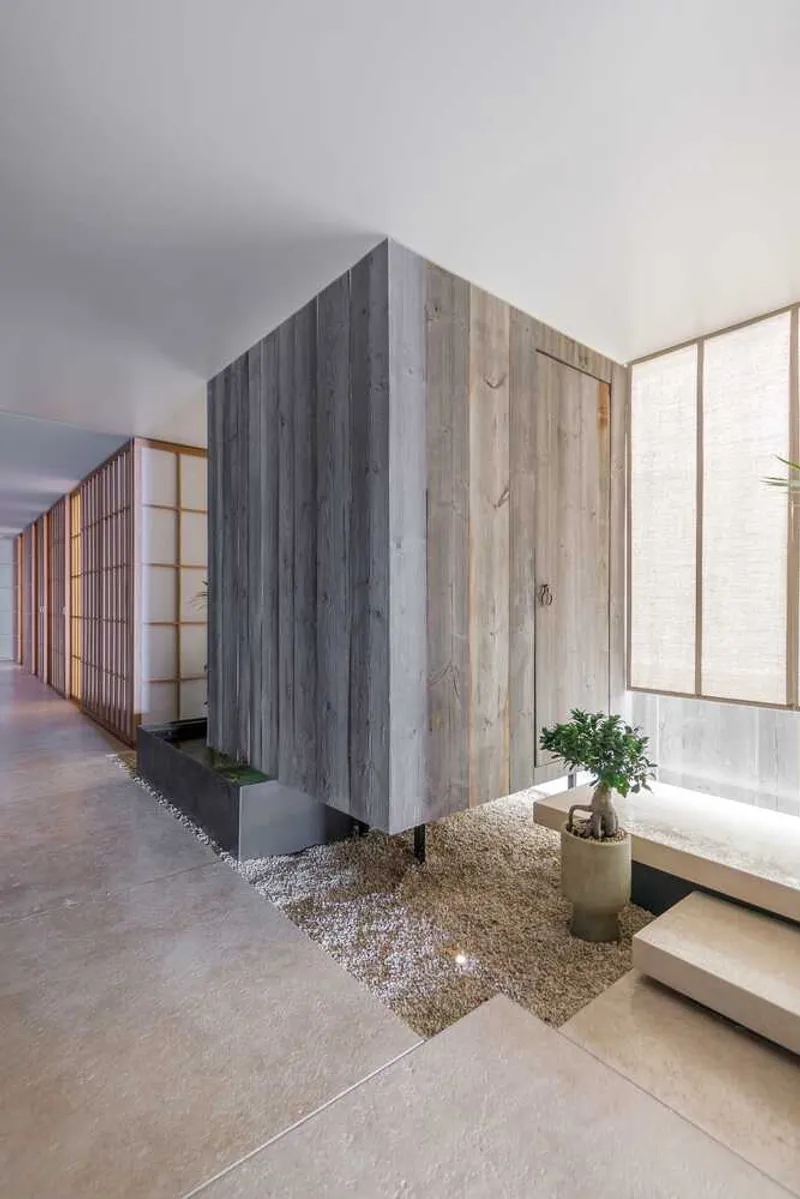
Architectural Narrative: From Courtyard to Cliff
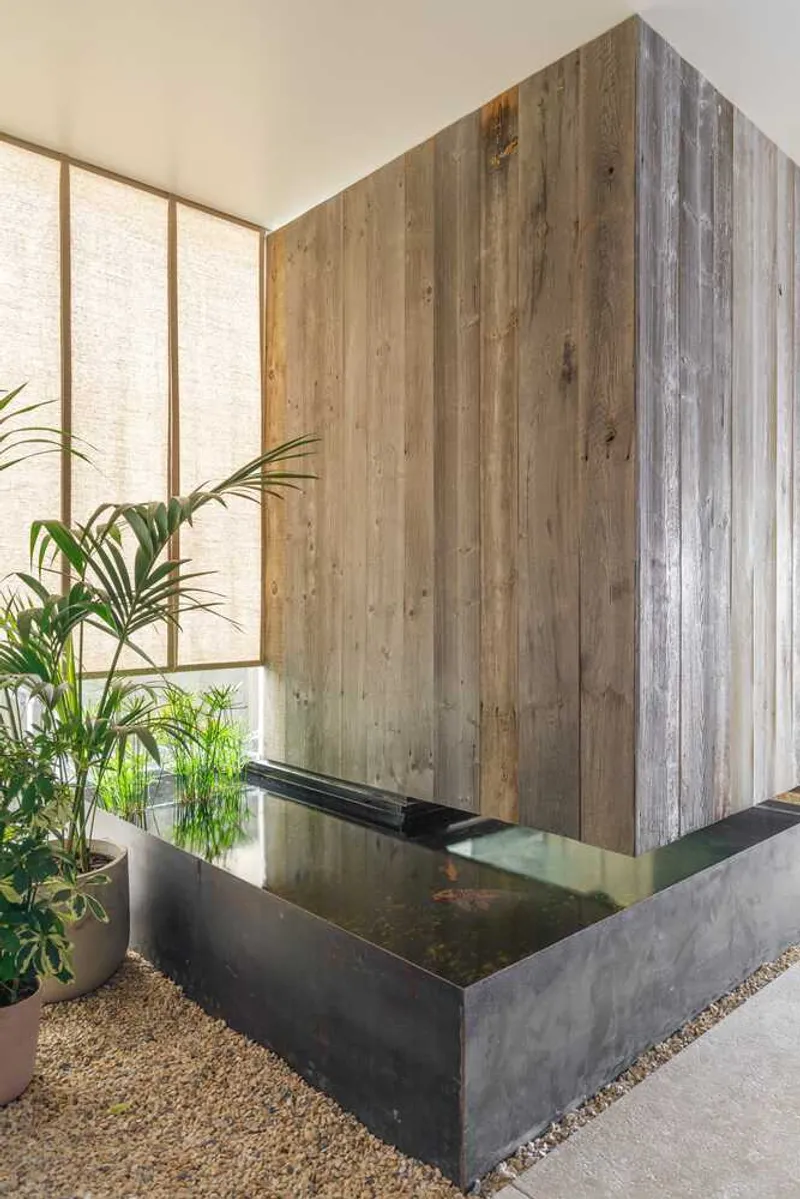
Upon entry, a surreal, quasi-outdoor courtyard sets the tone. A floating timber cabin—housing a guest lavatory—hovers above a koi pond, its floor perforated to give glimpses of the water and fish below. Local limestone, shoji screens, and noren curtains merge to form a hybrid courtyard, where ambient daylight bounces off stone into the pond. By night, hidden LEDs simulate overcast daylight, giving a gentle glow akin to the soft skies of Tanizaki’s literary world.

Spatial Division and the Dance of Light
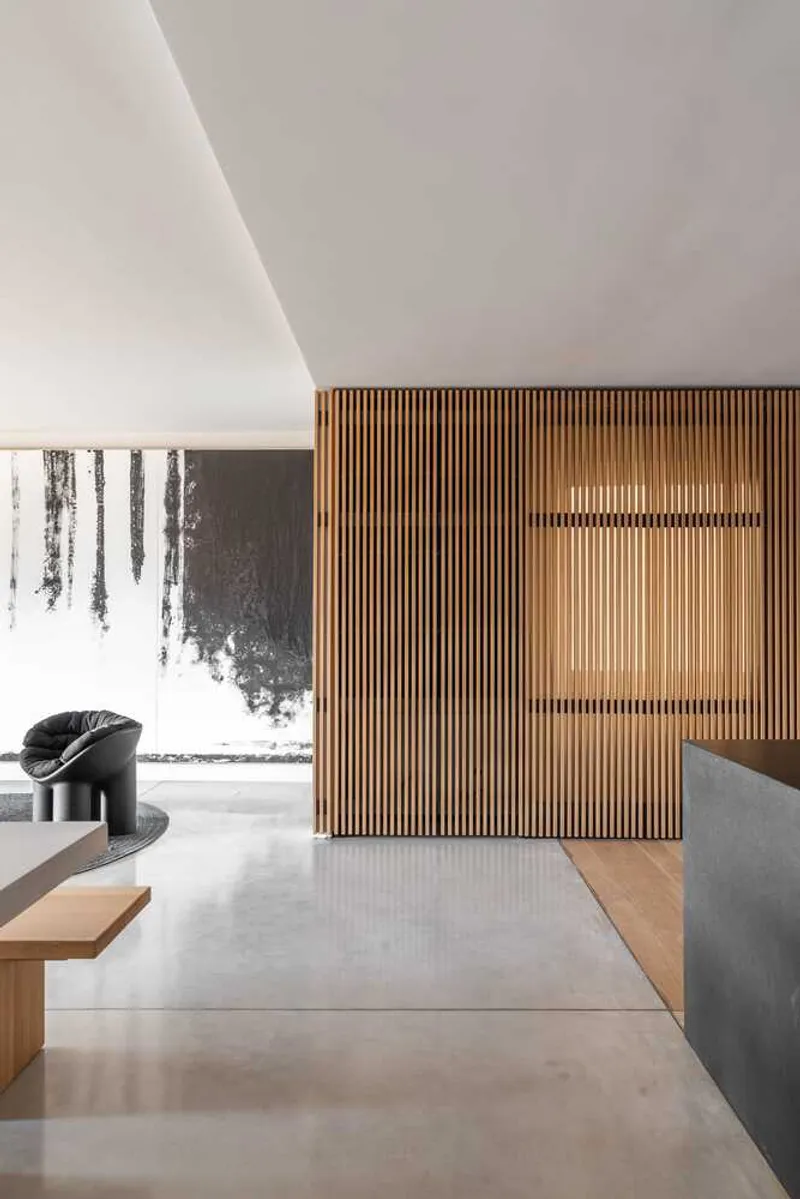
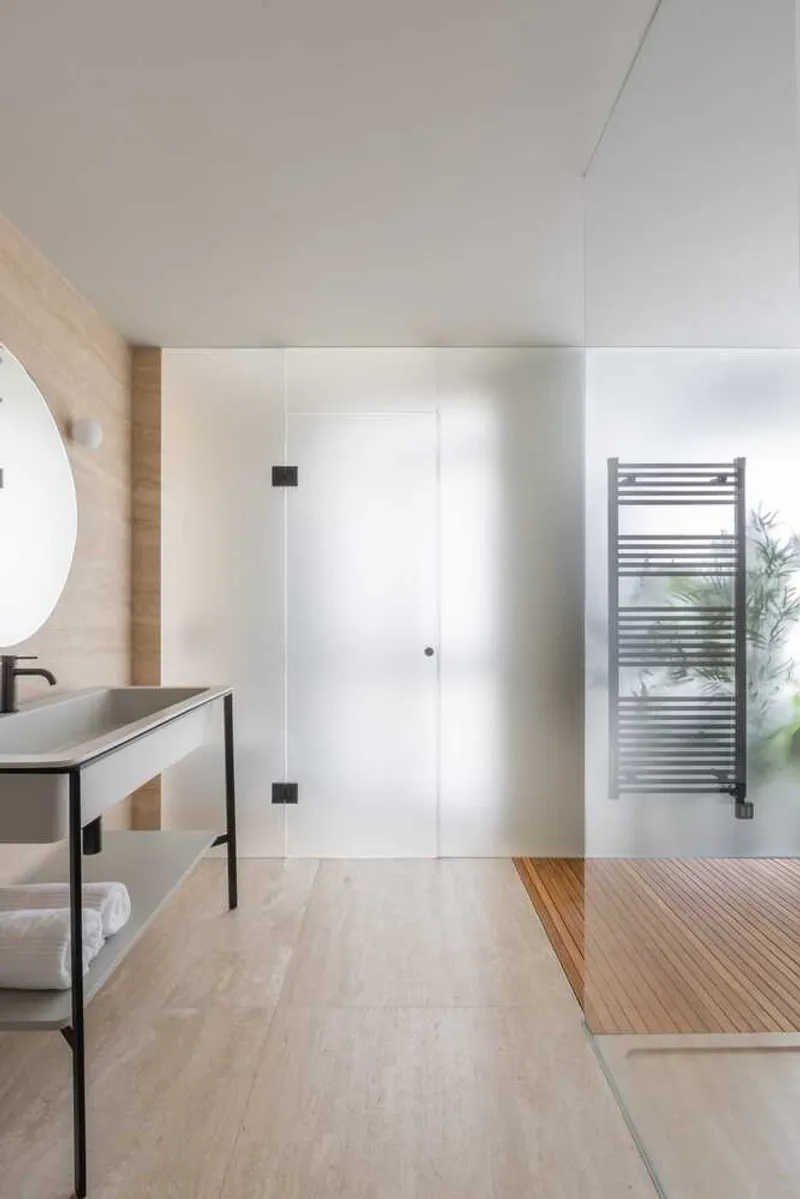
The apartment is organized by two sliding partitions—one leads to a serene sleeping quarter hidden behind timber-clad corridors and shoji doors; the other opens up to an expansive living area that faces the sea. The interiors adopt the philosophy of wabi-sabi—embracing imperfection, asymmetry, and authenticity.
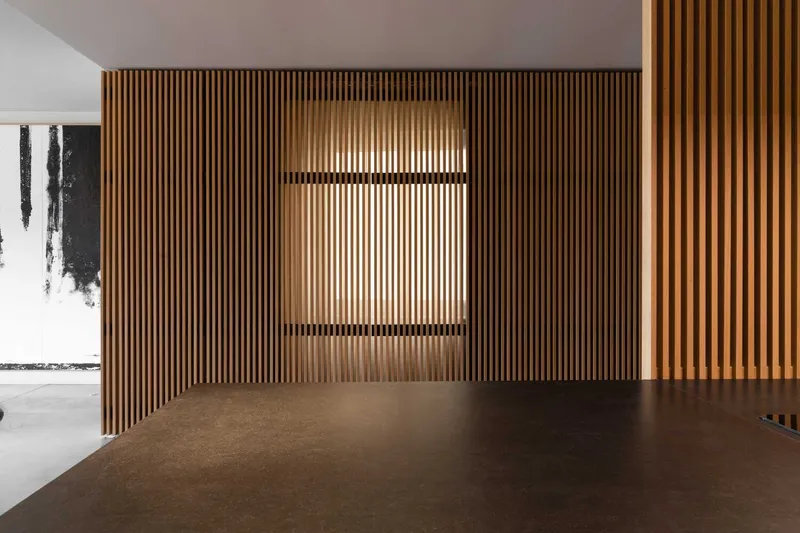
The kitchen sits like a sculptural void, where light filters through slatted oak walls, and textures shift from raw to refined. A glass-fiber concrete slab dining table, supported by solid oak legs, anchors the space. Rather than framing the sea, it sits perpendicular to the view—inviting a quiet, contemplative experience.

Furniture as Architecture
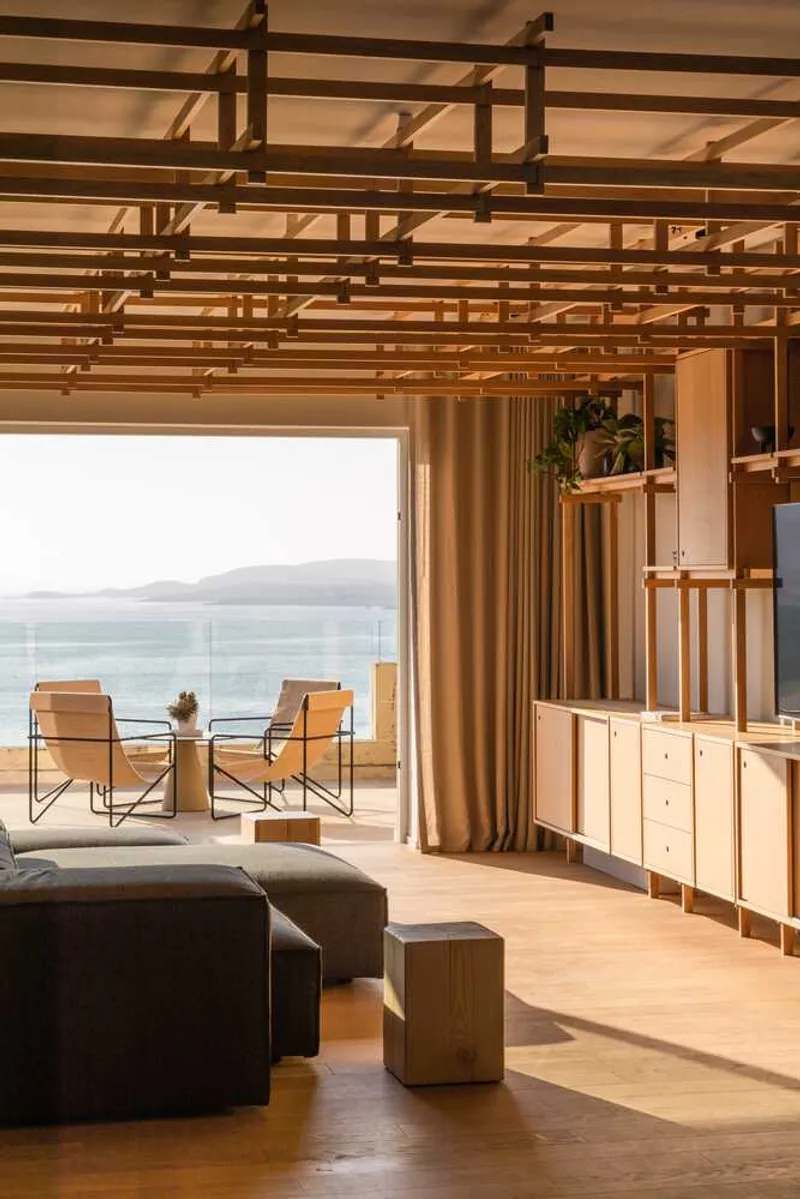
A striking modular sofa sits under a timber space truss, which serves not only as shelving and storage but also cleverly integrates lighting and HVAC systems. The studio’s own Red Blue Shelf—reimagined in monochrome oak—blurs the line between furniture and spatial form.
The tactile language continues in the material palette: limestone, oak, paper, concrete, and metal. Each material is selected for its aging process, creating a living interior that evolves with time.

Art as Extension of Space
The art curation strengthens the home's narrative. Julien Vinet, an artist deeply influenced by his time in Japan, was commissioned to create site-specific work. His black-and-white ink paintings culminate in a monumental triptych titled “Waterfall”, which sits opposite a wall-mounted series of vintage “Pjanci” trays—industrial baking sheets once used for Malta’s iconic pastizzi pastries, now repurposed as readymade sculpture.
Vinet’s artworks also appear in the bedrooms, capturing the changing light at sunset—echoing the home’s meditative rhythm.

A Crafted Dialogue Between East and West
This home is a celebration of carpentry, architecture, and atmosphere. It honors traditional Japanese interior philosophies while responding to the Mediterranean’s sensory landscape. From architectural lighting design to custom joinery, every detail is calibrated to heighten the experience of shadow, sound, and material.
Tanizaki’s Shadows Apartment stands as an ode to slow living, where art, architecture, and nature form a quiet, harmonious retreat above the sea.


All Photographs are works of Hanna Briffa




Popular Articles
Popular articles from the community


The Earth Pod: 3D Printed Homes for Resilient Refugee Communities
The Earth Pod reimagines refugee housing through 3D printed homes made from clay, combining resilience, self-sufficiency, and rapid shelter.

Riyadh For All: Intergenerational Urban Design for Active Aging in Rabat
Riyadh For All reimagines urban design in Rabat with intergenerational co-living, adaptive courtyards, and Moroccan cultural exchange today.
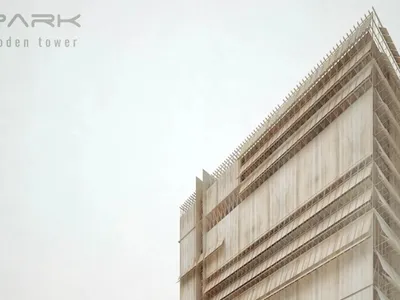
EW PARK: Sustainable Architecture Reimagines the Future of Urban Parking
EW PARK reimagines city parking as a modular wooden tower combining automation, solar energy, electric mobility, and adaptable urban design.

Co-Life: Senior Housing Design That Reconnects Older Adults With the City
Co-Life reimagines senior housing design through healing gardens, shared streets, workshops, and a sustainable community across generations.


Similar Reads
You might also enjoy these articles


Hodi-Mandai Geram
Project Function: Preservation and revitalization of the Intangible heritage and socio-spatial identity of the Hodi by Housing, Cultural Memory Center, Sacred Grove, landscape, local tourism economy


Olio Towers: A Mid-Rise for Performers That Fuses Housing, Rehearsal, and Stage
Located blocks from Houston's Theater District, this modular tower stacks living units around a central performance atrium.

Oasis: Modular Green Housing Carved into Dhaka's Urban Fabric
A shortlisted Plugin Housing entry reclaims unauthorized settlements in Dhaka with stepped concrete volumes, green roofs, and ventilation-driven design.

Black Hole: A Floating Megastructure for the Post-Physical Era
Emiliano Mazzarotto envisions a spherical, self-scaling arena where e-sports, digital hotels, and holographic stadiums replace traditional public space.


Explore Architecture Competitions
Discover active competitions in this discipline



Challenge to reimagine the Iron Throne


Photograph architecture without architects


Illustrate the lost glory of Angkor Wat - Render Challenge


Design challenge to reuse E-waste
Comments (0)
Please login or sign up to add comments
No comments yet. Be the first to comment!