
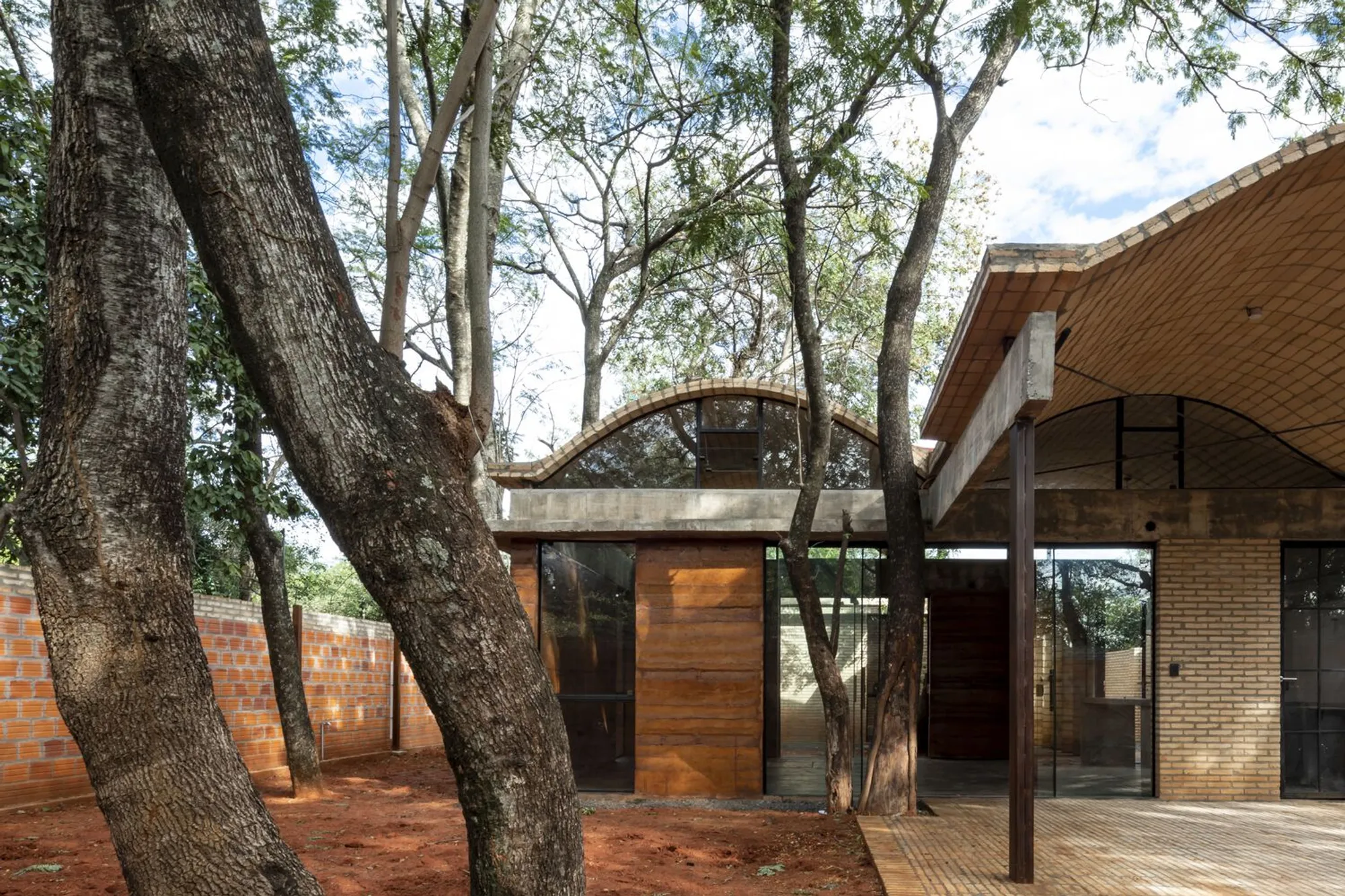
Tatakua House by Rcubo: A Fusion of Tradition and Sustainability
Tatakua House by Rcubo blends traditional Paraguayan architecture with sustainable materials, passive cooling, and a nature-integrated design for modern living.


A Modern Interpretation of Traditional Architecture
Tatakua House, designed by Rcubo, is a striking example of sustainable architecture that blends modern design with Paraguay’s vernacular building techniques. Located in Luque, within the metropolitan area of Asunción, the project harmonizes urban and rural elements, creating a unique residential experience.
The name Tatakua, derived from Guarani, means "the cave where fire lives"—a reference to traditional clay ovens that serve as communal gathering spaces. This cultural significance shaped the home’s design, emphasizing warmth, community, and functionality.
Thoughtful Spatial Organization
Designed for a young couple, the house centers around food preparation and communal dining, with a basement accessible from the kitchen for food storage and production. The structure is carefully placed within a 27x14 meter plot, preserving existing trees to enhance natural shading and ventilation.
The layout consists of two primary blocks:
- Private Block (West): Contains bedrooms with built-in closets and strategically placed wet cores that function as thermal buffers.
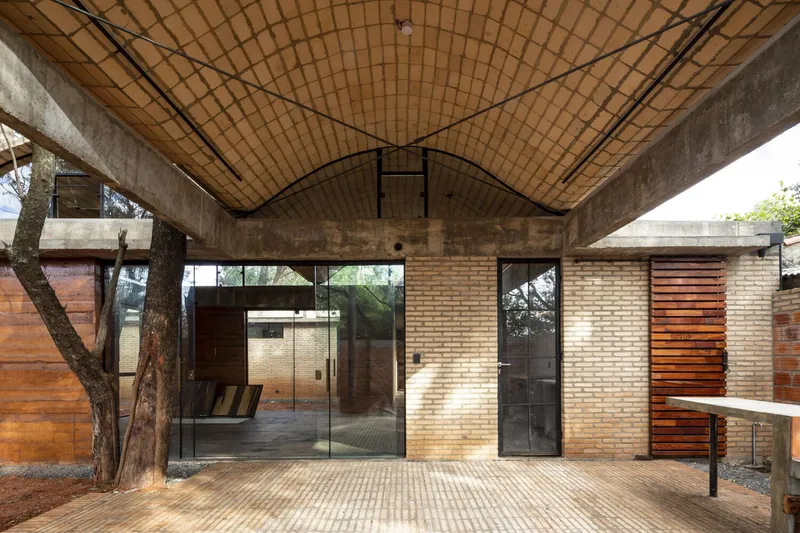
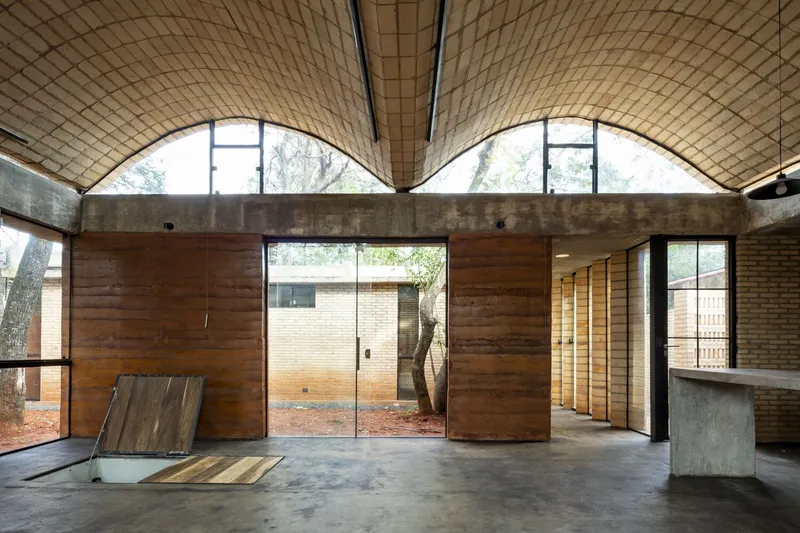
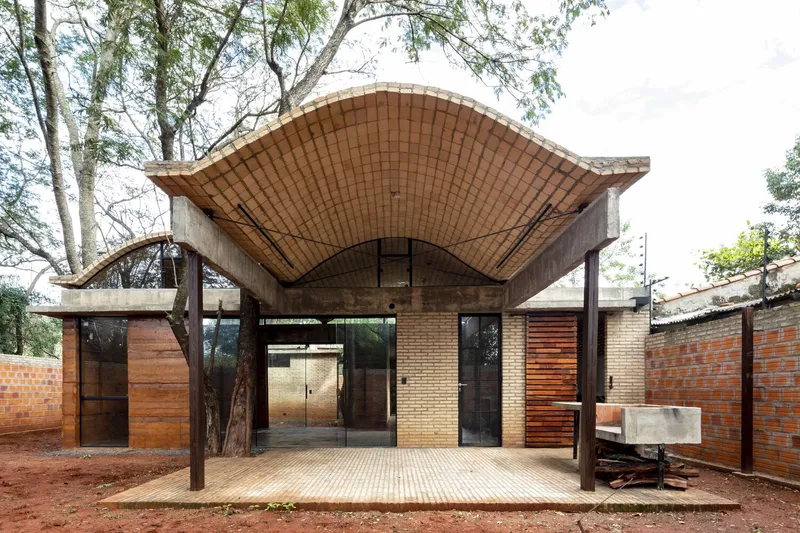
- Social Block (East): Features an open-plan living area with a kitchen at its heart, extending to an outdoor barbecue space that provides shade and ventilation. A vestibule to the north acts as a thermal antechamber, minimizing solar heat gain.
Sustainable Construction and Material Choices
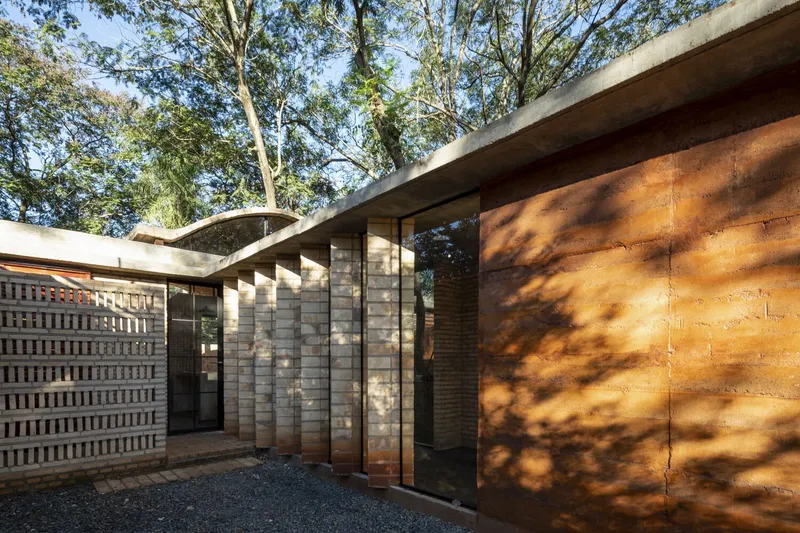
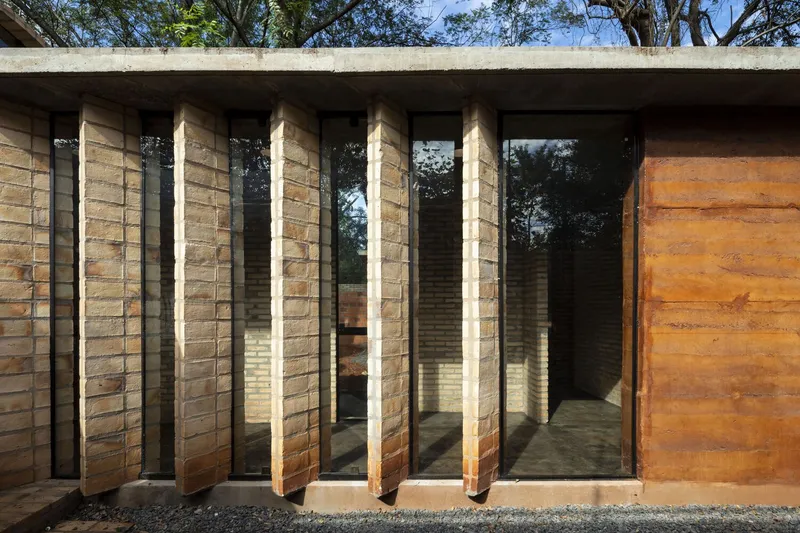
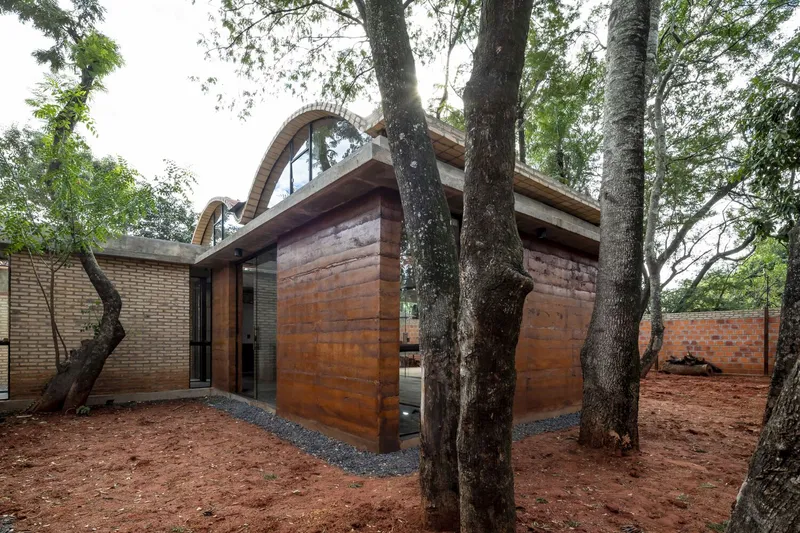
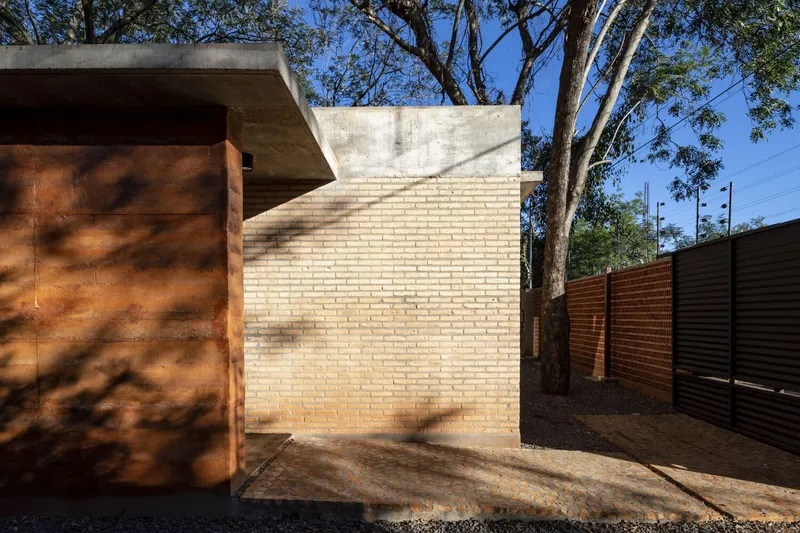
The house utilizes load-bearing brick masonry, reinforced with concrete beams. Locally sourced materials, such as cement soil walls made from excavated earth, ensure thermal insulation and structural durability. A green roof atop the bedroom block improves natural ventilation and provides a visual connection to the surrounding landscape.
Key sustainable design features include:
- Recycled Glass & Ceramic Chimneys: Embedded into the concrete slab to facilitate hot air expulsion.
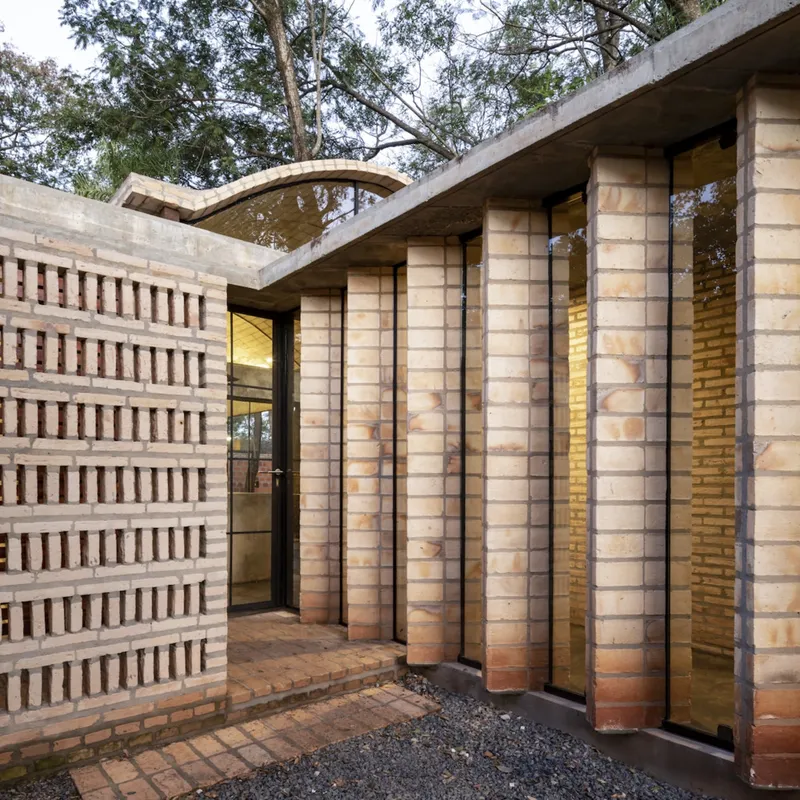
- Brick Panels for Passive Cooling: Angled towards prevailing winds to enhance cross-ventilation.
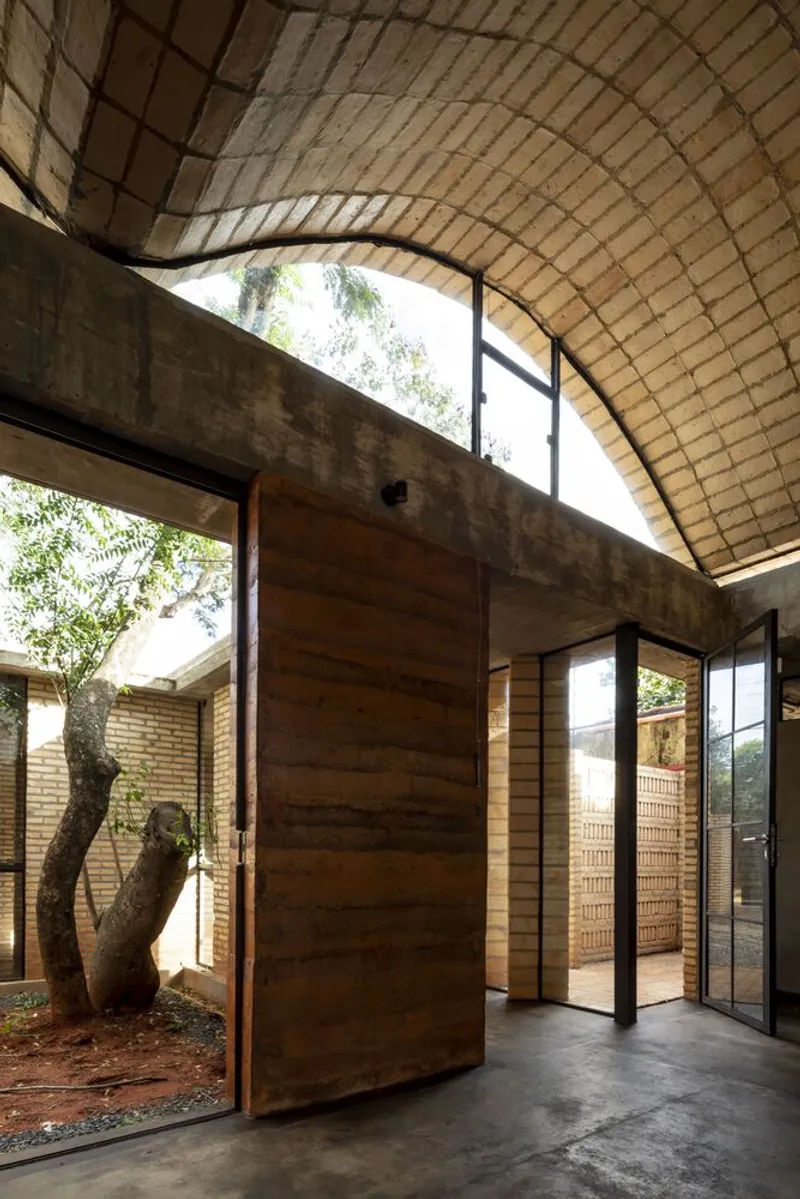
- Vaulted Ceramic Roofs: 7 cm thick reinforced ceramic sheets promote airflow and maintain high ceilings for natural cooling.
- Natural Sealants & Finishes: On-site preparation of lime, sand, and natural paints ensures hygroscopic comfort and air quality.
- Minimal Waste Strategy: Uniform use of brick, cement, and soil for floors, walls, and ceilings reduces construction waste.
Handcrafted Local Elements
The project emphasizes craftsmanship, with bathroom accessories, furniture, and hardware produced by local artisans and independent workshops. This approach not only supports the regional economy but also reinforces the home’s connection to Paraguayan architectural heritage.
All Photographs are works of Leonardo Mendez




Popular Articles
Popular articles from the community


Co-life: Sustainable Architecture for Age-Friendly Community Living
Co-life reimagines sustainable architecture for seniors through courtyards, rammed earth, shared gardens, and spaces designed for belonging.

Conexión: Biophilic Design Reimagines High-Rise Living in Hong Kong
Conexión reimagines high-rise living in Hong Kong through biophilic design, green facades, shared spaces, daylight, water and nature within.

The Musturak Paradise: Senior Living Architecture for a Connected Future in Temara, Morocco
The Musturak Paradise reimagines senior living architecture in Temara via private homes, social spaces, culture, community, and shared care.

Play: Fragments of Their World
Familiar architecture becomes modular playground design, creating safe spaces where displaced children can learn, connect, imagine and play.


Similar Reads
You might also enjoy these articles


Hodi-Mandai Geram
Project Function: Preservation and revitalization of the Intangible heritage and socio-spatial identity of the Hodi by Housing, Cultural Memory Center, Sacred Grove, landscape, local tourism economy


Olio Towers: A Mid-Rise for Performers That Fuses Housing, Rehearsal, and Stage
Located blocks from Houston's Theater District, this modular tower stacks living units around a central performance atrium.

Oasis: Modular Green Housing Carved into Dhaka's Urban Fabric
A shortlisted Plugin Housing entry reclaims unauthorized settlements in Dhaka with stepped concrete volumes, green roofs, and ventilation-driven design.

Black Hole: A Floating Megastructure for the Post-Physical Era
Emiliano Mazzarotto envisions a spherical, self-scaling arena where e-sports, digital hotels, and holographic stadiums replace traditional public space.


Explore Architecture Competitions
Discover active competitions in this discipline



Challenge to reimagine the Iron Throne


Photograph architecture without architects


Illustrate the lost glory of Angkor Wat - Render Challenge


Design challenge to reuse E-waste
Comments (0)
Please login or sign up to add comments
No comments yet. Be the first to comment!