
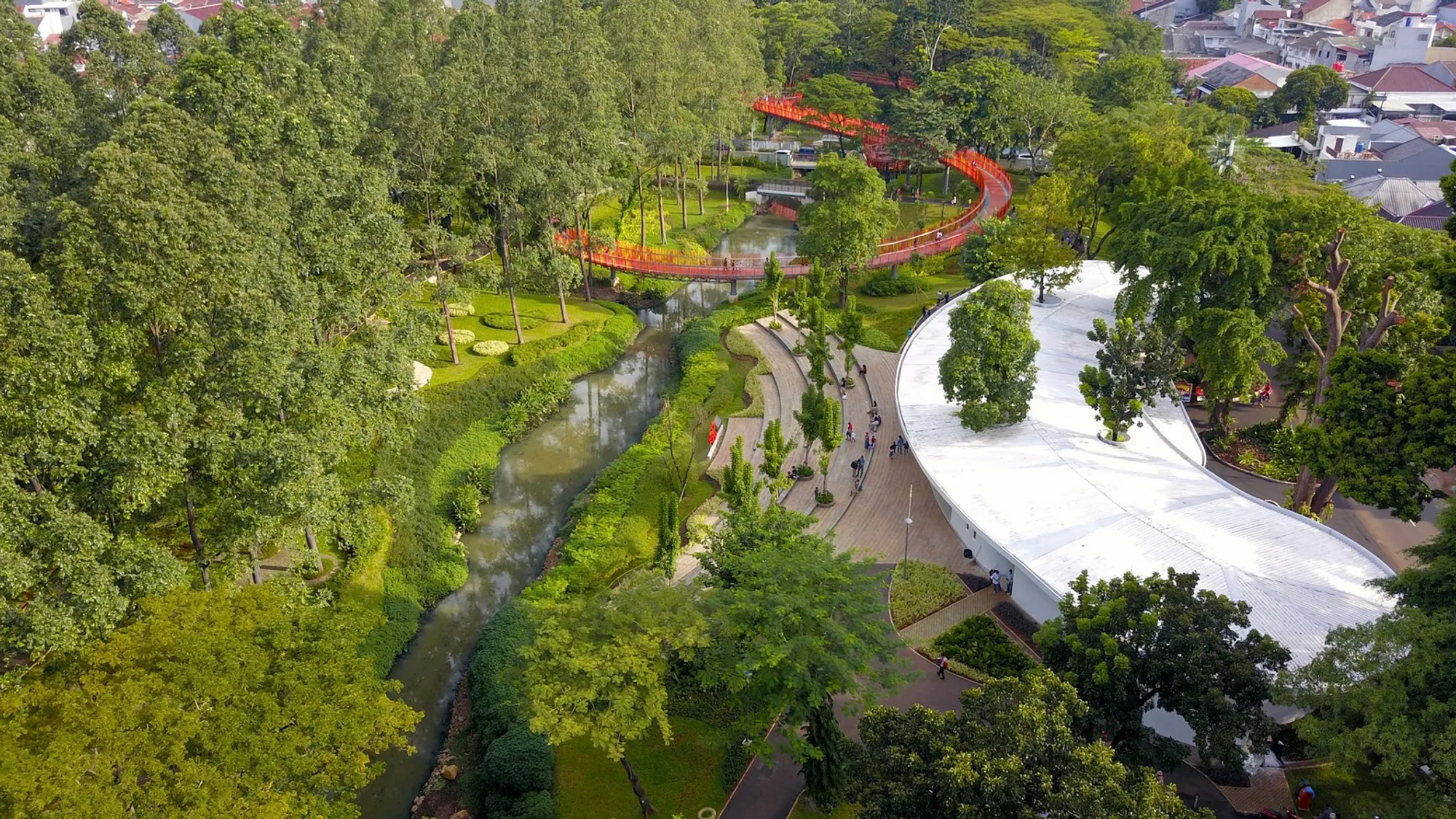
Tebet Eco Park by SIURA Studio: A Landmark in Ecological Urban Regeneration in Jakarta
Tebet Eco Park is a revitalized urban park in Jakarta, blending ecological restoration, flood resilience, and inclusive public space design.


In the heart of Jakarta, a once-neglected public park plagued by environmental degradation, frequent flooding, and poor accessibility has been dramatically transformed into an ecological and community-centered urban oasis. Tebet Eco Park, designed by SIURA Studio, is a groundbreaking example of how landscape architecture and urban planning can work hand in hand to regenerate natural ecosystems and foster social inclusivity.
A Vision for Blue-Green Infrastructure and Ecological Restoration
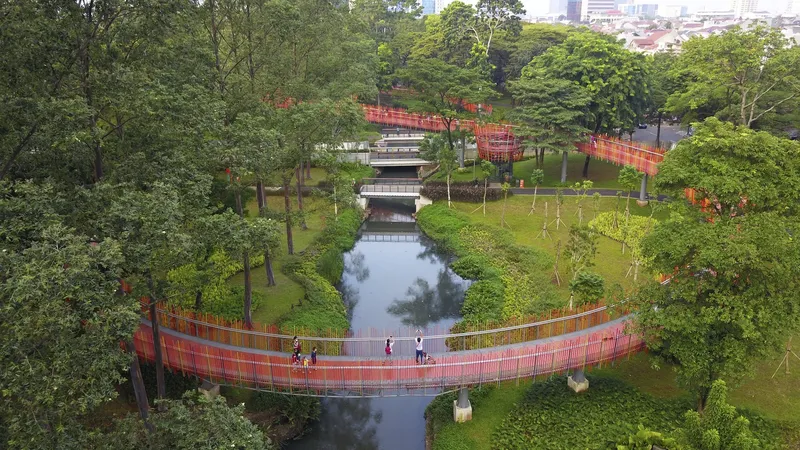
The design for Tebet Eco Park emphasizes active ecological regeneration, with a focus on tree conservation, biodiversity enhancement, and blue-green infrastructure. By re-naturalizing the site’s river system, the park not only improves water quality and enhances local biodiversity, but also significantly mitigates the risk of flooding—a critical issue in Jakarta’s rapidly urbanizing landscape.
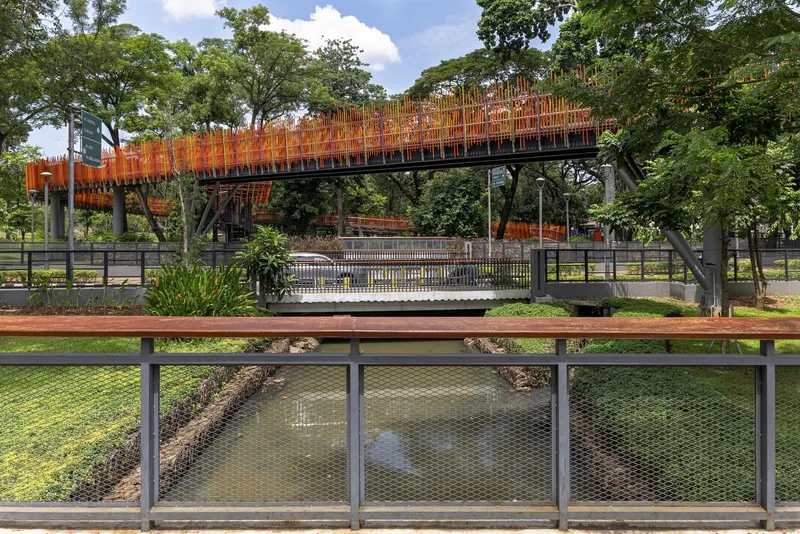
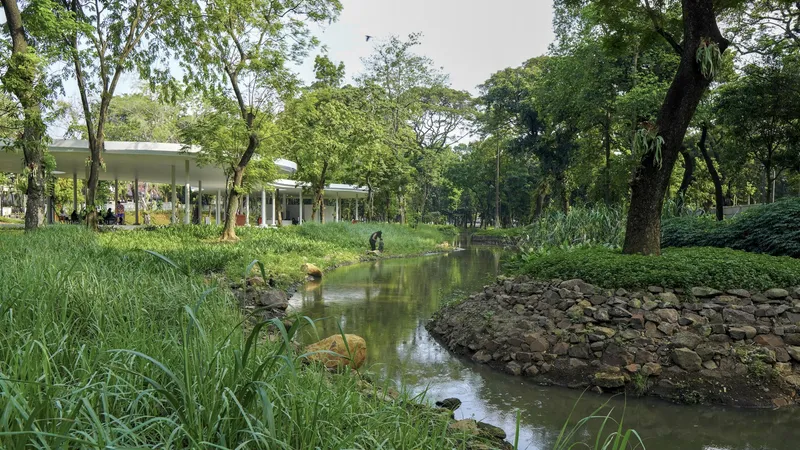
A previously polluted 714-meter canal running through the park has been transformed into a vibrant, climate-adaptive waterway. Planted with riparian vegetation, the restored river ecosystem acts as a natural filter for surface runoff, improving water quality and creating a resilient floodplain that can handle storm surges brought on by climate change. This nature-based solution fosters the return of native species and reintroduces a functional, living ecosystem to the urban park.
Sustainable Design and Circular Construction Methods
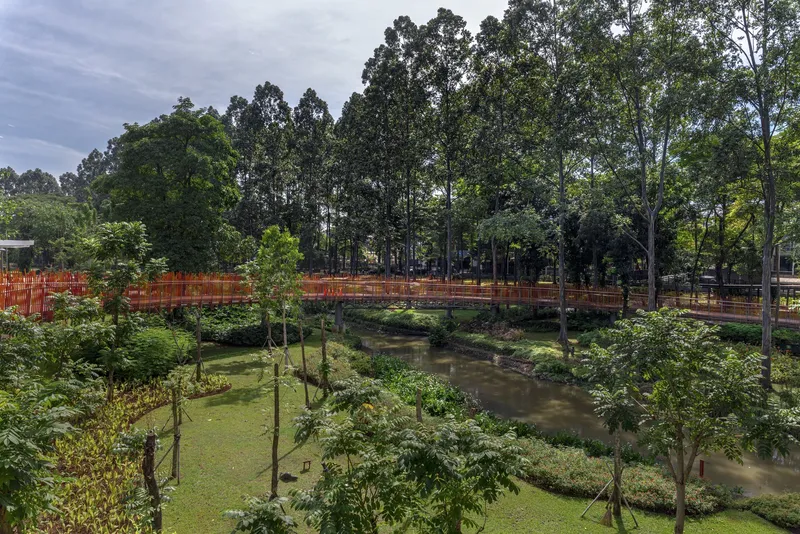
Sustainability lies at the core of Tebet Eco Park’s revitalization. Over 1,500 trees were surveyed and preserved during the park’s transformation, with only unhealthy specimens removed or repurposed. SIURA Studio prioritized minimal intervention, ensuring that valuable natural resources were conserved.
Materials such as excavated stones and felled logs from the original site were recycled and upcycled into park infrastructure, including furniture, play structures, and landscape elements. This circular approach to construction underscores the project's commitment to environmental stewardship and resource efficiency.
Community-Driven Design and Inclusive Programming
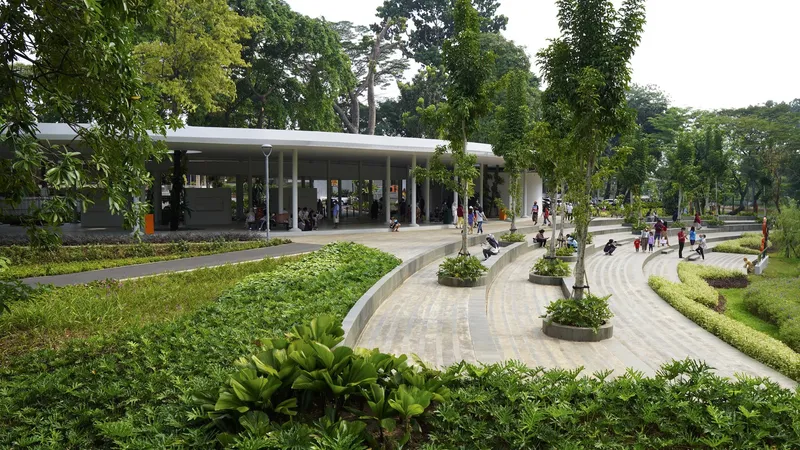
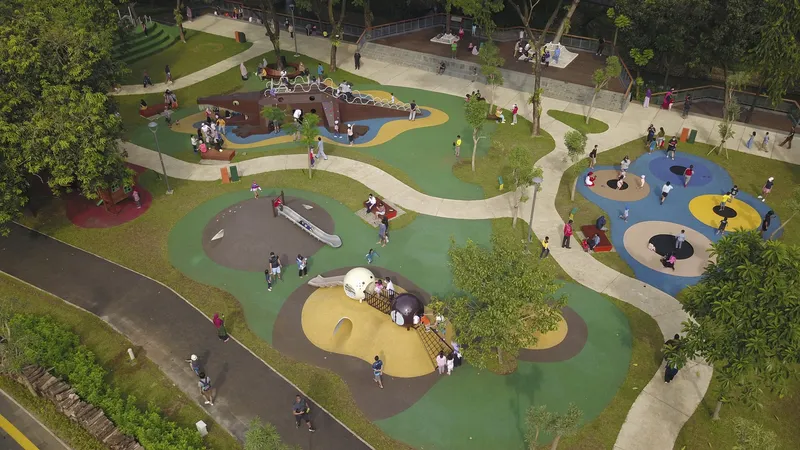
One of the park’s most significant achievements is its ability to reconnect people with nature through inclusive and participatory design. Developed through a co-creation process with local communities and stakeholders, the park offers both active and passive recreational spaces for people of all ages and backgrounds.
From interactive playgrounds and educational gardens to serene walking trails and shaded forest areas, the park accommodates a wide array of social, educational, and leisure activities. It promotes social equity and well-being, transforming the park into a true urban commons embraced by its surrounding community.
Enhancing Urban Connectivity with Iconic Infrastructure
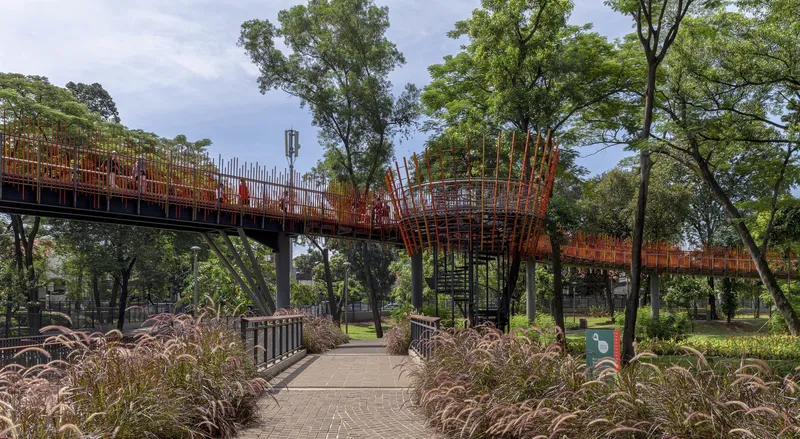
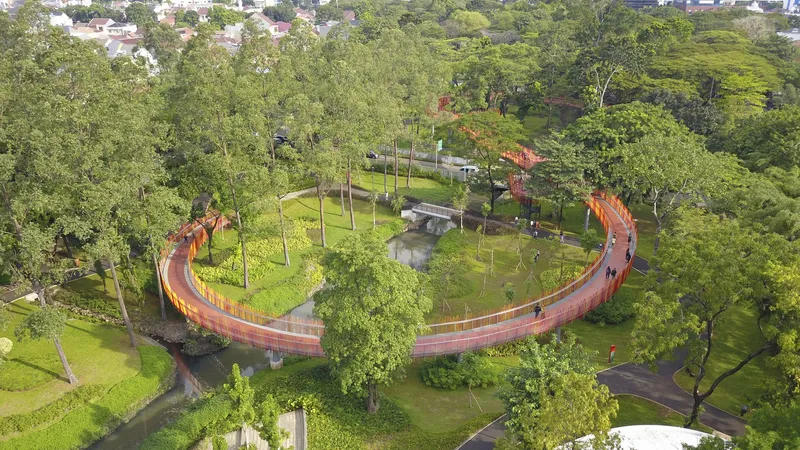
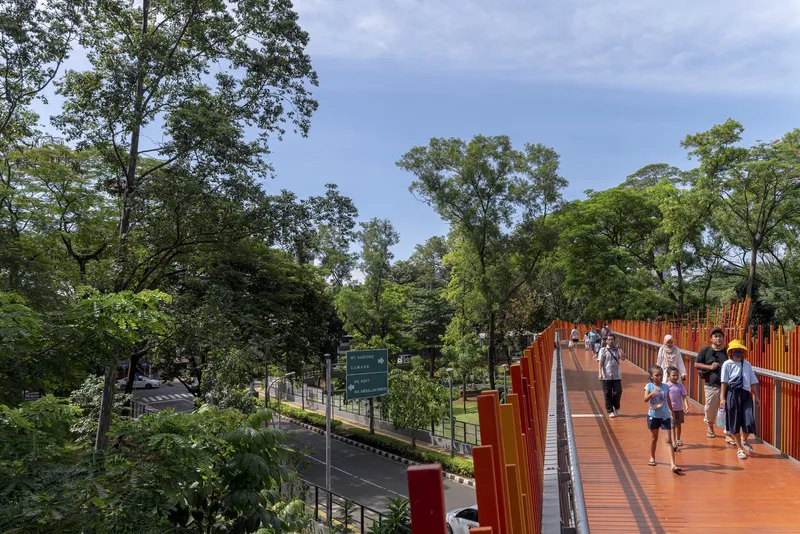
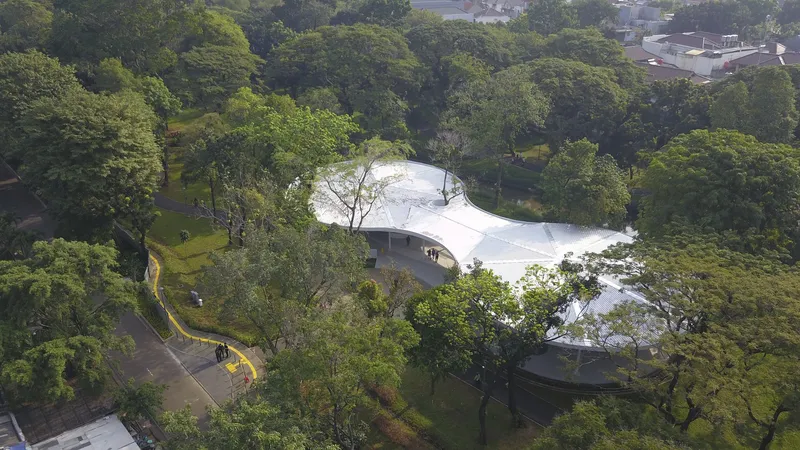
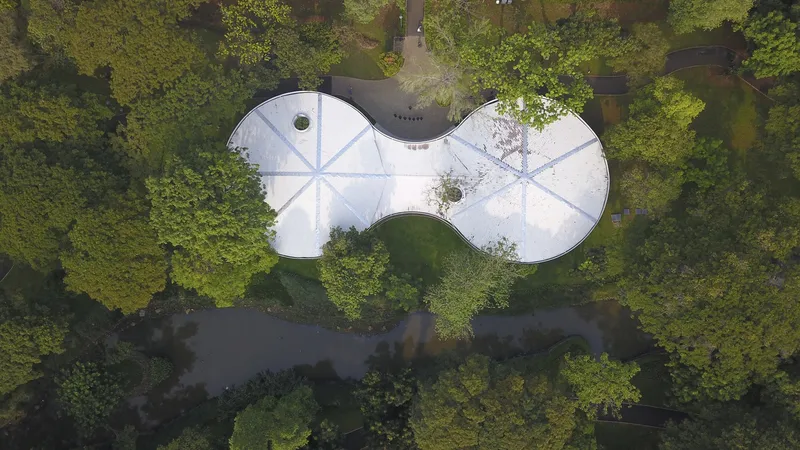
Before its transformation, the park was divided by both a polluted river and a heavily trafficked road, limiting accessibility. In response, SIURA Studio introduced an infinity-shaped pedestrian bridge that elegantly spans the river, reconnecting both sides of the park.
This meandering, colorful structure not only enhances pedestrian flow but is also designed with a deep sensitivity to the site’s ecology—avoiding existing trees and minimizing environmental impact. The bridge serves as a landmark of connectivity and inclusion, inviting users to fully engage with all parts of the park.
A New Model for Urban Park Design in Southeast Asia
Tebet Eco Park represents a paradigm shift in urban park design in Indonesia and the broader Southeast Asian region. It blends ecological resilience, community engagement, and sustainable design into a singular vision that reimagines what public space can achieve in the face of urban and environmental challenges.
This revitalized green space is not just a destination—it’s a living system and a model for future urban landscapes that prioritize harmony between people and nature.




Popular Articles
Popular articles from the community


Hill & Cross Opera: Sculptural Opera House Architecture Shaped by Tallinn’s Landscape and Identity
Hill & Cross Opera reimagines opera house architecture in Tallinn through its sculptural hill, civic plaza, glass wave and a luminous cross.

Play: Fragments of Their World
Familiar architecture becomes modular playground design, creating safe spaces where displaced children can learn, connect, imagine and play.

Lunar Spiral: Space Architecture Shaped by the Mathematics of the Universe
Lunar Spiral reimagines space architecture through Fibonacci geometry, lunar regolith, levitating habitats, and self-sustaining Moon living.

Co-life: Sustainable Architecture for Age-Friendly Community Living
Co-life reimagines sustainable architecture for seniors through courtyards, rammed earth, shared gardens, and spaces designed for belonging.


Similar Reads
You might also enjoy these articles


Hodi-Mandai Geram
Project Function: Preservation and revitalization of the Intangible heritage and socio-spatial identity of the Hodi by Housing, Cultural Memory Center, Sacred Grove, landscape, local tourism economy


Olio Towers: A Mid-Rise for Performers That Fuses Housing, Rehearsal, and Stage
Located blocks from Houston's Theater District, this modular tower stacks living units around a central performance atrium.

Oasis: Modular Green Housing Carved into Dhaka's Urban Fabric
A shortlisted Plugin Housing entry reclaims unauthorized settlements in Dhaka with stepped concrete volumes, green roofs, and ventilation-driven design.

Black Hole: A Floating Megastructure for the Post-Physical Era
Emiliano Mazzarotto envisions a spherical, self-scaling arena where e-sports, digital hotels, and holographic stadiums replace traditional public space.

Explore Landscape Design Competitions
Discover active competitions in this discipline



Challenge to reimagine the Iron Throne


Photograph architecture without architects


Illustrate the lost glory of Angkor Wat - Render Challenge


Design challenge to reuse E-waste
Comments (0)
Please login or sign up to add comments
No comments yet. Be the first to comment!