
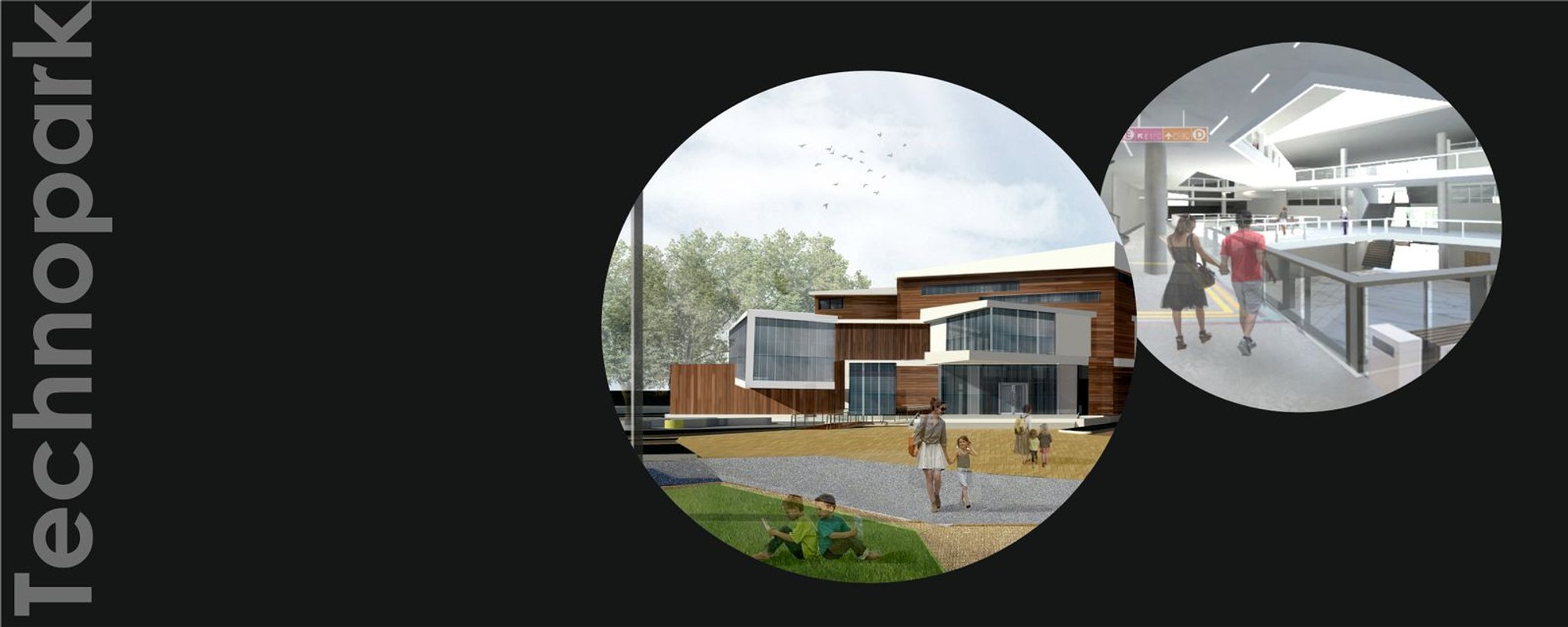
Technopark: Sustainable Public Architecture And Educational Hub
A sustainable technopark architecture integrating culture, education, and public life through flexible spaces and environmentally responsible design.

Sustainable technopark architecture is increasingly redefining how cities merge innovation, education, and public life. The Technopark project explores this intersection by creating a multifunctional architectural environment that operates simultaneously as a cultural institution, an educational center, and a civic gathering space. Designed as an open and accessible public platform, the project demonstrates how architecture can foster social interaction, learning, and environmental responsibility within a single urban framework.
Located in a context rich with natural surroundings and public potential, the Technopark responds to contemporary demands for adaptable public spaces that support creativity, recreation, and knowledge exchange. The project is conceived as a catalyst for community engagement, bringing together diverse user groups through architecture that is flexible, inclusive, and sustainable.
Concept: Architecture as a Social Platform
The core idea behind the Technopark is to create architectural platforms that combine cultural and educational functions in one integrated environment. The complex accommodates exhibition spaces, performance areas, and film screening zones alongside robotics labs, libraries, creative studios, and workshops. This hybrid program allows the building to function throughout the day and across different user demographics.
Beyond its formal program, the Technopark is envisioned as a true public space. Areas for leisure, discussion clubs, informal meetings, and self‑organized community activities are embedded within the spatial structure. Rather than isolating functions, the architecture encourages overlap, where learning meets culture, and public life meets innovation.
Spatial Organization and Architectural Form
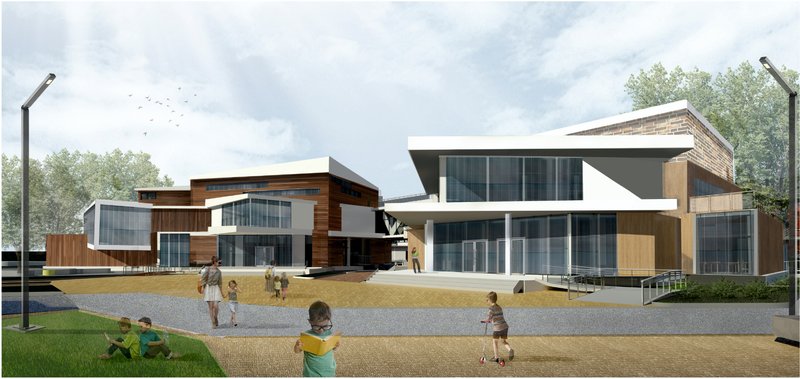
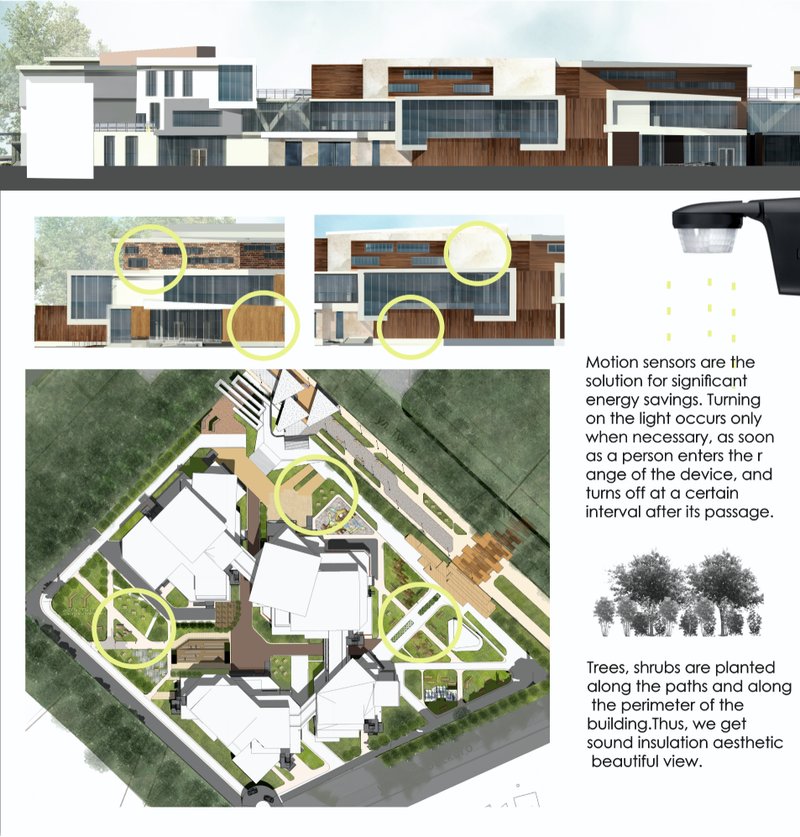
The architectural form of the Technopark is defined by a dynamic yet clear spatial logic. The complex is composed of interconnected blocks organized across multiple floors, each responding to specific functional needs while remaining visually and physically connected.
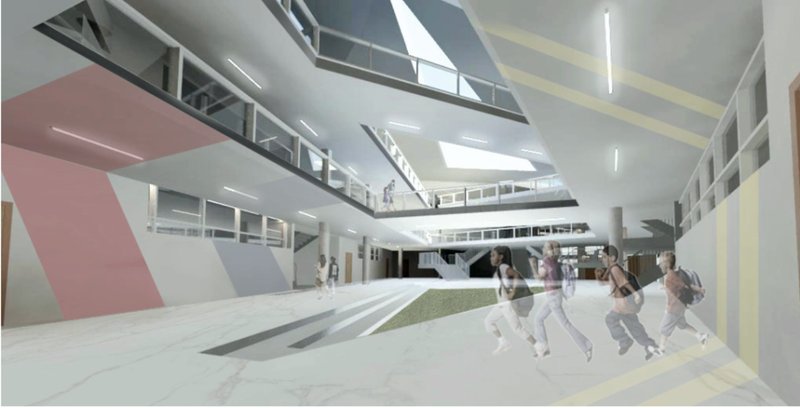
The ground level prioritizes public accessibility, hosting exhibition zones, performance spaces, and shared amenities that invite visitors into the complex. Upper levels accommodate educational and creative functions such as classrooms, workshops, libraries, and studios. This vertical distribution allows the project to maintain openness while managing programmatic efficiency.
Despite the fragmented massing, the ensemble reads as a cohesive whole. Circulation paths, internal courtyards, and transitional spaces create continuous movement through the building, offering multiple viewpoints and encouraging exploration. The architectural composition ensures clarity of use while supporting flexible adaptation over time.
Sustainable Technopark Architecture and Environmental Strategy
Sustainability is a defining principle of the Technopark’s architectural approach. Recognizing that buildings are among the largest consumers of energy, the project integrates multiple passive and active strategies to reduce environmental impact.
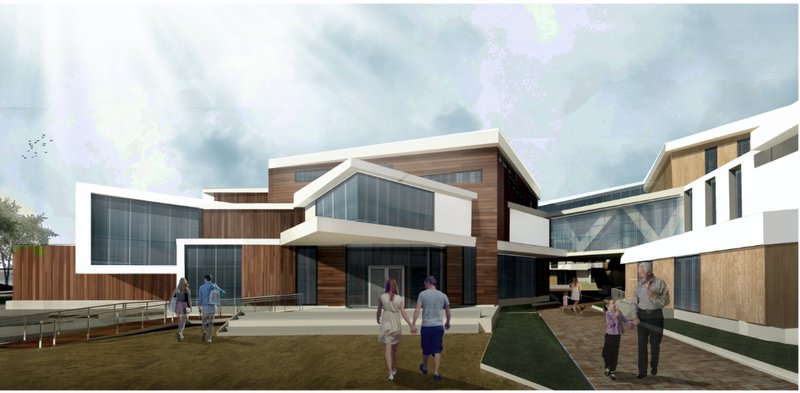
Natural and environmentally friendly materials are prioritized throughout construction and finishing. Breathing materials such as wood, plaster, and facing brick contribute to healthier indoor environments while reducing reliance on artificial climate control systems. Double glazing improves thermal performance and minimizes energy loss.
The site design incorporates ecological paving systems that allow grass to grow through surface openings, enabling natural water absorption and oxygen exchange. This approach reduces surface runoff while maintaining durability and visual continuity across outdoor spaces.
Water Management and Resource Efficiency
Efficient water use is a critical component of the Technopark’s sustainable design. The project integrates rainwater collection and recycling systems that significantly reduce dependence on potable water. Collected rainwater is filtered, stored, and reused for landscape irrigation and non‑potable building functions.
Drainage systems are carefully designed to manage precipitation, protect building utilities, and reduce moisture accumulation. These systems ensure long‑term durability while contributing to responsible resource management.
Waste collection and recycling strategies are also embedded into the project. Dedicated infrastructure supports waste separation and recycling, addressing one of the most pressing environmental challenges in contemporary urban development.
Landscape Integration and Public Realm
Landscape design plays a crucial role in reinforcing the Technopark’s identity as a public space. Trees and shrubs are planted along circulation paths and site boundaries, providing natural shading, sound insulation, and visual comfort. Green areas soften the architectural mass and strengthen the connection between the built environment and nature.
Outdoor spaces are designed as extensions of the interior program, supporting informal learning, social interaction, and recreation. Courtyards and landscaped paths encourage users to move between buildings while remaining engaged with the surrounding environment.
Technology, Comfort, and User Experience
Technological integration enhances both sustainability and user comfort within the Technopark. Motion sensors control lighting systems, ensuring energy is used only when necessary. This smart approach reduces electricity consumption while maintaining safety and convenience.
The architectural design carefully balances transparency and enclosure, allowing natural light to penetrate deep into interior spaces while preventing overheating. Together, these strategies create a comfortable, efficient, and adaptable environment suited to a wide range of activities.
As an example of sustainable technopark architecture, this project demonstrates how cultural, educational, and public functions can be unified within a single architectural system. By combining flexible programming, environmentally responsible strategies, and strong public engagement, the Technopark offers a forward‑looking model for contemporary civic architecture.
The project highlights architecture’s potential to shape social interaction, support learning, and address environmental challenges simultaneously. Designed by Aigyl Gilmutdinova, the Technopark stands as a vision for future public spaces: open, sustainable, and deeply connected to the communities they serve.



Popular Articles
Popular articles from the community

IDIN Architects Wraps a Hua Hin Hotel Around a Private Courtyard to Escape the City
Dusit D2 Hua Hin turns an urban infill site in Thailand's family vacation heartland into a self-contained resort through courtyard planning.
gru.a Builds a 70 m² Timber Shelter That Opens Like a Farm Door in Brazil's Valley of the Vines
In the mountainous region near Rio de Janeiro, a compact retreat uses plywood panels and deep eaves to blur the line between inside and out.
VEIVE Architects Builds a Mountain Hostel That Disappears into a Hangzhou Hillside
On the Huihang Ancient Trail in Xiangjian Village, a shelter of wood, steel, and rammed earth roots itself in the rural landscape.
BLDUS Turns a 250-Square-Foot Screened Porch into a Pine Forest Temple in East Hampton
A gabled cedar pavilion mimics the rhythm of surrounding pines, anchoring a 1990s wooded home to its hollow in Long Island.


Similar Reads
You might also enjoy these articles

Maya Harvest: A Cacao Resort Village Rooted in Mayan Tradition and Local Craft
Situated within a Tabasco cacao plantation, this shortlisted resort proposal merges vernacular materials with hands-on cultural immersion.
Harmonia: A River-Shaped Community That Grows Over Decades in Boa Vista
Curved pathways and modular grid structures along the Branco River create a phased settlement designed to evolve from 2030 to 2050.
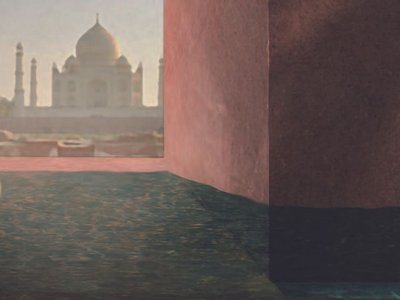
The Architecture of Bathing: A Mughal Hammam Reimagined Across the Yamuna
Charlotte May's honorable mention entry for The Black Taj reinterprets Agra's bathing rituals through red sandstone, water, and framed views of the Taj Mah
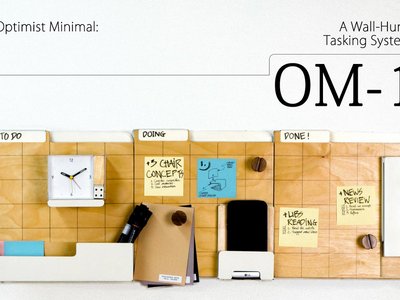
Om-1: A Wall-Hung System That Moves Your Workspace Off the Desk
Modular plywood boards, magnetic pegs, and utility elements migrate clutter from the horizontal surface to the vertical plane.

Explore Educational Building Competitions
Discover active competitions in this discipline




The Global Benchmark for Architecture Dissertation Awards

Challenge to design a portable theatre


Challenge to design a portable music platform


Challenge to design public laboratory
Comments (0)
Please login or sign up to add comments
No comments yet. Be the first to comment!