
Temple Complex in Hampshire by James Gorst Architects: A Contemporary Sanctuary Rooted in Simplicity and Sustainability
A serene timber temple complex blending sacred architecture, sustainability, and landscape in Hampshire's South Downs by James Gorst Architects.


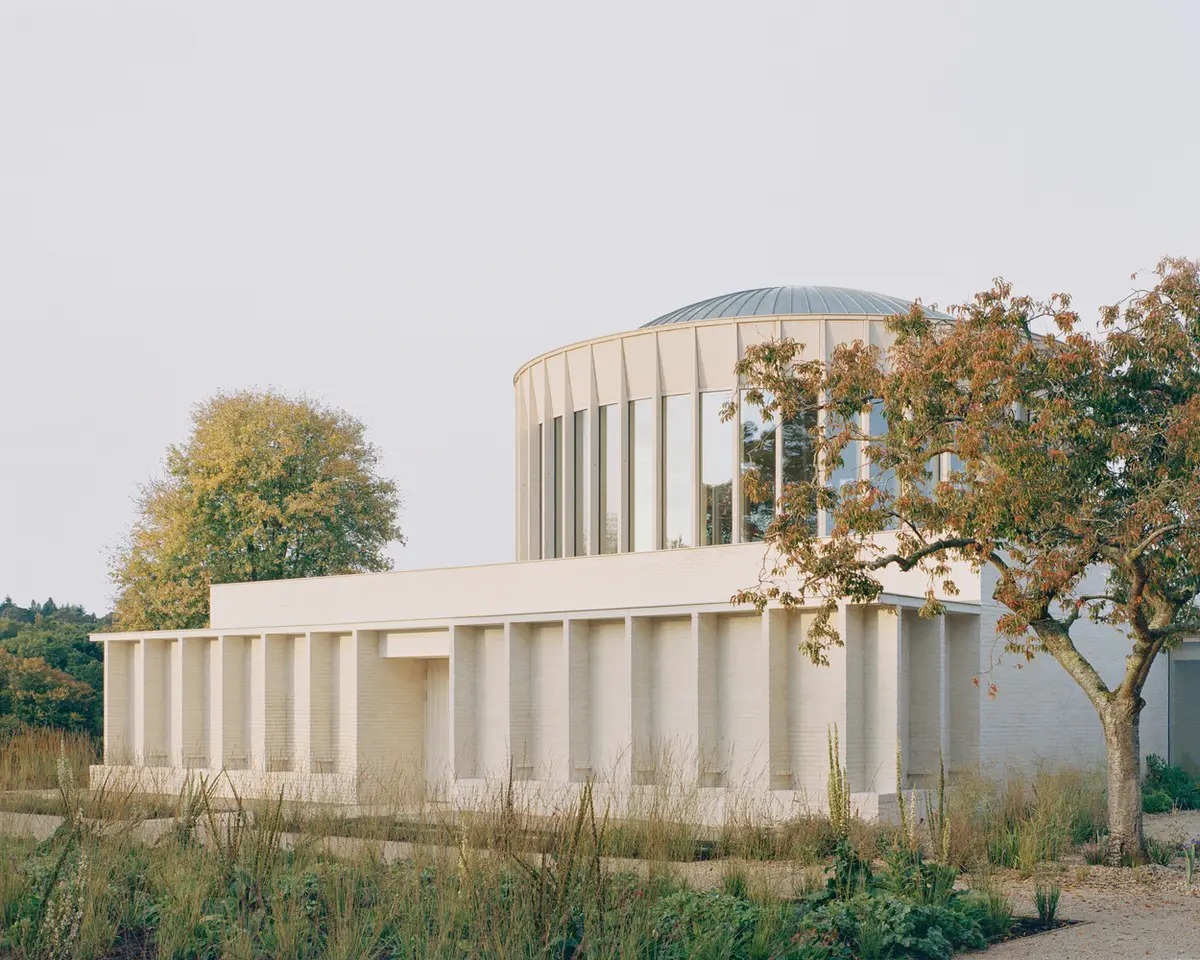
Nestled within the serene landscape of the South Downs National Park in Rake, Hampshire, the newly completed Temple Complex by James Gorst Architects redefines sacred architecture through a modern, sustainable, and contemplative lens. Designed to replace a deteriorating 1970s complex, this architectural project was commissioned following a two-stage competition in 2017 and has since emerged as a striking example of peaceful, purpose-driven design.
A New Center for Spirituality and Community
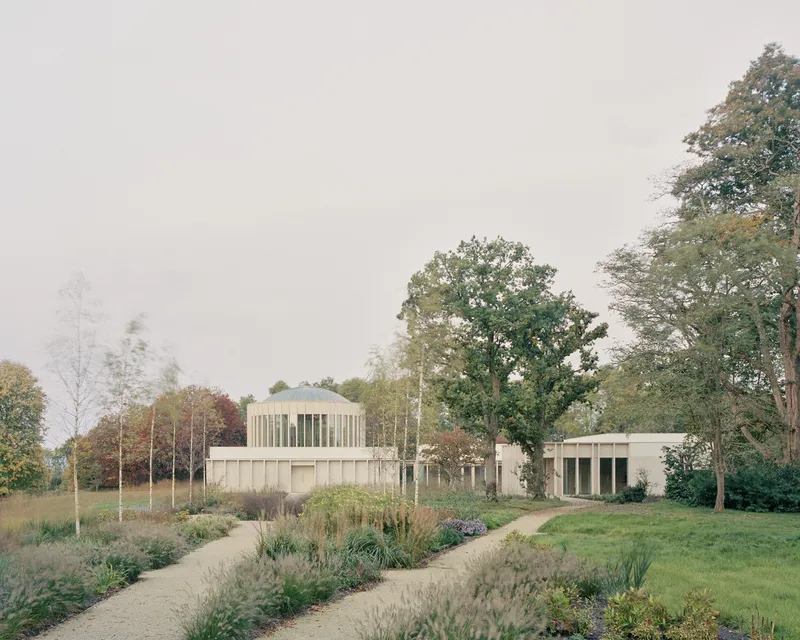
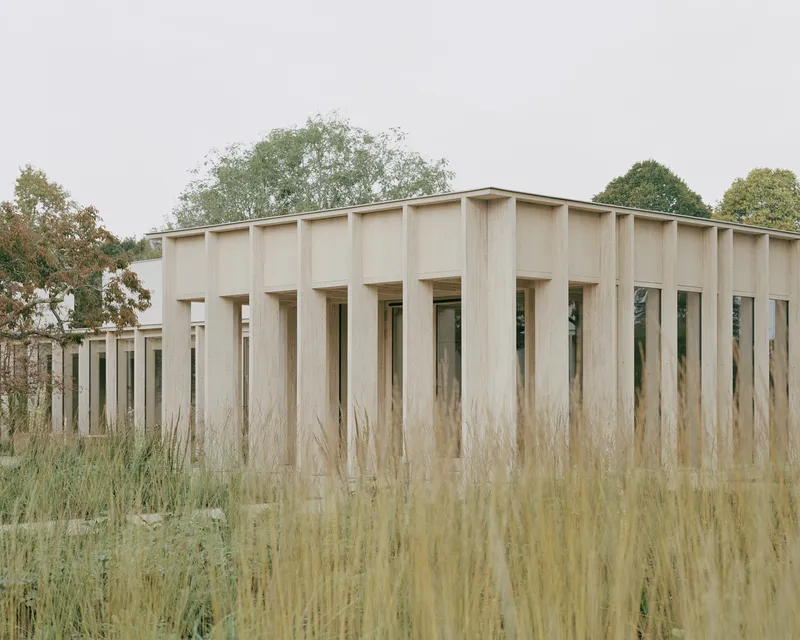
More than just a place of worship, the Temple Complex serves as a multi-functional spiritual and community center. The project includes a main temple, two chapels, a library, meeting rooms, a catering kitchen, and a public foyer, all thoughtfully embedded within newly landscaped gardens. Each architectural element is organized within a series of orthogonal timber pavilions, which are gracefully linked by a cloistered walkway surrounding a central courtyard garden. This composition reinforces both spatial clarity and emotional tranquility, reflecting the client’s desire for an environment of peace and simplicity.
Visitors enter from the east, greeted by a timber portico and a social foyer before gradually transitioning through increasingly contemplative spaces, culminating in the central temple located on the western end. This processional layout supports a subtle narrative of ritual and reflection, moving from the secular to the sacred.
Contextual Materials and Craft
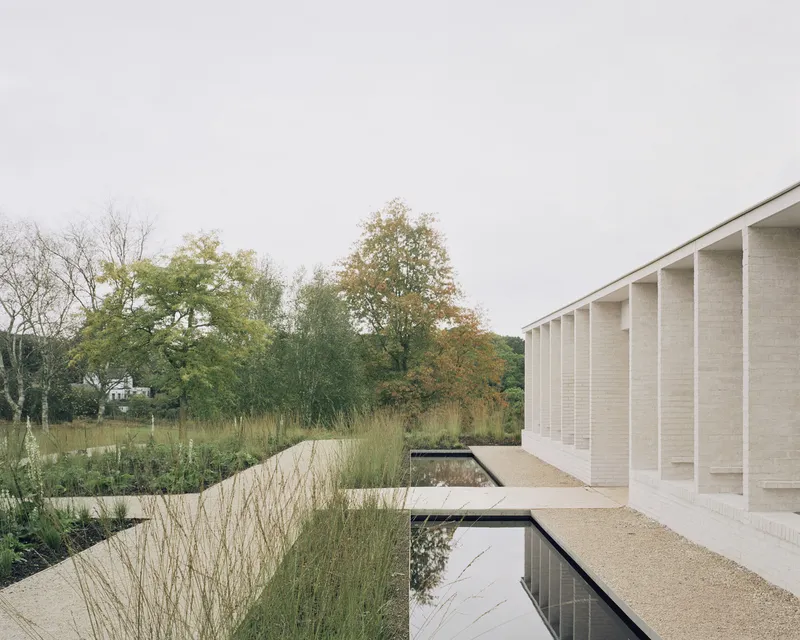
The architectural language of the complex is deeply rooted in the material heritage of Hampshire’s vernacular. The restrained palette—consisting of glue-laminated timber, handmade brick, and chalk lime mortar—echoes traditional construction methods while offering a contemporary reinterpretation. The natural textures and warm tones of these materials contribute to an atmosphere of quiet introspection, seamlessly blending the architecture into its rural setting.
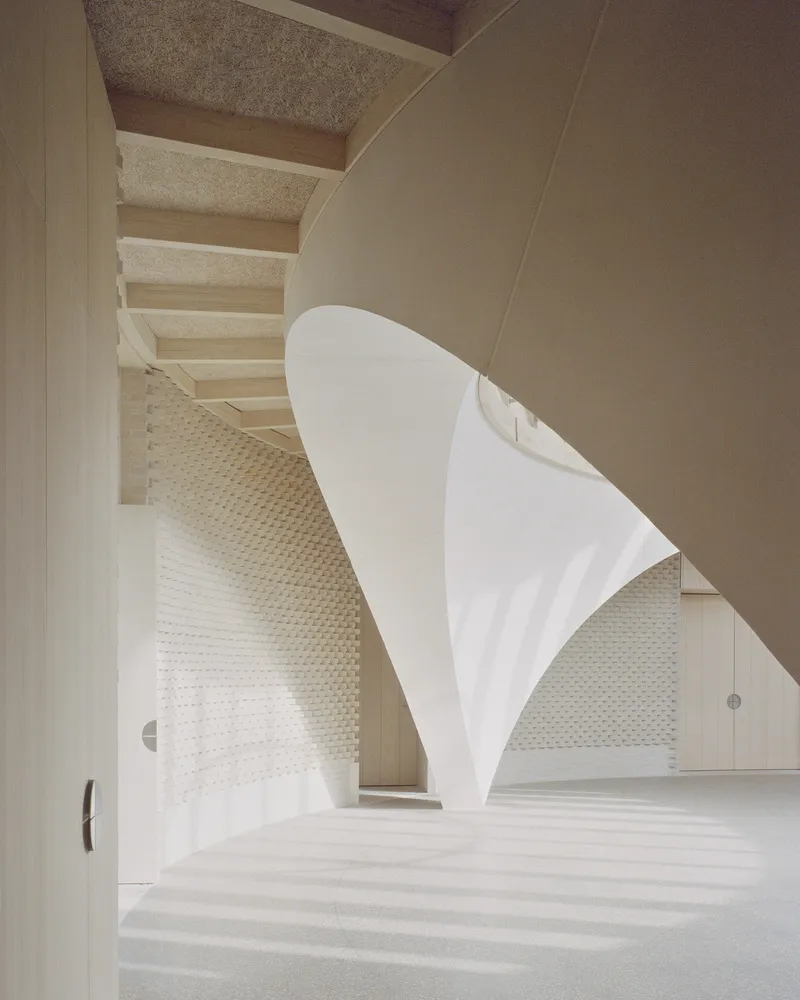
Inside, daylight filters gently through carefully placed openings, while the high ceilings and minimalist interiors emphasize stillness and natural connection. The architectural detailing is deliberately modest, emphasizing material honesty and craftsmanship over ornamentation.

Passive Design and Sustainability at the Core
From the outset, the design team prioritized sustainability and long-term energy efficiency. Employing a fabric-first approach, the structure was built almost entirely from off-site glue-laminated timber, eliminating the need for steel and minimizing construction waste. The building's thermal performance is enhanced by a combination of passive cooling strategies, thermal mass, and a highly insulated envelope.
A ground source heat pump, discreetly buried in the surrounding landscape, supplies underfloor heating throughout the complex. Meanwhile, photovoltaic panels provide renewable electricity, and a labyrinth ventilation system below the raised floor slab introduces naturally cooled fresh air into the interiors. Warm air is expelled through high-level actuators in the temple clerestory, ensuring thermal comfort without mechanical intervention.
The temple’s pre-cast pendentive arches not only create a spatial rhythm but also contribute to thermal mass, passively regulating internal temperatures and enhancing the building’s environmental performance.
Landscape and Holistic Integration
The surrounding landscape, designed by McWilliam Studio, reinforces the sense of retreat and reverence. Carefully composed gardens and native plantings further root the complex in its South Downs context, creating a seamless flow between architecture and nature.

A Model for Contemporary Sacred Architecture
James Gorst Architects’ Temple Complex exemplifies how modern sacred architecture can foster spirituality, community, and environmental stewardship in equal measure. Through its clear spatial organization, material authenticity, and climate-responsive design, the project offers a compelling vision for how places of ritual can evolve for the 21st century.
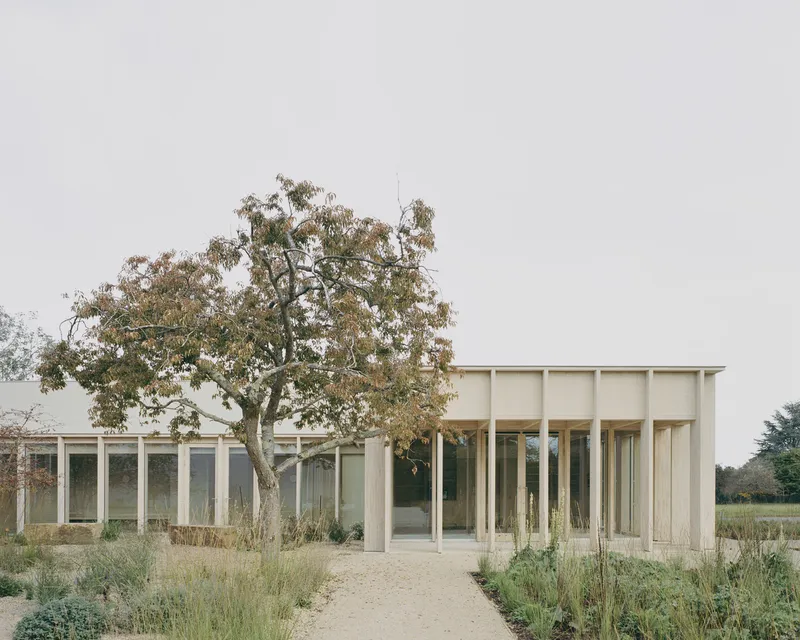

All photographs are works of Rory Gardiner


Popular Articles
Popular articles from the community

Tsunami Convergenics: Turning Catastrophic Ocean Forces into Underwater Housing Infrastructure
A speculative underwater settlement off the coast of Onagawa, Japan, treats tsunamis and typhoons as energy sources rather than threats.

Cloaked Colonization: A Mobile Underwater Habitat That Moves Like a Fish
Micah Abaya's shortlisted EHC Pacific entry reimagines ocean settlement as a dispersed network of self-sustaining architectural organisms.

Faces of the Soviet Avant-Garde: Turning Moscow's Street Names into an Open-Air Museum
A network of sculptural installations across a Moscow residential district transforms forgotten architect names into spatial encounters with cultural memor

Singing Woman: Contemporary Architecture Inspired by Estonia’s Voice and the Sea
Singing Woman turns Estonia’s song culture into flowing opera house architecture, blending public life, landscape, sea, and national memory.

Similar Reads
You might also enjoy these articles


Hodi-Mandai Geram
Project Function: Preservation and revitalization of the Intangible heritage and socio-spatial identity of the Hodi by Housing, Cultural Memory Center, Sacred Grove, landscape, local tourism economy


Olio Towers: A Mid-Rise for Performers That Fuses Housing, Rehearsal, and Stage
Located blocks from Houston's Theater District, this modular tower stacks living units around a central performance atrium.

Oasis: Modular Green Housing Carved into Dhaka's Urban Fabric
A shortlisted Plugin Housing entry reclaims unauthorized settlements in Dhaka with stepped concrete volumes, green roofs, and ventilation-driven design.

Black Hole: A Floating Megastructure for the Post-Physical Era
Emiliano Mazzarotto envisions a spherical, self-scaling arena where e-sports, digital hotels, and holographic stadiums replace traditional public space.

Explore Sacralized Architecture Competitions
Discover active competitions in this discipline

Challenge to reimagine the Iron Throne

Photograph architecture without architects

Illustrate the lost glory of Angkor Wat - Render Challenge

Design challenge to reuse E-waste
Comments (0)
Please login or sign up to add comments
No comments yet. Be the first to comment!