

Tent Cabin in Omori By HUNE ARCHITECTS
Tent Cabin in Omori by HUNE Architects is a compact timber home featuring a tent-like roof, layered spaces, and gentle family-centered living.


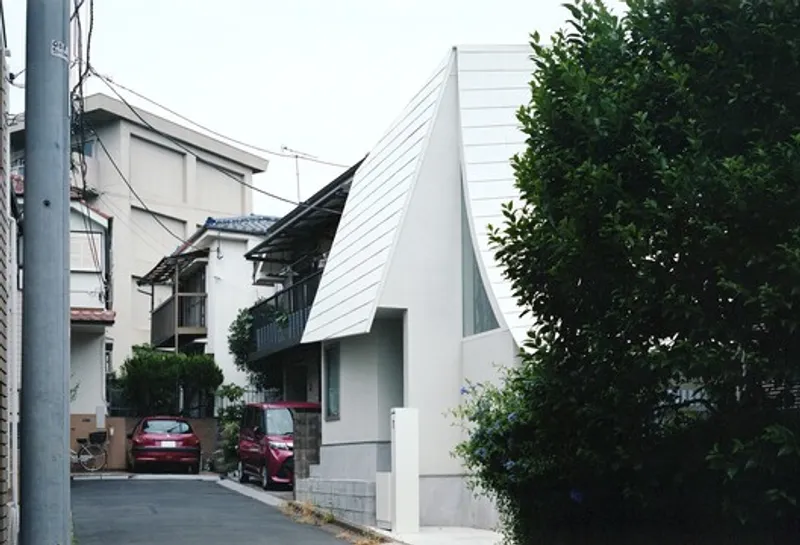
Located in the Omori neighborhood of Tokyo, Tent Cabin by HUNE ARCHITECTS is a compact yet highly expressive 72 m² timber house designed for a young family of four. Completed in 2025, the project rethinks small urban housing through spatial layering, roof experimentation, and a sensitive response to family life, site constraints, and material performance.
A Home for Individual Rhythms and Shared Living
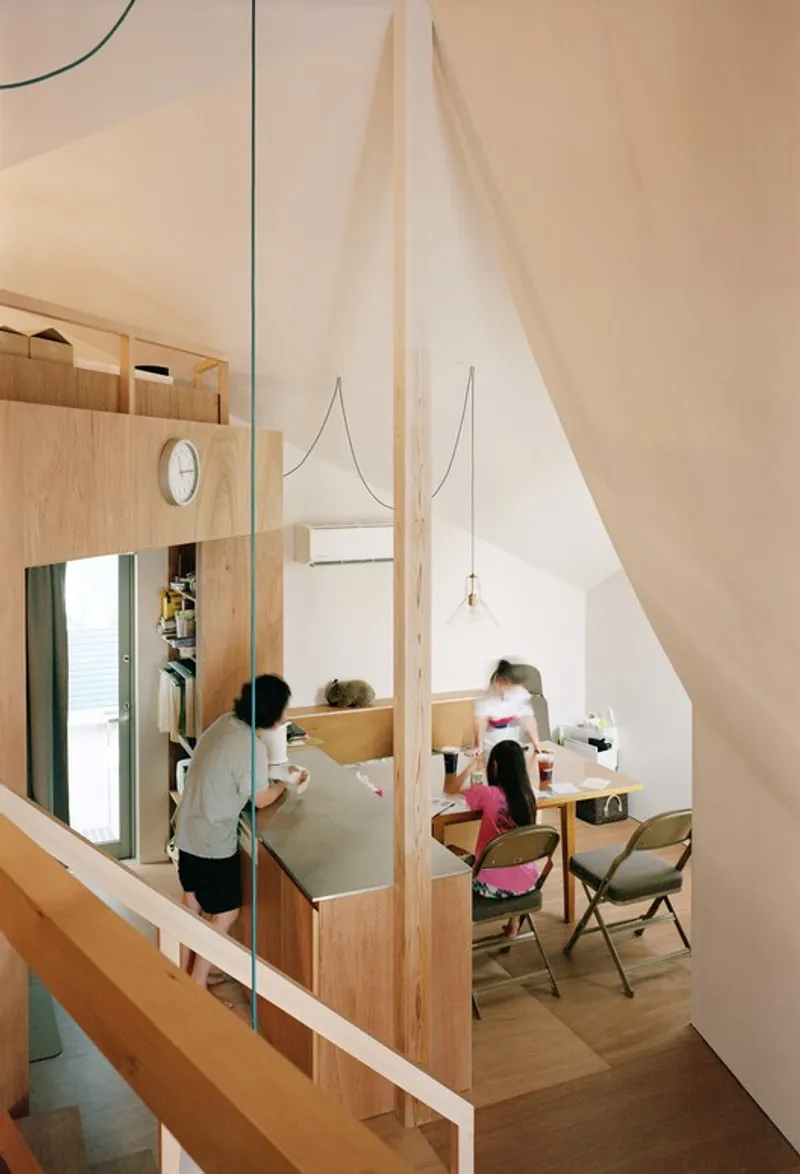
The clients—a young couple with two children—envisioned a house that could support different daily rhythms, hobbies, and moments of retreat, while still encouraging togetherness. Rather than dividing the house into rigid rooms, the architects designed a sequence of interconnected spaces that flow vertically and visually, allowing the family to remain connected without feeling crowded.
This approach results in a flexible domestic landscape, where movement, light, and roof form guide everyday life.
Site Strategy and Split-Level Organization
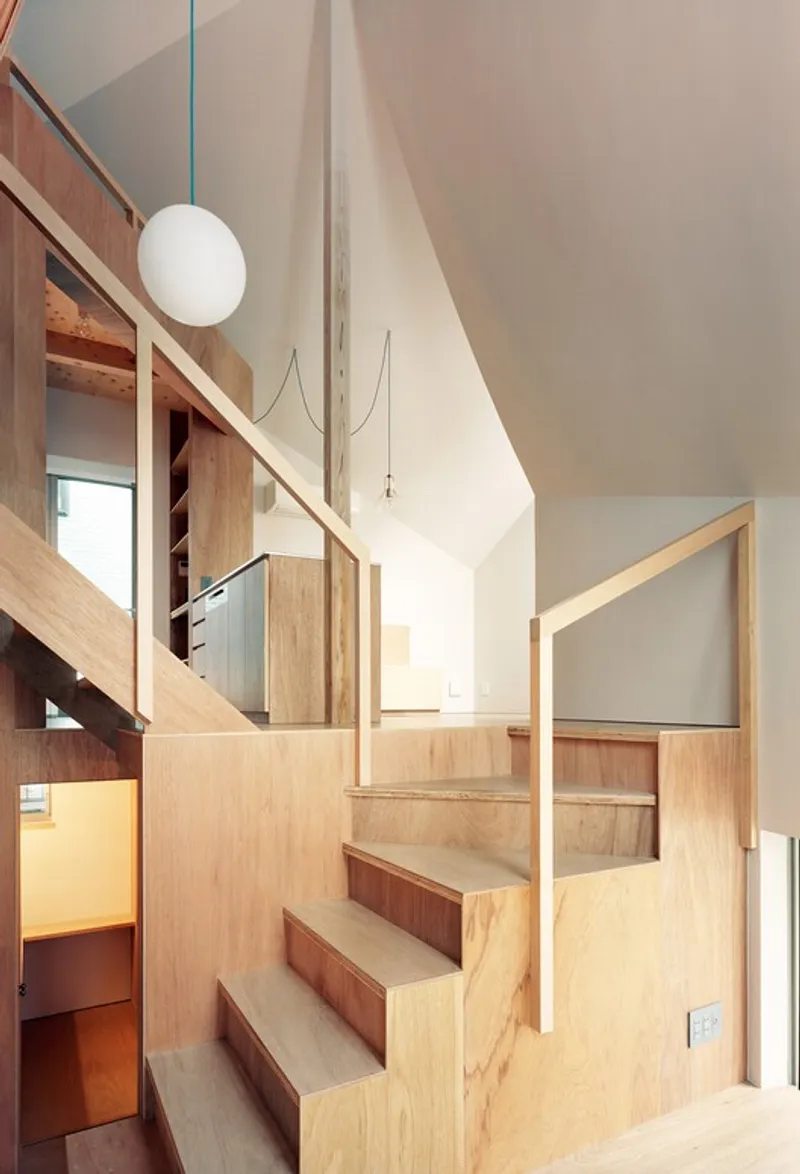
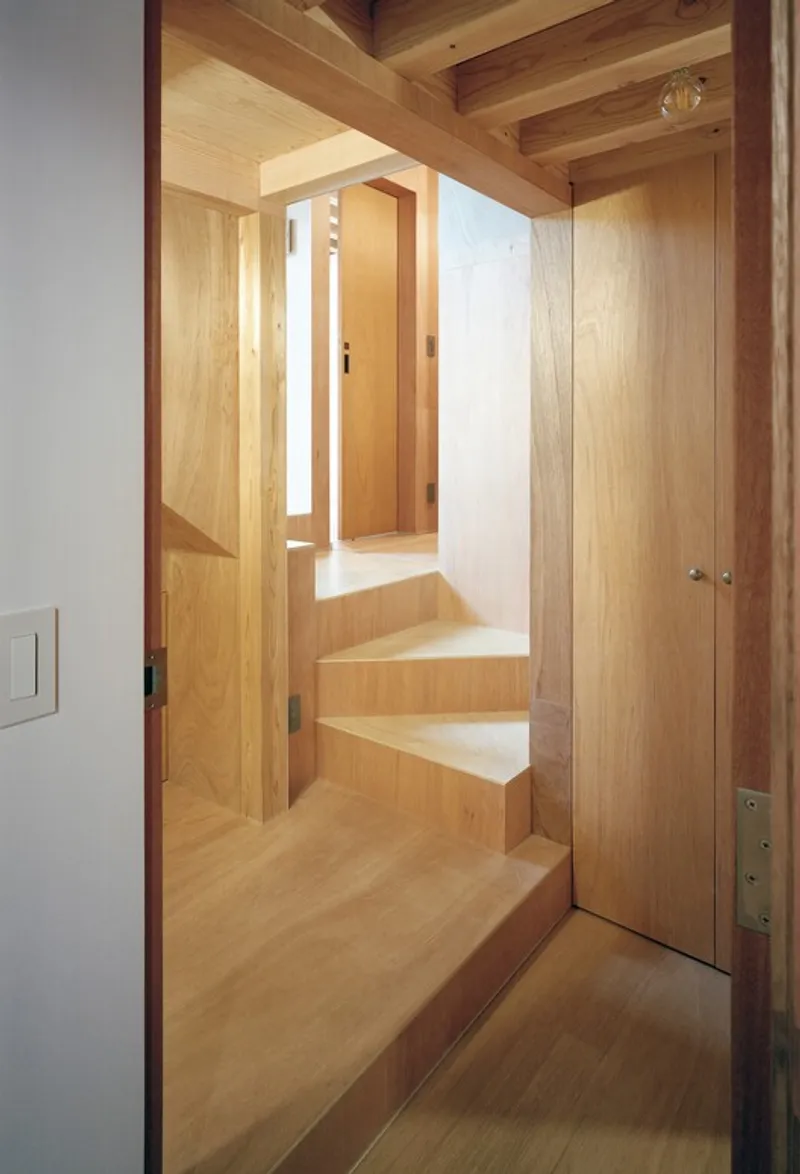
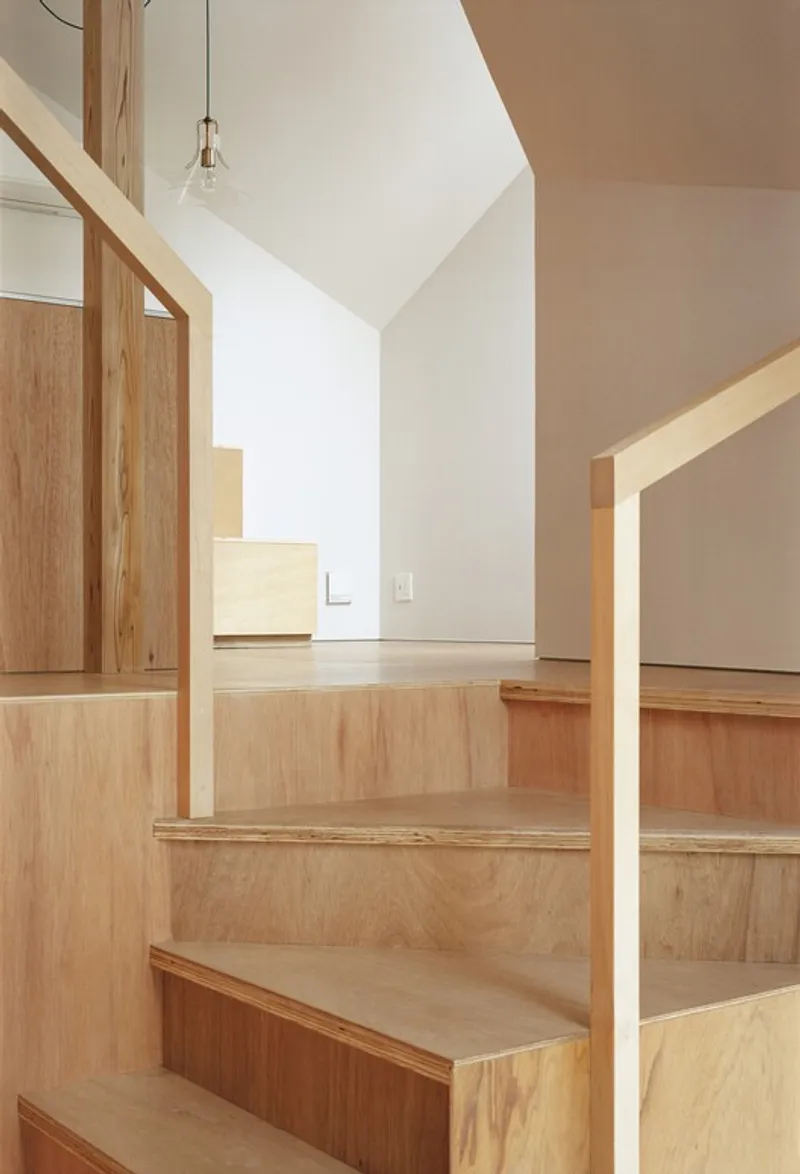
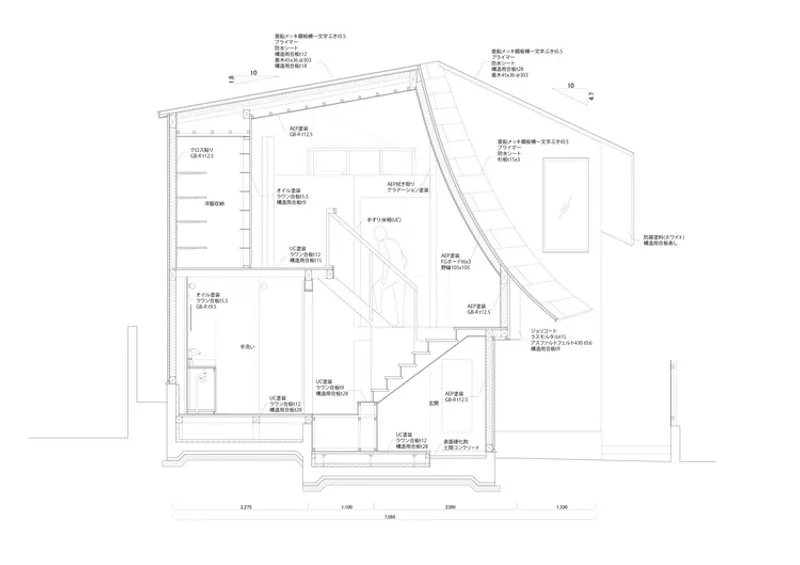
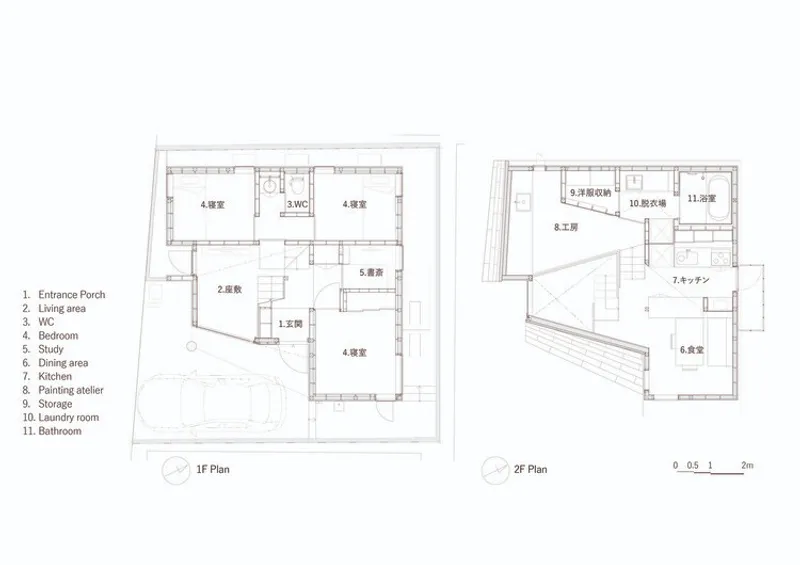
The narrow site is located along a small lane branching from a road facing railway tracks—typical of dense Tokyo neighborhoods. Responding to the subtle level difference between the front road and rear of the plot, the architects arranged the bedrooms in an L-shaped plan, staggered by half levels. This split-level strategy minimizes excavation while naturally separating private spaces.
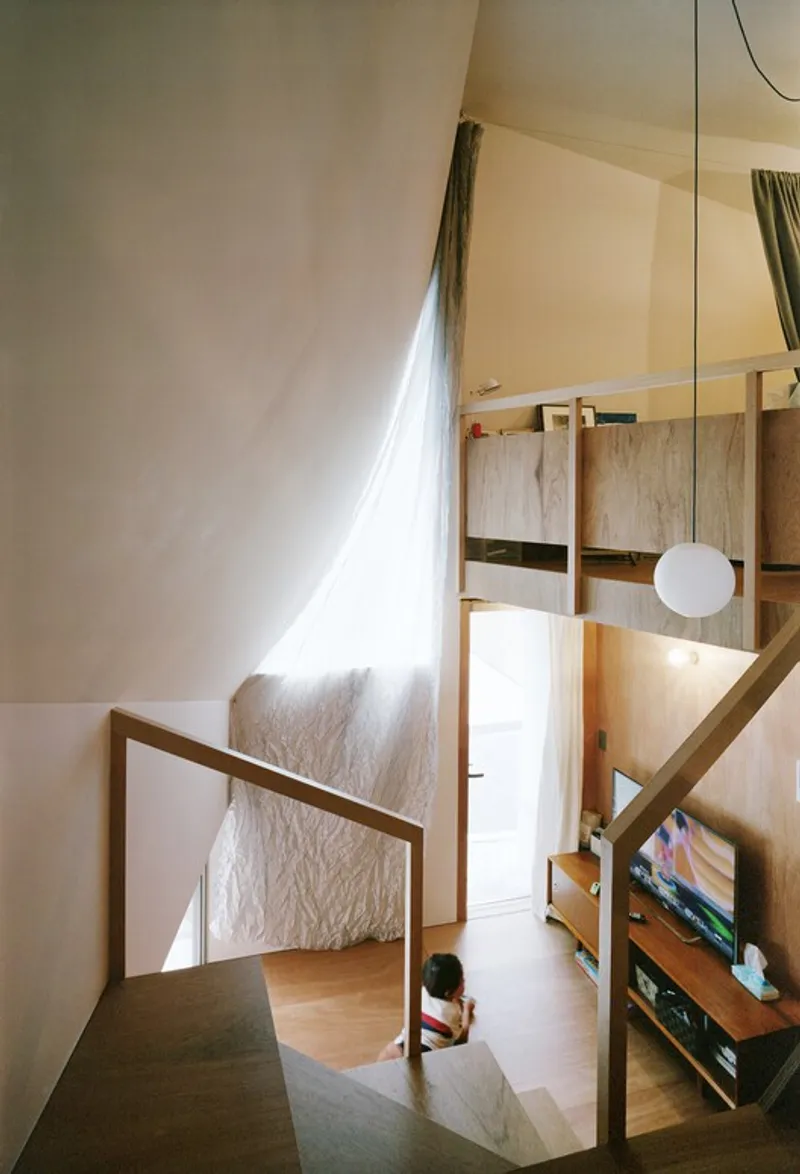
Above these bedrooms, a rising staircase unfolds into a series of shared living zones:
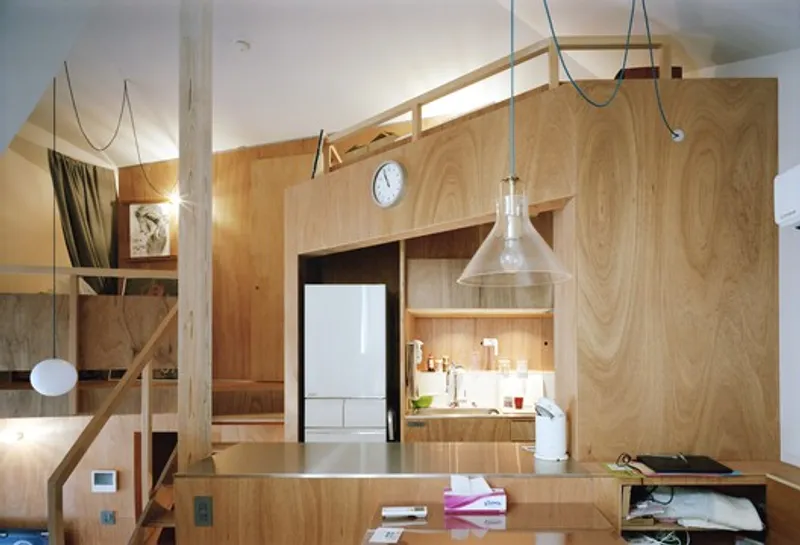
- a cozy living corner
- a dining area
- a small painting atelier
- a loft space
Together, these spaces form a continuous vertical journey rather than a single open floor.
The Tent-Inspired Roof as Spatial Generator
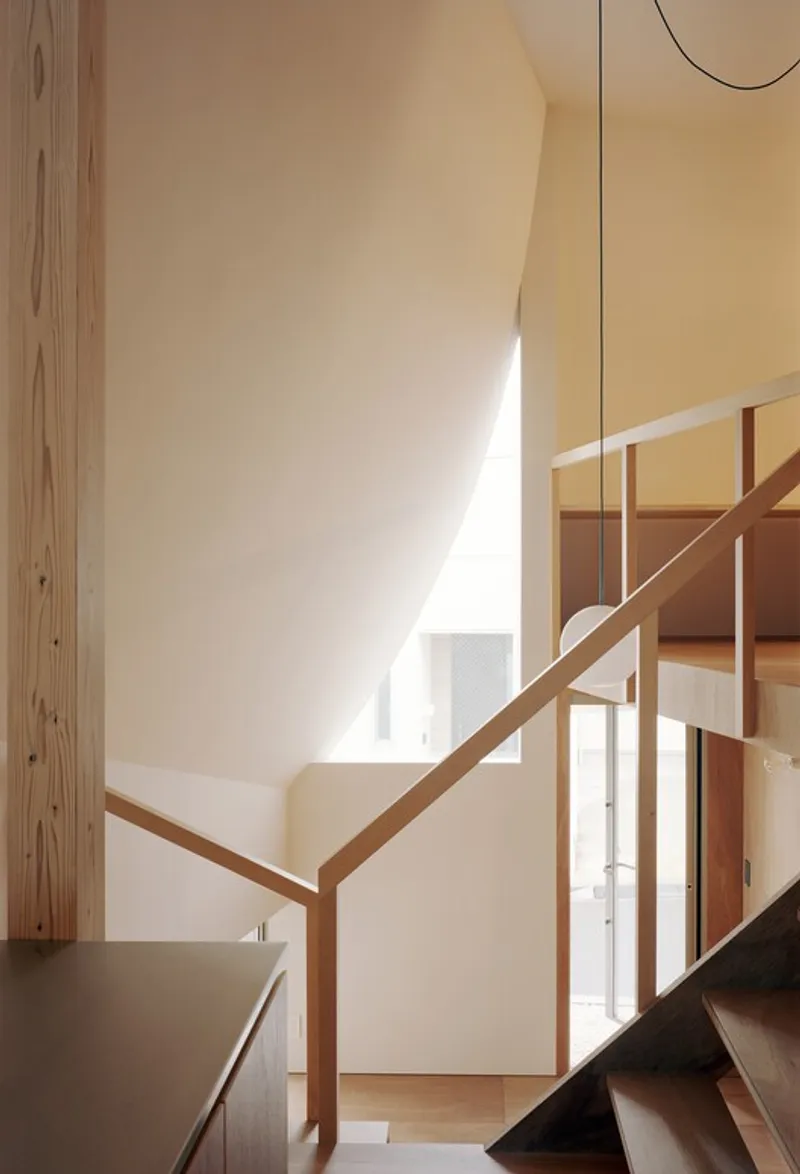
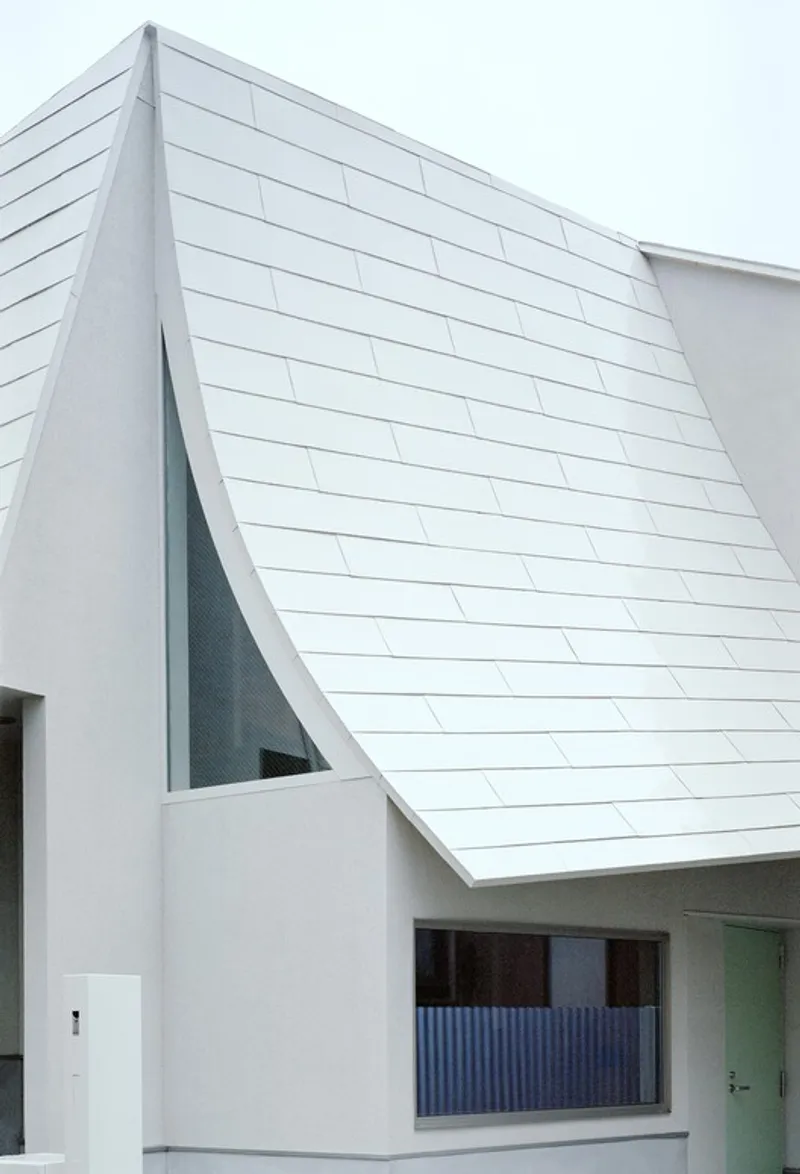
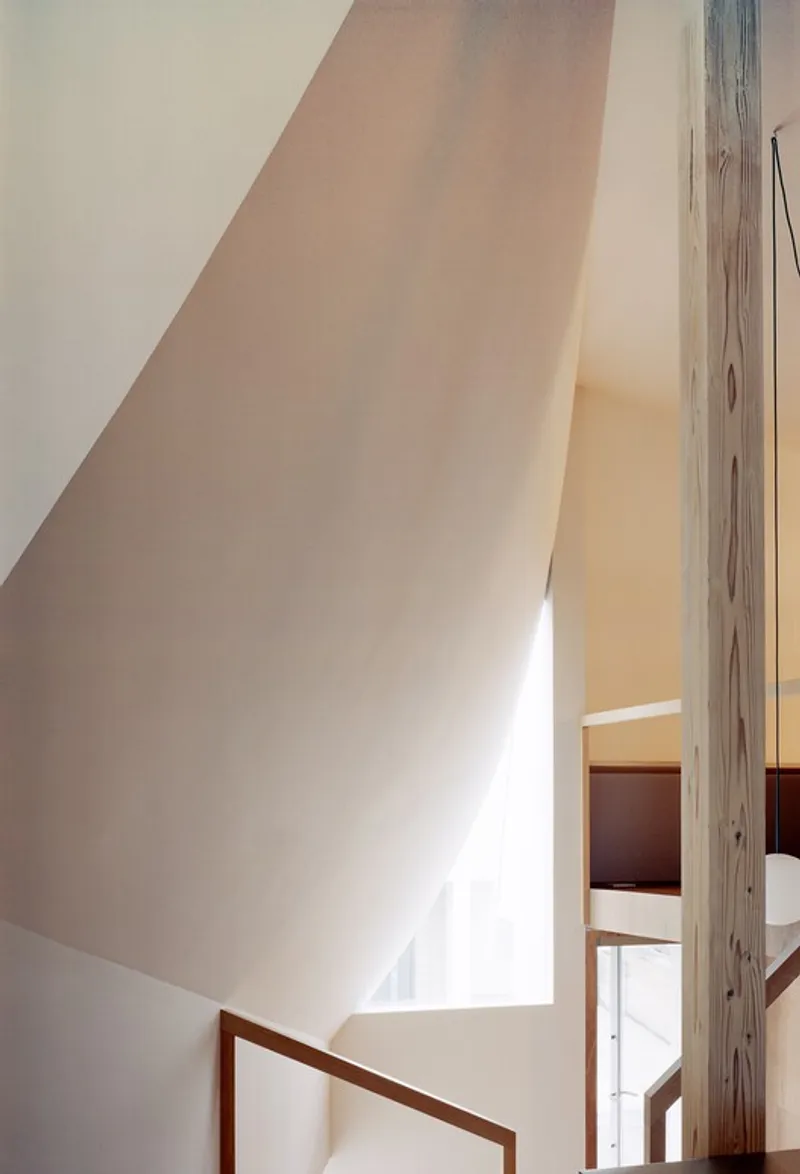
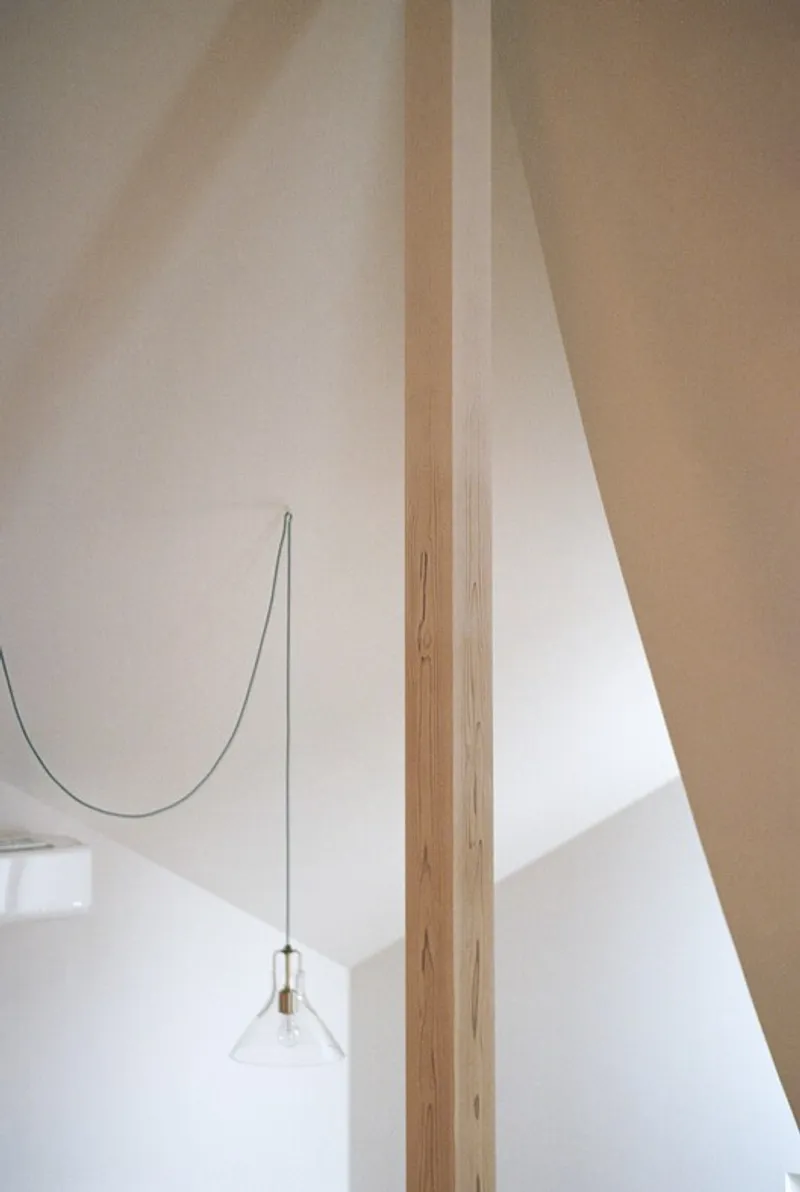
The defining architectural element of the project is its tent-like roof structure. Four interlinked roofs—one of them gently curved—are lifted by a central pillar that forms a ridge, allowing the roofs to drape downward like fabric softly laid over the house.
As residents move through the home, the relationship between roof and floor constantly shifts. Ceiling heights expand and compress, framing views upward and allowing daylight to slip through roof edges. The changing geometry produces a dynamic interior atmosphere where light, shadow, and form evolve throughout the day.
Innovative Timber Construction
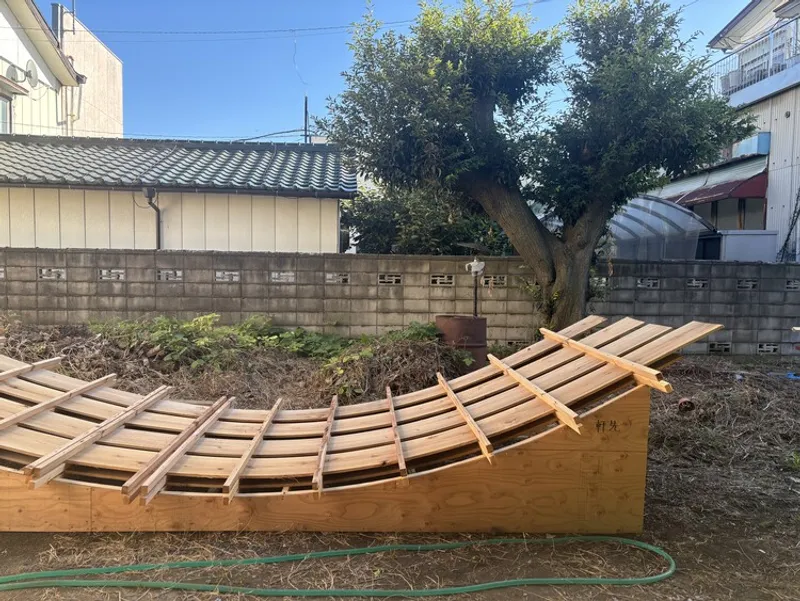
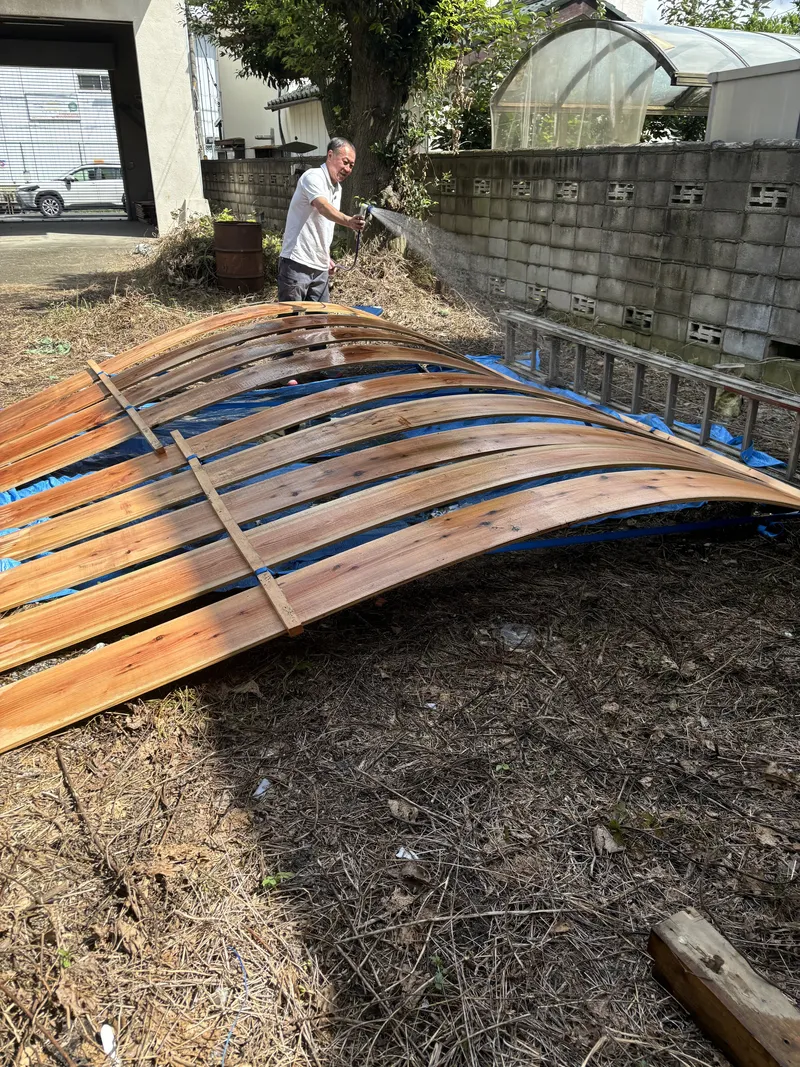
To achieve the soft curvature of the roof while maintaining structural integrity, HUNE ARCHITECTS developed a laminated timber system using cedar boards. Each roof panel consists of three layers of boards, each 15 mm thick and 300 mm wide, laminated to form a total thickness of approximately 45 mm.
The process involved:
- daily watering of boards to soften fibers
- bending boards over curvature molds offsite
- transporting pre-bent plies to the site
- staggered joints bonded with screws and adhesive
Testing with MEMS acceleration sensors confirmed that the laminated system achieved 2.5 times higher vibration frequency than a single board, delivering stiffness equivalent to solid timber while preserving visual lightness.
Light, Material, and Atmosphere
Exposed timber surfaces dominate the interior, reinforcing warmth and tactility. Daylight grazes the curved roof from the side, scattering subtle color shifts that change with the time of day. The result is an interior that feels calm, protective, and gently animated, much like the interior of a tent.
Rather than emphasizing efficiency alone, the project prioritizes emotional comfort, spatial variety, and sensory experience, transforming a small footprint into a rich living environment.
A Soft Shelter for Urban Family Life
Tent Cabin in Omori is a thoughtful example of contemporary Japanese residential architecture, blending structural experimentation with human-centered design. It offers a model for compact urban housing where architecture acts not as a rigid container, but as a shared fabric—one that embraces individual lives under a single, gentle roof.
All the photographs are works of Yurika Kono


Popular Articles
Popular articles from the community


Jaramillo Van Sluys Arquitectura and Urbanismo Turn a Demolished Registry Lot in Quito into an Orchard Plaza
In Quito's Centro Histórico, a 2,800 m² plaza exposes the San Agustín convent wall and redraws its lost Augustinian orchard in volcanic stone.

GROUP A Strips a 1969 Rotterdam Harbor Headquarters to Its Frame and Wraps It in Timber Louvers
In Rotterdam's M4H harbor district, Ferro Offices reuses a 1969 frame, adds one timber storey and reaches BREEAM-NL Outstanding.

David Macias Steps a Doorless Stone and Plaster House Down a Tropical Colombian Hillside
In the humid hills of Colombia, Threshold House replaces the front door with an open void and terraces its 850 m² down the slope instead of fighting it.

LT2A and OPEN Architectes Thread a Brick and Glass High School Through a Wooded Belgian Campus
In Braine-l'Alleud, a 3,000 m² wing for Collège Cardinal Mercier pairs pale brick with a glazed colonnade, deferring to a small chapel and a dense wood.

Similar Reads
You might also enjoy these articles


Hodi-Mandai Geram
Project Function: Preservation and revitalization of the Intangible heritage and socio-spatial identity of the Hodi by Housing, Cultural Memory Center, Sacred Grove, landscape, local tourism economy


Olio Towers: A Mid-Rise for Performers That Fuses Housing, Rehearsal, and Stage
Located blocks from Houston's Theater District, this modular tower stacks living units around a central performance atrium.

Oasis: Modular Green Housing Carved into Dhaka's Urban Fabric
A shortlisted Plugin Housing entry reclaims unauthorized settlements in Dhaka with stepped concrete volumes, green roofs, and ventilation-driven design.

Black Hole: A Floating Megastructure for the Post-Physical Era
Emiliano Mazzarotto envisions a spherical, self-scaling arena where e-sports, digital hotels, and holographic stadiums replace traditional public space.

Explore Tiny House Competitions
Discover active competitions in this discipline

Challenge to reimagine the Iron Throne

Photograph architecture without architects

Illustrate the lost glory of Angkor Wat - Render Challenge

Design challenge to reuse E-waste
Comments (0)
Please login or sign up to add comments
No comments yet. Be the first to comment!