

Terra Casa by Studio Dashline: A Nature-Integrated Retreat in Gwalior
Terra Casa blends rustic warmth and Mediterranean charm, using natural materials, open spaces, and greenery to create a serene, sustainable family retreat.


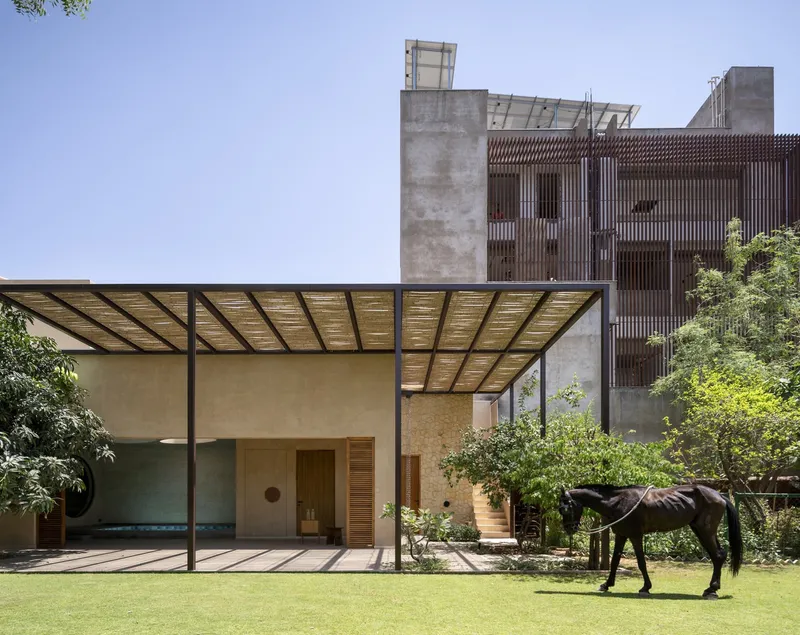
Terra Casa by Studio Dashline is envisioned as a serene residential retreat designed for the Gupta family, offering an escape from the density and chaos of urban life. Located on a generous 10,000 sq ft plot in Gwalior, India, the home embraces nature, calmness, and spatial openness. Every detail is carefully curated to foster tranquillity: lush landscapes, soft breezes, and natural textures create an environment rooted in comfort and connection.
A Nature-First Residential Design Approach
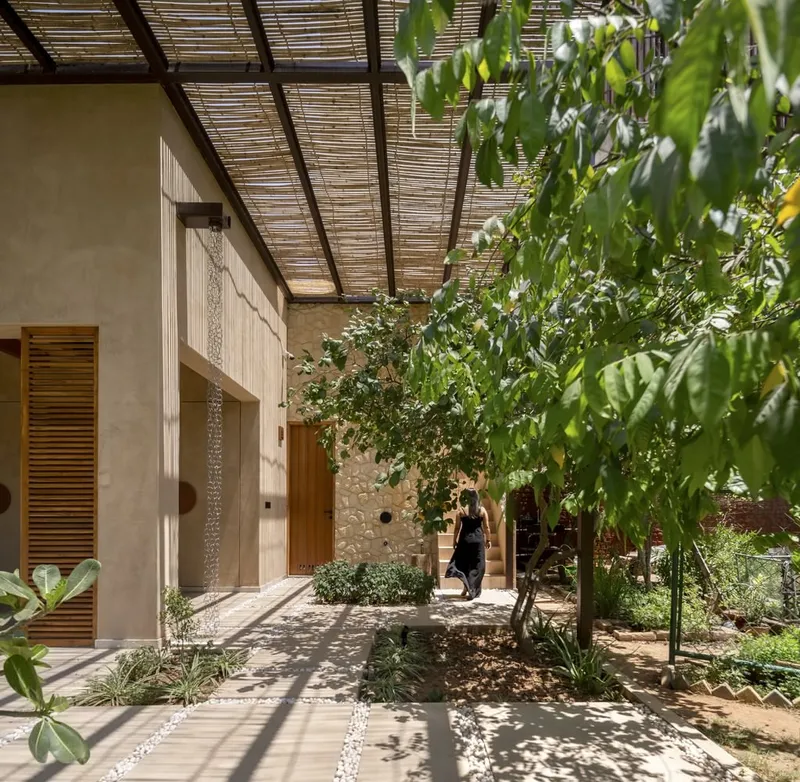
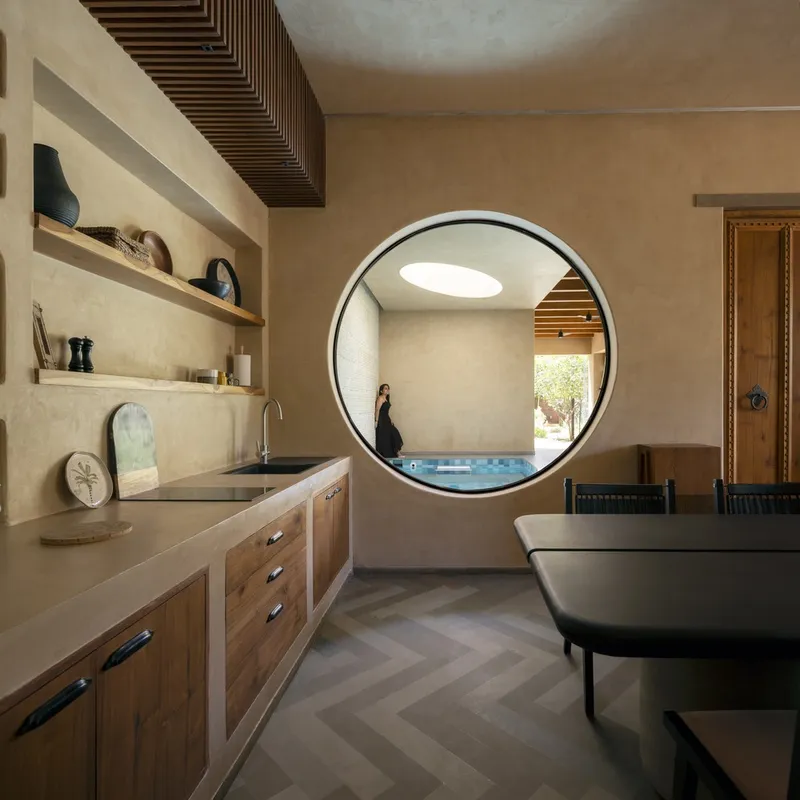
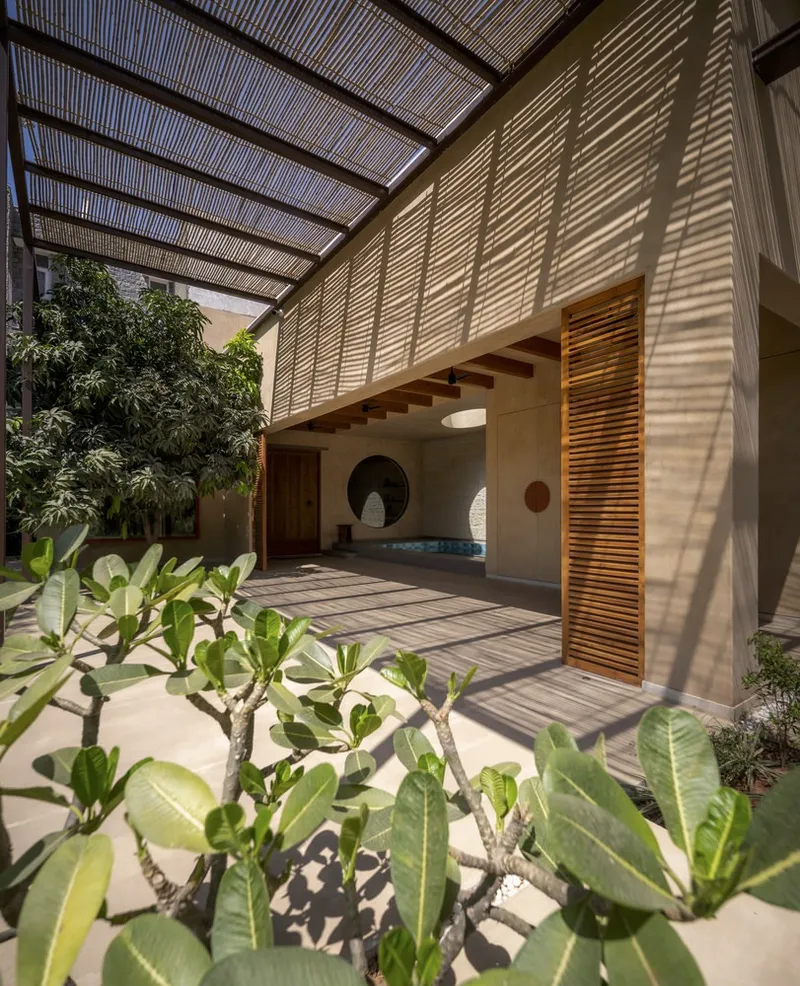
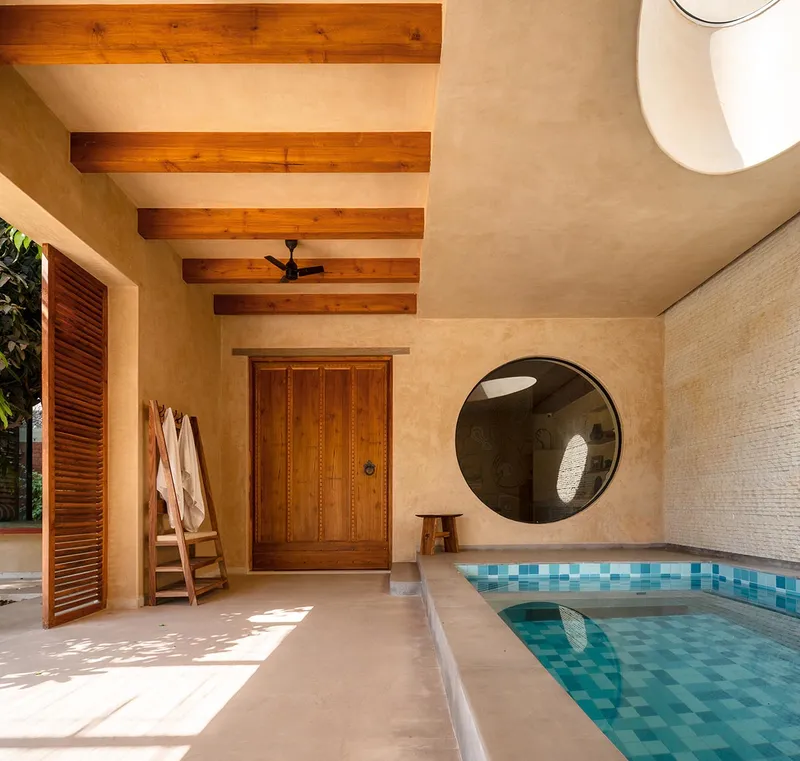
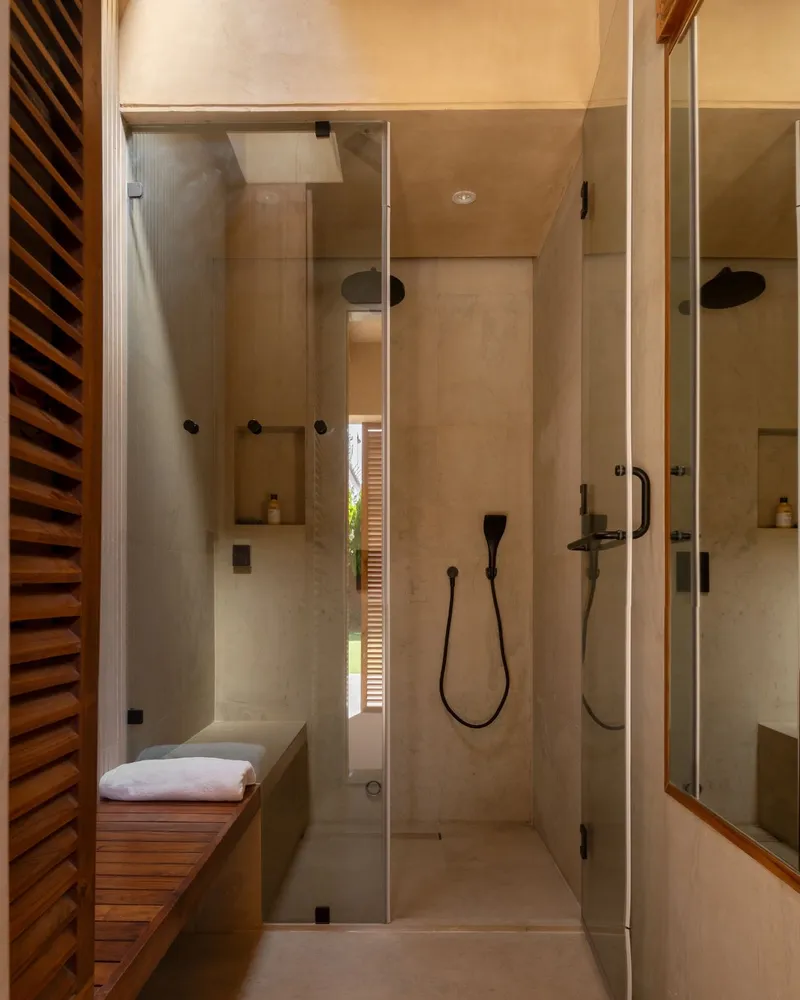
From the moment one enters the property, Terra Casa reveals its grounding philosophy: architecture should complement nature, not overpower it. The home is organized around a central training pool that forms the core of the spatial arrangement. Positioned between the living area and an outdoor shower zone, it allows seamless movement while bringing a cooling, reflective quality to the heart of the residence.
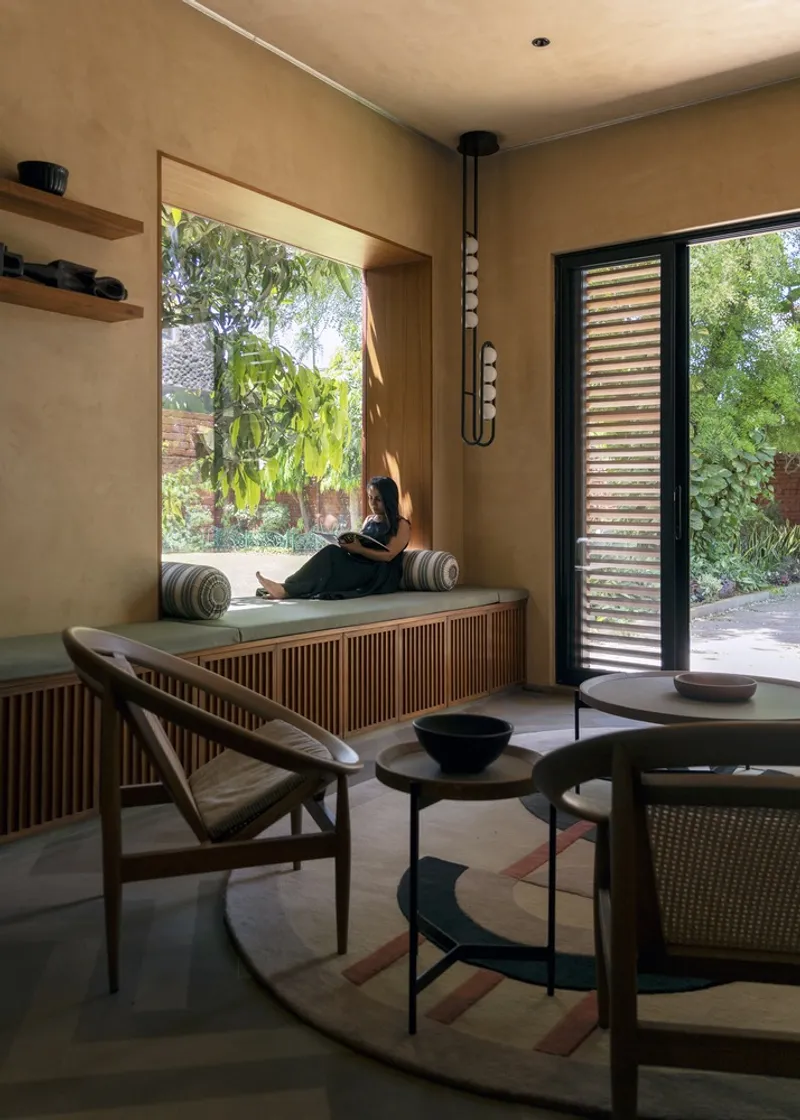
Large windows, full-height openings, and strategically placed skylights ensure the interiors are bathed in shifting daylight from sunrise to dusk. These elements shape the mood of each room, guiding natural airflow and creating visual dialogues with the surrounding greenery. A prominent mango tree outside the bay window provides shade, diffuses harsh sunlight, and frames a peaceful view, demonstrating how landscape elements actively shape indoor comfort.
Mediterranean Warmth Meets Rustic Indian Craftsmanship
The design language of Terra Casa combines rustic Indian charm with Mediterranean influences, achieving a balance between simplicity and understated luxury. Studio Dashline incorporates traditional building techniques and natural materials, enhancing both sustainability and aesthetic richness.
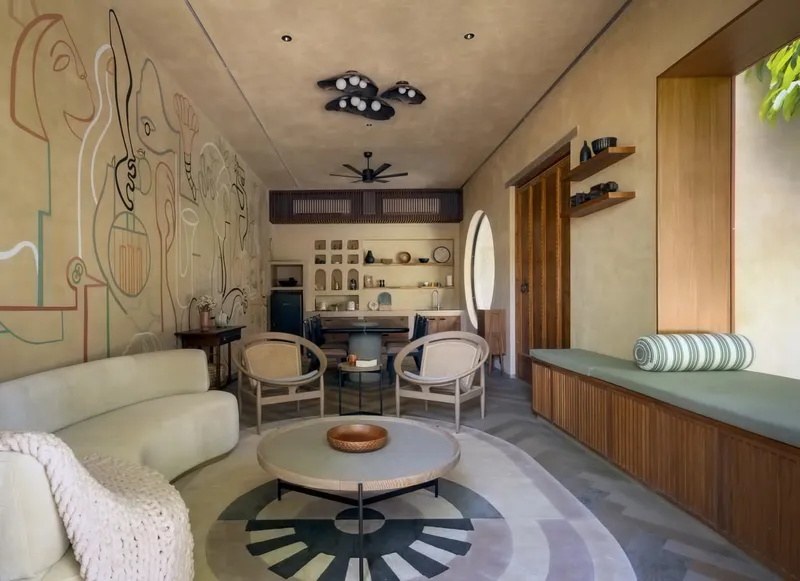
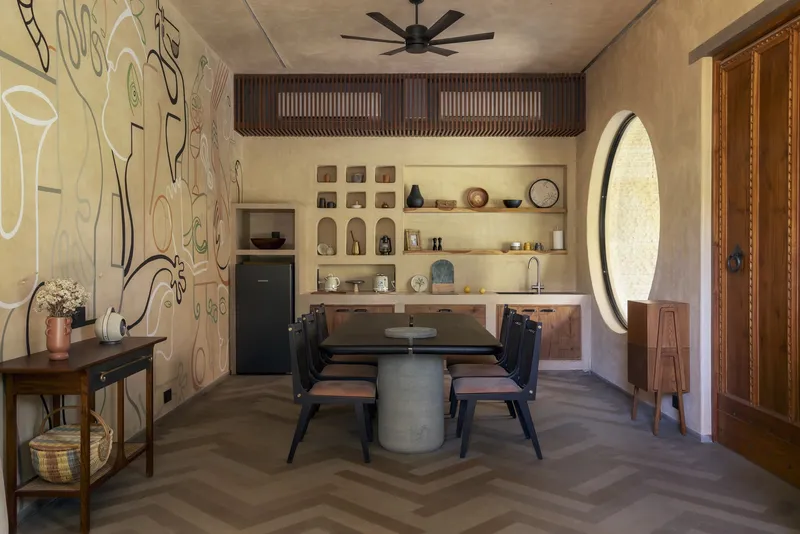
Key architectural elements include a stone lintel above the main entrance, hand-applied lime clay plaster for breathable walls, and custom metal studs that reference vernacular detailing. Inside, the kitchen draws inspiration from traditional Mediterranean homes, featuring built-in brick storage, deep wall niches, and tactile materials. Contemporary elements, such as the fluid wall mural adorning the living lounge, add personality and warmth, reflecting the family’s identity.
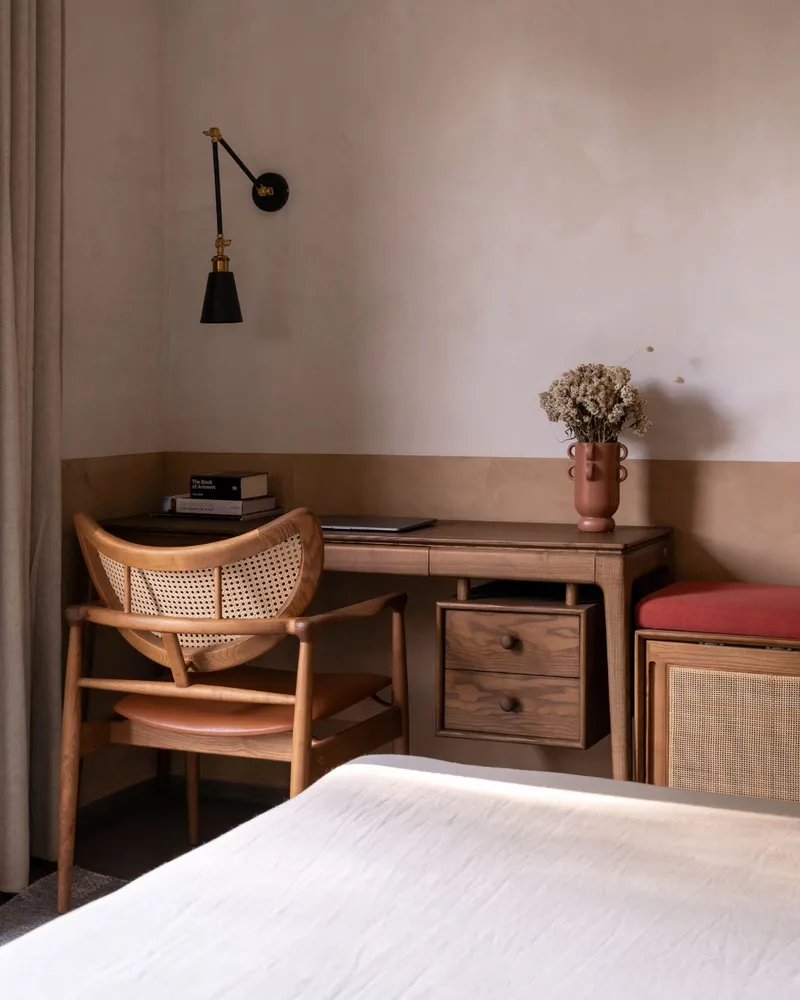
Throughout the home, furniture pieces, lighting fixtures, and curated decor items from local artisans and design brands blend harmoniously with the minimalist shell, emphasizing the surrounding landscape and architectural clarity.
A Family Home Born from the Need for Space and Reconnection
The concept for Terra Casa emerges from the Gupta family's desire for breathing space during the COVID-19 pandemic. Their earlier urban home could no longer support the peace and connection they sought as they transitioned into parenthood. Terra Casa thus became a second home: a place to slow down, nurture family moments, and reconnect with nature.
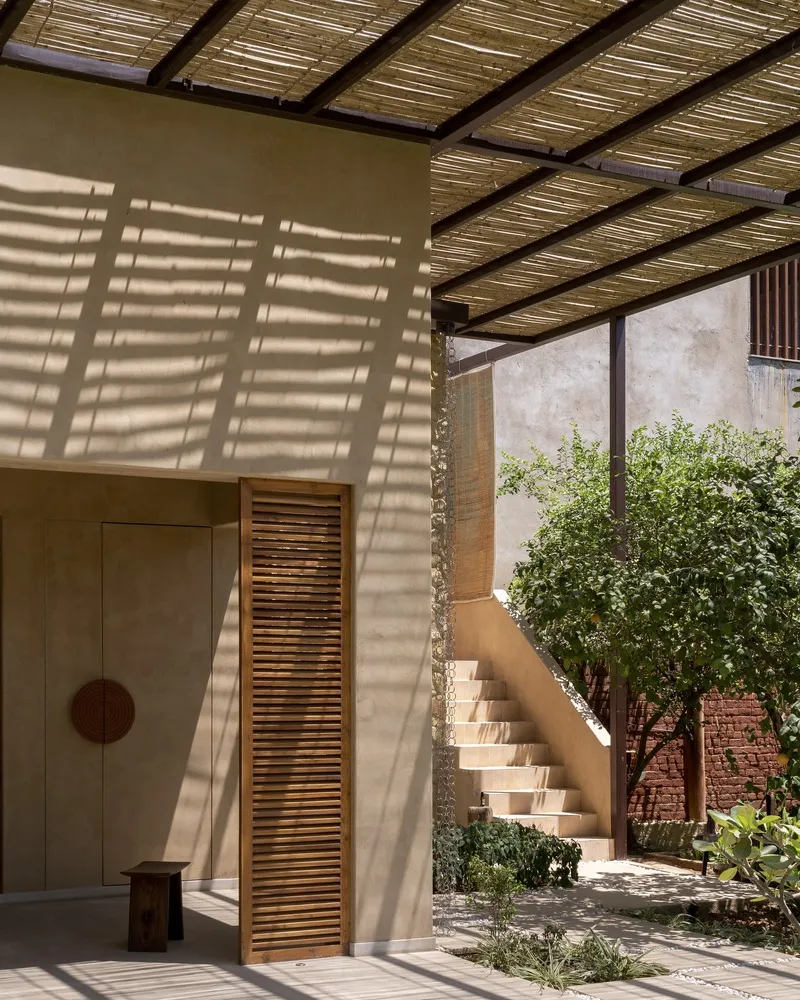
The architecture translates this emotional brief into a spatial experience. High ceilings create openness and regulate temperature, while cross-ventilation ensures thermal comfort with minimal mechanical cooling. Outdoor decks shaded with bamboo become quiet relaxation zones, reducing heat gain and extending living spaces outward. Mature trees are preserved, and new shrubs are introduced around the building perimeter to soften the microclimate and reduce heat absorption.
Sustainability as a Living Principle
Sustainable design forms the backbone of Terra Casa. The project employs environmentally conscious materials and techniques, reducing its carbon footprint while enhancing long-term resilience.
Locally sourced stone, reclaimed teak, bamboo, and low-waste raw materials form the primary palette. These natural materials reduce transportation emissions, promote regional craftsmanship, and ensure durability. Rainwater harvesting systems help limit dependence on municipal water supply, while a dedicated kitchen garden brings self-sufficiency and encourages slow, mindful living.
Expansive openings and skylights reduce the need for artificial lighting, and the home’s strategic orientation optimizes natural ventilation, lowering overall energy consumption.
A Timeless Retreat Where Architecture Meets Nature
Terra Casa by Studio Dashline ultimately stands as a celebration of nature-integrated architecture, tranquil living, and sustainable design. It functions not merely as a getaway but as an emotionally grounded sanctuary: a place where families can slow down, spend meaningful time together, and weave memories that transcend generations. The home’s thoughtful materiality, immersive landscapes, and calm spatial flow create an architectural experience rooted in wellbeing, simplicity, and ecological harmony.
All photographs are works of Yash R Jain


Popular Articles
Popular articles from the community


David Ortega Stacks a Two-Story Mexico City Penthouse Around a Steel Stair and a Pergola-Shaded Roof Terrace
In Colonia Roma, a 300 m² penthouse uses oak joinery, a planted steel stair and a slatted roof pergola to make a new-build apartment feel like a house.

longwave studio Reorganizes a 112 m² Tainan Apartment Around the Daily Routines of a Family and Two Cats
In Tainan, Taiwan, birch plywood, rust-red furniture and a freestanding plaster wall link arrival, storage, work and family life in one apartment.

GROUP A Strips a 1969 Rotterdam Harbor Headquarters to Its Frame and Wraps It in Timber Louvers
In Rotterdam's M4H harbor district, Ferro Offices reuses a 1969 frame, adds one timber storey and reaches BREEAM-NL Outstanding.

David Macias Steps a Doorless Stone and Plaster House Down a Tropical Colombian Hillside
In the humid hills of Colombia, Threshold House replaces the front door with an open void and terraces its 850 m² down the slope instead of fighting it.

Similar Reads
You might also enjoy these articles


Hodi-Mandai Geram
Project Function: Preservation and revitalization of the Intangible heritage and socio-spatial identity of the Hodi by Housing, Cultural Memory Center, Sacred Grove, landscape, local tourism economy


Olio Towers: A Mid-Rise for Performers That Fuses Housing, Rehearsal, and Stage
Located blocks from Houston's Theater District, this modular tower stacks living units around a central performance atrium.

Oasis: Modular Green Housing Carved into Dhaka's Urban Fabric
A shortlisted Plugin Housing entry reclaims unauthorized settlements in Dhaka with stepped concrete volumes, green roofs, and ventilation-driven design.

Black Hole: A Floating Megastructure for the Post-Physical Era
Emiliano Mazzarotto envisions a spherical, self-scaling arena where e-sports, digital hotels, and holographic stadiums replace traditional public space.

Explore Architecture Competitions
Discover active competitions in this discipline

Challenge to reimagine the Iron Throne

Photograph architecture without architects

Illustrate the lost glory of Angkor Wat - Render Challenge

Design challenge to reuse E-waste
Comments (0)
Please login or sign up to add comments
No comments yet. Be the first to comment!