
Terra Firma House in Longueville by Luigi Rosselli Architects
Rammed earth waterfront home in Longueville blends recycled brick, solar power, and maritime-inspired design overlooking Sydney Harbour sustainably.

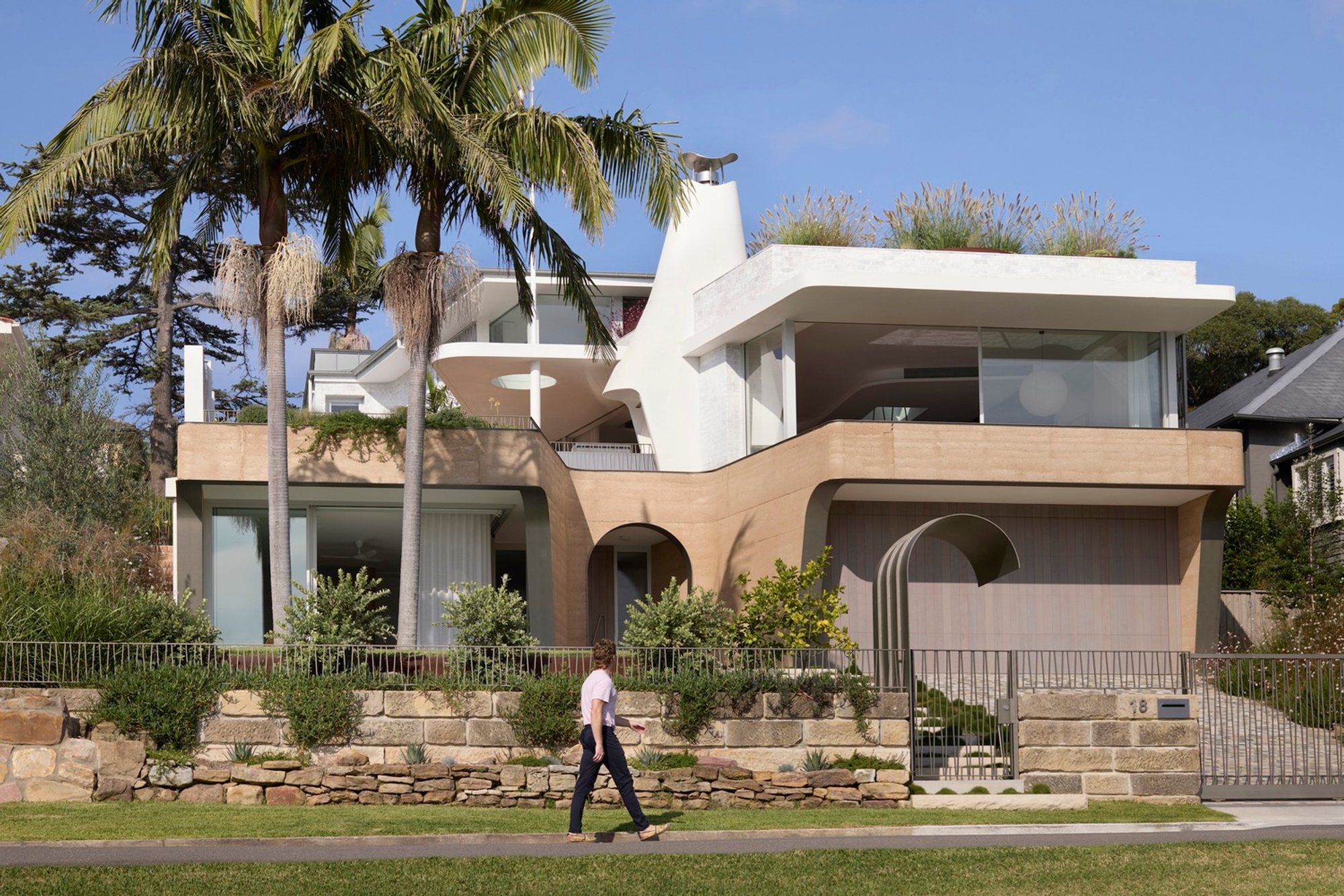
Located in Longueville, Australia, Terra Firma House is a 2024 waterfront residence designed by Luigi Rosselli Architects. Overlooking a sheltered bay within the tidal estuary of Sydney Harbour, this contemporary coastal home embodies permanence, sustainability, and material authenticity.
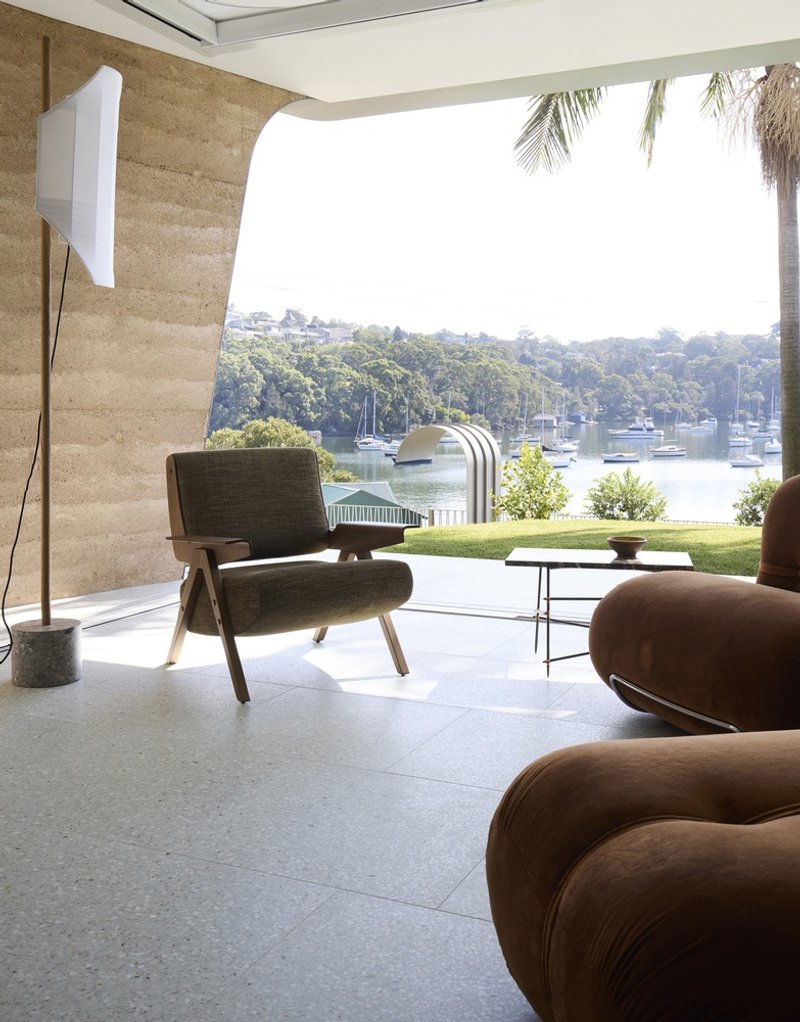
The name Terra Firma, Latin for “solid ground”, captures the emotional narrative behind the project. Designed for homeowners who are sailors, the house responds to a life shaped by ocean currents and shifting tides. While their boat rests only meters from the front door, the architecture provides psychological grounding: a stable, enduring retreat that contrasts with life at sea.
This project is a powerful example of sustainable waterfront architecture, combining rammed earth construction, recycled brickwork, reclaimed sandstone, and low-carbon concrete to create a low-embodied-energy home anchored to its site.
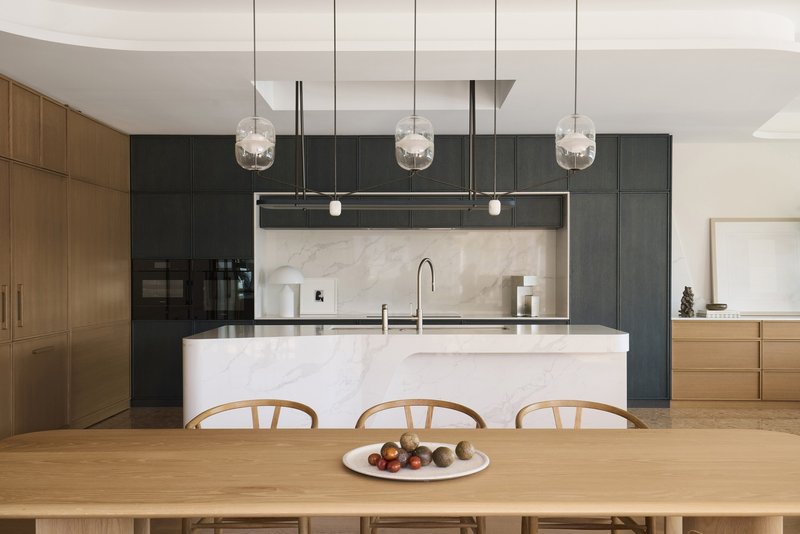
Architecture Inspired by Maritime Life
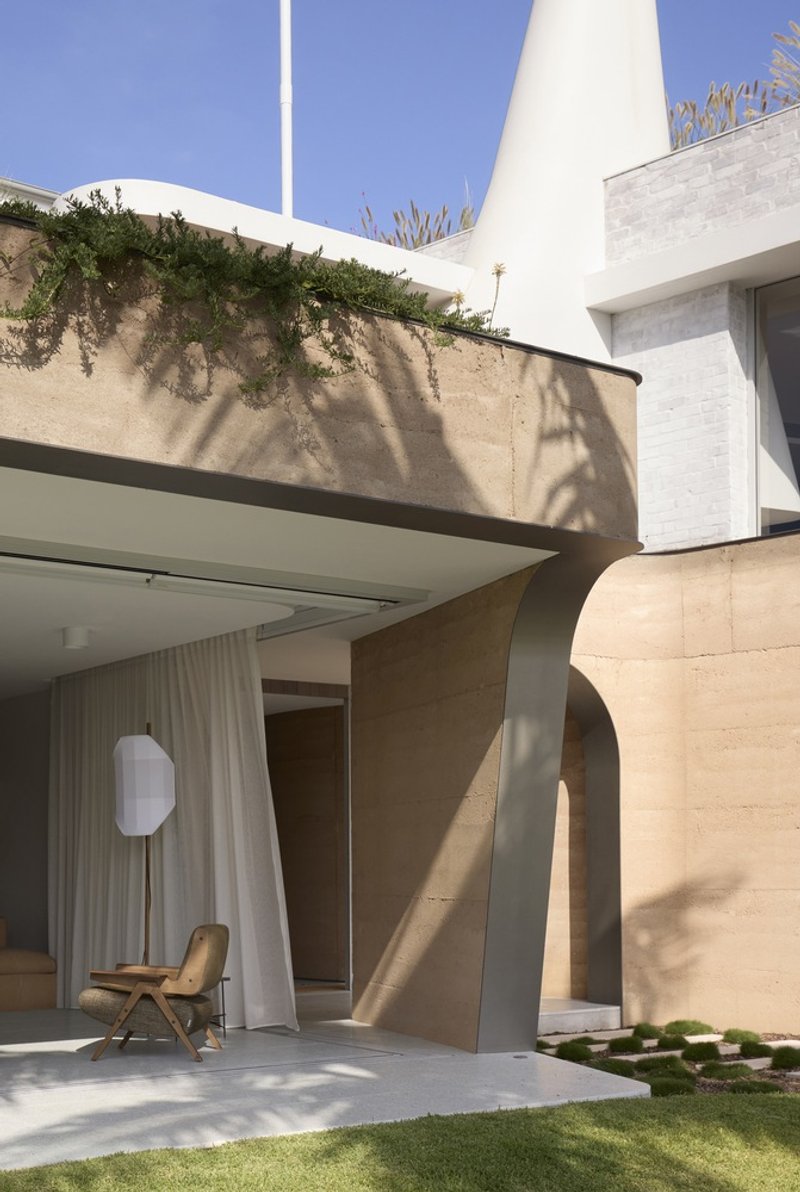
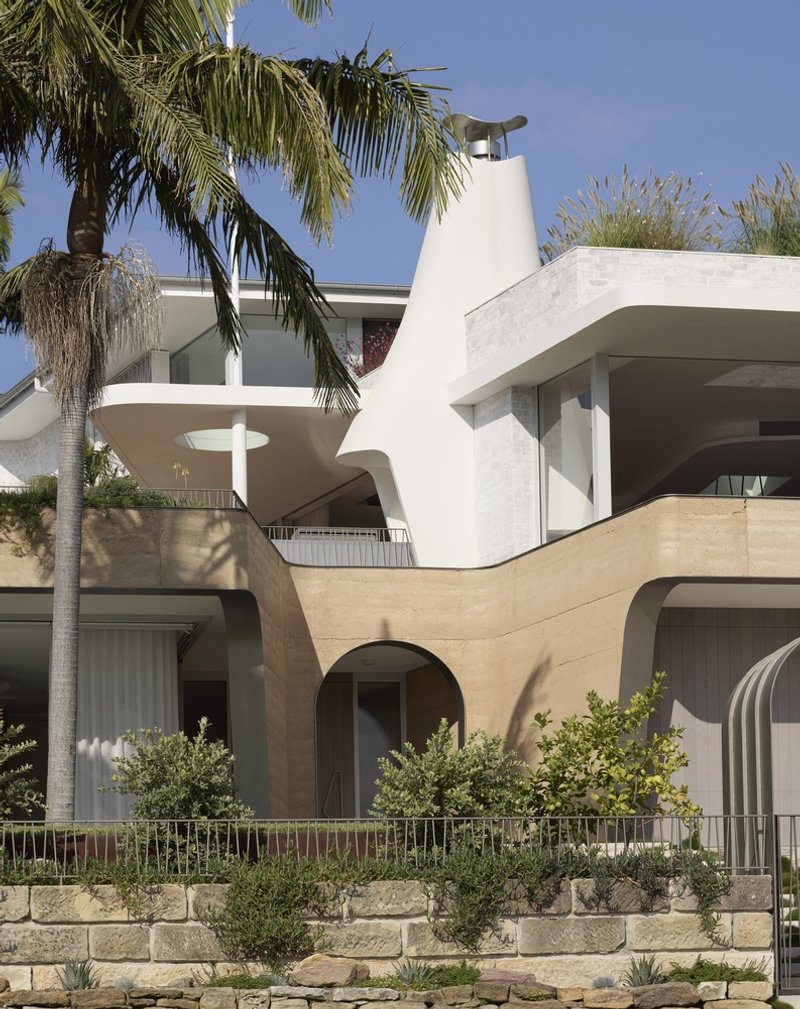
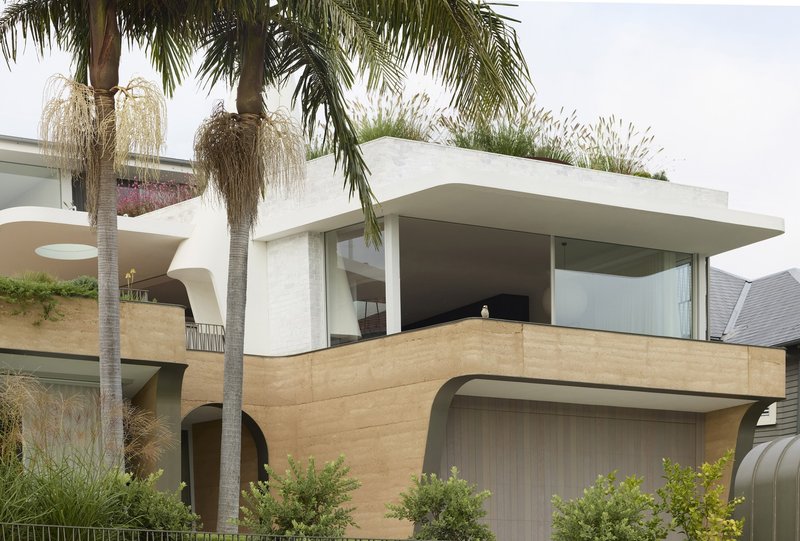
Perched atop a sandstone outcrop, Terra Firma House is firmly anchored to the land through a robust rammed earth base in warm sandstone tones. Rather than being excavated from the terrain, the structure sits confidently above it, offering panoramic views across Sydney Harbour while maintaining a grounded architectural presence.
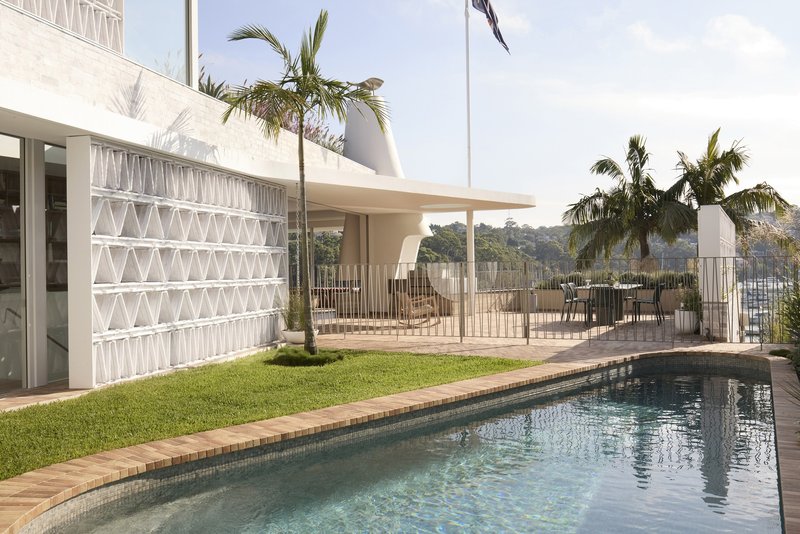
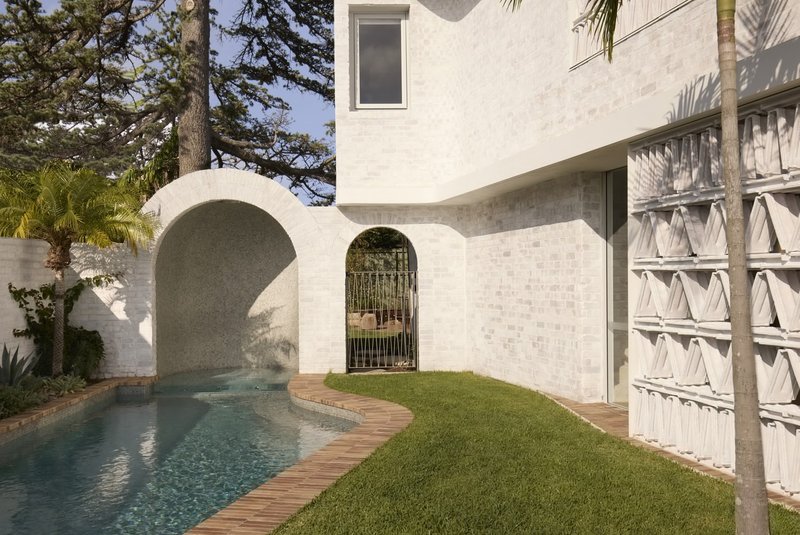
The home follows a distinctive ‘J’-shaped floor plan, wrapping around a swimming pool and terrace that nestle into its hollowed curve. This form creates:
- A protected outdoor courtyard
- A cruiser-like elevated deck
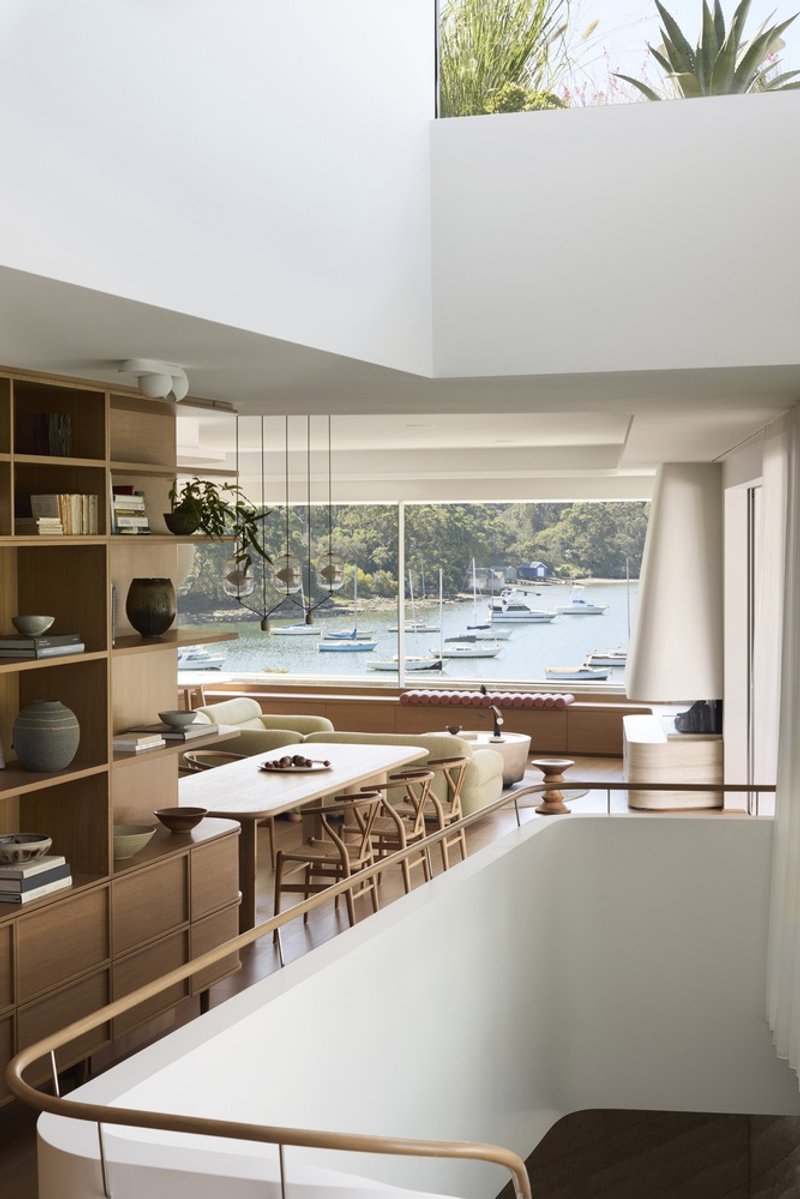
- Framed harbor views
- Seamless indoor–outdoor living
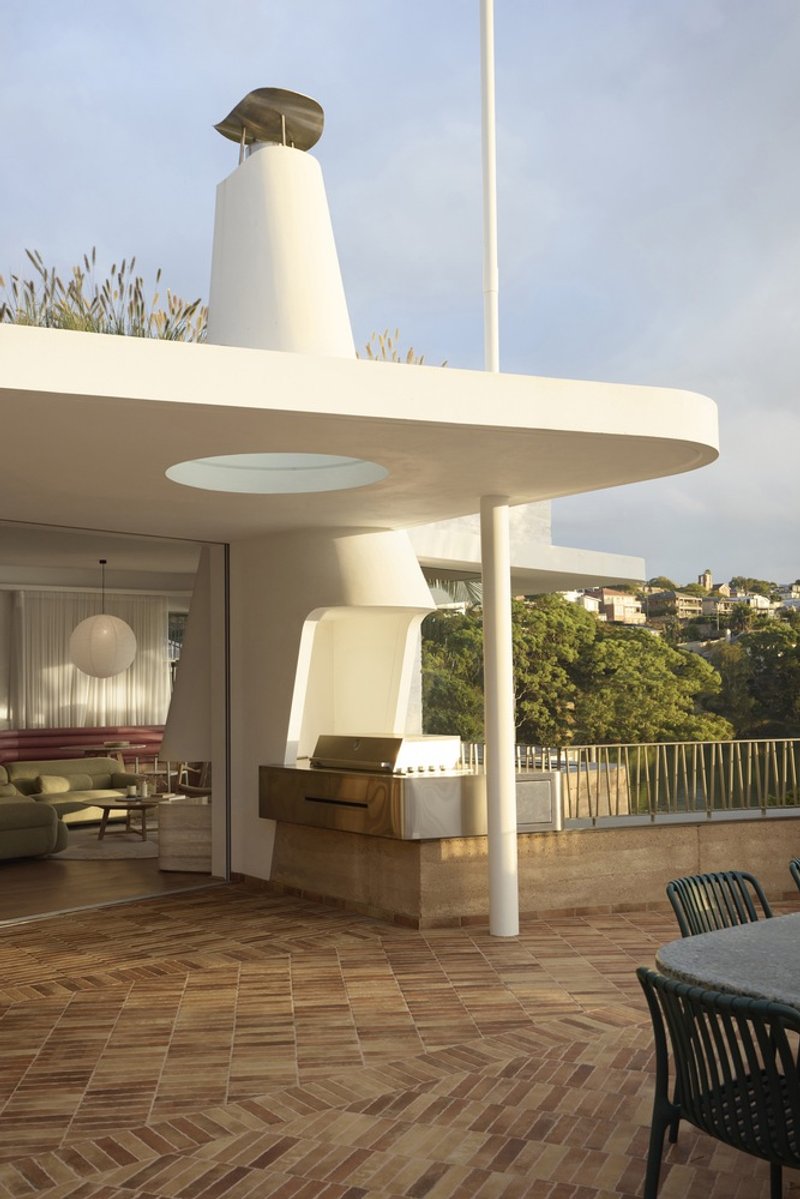
On the upper level, a dramatic “captain’s bridge” master suite reinforces the nautical narrative. Complete with a funnel-inspired feature and flagpole mast, the design subtly references maritime architecture while remaining refined and contemporary.
This interplay between solidity and fluidity reflects the studio’s counterpoint design philosophy, where heavy, grounded materials meet sculptural, dynamic forms.
Low-Embodied Energy Materials and Circular Construction
Terra Firma House stands as a model for circular architecture and sustainable residential design in Australia. The project prioritizes reclaimed and natural materials, significantly reducing environmental impact.
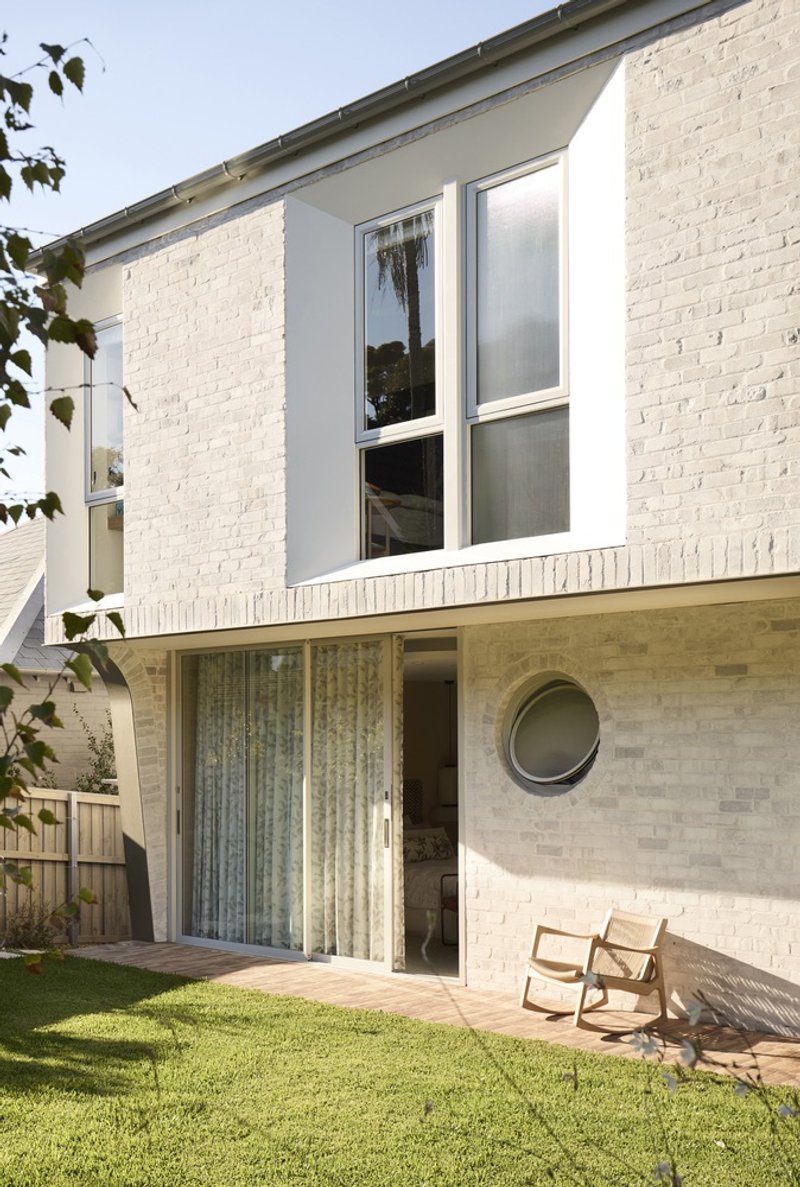
Primary Materials
- Rammed Earth Base – Provides thermal mass and visual grounding
- Recycled Brickwork – Bricks salvaged from the original demolished cottage
- Recycled Terracotta Roof Tiles – Reassembled into geometric privacy screens
- Reclaimed Sandstone – Reinforcing connection to the site
Together, these materials form what can be described as Domus Terrae, an earthly abode deeply rooted in its context.
Where concrete was structurally necessary, the team specified Envisia low-carbon concrete by Boral, reducing emissions by approximately 50% compared to conventional concrete.
To further enhance environmental performance, a large solar array crowns the roof, supporting renewable energy generation and long-term operational efficiency.
This approach demonstrates how luxury waterfront homes can integrate sustainability, reclaimed materials, and energy-efficient systems without compromising architectural expression.
Interior Design: Warmth, Permanence, and Coastal Elegance
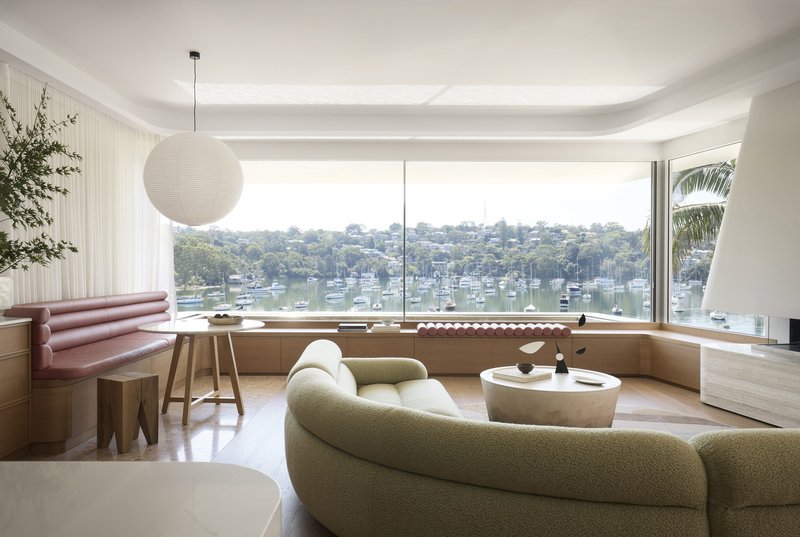
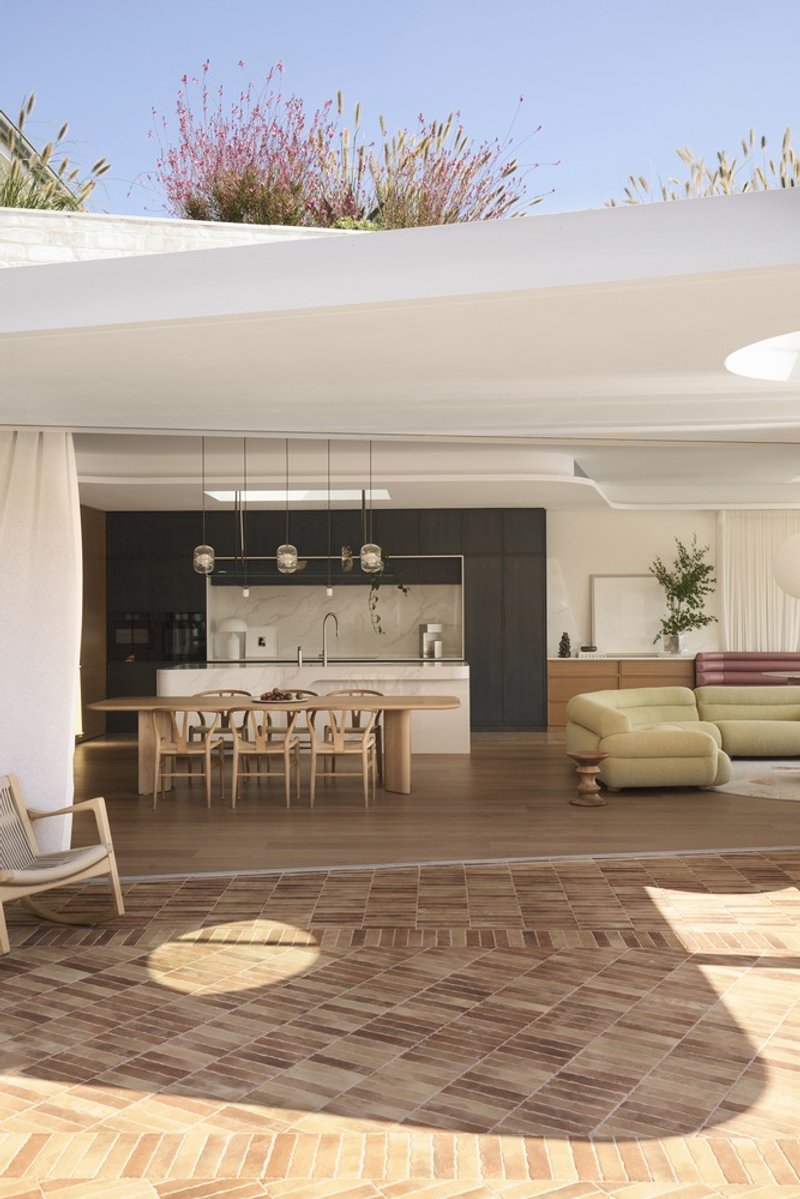
The interiors, designed by Reid Design, complement the architectural language with warmth and restraint.
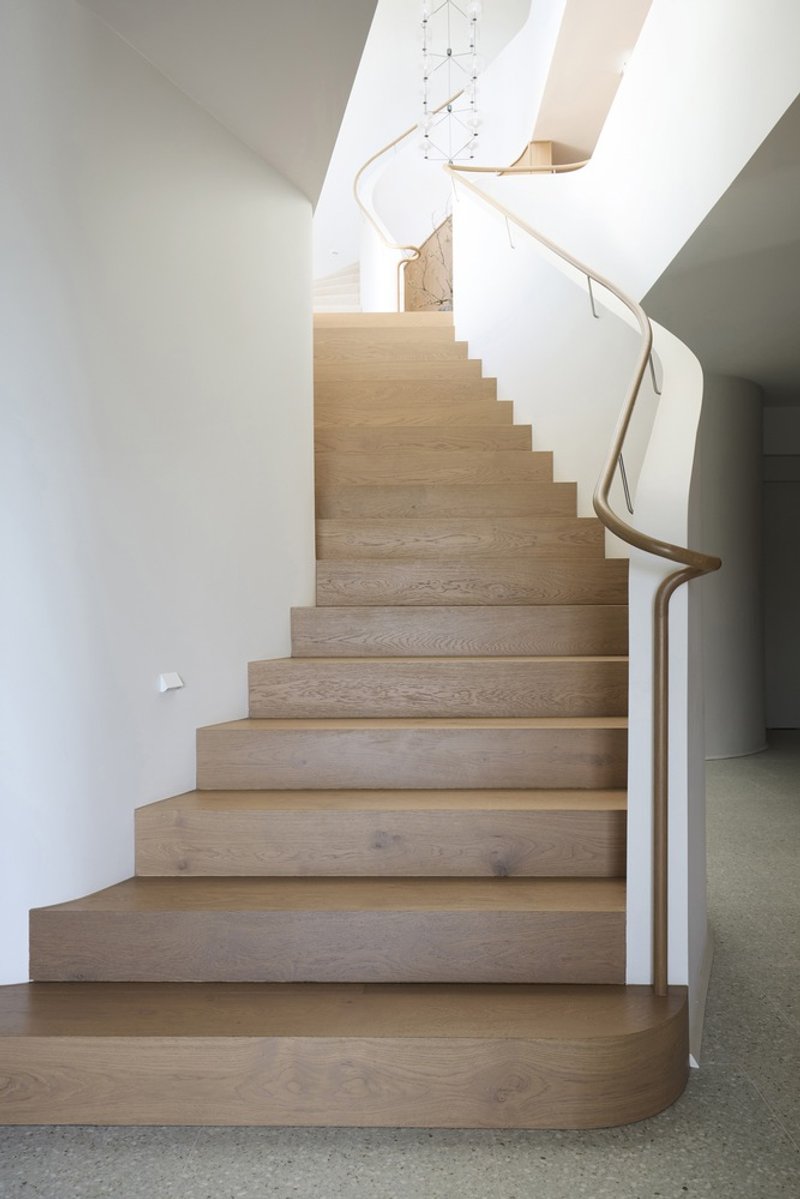
Natural textures, layered timber, and earthy finishes reinforce the concept of grounded living. Expansive glazing captures shifting harbor light, while carefully framed views maintain privacy and solar control.
The interior spaces prioritize:
- Strong indoor–outdoor continuity
- Durable, natural material palettes
- Cross-ventilation and passive cooling
- Harbor-facing living zones
The result is a contemporary Australian coastal home that feels both protective and open, solid yet fluid.
A Dialogue Between Land and Sea
Thirty-five years earlier, Luigi Rosselli designed a residence at Cottage Point for musician Andrew Farris of INXS, another project responding to the tension between permanence and travel. Terra Firma House continues that exploration.
Here, the human contradiction is architecturalized: mariners longing for solid ground, yet forever drawn back to the sea. The home does not reject that tension, it expresses it.
The rammed earth anchors the structure physically and emotionally, while its elevated decks and maritime references maintain a dialogue with the water beyond.
All photographs are works of
Prue Ruscoe



Popular Articles
Popular articles from the community

Takeshi Hosaka Architects Suspends a Concrete Cross Above a Yokohama Cemetery
A 28-square-meter burial renovation in Yokohama lifts the symbol of resurrection into the sky so mourners see it against heaven.

20 Most Popular Office Building Projects of 2025
From biophilic workspaces in India to net-positive energy offices in New Delhi, 20 office building projects that defined architecture in 2025.
RDTH architekti Rips Out Nearly Every Wall in a Prague Apartment and Replaces Them with Furniture
A 101-square-meter post-war flat in Prague trades rigid partitions for a single rotated furniture block, curtains, and glass concrete.
YOAP Architects Round a Corner in Yeongcheon with a Cylindrical Community Hub
A 197-square-meter brick and ribbed-clad tower turns a forgotten alley corner in South Korea into a public garden with a low threshold.

Similar Reads
You might also enjoy these articles

Kokaistudios Wraps a Shanghai Retail Podium in Horizontal Louvers That Echo Its Foster + Partners Neighbor
A four-storey glass-roofed gateway links an underground commercial valley to the revitalized north bank of Shanghai's Suzhou River.
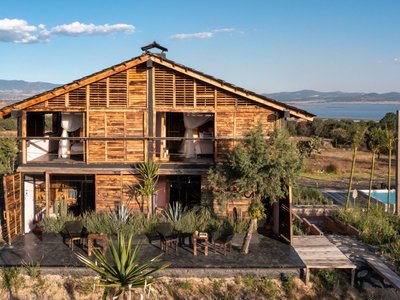
Fausto Terán and Toro Fuse Japanese Craft with Mexican Tradition in a Lakeside Retreat
Nakamura House pairs Shou-Sugi-Ban charred pine with handmade clay tile at the foot of Atlangatepec Lagoon in Mexico.
RDTH architekti Rips Out Nearly Every Wall in a Prague Apartment and Replaces Them with Furniture
A 101-square-meter post-war flat in Prague trades rigid partitions for a single rotated furniture block, curtains, and glass concrete.

SWA Group Spirals a Landscape Memorial into the Woods of Sandy Hook
A 1.8-acre clearing in Newtown, Connecticut, honors 26 lives lost with water, stone, and a single sycamore tree.

Explore Architecture Competitions
Discover active competitions in this discipline




The International Standard for Design Portfolios


The Global Benchmark for Architecture Dissertation Awards


The Global Benchmark for Graduation Excellence


Challenge to reimagine the Iron Throne
Comments (0)
Please login or sign up to add comments
No comments yet. Be the first to comment!