
The Borobi Sanctuary: A Koala Rehabilitation Center Architecture Designed for Conservation and Coexistence
A wildlife-focused architectural sanctuary where conservation, education, and rehabilitation unite to protect koalas and restore habitats.


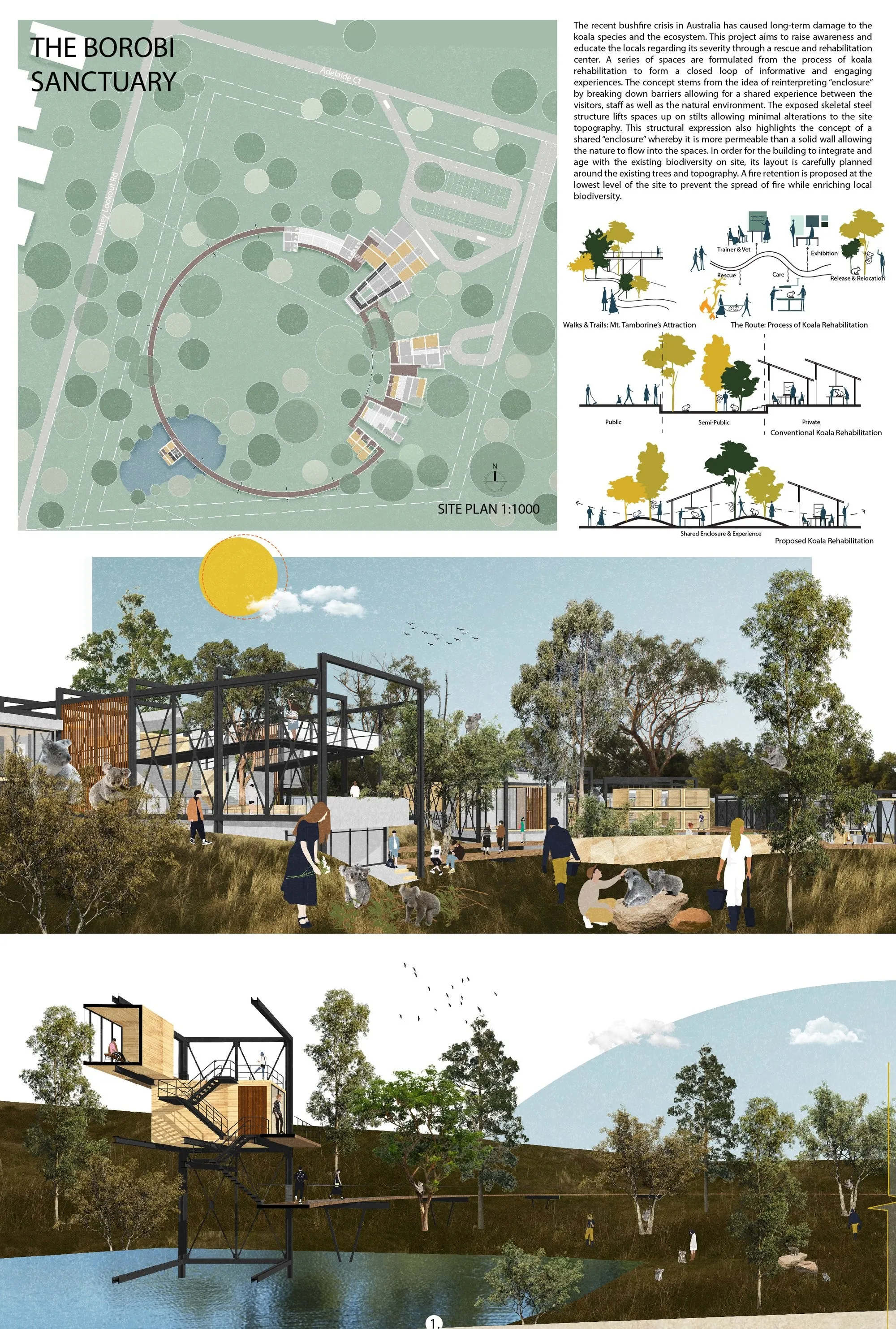
As environmental challenges continue to threaten native wildlife populations across Australia, architecture is increasingly being called upon to play a meaningful role in conservation efforts. The Borobi Sanctuary, a shortlisted entry of Haven 2020 by Edwin Ho and Chin Jovi, presents a thoughtful response to the ongoing crisis facing koalas by creating a comprehensive rehabilitation and education center that merges wildlife care, public engagement, and ecological stewardship.
This innovative example of Koala Rehabilitation Center Architecture goes beyond the conventional model of animal rescue facilities. Instead, it reinterprets the relationship between humans, wildlife, and the natural environment through a carefully orchestrated sequence of spaces that educate visitors while supporting the rehabilitation process of injured and displaced koalas.
A Sanctuary Built Around the Journey of Rehabilitation
The design of The Borobi Sanctuary is inspired by the complete process of koala rehabilitation. Rather than isolating these activities behind closed walls, the project transforms them into a continuous educational experience.
Visitors are guided through a closed-loop circulation system that reveals different stages of rehabilitation, conservation, and care. This journey creates opportunities for learning and awareness while maintaining appropriate boundaries between public and private zones.
The architectural concept originates from the reinterpretation of the idea of "enclosure." Instead of creating rigid separations, the sanctuary breaks down physical and visual barriers to encourage shared experiences among visitors, staff, wildlife, and the surrounding landscape.
This approach allows people to understand the rehabilitation process firsthand while fostering deeper connections with Australia's vulnerable wildlife.
Wildlife Conservation Architecture That Respects Nature
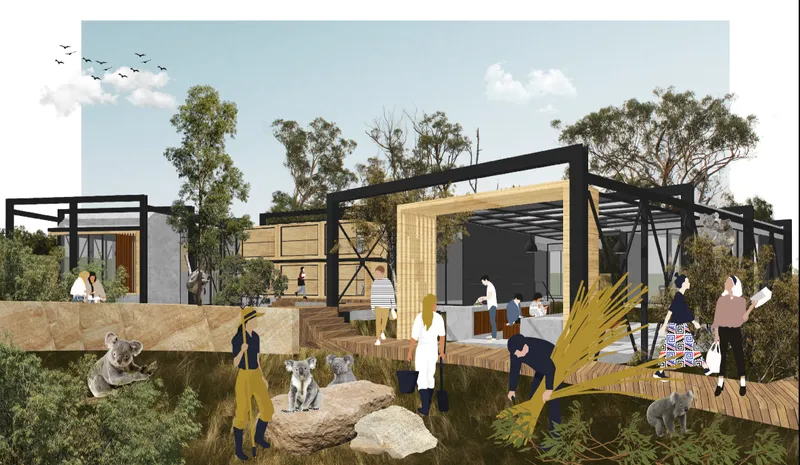
One of the most compelling aspects of The Borobi Sanctuary is its commitment to preserving the existing ecosystem. Rather than imposing a building onto the landscape, the project carefully adapts itself to the site's natural topography and vegetation.
The masterplan is organized around a central koala sanctuary, which serves as both the ecological and symbolic heart of the project. Existing trees and biodiversity corridors remain protected, allowing native habitats to continue functioning with minimal disruption.
The circular circulation path creates a gentle journey through the landscape, offering multiple viewpoints toward nature while minimizing interference with wildlife habitats. Visitors are immersed within the environment rather than separated from it.
This sensitive planning strategy exemplifies the principles of contemporary Wildlife Conservation Architecture, where architecture acts as a facilitator of ecological restoration rather than a dominant intervention.
Architecture Elevated Above the Landscape
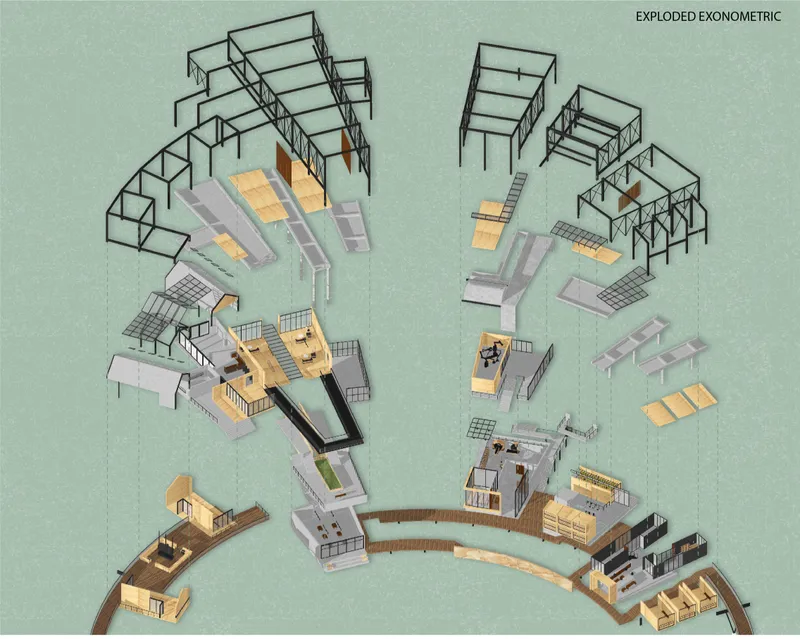
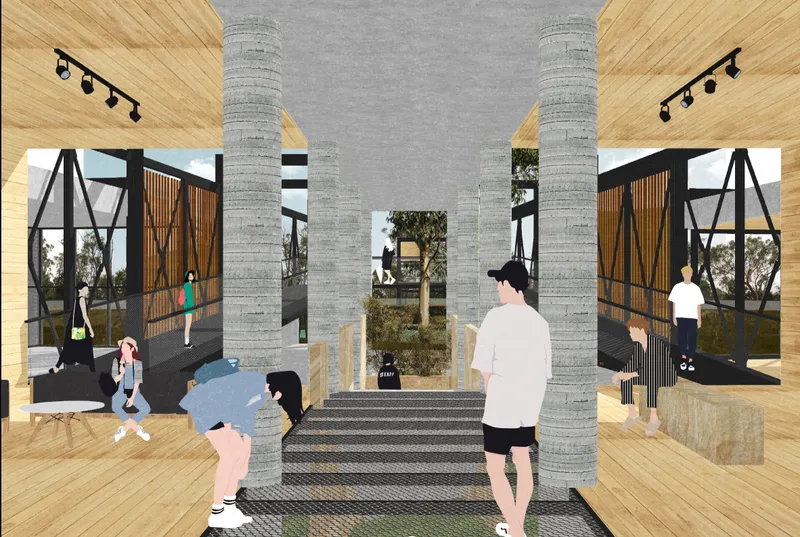
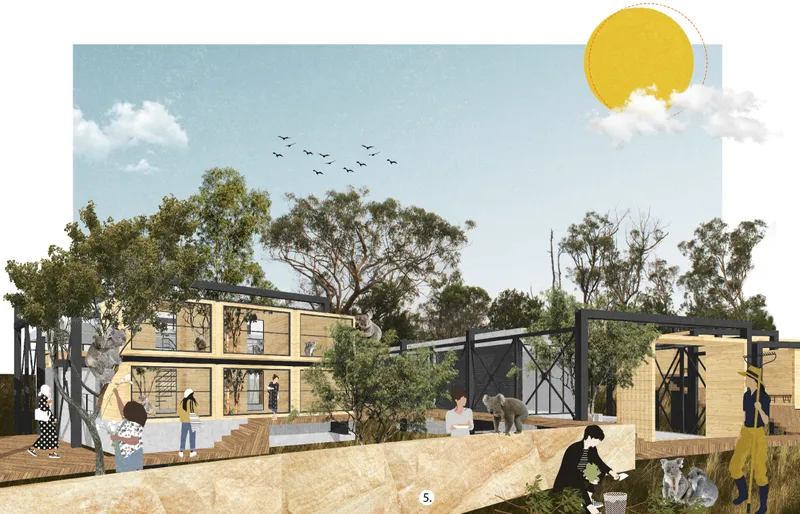
The sanctuary employs an exposed skeletal steel structure elevated on stilts, allowing the building to lightly touch the ground.
This architectural decision serves multiple purposes:
- Preserves existing site topography
- Minimizes excavation and land disturbance
- Protects root systems of existing vegetation
- Reduces environmental impact
- Allows natural water flow across the site
By lifting portions of the building above the landscape, the design enables nature to remain uninterrupted beneath the architecture. This creates a harmonious coexistence between built form and ecological systems.
The elevated walkways also provide visitors with unique perspectives of the sanctuary while maintaining safe distances from sensitive rehabilitation areas.
Sustainable Architecture Inspired by Bushland Ecology
Located within a bushfire-prone region, The Borobi Sanctuary incorporates resilient materials and sustainable construction strategies that respond directly to local environmental conditions.
The project utilizes:
- Coated timber cladding
- Exposed steel framing
- Reinforced concrete elements
- Toughened glazing systems
- Fire-resistant construction techniques
These materials create a balance between durability and warmth. Timber introduces a natural character that blends with the surrounding bushland, while steel provides structural efficiency and longevity.
The architectural language remains intentionally understated, allowing the surrounding landscape and wildlife to become the primary focus of the experience.
Creating Educational Experiences Through Spatial Design
The sanctuary is carefully programmed to engage visitors at every stage of their journey.
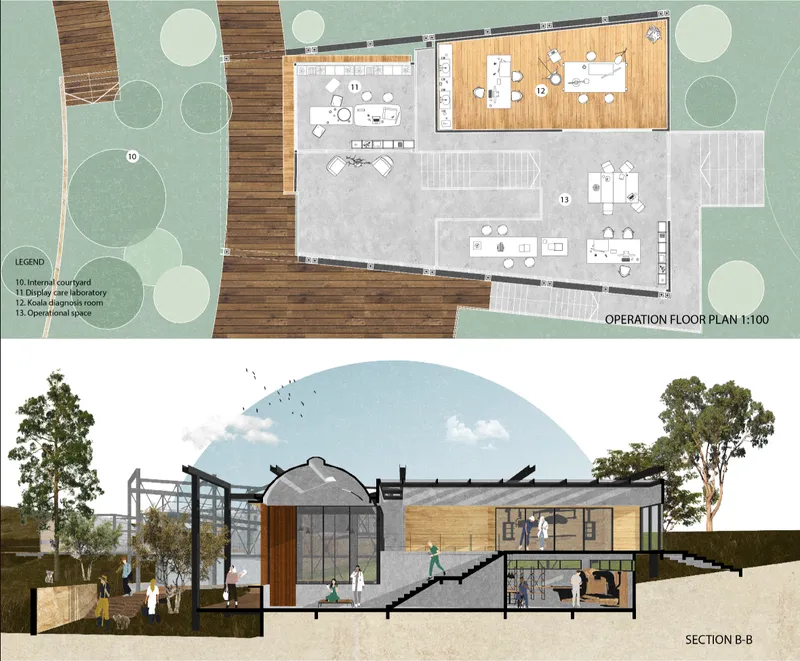
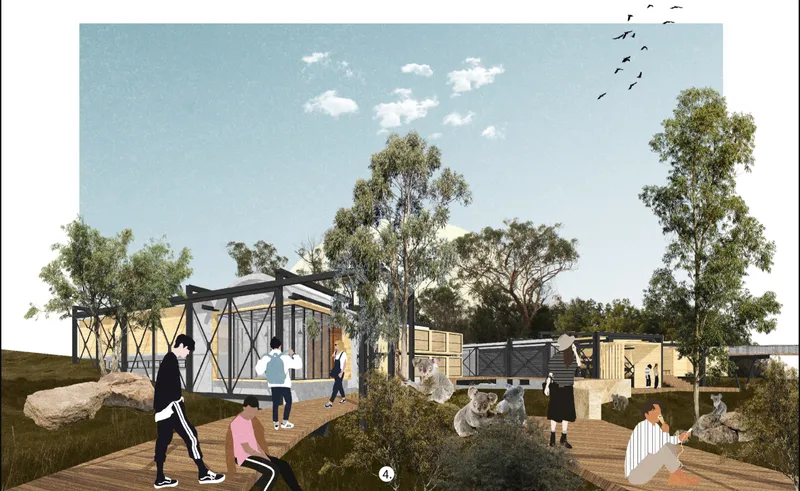
Upon arrival, guests enter a spacious timber-clad foyer supported by robust concrete pilotis. From here, circulation gradually unfolds through exhibition spaces, educational galleries, outdoor observation areas, and interactive learning environments.
The sequence includes:
Visitor Experience Areas
- Entrance foyer
- Information center
- Multimedia exhibition space
- Outdoor lounge areas
- Terraced seating
- Interactive feeding pods
- Viewing decks
Rehabilitation Facilities
- Display care laboratory
- Koala diagnosis rooms
- Operational treatment spaces
- Koala nurturing pods
- Intensive care units
- Necropsy facilities
Staff and Support Facilities
- Food preparation areas
- Staff offices
- Service zones
- Research spaces
The layout ensures visitors gain insight into wildlife conservation while sensitive treatment areas remain protected from unnecessary disturbance.
The Central Koala Sanctuary
At the heart of the project lies the koala sanctuary itself.
This protected habitat becomes the anchor around which all public and operational functions revolve. The circular masterplan continuously directs attention back toward the sanctuary, reinforcing the importance of conservation and ecological protection.
Viewing galleries and elevated walkways provide opportunities to observe wildlife behavior without disrupting natural activities. This approach balances educational access with animal welfare, a critical consideration in contemporary rehabilitation facilities.
The sanctuary becomes both a place of healing for wildlife and a powerful educational tool for visitors.
Blurring Boundaries Between Architecture and Landscape
The Borobi Sanctuary demonstrates how architecture can dissolve conventional boundaries between built environments and natural systems.
Large openings, transparent façades, elevated pathways, and permeable structures create a sense of openness that encourages the landscape to flow through the building. Visitors remain constantly connected to changing views of trees, habitats, wildlife, and natural light.
Rather than functioning as a collection of isolated rooms, the sanctuary becomes an interconnected ecological experience where architecture and environment operate together as a unified system.
This design philosophy transforms conservation into an immersive journey that fosters awareness, empathy, and responsibility.
A New Model for Koala Rehabilitation Center Architecture
The Borobi Sanctuary offers an inspiring vision for the future of conservation-focused design. By integrating wildlife rehabilitation, public education, ecological restoration, and sustainable architecture into a single cohesive framework, the project demonstrates how architecture can actively contribute to protecting endangered species.
As a shortlisted entry of Haven 2020, Edwin Ho and Chin Jovi's proposal presents a compelling model for future wildlife facilities. Through thoughtful planning, environmental sensitivity, and innovative spatial experiences, The Borobi Sanctuary redefines what a rehabilitation center can be.
More than a building, it becomes a living ecosystem where architecture serves as a bridge between people, wildlife, and nature, creating a shared future built on conservation, understanding, and coexistence.


Popular Articles
Popular articles from the community


Conexión: Biophilic Design Reimagines High-Rise Living in Hong Kong
Conexión reimagines high-rise living in Hong Kong through biophilic design, green facades, shared spaces, daylight, water and nature within.

Lunar Spiral: Space Architecture Shaped by the Mathematics of the Universe
Lunar Spiral reimagines space architecture through Fibonacci geometry, lunar regolith, levitating habitats, and self-sustaining Moon living.

Play: Fragments of Their World
Familiar architecture becomes modular playground design, creating safe spaces where displaced children can learn, connect, imagine and play.

Co-life: Sustainable Architecture for Age-Friendly Community Living
Co-life reimagines sustainable architecture for seniors through courtyards, rammed earth, shared gardens, and spaces designed for belonging.
Similar Reads
You might also enjoy these articles

Eco Chapel: A Green Architecture Pavilion Designed in Symbiosis with the Forest
Eco Chapel uses green architecture to weave prayer, learning and reuse into a forest pavilion shaped by modular hexagonal canopies for life.
Kaffeebühnen: Coffee Shop Architecture Designed as a Civic Stage Between Vienna’s City and Park
Kaffeebühnen turns coffee shop architecture into a civic stage, linking Vienna’s park edge, urban life, warm timber yards, and coffee craft.
Healing Façade: Sustainable Architecture for Reforestation, Community, and Sacred Ecology in Ethiopia
Healing Façade reimagines sustainable architecture as a living wall that restores soil, catches water and renews Ethiopia's forest churches.


Urban Forest: A Vertical Ecosystem for 5,000 Workers in Singapore's Changi Business Park
Radially stacked pods and layered green decks turn a 7-acre plot into 47 acres of ecological workspace projected for 2040.

Explore Architecture Competitions
Discover active competitions in this discipline



Challenge to reimagine the Iron Throne


Photograph architecture without architects


Illustrate the lost glory of Angkor Wat - Render Challenge


Design challenge to reuse E-waste
Comments (0)
Please login or sign up to add comments
No comments yet. Be the first to comment!