
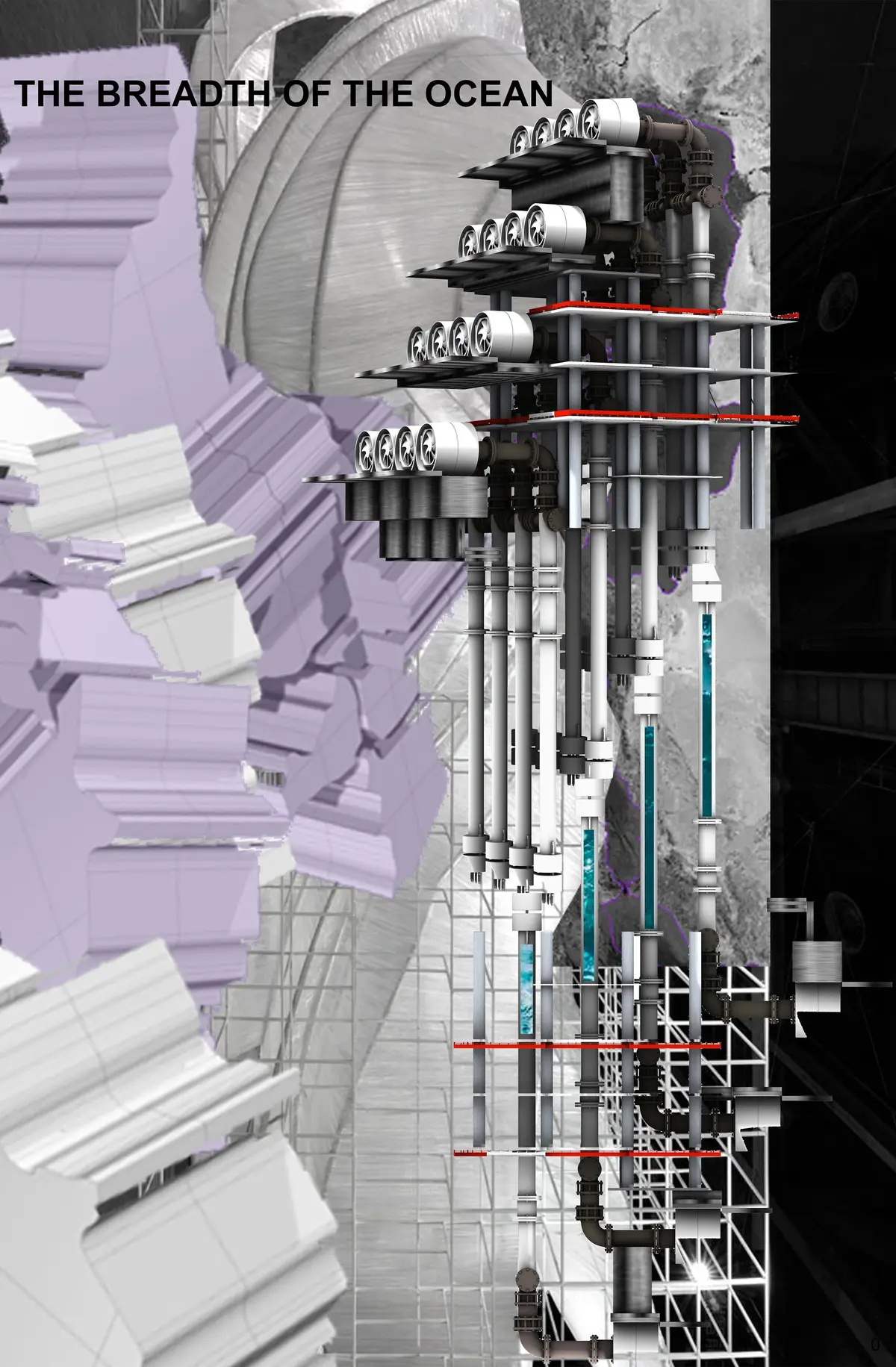
The Breadth of The Ocean: Turning Obsolete Oil Rigs into Carbon Capture Ocean Museums
Lewis Mitchell layers wave-like copper and blue shells onto offshore rig frames, making carbon capture machinery the exhibit itself.


Most decommissioned oil platforms face one of two futures: expensive dismantling or slow abandonment at sea. The Breadth of The Ocean proposes a third. Instead of removing the steel legs and decks that already stand in open water, the project keeps them and turns them into Carbon Capture Ocean Museums, places where the machinery of climate mitigation is put on public display. The rig built to extract carbon from beneath the seabed is recast as an instrument for pulling it back out of the air.
The proposal is by Lewis Mitchell, who takes adaptive reuse, a strategy usually applied to warehouses, factories and historic buildings on land, and pushes it offshore. His platforms combine carbon capture technology, oceanographic research, education and public engagement. They are framed as a deliberate argument for circular economy thinking: extending the life of structures already embedded in the marine environment reduces demolition waste and gives a stranded industrial asset a new civic role.
A Vaulted Canopy Over a Stacked Industrial Section
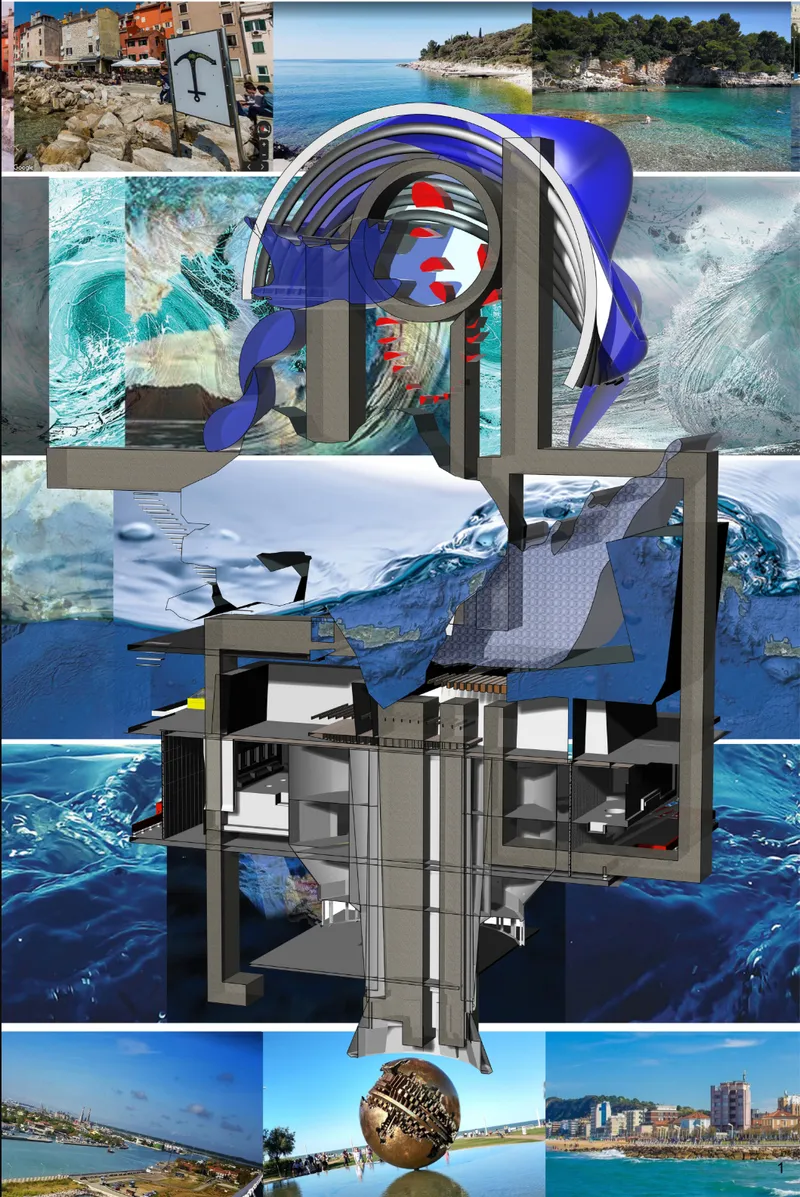
The collage section explains the project's logic more clearly than any plan could. A stacked offshore structure, layered deck over deck, is crowned by a blue vaulted canopy, and the whole composition sits against bands of ocean wave photography. The drawing reads as a geological core sample in which industrial strata accumulate below and a softer, fluid element floats on top. That is Mitchell's formal thesis in miniature. The heavy frame anchors the building in its extractive past, while the lightweight curved form above points toward a different future.
The wave imagery is more than backdrop. Mitchell's text describes the architecture as drawing on waves, currents, tectonic shifts and fluid motion, and the section puts that reference directly beside the structure. The canopy's curve echoes the swell behind it, so the reader understands the rig as something that now answers to the sea rather than simply resisting it.
Copper Barrels and Fan Arrays on Steel Legs
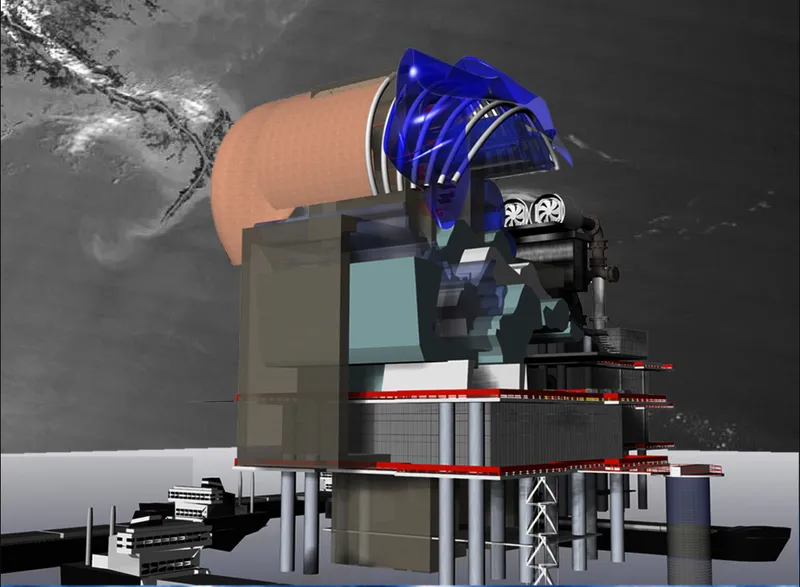
The first rendered view sets a single platform on its steel legs under a grey sky, now topped with a copper barrel roof and the blue canopy. The contrast is precise. The rig's rigid grid stays legible, and the curved roofs sit on it as distinct additions rather than disguising it. This is adaptive reuse that is honest about its source: the visitor approaching by sea still recognises an oil platform, only one that has been given a new skyline.
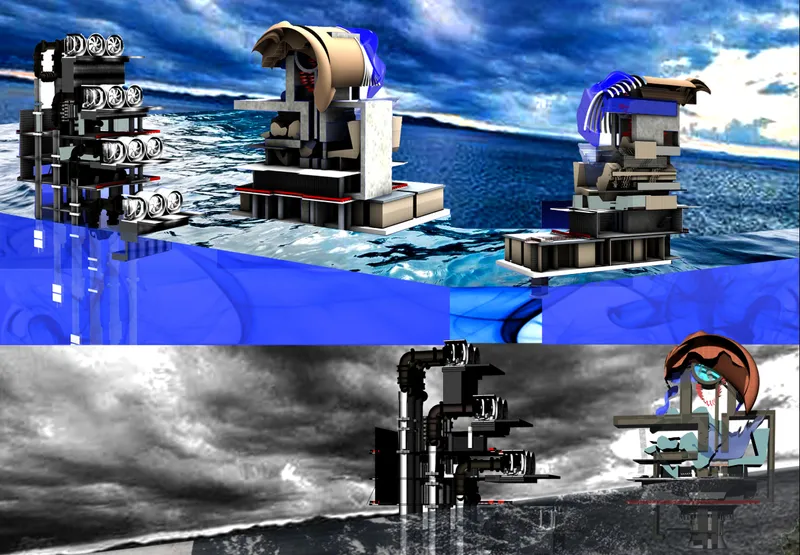
The three-platform collage widens the frame into something closer to a network. Fan units and curved roofs recur from one platform to the next, and the image splits between a blue stormy sea and a grey cloudy sky. That split matters, because the project operates at the meeting of water and atmosphere, which is where carbon exchange happens. Repeating the same elements across several rigs also suggests the idea is meant to work as a system that could be deployed wherever obsolete platforms already stand, not as a one-off monument.
Visible Machinery as the Museum's Main Exhibit
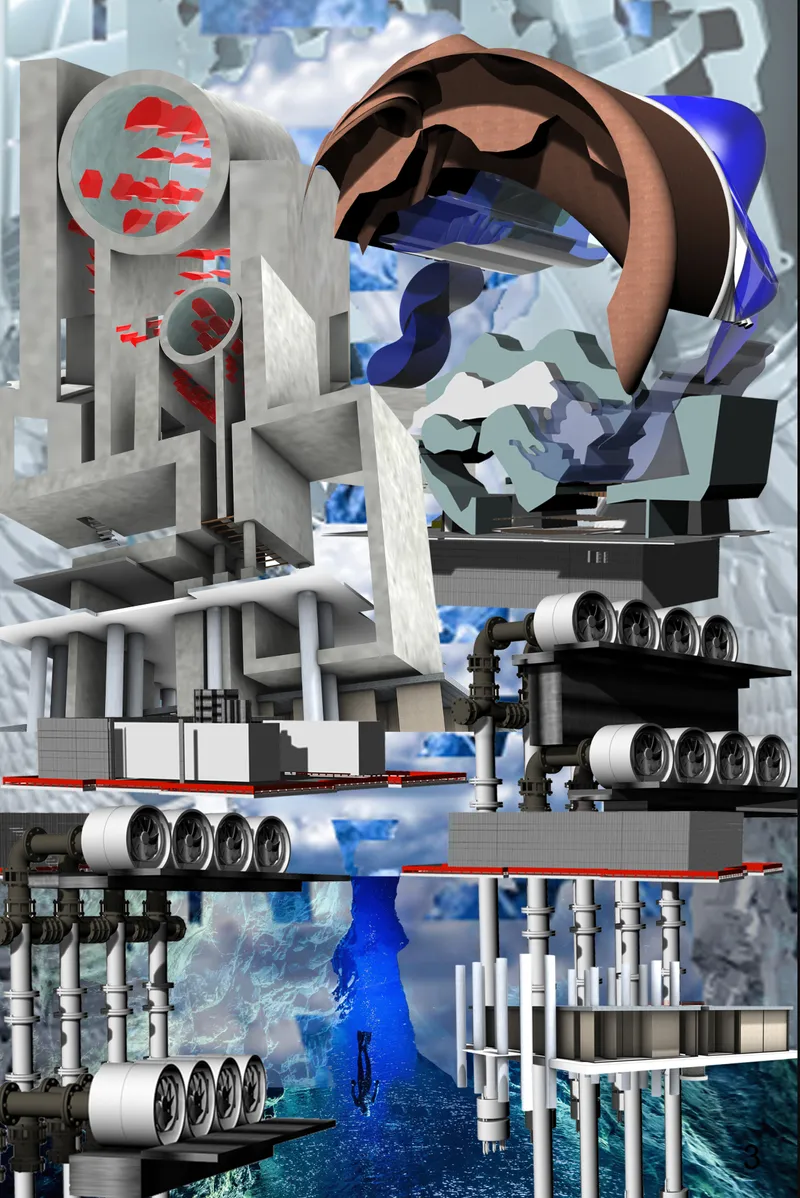
Here the mood shifts to icy water, concrete towers with red-lit circular openings, copper roof shells and rows of cylindrical fan units. It is the most atmospheric image in the set, and it captures the project's central curatorial decision. Mitchell keeps structural spaces, mechanical systems and carbon capture technologies visible, so the museum does not need to explain sustainability through wall text alone. Visitors watch it happen.
This is the project's strongest idea. Climate infrastructure is usually hidden, fenced off or simply too abstract to grasp. By making the apparatus legible, with rows of cylinders, glowing apertures and exposed systems, the architecture turns a technical process into a spatial experience. The text speaks of educating through direct experience rather than passive observation, and this image shows what that might feel like: less like a gallery and more like walking through a working machine at the edge of the ocean.
From Sea Basin to Platform Module
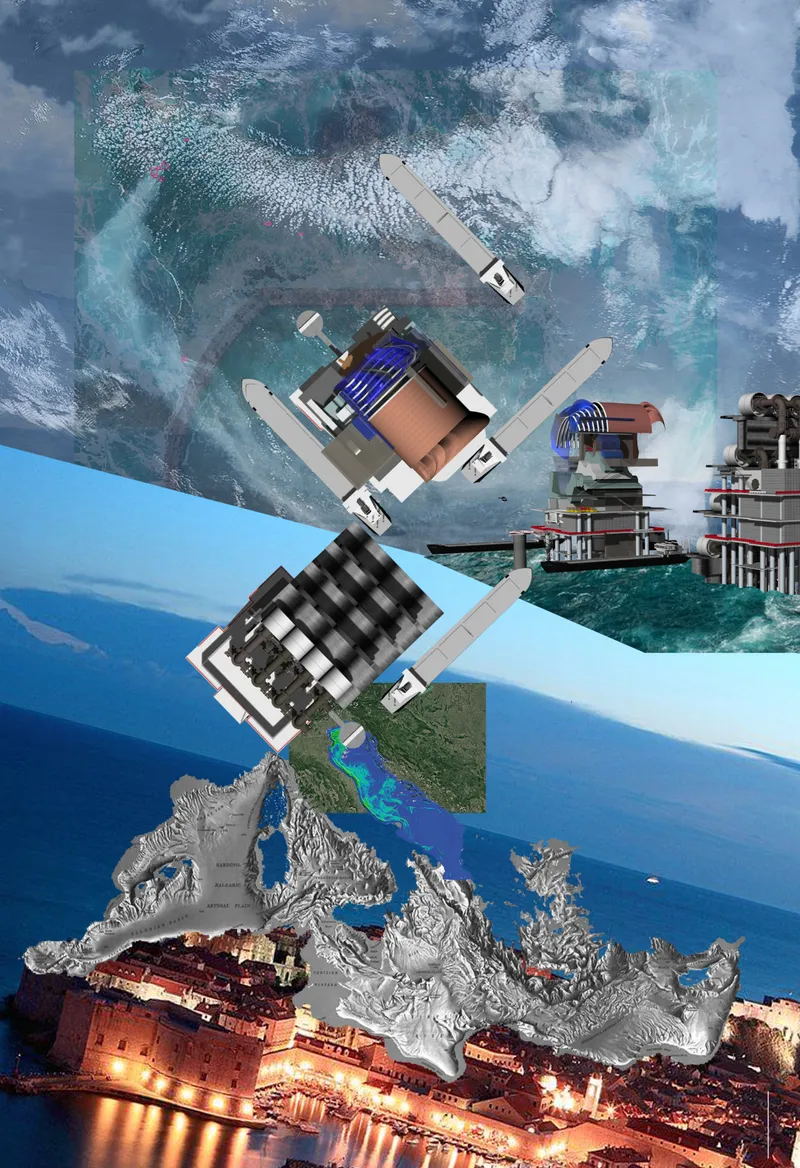
The aerial collage pulls back to the territorial scale. Platform plans and ship hulls hover above a relief map of a sea basin, and a floodlit walled harbour appears at dusk. Together these place the rigs within a wider maritime geography of shipping, coastline and seabed topography, which reinforces the project's point that oil platforms occupy strategic positions in the ocean landscape. Their locations are an asset worth keeping.
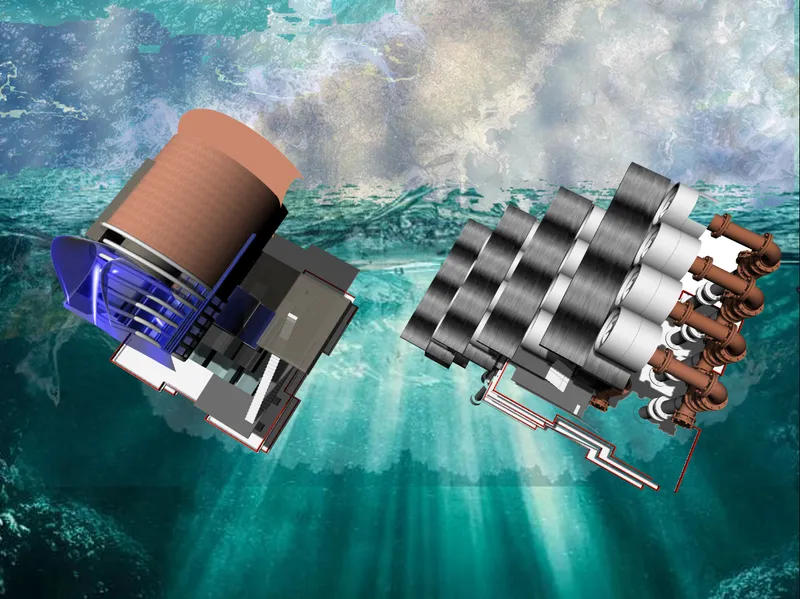
The top-down rendering then zooms into two modules above sunlit teal water. One carries the copper drum roof, the other rows of cylinders and copper pipes. Read side by side, they suggest a division between enclosed space for people and an open deck for process, two modules sharing one structural inheritance. The copper ties them together materially, and its warmth against the teal sea gives the project a consistent identity across every view.
Why This Project Matters
The Breadth of The Ocean takes on a question that the energy transition will soon force into the open: what happens to the vast offshore infrastructure of the fossil fuel era? Mitchell's answer avoids both nostalgia and erasure. He treats the rig as a structural resource whose embedded material and strategic position still hold value, and he redirects that value toward carbon reduction, research and public learning.
The project's most persuasive move is making climate technology visible and inhabitable. By turning carbon capture into architecture and architecture into exhibition, it argues that mitigation does not have to be remote or invisible. The renderings leave room for development, particularly in how the capture systems perform and how visitors would reach and move through these remote sites, but the conceptual framework is clear and worth pursuing: the structures that defined the carbon economy could become the places where we learn to undo it.
View the Full Project
About the Designers
Designer: Lewis Mitchell
Enter a Design Competition on uni.xyz
uni.xyz runs architecture and design competitions year-round that reward proposals with spatial conviction and real site intelligence.
Project credits: The Breadth of The Ocean by Lewis Mitchell.


Popular Articles
Popular articles from the community


LT2A and OPEN Architectes Thread a Brick and Glass High School Through a Wooded Belgian Campus
In Braine-l'Alleud, a 3,000 m² wing for Collège Cardinal Mercier pairs pale brick with a glazed colonnade, deferring to a small chapel and a dense wood.

Architekt Andreas Gruber Scatters 23 Dark Timber Chalets Across a South Tyrolean Forest Edge
In Molini di Tures, Amonti Chalets breaks a resort into a hamlet of gabled timber houses, with parking, storage and services pushed into the slope.

David Macias Steps a Doorless Stone and Plaster House Down a Tropical Colombian Hillside
In the humid hills of Colombia, Threshold House replaces the front door with an open void and terraces its 850 m² down the slope instead of fighting it.

Jaramillo Van Sluys Arquitectura and Urbanismo Turn a Demolished Registry Lot in Quito into an Orchard Plaza
In Quito's Centro Histórico, a 2,800 m² plaza exposes the San Agustín convent wall and redraws its lost Augustinian orchard in volcanic stone.

Similar Reads
You might also enjoy these articles
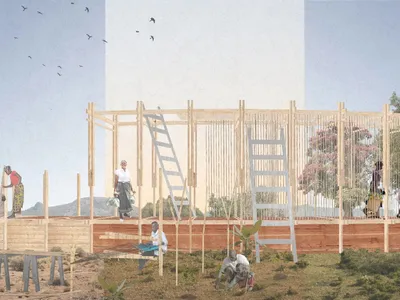
Healing Façade: A Modular Chapel System That Restores Ethiopia's Sacred Forests
Winner of the Eco-Chapel competition, this circular timber façade collects water from air to rebuild soil and reforest degraded Ethiopian landscapes.
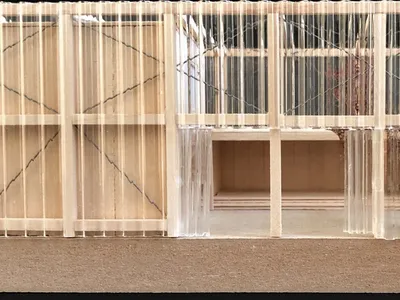
Kaffeebühnen: Where Coffee Shop Architecture Becomes a Civic Stage in Vienna
A linear sequence of timber boxes, transparent shells, and open yards turns the Viennese café tradition into a public performance space.
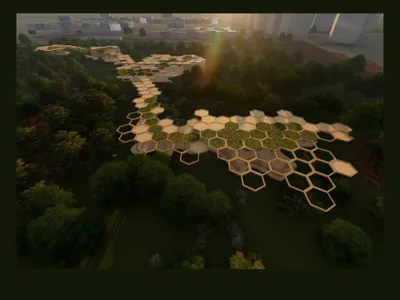
Eco Chapel: A Modular Forest Pavilion That Grows Like the Landscape It Protects
Hexagonal timber modules weave through existing trees, turning a chapel into a living system for prayer, education, and reforestation.


Urban Forest: A Vertical Ecosystem for 5,000 Workers in Singapore's Changi Business Park
Radially stacked pods and layered green decks turn a 7-acre plot into 47 acres of ecological workspace projected for 2040.

Explore Sustainable Design Competitions
Discover active competitions in this discipline

Challenge to design public laboratory

Design challenge to reuse E-waste
Comments (0)
Please login or sign up to add comments
No comments yet. Be the first to comment!