
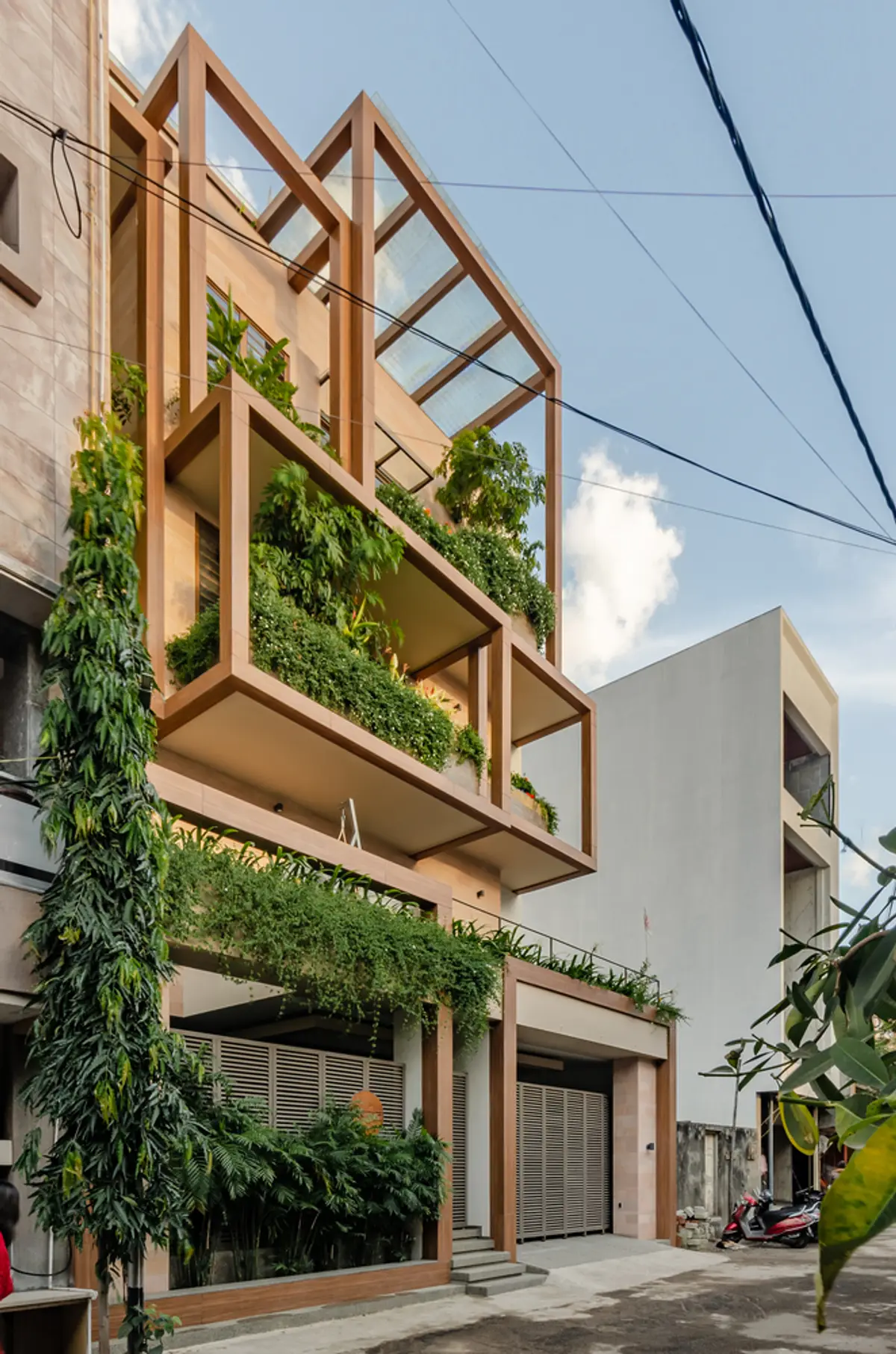
The Breathing House in Surat: Courtyard-Centered Sustainable Living by AANGAN Architects
Courtyard-centered residence in Surat blending traditional Gujarati living with modern architecture, natural ventilation, sunlight, greenery, and climate-responsive sustainable design.


Located in the vibrant city of Surat, The Breathing House designed by AANGAN Architects is a contemporary residential project that thoughtfully merges traditional Gujarati living patterns with modern architectural aspirations. Completed in 2022, the home occupies a 300-square-meter plot within a historic neighborhood known locally as a “ફળીયા” (Faliya), a traditional village street typology that once defined community living in Gujarat.
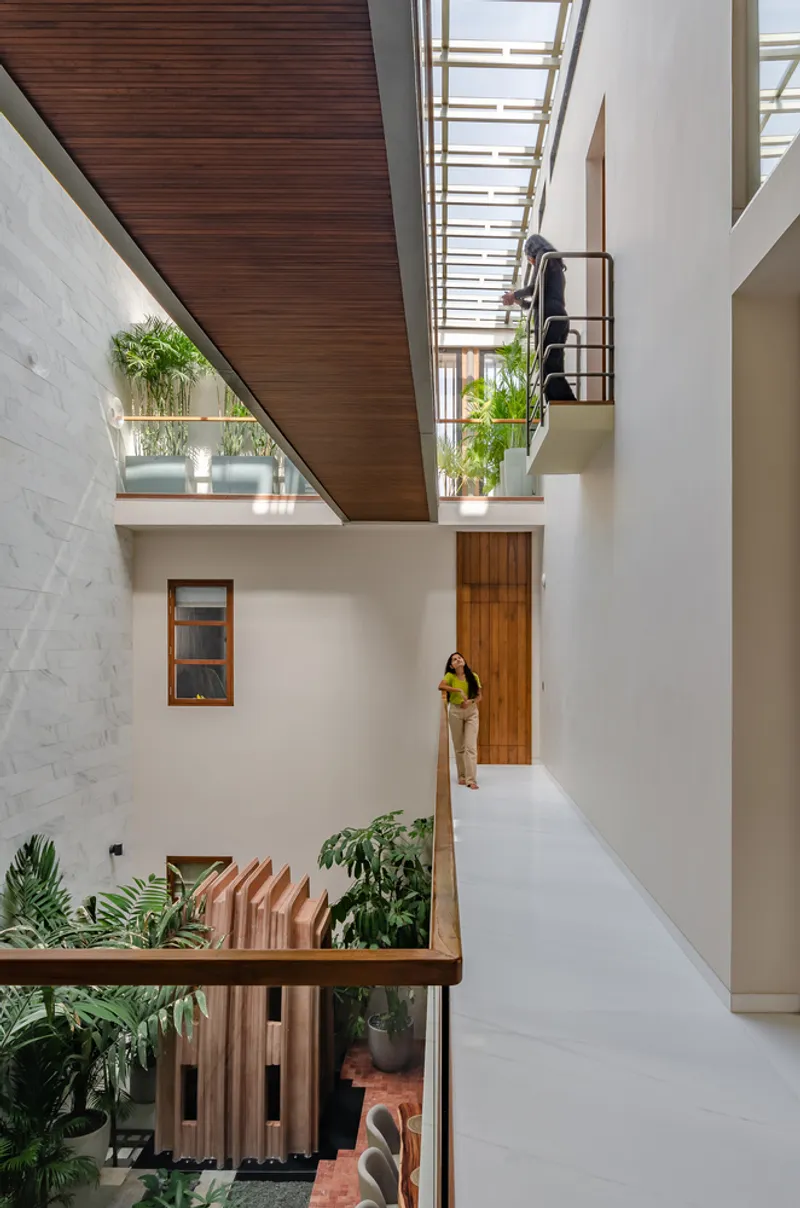
With an expansive built area of 1014 square meters, the residence reflects a deep architectural understanding of climate responsiveness, spatial connectivity, and cultural continuity. The project demonstrates how modern homes can reinterpret vernacular strategies such as courtyards, cross-ventilation, and shaded outdoor spaces to create sustainable living environments in rapidly urbanizing cities.
Reinterpreting the Traditional Faliya Housing Pattern
The design concept for The Breathing House stems from the challenge of preserving traditional neighborhood culture while accommodating the lifestyle expectations of a contemporary urban family. Historically, the Faliya typology organized homes along narrow streets where social interaction, shared spaces, and climate-responsive design were integral to daily life.
As Surat continues to expand as India’s diamond hub, many such neighborhoods are being absorbed into dense urban development. In response, the architects developed a linear spatial layout that recreates the openness and community spirit of traditional housing patterns while adapting them to a private bungalow format.
At the heart of the house lies a central courtyard, functioning as both a spatial organizer and a climatic device. This courtyard becomes the focal point around which everyday life unfolds, reinforcing the social dynamics that once defined traditional Gujarati homes.
The Courtyard as the Social and Climatic Core
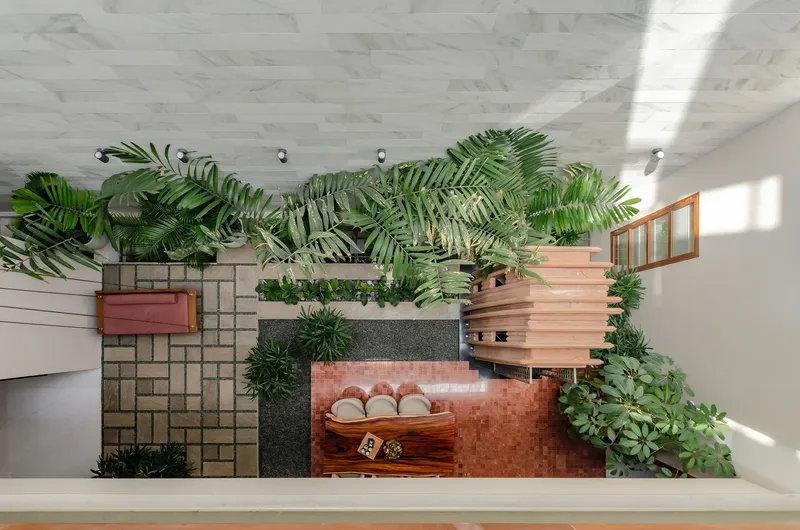
The defining feature of the residence is the north-facing courtyard, strategically inserted into the center of the linear layout. This courtyard performs multiple roles: providing natural daylight, improving ventilation, and serving as the primary social gathering space for the family.
A swing and dining platform are integrated within the courtyard, encouraging spontaneous interactions and informal activities. The experience evokes the atmosphere of a garden within the house, where family members can relax, socialize, and connect with nature without leaving the comfort of their home.
By maintaining the northern edge open, the design ensures soft, diffused daylight throughout the day while avoiding excessive heat gain. The courtyard also visually connects different parts of the house, strengthening spatial continuity and enhancing the sense of openness.
Passive Climate Design and Natural Ventilation
Given Surat’s humid tropical climate, passive environmental strategies play a central role in the architectural design. The house is engineered to maintain a comfortable indoor environment without heavy reliance on mechanical cooling.
The architects introduced sectional variations and vertical openings that enable a powerful stack effect. Warm air naturally rises through the central courtyard and exits through high-level openings near the terrace parapet, while cooler air enters from lower levels. This continuous airflow ensures effective cross-ventilation across all spaces.
Such climatic responsiveness not only improves thermal comfort but also significantly reduces energy consumption. Every room in the house maintains a visual and physical relationship with greenery, sunlight, and open air, reinforcing the project’s sustainable approach.
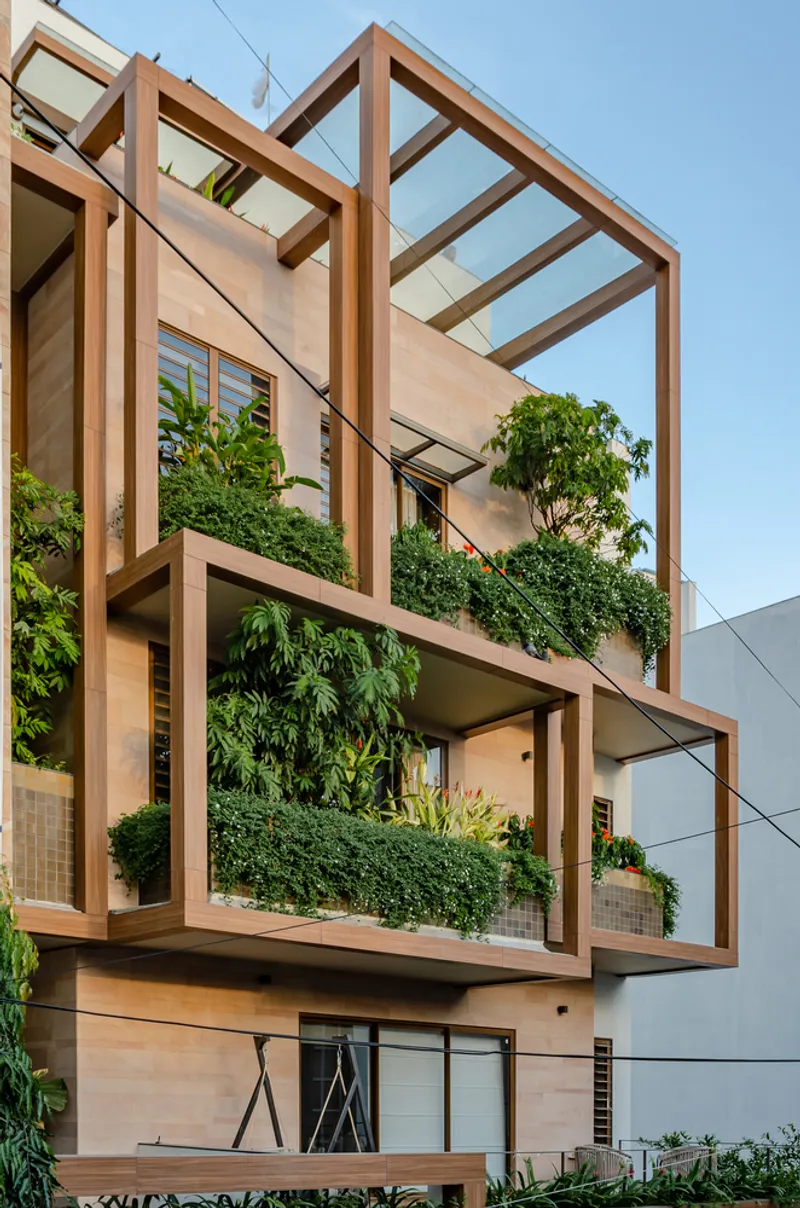
Layered Spatial Experience and Connecting Bridges
Another distinctive architectural feature is the use of bridges that span across the courtyard. These bridges connect rooms located on different levels while visually linking the various zones of the house.
This strategy creates a dynamic spatial experience, allowing residents to perceive the courtyard from multiple vantage points. Movement within the house becomes an architectural journey where views, light, and greenery continuously shift as one moves through the spaces.
The sectional design also amplifies the sense of vertical openness. Rather than dividing the home into isolated floors, the architects created interconnected layers of living spaces that interact through voids and visual connections.
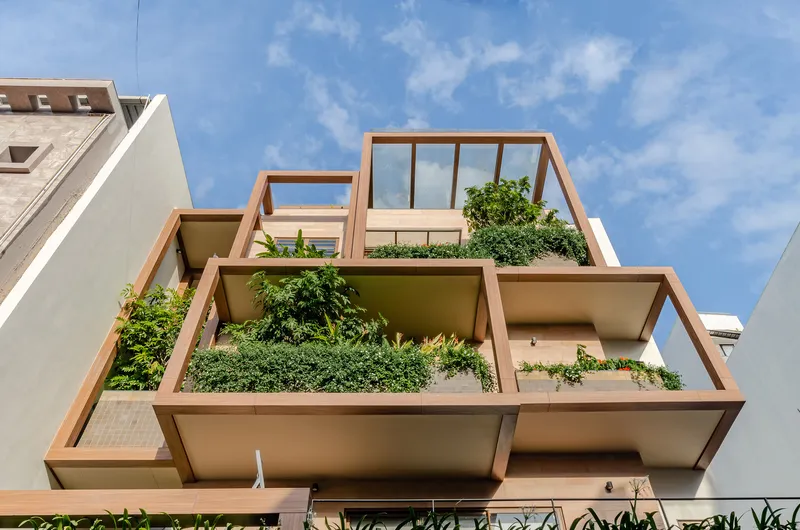
Courtyard Sectional Design and Pergola Shading
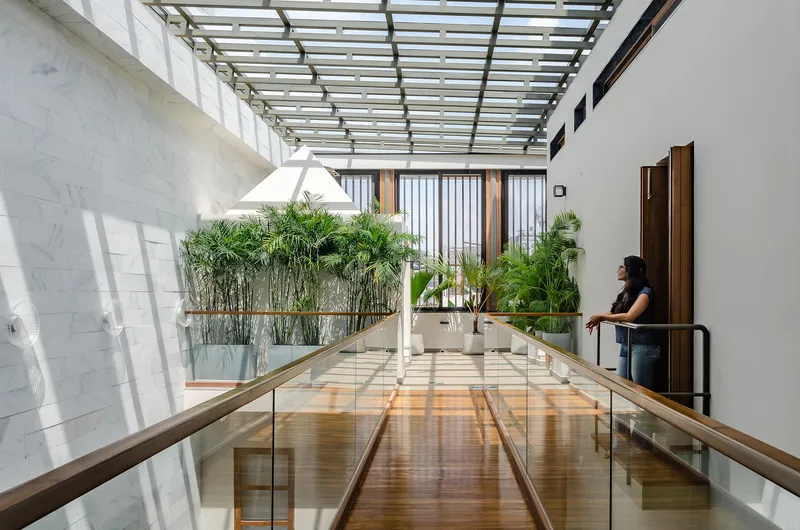
In traditional Indian homes, courtyards function as cool outdoor rooms that remain partially sheltered from direct sunlight. In The Breathing House, this concept is reinterpreted through a carefully designed pergola structure that spans the courtyard.
The pergola filters sunlight and moderates heat while maintaining visual openness to the sky. Together with the vertical section design, it allows warm air to escape upward while preserving comfortable temperatures below.
This thoughtful combination of shade, airflow, and natural light creates a pleasant microclimate throughout the day. The courtyard therefore becomes a usable space across seasons, offering a tranquil retreat within the house.
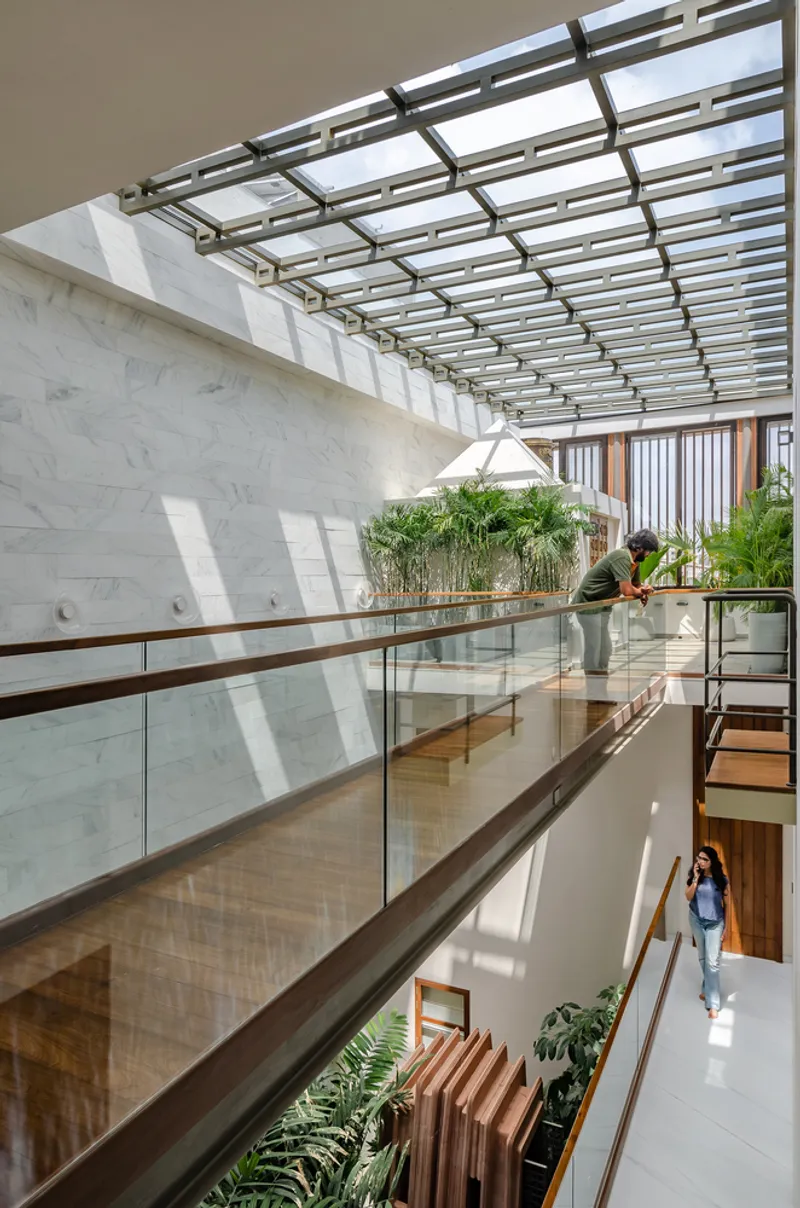
Interior Material Palette and Natural Aesthetic
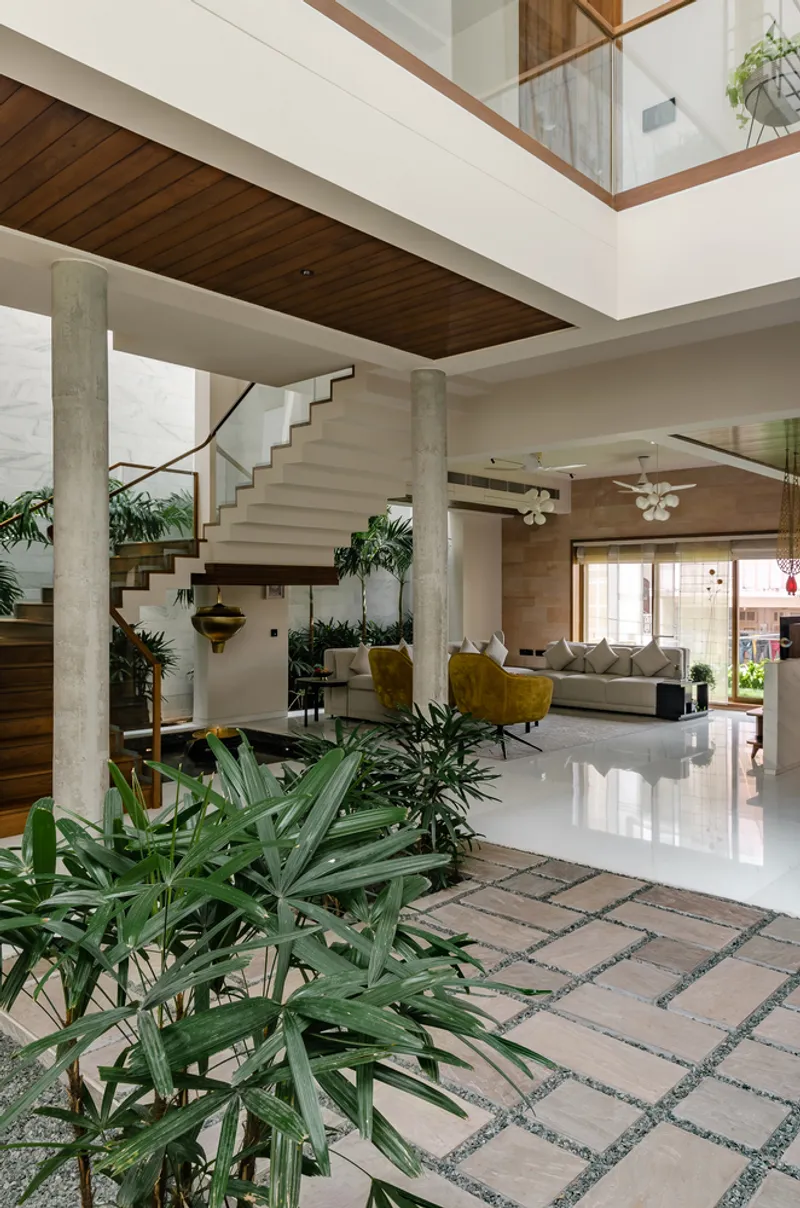
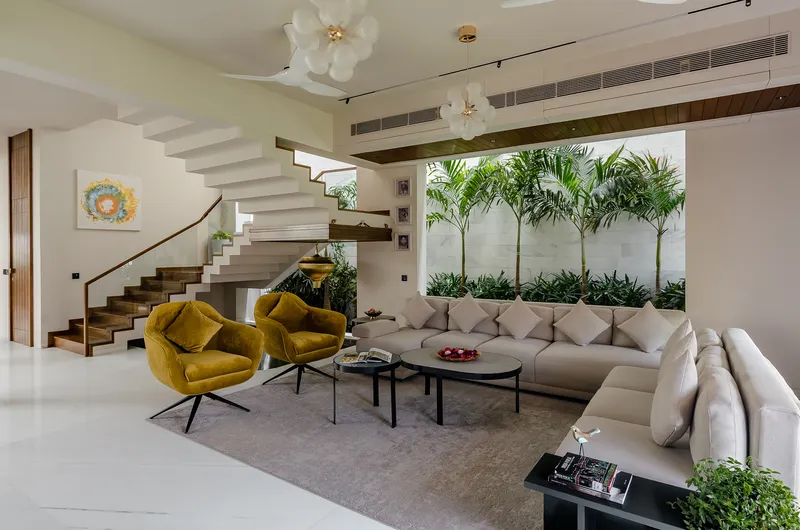
The interiors of The Breathing House are intentionally designed with a restrained material palette to emphasize calmness and natural beauty. The selection of materials reinforces the connection between architecture and nature.
Key materials include:
- Makrana marble flooring, providing durability and timeless elegance
- Wood ceilings and custom furniture, introducing warmth and tactile richness
- Glass openings, maximizing daylight and exterior views
- White plaster walls, creating a serene and minimalist background
Complementing these materials are sandstone surfaces, indoor plants, and natural textures that enhance the sensory experience of the home. The integration of greenery inside the house blurs the boundaries between indoor and outdoor environments.
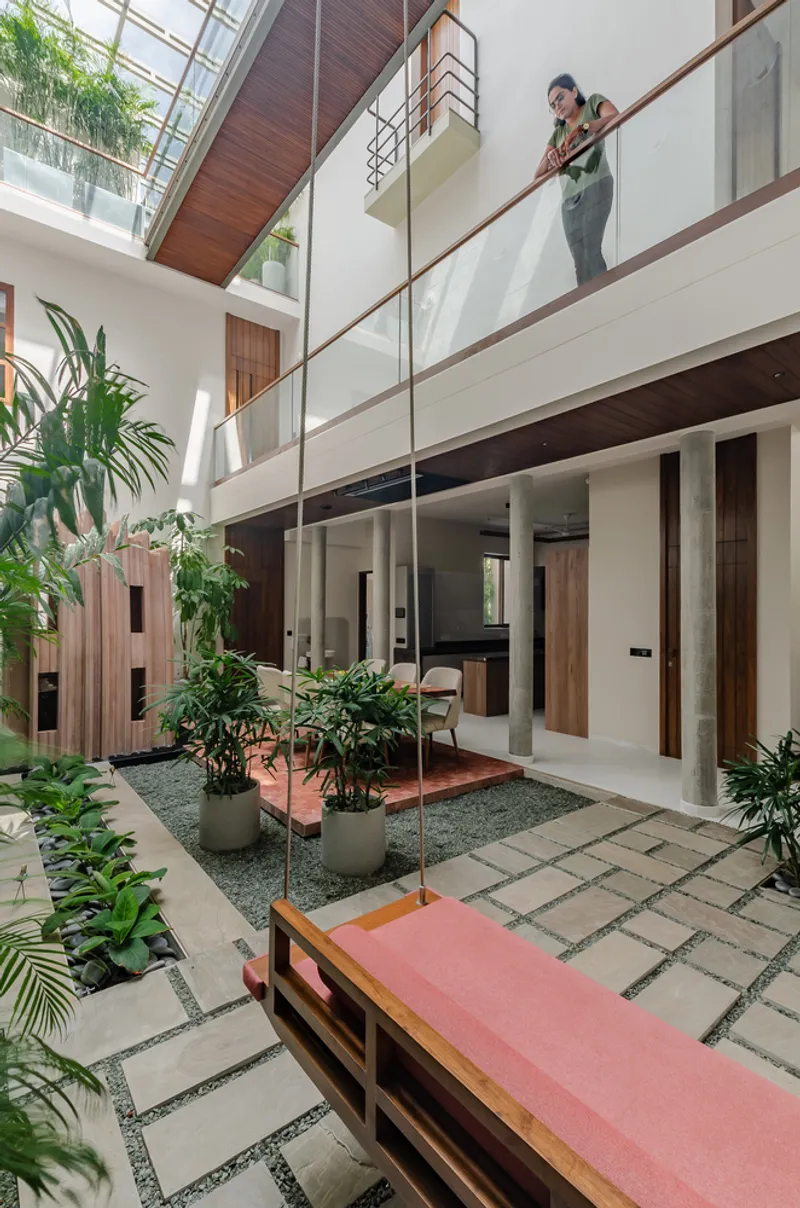
Blurring Boundaries Between Interior and Landscape
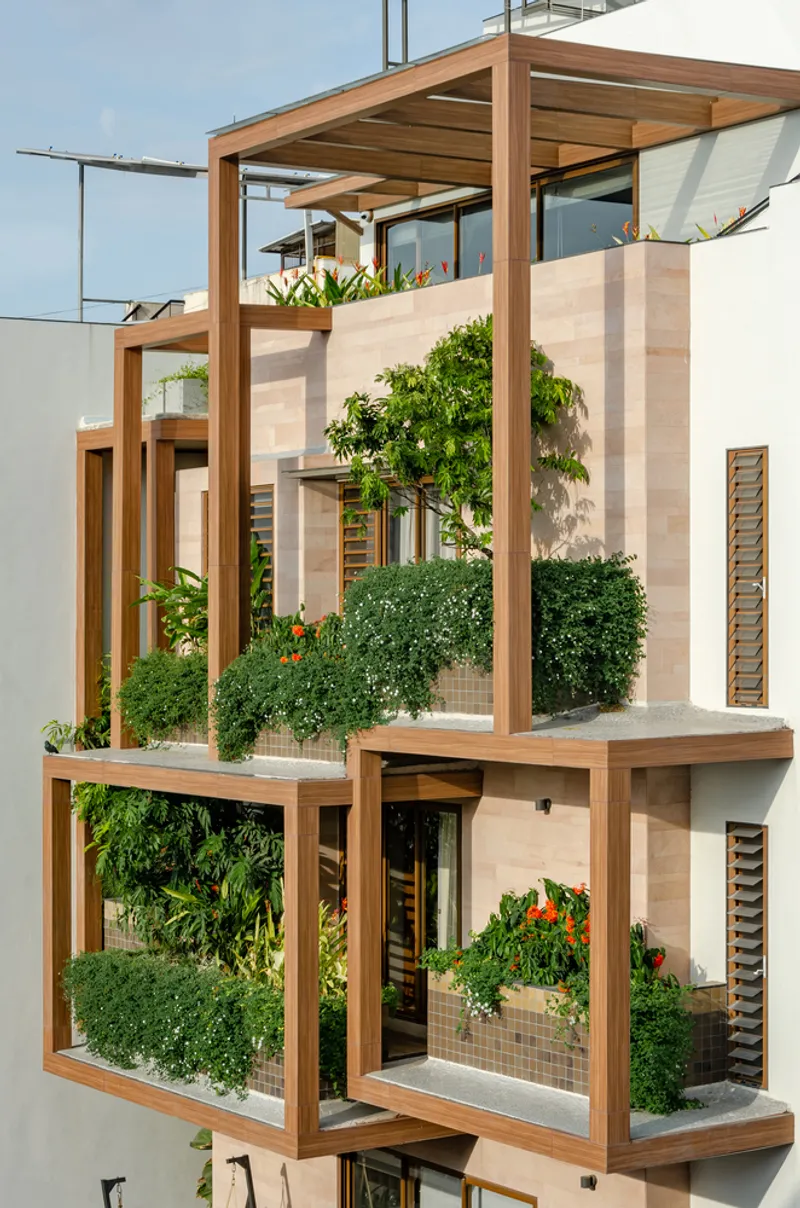
One of the most compelling aspects of the project is its ability to dissolve the traditional separation between built space and landscape. The design incorporates green corridors and planted areas within the house itself.
These interior gardens not only improve indoor air quality but also create visual continuity with the courtyard. As a result, every room maintains a relationship with natural elements such as sunlight, vegetation, and open sky.
This approach reflects the architects’ belief that residential design should foster emotional well-being and environmental awareness through everyday interactions with nature.
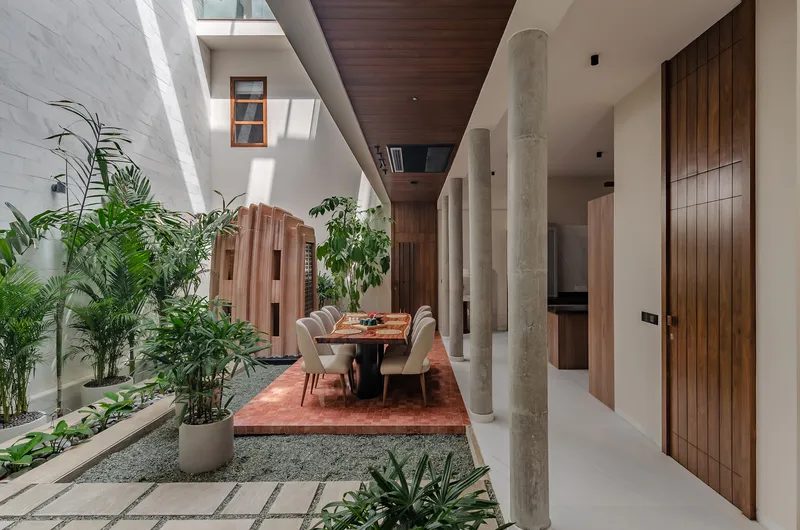
A Contemporary Temple Inspired by Traditional Forms
Spirituality also plays an important role in the spatial composition of the house. A small temple space is placed within the semi-covered courtyard, emphasizing the cultural significance of spiritual rituals in Indian homes.
The design of this temple draws inspiration from the Ghumbaj (dome) form, a shape commonly found in traditional architecture. However, the architects reinterpret this element in a contemporary way, allowing it to blend harmoniously with the modern aesthetic of the house.
Situated at the heart of the courtyard, the temple reinforces the symbolic idea of the home as a sacred and nurturing environment.
A Model for Climate-Responsive Indian Housing
The Breathing House demonstrates how traditional architectural wisdom can guide contemporary residential design in rapidly urbanizing Indian cities. By integrating courtyards, natural ventilation, and minimal material palettes, the project offers a sustainable and culturally rooted solution for modern living.
Through its careful balance of climate responsiveness, spatial innovation, and cultural sensitivity, the house becomes more than a residence: it becomes a living system that breathes, adapts, and evolves with its inhabitants.
All photographs are works of
Pratikruti09


Popular Articles
Popular articles from the community


David Ortega Stacks a Two-Story Mexico City Penthouse Around a Steel Stair and a Pergola-Shaded Roof Terrace
In Colonia Roma, a 300 m² penthouse uses oak joinery, a planted steel stair and a slatted roof pergola to make a new-build apartment feel like a house.

Juan García Correa, John González and Claudia Rueda Sink a Circular Amphitheater into a Manizales Engineering Building
On the La Nubia campus in Manizales, Colombia, the S1 Building folds labs and offices into a hillside of ramped lawns that double as a campus route.

LT2A and OPEN Architectes Thread a Brick and Glass High School Through a Wooded Belgian Campus
In Braine-l'Alleud, a 3,000 m² wing for Collège Cardinal Mercier pairs pale brick with a glazed colonnade, deferring to a small chapel and a dense wood.

U.GA Architects Wraps an Oval Rooftop Pool in Curved Board-Formed Concrete on Busan's Jeollidan-gil
In Busan's Jeonpo-dong, a 454 m² mixed-use block stacks a neighborhood facility, guest rooms and an oval rooftop pool inside spiraling concrete walls.

Similar Reads
You might also enjoy these articles

Gil Mello Arquitetura Tilts a Single Roof Toward the Waterfalls on a Plateau Above Aiuruoca, Brazil
In Aiuruoca, Minas Gerais, a 200 m² house of local labor and reclaimed poles pairs a low valley veranda with a tall mountain one.
U.GA Architects Wraps an Oval Rooftop Pool in Curved Board-Formed Concrete on Busan's Jeollidan-gil
In Busan's Jeonpo-dong, a 454 m² mixed-use block stacks a neighborhood facility, guest rooms and an oval rooftop pool inside spiraling concrete walls.

Felipe Hess Arquitetos Turns a Blind Stone Wall to the Street and Opens a Brazilian House onto a Courtyard and Canal
A canal-front house in Brazil hides behind painted stone and planting, then opens to an olive-tree courtyard, a reed-ceilinged porch and a curving pool.

David Macias Steps a Doorless Stone and Plaster House Down a Tropical Colombian Hillside
In the humid hills of Colombia, Threshold House replaces the front door with an open void and terraces its 850 m² down the slope instead of fighting it.

Explore Sustainable Living Competitions
Discover active competitions in this discipline

Challenge to reimagine the Iron Throne

Photograph architecture without architects

Illustrate the lost glory of Angkor Wat - Render Challenge

Design challenge to reuse E-waste
Comments (0)
Please login or sign up to add comments
No comments yet. Be the first to comment!