

The Butterfly and First Baptist Church Complex by Revery Architecture
A transformative mixed-use complex in Vancouver uniting heritage restoration, sculptural high-rise living, and inclusive community infrastructure within a single civic landmark.


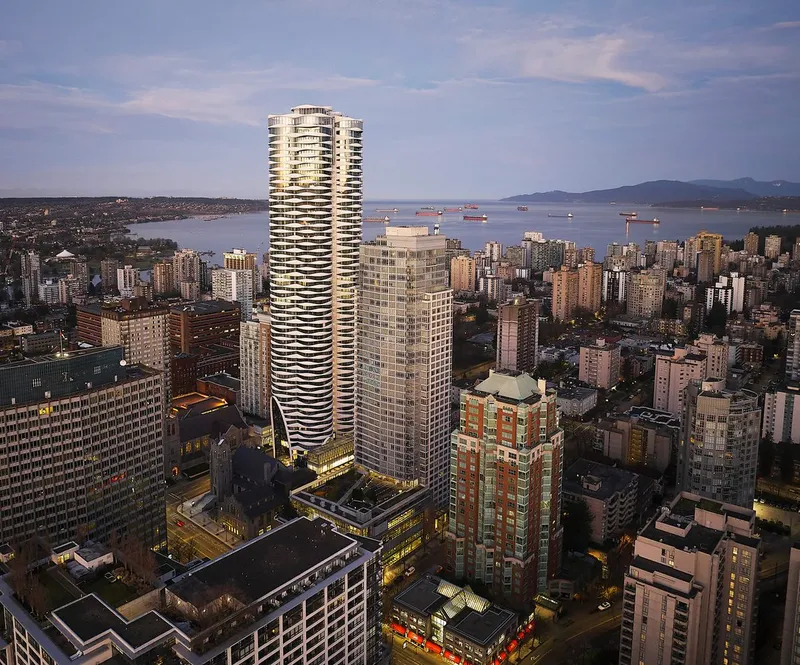
Rising from one of Vancouver’s most prominent downtown sites, The Butterfly and First Baptist Church Complexredefines how heritage, density, and community can coexist. Designed by Revery Architecture, the 605,000 ft² mixed-use development brings together a sculptural 57-storey residential tower, a mid-rise affordable housing building, and the meticulous restoration of the historic First Baptist Church (1911)—transforming church-owned land into a socially grounded urban ecosystem.
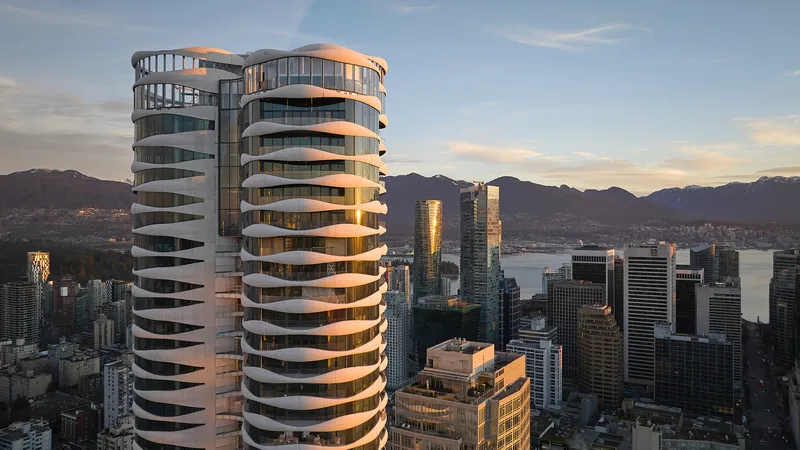
A New Urban Typology
As cities densify and land becomes increasingly scarce, sacred sites—once considered untouchable—are emerging as powerful catalysts for urban transformation. In Vancouver, where housing demand, social isolation, and sustainability intersect, The Butterfly proposes a new typology: vertical living anchored in civic, cultural, and spiritual life.
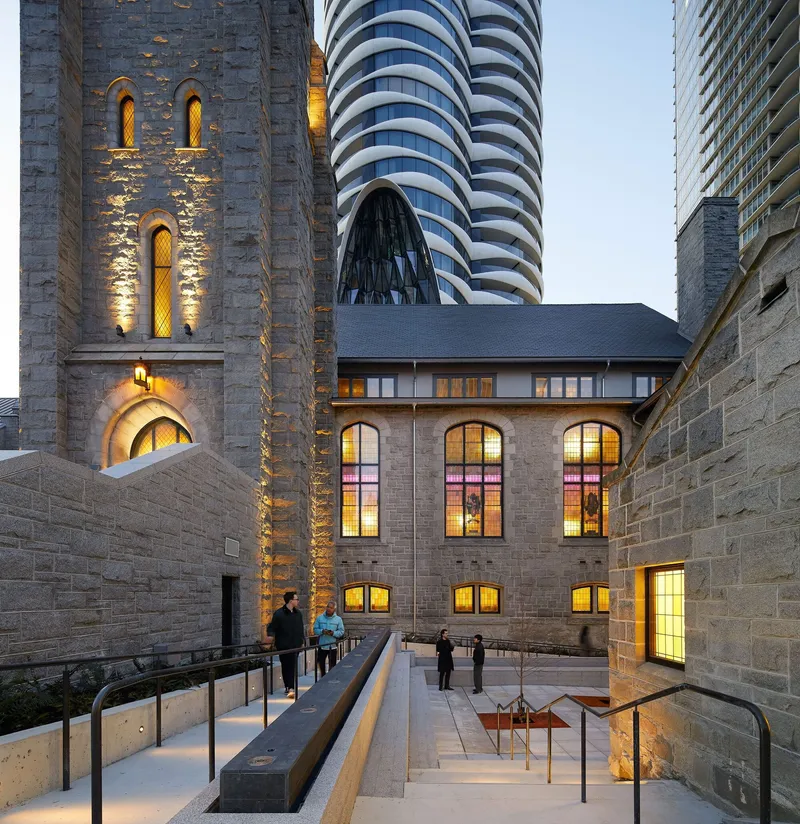
Developed in partnership with Westbank Corp and the First Baptist Church of Vancouver, the project leverages heritage land to deliver mixed-income housing, community infrastructure, and public space—without sacrificing architectural ambition or historical integrity.
Sculptural Form and Environmental Intelligence
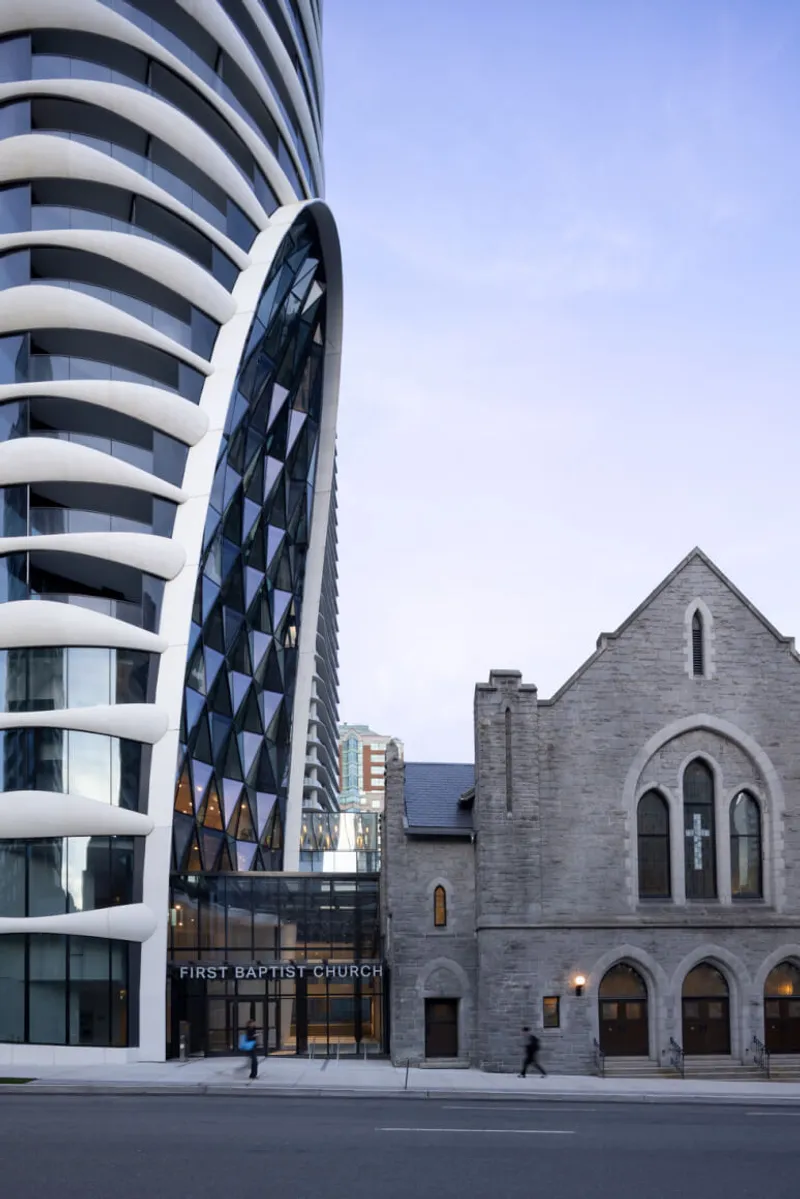
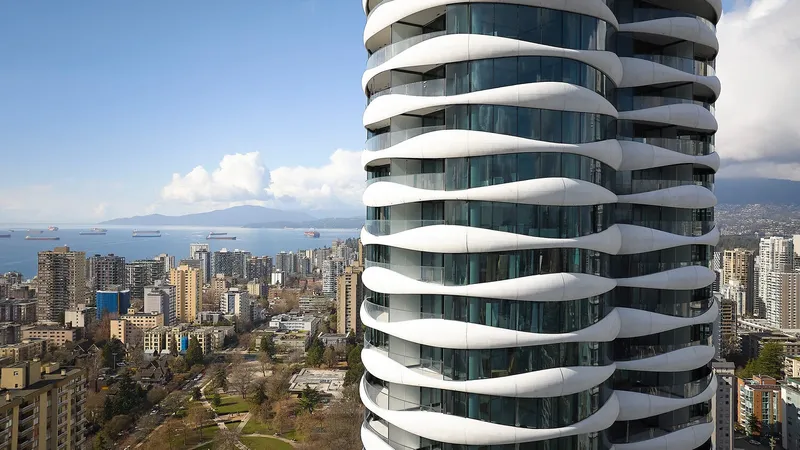
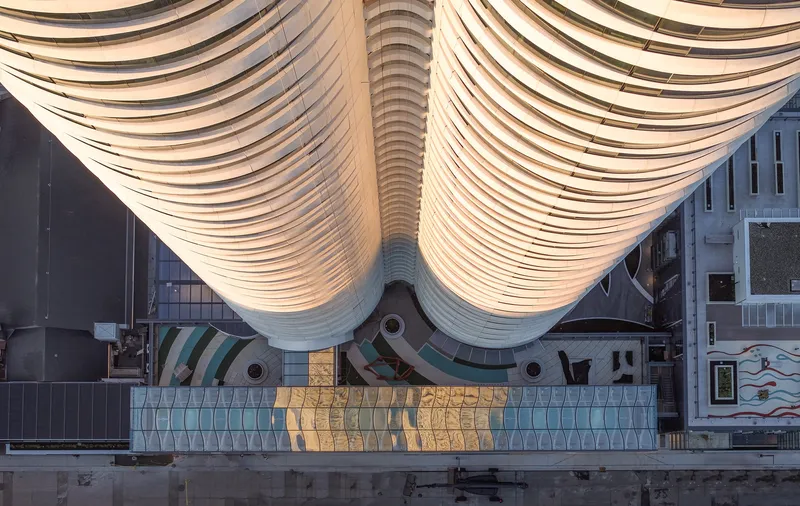
The Butterfly tower introduces a striking new silhouette to Vancouver’s skyline. Its undulating white GFRC façade and curved high-performance glazing draw inspiration from the form and symbolism of a butterfly—metamorphosis, lightness, and transformation.
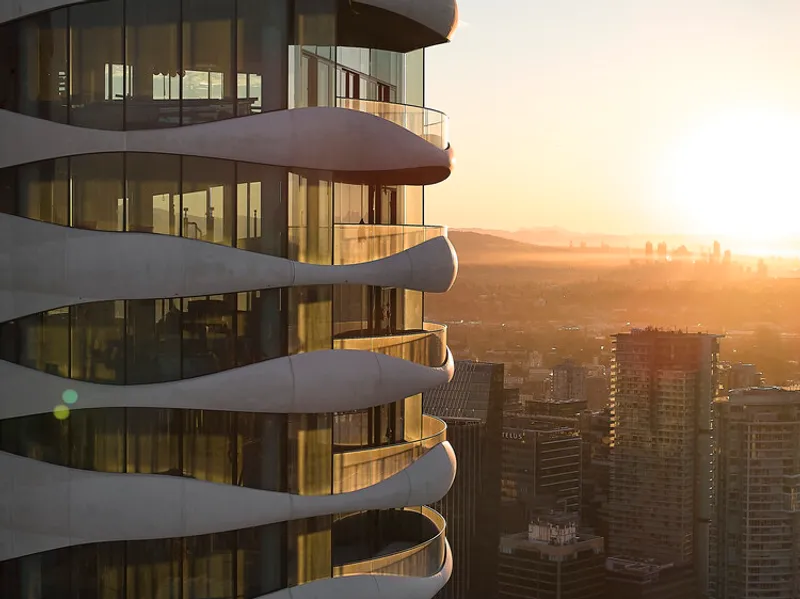
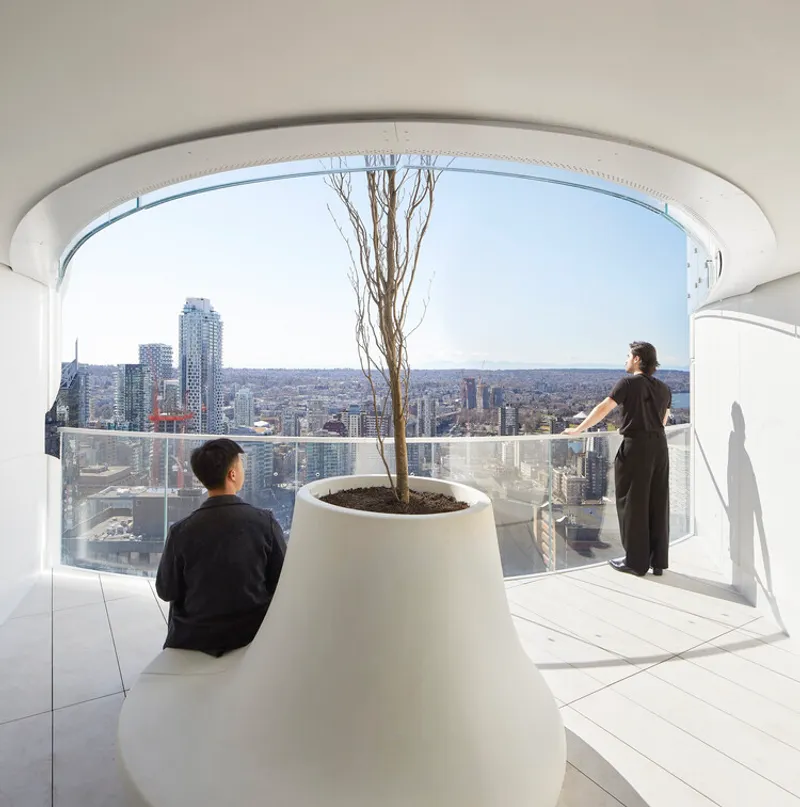
Rather than relying on a conventional floorplate, Revery split the tower’s massing to create open-air breezeways at every level, drawing daylight and fresh air deep into the building. Every third floor expands into sky gardens, planted with deciduous trees and seating, functioning as vertical “front porches” that encourage social interaction while reducing cooling demand.
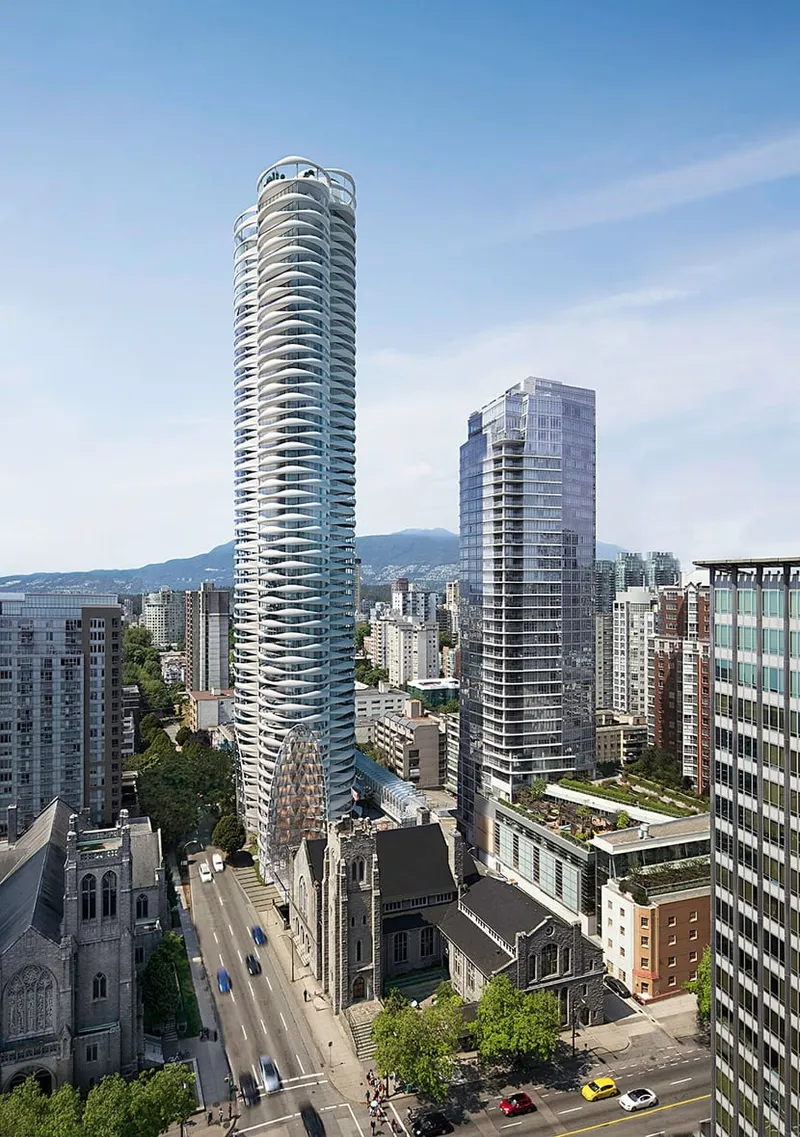
Parametric modeling and full-scale mockups were used to rationalize the complex geometry, ensuring high performance, constructability, and material efficiency without compromising the fluid architectural expression.
Living at Height, Grounded in Community
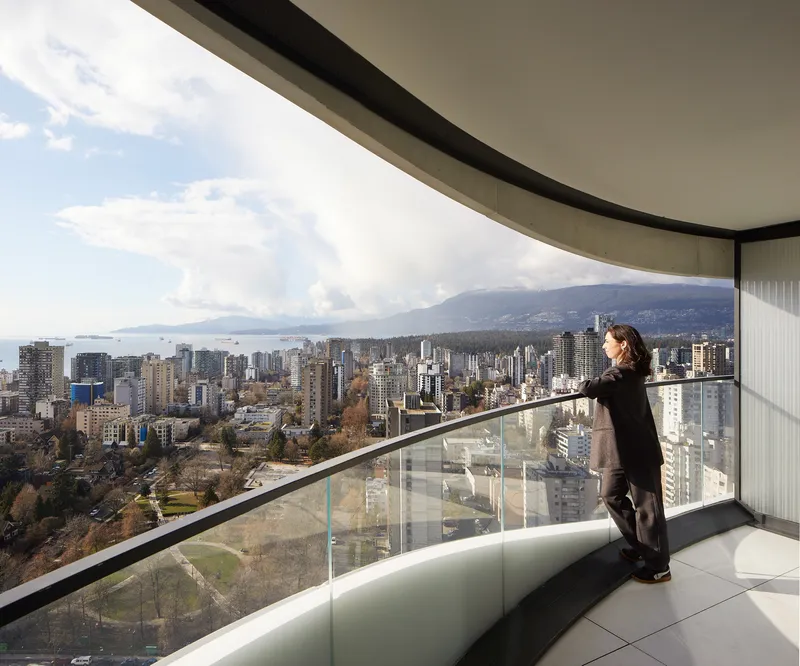
The residential units emphasize light, openness, and tactility, with custom-designed interiors that echo the tower’s fluid form. Open layouts, full-height glazing, warm wood accents, and sculptural kitchen islands create spaces that feel intimate despite the building’s scale.
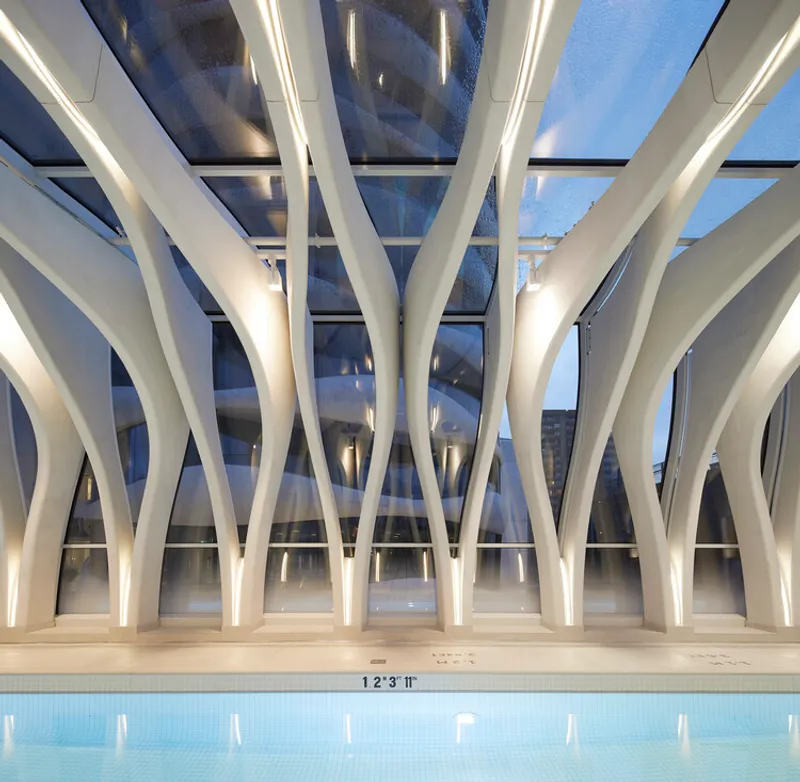
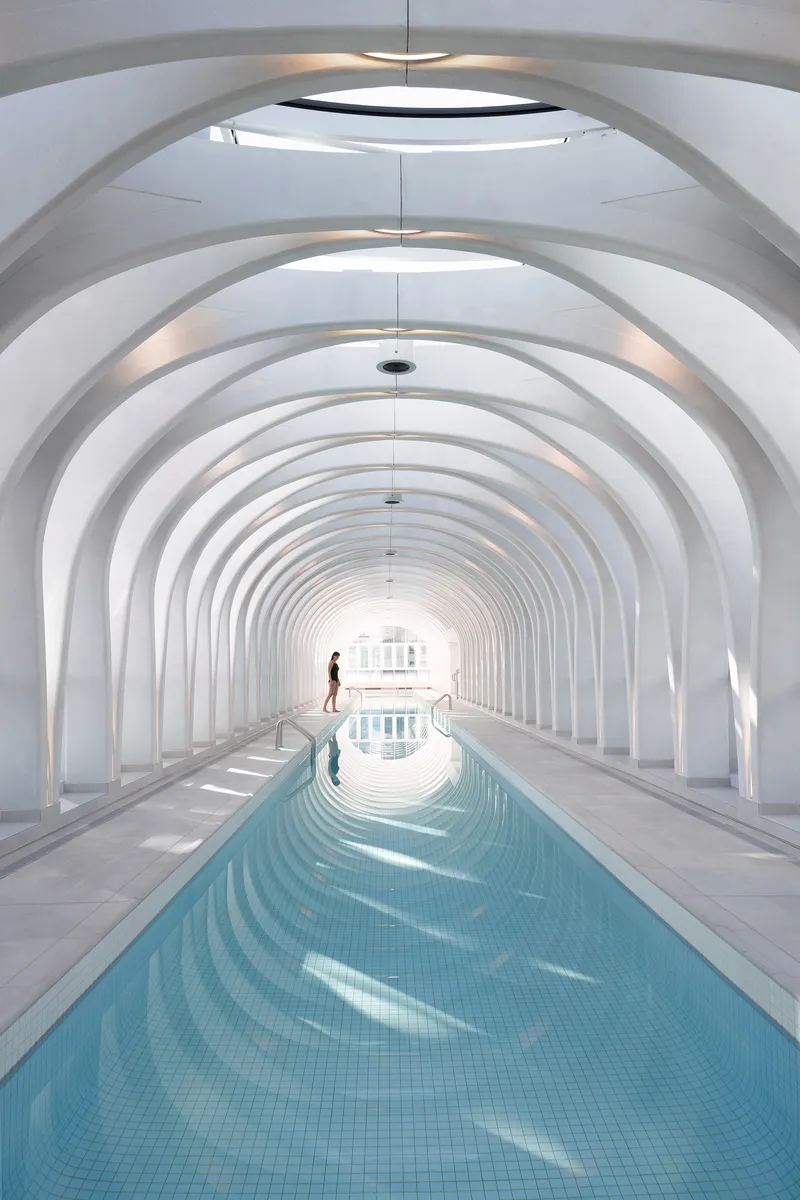
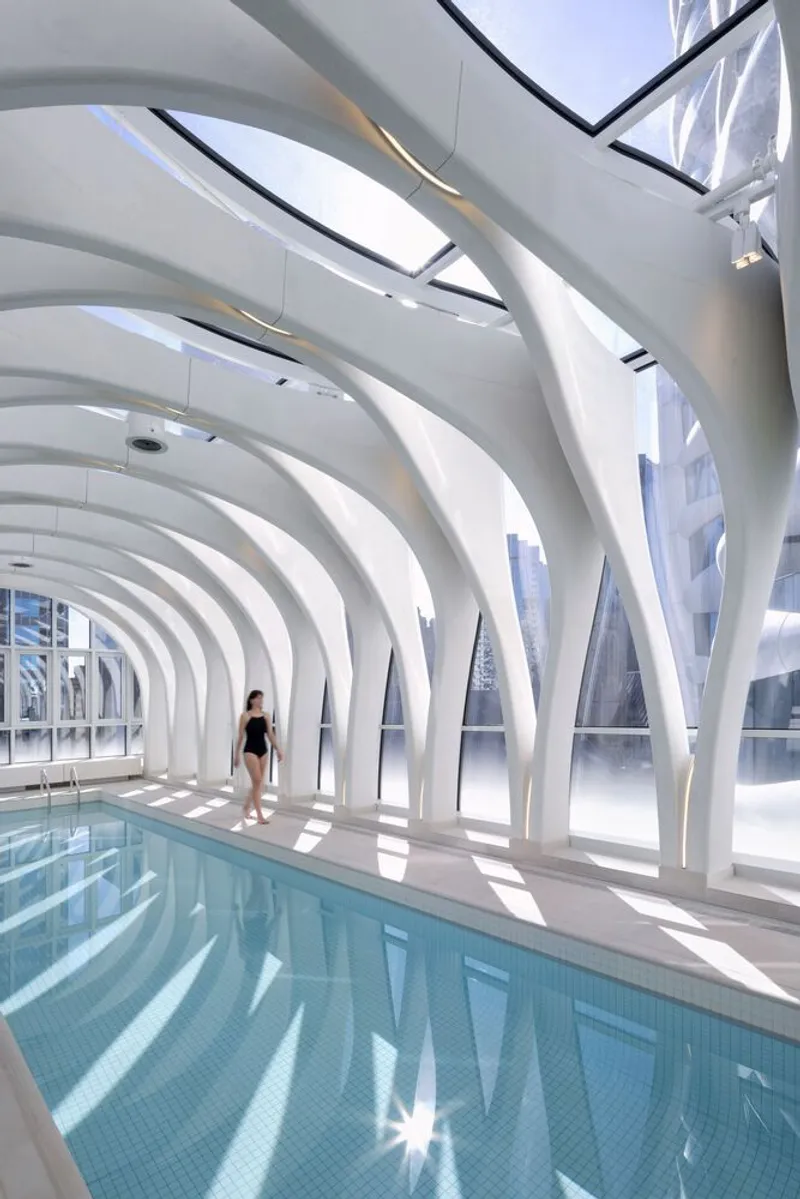
Amenities extend well beyond luxury: a 50-meter elevated lap pool, fitness and wellness spaces, childcare facilities, and communal lounges are woven into the podium and galleria. Together, they support daily rituals, health, and connection—transforming the tower into a lived-in vertical neighborhood rather than a sealed high-rise.
Heritage as a Living Anchor
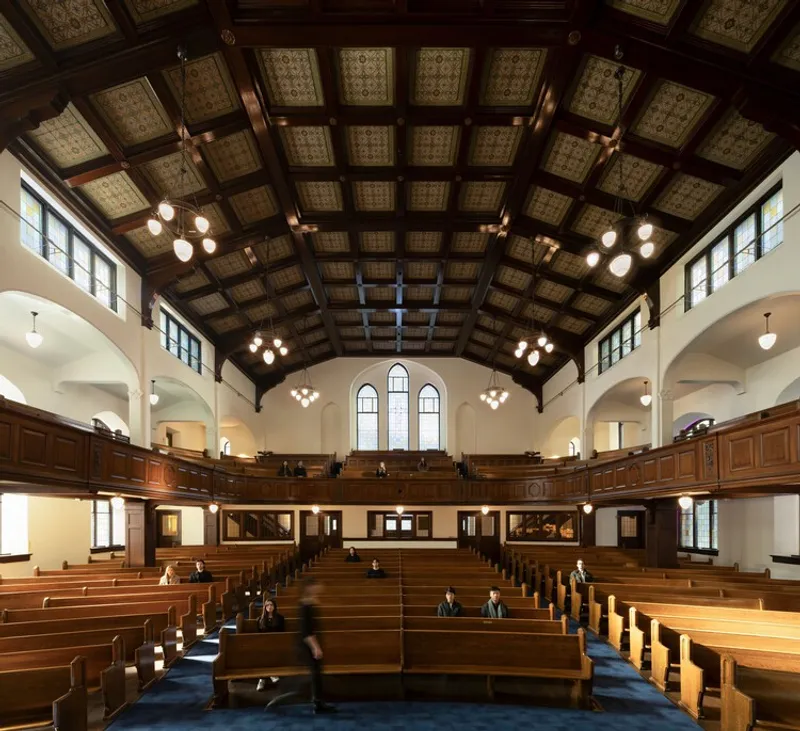
At the heart of the complex stands the First Baptist Church, a Gothic Revival landmark that has served Vancouver’s West End for over a century. Revery approached its restoration with surgical precision, reinforcing the structure for seismic performance while preserving stained glass, oak pews, stonework, and historic detailing.
Key interior spaces, including the Sanctuary and Pinder Hall, were reconfigured to restore original volumes, improve accessibility, and support contemporary programming. New elevators, ramps, and universal-access routes ensure inclusivity throughout the building—extending the church’s mission of welcome into the future.
The Galleria: Old and New in Dialogue
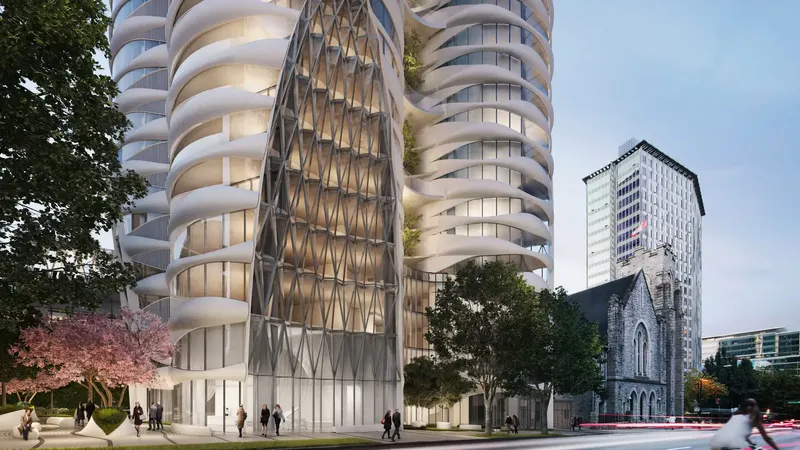
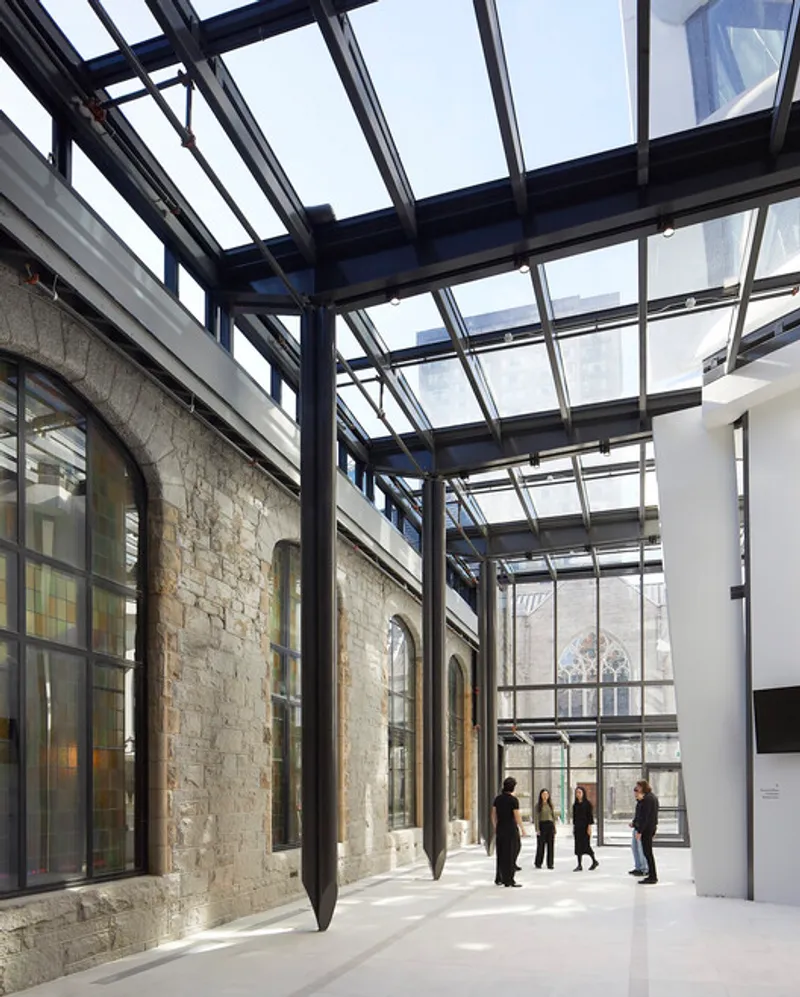
Linking the tower, church, and community facilities is a light-filled galleria—a transparent civic spine that acts as both connector and gathering space. Steel and glass yield to masonry and curvilinear concrete, creating a layered dialogue between past and present.
The galleria hosts informal performances, community events, and everyday circulation, reinforcing the project’s role as a public living room for the neighborhood.
Social and Environmental Sustainability
Designed to LEED Gold standards, the complex achieves significant reductions in operational carbon, energy use, and potable water consumption. A district energy system, high-performance envelope, and natural ventilation strategies underpin its environmental performance.
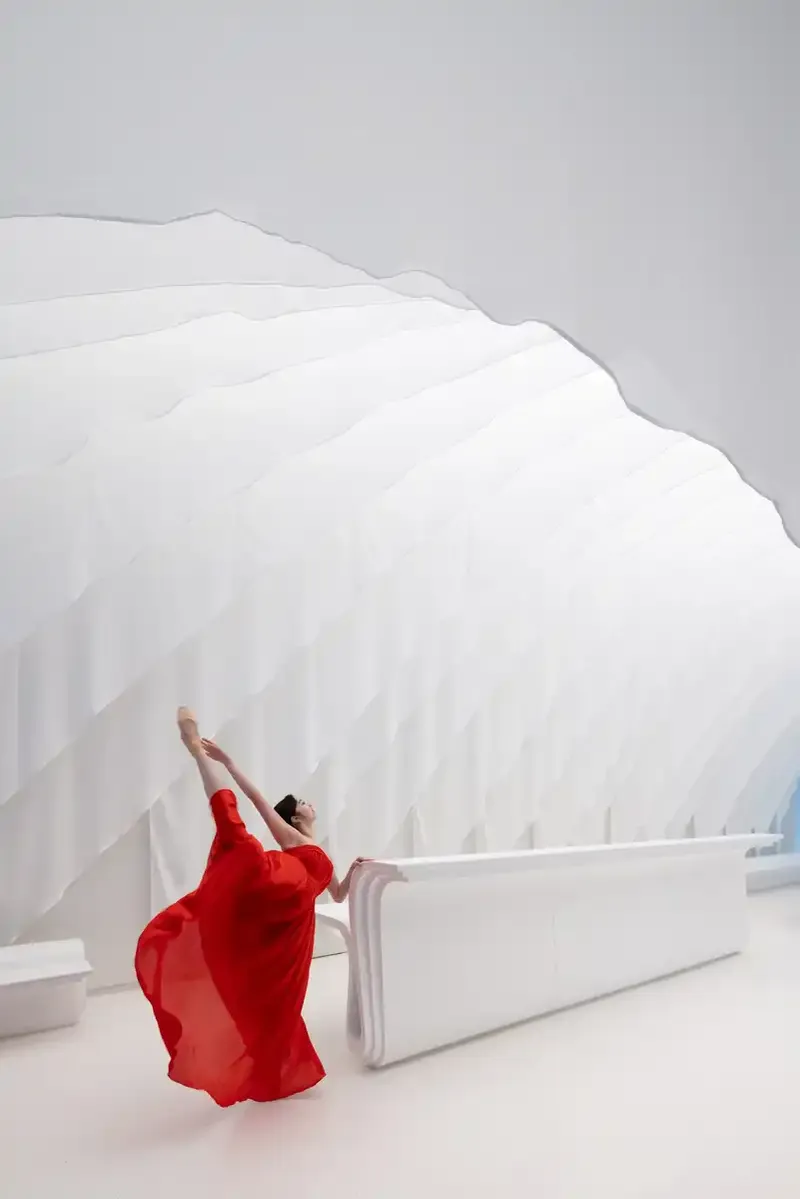
Equally important is social sustainability. The project integrates affordable and social housing, family-sized units, accessible residences, childcare, and community services—placing residents of vastly different socioeconomic backgrounds within the same footprint. This deliberate integration challenges traditional urban segregation and repositions architecture as a tool for belonging.
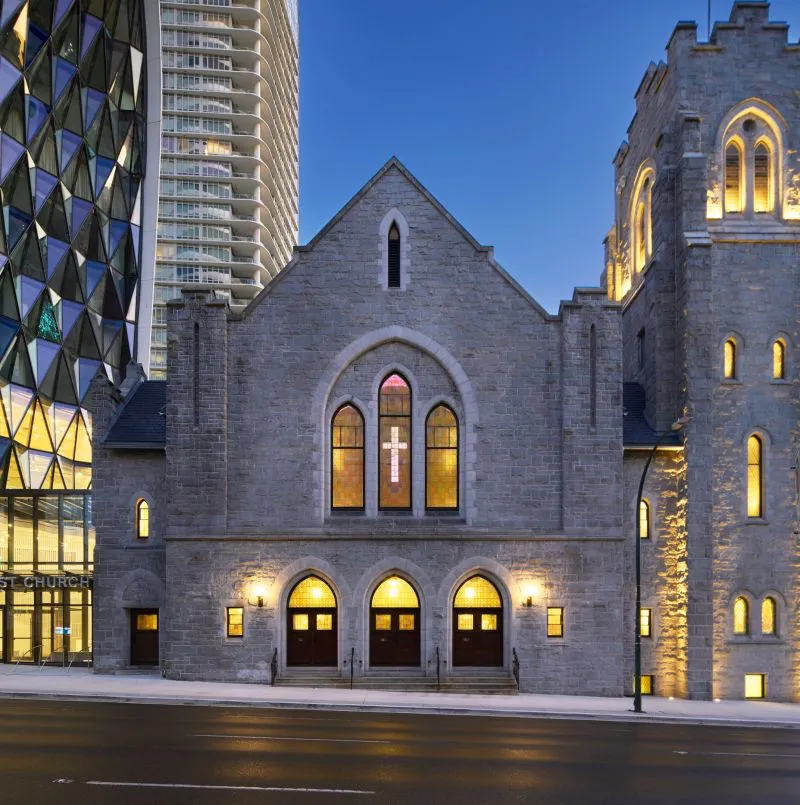
A Civic Landmark Reimagined
More than a residential tower or heritage restoration, The Butterfly and First Baptist Church Complex represents a new model for urban density—one where architecture supports spiritual, social, and environmental resilience. By aligning design excellence with civic ambition, Revery Architecture has crafted a landmark that honors history while offering a framework for inclusive urban futures.
All the Photographs are works of Hufton Crow, Ema Peter


Popular Articles
Popular articles from the community

Opera by the Sea Estonia: Three Shells Dissolving Architecture into Tallinn's Coastline
A winning opera house proposal replaces monumental form with interconnected shells that blur the boundary between building, park and Baltic Sea.
Opera on the Sea: Driftwood Logic Shapes a Timber Opera House on Estonia's Coast
Trevor Orgill's opera house translates the entangled drift of floating timber into a civic building where wood, water, and music converge.
Cloaked Colonization: A Mobile Underwater Habitat That Moves Like a Fish
Micah Abaya's shortlisted EHC Pacific entry reimagines ocean settlement as a dispersed network of self-sustaining architectural organisms.
Temporary Home for Dogs: A Reversed Zoo Rethinks Animal Shelter Architecture
In Bucharest, a sinuous corridor and freed landscape flip the logic of containment, designing a shelter that works to make itself unnecessary.

Similar Reads
You might also enjoy these articles

Hodi-Mandai Geram
Project Function: Preservation and revitalization of the Intangible heritage and socio-spatial identity of the Hodi by Housing, Cultural Memory Center, Sacred Grove, landscape, local tourism economy

Olio Towers: A Mid-Rise for Performers That Fuses Housing, Rehearsal, and Stage
Located blocks from Houston's Theater District, this modular tower stacks living units around a central performance atrium.
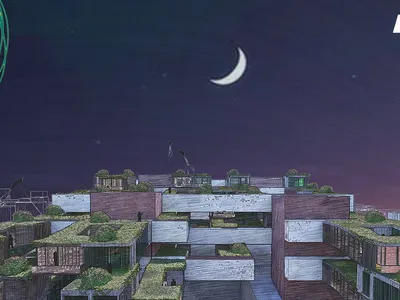
Oasis: Modular Green Housing Carved into Dhaka's Urban Fabric
A shortlisted Plugin Housing entry reclaims unauthorized settlements in Dhaka with stepped concrete volumes, green roofs, and ventilation-driven design.

Black Hole: A Floating Megastructure for the Post-Physical Era
Emiliano Mazzarotto envisions a spherical, self-scaling arena where e-sports, digital hotels, and holographic stadiums replace traditional public space.

Explore Residential Building Competitions
Discover active competitions in this discipline

Challenge to design mud housing for contemporary communities

Challenge to reimagine the Iron Throne

Photograph architecture without architects

Illustrate the lost glory of Angkor Wat - Render Challenge
Comments (0)
Please login or sign up to add comments
No comments yet. Be the first to comment!