
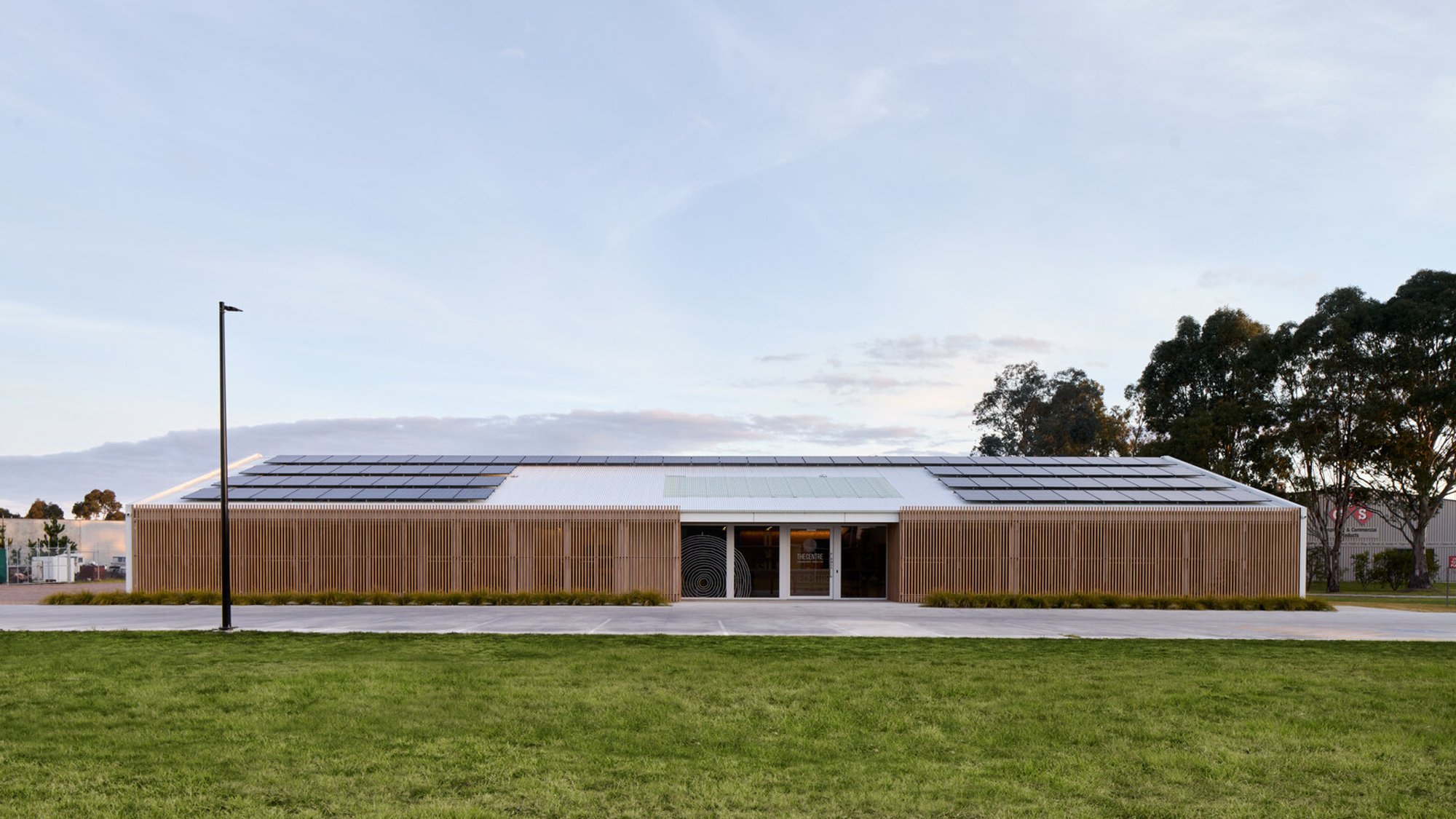
The Centre for Combined Health: A Community-Focused Wellness Hub by Sarah Lake Architects
A community-focused health center offering consulting suites and multipurpose wellness spaces, combining simplicity, natural light, and cost-efficient design for regional wellbeing.

The Centre for Combined Health in Bairnsdale, East Gippsland represents a forward-thinking approach to regional healthcare architecture, delivering an inclusive environment designed to support physical, mental, and community wellbeing. Designed by Sarah Lake Architects, this 706 m² facility combines multiple health services under one roof, responding directly to the urgent need for accessible allied health care in Regional Victoria.
Following years of drought, the destructive Black Summer bushfires, the impacts of COVID-19, and the decline of local fishing and timber industries, the region faced significant health challenges. The clients envisioned a place where connection, education, and engagement could fuel healing. Their mission led to the creation of a privately funded community health centre: a functional, welcoming, and emotionally supportive space built for long-term resilience.
A Design Rooted in Wellbeing and Community Needs
The architectural concept focuses on creating a building that feels approachable, calm, and connected to its context. Rather than a clinical or institutional atmosphere, the Centre offers a warm, timber-rich interior and clearly organized spatial zones that support healing and privacy.
The plan is strategically arranged into three key zones:
1. Private Consultation Suites
Twelve consulting rooms accommodate a wide range of allied health specialists and outpatient services. These suites are located in the quietest zone, ensuring privacy, care concentration, and acoustic comfort.
2. Active Multipurpose Spaces
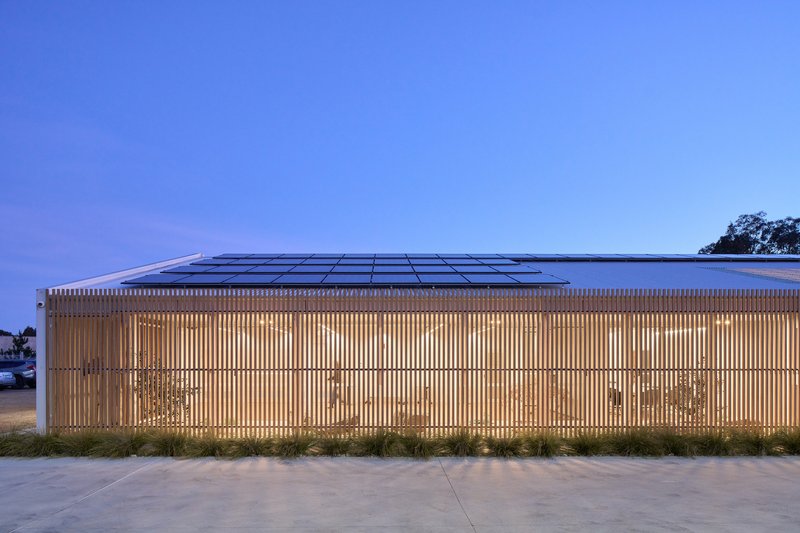
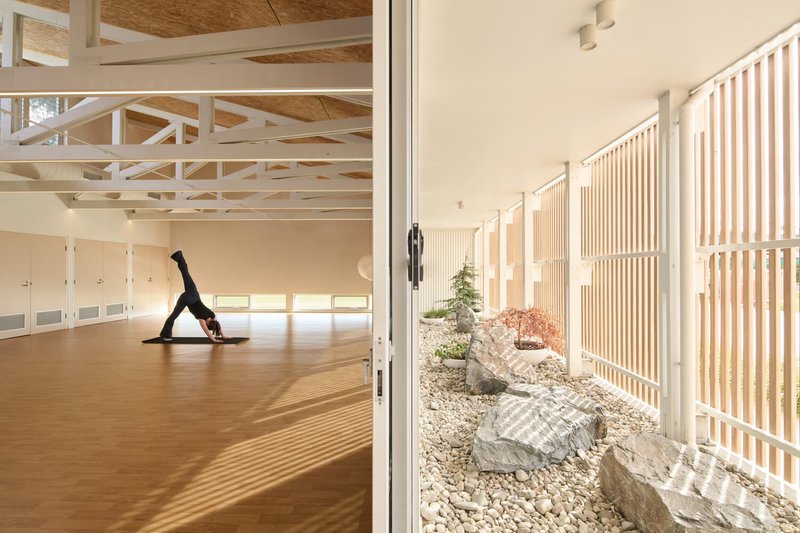
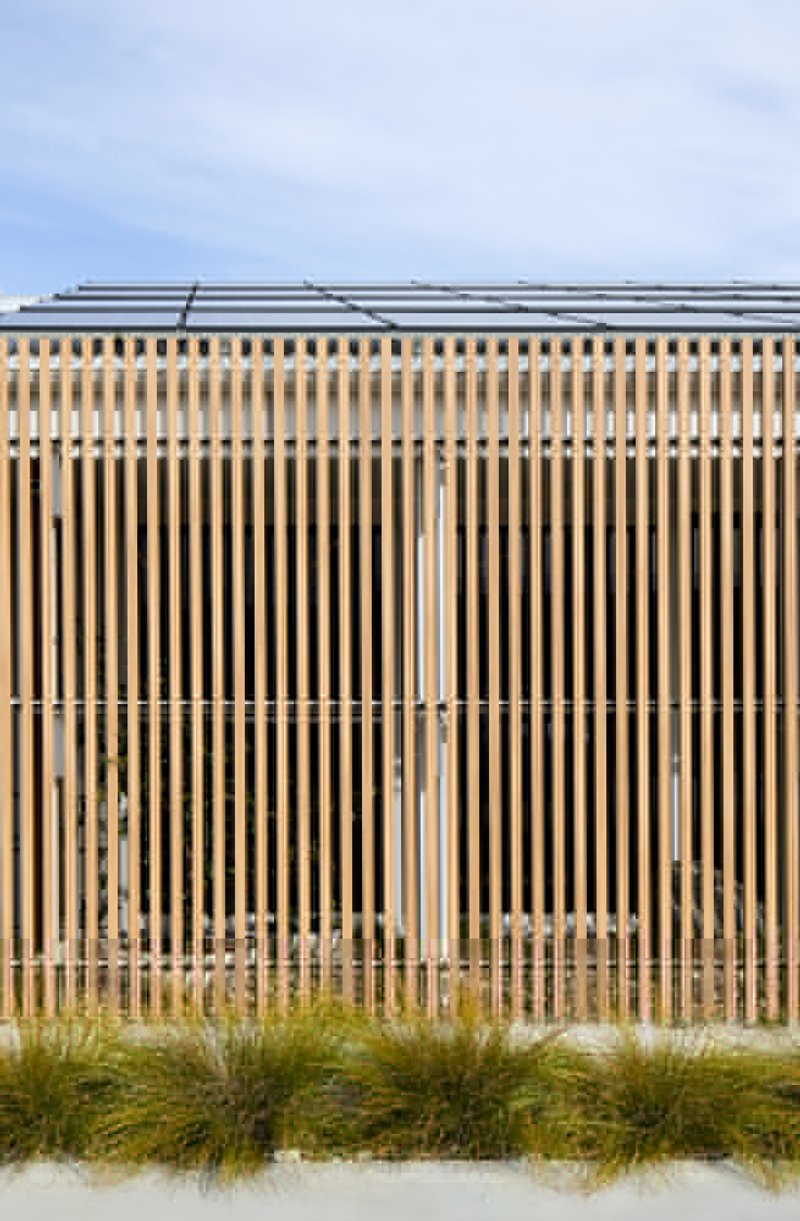
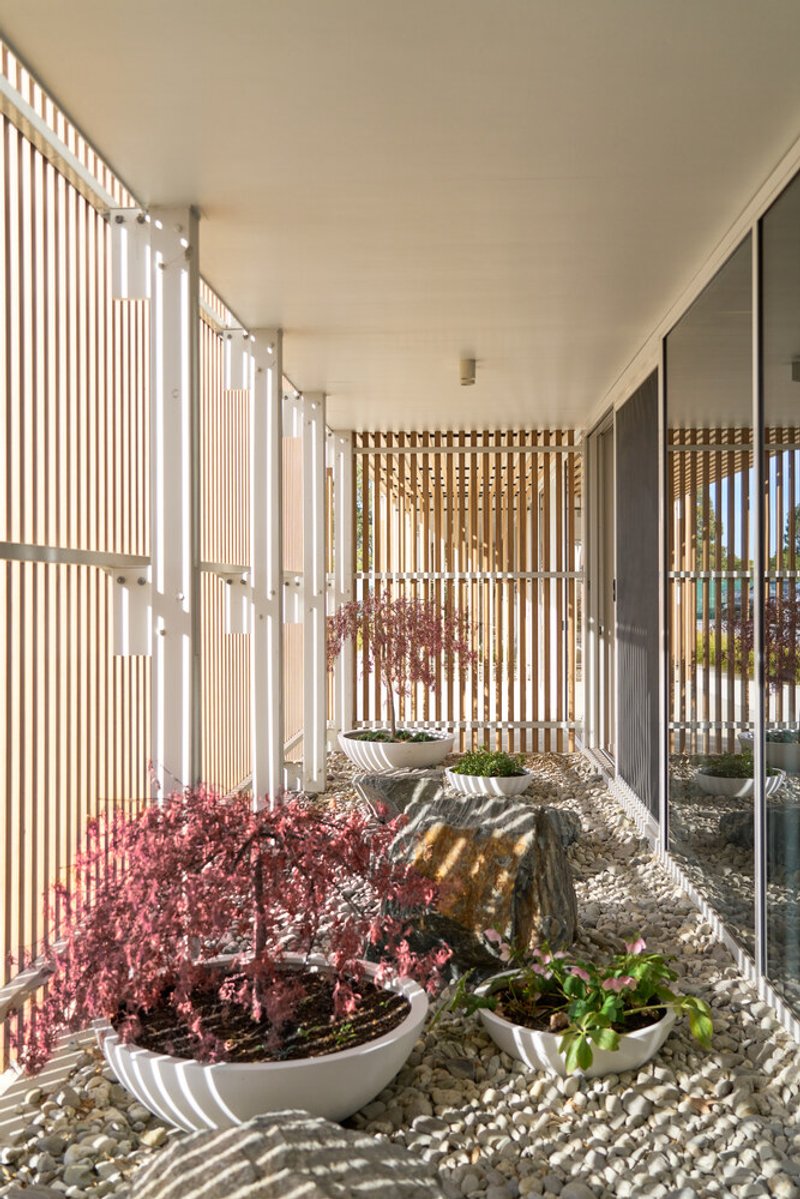
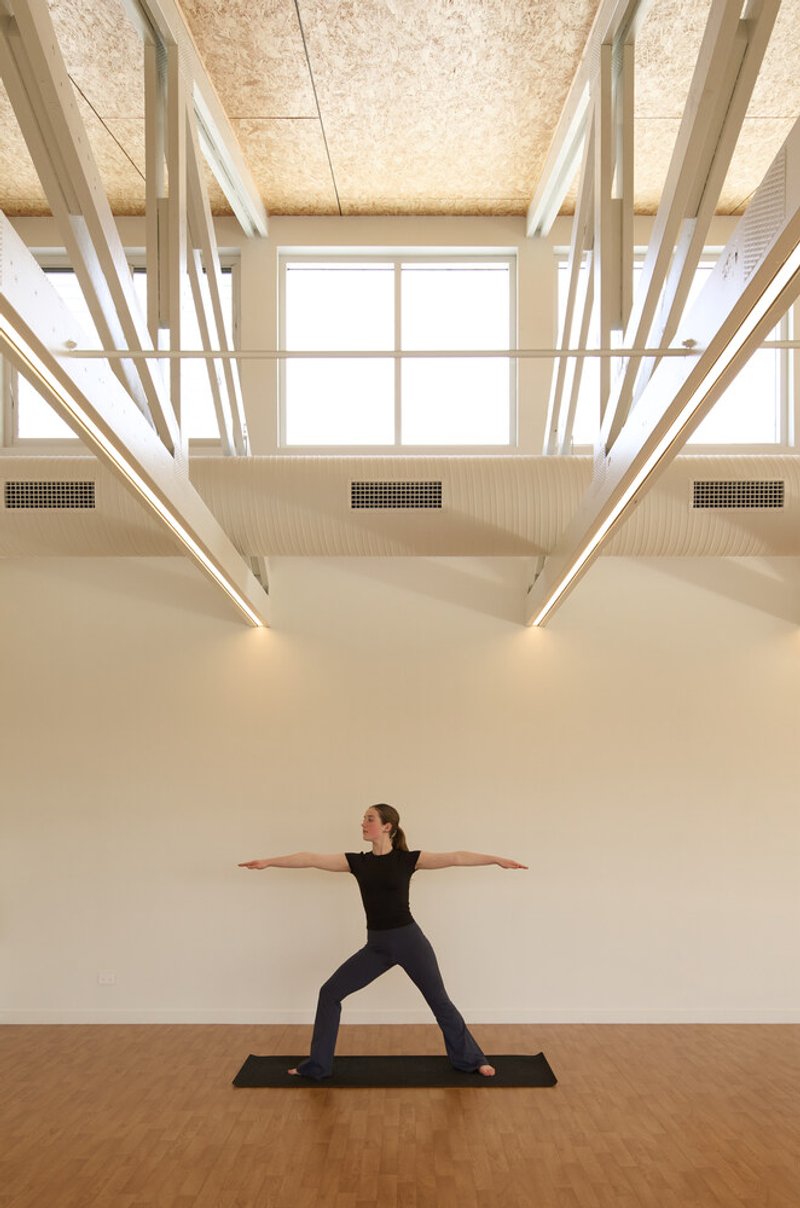
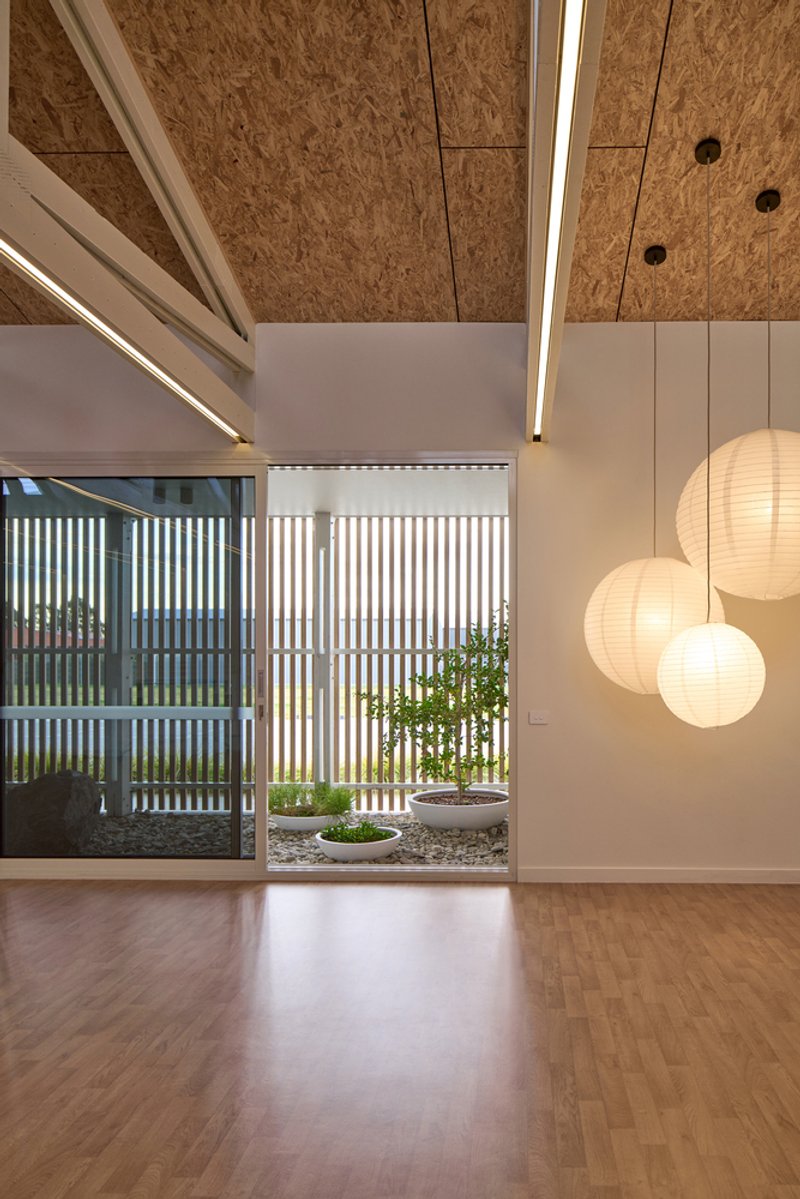
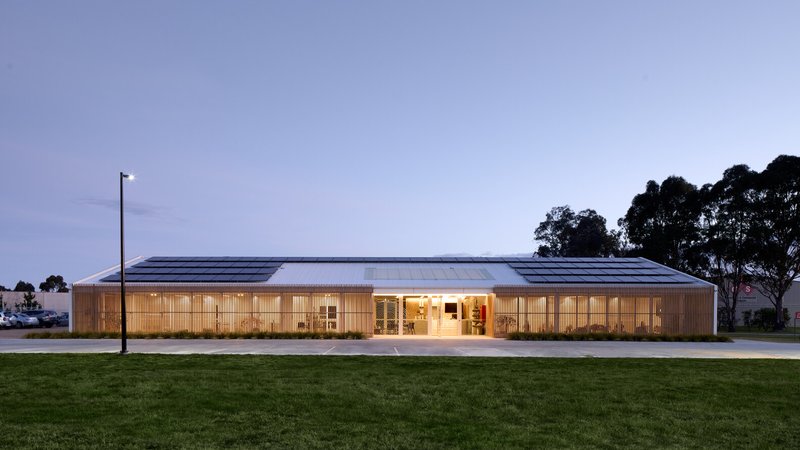
Two expansive fitness studios support yoga, pilates, workshops, and health education lectures. These north-facing rooms open to concealed courtyards that provide natural light and a sense of retreat, while the façade screen ensures privacy and buffers views from the parking area.
3. Shared Amenities and Circulation
Between the public and private areas lies a zone of staff rooms, amenities, and service spaces, acting as a buffer that enhances operational efficiency and improves patient experience.
Industrial Context Reinterpreted Through a Softer Architectural Lens
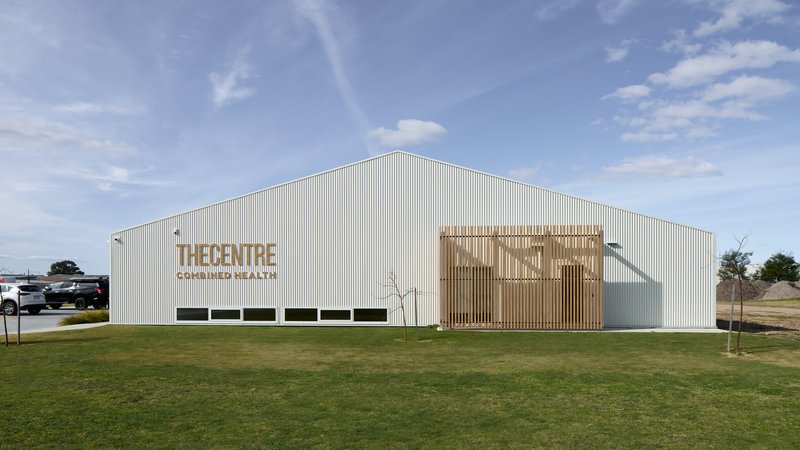
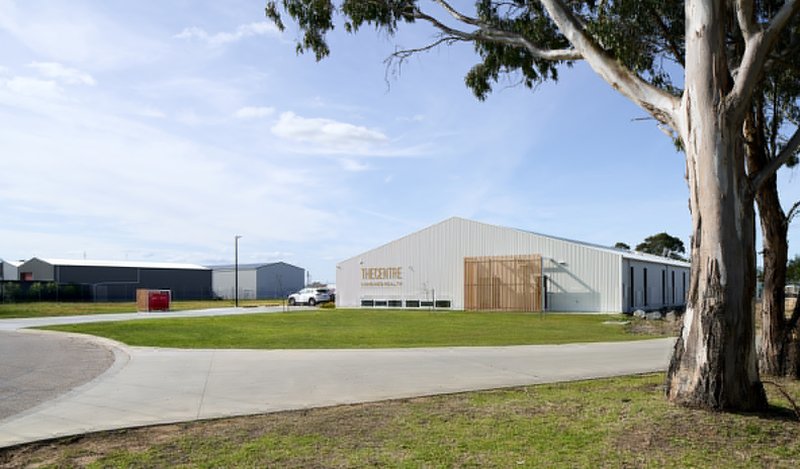
Sited within Bairnsdale’s industrial estate, the building draws inspiration from the utilitarian aesthetic of local sheds. Sarah Lake Architects transformed this familiar industrial form into a welcoming community health facility, using a simple pitched-roof silhouette paired with a parapet that conceals the central roof cut.
This roof cut becomes an architectural device, introducing highlight windows for cross ventilation and natural daylight, ensuring that even interior zones feel bright and breathable. The reduced reliance on artificial lighting not only minimizes energy use but also improves occupant comfort.
Materiality: Honest, Cost-Conscious, and Locally Constructible
The Centre’s materials were carefully chosen to balance budget, durability, and visual warmth:
- Corrugated cladding and roofing reference the industrial context while remaining cost-effective.
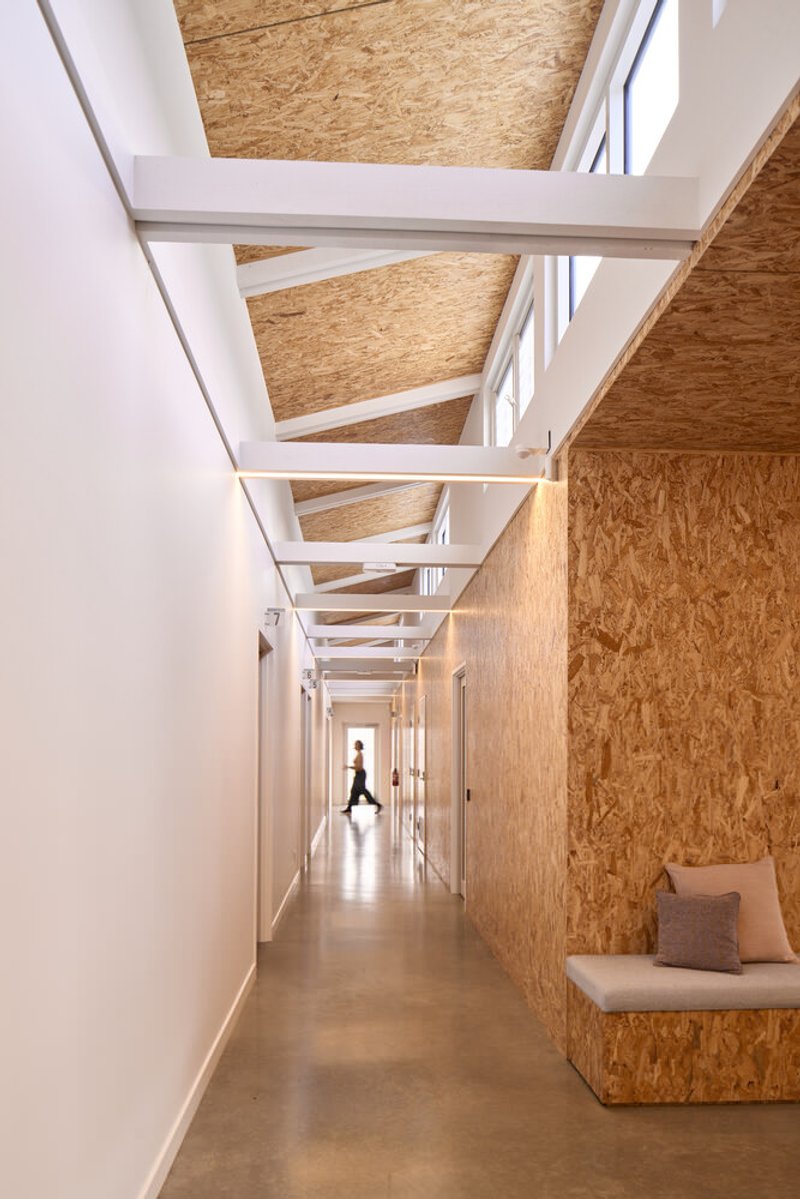
- OSB panels and plasterboard add texture and practicality to interior walls.
- Concrete flooring provides durability and low-maintenance surfaces for high-traffic use.
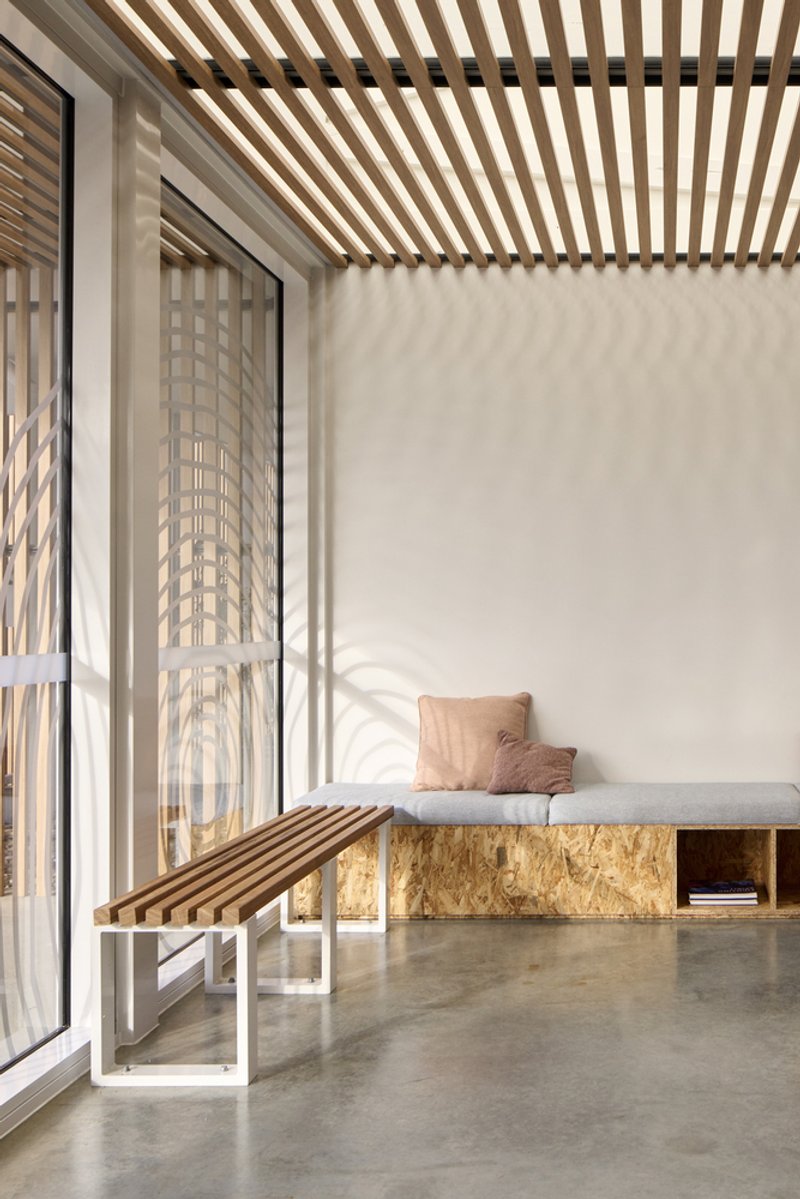
- An aluminium façade screen filters light, adds privacy, and softens the building’s industrial character.
- Tarkett flooring in multipurpose rooms supports safe physical activity without the cost of a sprung floor.
The open gangnail trusses create generous interior volumes using affordable, readily available materials, while minimizing steel usage keeps overall construction costs approachable.
In a personal contribution, the client, who works as a plumber, installed the corrugated roofing and cladding himself, a testament to the project’s commitment to community involvement and practical construction methods.
Light, Air, and Comfort: Designing a Healthy Interior Environment
Natural light is a key element throughout the Centre. The building’s north orientation brings soft daylight into the public areas, filtered through the façade screen to reduce glare and ensure visual comfort.
The central services block is intentionally designed with lower ceilings, allowing daylight to reach both the north and south spaces as the roof rises above it. Skylights further enhance illumination, creating a bright, uplifting atmosphere ideal for wellness activities.
Cross ventilation enabled by the roof cut reduces reliance on mechanical systems, reinforcing the building’s commitment to sustainability and long-term operational affordability.
A Model for Regional Healthcare Design
The Centre for Combined Health stands as a meaningful architectural response to the evolving needs of regional communities. By combining multiple health services within an inviting, efficient, and cost-conscious structure, Sarah Lake Architects demonstrates how purpose-driven design can uplift community wellbeing.
This project not only delivers vital infrastructure but also signals a new direction for holistic, community-centered healthcare architecture: one that prioritizes dignity, accessibility, and the healing power of space.
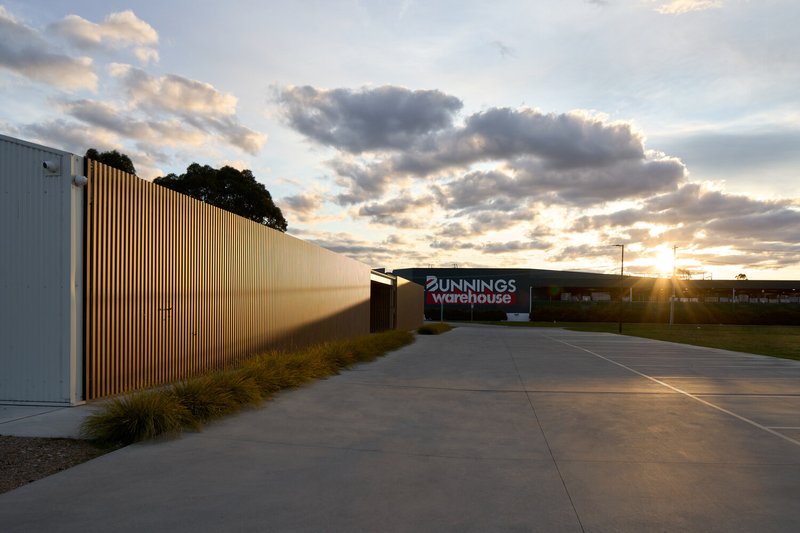
All photographs are works of Glenn Hester



Popular Articles
Popular articles from the community

20 Most Popular Furniture Design Projects of 2025
Modular street systems, parametric benches, and insect hotels: the furniture design projects that captivated architects on uni.xyz in 2025.

Rojkind Arquitectos and Think Parametric Build a Glueless Pavilion from 67 Interlocking Panels
A serpentine fiber-cement installation in Chapultepec Park celebrates a decade of architectural media in Mexico City.
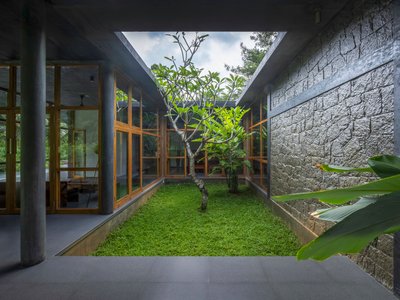
3dor Concepts Wraps a Kerala Home in Mirrored Concrete Arcs Around a Courtyard Tree
In the Western Ghats foothills of Thamarassery, a 270 m² single-story house uses two curved volumes to frame nature as its center.
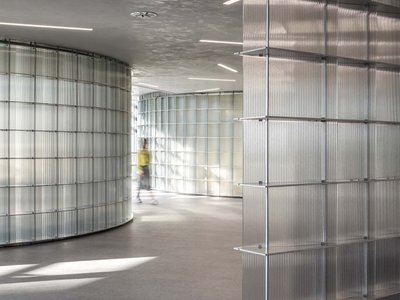
HCCH Studio Wraps a Shanghai High-Rise Office in Curved Walls of Translucent Glass
A 1,000 square meter fit-out in Lujiazui replaces the typical tech-office palette with layered glass, micro-cement, and quiet rigor.


Similar Reads
You might also enjoy these articles
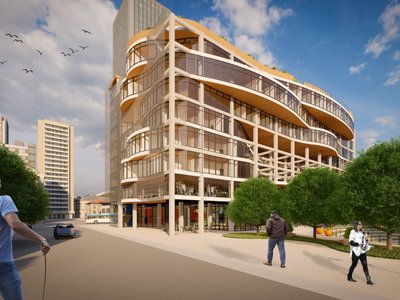
Olio Towers: A Mid-Rise for Performers That Fuses Housing, Rehearsal, and Stage
Located blocks from Houston's Theater District, this modular tower stacks living units around a central performance atrium.
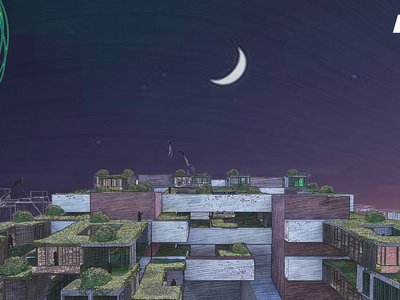
Oasis: Modular Green Housing Carved into Dhaka's Urban Fabric
A shortlisted Plugin Housing entry reclaims unauthorized settlements in Dhaka with stepped concrete volumes, green roofs, and ventilation-driven design.

Black Hole: A Floating Megastructure for the Post-Physical Era
Emiliano Mazzarotto envisions a spherical, self-scaling arena where e-sports, digital hotels, and holographic stadiums replace traditional public space.
Compact & Sustainable Living in Piraeus: A Four-Level Family Home Built Around Light and Air
A narrow townhouse in one of Greece's densest port cities uses a central atrium and passive strategies to house three generations under one roof.

Explore Architecture Competitions
Discover active competitions in this discipline




The International Standard for Design Portfolios


The Global Benchmark for Architecture Dissertation Awards


The Global Benchmark for Graduation Excellence


Challenge to reimagine the Iron Throne
Comments (0)
Please login or sign up to add comments
No comments yet. Be the first to comment!