
The City Hub: A Landmark in Sustainable Bridge Architecture
A landmark sustainable bridge in Copenhagen redefining urban mobility through cycling, public space, and floating architecture.


In an era where cities are redefining mobility and public space, sustainable bridge architecture has emerged as a powerful catalyst for urban transformation. The City Hub, More Than Just a Link, designed by Francisco Javier Rodriguez Salas, proposes a visionary moveable bascule bridge and integrated floating platform in Copenhagen that transcends infrastructure. It is not merely a crossing point over water; it is an active urban destination, a cultural platform, and a symbol of zero‑carbon mobility.
Positioned within Copenhagen’s iconic waterfront, the project embraces the city’s strong cycling culture while introducing a new typology of hybrid infrastructure: one that merges engineering innovation, architectural clarity, and social interaction.
More Than Just a Link
Traditional bridges serve a single purpose: connection. The City Hub challenges this convention by transforming a transportation corridor into a vibrant civic landmark. The design addresses the growing need for sustainable transport systems while simultaneously creating a welcoming public realm for residents and tourists.
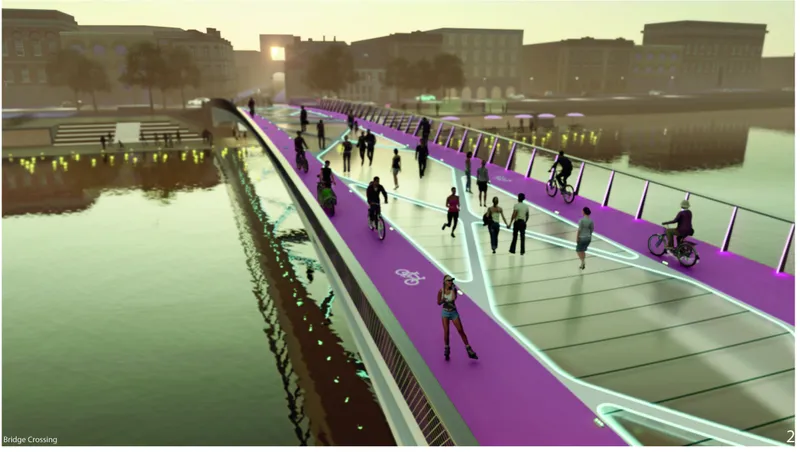
Dedicated, uninterrupted cycle lanes ensure fluid movement for non‑motorised traffic including bicycles, scooters, and skateboards. Pedestrian pathways are thoughtfully separated from high‑speed cycling routes, enhancing safety while preserving scenic experiences. Wide decks allow users to pause, admire panoramic canal views, and engage with the city’s waterfront.
This integration of mobility and social infrastructure defines contemporary sustainable bridge architecture, infrastructure that supports movement while cultivating belonging.
The Bridge: Engineering Elegance Meets Urban Identity
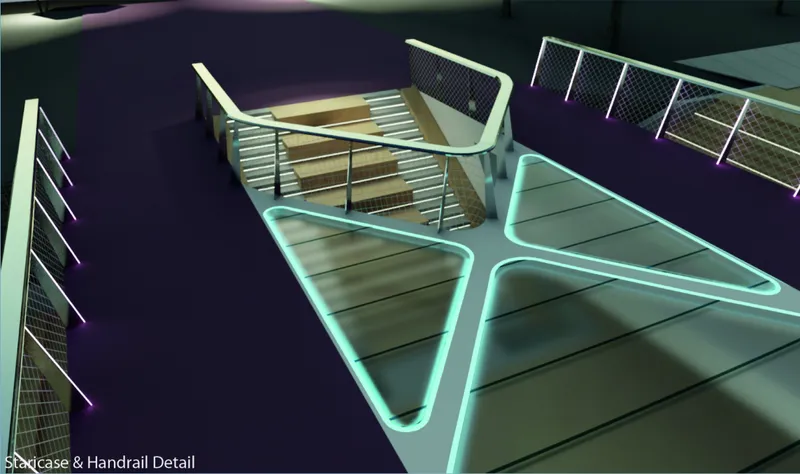
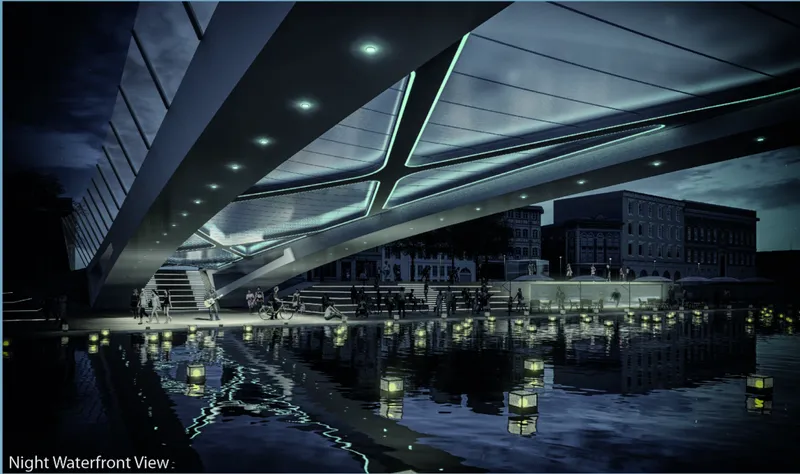
The bridge features optimised arch-shaped edge girders that structurally accommodate dual cycle lanes and pedestrian decks. A refined bracing system creates structural clarity while contributing to a distinctive visual rhythm visible from below.
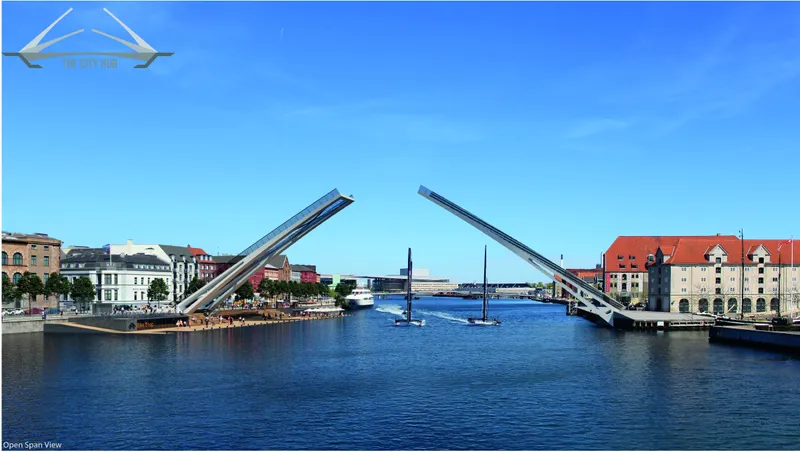
Two 50-metre fully openable bascule leaves form the project’s iconic gesture. When raised, the bridge becomes kinetic architecture, a dynamic landmark animating Copenhagen’s skyline. The mechanism is concealed within a clean, slender profile, maintaining visual simplicity while showcasing state-of-the-art engineering.
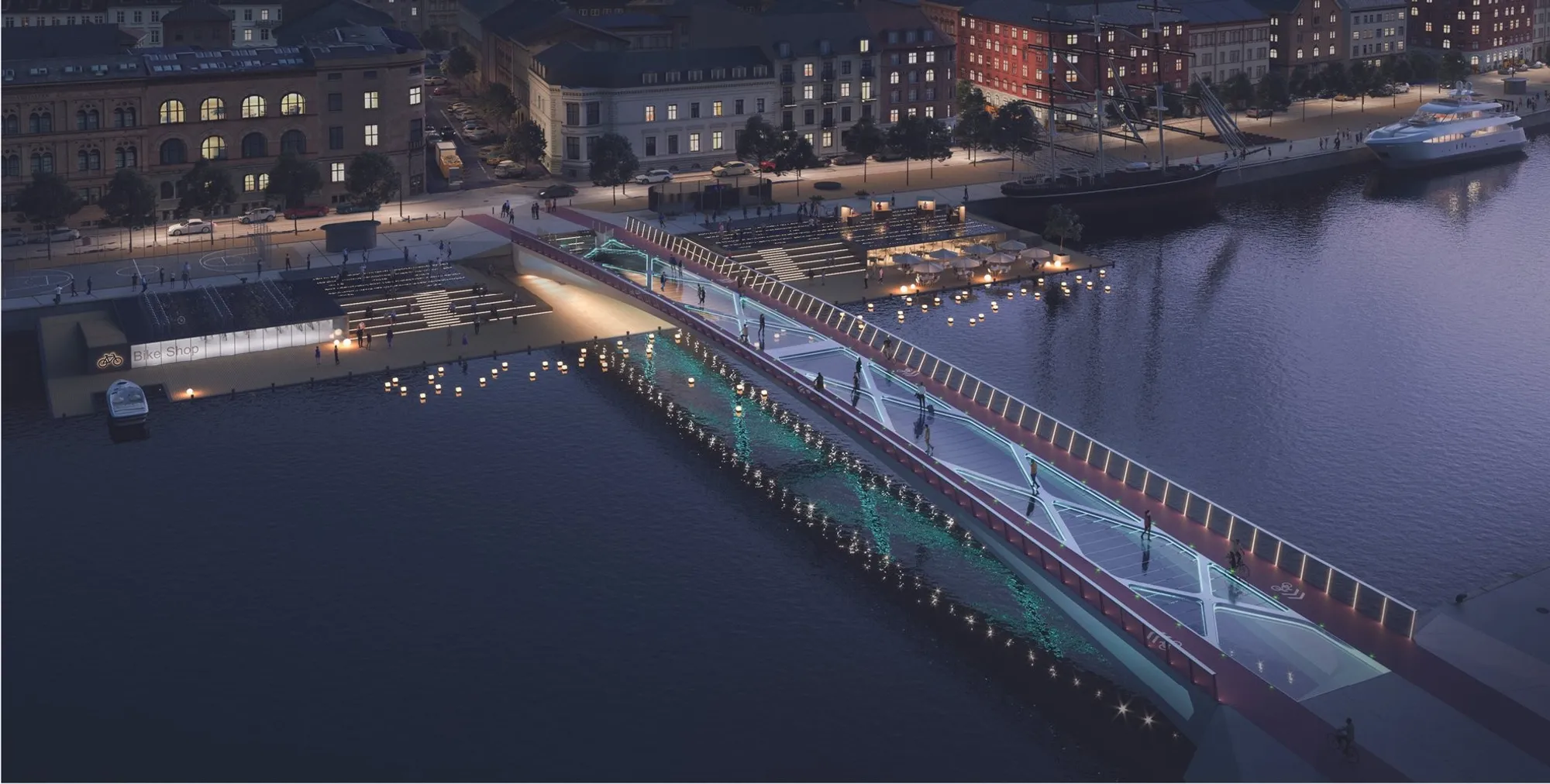
Integrated LED lighting enhances nighttime visibility and transforms the structure into a glowing urban ribbon across the canal. A unique net-style stainless steel parapet reinforces safety while maintaining transparency and uninterrupted views.
The bridge embodies Danish design values: functional minimalism, structural honesty, and refined detailing.
The Floating Platform: A New Public Waterfront
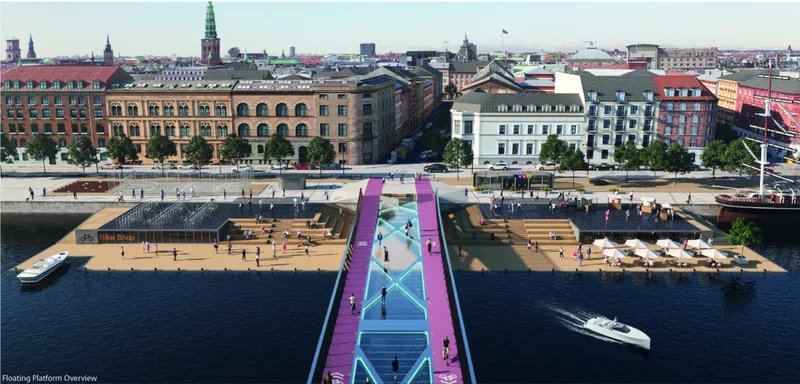
Beneath and alongside the bridge, the floating platform introduces a second layer of urban life. Divided into two levels, it extends the experience from mere crossing to extended occupation.
At street level, visitors access bicycle parking, green areas, and flexible event space capable of hosting organic markets, fairs, and community gatherings. The lower canal-level platform offers bike rental and repair workshops, cafés with outdoor seating, and a covered performance area for live events and exhibitions.
This layered public realm transforms the waterfront into a multi-functional civic stage. The platform remains operational even when the bridge opens, ensuring uninterrupted public activity, a thoughtful synthesis of infrastructure and place-making.
Water taxis, small delivery boats, and docking facilities further integrate land and water mobility, strengthening Copenhagen’s identity as a canal city.
Sustainable Innovation at the Core
The City Hub demonstrates how sustainable bridge architecture can actively contribute to climate-responsive urbanism.
• Integrated photovoltaic pavement panels generate renewable energy to power bridge lighting and feed surplus electricity back to the grid.• Recycled and recyclable materials minimise lifecycle environmental impact.• Energy requirements for operation and maintenance are carefully optimised.• Docking infrastructure reduces dependence on car-based transport.• Zero-carbon mobility is encouraged through prioritised cycling infrastructure.
The floating platform’s self-sufficient energy system ensures functionality even during power outages, reinforcing resilience as a key design principle.
A Bridge of Two Paces
The spatial concept distinguishes between fast and slow movement. Dedicated cycle lanes allow efficient commuting, while the central pedestrian walkway fosters slower, contemplative engagement.
This duality, speed and pause, reflects the rhythm of urban life. It transforms infrastructure into experiential architecture, where movement and gathering coexist.
By encouraging interaction, cultural programming, and social exchange, the bridge becomes a meeting point connecting both sides of the canal and strengthening civic cohesion.
Transforming Urban Mobility
How can urban design foster sustainable transport? The City Hub answers through clarity, accessibility, and attraction. Smooth trafficable surfaces, intuitive wayfinding, integrated service points, and engaging design elements make cycling practical and desirable.
Handles at red lights, well-defined pathways, secure bicycle parking, and visible repair hubs lower barriers to adoption. By merging functionality with architectural appeal, the bridge entices new users toward greener mobility choices.
This is infrastructure designed not only for efficiency but for inspiration.
A Landmark for Copenhagen
The majesty of its opening bascule leaves, the luminous LED network, and the elegant floating platform collectively establish The City Hub as a contemporary landmark. It reflects Copenhagen’s commitment to sustainability, innovation, and human-centered urban design.
Through structural refinement, renewable energy integration, and public activation, the project redefines what a bridge can be in the 21st century.
It is not just a connection between two banks: it is a connection between mobility and community, engineering and architecture, water and city.
The City Hub stands as a compelling example of sustainable bridge architecture shaping the future of resilient and people-focused cities.



Popular Articles
Popular articles from the community


Co-Life: Senior Housing Design That Reconnects Older Adults With the City
Co-Life reimagines senior housing design through healing gardens, shared streets, workshops, and a sustainable community across generations.

Play: Fragments of Their World
Familiar architecture becomes modular playground design, creating safe spaces where displaced children can learn, connect, imagine and play.

Hill & Cross Opera: Sculptural Opera House Architecture Shaped by Tallinn’s Landscape and Identity
Hill & Cross Opera reimagines opera house architecture in Tallinn through its sculptural hill, civic plaza, glass wave and a luminous cross.

The Earth Pod: 3D Printed Homes for Resilient Refugee Communities
The Earth Pod reimagines refugee housing through 3D printed homes made from clay, combining resilience, self-sufficiency, and rapid shelter.


Similar Reads
You might also enjoy these articles

Eco Chapel: A Green Architecture Pavilion Designed in Symbiosis with the Forest
Eco Chapel uses green architecture to weave prayer, learning and reuse into a forest pavilion shaped by modular hexagonal canopies for life.
Kaffeebühnen: Coffee Shop Architecture Designed as a Civic Stage Between Vienna’s City and Park
Kaffeebühnen turns coffee shop architecture into a civic stage, linking Vienna’s park edge, urban life, warm timber yards, and coffee craft.
Healing Façade: Sustainable Architecture for Reforestation, Community, and Sacred Ecology in Ethiopia
Healing Façade reimagines sustainable architecture as a living wall that restores soil, catches water and renews Ethiopia's forest churches.


Urban Forest: A Vertical Ecosystem for 5,000 Workers in Singapore's Changi Business Park
Radially stacked pods and layered green decks turn a 7-acre plot into 47 acres of ecological workspace projected for 2040.


Explore Cycling Bridge Competitions
Discover active competitions in this discipline



Challenge to reimagine the Iron Throne


Photograph architecture without architects


Illustrate the lost glory of Angkor Wat - Render Challenge


Design challenge to reuse E-waste
Comments (0)
Please login or sign up to add comments
No comments yet. Be the first to comment!