

The Cortijo Belicena Renovation: A Blend of Tradition and Modernity
The article explores the renovation of Cortijo Belicena, blending traditional Andalusian architecture with modern design and sustainable features.


Cortijo Belicena
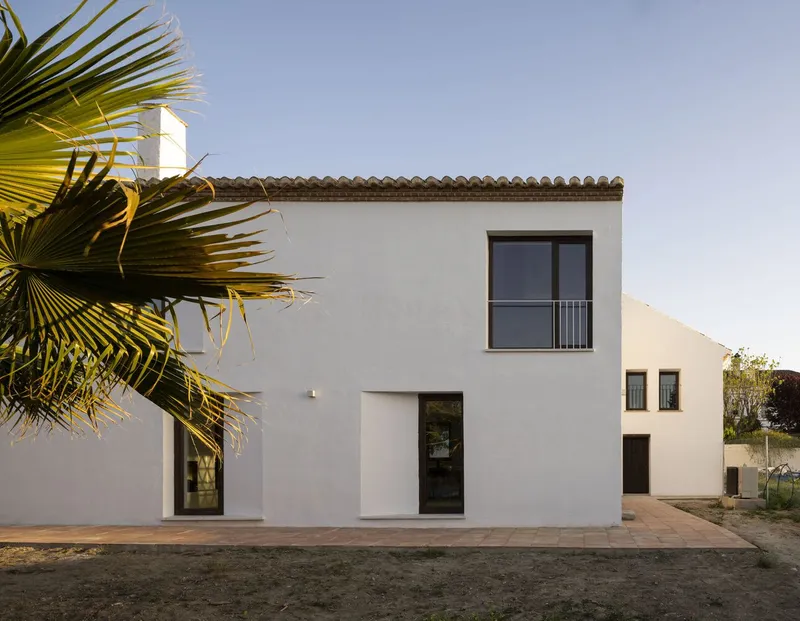
The Cortijo Belicena renovation is a prime example of how architecture can preserve historical elements while embracing modern design. Located in the Vega de Granada, Spain, the renovation of this early 20th-century building, originally constructed with rudimentary materials, combines the charm of traditional Andalusian rural architecture with contemporary interventions. The project, designed by ROOM ARQUITECTOS in collaboration with Juan García Nofuentes and Roser Martinez, serves as a model for integrating sustainable features with an aesthetically rich approach to historic preservation.

A Glimpse into the History of Cortijo Belicena
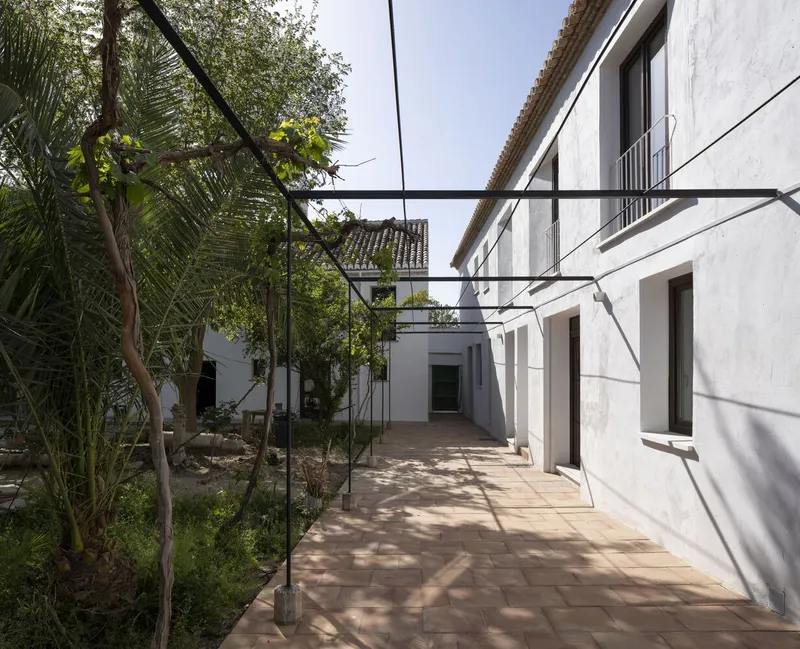
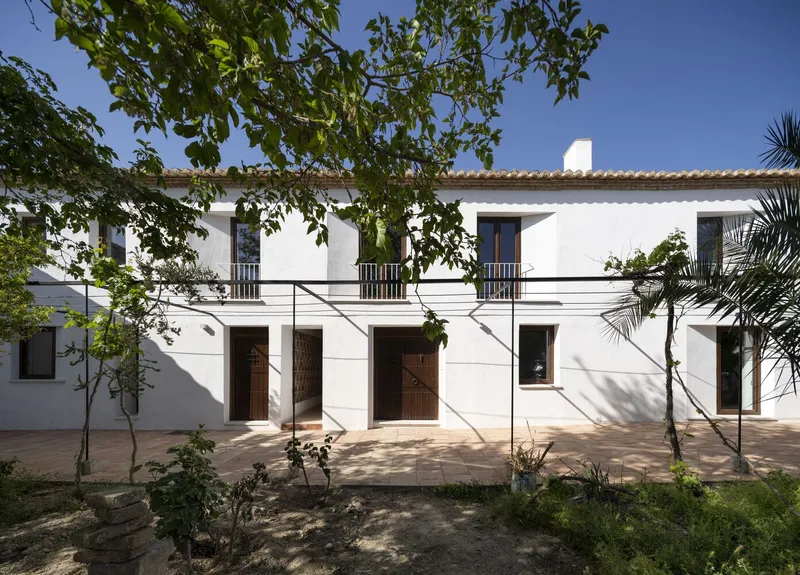
Cortijo Belicena was initially built at the turn of the 20th century using basic load-bearing walls and a wooden gable roof. This typical structure of the Vega de Granada region was a reflection of its time, where practicality and functionality were prioritized. The original design of the building comprised two "L" shaped bodies surrounding a central courtyard. A second courtyard at the back of the building now houses a swimming pool, providing a modern touch to the historic architecture.
The renovation project was a bold yet sensitive intervention, ensuring that the building’s heritage was preserved while creating a comfortable, contemporary living space.
The Vision Behind the Renovation
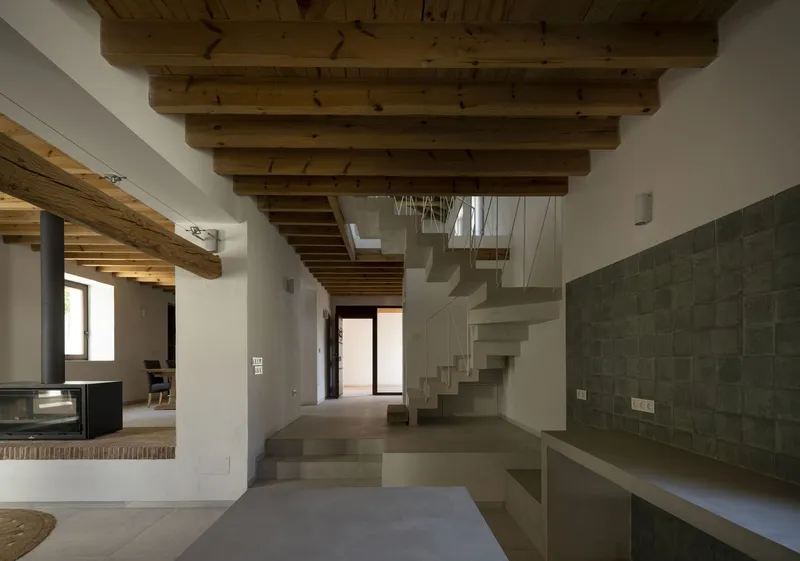
The architects' vision for the Cortijo Belicena renovation was to create two independent single-family homes within the original framework. The ground floor of the largest house was designed for social and celebratory activities, directly linked to the central courtyard and the swimming pool. The private spaces are located on the upper floor, allowing for a separation between public and private life.
Key aspects of the renovation include:
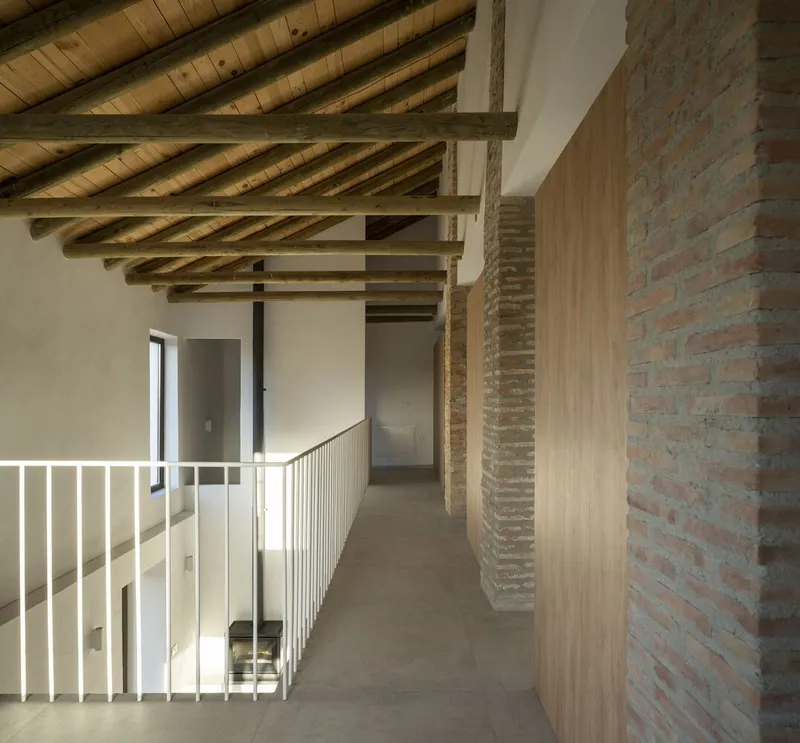
- Restoring the Integrity of the Building’s Structure: The original load-bearing walls and gable roof were preserved, maintaining the building’s traditional aesthetic. The new intervention respected these historical elements, reinforcing the foundation and consolidating the walls.
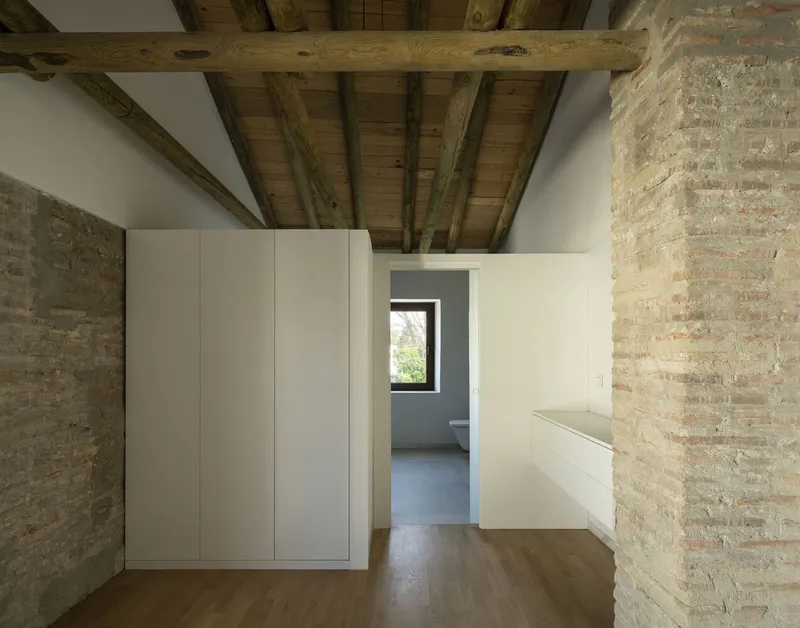
- Introducing Modern Design Elements: While the structure was preserved, the interiors were updated with modern wooden flooring and new partition walls that contrast with the original elements. These updates not only enhance the building’s functionality but also highlight the distinction between the old and the new.
The Design Process and Functionality
The renovation process involved careful planning and design to ensure that the new spaces functioned well while preserving the essence of the original building. The layout of the Cortijo Belicena was restructured to create two distinct living areas, each with its own access and private spaces.
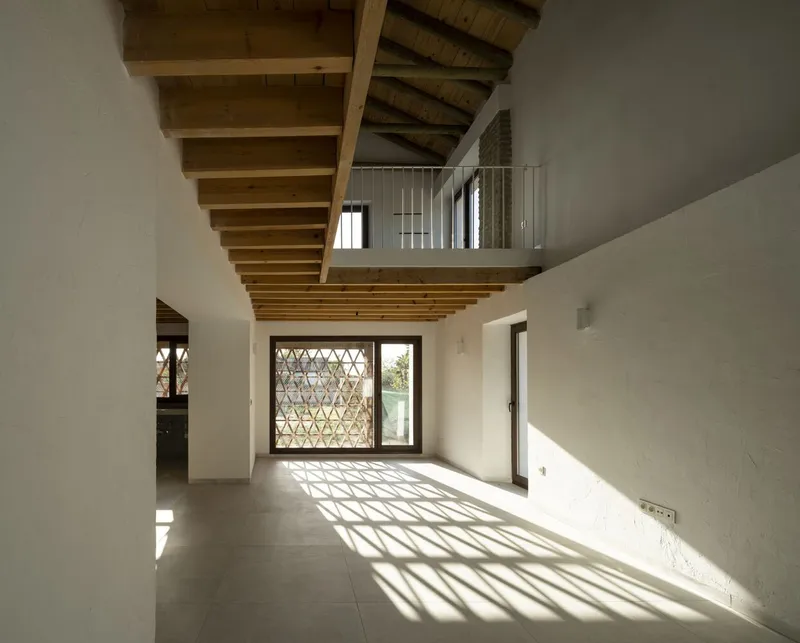
Open Concept Layout:The architects introduced an open plan for the ground floor to facilitate easy flow between the social areas, which are now integrated with the central courtyard. This allows for seamless indoor-outdoor living, a feature that enhances the comfort and livability of the home.
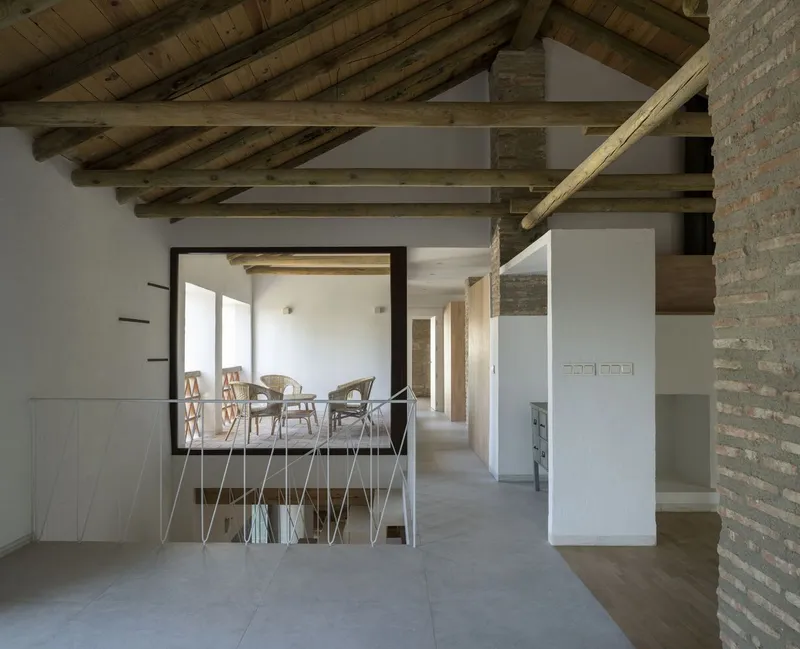
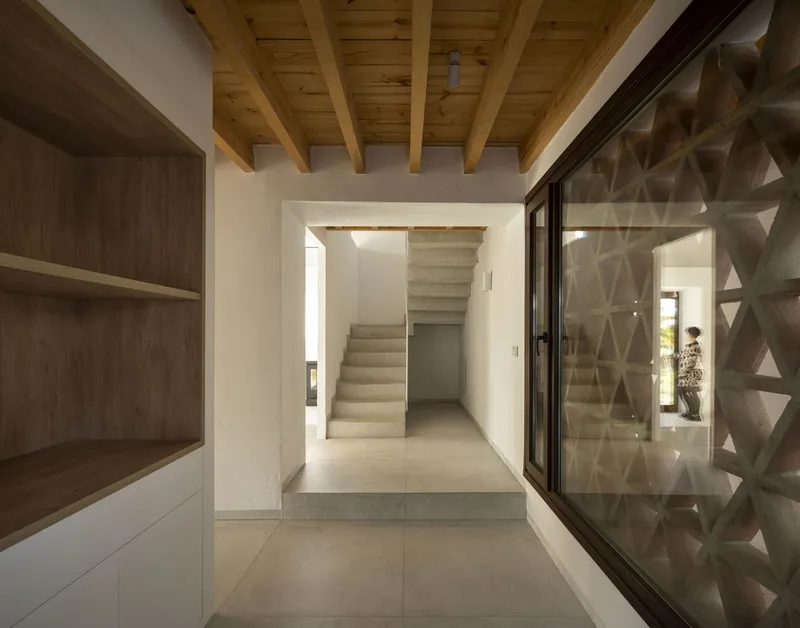
Private Spaces on the Upper Floor:The private areas are located on the first floor, ensuring privacy and separation from the social spaces. The design of the staircases was also carefully considered, with each home having its own access to the upper levels, ensuring that the two residences remained independent of each other.
Sustainability and Energy Efficiency in Cortijo Belicena Renovation
Sustainability is a key focus of the Cortijo Belicena renovation. The building’s original construction, with its thick perimeter walls, provides excellent thermal inertia, which helps to maintain comfortable indoor temperatures. In addition, the architects incorporated elements such as ceramic lattices, which serve as both a solar control and ventilation mechanism.
Thermal Comfort:The existing thermal mass of the building was used to the advantage of energy efficiency. The design takes full advantage of the natural climate, reducing the need for artificial heating and cooling. This focus on sustainable architecture ensures that the Cortijo Belicena renovation is as environmentally friendly as it is beautiful.
Solar Control:The recovery of traditional ceramic lattices for solar control not only enhances the building's aesthetic appeal but also plays a vital role in maintaining the thermal comfort inside. This method, which was common in traditional Andalusian architecture, is both effective and sustainable in providing natural climate control.

The Materiality of the Intervention
The materials chosen for the Cortijo Belicena renovation were selected to balance the old and the new. While the original building’s walls and roof were preserved, the interior interventions were deliberately differentiated through the use of new materials and techniques.
- Wooden Floors:The new wooden floors complement the original structure while providing a modern touch to the interiors. These floors are an homage to the building’s rustic roots but also create a sense of warmth and comfort in the renovated spaces.
- New Partition Walls:The interior partitions were constructed using materials that are distinct from the original load-bearing walls. This differentiation makes it clear where the old construction ends and the new interventions begin, creating a sense of history and transformation.
Cortijo Belicena’s Timeless Elegance
The Cortijo Belicena renovation exemplifies a successful integration of historic preservation with modern architectural design. By retaining the integrity of the original structure while introducing innovative and sustainable design elements, the project creates a seamless blend of tradition and contemporary living. The building stands as a testament to the enduring value of thoughtful renovation, preserving the essence of the past while embracing the needs of the present.
With its focus on sustainability, energy efficiency, and respect for historical architecture, the Cortijo Belicena renovation sets a new standard for adaptive reuse in residential architecture.
This project demonstrates that architecture can be both a reflection of the past and a forward-looking vision of the future, making it an exemplary case for architects and homeowners alike.





Popular Articles
Popular articles from the community


Hill & Cross Opera: Sculptural Opera House Architecture Shaped by Tallinn’s Landscape and Identity
Hill & Cross Opera reimagines opera house architecture in Tallinn through its sculptural hill, civic plaza, glass wave and a luminous cross.

Riyadh For All: Intergenerational Urban Design for Active Aging in Rabat
Riyadh For All reimagines urban design in Rabat with intergenerational co-living, adaptive courtyards, and Moroccan cultural exchange today.

Conexión: Biophilic Design Reimagines High-Rise Living in Hong Kong
Conexión reimagines high-rise living in Hong Kong through biophilic design, green facades, shared spaces, daylight, water and nature within.

AL-JANNAH: Sustainable Architecture and Permaculture for Afghan Widows
AL-JANNAH uses sustainable architecture and permaculture to create resilient oasis of housing, learning, work and renewal for Afghan widows.


Similar Reads
You might also enjoy these articles


Hodi-Mandai Geram
Project Function: Preservation and revitalization of the Intangible heritage and socio-spatial identity of the Hodi by Housing, Cultural Memory Center, Sacred Grove, landscape, local tourism economy


Olio Towers: A Mid-Rise for Performers That Fuses Housing, Rehearsal, and Stage
Located blocks from Houston's Theater District, this modular tower stacks living units around a central performance atrium.

Oasis: Modular Green Housing Carved into Dhaka's Urban Fabric
A shortlisted Plugin Housing entry reclaims unauthorized settlements in Dhaka with stepped concrete volumes, green roofs, and ventilation-driven design.

Black Hole: A Floating Megastructure for the Post-Physical Era
Emiliano Mazzarotto envisions a spherical, self-scaling arena where e-sports, digital hotels, and holographic stadiums replace traditional public space.


Explore Historic Preservation Competitions
Discover active competitions in this discipline



Challenge to reimagine the Iron Throne


Photograph architecture without architects


Illustrate the lost glory of Angkor Wat - Render Challenge


Design challenge to reuse E-waste
Comments (0)
Please login or sign up to add comments
No comments yet. Be the first to comment!