
The Courtyard House by MODO Designs – A Contemporary Haveli-Inspired Residence in Rancharda, India
The Courtyard House by MODO Designs blends traditional haveli inspiration with modern courtyards, natural materials, and open spaces in Ahmedabad.


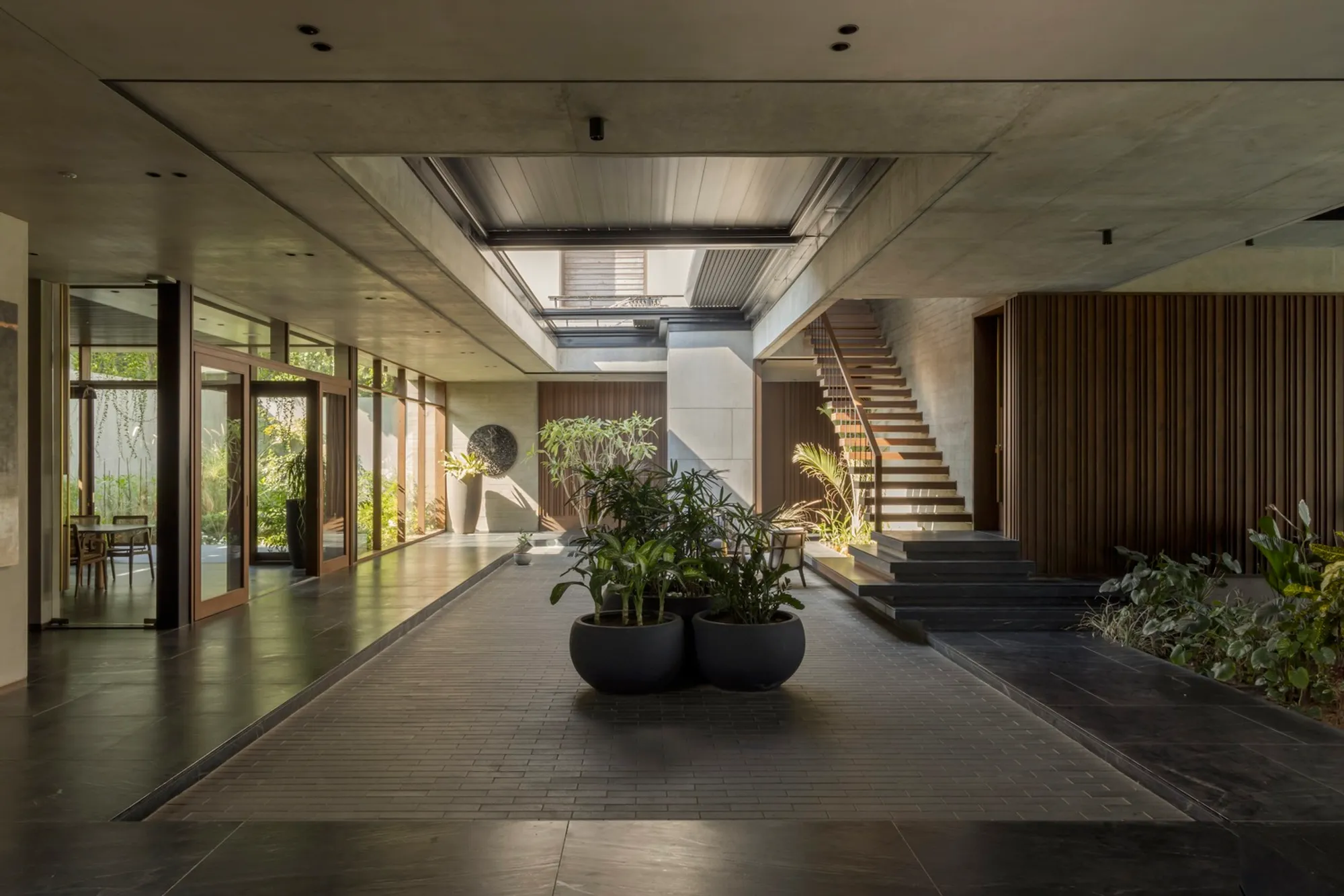
Nestled on the outskirts of Ahmedabad, The Courtyard House by MODO Designs redefines the traditional haveli for modern living. Built on a sprawling 45,000 sq ft plot in Rancharda, this 10,350 sq ft residence blends openness, natural light, and sustainable materiality to create a serene family retreat.
Concept and Design Philosophy
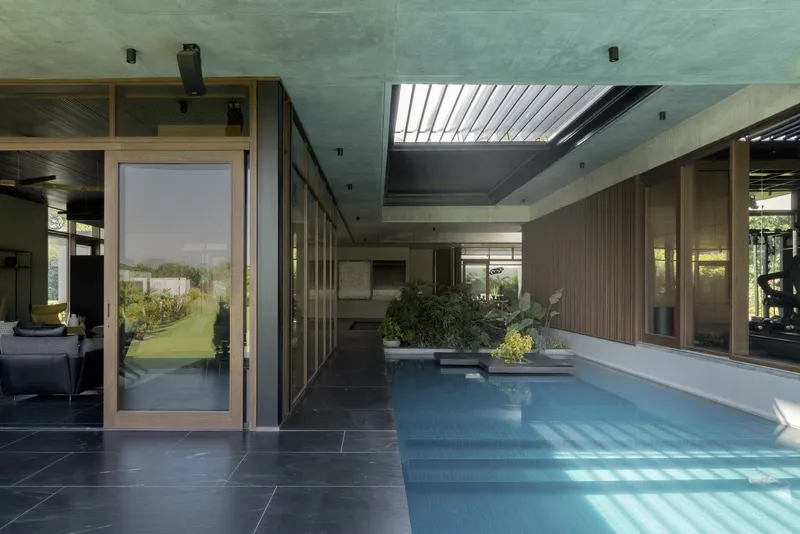
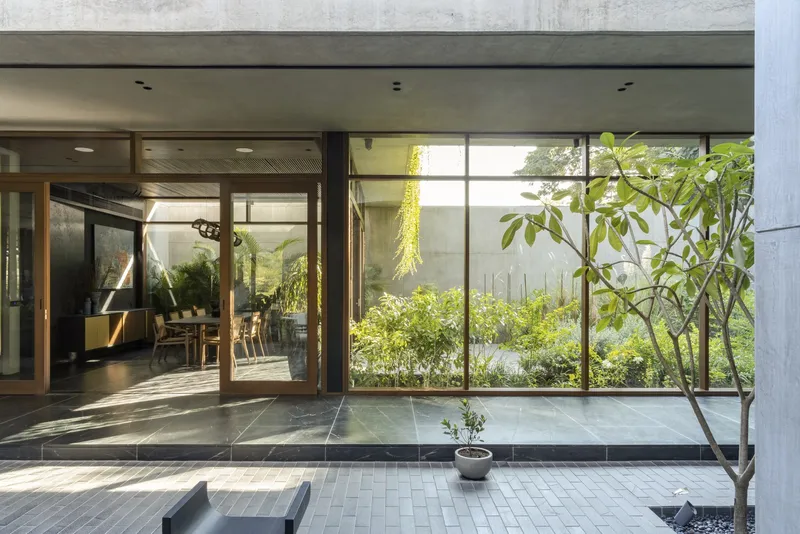
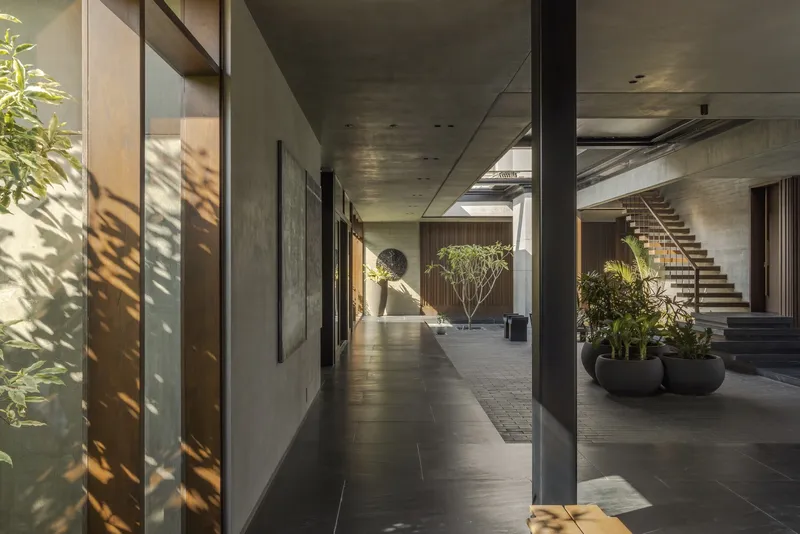
The client’s brief called for a 4-bedroom home with living, study, and entertainment areas designed around the principles of openness. Rather than a closed, compact structure, the architects envisioned a spatial layout centered on multiple interconnected courtyards. These include an entry court, central court, dining court, shower court, and pool court, each bringing light, air, and greenery into the home.
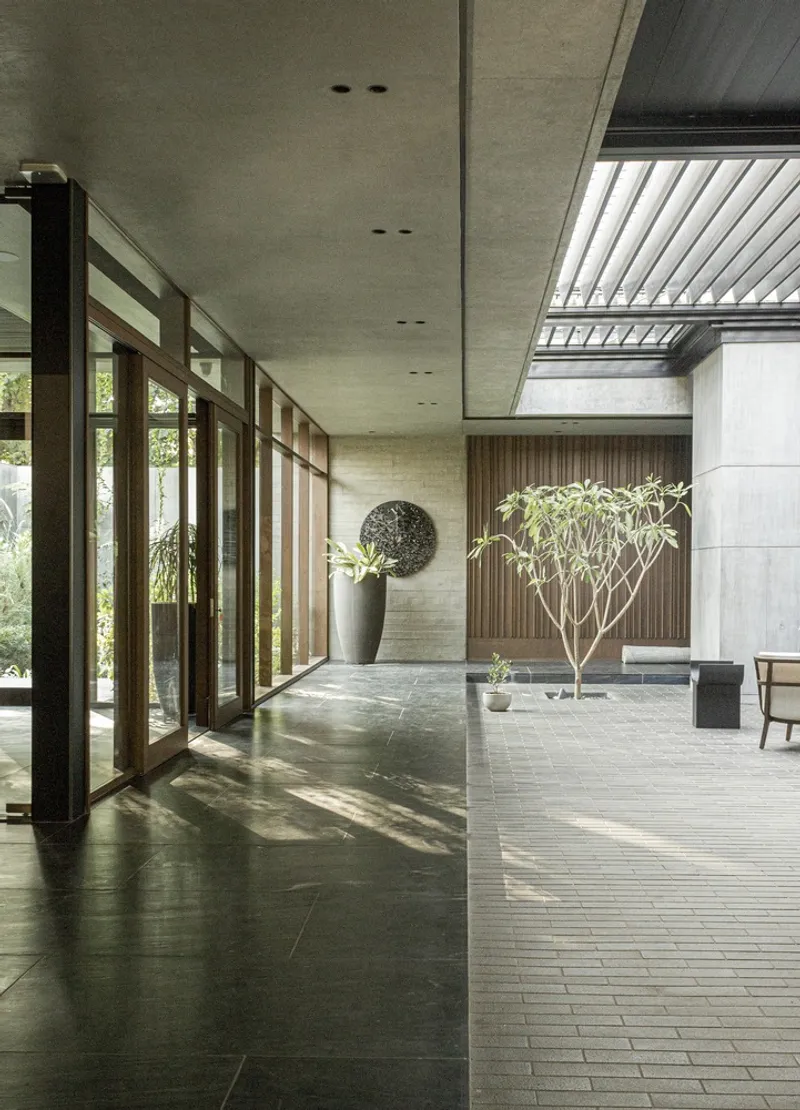
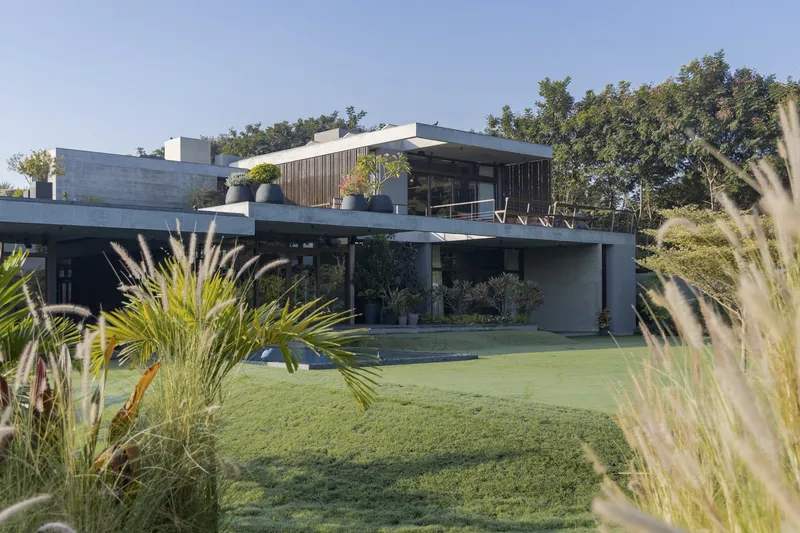
This open courtyard typology takes inspiration from the traditional havelis of Ahmedabad, yet it is reinterpreted with a contemporary architectural language. Unlike inward-looking historic havelis, The Courtyard House features peripheral courts that visually and spatially connect the central courtyard to the surrounding gardens, creating an extroverted house immersed in nature.

Spatial Organization
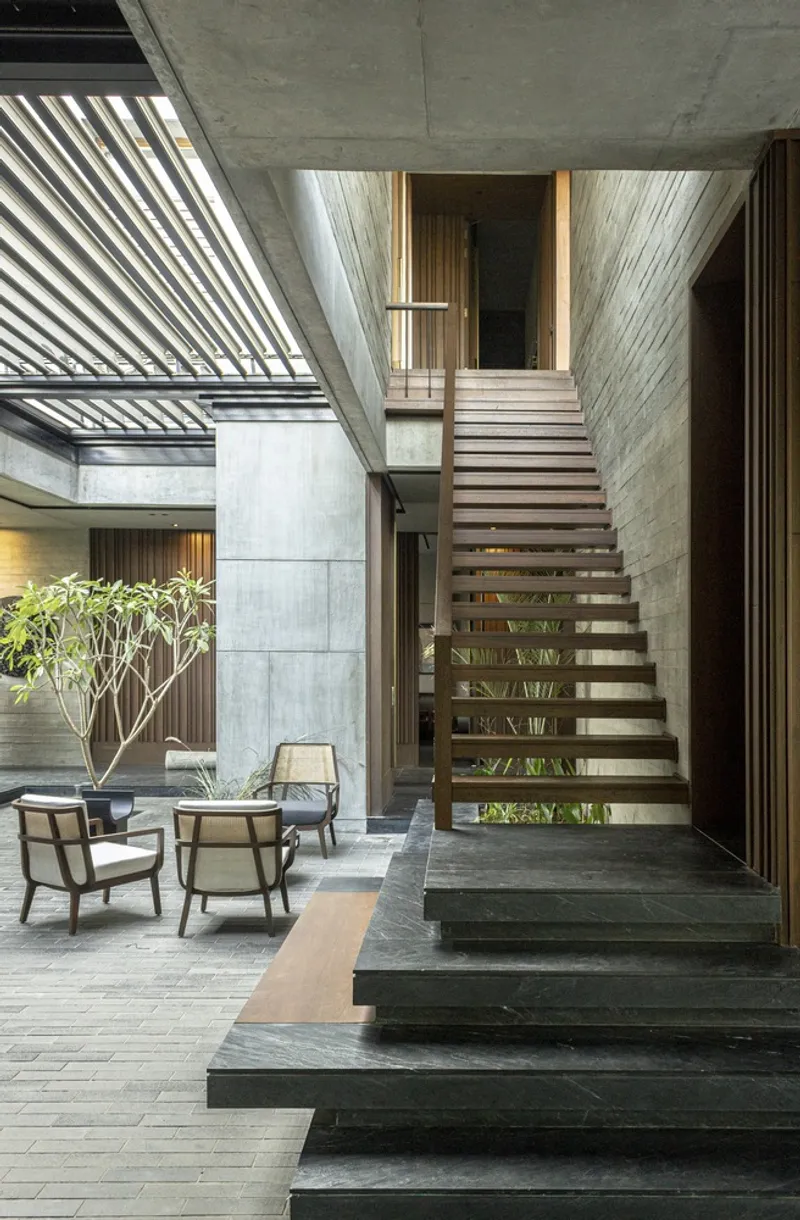
The ground floor is organized around the central courtyard, with spaces radiating outward: a study, kitchen, dining area, living space, and the private bedrooms of the owner, his father, and guests. The first floor is lighter, housing an entertainment lounge and the daughter’s bedroom, with terraces overlooking the gardens—ideal for leisure and outdoor connection.
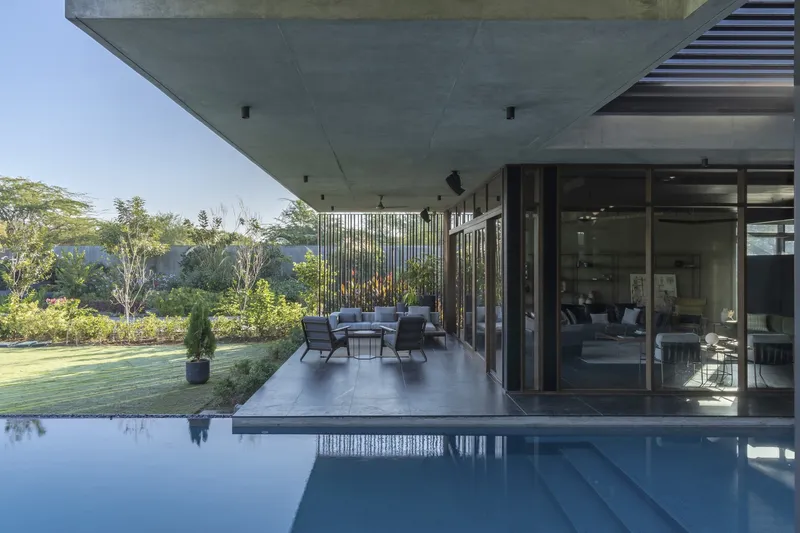
The form of the house appears visually lighter from the north garden, with upper volumes carefully recessed to soften the building’s presence. The terraces and verandahs act as transitional zones, blurring boundaries between indoor and outdoor living.
Materials and Atmosphere
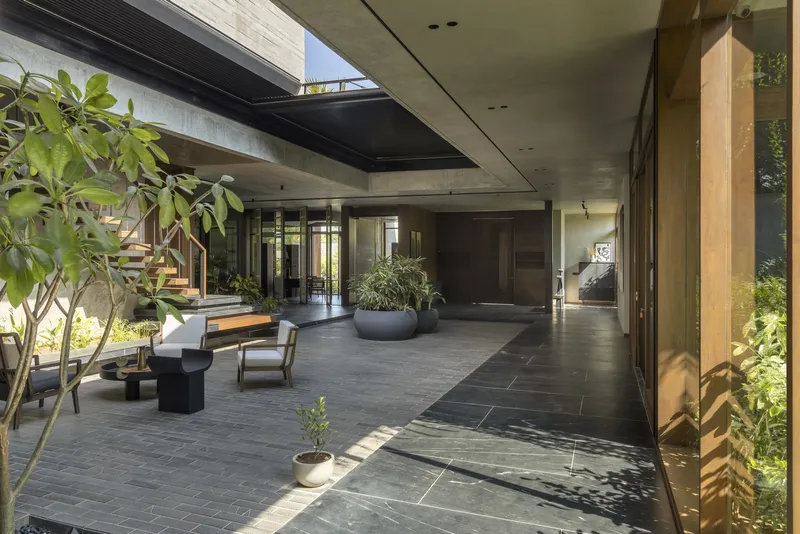
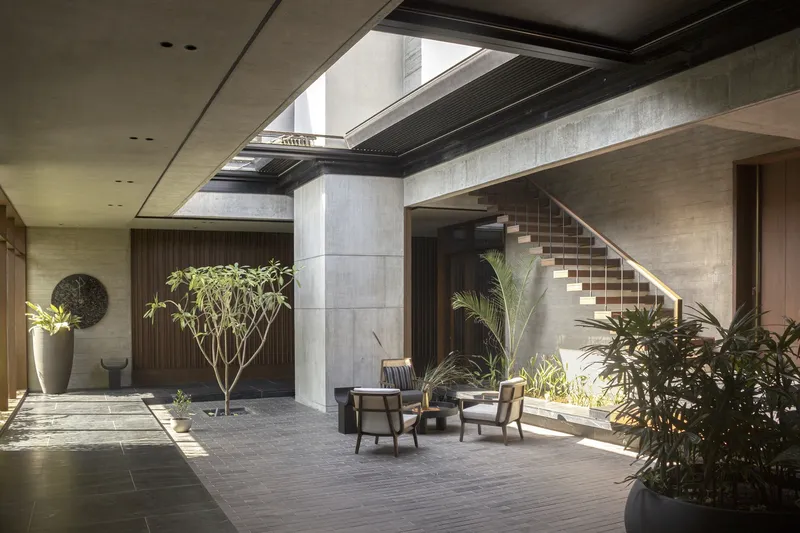
The architectural material palette enhances the house’s warm, intimate, and timeless character. Key features include:
- Roughened black Marquina marble flooring in most spaces
- Lava stone flooring in the central courtyard
- Reclaimed wood used extensively for sustainability and texture
- Concrete walls with wood-pattern finishes, lime coats, and wood paneling
The interiors mix Western contemporary furniture with customized Indian designs, resulting in a balance of global elegance and local craftsmanship.
Courtyards, Light, and Climate
The courtyards play a vital role in shaping the home’s microclimate. The central court and pool court feature operable roofs that can be opened or closed depending on weather conditions, while the peripheral courts remain open, landscaped with dense plantations. This strategy not only ensures natural ventilation and daylighting but also connects the family to the rhythms of nature throughout the day.
The Courtyard House by MODO Designs is a fine example of contemporary Indian residential architecture that draws from heritage typologies while embracing modern lifestyles. Through courtyards, natural materials, and spatial openness, the home embodies both comfort and cultural continuity.



Popular Articles
Popular articles from the community


The Earth Pod: 3D Printed Homes for Resilient Refugee Communities
The Earth Pod reimagines refugee housing through 3D printed homes made from clay, combining resilience, self-sufficiency, and rapid shelter.

Hill & Cross Opera: Sculptural Opera House Architecture Shaped by Tallinn’s Landscape and Identity
Hill & Cross Opera reimagines opera house architecture in Tallinn through its sculptural hill, civic plaza, glass wave and a luminous cross.

Riyadh For All: Intergenerational Urban Design for Active Aging in Rabat
Riyadh For All reimagines urban design in Rabat with intergenerational co-living, adaptive courtyards, and Moroccan cultural exchange today.
EW PARK: Sustainable Architecture Reimagines the Future of Urban Parking
EW PARK reimagines city parking as a modular wooden tower combining automation, solar energy, electric mobility, and adaptable urban design.


Similar Reads
You might also enjoy these articles


Hodi-Mandai Geram
Project Function: Preservation and revitalization of the Intangible heritage and socio-spatial identity of the Hodi by Housing, Cultural Memory Center, Sacred Grove, landscape, local tourism economy


Olio Towers: A Mid-Rise for Performers That Fuses Housing, Rehearsal, and Stage
Located blocks from Houston's Theater District, this modular tower stacks living units around a central performance atrium.

Oasis: Modular Green Housing Carved into Dhaka's Urban Fabric
A shortlisted Plugin Housing entry reclaims unauthorized settlements in Dhaka with stepped concrete volumes, green roofs, and ventilation-driven design.

Black Hole: A Floating Megastructure for the Post-Physical Era
Emiliano Mazzarotto envisions a spherical, self-scaling arena where e-sports, digital hotels, and holographic stadiums replace traditional public space.


Explore Courtyard Competitions
Discover active competitions in this discipline



Challenge to reimagine the Iron Throne


Photograph architecture without architects


Illustrate the lost glory of Angkor Wat - Render Challenge


Design challenge to reuse E-waste
Comments (0)
Please login or sign up to add comments
No comments yet. Be the first to comment!